Likes
Comments
Share
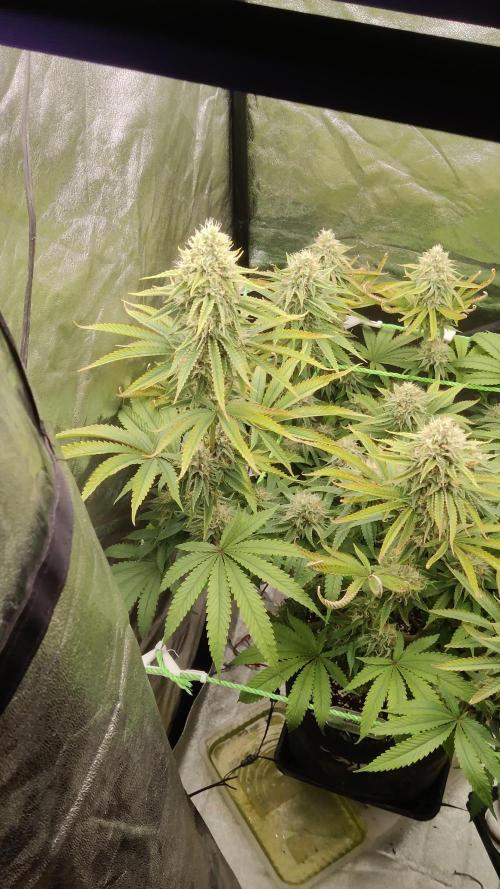
Just come back to post a result for you guys, been really busy lately and we just open our own dispensary in Thailand. The coco grow medium just requires lot of work compared to RDWC and the yield is almost similar but just a bit lower paces. Keep on getting high, Cheers
Likes
5
Share
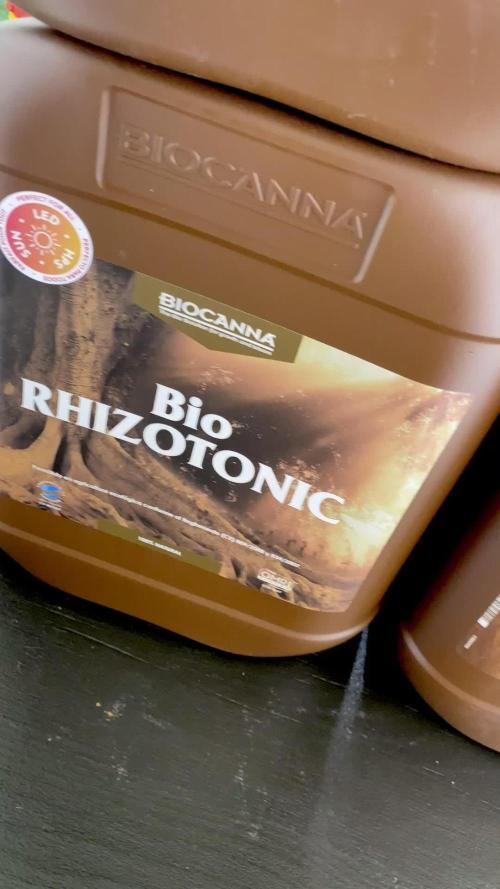
Pues las banana son lo mas bello que he plantado, con un efecto muy potente y unos sabores deliciosos. Este es el ultimo diario que escribo de esta tanda de preciosas plantas. Os mando un abrazo enorme, nos vemos en unos días con una nueva tanda de preciosas plantas💚 Buenos humos jardineros mios!😘😘😘
Likes
3
Share
@ElJrrero
Follow
Solo un riego mas con abono y hago lavado de raíces..:D
Processing
Likes
7
Share
@maxpain
Follow
Week was good alot off leaves...about to start flushing soon maybe in a week or soo ..
Likes
6
Share
@Tezza2
Follow
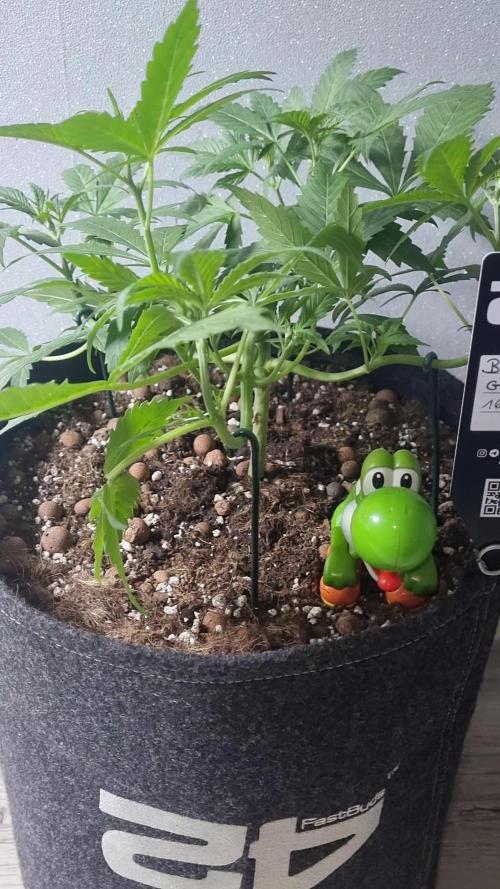
The plants have been going great.no problems at all i love 420 Fast buds genetics they grow great both plants should be very big plants i have one in a 7 gallon fabric pot and the purple lemonade is in a four gallon fabric pot
Likes
7
Share
Original Sensible Seeds - Frosted Guava 🍈 Enjoy - Week 8 👨🏻‍🌾❄️ - 25-28 grad Celsius - 55-60% humidity level - 20l Air-Pot (75% BioBizz All-Mix, 25 % BioBizz Worm Humus) - RO-water (PH 6,25) Day 50 👨🏻‍🌾 Frosted Guava - LST Day 53 👨🏻‍🌾 Frosted Guava - LST Day 54 👨🏻‍🌾 Frosted Guava - Defoliation Day 55 👨🏻‍🌾 Frosted Guava - Defoliation Sanlight Evo 3-60 40%: about 400 PPFD Spider Farmer Glow30 6h/18h on
Likes
23
Share
Flush mode!! Day early but chopping right soon Everything turned out awesome , really impressed with the Futur vert flora max series and the Futur vert uv led bar , love to add 2 more to the tent. I’ll update next when I harvest in a few days Thanks everyone who checked out my grow Happy growing fam
Likes
12
Share
Can't upload as many great pictures as I would like. But she is cut and hanging as of 9/3/25
Likes
10
Share
Día 20!!! Estamos en el punto de comienzo de la 4 semana de floración ! Esa en la que notamos como el cultivo nos da el cambio que queremos y a partir de los dos vemos como Nuestras flores evolucionan de una manera u otra dependiendo de clima,genética,nuestra mano con ella etc.. Vamos a comenzar la media floración bien cargados con la paleta de nutrientes alta en potasio y nitrógeno! Siempre añadiendo también,nuestras mañanas de agricultor. Tuve el fallo de abrir el tupper de lombrices y echarlas a el cultivo y no poderos grabar el proceso. Fue algo rápido que hice con el armario apagado..lo tuve que iluminar por un minuto para añadir la bola de lombrices unas 60!!! La siguiente tanda de flores si empezara a sacarle provecho a estas amigas!! Deciros que el cambio en altura es muy grande no para aún de crecer! Y las últimas están engordando mucho las flores a pesar de el corto periodo se ve que nuestra selección de amnesia haze,es un fenotipo muy especial.. Es de unas 8 semanas de floración y muy buena productora! Día 21 Primer día de la cuarta semana de floración tenemos una escalera Desde la puerta del armario hacia el fondo tenemos alturas que van 54cm/62cm/71cm/80cm Gracias a el control individual en altura de cada luminaria iré trabajando con el control de dividir el área en tres Alturas diferentes,así lo requiera cada planta. Una pequeña planta que está cerca de una rendija de ventilación tuvo unas pequeñas picaduras de tips”. Observaré si no es de un periodo anterior de antes del fumigado.. Si no es así trabajaré un poco de jabón potásico y ajo! De momento el olor es muy sutil. Algunas flores empiezan a producir resina de manera temprana.
Likes
19
Share
@Chubbs
Follow
420Fastbuds-Week 6 Train Wreck Auto What up grow fam. Weekly update on these 2 beautiful 😍 ladies. They got moved over to the flower tent this week. Temperatures have gone up tremendously since it seems summer weather has finally got here. Over all they seem to be handling it, OK. I'll most likely do a defoliation this week thinning it out to allow more air flow. All in all Happy Growing
Likes
1
Share
@PalmaGrow
Follow
19 - 25 noviembre Se realiza amarre en brazos más altos poda de bajos y hojas al igual dóblanos estás dos ranas para generar estrés y emparejar con las demás
Likes
18
Share
@poloq
Follow
_Environment I got the VPD to 1.3 - rather by luck (watering less frequently + ambient temp. rising/ ambient RH dropping (spring around the corner)). _Flower Gorilla Z starts to develop it's trichom stalks, showing that the plant is pretty much done (I'm literally just waiting for the heads to turn milky/ amber). Besides that, the structure is really airy (foxtail). Mimosa Cake on the other hand has still mostly transparent trichomes; it's stucture is much more what you'd expect. The smell also started to increase to a point where you can definitly sense it within the whole room. _Harvest I expect Gorilla Z to be done around early week 15; Mimosa Cake should need 1 week extra, so I'll try to hit the sweet spot in between. _Fertilization On day 88, I gave about 2 tbl spoons (10 ml) of selfmade calciumacetat-suspension (mixed with 2 l of water) to the plants. This was the only watering they got during this week. [1 cleaned eggshell, sterilized at 180 °C (oven) for 20 minutes, then ground into powder, added about 50 ml of 5% apple cider vinegar, left standing until the reaction is complete (no more bubbles rising), mixed with water 1:200 ratio] This is rather an experiment to see if 1) this works and more importantly 2) the plants need/ can take more calcium in their current stage (anaerobic, dense soil). _Plants At first, Gorilla Z shedding all its leaves (sun sails) seemes like a problem, but it's turning out to be an absolute stroke of luck! The leaves literally fall off by themselves (video), which means that a) I have little to no trimming to do, and b) there's almost no chance of mold. *Gorilla Z Auto was 46 cm tall, Mimosa Cake Auto 27 cm.
Likes
50
Share
🌟 Eternity Grow Cup – Week 3 Veg Report 🌱 Another week in the books, legends, and though the temps aren’t perfect, our Runtz babies are growing strong! 💪 This week marks a pivotal moment as we get serious and start to push these girls toward greatness. 🌱 Growth Update: • The girls are officially showing their third pair of leaves, and while they’re growing slow due to cooler temps, they’re consistent. Standing at 6 cm tall, these beauties are ready for the next steps in their journey. • The yellow sticky traps have also done their job, catching some gnats—always a win for pest management! Let’s talk about the unexpected guests making an appearance in the grow room—gnats! These tiny critters can be a common nuisance for growers, especially in environments with moist soil. While they’re not devastating, they can be a sign that things need a bit of tweaking. Why the Yellow Stickers? Yellow sticky traps are like candy for gnats—they’re irresistibly attracted to the bright color, which mimics flowers. These traps are a simple, non-toxic way to monitor and control the population. It’s not just satisfying to see them stuck (though, let’s admit it, it kind of is)—it’s also a great way to keep tabs on how many are lurking around and take action if necessary. What Causes Gnats? Gnats love moist environments, and overwatering or humidity that’s a bit too high can create their perfect breeding ground. Using high-quality soil like Pro-Mix HP with Mycorrhizae helps, but these little critters can still sneak in. How to Handle Them? While yellow stickers are a great first line of defense, staying vigilant with watering practices is key. Letting the top layer of soil dry out between waterings can disrupt their life cycle. Plus, products like beneficial nematodes or soil conditioners can help keep them under control. They may be tiny, but we’ve got our eye on them! Let’s not let the gnats steal the show—our Runtz have got all the spotlight! 🌟 Nutrient Regimen: This week, we’re sticking with the Aptus Clean Mineral Line for Veg, a powerful combo designed for optimal plant health: • Regulator: 0.15 ml/L – This keeps the plants strong, aids in stress tolerance, and boosts nutrient uptake. • RO Water Conditioner: 0.8 ml/L – Balances the water profile and improves nutrient delivery. • All-in-One Liquid: 1.25 ml/L – Provides a balanced mix of essential macro and micronutrients for sustained growth. 📌 Key Stats: • pH: 6.05 • EC: 1.0 • Temp: 18.3°C 🔧 Tech, Tools & Building the Dream Studio Behind the grow, I’ve been fine-tuning my workspace. Using just a piece of wood, carefully cut feet, and some imagination, I’ve elevated my monitors for better editing. It’s not fancy, but it works! 💻✨ For the grow, my trusted TrolMaster gear (from the Tent-X to the AMP-3) has been my go-to for precision. Every measure—pH, EC, temps—is logged and tracked to keep these plants thriving. 🌟 Exciting Milestones: 💚 Huge thank you to the community for helping me reach: • 500 YouTube Subscribers 🎥 – Weekly episodes are dropping, so make sure to tune in for detailed updates! • 4.5K Instagram Followers 📸 – Join the fun as we share the Runtz journey and so much more! 💨 Welcome, Ziggi Papers! A warm welcome to Ziggi Papers, our newest sponsor! 🌟 Ziggi’s high-quality rolling papers are the perfect addition to any smoke session. They’re all about sustainability and precision—just like this grow. Check them out at ziggioriginal.com. 💚 Shoutouts: To the diary sponsors, to my sponsors and this incredible community: • @GrowDiaries, @Plagron, @Zamnesia, @AptusHolland, @ProMixSoil, @TrolMaster, @ThinkGrowLED, @FutureOfGrowLED, @CannaKan, @ZiggiPapers Thank you for believing in the craft and making this journey possible! To the community—supporters, lovers, and yes, even the haters—you all inspire me to give my best every day. Together, we’re writing history with this grow. This week, I’m dropping: • A photo set of all 5 phenos, showing their progress. • Behind-the-scenes shots of my workspace build. • A closer look at the tools and products making this grow epic and more. For next week only God knows but one thing is for sure this promisses to be epic 💚 Let’s keep the momentum going, legends. This grow is more than just a competition—it’s a journey of learning, growth, and passion. Good luck to all the participants—may your grows be epic, your spirits high, and the journey fun for everyone involved! Stay tuned, and let’s make history together! Genetics - Runtz https://www.zamnesia.com/6000-zamnesia-seeds-runtz-feminized.html Nutrients - Plagron https://plagron.com/en/hobby - Aptus Holland https://aptus-holland.com/ Controls - Trol MAster https://www.trolmaster.eu/ LED - https://www.futureofgrow.com/en LED - https://www.thinkgrowled.com Soil - https://www.promixgardening.com/en Germination - Cannakan https://cannakan.com/?srsltid=AfmBOopXr-inLXajXu3QFgKXCXXos4F1oEvScjMKIB5MR5dk8-GJ-F49 DOGDOCTOR 15% off Smoking Papers - https://ziggioriginal.com/ Terpene saver - https://grovebags.com/ As always thank you all for stopping by, for the love and for it all , this journey of mine wold just not be the same without you guys, the love and support is very much appreciloved and i fell honored with you all in my life With true love comes happiness Always believe in your self and always do things expecting nothing and with an open heart , be a giver and the universe will give back to you in ways you could not even imagine so As always, this is shared for educational purposes, aiming to spread understanding and appreciation for this plant. The journey with nature is one of discovery, creativity, and respect. Let’s celebrate it responsibly and continue to learn and grow together! Growers Love To you All 💚 #EternityGrowCup #RuntzHunt #GrowersLove #CannabisCommunity #AptusHolland #ProMixSoil #TrolMaster #Zamnesia #Plagron #ZiggiPapers
Likes
9
Share
Very happy with this weeks growth. So much sugar. I did lots of trimming after last weeks pictures. These girls were flushed yesterday and the smell is really starting to show. Will get some good trichome shots uploaded later today, starting to see lots of milk soon :)
Likes
16
Share
GORILLA MELON / 420FASTBUDS Week #8 OVERALL Week #7 VEG This week she's still under heavy training as I'm trying to manulipate her and maximize her buds sites she's definitely responding well to training as she's also being grown in a bud cup!! Stay Growing!!! Thank you for stopping by and taking a look it's much appreciated!! THANK YOU 420FASTBUDS!! BUDTRAINER.COM BUD CUPS / BUD CLIPS GORILLA MELON / 420FASTBUDS
Likes
7
Share
Likes
2
Share
@Alepower
Follow
Iniziato lavaggio con osmosi da 3 giorni, trascorsi altri 7 taglieremo tutto.
Likes
22
Share
@BruWeed
Follow
☘️15/11 - Empieza su segunda semana en Etapa de Floración. ☘️Creció muy rápido en tan poco tiempo, tiene una altura de 64 cm de largo. ☘️Por el momento viene creciendo y desarrollándose de manera correcta sin ningún problema. ☘️Estos días seguiré subiendo más imágenes de como viene su evolución.
Likes
47
Share
What's in the soil? What's not in the soil would be an easier question to answer. 16-18 DLI @ the minute. +++ as she grows. Probably not recommended, but to get to where it needs to be, I need to start now. Vegetative @1400ppm 0.8–1.2 kPa 80–86°F (26.7–30°C) 65–75%, LST Day 10, Fim'd Day 11 CEC (Cation Exchange Capacity): This is a measure of a soil's ability to hold and exchange positively charged nutrients, like calcium, magnesium, and potassium. Soils with high CEC (more clay and organic matter) have more negative charges that attract and hold these essential nutrients, preventing them from leaching away. Biochar is highly efficient at increasing cation exchange capacity (CEC) compared to many other amendments. Biochar's high CEC potential stems from its negatively charged functional groups, and studies show it can increase CEC by over 90%. Amendments like compost also increase CEC but are often more prone to rapid biodegradation, which can make biochar's effect more long-lasting. biochar acts as a long-lasting Cation Exchange Capacity (CEC) enhancer because its porous, carbon-rich structure provides sites for nutrients to bind to, effectively improving nutrient retention in soil without relying on the short-term benefits of fresh organic matter like compost or manure. Biochar's stability means these benefits last much longer than those from traditional organic amendments, making it a sustainable way to improve soil fertility, water retention, and structure over time. Needs to be charged first, similar to Coco, or it will immobilize cations, but at a much higher ratio. a high cation exchange capacity (CEC) results in a high buffer protection, meaning the soil can better resist changes in pH and nutrient availability. This is because a high CEC soil has more negatively charged sites to hold onto essential positively charged nutrients, like calcium and magnesium, and to buffer against acid ions, such as hydrogen. EC (Electrical Conductivity): This measures the amount of soluble salts in the soil. High EC levels indicate a high concentration of dissolved salts and can be a sign of potential salinity issues that can harm plants. The stored cations associated with a medium's cation exchange capacity (CEC) do not directly contribute to a real-time electrical conductivity (EC) reading. A real-time EC measurement reflects only the concentration of free, dissolved salt ions in the water solution within the medium. 98% of a plants nutrients comes directly from the water solution. 2% come directly from soil particles. CEC is a mediums storage capacity for cations. These stored cations do not contribute to a mediums EC directly. Electrical Conductivity (EC) does not measure salt ions adsorbed (stored) onto a Cation Exchange Capacity (CEC) site, as EC measures the conductivity of ions in solution within a soil or water sample, not those held on soil particles. A medium releases stored cations to water by ion exchange, where a new, more desirable ion from the water solution temporarily displaces the stored cation from the medium's surface, a process also seen in plants absorbing nutrients via mass flow. For example, in water softeners, sodium ions are released from resin beads to bond with the medium's surface, displacing calcium and magnesium ions which then enter the water. This same principle applies when plants take up nutrients from the soil solution: the cations are released from the soil particles into the water in response to a concentration equilibrium, and then moved to the root surface via mass flow. An example of ion exchange within the context of Cation Exchange Capacity (CEC) is a soil particle with a negative charge attracting and holding positively charged nutrient ions, like potassium (K+) or calcium (Ca2+), and then exchanging them for other positive ions present in the soil solution. For instance, a negatively charged clay particle in soil can hold a K+ ion and later release it to a plant's roots when a different cation, such as calcium (Ca2+), is abundant and replaces the potassium. This process of holding and swapping positively charged ions is fundamental to soil fertility, as it provides plants with essential nutrients. Negative charges on soil particles: Soil particles, particularly clay and organic matter, have negatively charged surfaces due to their chemical structure. Attraction of cations: These negative charges attract and hold positively charged ions, or cations, such as: Potassium (K+) Calcium (Ca2+) Magnesium (Mg2+) Sodium (Na+) Ammonium (NH4+) Plant roots excrete hydrogen ions (H+) through the action of proton pumps embedded in the root cell membranes, which use ATP (energy) to actively transport H+ ions from inside the root cell into the surrounding soil. This process lowers the pH of the soil, which helps to make certain mineral nutrients, such as iron, more available for uptake by the plant. Mechanism of H+ Excretion Proton Pumps: Root cells contain specialized proteins called proton pumps (H+-ATPases) in their cell membranes. Active Transport: These proton pumps use energy from ATP to actively move H+ ions from the cytoplasm of the root cell into the soil, against their concentration gradient. Role in pH Regulation: This active excretion of H+ is a major way plants regulate their internal cytoplasmic pH. Nutrient Availability: The resulting decrease in soil pH makes certain essential mineral nutrients, like iron, more soluble and available for the root cells to absorb. Ion Exchange: The H+ ions also displace positively charged mineral cations from the soil particles, making them available for uptake. Iron Uptake: In response to iron deficiency stress, plants enhance H+ excretion and reductant release to lower the pH and convert Fe3+ to the more available form Fe2+. The altered pH can influence the activity and composition of beneficial microbes in the soil. The H+ gradient created by the proton pumps can also be used for other vital cell functions, such as ATP synthesis and the transport of other solutes. The hydrogen ions (H+) excreted during photosynthesis come from the splitting of water molecules. This splitting, called photolysis, occurs in Photosystem II to replace the electrons used in the light-dependent reactions. The released hydrogen ions are then pumped into the thylakoid lumen, creating a proton gradient that drives ATP synthesis. Plants release hydrogen ions (H+) from their roots into the soil, a process that occurs in conjunction with nutrient uptake and photosynthesis. These H+ ions compete with mineral cations for the negatively charged sites on soil particles, a phenomenon known as cation exchange. By displacing beneficial mineral cations, the excreted H+ ions make these nutrients available for the plant to absorb, which can also lower the soil pH and indirectly affect its Cation Exchange Capacity (CEC) by altering the pool of exchangeable cations in the soil solution. Plants use proton (H+) exudation, driven by the H+-ATPase enzyme, to release H+ ions into the soil, creating a more acidic rhizosphere, which enhances nutrient availability and influences nutrient cycling processes. This acidification mobilizes insoluble nutrients like iron (Fe) by breaking them down, while also facilitating the activity of beneficial microbes involved in the nutrient cycle. Therefore, H+ exudation is a critical plant strategy for nutrient acquisition and management, allowing plants to improve their access to essential elements from the soil. A lack of water splitting during photosynthesis can affect iron uptake because the resulting energy imbalance disrupts the plant's ability to produce ATP and NADPH, which are crucial for overall photosynthetic energy conversion and can trigger a deficiency in iron homeostasis pathways. While photosynthesis uses hydrogen ions produced from water splitting for the Calvin cycle, not to create a hydrogen gas deficiency, the overall process is sensitive to nutrient availability, and iron is essential for chloroplast function. In photosynthesis, water is split to provide electrons to replace those lost in Photosystem II, which is triggered by light absorption. These electrons then travel along a transport chain to generate ATP (energy currency) and NADPH (reducing power). Carbon Fixation: The generated ATP and NADPH are then used to convert carbon dioxide into carbohydrates in the Calvin cycle. Impaired water splitting (via water in or out) breaks the chain reaction of photosynthesis. This leads to an imbalance in ATP and NADPH levels, which disrupts the Calvin cycle and overall energy production in the plant. Plants require a sufficient supply of essential mineral elements like iron for photosynthesis. Iron is vital for chlorophyll formation and plays a crucial role in electron transport within the chloroplasts. The complex relationship between nutrient status and photosynthesis is evident when iron deficiency can be reverted by depleting other micronutrients like manganese. This highlights how nutrient homeostasis influences photosynthetic function. A lack of adequate energy and reducing power from photosynthesis, which is directly linked to water splitting, can trigger complex adaptive responses in the plant's iron uptake and distribution systems. Plants possess receptors called transceptors that can directly detect specific nutrient concentrations in the soil or within the plant's tissues. These receptors trigger signaling pathways, sometimes involving calcium influx or changes in protein complex activity, that then influence nutrient uptake by the roots. Plants use this information to make long-term adjustments, such as Increasing root biomass to explore more soil for nutrients. Modifying metabolic pathways to make better use of available resources. Adjusting the rate of nutrient transport into the roots. That's why I keep a high EC. Abundance resonates Abundance.