


Likes
Comments
Share


@Farmerbry71
Follow
Day 66 since sprout fat buds swelling every day smell is starting to get stronger with it sweet smell no pest so far having a rainy couple of day good thing I have a canopy to protect her

Likes
56
Share


@Wastent91
Follow
Eccoci ragazzi alla terza settimana! La pianta sta crescendo ad un ritmo davvero elevato, nn ho mai visto nulla del genere crescere con questa velocità! E anche il colore delle foglie di un verde intenso, è la grandezza totale della pianta sono fenomenali! Sono davvero impressionato, non mi sarei mai aspettato che la coltura in idroponica sia così poderosa e significativamente molto più sviluppata rispetto ad una coltivazione in terra! Me ne avevano parlato molto di questa capacità di crescita così rapida, ma davvero nn sto credendo ai miei occhi! Sto imparando molto grazie anche al manuale di texier, ma sopratutto penso siano i suoi nutrienti a fare gran parte della differenza! Le radici sono davvero ben sviluppate e per adesso non ho mai cambiato l acqua xke mi è sempre sembrato di un ottimo colore, e non noto alcun problema per adesso dal out o di vista radicale, probabilemnte grazie alle basse temperature della soluzione che nn supera i 20 gradi celsius e questo penso sia un grande vantaggio che tende a non far sviluppare funghi o microrganismi maligni per lo sviluppo della pianta! Per adesso sono davvero piacevolmente sorpreso dei risultati che sto ottenendo! Spero di continuare in questa direzione e di avere sempre la giusta conoscenza di questo nuovo tipo di coltivazione così chiamata da William texier "bio - ponica" una giusta terminologia per descrivere qualcosa di coltivato biologico senza uso di pesticidi o altro, e che sia fatta in acqua senza suolo! Garzie anche al sistema di Mars Hydro Dwc che per adesso si sta rivelando un ottimo sistema idroponico! Posso solo dire garzie di far parte della loro famiglia e anche quella di Terra Aquatica, è spero di continuare con questi ottimi risultati! L unico problema del loro sistema è il cambio Dell acqua, che xo penso si aver risolto comprando una pompa che mi aiuti a svuotare completamente la soluzione vecchia e sostituirla con quella nuova.. Grazie a tutti voi che mi seguite che siete da stimolo per continuare questa battaglia di coltivare questa mia passione per la cannabis che nel mio paese "Italia" è ormai perseguitata e sta diventando illegale pure il CBD nonostante nn sia psicoattivo, e sta portando al. Collasso l intero settore produttivo della filiera della canapa! Siamo perseguitati peggio dei mafiosi, i quali hanno ottimi avvocati che li fanno uscire di prigione! Un buon 420 a tutti voi! 🙏💪😸🌱🌿🧑🌾😽💨🔥💥💣

Likes
13
Share


@DrewbieDoobieNoobie
Follow
48 hrs. of dark are up and its time to chop. pots have dried from the last flush. These did not stretch as much as I would have liked I will have to adjust my light better next time and there was a lot of lower development near the media, hence not enough air flow. when I flushed the pots the water level went up to the lower growth on the Think different and the bottom was wet and rotted the bottom half. I did a mild lollypop on them I'm early flower it just was not enough, LESSON LEARNED. Chopped on 2/8/20 whole plant drying low and slow 54% RH 68F for 10-14 days then will trim and jar. 981 grams wet with the lumber. lets see how they dry. I got a rosin press coming today I will squeeze all the trim and larffy buds into dabs yummy! All in all I recommend these genetics I will try the think different again I'm sure I just got a recessive dwarf gene. I have seen other grows of this same strain same breeder that are huge and stacked. thanks again to Fast Buds 420 and Green Buzz Nutrients for suppling the goods for the grow. Stay tuned for the harvest pics and vids along with the rosin squish. Be cool to one another we could really use it these days.👏 please fell free to comment on the grow as this is my first true auto flower grow. If any one out there is experienced with rosin pressing and you have any tips for beginner's let me know I will incorporate them in the next videos. thanks


Likes
12
Share


@Medgrow93
Follow
Just waiting for them to finish.
8 Apr - 2.2L each + B.A.C Final Solution (last watering before harvest)
I'll probably harvest them early because I need to paint the room. Will give them one more week until the substrate dries out.
10 Apr - just waiting for the substrate to dry out before chopping down. Trichome productions is crazy. I hope they taste as good as they look.

Likes
21
Share


@CanadianFillmore
Follow
Welcome growfessors to another episode of growfessor theatre! Week 2 begins in the 4x4 tent for these 4 ladies. The grow medium is still damp and heavy, so no feed yet this week. I will wait a few more days before feeding.
Ladies look happy and healthy under the Mars-Hydro TSW2000 light.
Thanks for stopping by growfessors, tune in next week for another episode 👽🌳💚


Likes
5
Share


@Willy_Balls
Follow
Beautiful spot on finish.
Fade is going on beautifully
This Mokum’s Tulip specimen I managed to save in reveg project is a true gem.
Gelato x sherbert go in tandem to create a creamy thin mint taste with hint of lemon zest. It’s astonishing.

Processing
Likes
43
Share


@MUDBUG
Follow
This has been going smoothly the growth of MELLO YELLOW has impressed me i mean shes 31 inches and still rolling she at 1200 1300 ppms right now theres 3 phenos on this BlackBerry all 3 will be updated 🍇🍇🍇🍇💥💥💥💥💥💥💥11-17 Going smoothly 👌👌👌👌🍇🍇🍇🍇🍇🍇🍇Mello YELLOW is rolling she has shook back with VENGEANCE BERRY-BLACK has picked up she slowed down wen i topped her i should of let her be she is at 1275ppms on her 2nd gallon of nutes i will have a separate gallon made up with my calmag i havnt been ph ing my water distilled stays the same but my ph has dropped because of the ph perfect bloom im using so from around 6.2 im guessing for veg dropping to 5.6 5.8 is a big swing calmag is best in the 6 range those few points MATTER i see a slight mag lag in the leaves HAPPY SAINTSGIVING 👍👍👍👍👍👍
Likes
12
Share


Likes
9
Share


@TricoGhost
Follow
Para ser la primera vez que cultivo no puedo quejarme, pero si alguien me pudiese ayudar

Likes
10
Share

@Growmigos
Follow
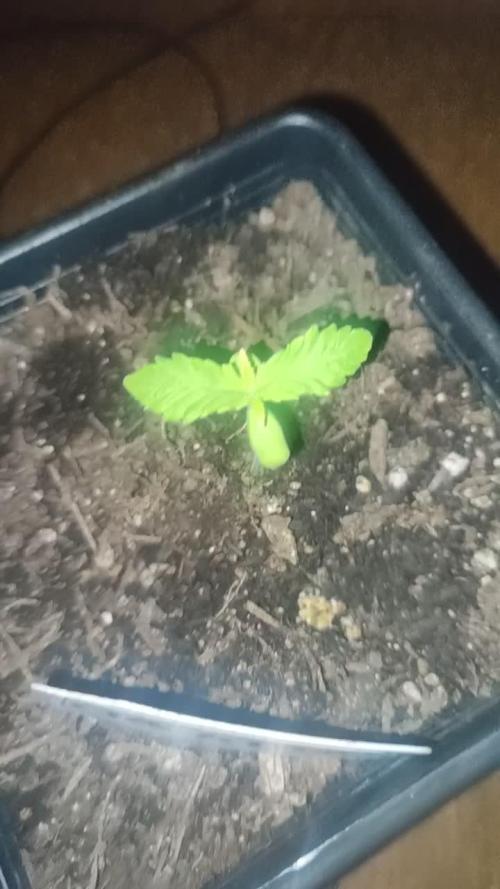
ICHch finde sie sieht aus wie letzte Woche ,bei Photos siehst du erstmal 1-2 Wochen nichts, unter der Erde bereitet sie sich auf ihr Leben vor!!!
Likes
7
Share


@DEEGREEN
Follow
DAY 26 I CHANGE MARSHYDRO TS1000 WITH 2X 150W. PLANT GROWTH LAMP / PGL150FAV

Likes
6
Share


Likes
22
Share


@PrairieFrostGrow
Follow
*
********* Week 3, April 25 to May 1, 2020 - Days 15 to 21 from germination **********
*
So we have been chugging along and doing well. Keeping the feeds in check and not given any waterings over 6.0pH before this week. By mid week when checking runoff numbers found they were flipping 7.2pH!!!!!! What is shooting up the numbers so high?? They were given some Epsom salt and not sure if they have been given too much magnesium. Wondering if it could be the pots? Watering patterns have not changed? Cut slits in the bottom of all the fabric pots to help with drainage and see if moisture is sitting in the bottom of the pot causing issues with pH???
They are doing well but not at the same time.....GSC girls seem a little show in veg growth at this stage.
Little more detail.......
April 25/20 - Day 15
- Mixed 1L of water with Vitathrive, Dual Fuel @ 1.5ml = 700ppm and 6.0pH.
- each girl given 0.5L feed.
- humidity a little low at 52% and bumping up to 65%
- light heights at 30” roughly right now.
- GSC outer edges of leaves getting a little light.
- GSC2 is forming a nice structure and new leaves are wider.
April 26/20 - Day 16
- no real growth and the girls don’t look happy.......not sure of the issue?
- mixed 2L water with Sensi CalMag @ 1.5ml. Sensyzime @ 2ml, Epsom Salt @ 1/4 tsp/L
- GSC fighting magnesium deficiency so adding Epsom Salt,
- increased light intensity a bit today.
April 27/20 - Day 17
- dry out day
- think the root zone is holding too much moisture and causing pH issue.
- cut long slits in the bottom of the pots to let moisture run out faster/easier.
- GSC has liked the increased lighting.
- all the girls got clockwise rotation today.
April 28/20 - Day 18
- Girl Scout girls given 3L watering with Vitrathrive @ 1.5ml = 100ppm and 5.1pH
- runoff numbers:
- GSC - 600ppm and 7.2pH
- GSC2 - 475ppm and 7.2pH
- pH is still too high!!!!
- leaf colours on all the girls look good😳
April 29/20 - Day 19
- more runoff numbers to look at
- Mixed 8L for each girl with Dual Fual @ 1.75ml - 325ppm and 5.0pH........each girl given this amount!!!!
- Run off numbers:
- GSC - in tray before feed was 7.2pH, brought down the pH to 7.0 and 525ppm
- GSC2 - in tray before feed was 7.2pH, brought down the pH to 7.0 and 500ppm
- now we see if the flush will help in the next couple of days.
April 30/20 - Day 20
- dry out day
- stems are looking thicker today. All nodes are separating and they are growing.......slowly though.
May 1/20 - Day 21
- dry out day again
- need to let the pots dry out in order to adjust the pH further.
- they are looking taller and happier today.
Sorry for running behind gang. Always so much to stay on top of😀........
Likes
7
Share


@Mr_nugs_lover_David
Follow
This plant has developed very nicely without any issues and so I decided to transplant the 10 plants I'll be growing with the complete biotabs organic line, I Transplanted this lady on day 39 since seed and I've prepared the 50L pot using 5 Slow release tabs, using 25g for every 5L of soil of startrex and sprinkled mycotrex in the transplant hole just a couple of grams maybe 3, and then I watered the soil once the transplant was done, I watered applying to the water 1ml per liter of orgatrex and 1g per liter of bactrex

Likes
21
Share


@darb35
Follow
Probably 2-3 weeks left, giving them nutrients almost every watering.
They started to smell really nice, very frutiy.
Hopefully this lasts after curing (:
Likes
2
Share


@Naujas
Follow
The girl has experienced some interesting changes outside this week, from +30 days to +3 nights, but it seems she is still thriving. I have done a main flower cut because I am going on vacation and will leave the girls alone for 10 days and therefore I don't want them to grow out, it all depends on the weather conditions :) good luck to everyone.

Likes
37
Share


@GODSGIFT_2005
Follow
For LIQUIDS & NUTES ******GREEN BUZZ NUTRIENTS***** organic.
Also i’m using their LIVING SOIL CULTURE in powder form!
MARSHYDRO ⛺️ has large openings on the sides which is useful for mid section groom room work. 🤩
☀️ MARSHYDRO FC 3000 LED 300W
💨MARSHYDRO 6” in-line EXTRACTOR with speed-variation knob, comes complete with ducting and carbon filter.

Likes
5
Share


Likes
3
Share

@birdmountain
Follow
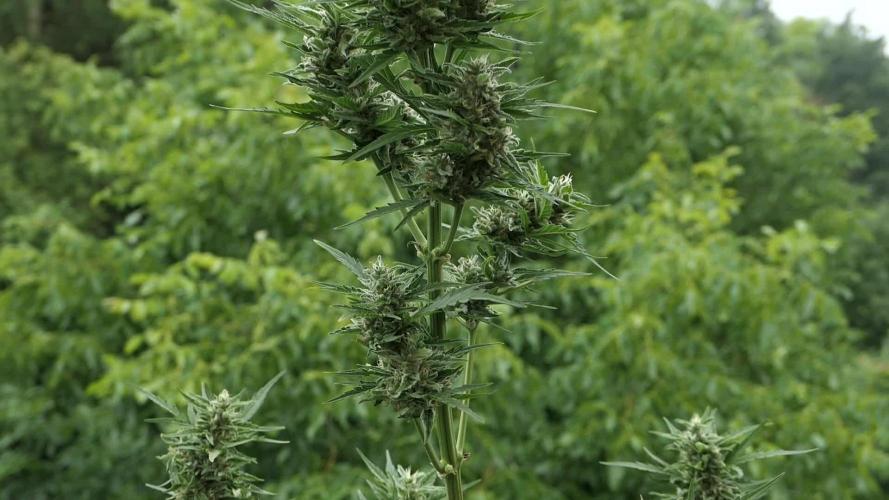
Die extrem hohe Luftfeuchtigkeit, verursacht durch die vielen Regen dieser Woche hat auch bei ihr Spuren hinterlassen. Ich musste eine daumennagelgroße Stelle aufgrund Budrot säubern. Der Ventilator lief zwar die ganze Zeit im Folienzelt, aber oszillierend, ich habe auf Dauergebläse direkt auf den Haupttrieb gestellt (Etwas ernten möchte ich schon noch.). Die Luftfeuchtigkeit war teilweise nachts bei 91%, der Ventilator kann es auf 74-81% herunterdrücken. Es sollen zwei regenreiche Tage kommen, danach solle wieder wärmer werden und damit höhere Temperaturen und auch hohe Luftfeuchtigkeit.
Ansonsten ist sie auf dem Höhepunkt der Blüte, nur die kleinen unteren Buds sind noch im Wachstum. Der Duft ist stark und sehr süßlich geworden, die Buds werden harzig.
Auch um Schimmelbildung zu minimieren habe ich die Wasserversorgung sehr eingeschränkt, sie wird von nun an auch ohne Dünger für die letzten zwei Wochen auskommen.
Wenn sie es bis zur Ernte in ca. zwei Wochen schafft, ist noch eine gute Ernte für Outdoor zu erwarten. Aber bis dahin kann viel passieren.
Wünscht mir viel Glück, ich kann es diesen Sommer gebrauchen.
---
The extremely high humidity caused by the heavy rainfall this week has also left its mark on her. I had to clean a thumbnail-sized area due to bud rot. The fan was running continuously in the foil tent, but oscillating, so I set it to continuous operation directly on the main shoot (I would still like to harvest something). The humidity was sometimes 91% at night, but the fan can reduce it to 74-81%. Two rainy days are forecast, followed by warmer weather with higher temperatures and high humidity.
Otherwise, it is at the peak of flowering, with only the small lower buds still growing. The scent has become strong and very sweet, and the buds are becoming resinous.
To minimize mold growth, I have also greatly restricted the water supply, and from now on it will have to manage without fertilizer for the last two weeks.
If it makes it to harvest in about two weeks, a good outdoor harvest is still to be expected. But a lot can happen between now and then.
Wish me luck, I can use it this summer.