Likes
Comments
Share
@AsNoriu
Follow
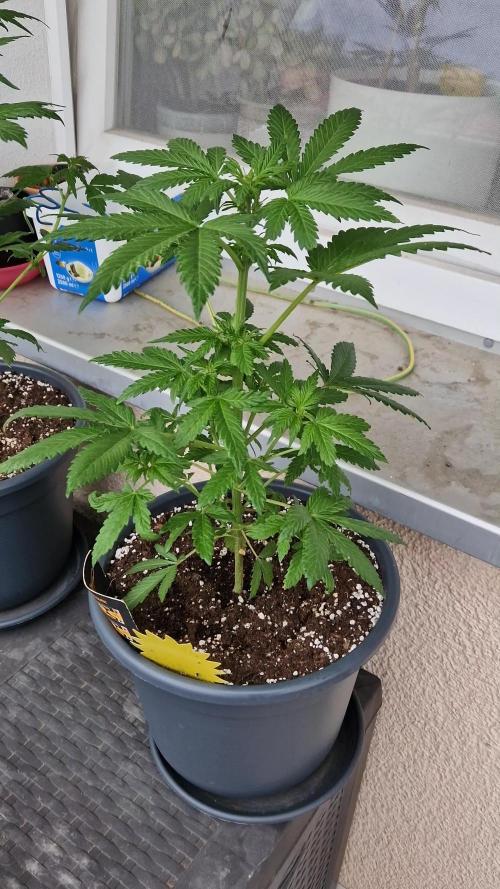
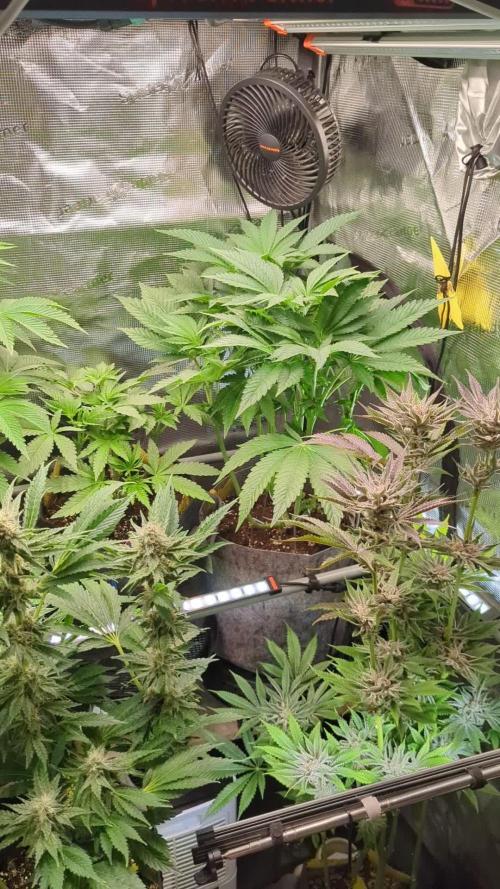
Day 9. All is running very nice. Happy with light performace a lot. Girls missed wind a bit, but i cant make it faster, because of neighbours and sound, so i took humidity dome away. TSL2000 runs 40 cm away and on 40% output. Girls get daily shower , try to keep some wet cloth to maintain humidity. Happy Growing !!!
Likes
14
Share
GMO Cookies Served with Extra Curiosity ?🍪 Drying & Trimming Report | Garlic, Gold & Preservation And once again… yes 😄 We are dividing the reports. At this point it almost became tradition. But honestly, there is simply no realistic way to fit: * harvest, * drying, * trimming, * curing, * smoke review, * fresh frozen, * washing, * strain review, * extraction plans, * terpene analysis, * and all the small details we love documenting… into one single update without turning everything into chaos. So first of all: thank you for the patience. Everything from seed until harvest was already documented in the previous reports, but for the people arriving only now, let’s quickly recap how we got here. This GMO Cookies run was grown under a 12/12 from seed cycle using the F.O.G. LED setup, with environmental management focused on healthy plant development, airflow, structure, and resin production. Throughout flower the girls received selective defoliation, LST, continuous observation, and careful feeding while expressing one of the loudest terpene profiles we have had in the room in a while. And now? Now the plants have moved beyond harvest and entered one of the most important phases of all: preservation. Because growing beautiful flowers means very little if drying and trimming are rushed afterward. So this report belongs to: * drying, * trimming, * handling, * preserving terpenes, * collecting resin, * and slowly preparing the medicine for cure. The branches that were selected for drying spent approximately: * 10 days drying, * around 60% humidity, * temperatures between 18–20°C, with the first couple of days running slightly drier in order to help remove excess surface moisture before stabilizing the environment more carefully. And honestly? The aromas coming from these flowers during drying were absolutely ridiculous. Now, to be completely honest and transparent: these were not the densest flowers from the tent. Visually they actually looked denser while still wet than they ended up feeling after drying. But what they lacked slightly in density… they completely compensated for in aroma, terpene expression, flavor potential, resin behavior, and overall personality. And honestly, that trade-off is something many growers happily accept. Because this GMO profile is LOUD. Like… walk-into-a-kitchen loud. Real GMO lovers will understand this instantly. Every trimming session felt like sitting next to a chef smashing fresh garlic cloves directly beside us. Savory. Greasy. Funky. Sharp. Warm. Almost oily-smelling. And hidden underneath all that madness: sweetness, cookie notes, earthiness, and weird creamy undertones slowly revealing themselves as the flowers cured further. This is not a shy cultivar. Not even close. Once the drying process finished, it was finally time to trim. So: gloves on. Trim station ready. Trim bin prepared. Scissors cleaned. Glass jars nearby. Grove Bags prepared. And of course… little self-medication beforehand 😄 Because trimming sessions and cannabis culture somehow always belonged together naturally. The branches were broken down carefully by hand, one by one, and every flower was trimmed individually with patience instead of speed. As always, we used pointed curved trimming scissors. And honestly, they are fantastic for this type of flower structure. Especially with fluffier or more open flowers, curved pointed scissors allow you to: * enter tighter spaces, * remove excess leaf material precisely, * preserve flower structure, * avoid crushing calyxes, * and maintain a more natural-looking final product. Straight scissors work perfectly fine too of course, but for this type of trimming, curved points genuinely feel more comfortable and surgical. And with GMO? You quickly realize precision matters. Because these flowers become sticky almost immediately. The scissors start collecting resin. The gloves become greasy. Finger hash starts forming naturally. And suddenly trimming stops being just “work” and starts becoming part of the experience itself. The first dried branches gave us: 137.1 grams. After trimming and weighing, the flowers were carefully transferred into Grove Bags, with smaller amounts also resting inside glass jars for comparison and monitoring during cure. Then we moved onto the flowers dried on the drying rack. Again: not the densest plant from the tent. And honestly, we believe temperatures played a role there. This cultivar appeared slightly more sensitive to higher temperatures than some of the others around her. Our personal feeling is that she continued pulling significant water during flower development, which likely contributed to the final structure remaining slightly more open once dry weight settled. But despite that? The quality remained absolutely beautiful. Sometimes growers become overly obsessed with density alone. But density is not everything. Aromatic expression, resin quality, effect, smoothness, flavor, and terpene complexity matter just as much — sometimes even more. And this GMO absolutely shines there. The second drying batch landed at: 224.2 grams. Again carefully bagged for preservation. And speaking of preservation: we decided to use Grove Bags for most of the flower storage. Why? Because preserving terpenes matters deeply to us. Especially with a cultivar this expressive. The idea behind Grove Bags is maintaining stable curing conditions while reducing the constant need to burp jars manually. They help regulate humidity exchange while still allowing the flowers to continue stabilizing naturally over time. Of course, glass jars still remain legendary and we still use them too. Honestly? Both methods have their place. And later during cure and smoke review, we will probably compare the differences more deeply. But for now, the priority is simple: protect the terpenes. Protect the medicine. Protect the work. Now let’s talk about something we personally love a lot: the “gold.” Or what many people simply call: kief. During trimming, tiny trichome heads naturally separated and fell through the trim bin screen. And honestly… watching that happen never gets old. At one point we jokingly started “playing the drums” Moroccan style across the trim bin while working, moving material gently across the screen and collecting the resin heads gathering underneath. And the result? Beautiful golden powder. Tiny greasy trichome heads. Pure aromatic dust from the plant itself. Eventually we pressed part of it together gently using finger warmth and pressure, creating a tiny mini temple ball. Small. Dark. Sticky. Greasy. Beautiful. The type of resin that already tells you: “This plant is going to wash beautifully later.” And yes… that curiosity is still alive and stronger than ever. Because despite everything already documented here, we still have: more than 700 grams of fresh frozen flower material waiting patiently inside the freezer. That future report is still coming. And honestly? We are incredibly excited for it. But there is no rush. That material is preserved safely and waiting for the right moment to become: * ice water hash, * solventless resin, * or whatever expression this GMO decides to offer us later. For now, this chapter belongs to drying, trimming, preservation, and preparation. Before ending this report, one more important thing: cleaning. Once trimming was finished and the room slowly emptied, it was time to clean everything thoroughly and prepare the environment for future runs. And honestly, this part matters far more than many growers realize. Between runs we strongly believe in: * deep cleaning, * sanitizing surfaces, * cleaning fans, * sterilizing tools, * removing plant residue, * using UVC if available, * using ionizers or environmental tools carefully, * and resetting the room properly. Because prevention is always easier than fighting problems later. A clean room protects future harvests. And after a run like this? The room deserved a respectful reset. Now next week? Next week we finally move deeper into: * curing, * smoke review, * terpene evolution, * flavor, * effects, * smoothness, * strain review, * and our true thoughts about GMO Cookies after spending months with this cultivar from seed until cure. And honestly… we cannot wait. Before ending, as always: Thank you. To Zamnesia. To F.O.G. To Plagron. To Lumiflora. To Grove Bags. To the platform. To the community. To the growers sharing knowledge. To the hash makers. To the flower lovers. To the silent supporters. To the curious people following this strange garlic-filled adventure 😄 To everyone spending even a few moments here with us. This GMO Cookies run truly was served with extra curiosity. And honestly? That curiosity still hasn’t disappeared yet. 🌱 📲 Don’t forget to Subscribe and follow me on Instagram and YouTube @DogDoctorOfficial for exclusive content, real-time updates, and behind-the-scenes magic. GrowDiaries Journal: https://growdiaries.com/grower/dogdoctorofficial Instagram: https://www.instagram.com/dogdoctorofficial/ YouTube: https://www.youtube.com/@dogdoctorofficial Deleted by Youtube - https://www.youtube.com/@TheDogDoctorOfficial NEW Vimeo : https://vimeo.com/dogdoctorofficial Under construction stay tuned ⸻ Explore the Gear that Powers My Grow If you’re curious about the tech I’m using, check out these links: 🔆 Lighting & Environmental Control • Future of Grow — Advanced LED lighting technology https://www.futureofgrow.com/ DISCOUNT CODE: DOG20 • Lumiflora — Under-canopy LED lighting https://lumiflorade.com/ • TrollMaster — Environmental controllers and automation gear (past collaboration) ⸻ Genetics • Zamnesia Seeds — Genetics used in this project https://www.zamnesia.com/ ⸻ 🌱 Soil, Substrates, Boosters & Root Support • Plagron — Substrates, bio mixes, and supportive products https://plagron.com/en/ ⸻ 🎒 Storage, Curing & Preservation • Grove Bags — Curing and storage solutions https://grovebags.com/ ⸻ 📸 Photography Equipment & Tools (Not sponsors, but part of my creative toolkit) • Sony A6700 • Sony full-frame macro lens + few more • Stacking photography workflow - learning • iPhone (for behind-the-scenes shots) As always, this is shared for educational purposes, aiming to spread understanding and appreciation for this plant. Let’s celebrate it responsibly and continue to learn and grow together. With true love comes happiness. Always believe in yourself, and always do things expecting nothing and with an open heart. Be a giver, and the universe will give back in ways you could never imagine. 💚 Growers love to all 💚 📸 P.S. – The Eye Behind the Lens All photos in this diary (for now — except for the ones showing the camera, which I took with an iPhone) are taken with a Sony A6700 paired with a Sony full-frame macro lens and a few more. Photography is part of the story — it’s how we share the fine textures, the glow, and the quiet details that words can’t always capture. I’ve also started experimenting with photo stacking — a technique where multiple images, each taken at a slightly different focus point, are layered together to create one perfectly sharp image from front to back. It’s not digital enhancement or AI; it’s pure photography — a way to reveal the plant’s beauty in microscopic depth, from trichome to petal. You’ll even see a few shots of "ghost me" capturing the shots — camera, lens, setup — because every grow deserves not just to be cultivated, but documented like art. FOR DISCOUNT CODES AND MORE JUST FOLLOW THE LINK https://website.beacons.ai/dogdoctorofficial NEW DISCORD - Official Server Invite Link : https://discord.gg/ksjAkA5T74
Likes
16
Share
@GrowerGaz
Follow
Just water till the end now , last feed was just water and Hesi boost .
Likes
42
Share
End of week 22: Overal it was a good run with the Shamans from @DutchPassion_Official . Didn't had mayor problems besides having to harvest them earlyer. I really wanted to flower them another 2 weeks but the weather/climate didn't allow me to. Still the buds came out decent as you can see for an early harvest. I will cure those buds for some time in my pots before they get smoked and will update how much weight I got out of the two plants. As you can see I made the bigger buds smaller. There is no use for me to keep big buds for showing off. Big buds just have big long stems in it, harder to dry and to fill your cure pots with.
Likes
98
Share
Hi all the happy people here in GrowDiaries. And hello to you who read my diary, I just want to say that I am pleased that you have chosen to check in with me and in my diary. I do this for myself and for a steady flow of my medicine. Everything you read and see in my diary is 100% honest and I will never distort or beautify anything here. I document my crops so that I can learn from my mistakes and also to look back at those different crops. I try to update with pictures every day and with text if something special has happened in the garden. This is my strainhunt for the best medicine and the beginning of my journey with cannabis and the cultivation of it. This is my second feminised cultivation ever. First, I'm just going to say something about my grow room. The room is 2.14 meters by 1.7 meters and has a ceiling height of 2 meters. It provides a floor area of ​​3.6 square meters. I use a 54 Watt Lightwawe T5 for germination and 2 Pcs 400 Watt HPS lamps for bloom. I have a channel fan that replaces the room air about 40 times an hour to get a comfortable environment in the room, the air enters a fresh air intake from the outside. The air is purified through a carbon filter to then leave the room to the rest of the basement. Then I use that heat to heat the rest of the basement. I will use 15 liter Autopots to grow with and a 100 liter water tank that supplies the pots of water and nutrition. I will grow completely organically in soil and will watercure my buds to get the best possible medicine for me. ---------------------------------------------------------------------------------------------------------------------------------------------------------------------------------------------- This new strain combines two well-received parents, Juanita la Lagrimosa (Spanish for "Juanita the Tearful") and Royal Highness, which are themselves genetic hybrids of other precursor strains: Juanita the Tearful from Queen Mother and a Mexican-Afghan blend; Royal Highness from Dance Hall and Respect 13. On and on the strains date back in agricultural time, each new variety with its own unique smell, taste, color, high and medical benefit. However, in the past decade, a goal of all this tinkering has been what some producers are starting to call “Royal Respect” with the soul of marijuana's benefits going toward both body and mind. Painkiller XL is notable for its near-equal representation of 6 percent tetrahydrocannabinol (THC) and 7 percent cannabidiol (CBD), achieved by a seed that's 70 percent sativa and 30 percent indica. While the sativa variety of cannabis is widely known for producing more of a mental, cerebral high, and indica has a reputation for contributing more toward its physical high, other factors are more important to consider: THC is the compound given most of the credit for that head high, with CBD takes the credit for marijuana's many proven medicinal benefits, which range vastly from relieving pain, anxiety, migraines, fibromyalgia and even mad cow disease to easing many of the most deleterious symptoms of AIDS, diabetes, epilepsy and Parkinson's disease. These are just a handful of the dozens of ailments marijuana is being prescribed to combat by doctors across the globe and in more than a dozen U.S. states. Cooperatives at medical marijuana dispensaries have been at the forefront of providing CBD-rich cannabis buds and oils for their patients, who undoubtedly appreciate being able to purchase the strain best-suited to ease their particular ailments. This new strain joins others rich in both CBD and THC like Euphoria, Royal Medic, Medical Mass and Danceworld that seek to actually not necessarily downplay cannabis' psychoactive effects in favor of optimizing its healing role, but instead equalize the two. According to the California-based Steep Hill Cannabis Analysis Laboratory, this equalization brings to the cannabis user not just the physically healing aspects, but also the spiritually and psychologically healing benefits as well. There are other strains with very little THC and more CBD than Painkiller XL , but rare are such splendid balances. Producers of this strain say it produces a considerable amount of pain relief, with a mild, relieving mental euphoria. With a flowering time of eight weeks, the Painkiller XL seed can produce 525 to 575 grams per plant indoors. Inside, the dried yield is 400 to 450 grams per plant. Inside, the plants average in height at about 31.5 inche (80 cm); outside, the average height is about 53 inches (135 cm), with harvest time at the end of September. THC: 9% CBD: 9% Yield Indoor: 500-550gr m2 Yield Outdoor: 500-550 grams per plant dried Height Indoor: 60 - 100 cm Height Outdoor: 120 - 150 cm Flowering time: 8 weeks Harvest month: Late September Genetic background: Juanita la Lagrimosa x Royal Highness Type Sativa: 75%; Indica: 25% Effect: Physical, clear high. ----------------------------------------------------------------------------------------------------------------------------------------------------------------- 2017-10-04. New week. I have started giving light nutes and fimed the tops of the plants. No lst and defoliation yet. Added picks and video. Girl N1 is 14 cm high, Nr 2 is 7 cm high. They are still in 1 liter pots and i wait another week to transplant them to big pots.
Likes
13
Share
@Dunk_Junk
Follow
18cm vertical growth this week. She's not very tall.... Not sure what I've done wrong. 😐 Slowing down now we are entering flowering. She is VERY bushy!!!!!! Very short internode length. I've cut the big fan leaves off the main stem to allow light to penetrate her lower leaves!!! I never usually do this, but she is so bushy they had to go.
Likes
45
Share
2nd net is up. Early bud formations are promising. holding up to the extremes pretty well, some leaves taking minor damage, but overall, she is holding up, gave her 1 night at 50F see how she would react, stressful. Not advised as it messes with her metabolism, but I want to see if it triggers any anthocyanin response. Love to see her purp up but no signs yet. Remember, For every molecule of glucose produced during photosynthesis, a plant needs to split six molecules of water. This process provides the hydrogen needed for synthesizing glucose and other organic compounds, while oxygen is released as a byproduct. Homework. If Rubisco activity is impaired and it cannot properly function or regenerate its substrate, the plant's leaves are likely to turn a pale green or lime green, a condition known as chlorosis. Essentially, Rubisco activity is highly regulated and susceptible to various environmental and metabolic factors that can cause it to become inhibited, leading to an apparent failure in RuBP regeneration due to a lack of consumption. Rubisco regeneration is intrinsically linked to nitrogen supply because Rubisco is a major sink for nitrogen in plants, typically accounting for 15% to over 25% of total leaf nitrogen. The regeneration phase itself consumes nitrogen through the synthesis of the Rubisco enzyme and associated proteins (like Rubisco activase), and overall nitrogen status heavily influences the efficiency of RuBP regeneration. RuBisCO is a very large enzyme that constitutes a significant proportion (up to 50%) of leaf soluble protein and requires large investments in nitrogen. Insufficient nitrogen supply limits the plant's ability to produce adequate amounts of RuBisCO, thereby limiting the overall capacity for photosynthesis and carbon fixation. Maintaining the optimal, slightly alkaline pH is crucial for the proper function and regeneration of Rubisco. Deviations in either direction (too high or too low) disrupt the enzyme's structure, activation state, and interaction with its substrates, leading to decreased activity and impaired RuBP regeneration. (Lime/yellowing) Structural Component: Nitrogen is an essential building block for all proteins, and the sheer abundance of the Rubisco protein makes it the single largest storage of nitrogen in the leaf. Synthesis and Activity: Adequate nitrogen supply is crucial for the synthesis and maintenance of sufficient Rubisco enzyme and Rubisco activase (Rca), the regulatory protein responsible for maintaining Rubisco's active state. Nitrogen deficiency leads to a decrease in the content and activity of both Rubisco and Rca, which in turn limits the maximum carboxylation rate, Vmax, and the rate of RuBP regeneration Jmax, thus reducing overall photosynthetic capacity. Nitrogen Storage and Remobilization: Rubisco can act as a temporary nitrogen storage protein, which is degraded to remobilize nitrogen to other growing parts of the plant, especially under conditions of nitrogen deficiency or senescence. Nitrogen Use Efficiency (NUE): The allocation of nitrogen to Rubisco is a key determinant of a plant's photosynthetic nitrogen use efficiency (PNUE). In high-nitrogen conditions, plants may accumulate a surplus of Rubisco, which may not be fully activated, leading to a lower PNUE. Optimizing the amount and activity of Rubisco relative to nitrogen availability is a target for improving crop NUE. Photorespiration and Nitrogen Metabolism: Nitrogen metabolism is also linked to the photorespiration pathway (which competes with carboxylation at the Rubisco active site), particularly in the reassimilation of ammonia released during the process. To increase RuBisCO regeneration, which refers to the process of forming the CO2 acceptor molecule Ribulose-1,5-bisphosphate (RuBP) during photosynthesis, the primary methods involve optimizing the levels and activity of Rubisco activase (Rca) and enhancing the performance of other Calvin-Benson-Bassham (CBB) cycle enzymes. Biochemical and Environmental Approaches: Optimize Rubisco Activase (Rca) activity: Rca is a crucial chaperone protein that removes inhibitory sugar phosphates, such as CA1P (2-carboxy-D-arabinitol 1-phosphate), from the Rubisco active site, thus maintaining its catalytic competence. •Ensure optimal light conditions: Rca is light-activated via the chloroplast's redox status. Adequate light intensity ensures Rca can effectively maintain Rubisco in its active, carbamylated state. •Maintain optimal temperature: Rca is highly temperature-sensitive and can become unstable at moderately high temperatures (e.g., above 35°C/95F° in many C3 plants), which decreases its ability to activate Rubisco. Maintaining temperatures within the optimal range for a specific plant species is important. •Optimize Mg2+ concentration: Mg2+ is a key cofactor for both Rubisco carbamylation and Rca activity. In the light, Mg2+ concentration in the chloroplast stroma increases, promoting activation. •Manage ATP/ADP ratio: Rca activity depends on ATP hydrolysis and is inhibited by ADP. Conditions that maintain a high ATP/ADP ratio in the chloroplast stroma favor Rca activity. Enhance Calvin-Benson-Bassham (CBB) cycle enzyme activity: The overall rate of RuBP regeneration can be limited by other enzymes in the cycle. •Increase SBPase activity: Sedoheptulose-1,7-bisphosphatase (SBPase) is a key regulatory enzyme in the regeneration pathway, and increasing its activity can enhance RuBP regeneration and overall photosynthesis. •Optimize other enzymes: Overexpression of other CBB cycle enzymes such as fructose-1,6-bisphosphate aldolase (FBA) and triose phosphate isomerase (TPI) can also help to balance the metabolic flux and improve RuBP regeneration capacity. Magnesium ions, Mg2+, are specifically required for Rubisco activation because the cation plays a critical structural and chemical role in forming the active site: A specific lysine residue in the active site must be carbamylated by a CO2 molecule to activate the enzyme. The resulting negatively charged carbamyl group then facilitates the binding of the positively charged Mg2+ion. While other divalent metal ions like Mn2+ can bind to Rubisco, they alter the enzyme's substrate specificity and lead to dramatically lower activity or a higher rate of the non-productive oxygenation reaction compared to Mg2+, making them biologically unfavorable in the context of efficient carbon fixation. The concentration of Mg2+ in the chloroplast stroma naturally increases in the light due to ion potential balancing during ATP synthesis, providing a physiological mechanism to ensure the enzyme is activated when photosynthesis is possible. At the center of the porphyrin ring, nestled within its nitrogen atoms, is a Magnesium ion (Mg2+). This magnesium ion is crucial for the function of chlorophyll, and without it, the pigment cannot effectively capture and transfer light energy. Mg acts as a cofactor: Mg2+ binds to Rubisco after an activator CO2 molecule, forming a catalytically competent complex (Enzyme-CO2-Mg2+). High light + CO2) increases demand: Under high light (60 DLI is a very high intensity, potentially saturating) and high CO2, the plant's capacity for photosynthesis is high, and thus the demand for activated Rubisco and the necessary Mg2+ cofactor increases. Mg deficiency becomes limiting: If Mg2+ is deficient under these conditions, the higher levels of Rubisco and Rubisco activase produced cannot be fully activated, leading to lower photosynthetic rates and potential photo-oxidative damage. Optimal range: Studies show that adequate Mg2+ application can enhance Rubisco activation and stabilize net photosynthetic rates under stress conditions, but the required concentration is specific to the experimental setup. Monitoring is key: The most effective approach in a controlled environment is to monitor the plant's physiological responses e.g., leaf Mg2+ concentration, photosynthetic rate, Rubisco activation state, and adjust the nutrient solution/fertilizer to maintain adequate levels, rather than supplementing a fixed "extra" amount. In practice, this means ensuring that Mg2+ is not a limiting factor in the plant's standard nutrient solution when pushing the limits with high light and CO2. Applying Mg2+ through foliar spray is beneficial to Rubisco regeneration, particularly in alleviating the negative effects of magnesium (Mg) deficiency and high-temperature stress (HTS). While Mg can be leached from soil, within the plant it is considered a mobile nutrient, particularly in the phloem. Foliar-applied Mg is quickly absorbed by the leaves and can be translocate to other plant parts, including new growth and sink organs. Foliar application of: NATURES VERY OWN MgSO4 @ 15.0g L-1 in a spray bottle. For those high-intensity workouts when 1 meal a day is just not enough! Foliar sprays are often recommended as a rapid rescue measure for existing deficiencies or as a supplement during critical growth stages, when demand for Mg is high. Application in the early morning or late evening can improve absorption and prevent leaf burn. The plant was getting a little limey yellow in the centre. Shortly thereafter, she was back in business, green mostly regenerated. The starting point [of creativity] is curiosity: pondering why the default exists in the first place. We’re driven to question defaults when we experience vuja de, the opposite of déjà vu. Déjà vu occurs when we encounter something new, but it feels as if we’ve seen it before. Vuja de is the reverse—we face something familiar, but we see it with a fresh perspective that enables us to gain new insights into old problems. Confidence is evidence... nothing more. You are confident because you have driven 10,000 times, you are confident because you have spoken 10,000 times. People think confidence is a feeling, but it's not. If you want more confidence, then you need to create evidence, take more shots, collect more data, build more experiences, take more risks; fail, confidence doesn't come first; it is the reward you get for doing the work. no one else wants to do.
Likes
Comments
Share
@Mati_86
Follow
die 3. BW ist erreicht. stretch ist zu sehen und die damen entwickeln sich...die pina colada entwickelt interessante gerüche. habe mir nen stecki geschnitten zum glück. sieht eig alles ok aus. hätte gern noch ne woche veggie gemacht aber ging net. dafür sieht es ganz ok aus...hab ja noch n paar wochen vor mir 😄 . ich gieße alle 2 tage und dünge bis zur 5 BW jedes 2 bis 3 mal gießen, aber moderate düngermenge...ec ca 1.2 bis 1.5. ich verwende mineralischen npk dünger und arbeite mit bio produkten wie wurm humus, melasse, mycorrhiza ,trichoderma und enzymen...nach erfahrung funktioniert das prima...der geschmack ist top und die menge geht auch klar... meißt verwende ich ab blütewoche 4 bis 5 von biobizz den bloom dünger. denn er hat wenig stickstoff und mehr phosphor als kalium...das braucht die pflanze zur 2. hälfte der blüte...hoffentlich gehen die temp bald runter denn es ist einfach zu heiß 😂😂 ✌️✌️✌️✌️✌️✌️
Likes
8
Share
@LAShugars
Follow
Looking healthy and happy. Going to try and give her better tent placement this week. Tents a little crowded again.
Likes
25
Share
@Rob691
Follow
D-70 : At this stage, I'm a bit.... surprised that the Desfrans are not taller thant they are. The smallest one is 35cm wich is really small for a 100% sativa strain. The tallest one is about 56cm, wich is also quiet small I think. If I compare with some other diaries, the tallest one could be in the target if we take into account that I trained them a lot during their first weeks. But the small one is almost the half she should be... There's no sign of deficency, none ! I have 420w @ 50 cm from the top, so it's not because of the light. The container is a 20L smartpot. I simply do not understand. Is it juste because of that phenotype ? Will she grow during the next 7-9 weeks untill she'll recover her late ? I Modified a bit the position of the light so the Lumatek 100w FullSpectrum on the side of the box is really pointed to the "slow" girls. We'll see if it change anything but I really doubt about it... The only lead I have is : Desfran loves HEAT and Light. The 2 smallest are on the coldest side of the box, even if it's not cold at all. But it is the side near the window...
Likes
13
Share
@testo123
Follow
For my 37th Autoflower and first try with a single plant in my tent, I am more than happy to have broken my previous record of 42g, with now 60g dry bud on this harvest. 2nd organic grow, never going back to mineral.
Likes
9
Share
Looking lovely just way to over crowded so we went out and got another little setup to remove a couple later on 💪
Likes
2
Share
@Ninjabuds
Follow
Straw lectric lemonade is one of the best plants in the tent. No surprise seeing every seed in the pack popped really well so this is the best out of 8 plants or so I’m super excited about this one I had my on this one soon as I saw it photo on NASC when it dropped a year ago or so
Likes
6
Share
Supper cropped because plant got taller than expected. Was too close to light. Tallest branches around 3 feet tall. I defoliated 2 weeks into flower. I also took clones today. Sweet gassy smell. Have light on 75% intensity since it is so close. Depending how plants respond I may just keep the intensity there.
Likes
7
Share
@NSABND
Follow
Day 57 😁👌all the queens are ok 🙏 Day 58 the queens got some fertilizer 💪😃👍 Day 59 what should i say... everything seems to fine 😃🙏👍 Day 60 the queens got some fertilizer 💪😃👍 Day 61 all queens are in good shape 😃🙏
Likes
127
Share
Another week done applying some More training Put the Ionbeam U4 inside the tent watch the unboxing video and setup! https://www.youtube.com/watch?v=B6cT9c1UfSo
Likes
20
Share
This cycle was really fun! I chopped 142 gs of wet plant. This time I’m gonna dry in the closet with all the leafs on for 4 days.. Pics of harvest are uploaded! 30 sweety grams for me and my gf ;) Taste is mellow, but I can taste the sweey sour taste tipical of SweetZZ! I grew the same strain with organic fertilizers and it tasted a little better, but this one with was fed with Hesi nutrients and it’s more strong than the organic one! Diarie continues with her sister!
Likes
5
Share
@Andres
Follow
all my ladys are fed with organic products, earthworm humus and red bird guano. I am waiting this flowers...
Likes
4
Share
we have nici branching and flowering. The plant didnt need an nutrients beacause it is in perfect soil. Still growing wider and higher, beatiful sativa plant. The smell is very exotic, like citrusy, gasy like. Mabye in 3-4 weeks we will have one plant done.
Likes
52
Share
Hi Guys, Grow Diaries for whatever reason won't allow me to upload my complete harvest video which is a real bummer because I mainly do the videos for my YouTube channel but decided to also include them on grow diaries to give other growers who might be considering growing the same strain in the future. Helps give people an idea of what to expect when they grow it. But honestly I can't be bothered to re-edit it to fit to Grow Diaries setting which I don't even know what they are.... Didn't think they had any! Maybe it's the length of my video..... 🤔! I don't know, but I like to give growers a good description of the strain and smoke review. I hate it when I go to others peoples pages to have a look at a strain I'm thinking of growing and them not having hardly any pictures that properly show you the growth stages of the plants.... Really annoying. Which is why I chose to properly document mine to give you guys or try to give you guys the best view of my grows..... If that makes any sense 😅 https://youtu.be/iYNiI75Vvkg That's the link for my channel guys, the complete King's Juice harvest review is there. Really sorry I couldn't provide a better aspect to the Harvest guys, but at least I know for next time and I will be prepared. 👍🏾