


Likes
Comments
Share


@Jays_Not_Here_Man
Follow
She was super easy to grow. After figuring out she loved to feed, I began mixing her own nutrients separately and within a week had any deficiencies in check. She kept to a regular cycle of regular feed, light feed, then straight ph’d water. This kept her healthy all throughout. No signs of disease or pests, she performed
Like a champ and ended up giving me a little over 6 oz of dense gassy buds. She took a full 10 weeks, and I probably could have given her a few more days, but she is already a very potent smoke, something that is great in the day time for me. For the price of these beans, $45 for 5 feminized seeds, I would highly recommend the 34 street seed Pink Kush strain 🇨🇦👊❤️


Likes
8
Share


@Abreuvoir
Follow
Day 35-42
Plants are making a nice comeback (d36)
Some minor defoliation around the top was done during the last few days (d32-36)
I plan on increasing DLI to 40+ during next week.
Some defoliation + LST/leaf tucking + pinching (d38)
#3 has comeback nicely and has a unique phenotype compared to the 3 others (d38)
#4 has slowed down a little bit. The soil was more dry so maybe a lack of water/nutes intake (d38)
Likes
13
Share


@Kayotic
Follow
*Started directly in Fox Farms Happy Frog, small peat pots
* All sprouted within 4 days
* Light on at 100%( doesn't dim)
*Inline fan and small fan inside tent, no carbon filter
* Still just watering with spray bottle
* Smallest is half an inch, tallest is 2 inches
* Tent currently at 72° and 44% rh

Likes
10
Share


@DNBgreen
Follow
los esquejes enraizaron rapido a los 9 dias ya tenian raices y el dia 10 fueon transplantados


Likes
226
Share


@JUNGLE_B4RNS
Follow
Hey folks ! Back with some Royal Queen Seeds genetics, lets blow out all their potential and make some monsters plants 😉
The plan is 12 plants of 1 square meter all in personal ScrOG to harvest 12 squares meter.
Light:
2 x Adjust-A-Wings Avenger
1 x 600w SuperPlant Super Red 85000 Lumens 2000K 1498nm
1 x 600w HPS Philips Son-t Green Power 95000 Lumens
Soil:
Platinium Royal Mix Premium Quality Oxygen+
with NPK 8-9-12
Nutrients:
Flush Bud, acid citric 0.6%
[Day 120]
The end is getting close, only water now, waiting for amber tric’s to start the flush if needed depending on the amount of nootz left in the pot.
- Water pH 6.5 (Cellmax pH- Bloom)
Bubble Kush 2
Fruit Spirit 2
Drain :
BBK 2: 900ppm
Fruit Spirit 2: 680ppm
- Water pH 6.5 (Cellmax pH- Bloom)
Royal Cookies
Drain : 1100ppm
[Day 122]
- Water pH 6.5 (Cellmax pH- Bloom)
Bubblegum 1 , 2
Candy Kush Express 1 , 2
Royal Gorilla 1 , 2
Bubble Kush 1
Drain :
BBK 1: 725ppm
Gorilla 2: 965ppm
Gorilla 1: 857ppm
Candy Kush 1: 900ppm
Candy Kush 2: 795ppm
BBG 1: 790ppm
BBG 2: 860ppm
[Day 124]
- Water pH 6.5 (Cellmax pH- Bloom)
Fruit Spirit 1
Drain : 900ppm
[Day 125]
Starting the flush with Royal Cookies
- Water pH 6.5 (Cellmax pH- Bloom)
Bubble Kush 2
Fruit Spirit 2
Drain :
BBK 2: 790ppm
Fruit Spirit 2: 690ppm
- Water pH 6.5 (Cellmax pH- Bloom) + Flush Bud 2ml/1l
Royal Cookies
Drain : 570ppm

Likes
34
Share


@Southwest_budders21
Follow
CandyMan (kre8 Genetics regular seeds)
Week 5 Day 35 of veg!
First one has always looked smaller not sure if it's due to that light though but could also just be a weaker Genetic 🤷♂️🏼 the other two seem to fill out quickly even after pulling most leaves off they just bounce back looking bushy in 24hrs! Two more weeks until flip 😍
Likes
32
Share


@SkunkyDog420
Follow
Hallo zusammen 🙋♂️. Die Knospen werden jeden Tag dicker und der Geruch ist einfach Hammer. Sonst gibt's nix zu berichten Sie wächst ohne Probleme 😀.
55 Blüte Tag: Habe sie heute das letzte mal gedüngt , ab Mitte nächster Woche werde ich anfangen mit Spülen

Likes
14
Share


@Fat_Olsh_Farms
Follow
Day 50. Switched from maxigro to maxibloom, plant is taking well to it.

Likes
4
Share

@GREENPHOENIX6262
Follow
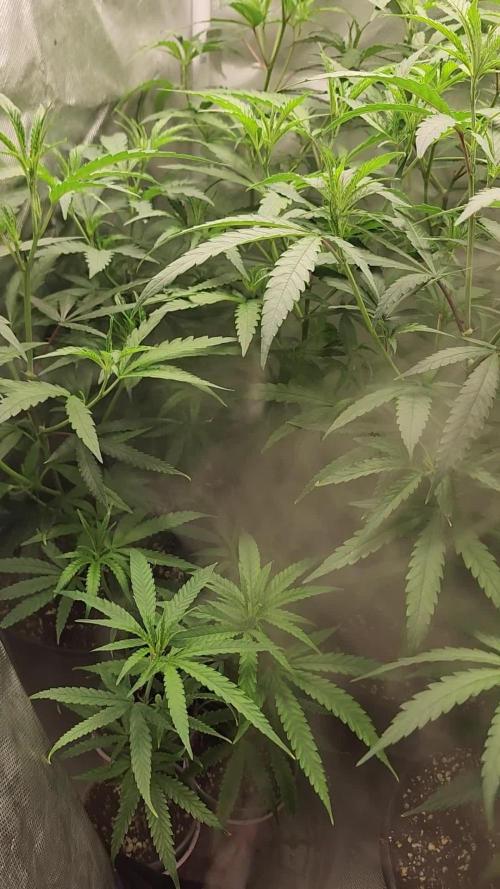
10/7 - Mother is thriving in the flower tent - this weeks update is on the clones - currently running 14 healthy cuttings in 1 gallon pots - medium charged with Worm Castings + Dry myco+ - currently running in a 2xw with a 150W light at 95% intensity - VPD 1%.

Likes
11
Share

@sanibelisl
Follow
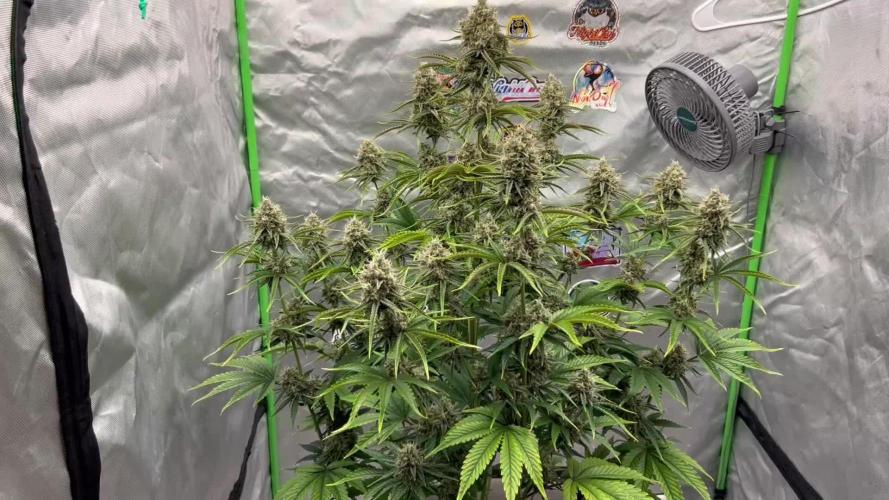
Mulberry F3 Day 70
All is good with Miss Mulberry this morning. Her flowers are in chunky mode. She responded well to increasing her lights. Her flowers resemble strawberries in shape and size with many very large flowers. Starting the pk 13/14 immediately after stretch has seemed to have a positive influence in flower formation. The increase in light intensity also has had a positive effect on flower growth. I haven’t defoliated her very much at all and if I tried hard I could probably count each leaf I removed, less than two dozen total I’m sure. I will however begin to remove a leaf or two each day until she is thinned out a bit.


Likes
24
Share


@MrHightimes
Follow
Man,
I whipped these girls into shape!
They got an amazing lolipoping~! its hard to sacrifice some of those branches but they look so much better for it and i hope it better allocates the plants resources!
Did a big defoliation that really changed the way they look!
Likes
6
Share

@420DeepGrow
Follow
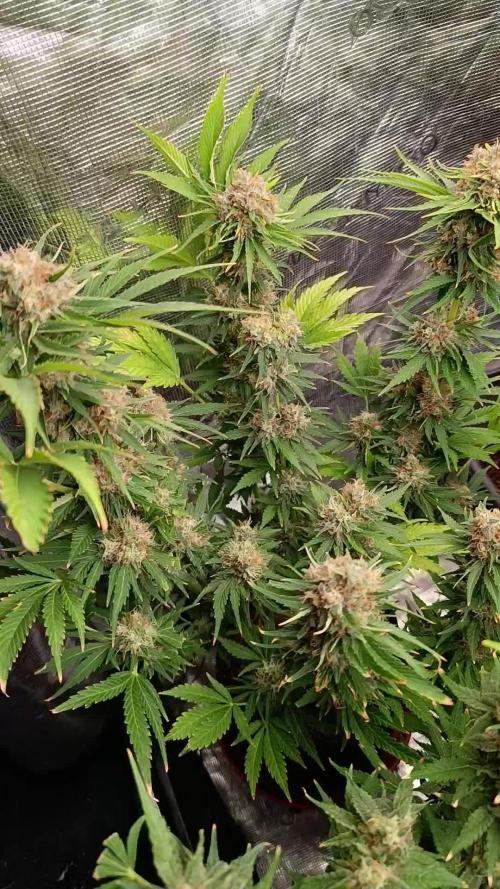
📆 Semana 8
La maduración se acentúa y los cogollos alcanzan su máxima densidad. Los tricomas pasan a lechoso con algunos ámbar y el aroma se vuelve más intenso.
La planta baja la absorción y se centra en rematar calidad y resina.
Semana clave de definición final.
Seguimos creciendo fuerte 💪!
Likes
17
Share


@Leonard_Lunte
Follow
This is my first grow, felt like now is the perfect time to start. 😅
Picture 1 - The plants will have a 24h schedule with both sun and LED light. The solution with the cloth in front of the window is only temporary, I need something thats easy to pull up as soon as the sun comes out.
My light is about 16in/37cm away from the plants, please let me know if its too close or too far away from the seedlings.
Up until this point I germinated both the seedlings using one of those 'Easy Start' Kits with Microorganisms, I then just transplanted both plants with the soil still attached to them in the final pots.
I am using Bio Bizz Light Mix for the soil. In about 1 week I will start adding the fertilizers, I will go with about half of what it says on the nutrient schedule because these are autoflowers.
Picture 2 - Day 1 - Seedling number 1 is looking healthy. (I think?)
As you can see I put a hygrometer next to it so I can monitor the Humidity and Temperature levels. I currently have a humidifier running next to the plants and humidity levels seem to be good so far. I read online between 65-80% are good at this stage.
Picture 3 - Day 1 - Seedling number 1 again. At this stage I only water around the plant and dont soak the whole pot, I read that soaking the whole pot while the plant is this tiny can overwhelme the plants. I also noticed that the leaves look kinda yellow-ish? Please let me know if thats normal.
Picture 4 - Day 1 - Seedling number 2.
I need help with this one I dont know why but he doesnt look good, from the beginning he was much slower than plant 1 and when he finally popped out he looked like he was dying, he is kind of gaining a little bit of color now again but I dont know if he will make it. If you know whats wrong with him please let me know. I hope he opens his two little leafs soon.
I still have a third seed laying around so please let me know if it'd be smarter to just abandone number 2 and germinate a new seed. Thanks for reading this far and I'll update as frequent as possible.
Day 1 Issues Update - After taking a look at seedling number 2 again and seeing that after all this time it still didnt show any progress, I noticed that one of the two first leaves is actually cut. I mustve damaged it while inspecting earlier because I, (stupid newbie move), touched it too much or whatever. Now germinating my last seed in hopes that all goes well.
Since I dont have anymore 'Easy Start' kits im going to try a different germination method, I will put the seed in a cup of water with a piece of cardboard on top of it overnight (12-15h) and then plant it into the moist soil afterwards. 😄
Picture 5 - Day 2 - Seedling 1 is still doing fine. In the morning the temperatures went up a lot (29 Celsius), due to the sun shining a lot through the window, and the seedling was showing slight signs of heat stress (Leafs going up and small yellow-is tint), I then opened the window and the Temperatures quickly dropped back to normal (20-23 Celsius). Moisture levels seem lower than yesterday and Im not sure why (probably because of the heat and opening the window?), still at a solid 62% tho so Im not too bothered.
Picture 6 - Day 2 - Since my last Seedling 2 died I germinated another one, I put it in a glass of water over night (~15h) and then planted it into the soil. Hopefully it'll pop out in the next few days... 💪
Picture 7 - Day 3 - Everything looking good with Seedling 1, I kinda felt like it was sort of streching too much instead of growing its leaves, so I put the light closer to it. I will water again tomorrow, the last time I watered was when I put it in the soil 3 Days ago.
Picture 8 - Day 3 - The new Seedling 2 is still germinating and will hopefully pop out of the soil in the next few days.
Picture 9 - Day 4 - Seedling 1 still going strong, leaves are praying but I read that that is a good sign. I watered both pots again today with just Ph-water, will add fertilizer in about 3 days for seedling 1.
Seedling 2 is still germinating, will post a new picture as soon as it pops out of the soil. 😉
Picture 10 - Day 5 - Seedling 1 looks healthy, but is going kinda slow. Turns out I had the light far too high... 😐 Pulled it as much down as I could now and its already growing better! Main indicator for not enough light was the stretching and the thin leaves. I will probably have to invest into a bigger setup as soon as flowering hits. ✊
Picture 11 - Day 6 - Seedling 1 leaves are getting bigger and the next set is already on the way.
Picture 12 - Day 6 - After 4 days germination, seedling 2.1 finally popped out the soil! 👏
Picture 13 - Day 7 - Seedling 1 leaves seem a bit curled up, probably because of the hot sun this morning, Im not too worried tho. Will water with nutrients the first time tomorrow.
Picture 14 - Day 7 - Seedling 2.1 looking fine, soil was pretty dry so I watered it a bit with ph water.
Likes
23
Share


@Chubbs
Follow
420 Fastbuds Week 9
Gorilla Zkittlez Auto
What up everyone it's week 9 for these 2 wonderful girls. They're getting super close to being finished. The smell I wish I could package and save its so delightful and nice. The flowers are fattening up great. I'd guess maybe one more week tops. I'm already seeing mostly cloudy heads on the trichomes. Hopefully be in time for a little Christmas meds.
All in all Happy Growing
Likes
6
Share

@Wondrej
Follow
One love, growers 🇯🇲💚
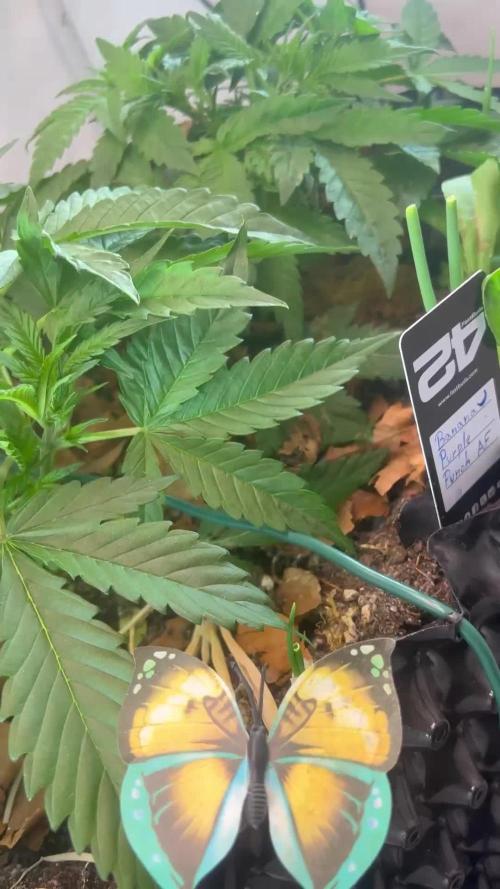
So today we have the first day of Week 4(1.12.25)of vegetation, counting from the first cotyledon leaf.
The girls have recovered quite well since Thursday (27.11.25) when they were topped and bent, and we are going strong without flipping from the stress.
TBH, try putting other autoflowers through that much stress in the middle of Week 3 compared to Fast Buds without flipping into flower 🤲🏻
BIG UP to their genetics. They are really changing the game.
What do yall think of the girls, growmies? Any tips? Btw, the fertrometr finally shows the living soil is OK, it took those little rascals long enough to make it 🐛
2.12.2025 They look so freakin beatifull i needed to shot some random short. Again and again shout out to Fast Buds team. See ya later growmies👽
5.12.2025 🚀 Quick Vibe Check (Day 25)
Just a quick update today, growmies! 💚
It's December 5th, and the girls are cruising into Day 25 of vegetation. What can I say? They look absolutely perfect! 💪 They are beautifully bushy and full of life.
Now the focus is just on keeping that canopy nice and level so every tip catches maximum light and we find that sweet spot.
Everything is running smoothly, catch you at the next update in week 5. Sending everyone one love and happy growing! 🙏
Likes
7
Share


@420Germany
Follow
Just before harvest. Pictures in about a week or 2 when product is dry and my eyes are healed (I am going to have Eye Surgery tomorror)
Wettrimmed !!!! 1089 Gram !!!
Likes
12
Share


@AltexGrower
Follow
Now Flora!! 💐💐
They are healthy and have enough buds for abundant flowering!!
Processing
Likes
3
Share


@GanjaFarmerGrow
Follow
Dispite the bad air and heat that she took..
she is starting to recover...
I hope she heals...
She has started to produce some flowers...
fingers crossed.. 🙏

Likes
2
Share

@WalachianGrowinDiary
Follow
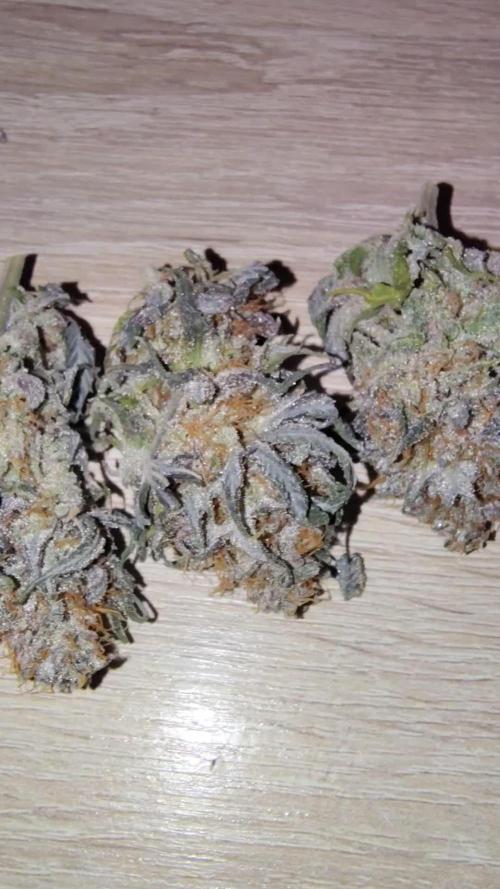
Great Strain and Pheno for low height tents. Citruses oranges and Gass terpZ.
