



@Polygus
Follow
A big hello to all the cannabis growing gardeners...and all the other visitors that came across my grow journal.
I'm a little bit late with starting this grow because the plants will finish around end of december or so, so i'm basically counting on a warm december :)
This grow was supposed to start earlier, and I did germinate 11 seeds last month but only three of the lot sprouted out, it was totally my fault and i did abort that grow so we could start with a clean slate and at least four plants....so here we are ;)
All three seeds popped after 36 hours in a glass of water, but thanks to my thick awkward fingers only two seedlings came out after planting in rockwool...my fingers are killers to most of my little sprouts :/
We were gifted Moby Dick seeds by Romy from Seeds Mafia to take part in the competition they are running.
Thank you Seeds Mafia, for giving me the opportunity try out your stock. It's the first time we get to grow Seeds Mafia cultivar.
https://seedsmafia.com/en/feminized-cannabis-seeds/moby-dick-feminized.html
This whole grow's main sponsor is Spider Farmer and as such I added a video of unpacking one of the parcels I got from SF.
Here are the links for people interested in the Spider Farmer products that are presented in the videos:
https://www.spider-farmer.com/products/spider-farmer-30w-uv-led-grow-light-bar/
https://www.spider-farmer.com/products/spider-farmer-30x-60x-jewelers-loupe-magnifier-for-led-light/
A big thank you to Jessie and the whole Spider Farmer crew for supporting my effort to grow the best cannabis I can.
Let's get this started already!
Thank you for your visit, please leave a like and hope to see you beck here in about a week.


@Budz_Bunny
Follow
Week 4: Continued Growth and Training
Hello dear Weed friends,
welcome to my fourth weekly report on my exciting grow with four different strains: Lemon Gelato, Orange Sherbert, Apple Fritter and Bruce Banner.
This week I learned a lot and continued to care for and promote my plants.
I took the following steps:
I applied LST (Low Stress Training) to all plants to improve their shape and let more light reach the lower branches.
I topped the Apple Fritter several times, as it grows the fastest . I hope that this will result in many thick buds.
I topped the other three strains only on the main stem to allow them more side branches.
The plants look good, even though I sometimes doubt whether I am doing everything right. But I am confident that they will be even stronger and more beautiful in 1-2 weeks.
My next goal is to repot the plants in larger pots in 2 weeks and attach a net in the tent. This should help me distribute the plants evenly and use the space optimally. I also want to avoid having such a mess in the tent as last time. That made harvesting very difficult.
Another highlight this week was buying a new lamp: the Lumatek 300 Watt Pro Edition. This lamp is simply fantastic! It has a great illumination, a high efficiency and a cool look. It looks like a UFO! I am very happy with this investment and gave my old lamp to my brother. So it stays in the family.
I water my plants as needed with 1 liter of water each, to which I add 100 percent of the recommended fertilizer schedule. I use all options of the fertilizer, which you can read in the fertilizer directory.
I would also like to show you my timelapse video that I have been making since the first week. The video shows you how my plants have changed from week to week. It is really impressive to see how they have grown. I will update the video every four weeks and show you the latest video.
I hope you enjoyed my report and are looking forward to the next weeks. See you soon!


@HisHope
Follow
5/7
Week 3!
This is our first CBD Crack grown in coco and she is showing wonderful color, form, and size for only 14 days up.
Very happy with this so far even if the delay does present some issues.
She just so pretty!
5/9
She is just exploding, a full inch of height and girth in one day.
No hairs yet, increasing nuets tomorrow 20%.
5/10
Nuets increased
Raised her base up to get better light, think she has fully acclimated by now.
5/11
She has grown another node and another inch in one day!
The reward for what we did yesterday, she wanted more light and nuets.
Will leave things as they are for now.
5/12
Just call her "Inch a Day" a that is her growth rate.
Training her today, Pony Tailing LST
First hairs visible so folding in a light dose of Bloom
5/13
10 inches wow
First cycle of pony tailing was productive though she still tacked on over an inch in 24 hrs.
Secondary growth tips grew a lot during the process and expect tonight to be even more productive.
Node spacing is about one inch so perfect now


@GutThatDank
Follow
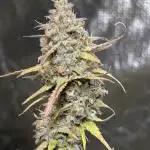
Continued LST throughout the week and starting to shape nicely. Girls are starting to explode and are really healthy. Both girls started to show sex at the very end of the week.



@smoking_hills9
Follow
Almost ready, want to give 1 more week for some brown trichomes. Otherwise it's ready. Tones of super nice dence crystal buds. Great genetics. Last few times watering with raw cane molasses or just water.


@Ganjagrandaddy
Follow
DAY 21 FLOWERING: Well it had to happen eventually!!! . I knew it would come to this point.....I had to be brutal and practical as I evicted the Gorilla cookies and the mutant Northern light to a different space...
I now have the #1 Northern lights and the Grandaddys Mimosa directly under the XS1500 to really develop them both to the best I can. The light has done a great job developing all 5 to this point and I do think it could have finished them all at a push but , I think seeing how it can grow 2 auto plants in a 2x2 space will be worth the change of plan. I am impressed with this little light and never expected such a growth rate . I really would love to test their new p4000 to see what that beast can do.
The northern lights has really worked hard this week on her bud structuring , she looks like she will be stacking her colas on each limb , just the way we like em in the space I have. I did take a little more weak lower growth out of her to focus on the stronger mains as we have hit the point of no more defol . She wont regrow leaf after this point now so the ones remaining will be all she has to power the photosynthesis during flowering. Sugar leaves do not do the same work as the fan leaves and with them being autos , I feel we need the extra boost more than in a photoperiod run. She looks like stretch has finished now too so her size is nice and stocky so she wont need to transfer nutes too far from the roots either.
Grandaddys mimosa is also really developing some nice looking golf ball buds all over. She looks like she will be a long cola girl too which is perfect to keep the canopy and light distribution as even as possible with the Northern lights too. She smells a little fruity already and the hint of her Mimosa lemon father is also really evident. So far so good .
The 2 Gorilla cookies and the other northern lights are all looking great after being grown under this light and I will include their harvest data in the diary at the end to avoid the diary going haywire. All in all this is going great now and continues to impress me with the capability of this unit. Come on #viparspectra , send me a p4000. Lol
Be safe and well growmies.


@madlangs
Follow
All going great and growing fast. No problems
5.10.23
Defoliation on gelato and gorilla punch.
5.10.23
Turned 300w light on 50% power
8.10.23
Lst and defoliated gelato and gorilla punch. Just a bit of defoliation for lemon pie
Gelato 25cm
Gorilla punch 22cm
Lemon pie 20cm


@Northern_Ent
Follow
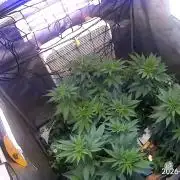
July 6: looking good starting a new week. In a few days out I’ll add another scrog layer to space out the 16 colas.
July 7: draped a piece of scrog netting across the plant and exposed the growth tips while tucking in the fan leaves. Net is not tied down as I realize it doesn’t need to be. Will add another final scrog net in about two weeks. Hot weather forecast for next two weeks which is pretty much perfect timing. 👍👍
July 10: hot last three days (32 C) with a super high overnight low last night of nearly 20 C.
Added a second scrog layer to separate out the growth tips a bit further. Adding loose scrog net layers seems to be working quite well while maintaining the easy portability that I need to chase sunlight hours in my yard.
July 12: made it through the heat wave and now back to ideal cannabis temperatures. 👍. She looks really good this morning.
#seedsman420growoff
#seedsmanseeds



@Ultraviolet_
Follow
Remember that, however you are played, or by whom, your soul is in your keeping alone. Even though those who presume to play you be kings or men of power, when you stand before God, you cannot say, 'But I was told by others to do thus,' or that virtue was not convenient at the time. This will not suffice. Remember that.
Day:18
84°F and 65% RH (VPD) for the vegetative stage. Approximately 1.15kPa(assuming leaf temperature is about 2°F cooler than the air), which falls right into the ideal vegetative sweet spot (0.8kPa to 1.2kPa). At 1.15kPa, plants can draw water and nutrients efficiently without risking stress or wilting. It keeps the leaf pores (stomata) open, allowing for ideal carbon dioxide intake and maximizing vegetative growth. VPD is determined by the leaf's temperature, not just the ambient air. Because leaves usually run 1° to 3°F cooler than room air under bright grow lights, my actual VPD will be slightly lower, closer to the 1.0kPa mark. As she transitions from vegetative growth to flowering, one can gradually lower the humidity (to around 45–60%) and drop temperatures slightly to prevent disease from settling inside dense buds when they appear.
Night:6
At 70°F and 60% relative humidity, Vapor Pressure Deficit (VPD) is 0.86 kPa. This is right on the cusp of whats optimal for the vegetative stage. During the nighttime, plants generally close their stomata and undergo cellular respiration rather than photosynthesis. Transpiration slows to a near stop, making VPD less critical at night than during the day. However, maintaining a nighttime VPD between 0.8 and 1.0 kPa is highly beneficial in that it ensures the air is dry enough to prevent powdery mildew or bud rot, but moist enough to keep the plant from undergoing unnecessary stress. This range keeps the environment comfortable for cellular processes and prevents large atmospheric swings. Keeping it all flowing.
(Not pushing them yet, these are photoperiods)
The optimal soil (root zone) temperature for cellular root respiration and nutrient uptake in cannabis is between 68F & 72F This narrow range balances biological energy production (cellular respiration) with the dissolved oxygen levels in the soil, maximizing plant growth and health. Warmer soils hold significantly less dissolved oxygen. When soil temperature exceeds 74F oxygen depletion occurs, inhibiting cellular respiration almost entirely, At 68-72F root cells generate optimal adenosine triphosphate (ATP) via respiration to power root-tip elongation and the active transport of water and nutrients.
Too Hot (Above 78F) Root respiration increases, demanding more oxygen, while the water's oxygen-carrying capacity drops. This creates a prime environment for anaerobic pathogens and Pythium (root rot).
Too Cold (Below 60F) Root metabolism and cellular respiration slow to a crawl. This severely impairs nutrient and water absorption, leading to yellowing, wilting, and phosphorus deficiencies.
A lot depends on whether it's automatic or photoperiod; with photoperiod, there is not as much of a need to push "hard" as the real countdown only begins once the flower is initiated. Automatics, on the other hand, the chronological "clock" begins ticking the moment the seed germinates. It is of critical importance that the seedling growth gets off to the races, understanding that early growth is like compound interest, which will pay off come harvest. This reality is why getting autoflowers "off to the races" early on yields such exponential benefits. The "compound interest" is directly related to the surface area of the leaves. Larger, faster-growing seedlings process more light and build bigger root networks early on, which translates into an explosion of vertical and lateral growth during their short vegetative window.
The margins for error are so thin with autoflowers; this early-stage momentum depends on several critical practices. Seedlings exposed to increased atmospheric CO2 levels early in life will develop at an increased rate. To effectively "extend" or optimize the capacity of Photosystem II (PSII) for increased photosynthetic efficiency. In standard oxygenic photosynthesis, Photosystem II (PSII) is naturally limited to the red-light spectrum, peaking at 680nm. Extending its light-harvesting capacity past 700nm into the far-red region requires bypassing the natural limits of standard chlorophyll a. Adding 730 nm (far-red) LEDs alongside standard red/blue lights has been shown to increase canopy photosynthesis by 20–30% in several crops by acting synergistically with shorter wavelengths. However, the limitation is that excessive, pure IR/Far-red light (without accompanying red light) can trigger the "shade avoidance response," causing plants to grow tall, weak, and spindly rather than robust. Utilizing infrared light (specifically the 700-750 nm far-red range) is a viable method to boost photosynthetic efficiency. It acts as a bridge to allow PSII to utilize a broader spectrum of light, breaking the traditional 700 nm barrier. UVR8-mediated signaling (often in conjunction with CRY proteins) triggers protective mechanisms that maintain the stability of the photosynthetic apparatus (including LHCII and reaction center proteins), thus ensuring that the efficiency of Photosystem II remains higher in UV-B-exposed plants compared to plants lacking this receptor. ΦPSII indictates the rate of electron transfer from water to plastoquinone, which drives the production of ATP and NADPH. There is a close link between ΦPSII and the true rate of CO2 fixation (Φ*co2).
ETR stands for Electron Transport Rate. It measures the speed at which electrons are moved through the thylakoid membranes in a plant's chloroplasts during the light-dependent reactions of photosynthesis. Infrared light (particularly Near-Infrared or NIR) improves cellular energy by interacting directly with the electron transport chain (ETC) in mitochondria. This process boosts adenosine triphosphate production, which acts as a metabolic coefficient multiplier by accelerating enzyme activity dramatically.
Extend then multiply.
Far-Red photons interact with plant photoreceptors to accelerate the plant’s biological "clock" or trigger a shade-avoidance response. Autoflowers don't use the plant's biological clock, although the IR will initiate a shade avoidance and make them stretchy. You can just add equal measures of 660nm-680nm to negate the shade avoidance effect. Replacing nights' "darkness" with a combination of IR+ and 660nm. Because autoflowers don't require a dark period to flower, many growers just blast them with light. 18/6 24/0. However, this ignores the plant's metabolic rhythms, where daytime photosynthesis (light reactions) must be perfectly balanced with nighttime carbon fixation and assimilation (Calvin cycle) to avoid bottlenecking plant development. Cellular respiration is a 24/7 process, but it can only function while the plant has the free oxidative capacity to do so. A 100% photosynthetically active leaf cannot perform cellular respiration. The viral trend of defoliation of every leaf that isn't "getting enough light" is of great detriment overall, putting 100% of the cellular respiratory "workload" and responsibility on the 0/4/6 hours of darkness in sub-optimal conditions for enzymatic activity. Photosynthesis captures nearly 100% of the initial energy as carbon, while cellular respiration is the process that unlocks 90% of that captured energy into usable ATP so the plant can use it. Respiration is considered roughly 30% to 40% efficient. It captures enough of the potential energy in glucose to synthesize around 30 to 38 ATP molecules per glucose molecule. The remaining 60% to 70% of the energy in the sugar is not captured in ATP; instead, it naturally escapes into the environment as heat, which helps regulate plant temperature. In plants, the primary enzymes of the Electron Transport Chain (ETC) and the ATP synthase complexes are typically adapted to function optimally in warmer temperatures (roughly 25°C to 35°C depending on the specific plant strain). As temperatures rise within this physiological range, molecular collisions increase, speeding up respiration and ATP production. The cannabis plant has a branched respiratory pathway. During heat or cold stress, plants activate Alternative Oxidase (AOX). AOX burns sugars to dissipate energy as heat rather than coupling it to ATP production. This pathway actually functions optimally at elevated temperatures to help protect the cell from the damaging build-up of Reactive Oxygen Species (ROS) during heat stress. Enzyme activity generally scales with heat; there is a strict biological limit. If canopy temperatures in a grow room exceed 40°C, the enzymes and their supporting lipid membranes lose stability. Not saying you need to go crazy, just optimize nights the same as we optimize days.
Phosphorus is the driving force behind early seedling development. It acts as the "energy hub" of the plant, directly driving cell division, robust root growth, and the creation of DNA. Without an adequate, easily accessible supply early on, the plant's overall growth potential and final yield can suffer permanently.
E=MC2 looks like a simple multiplication problem; it describes a fundamental physical truth: mass and energy are the same thing. The equation doesn't just calculate a value; it reveals that mass is effectively "congealed" energy. Energy is just numbers. Energy isn't a physical "substance" you can hold or touch. It is essentially an abstract, calculated number that we assign to a system to predict how it will change, interact, or move. A numerical label we attach to matter to track how it behaves. Because the universe runs on laws of symmetry (specifically, that the laws of physics don't change over time), a single global number must be conserved. We call that number "energy".
We don't grow; we facilitate energy conversion.
How well a seedling grows is essentially down to how much knowledge one can acquire to increase the level of conversion to occur. Applying knowledge effectively requires intuition, which comes from hands-on experience. A seasoned stoner learns to read subtle signs—like a slight change in leaf turgor (stiffness), subtle color shifts, or the specific texture of the soil—before a textbook diagnosis can be made. Ultimately, growing is the application of botanical science blended with active observation. Knowledge dictates your potential, but adaptability and attentiveness to the plant's immediate environment determine your results.
1.618 nature mathematically optimizes quantum energy transfer and light absorption efficiency within the photosynthetic machinery, as it naturally dictates energy scaling hierarchies and resonance dynamics. External vibration or electromagnetic wave that perfectly matches a plant's natural frequency directly influences plant growth. Low-frequency sound waves and targeted electromagnetic fields stimulate cellular processes and boost photosynthetic efficiency
Does it produce better yields?
How long is a piece of string? As long as you cut it. But isssss the juice worth the squeeze? The quantum framework of the IVM seems to think so. Good enough for the quantum firmware, good enough for the DNA software. Genetics are not dictated; they are expressed; the rate of that expression is dictated by the environment in which growth occurs.
Quantum Coherence in Photosynthesis occurs When a photon of sunlight strikes a leaf, the energy it carries must travel to a reaction center to be converted into chemical energy. This process operates at nearly 100% efficiency. If the energy moved in a traditional "bunching" or random hopping manner, a large portion of it would be lost as heat. Instead, plants utilize quantum superposition. The energy particle (exciton) doesn't just take one path; it exists in a wave state and explores multiple pathways simultaneously. It essentially "chooses" the most efficient route to the reaction center simultaneously. Research shows that molecular vibrations and the specific network arrangements of chlorophyll molecules (like the naturally evolved Chlorophyll A & B ratios) actively protect against energy overflow, optimizing light capture across different light intensities. Enzymes are the biological catalysts that speed up chemical reactions within a plant's cells, allowing them to grow, metabolize, and repair. Rather than relying solely on the classical kinetic energy of molecules colliding, plants use quantum tunneling. Subatomic particles like electrons and protons (hydrogen ions) can literally "teleport" through energy barriers that they normally wouldn’t have the energy to climb over. This makes vital metabolic reactions happen far faster than classical physics could ever explain.
Chloryphyll b has peak absorption at 460nm (Blue) and at 647nm(Red). If we take the blue peak wavelength 460nm and a UV-B, UVR8 peak absorption wavelength 285nm, Tryptophan-285 (W285) Sensing protein. 460/285=1.618 Φ If we take chlorypyhll b's Red absorption peak 647nm and a UV-A of 400nm, we get 647/400=1.618 Φ. "Structure of light". The cryptochrome photoreceptor (CRY) is a UV-A/blue light receptor that shares this dual sensitivity with several other biological structures and functions, including significant sequence similarity and a common evolutionary ancestor with DNA photolyase enzymes. These are light-activated enzymes that use blue/UV-A light to repair DNA damage caused by UV-B radiation in plants. Synergistic. But Shhh, it's a secret.
Effective quantum efficiency of photosystem II, often denoted as ΦPSII, represents the proportion of light absorbed by Photosystem II (ΦPSII) that is actually used in photosynthetic electron transport. It is a key indicator of how efficiently a plant is using light for photosynthesis, as opposed to losing it as heat or fluorescence. ΦPSII (effective quantum yield of photosystem II) functions primarily as a "multiplier" (a coefficient of efficiency) rather than an additive factor when estimating the overall photosynthetic electron transport rate (ETR). Multipliers are considered far more beneficial than additions because they generate exponential growth, leverage existing resources to their full potential, and create sustainable, self-multiplying capacity, rather than just incremental, linear increases. This fascinating observation is rooted in the intersection of subatomic geometry, fractal scaling, and quantum dynamics. In specific molecular arrangements—such as in conjugated polymer networks or biomolecular architectures—the Golden Ratio (PHI) naturally dictates energy scaling hierarchies and resonance dynamics. Mathematically tied to the fine-structure constant, which defines the strength of the electromagnetic interaction. The Golden Ratio can be mapped geometrically as the Golden Angle (137.5 degrees) in atomic structures, linking the charge of the electron to fundamental quantum constants like Planck's constant.
Electromagnetic.
The Golden Angle (137.5): This angle is derived from the Golden Ratio (1.618). It is the smaller of two angles created when a circle is divided such that the ratio of the arcs equals the Golden Ratio.


@MadeInGermany
Follow
Hey guys .
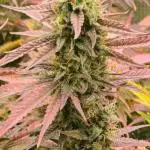
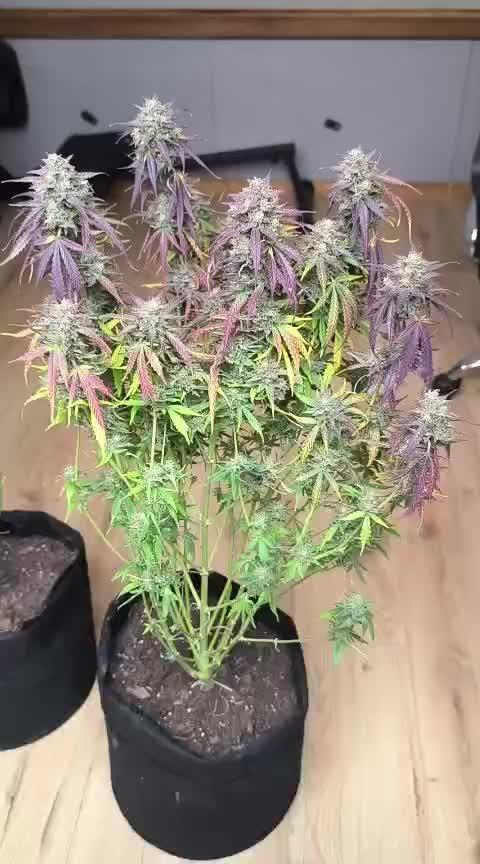
A wonderful week goes by with a super growth :-).
After I topped it for the first time last week, it recovered very quickly and showed great growth.
I braided the shoots of Dr Grinspoon under the hooks with LST every day.
It still looks a bit uncoordinated and funny but that will change as soon as it is allowed to grow in height while it is in bloom :-).
Depending on how long the other women in the tent still need their vegiphase, I then switch to 12/12 hours for flowering.
I think it will be ready in the next 7-14 days 👍.
This week it was poured 3 times with 1 l each time
(for nutrients, see table above).
The tent was cleaned and the health of all women was checked :-).
After the photos she was sprayed again with neem oil so that the last little tripse disappeared.
Even if you can't see any more trips I will spray it one last time next week to make sure :-).
I wish you all a happy new year 2022 ☺️.
Stay healthy 🙏🏻
👇🏼👇🏼👇🏼👇🏼👇🏼👇🏼👇🏼👇🏼👇🏼👇🏼👇🏼👇🏼
You can buy this Nutrients at :
https://greenbuzzliquids.com/en/shop/
With the discount code: Made_in_Germany you get a discount of 15% on all products from an order value of 100 euros.
👇🏼👇🏼👇🏼👇🏼👇🏼👇🏼👇🏼👇🏼👇🏼👇🏼👇🏼👇🏼
You can buy this strain at :
https://www.barneysfarm.com/dr-grinspoon-5
Water 💧 💧💧
Osmosis water mixed with normal water (24 hours stale that the chlorine evaporates) to 0.2 EC. Add Cal / Mag to 0.4 Ec Ph with Organic Ph - to 5.8 - 6.4
MadeInGermany

@Sensemillia
Follow
Installed my new suplimental lights. 440 en 660 nm.
Harvested the other 2.
Hang them all up in tent.
Aiming for low 60% humdity and around 19 - 20 C.
No oscilating fans active, only 2 exhaust fans on low setting.

shorts_status_processing


@Twizz
Follow
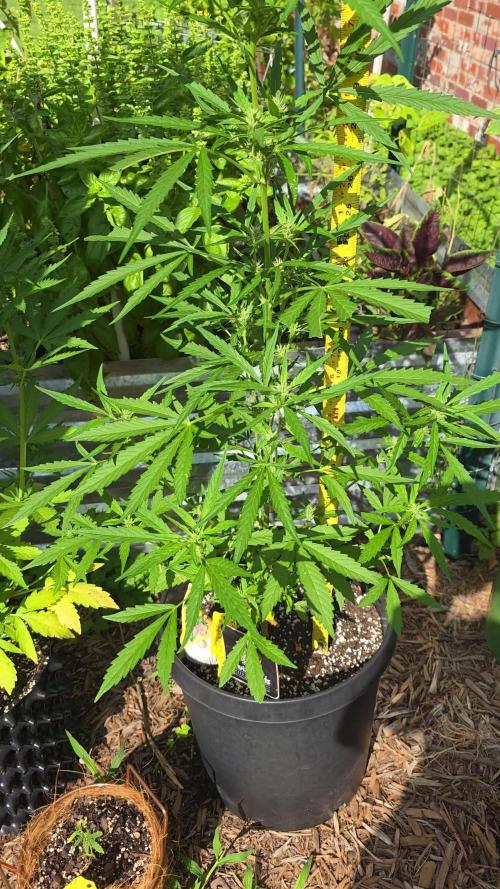
Weather has been rainy and windy so she has been living under a shelter at nights and most days. The climate is getting moisty here so i decides to remove some fanleafs again to keep a good airflow. Buds are getting bigger and they make me wanna sing
' I like big buds and i can not lie..'

@Natrona
Follow
Divine Seeds Auto Contest Candy Outside Grow
👉Sponsored Grow👈
W7F3
7/13-19
The weather was rainy with thunderstorms early in the week becoming hot, humid and overcast. I only got to fertilize once this week and thankfully with all the rain we’ve had she doesn’t show any deficiencies. I fertilized with I49 grow 1 tbsp/gal & 2 tbsp I49 Flower.
With the extreme heat and rain, my auto Candy grew 11 inches and is now 39 inches tall. She had a some minor bug damage last week but no worries. She is standing next to a plant with powdery mildew and demonstrates resistance to fungal diseases. ( I did move her further away to be safe and Im spraying the other plant wth H2O2 solution.
In the background noise on the video is Cicadas. When they hatch, they crawl onto a tree or plant and molt. The adult has wings. This is the empty body casing. This year there are some but not a lot as in many years of their 17-year cycle.
As always, thank you all for stopping by, for the likes and most of all growers’ love and support.
Stay green, growers love 💚🌿
💫Natrona💫


@Hawkbo
Follow
Everything is healthy as it could be right now. The heater made such a big difference I couldn't be happier with how these are growing at this point hopefully it keeps up. Been removing fan leaves here and there but I'm trying to hold off until day 21 and I might give them all a pretty heavy leaf strip. I read something saying defoliate heavy on day 21 and 42 to increase yields so I might give that a shot. These lights are the real deal I got a meter and even tho I barely know how to read it I'm getting much better canopy penetration and the flexibility of having 4 separate units instead of 2 is going to come in handy. Soon I will put all the shorter plants on one side and tall on the other and adjust the lights accordingly. If anyone is interested in these lights or a tent or green buzz liquids or rain science grow bags you can use the code bangdang for 10%. Pretty much everything I use will be 10% off with the code so if you want to grow the bangdang use the code. This Corona virus has hit around here and I just want to remind everyone again to do their part and try to stay out of crowded spaces, wash your hands and take care of eachother. It's a worldwide pandemic everyone can relate to and the best way to beat it with the least possible damage seems to be to isolate yourself since younger people can carry it without any symptoms. It can be easy to transmit it to your parents or grandparents that might have a weaker immune system. Better safe than sorry. I need the NBA back asap too
The code ' bangdang ' will get you 10% off at the follow companies.
@rainscience_growbags
@growlightscience.led *NEW
@greenbuzzliquids *NEW
@gorilla_grow_tent
Gorilla grow tent discounts extend to all companies affiliated with grow strong industries which inclue
@super.closet
Lotus Nutrients
Kind LED grow lights




shorts_status_processing


@Staffedition
Follow
Всем привет друзья!
Кустик готовится к харву.
Очень приятно начал пахнуть.
Мне кажется, что он начал меньше кушать.
Всем добра и хорошего роста!


@GroloCup
Follow
24 hr soak in my proprietary h2O2 blend, she'll be moved to a paper towel to show the tail, then off to her forever home (planted 12/18/24) to do what it is she does. This will be an organic grow with a DIY self watering tray made from dollar store Tupperware, some reflective tape, and some wicking cord. The pot size is 1 gallon and she's going to get a nice dose of LST and ponytailing to minimize the apical dominance while hopefully maximizing the yield. Tiny tent, tiny light, big dreams... Stay tuned folks, this oughta be a wild trip to Ghost Beach!!


@hollyhustler
Follow
My plant now smells even more intense every day. I am very happy to use an activated carbon filter, so you smell absolutely nothing outside the tent. I have now started to hang a camera in the tent and am experimenting with different durations for a timelapse recording. Currently I take a picture every 30 minutes, but will go up to one every hour.
