


Likes
Comments
Share


@electabruce420
Follow
F1 doing some lst this week that starts the flowering period, she is enjoying the Autopits already.

Likes
13
Share


@DrewbieDoobieNoobie
Follow
48 hrs. of dark are up and its time to chop. pots have dried from the last flush. These did not stretch as much as I would have liked I will have to adjust my light better next time and there was a lot of lower development near the media, hence not enough air flow. when I flushed the pots the water level went up to the lower growth on the Think different and the bottom was wet and rotted the bottom half. I did a mild lollypop on them I'm early flower it just was not enough, LESSON LEARNED. Chopped on 2/8/20 whole plant drying low and slow 54% RH 68F for 10-14 days then will trim and jar. 981 grams wet with the lumber. lets see how they dry. I got a rosin press coming today I will squeeze all the trim and larffy buds into dabs yummy! All in all I recommend these genetics I will try the think different again I'm sure I just got a recessive dwarf gene. I have seen other grows of this same strain same breeder that are huge and stacked. thanks again to Fast Buds 420 and Green Buzz Nutrients for suppling the goods for the grow. Stay tuned for the harvest pics and vids along with the rosin squish. Be cool to one another we could really use it these days.👏 please fell free to comment on the grow as this is my first true auto flower grow. If any one out there is experienced with rosin pressing and you have any tips for beginner's let me know I will incorporate them in the next videos. thanks


Likes
19
Share


@420DeepGrow
Follow
Gracias al equipo de Royal Queen Seeds, Marshydro, XpertNutrients y Trolmaster, sin ellos esto no seria posible.
💐🍁 Gelato #44:
Los criadores de Tyson 2.0 criaron Gelato 44 a partir de cepas finas. Al cruzar la Sunset Sherbet y la Thin Mint Girl Scout Cookies, crearon un híbrido de dominancia índica que asesta fuertes golpes en el cuerpo y la cabeza.
Su contenido de THC del 22% crea sinergia con terpenos colocantes para ablandar los músculos
Mantenla hidratada y con una dieta constante y pasará por la fase de floración en unas ocho semanas. Las plantas de interior alcanzan una altura máxima de 120 cm y producen 400-450 g/m², mientras que sus homólogas de exterior alcanzan los 180 cm y producen hasta 600 g por planta.
🚀 Consigue aqui tus semillas:
https://www.royalqueenseeds.es/rqs-semillas-cannabis-tyson/664-dynamite-diesel.html
💡TS-3000 + TS-1000: se usaran dos de las lámparas de la serie TS de Marshydro, para cubrir todas las necesidades de las plantas durante el ciclo de cultivo, uso las dos lámparas en floracion para llegar a toda la carpa de 1.50 x 1.50 x 1.80.
https://marshydro.eu/products/mars-hydro-ts-3000-led-grow-light/
🏠 : Marshydro 1.50 x 1.50 x 1.80, carpa 100% estanca con ventanas laterales para llegar a todos los lugares durante el grow
https://marshydro.eu/products/diy-150x150x200cm-grow-tent-kit
🌬️💨 Marshydro 6inch + filtro carbon para evitar olores indeseables.
https://marshydro.eu/products/ifresh-smart-6inch-filter-kits/
💻 Trolmaster Tent-X TCS-1 como controlador de luz, optimiza tu cultivo con la última tecnología del mercado, desde donde puedes controlar todos los parametros.
https://www.trolmaster.com/Products/Details/TCS-1
🍣🍦🌴 Xpert Nutrients es una empresa especializada en la producción y comercialización de fertilizantes líquidos y tierras, que garantizan excelentes cosechas y un crecimiento activo para sus plantas durante todas las fases de cultivo.
Consigue aqui tus Nutrientes:
https://xpertnutrients.com/es/shop/
📆 Semana 4:
Continuamos la etapa de vegetación, ella se desarrolla muy bien 😎, comienza el buen tiempo, temperaturas agradables para todos.
Esta semana se aplica una solución de trichodermas para una mejor adaptación aunque realmente va genial.
Se mantiene 1/3 de nutrientes Master Root y Master Grow

Likes
Comments
Share


@eldruida_lamota
Follow
Vamos familia, actualizamos la tercera semana de floración de esta Amaretto Tarmac de Seedstockers.
Empezamos abonando ya con varios productos de la gama Agrobeta para la floración.
Temperatura y humedad dentro de los rangos correctos, 12 horas luz, 12 oscuridad.
Una lástima que de todas solo aguanto una, y en concreto tiene un color espectacular aún así seguiremos con el diario hasta el final.
Agrobeta:
https://www.agrobeta.com/agrobetatiendaonline/36-abonos-canamo
Hasta aquí todo, Buenos humos 💨💨💨

Likes
11
Share


@NoProbation4Weed
Follow
its day 35 since sproud and the plant looks good so far. I removed some leaves and started training her with that bending clips to make the branches stronger.
I collected leave mold from the surrounding woods. a lot of white fungy hopefully usefull mycoriza.

Likes
1
Share

@AstrasGrow
Follow
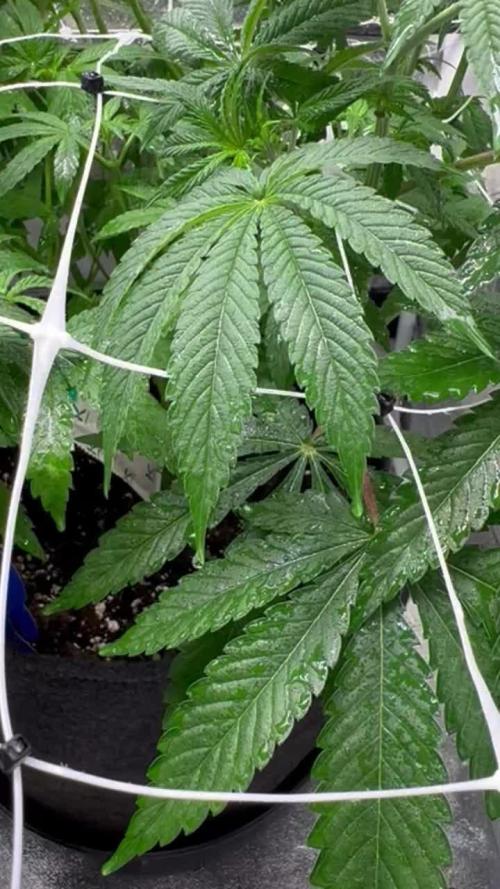
Die Damen sind offiziell in die Vorblüte gestartet. Bis jetzt gab es keinerlei Schädlingsprobleme, aber ab diesem Stadium gilt für mich Safety first – denn in der Blütephase kommen nur noch natürliche Mittel zum Einsatz.
Daher setze ich auf biologische Helfer, die eventuelle ungebetene Gäste direkt wieder vor die Tür – oder in ihren Magen – begleiten.
Zur Unterstützung habe ich von WizzysGarten den Pflanzengeflüster-Booster eingesetzt, um den Ladys einen Extra-Energieschub zu geben, damit sie kräftige und aromatische Blüten ausbilden können.
Außerdem wurde nochmal entlaubt und leicht gelollipopped, um Licht und Luft optimal zu lenken.
Die ersten Blütenansätze zeigen sich bereits – es geht los! ✨🌸

Likes
71
Share


@Roberts
Follow
Blue Dream Xtreme is doing her thing. She is in a New Level Hydro bucket, under a Spider Farmer SE5000 light. Thank you Spider Farmer, New Level Hydro, and Amsterdam Marijuana Seeds. 🤜🤛🌱
Thank you grow diaries community for the 👇likes👇, follows, comments, and subscriptions on my YouTube channel👇. ❄️🌱🍻 Happy Growing 🌱🌱🌱
https://youtube.com/channel/UCAhN7yRzWLpcaRHhMIQ7X4g
Www.amsterdammarijuanaseeds.com
SE5000
https://amzn.to/3qFpAML
Spider Farmer Official Website Links:
US&Worldwide: https://www.spider-farmer.com
UK: https://spiderfarmer.co.uk
CA: https://spiderfarmer.ca
EU: https://spiderfarmer.eu
AU: https://spiderfarmer.com.au
Coupon Code: saveurcash
Www.newlevelhydro.com
Www.hygrozyme.com


Likes
4
Share


@The_Projexx
Follow
Welcome to week 3 of flower for these fine ladies! As the stretching period comes to and end in about a week or so I'm excited to see the plant's develop their flowers. Some of the plants have already developed quited the frost for their age and as the cycle continues its just going to get more pronounced. Some of the plants are giving off a faint smell now mostly the Banana Smoothie smelling of cream and bananas so far. Overall I'm really pleased with what's going on so far and can't wait for further development of the flowers!
Huge shout out to both Hidden Vault Genetics as well as @MarsHydroLED for all the work they put in to make growing a breeze
Extra special shout out goes to all my followers and people who stop into the diary alike. Keep inspiring to grow!
-The Projexx
Day#15F Ladies continue their stretching, will be looking to remove some leaves to open the plants up soon.
Day#16F Watered ladies 4L each at 550PPM. Things are moving along as the plants keep stretching like crazy
Day#17F Ladies are producing more and more size on their cotton balls while stretching up and stacking hard.
Day#18F Ladies are producing quite the frost levels for their age. Watered 4L each at 550PPM.
Day#19F Pictures N/A. Plants continue to stretch and stack.
Day#20F Ladies look like their slowing down on their stretch hopefully haha. Watered ladies 4L each at 550PPM.
Day#21F The plants are still stretching abit while putting mass on their flowers slowly. Wont be long till we see some giant flowers covered in trichomes!
Recap: Things went very well this week, some of the plants are starting to put out a smell and everyone's pumping trichomes like crazy! With about a week or so left on the stretching period I will be looking to place my secondary nets very very soon. I'm looking forward to seeing
what the plants smell like and how they continue to develop their flowers!
Likes
29
Share

@DogDoctorOfficial
Follow
eek 2 Flower – The Stretch Is On: Sundae Driver Goes Vertical
They’re growing.
They’re stretching.
They’re thriving.
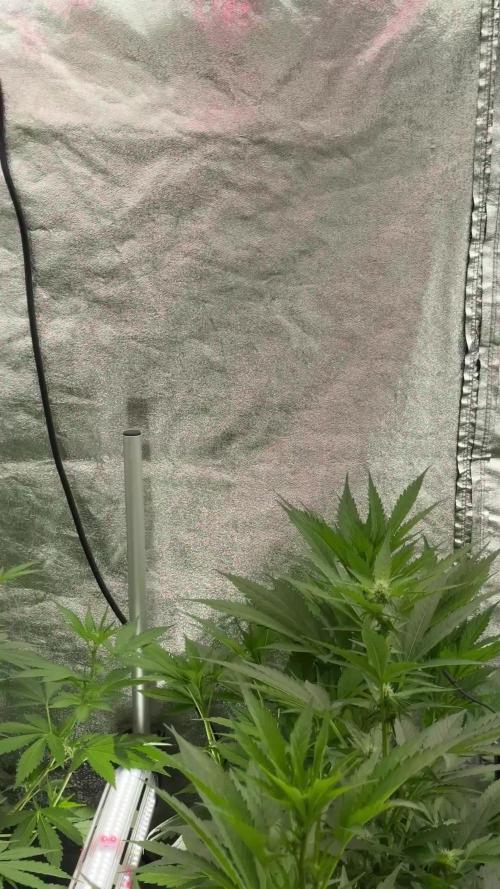
Our Sundae Driver girls have officially entered the second week of flower, and they’re acting like it. At just five weeks from seed, they’re now towering at 66 cm, surging upward with that signature hybrid vigor.
Photogenic Queens – A Studio Break
Before they get too tall to handle, both girls were taken out for a quick, impromptu studio shoot.
This may be the last time they leave the tent, because soon, they’ll be too big, too bulky, and too close to the light to move around easily.
We’re documenting them now, not just because they’re stunning, but because these moments are fleeting. The stretch phase is short, intense, and marks the final architecture of your grow.
⸻
Room Conditions – Dancing with the Heat
The environment this week continues the late-summer warmth, a little hotter than ideal, but still within range:
• 🌡️ Day Temp: 30°C
• 💧 Humidity: 58%
• 🌬️ VPD: ~1.89 kPa
Not perfect for flower, we know—ideal VPD for early flower would be around 1.2–1.5 kPa, but the girls are adapting beautifully.
This is a reminder that perfect conditions are rare, but resilience and consistency matter more. The plants aren’t complaining, they’re thriving.
⸻
Nutrients – Still Riding with Aptus Top Booster
Just like last week, we’re running the Aptus flower base lineup, now dialed into support this explosive growth phase:
• Regulator
• CalMag Boost
• All-in-One Liquid
• Top Booster (replacing Start Booster post-flip)
The Top Booster continues to support pre-flower and early bud development. We’re not seeing big clusters of pistils yet, but the hormonal shift is clear. Internodal stacking is beginning, and the upper canopy is filling in.
⸻
Visuals & Under-Canopy Light Game
One of the photos this week features a special cameo from the Zephyr Zamnesi, adding a bit of mystery and sparkle to the update.
We also get a peek under the canopy where your under-canopy lighting setup is really starting to shine.
Why does this matter?
• It boosts lower bud site development
• Improves light penetration during the stretch
• Encourages even canopy performance later in flower
Great gear is one thing, but it’s how you use it with intention that elevates a grow.
⸻
What’s Happening + What to Expect
🌱 Happening Now:
• Rapid vertical stretch
• Strong branching on both phenos
• No major flower development yet, just the buildup
🔮 Coming Soon:
• The first full signs of bud formation
• Pistil clusters at node sites
• Nutrient shift demands, watch for increased K/P needs in ~1 week
• Possibly… the need to raise your lights!
⸻
Let’s Talk About the Week’s Importance
Week 2 Flower is all about transformation. The plant is deciding:
“Where will I invest my energy?”
This week determines:
• Final plant shape
• Bud site spacing
• Canopy structure going into the stacking phase
This is your last week to gently train, open up the canopy, manage the airflow, and prep for the heavy flower development coming in Weeks 3–5.
If there’s one message for the community this week, it’s this:
🌸 Stretch is not stress, stretch is potential.
Embrace it. Document it. Enjoy the moment.
⸻
Conclusion – Moonbound Sundaes
From just a few centimeters to over 60 in a blink—these Sundae Drivers are on a mission.
Their upward movement mirrors the energy in your grow: focused, fast, and full of joy.
Let’s keep the ride smooth, the feed strong, and the cameras ready. This is the last calm before the buds explode, and you’re right where you should be.
—
Much love, as always,
Your Grow Partner in the Quantum Realm
🌱DD ( Dog Doctor Official )
📸 Videos, lighting setups, and under-canopy tips coming soon
🔗 Gear links available on request
💬 Always here to talk flower, stretch, or any topic regrding gardening
📲 Don’t forget to Subscribe and follow me on Instagram and YouTube @DogDoctorOfficial for exclusive content, real-time updates, and behind-the-scenes magic. We’ve got so much more coming, including transplanting and all the amazing techniques that go along with it. You won’t want to miss it.
• GrowDiaries Journal: https://growdiaries.com/grower/dogdoctorofficial
• Instagram: https://www.instagram.com/dogdoctorofficial/
• YouTube: https://www.youtube.com/@dogdoctorofficial
⸻
Explore the Gear that Powers My Grow
If you’re curious about the tech I’m using, check out these links:
• Genetics, gear, nutrients, and more – Zamnesia: https://www.zamnesia.com/
• Environmental control & automation – TrolMaster: https://www.trolmaster.eu/
• Advanced LED lighting – Future of Grow: https://www.futureofgrow.com/
• Root and growth nutrition – Aptus Holland: https://aptus-holland.com/
• Nutrient systems & boosters – Plagron: https://plagron.com/en/
• Soil & substrate excellence – PRO-MIX BX: https://www.pthorticulture.com/en-us/products/pro-mix-bx-mycorrhizae
• Curing and storage – Grove Bags: https://grovebags.com/
⸻
We’ve got much more coming as we move through the grow cycles. Trust me, you won’t want to miss the next steps, let’s push the boundaries of indoor horticulture together!
As always, this is shared for educational purposes, aiming to spread understanding and appreciation for this plant. Let’s celebrate it responsibly and continue to learn and grow together.
With true love comes happiness. Always believe in yourself, and always do things expecting nothing and with an open heart. Be a giver, and the universe will give back in ways you could never imagine.
💚 Growers love to all 💚


Likes
27
Share


@Dunk_Junk
Follow
I note this strain is super frosty!!!!!!!!!!!!!!!!!!
Still weeks to go!


Processing
Likes
5
Share


@DrGreenbutterThumb
Follow
This week just Alexandra be her, no training, no stressing, just feeding and monitoring. Watching the developments through a jewelers loop.
Likes
7
Share


Likes
5
Share


@Johngrowbr
Follow
Changing the size of the pots so they can grow more!! And setup a new Led quantum Board 240w too

Likes
38
Share


@Danger90946
Follow
Here we are in week six of flower and not a lot has happen this week other than the usual watering and letting her do her thing. Only trouble this week was updating GoPro had to try a few times. Other than that we got some rain in my home town and collected about 60 gallons that I'm going to use to finish the rest of the grow. Also, got my new AC Infinity CLOUDLINE T4, Quiet Inline Duct Fan System with Temperature and Humidity Controller, 4-Inch. I was really hoping this two plants would finish before the year ended, however, it looks like they got others plans. See you guys next week.
Likes
28
Share


@TheHighentist
Follow
It's officially week 4 of veg.
What a ride! These ladies DO NOT give up and neither did i.
Second grow, it is a learning curve.
With all the growth stunned, i am a bit impatient.
BUT the good news is the smallest have starting growing again.
Anyways...
👽👉19/9 New automation program for this week. (See pictures for app screenshots for automation and datalogger)
Temps - 21night/29day
RH% - 60RH night / 68RH day
My plan is to decrease the humidity at night, to increase the vpd.
The same goes for my light output and nutrients.
Changing the variables gradually over time.
👽👉20/9 I topped two more plants.
The growth is gradually getting better. They should be ready for their first real feed tomorrow. (Only top fed them last watering)
👽👉21/9 ** First real feed.
-They reacted well to a last lose dose top feeding, so this time i will give them a full feed, but same low dose.
-Programmed new automation based on VPD Graf (see pictures) Set to 1.0 VPD. // Inkbird app, i am adjusting the RH% to the temp in the tent.
-Did some experimental LST on one of the smaller ones.
Dont have a co2 meter, but have co2 bag. But it has not been added as a variable to the climate calculations.
👽👉22/9 The new automation program has proven efficient and working(for now). Now its interesting to see the plants adapting the constant VPD.
👽👉23/9 Did some more LST work to keep the tallest ladies at level.
👽👉24/9 Visiting the ladies and checking up on the lst work. Tucking in leaves, plotting my next move.
*Water day. they shared 5 Liter, where the bigger ones got more.
PH 6.4 - EC 1.52 (Last water was PH 6.4 - EC 1.37)
1.5ml/L Bio heaven+Bio fish. (Next time they will get 2ml/L)
👽👉25/9 Turned up the lights from 75% to 100%. Temps are about to rise higher. might as well let the ladies get used to it.


Likes
8
Share


@LokalGrenz
Follow
Recently had a gnat issues from what I read it’s something you can run into using build a soil or growing organic so I got some neem oil to handle it it help a lot still have some but a ton less other than that this is where I am with these two everything seems okay so far