


Likes
Comments
Share


@MJ_LIVINGSOIL
Follow
Good performance we plan to flowering in next week and use craft blended DIY organic fertilizer for these girl we use ratio 6-4-2 5-4-2 for vegetative stage and take microbe in soil for make NOTILL LIVINGSOIL

Likes
3
Share


@Ninjabuds
Follow
It’s day 43 of flower! All of the plants look great! I’m going to start dialing back the light intensity slowly over the next couple weeks. Harvest time is getting close
Likes
11
Share


@Willies_Organic_Gro
Follow
Great flowers with beautiful colors! Smells of sweet oranges and grapefruit sour grape woody spicy chem aromas and tastes of earthy sweetness with a hint of citrus.


Likes
6
Share


@ZombieKushAddicted
Follow
to view this lamp or any other marshydro product go to: https://instagram.com/marshydro_aliexpress?igshid=YmMyMTA2M2Y=
Likes
9
Share


@AlienScrOG
Follow
Dutch put want big pot ... some cal mag add ... i use rain water 25ppm ... and go down to 700ppm ... this fruit joy is strong
..in precedent pot all root
developer in the botto of pot .. only 1 liter of root
but blant is strong
Likes
11
Share


@Bread_n_Buds
Follow
Our Zamnesia photoperiod plants have also started their journey into the magical flowering period, this is the first week.
---- The general environmental conditions are good, the heat has increased a bit again but for the first weeks of flowering it is not a big problem, let's remember to never exceed 27 degrees centigrade in the last 4 weeks to avoid jeopardizing the quality of the flowers. If necessary, open the growbox but never let it exceed 27-30 degrees
where 30 is already a lot. The good thing is that as soon as the lights are turned off the change is already visible a bit and as autumn progresses we will also improve. The humidity is fluctuating but we try to control it with two dehumidifiers when necessary, pushing both possibly not into the growbox but directly into the room. (I dehumidify the room and the air in the growbox should also be dehumidified)
- Here we are at a top secret level so I can tell you that she is called XXX Test 1 and we really like how she climbs up. In fact they are because one is climbing up straight nice and fast too, the other was worked with a topping and let's see how it ends.
--- Feeding Program - The fertilizers are always Plagron and I am following the table that I generated on the site depending on the substrate chosen. Create your card and follow it, never be presumptuous my friend as I have been in the past, follow the card and look at the plants, not all need the same amount of fertilizer. We have arrived at the moment to give a good dose of ferrò in the first weeks of flowering, already of race life not sprayed but mixed with fertilizers.
---- https://plagron.com/en
- Power Roots - 1ml/l
- Alga Bloom - 4 ml/l
- Pure Zym - 1 ml/l
- Sugar Royal - 1ml/l
- Vita Race - 5 ml/l
--- Dehumidifier is now running between 50% - 55 %
--- The 100% Organic pack by Plagron can be found on Zamnesia at the link: https://www.zamnesia.io/it/11457 -pla gron-easy-pack-natural.html
--- We have removed the deumi diifier and now the values range from 45 to 60% we will put the dehumidifiers into operation in the 3/4 week of bloom - Get a seed of this fantastic strain
--- new strain coming soon no strain description becouse is a secret
- Soil and Fertilizers entirely organic -- https://plagron.com/en buy on www.zamnesia.io
- air system --- https://www.secretjardin.com/
- Growbox & Light —— www.Marshydro.eu
- Music and sound --- I made my girls listen to 432hz frequencies and music from www.radionula.com
- Z --- You can find these seeds, much more from the world of cannabis, mushrooms and an incredible series of accessories and gadgets on the reference site not only mine but of many growers
—— https://www .zamnesia.io




Likes
15
Share


@Kurow
Follow
Sooo frosty 👏🏾 I’m going to hopefully see some amber trichomes this week to justify harvesting on Christmas! Most definitely harvesting one plant on Christmas and one on new year’s due to the maturity rate on one plant.

Likes
50
Share


@DogDoctorOfficial
Follow
🌱 Eternity Grow Cup: Week 2 Veg Report – Building the Foundation 🌟
First, I want to extend a heartfelt thank you to Grow Diaries, this amazing community, and all the sponsors making this journey so special: Aptus Holland, Pro-Mix Soil, TrolMaster, ThinkGrow LED, Future of Grow LED, and CannaKan. And a special shoutout to Zamnesia and Plagron for their incredible support with seeds and nutrients for this run. This wouldn’t be possible without all of you—thank you for inspiring us to put our best into this grow! 💚
Growth Update: Small but Mighty
As Week 2 wraps up, the Zamnesia Runtz are still small, but they’re growing beautifully.
• Leaf Development:
• The first true leaves are now fully visible, and the second pair is starting to emerge on the horizon. Seeing those signs of life and progress fills me with hope and excitement.
• Nutrient Introduction:
• This week marked the beginning of feeding, laying the foundation for strong, vigorous growth in the weeks ahead.
Current Setup
• Environment:
• Temps are holding at 20°C, with RH at 60%—a comfortable range for young plants.
• The heat mat under the pots is maintaining an optimal root-zone temperature, keeping them cozy despite cooler room conditions.
• Location:
• Still growing alongside their sisters in the 4x8 tent but will soon transition into the full TrolMaster ecosystem, where precision and control will take things to the next level.
Nutrient Spotlight: Starting Strong with Aptus Holland
I’ve chosen to introduce the Aptus Holland lineup this week. These nutrients are carefully formulated to support plants through every stage of their growth cycle, and here’s what I’m using:
1. Aptus Regulator (0.15ml/L)
• What it is: A silicon-based additive that helps plants regulate stress and environmental challenges.
• Benefits:
• Strengthens cell walls, leading to thicker stems and stronger leaves.
• Increases stress tolerance, particularly against heat, cold, and light fluctuations.
• Improves nutrient uptake, ensuring plants get the most out of their feedings.
• Why now: At this early stage, Regulator gives the plants a strong foundation to handle the cooler temps and build resilience as they grow.
2. RO Water Conditioner (0.8ml/L)
• What it is: A product designed to optimize Reverse Osmosis (RO) water, making it suitable for plant feeding.
• Benefits:
• Balances pH and stabilizes water for nutrient absorption.
• Adds essential elements back into the water, ensuring a balanced feed.
• Why now: Using conditioned RO water prevents imbalances and provides a clean, consistent base for all feedings.
3. All-in-One Liquid (1.25ml/L)
• What it is: A complete macronutrient blend designed for vegging plants.
• Benefits:
• Provides all essential nutrients (N-P-K) in a balanced ratio.
• Easy to use and highly effective, supporting strong vegetative growth.
• Why now: As the plants develop their first leaves and roots, All-in-One Liquid ensures they have the building blocks needed to thrive.
Educational Focus: Why Start Nutrients in Week 2?
1. Natural Reserves:
• During the first week, seeds rely on their own nutrient stores within the seed casing. Introducing nutrients too early can overwhelm or damage delicate roots.
2. Signs of Readiness:
• By Week 2, the emergence of true leaves signals that the plants are ready to transition from relying on reserves to taking in nutrients from the medium.
3. Balanced Start:
• Starting with low doses ensures the plants can adjust gradually, reducing the risk of nutrient burn or stress.
Week 2 Insights: Setting the Stage for Success
1. Managing Environment Challenges:
• Lower temps can slow growth, but maintaining a warm root zone with a heat mat has been key to keeping these seedlings healthy and happy.
2. Patience in Veg:
• Early veg may feel slow, but this phase is all about establishing strong roots and foundational growth. Remember, every strong plant starts with a strong start.
3. Why Pro-Mix Soil:
• This medium provides excellent aeration and drainage, supporting rapid root growth. The added Biofungicide and Mycorrhizae further enhance plant resilience and nutrient uptake.
What’s Next?
As we move into Week 3, I’m excited to see these beauties continue their journey. The next steps include:
• Monitoring the development of new leaves and early structural growth.
• Transitioning to the TrolMaster ecosystem, where environmental precision will allow the Runtz to truly shine.
• Documenting every moment through photos and videos to share the magic with this amazing community.
Community Love & Thanks
Thank you to everyone following along and supporting this grow. To all the participants in the Eternity Grow Cup: best of luck—let’s make this one for the history books!
Stay tuned for Week 3, where we’ll dive even deeper into the evolution of these incredible plants. Until then, keep growing, keep believing, and let’s create something legendary together! 💚✨
Genetics - Runtz https://www.zamnesia.com/6000-zamnesia-seeds-runtz-feminized.html
Nutrients - Plagron https://plagron.com/en/hobby
- Aptus Holland https://aptus-holland.com/
Controls - Trol MAster https://www.trolmaster.eu/
LED - https://www.futureofgrow.com/en
LED - https://www.thinkgrowled.com
Soil - https://www.promixgardening.com/en
Germination - Cannakan https://cannakan.com/?srsltid=AfmBOopXr-inLXajXu3QFgKXCXXos4F1oEvScjMKIB5MR5dk8-GJ-F49
DOGDOCTOR 15% off
As always thank you all for stopping by, for the love and for it all , this journey of mine wold just not be the same without you guys, the love and support is very much appreciloved and i fell honored with you all in my life
With true love comes happiness Always believe in your self and always do things expecting nothing and with an open heart , be a giver and the universe will give back to you in ways you could not even imagine so
As always, this is shared for educational purposes, aiming to spread understanding and appreciation for this plant. The journey with nature is one of discovery, creativity, and respect. Let’s celebrate it responsibly and continue to learn and grow together!
Growers Love To you All 💚

Likes
7
Share

@Karl_Heinz420
Follow
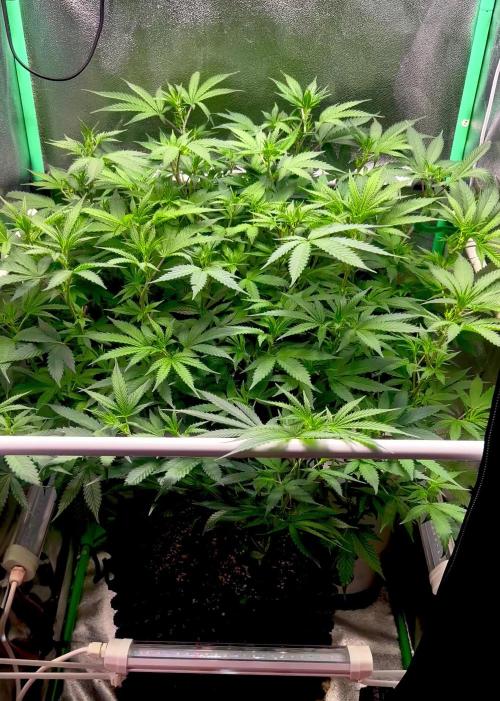
Original Sensible Seeds - Frosted Guava 🍈
Enjoy - Week 9 👨🏻🌾❄️
- 25-28 grad Celsius
- 55-60% humidity level
- 20l Air-Pot
(75% BioBizz All-Mix, 25 % BioBizz Worm Humus)
- RO-water (PH 6,25)
Sanlight Evo 3-60 40%: about 400 PPFD
Spider Farmer Glow30 6h/18h on

Likes
16
Share


@willertex
Follow
📅 D71 - 10/01
📜 New week. No res change
✍️ 1.5 EC
♒ 5,5 pH
🌊 10 L
📏 90 cm
📅 D74 - 13/01
📜 Res change
✍️ 1.5 EC
♒ 5,5 pH
🌊 10 L
📏 90 cm

Likes
29
Share


@theo_b65
Follow
Start of week 4, she’s not stretching like I thought she would but she’s healthy no nutrient burns or adversity of any significance. Topped her in week 3 with success. I took a risk and transplanted her into a bigger pot on day 30. Seemed shocked at first but is now thriving ... onto week 5.

Likes
3
Share

@BLAZED
Follow
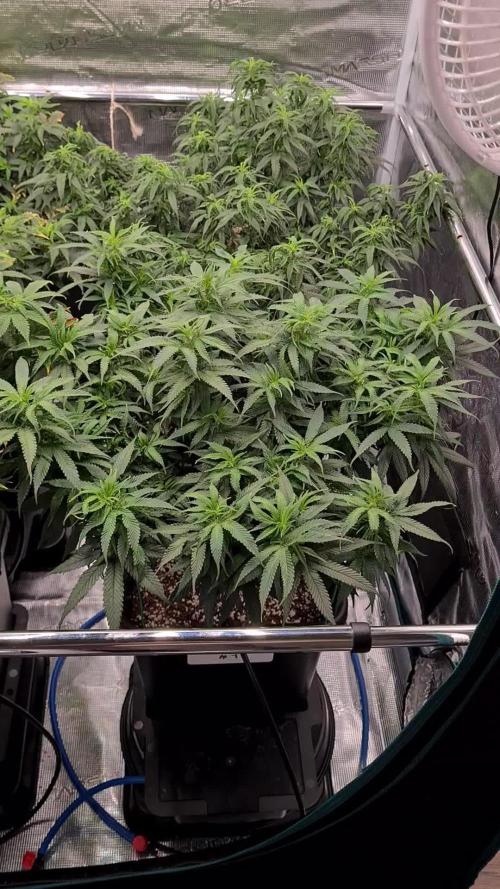
Week 14 (16-9 to 22-9)
16-9
Temps: 19.2 to 23.2 degrees
Humidity: 55% to 66%
Watering #1: 700 ml.
Light set to 12/12.
Finally! It looks like the plants are recovered so i decided to flip to flower.
Dry Weight #1: 3.5 kg. #2: 4.0 kg.
17-9
Temps: 20.4 to 23.6 degrees
Humidity: 59% to 67%
Watering: Both 500 ml.
Dry Weight #1: 3.8 kg. #2: 3.9 kg.
18-9
Temps: 17.9 to 24.1 degrees
Humidity: 61% to 74%
19-9
Temps: 21.2 to 24 degrees
Humidity: 64% to 73%
Watering: Both 500 ml.
Dry Weight #1: 3.5 kg. #2: 3.7 kg.
20-9
Temps: 19.1 to 23.5 degrees
Humidity: 60% to 70%
Watering: Both 500 ml.
Dry Weight #1: 3.6 kg. #2: 3.9 kg.
21-9
Temps: 18.7 to 24.5 degrees
Humidity: 59% to 70%
Watering: Both 500 ml.
Dry Weight #1: 3.6 kg. #2: 4.0 kg.
22-9
Temps: 19.5 to 24.5 degrees
Humidity: 59% to 71%
Watering: Both 500 ml.
Likes
7
Share


@Stickygreens420
Follow
10/31/2022: Happy Halloween!! 🎃 Not much to update today. Just installed my scrog net the other day, but I'm thinking I may need to lower it. I'm going to wait and see how much stretch I get this week. Plants were all watered yesterday and are still wet enough. Light is turned up to 100% at this point, but raised it a bit more. At 18 hours of light my average DLI is about 45, which is as high as I will take these.
11/3/2022: Did a heavy watering for all 3 plants today, since they are all still stretching. About 2 liters per plant, using the Coconut Water Powder and Bio-Phos. Ph was 6.7. Also did a bit more defoliation on the Newberry and Orange Bubblegum. All plants are looking great. I think raising the light helped with the slight droop the Newberry had. They are starting to smell now too. When I open the tent, the whole house smells. Love it, haha!
11/5/2022: light watering today with the coconut water and Fish Shit. The Newberry and Orange Bubblegum continue to stretch and the Strawberry Gushers appears to have finished it's stretch and the flowers are beginning to get larger. All 3 plants look really healthy and have no problems at all. Also, most of the fungas nats seem to be gone. I'm assuming the predator mites in the BuildAFlower ate most of the fungas nat larvae. Only issue is the plants did not stretch as much as I expected, so my scrog net is a little high, but I'm just going to leave it.
Avg. VPD:1.1
PPFD: 700
DLI: 45


Likes
80
Share


@OrganicNature420
Follow
• Sugar Puss, Exotic Genetix
• Cheetahs piss x Bakers dozen (unreleased)
• 60 - 70 day flowering time
• Unknown Info nothing online
Nutrients • GreenBuzzNutrients
(DISCOUNT CODE • GD42025 ) %25
I use the whole product range and this stuff is a game changer. I've not had one bad grow with this company and it hasn't let me down once. Terps and taste are through the roof. No need for run off in coco only during flush week. Hands down the best nutrients on the market.
GREENBUZZ OUR NOW OFFEEING OUR FELLOW GROWERS A WHOOPING %25 OFF WHEN USING MY CODE ABOVE. BE AWARE IT HAS CHANGED 🌱💚 ENJOY
LIGHT/TENT • Mars Hydro FC-E6500 5x5 tent
Another winner 🏆 well in my eyes it is. You will not get a nicer smelling plant that looks so god dam frosty. Just call me the frost King 🤴 ❄️
Bubble hash update incoming
Likes
31
Share


@IndicaVibeMe
Follow
Shogun is taking the lead, in terms of size AND smell!!! Seriously she has not even started preflower, no white hairs and YET her aroma is amazing!!! Seriously I can't WAIT to smoke these buds. Shogun is the Ninja warrior, her genetics are Gorilla Glue #4 & Amesia Haze from RQS.
The 2nd plang in the lead is Itty Bitty who's tripled in size the last week. All my girls seem to like the environment I've made for them & are loving Life. 😎

