


Likes
Comments
Share


@4_Pro2Bono_0
Follow
These ladies did'nt stretched much so far in week 2 but that could be due to the light intensity and distance I had it at in week 1 of the stretch period. This strain is really starting to show signs of that Gassy, Sweet, Creamy smelly that I was looking for and so far these ladies have been a breeze to grow.

Likes
15
Share


@Messypies
Follow
Yellowing on plant seems to have stopped after the increase in mg on last feed. Will continue to feed at a higher vol and fingers crossed will recover enough
Happy for any advice :)


Likes
21
Share


@Siriuz
Follow
Started week 8
Day 52
We are excited to announce new growing light setup coming soon for the ladies, we want to make them grow big a better so we gonna be adding 600 watts soon!
In the meantime, we continue outdoors
From 6. 30AM til weather gets too hot
Once it reaches hot temperature and low humidity we bring them back indoors for CFL lights and Air conditioner plus fan
Since it's so hot in where we live it's tropical weather, we always have to keep an eye to the hygrometer and the weather in general.
So far so good, they're flowering and taking their time but day after day new buds are coming up, we've done some defoliation as well to get rid of those old leaves and the other ones that are too low and not gonna make it so the plant can return that energy into several buds that are already developing.
Thank you so much for your support, we continue to upload content and update daily if possible, sometimes we busy and can't do it at the same time but have no fear we got you cover, not gonna miss a thing tho!
Day 53
Ended up feeding them1710ppm per gal
So 300ml/3.79lts
Each plant plus 900ml of water
PH 6.2
Looking neat
Day 53
Felt like recording some videos today also the girls were looking good so why not
Great Weather great day today
They're happy and comfortable
Growing good :)
Day 54
Hey guys what's up?
We've upgraded to a new set of lights
Yeah dude they rock!
Day 55
All day indoors since we've got those new baby's we running them on 700 watts
VEG ON + BLOOM ON
Day 56
Now please take a look at those thricomes they are very good looking and we still have 5 weeks left behind til harvest day
Hell yeah :)

Likes
22
Share


@eldruida_lamota
Follow
Vamos que os explico un poco critical es una variedad indica con una floración rápida, sus flores son compactas , y bastante resinosas, tiene aromas fuertes.
El ambiente en el secado estuvo en 23 grados de media y 40% de humedad se pasaron rápido al bote de cristal, 7 días en concreto.
Hasta aquí todo familia, espero que os agrade un saludo y buenos humos💨💨💨

Likes
39
Share


@Organic_LarF
Follow
High GD community,
Week 15,
Haze #1 doing its thing. Not the fastest constructor but with a steady pace. We are only halfway the ride.
2 feedings this week, rest of the week ph water.
Thats it for this week boys and girls,
Thanks for reading and passing by and 💚💚💚👏👏👏👍👍👍 for Marshydro leds. Quality/price top!
Grow safe buds and feel free to check out my other ladies doing fine thanks!
🙏🌿🌿🌿🙏
Weedseedsexpress!!!! 👏👏👏
LarfxWSE for discount at weedseedsexpress!!! 15% off!!!
Add OrganicLarF as a code when buying your own MarsHydro LED light and get a nice reduction!!!👽🚀🛸

Likes
17
Share


@ButterfliesLittleFarm
Follow
Hello Diary.
The first week of vegetation is over. The plants thrive nicely, look healthy and satisfied. 😀
Purple Punch # 1 grew 11 cm in the first week of vegetation while Purple Punch # 2 reached 7 cm. I remind you that I had to repeat the germination of another Purple Punch, so it’s lower.
In addition to the nutrients that I mixed into the soil at planting, I started adding BioBizz’s Root-Juice.
I regulate the humidity with a humidifier, so the humidity varies between 50% and 60%.
With Purple Punch on the “Farm” there is also one Watermelon Auto that keeps them company.
Let’s see what the first week looked like.
27/01/2021 - Day 1.
Official first day of vegetation.
29/01/2021 - Day 3.
Watering. I prepared 4 liters of water but each plant got about 1 liter. p.H. I regulated with Plagron’s Lemon Kick at 6.1 and added 4ml / lit Root-Juice from BioBizz.
Temp / Humidity on the farm - 22.9 degrees and 50% humidity.
02/02/2021 - Day 7.
Photographing and watering. After the photo shoot, I watered the plants, each getting about 1.5 lit. This time I didn't add any extras I just adjusted the p.H to 6.3. and the water temperature was 20.2 degrees.
I also measured the height of the plants
Purple Punch # 1 - 11 cm
Purple Punch # 2 - 7 cm.
That’s it for this week, thank you all for your support and likes. See you soon.

Likes
35
Share


@Da420Andi
Follow
Yo yo yo what's poppin
It's day 2 in week 7 some more pics incoming this week
Triple G and Wedding Gelato is fire.
North Thunderfuck has the most weight and doing also great
Hulk Berry is a sativa and will need a little bit longer. It smells already gasoline diesel berry like. The smell of Triple G is the best I've ever smelled. It's so fruity and has trichomes everywhere
Day 46 today and I started feeding water only. I guess 14 to 16 days and they are ready to harvest. All plants do really good.
Day 49 every plant got flushed today. 30 Liter clear water for every plant.
Likes
29
Share

@eldruida_lamota
Follow
Venga familia que ya viene la cosecha, que ganas que tenia ya de darles machetazo.
No veas que pinta que tienen estas plantas.
No son grandes pero si están bien gordas.
No soy de plantar autoflorecientes pero e de comentar que con este cultivo e hasta disfrutado. Pronto la cataremos 💨💨💨.
Agrobeta:
https://www.agrobeta.com/agrobetatiendaonline/36-abonos-canamo
Mars hydro:
Code discount: EL420
https://www.mars-hydro.com/
Hasta aquí es todo , espero que lo disfrutéis, buenos humos 💨💨.


Likes
14
Share


@BillMonroe
Follow
The bud is dense & strong are the smells
Great strain :)
Great stem rub. very fruity and dank. I bet these will
be high on taste!

Likes
4
Share


@adam_pawloski87
Follow
@twenty20mendocino A-Team R&D Update ~ Let’s Go day 24 of flower 🌸 an we are looking amazing! Ladies are starting to stack an oh my we getting a lot of frost going on! starting to get some gassy stanky notes of em too😍 ! We are only into week 4 ladies an gents we still got a few weeks to go of stacking! Keep your eyes peeled for next week’s update yall , peace love a positive to all y’all , an have an amazing productive day ! Cheers an blaze on !!

Likes
14
Share


@Naujas
Follow
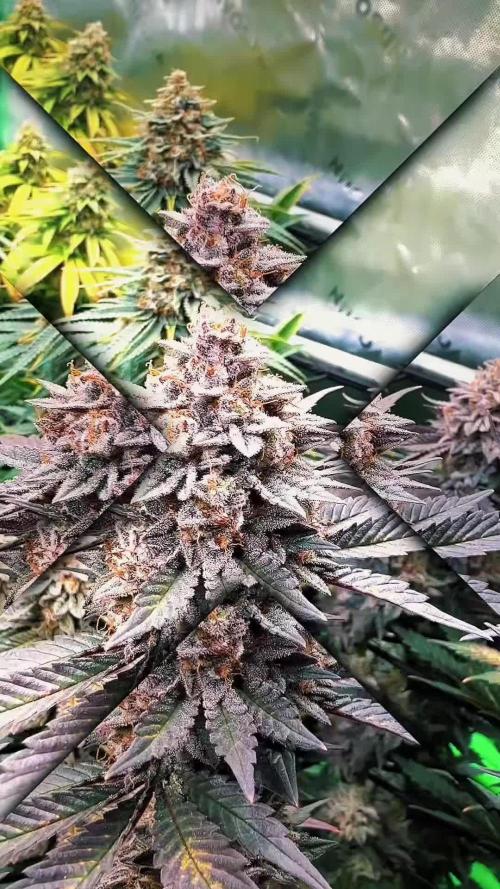
Week 8 is over :) the girl is suffering, maybe it's my mistake that I made, :( I used biotabs nutrients throughout the growth, and at one point, she even received two waterings with advancednutrients macro, after which she started to deteriorate, from now on only pure water :) looking at it from the other side, the flowers themselves really don't look like they will be small, the flowers are already getting a pink color, which is very beautiful to me :) in general, the girl is maturing quite well :) good luck to everyone.




Likes
14
Share


@JamieKnolliver
Follow
Grüßt euch Freunde!
Wir sind nun am Ende der 4. Woche.
Einige Blätter verfärben sich Lila.
Habe in dieser Woche nicht viel getan, außer Wasser und Dünger zu geben.
Die PPOG entwickelt in der 4 Woche wirklich heftig Resin.
Sie sieht wirklich frosty aus, gefällt mir !☺️
Mir ist nun aufgefallen, dass die unteren Blätter alle die Spitzen nach unten neigen.
Man nennt das auch ‚Adlerkrallen‘ und ist auf einen Stickstoff Überschuss zurückzuführen.
Habe durch die Verfärbung der Blätter auf einen Mangel geschlossen, war vielleicht nicht die beste Idee mehr Bio Grow zuzuführen😂
Werde im laufe der 5 Woche keinen Bio Grow mehr verwenden und beobachten wie sich das entwickelt.
Euch allen eine gute Woche !💚
Processing
Likes
4
Share


@Green_Thumb
Follow
My o my, what can I say... These ladies are gorgeous! Along with adding in the 2000W along side my 600W, I cut out the grow solution in my nutes contrary to the instructions and my ladies are booming! We'll see how the rest of the week continues! I started a majority bloom with some added glucose for my feed to help with bud weight but they are really packing on. Hopefully next week will be my last week of feeding as trichrome production increases and I can start my 2 week flush!
Likes
23
Share


@Calveeno
Follow
Happy Monday Folks!
Branches are starting to sway from the weight of the growing buds.
Topping up every other day with Week 8.
Hands down, Bloom is my favorite phase to watch.
I've uploaded a couple of videos for your viewing pleasure.
'til next time, Stay Tuned and Stay Blessed! 🙏
Likes
8
Share


@smoothbutter07
Follow
5/30 update: both plants have been jarred for curing! A little disappointed with the over all yield but a lot to learn from this first grow! Expert seeds gg#4 comin next 👌0

Processing
Likes
24
Share


@MadeInGermany
Follow
Hi all 🤗.
Runtz did the topping very well :-).
She grows nice and bushy, and hopefully becomes a monster 😍👍.
This week will be topped again. I wish you all a nice week, stay healthy 🙏🏻 and let it grow 🌱
Type:
Runtz
☝️🏼
Genetics:
Zkittlez x Gelato
👍
Vega lamp: 2 x Todogrow Led
Quantum Board 100 W
💡
Bloom Lamp : 2 x Todogrow Led
Cxb 3590 COB 3500 K 205 W
💡💡☝️🏼
Soil : Canna Bio
☝️🏼
Nutrients : Canna bio
☝️🏼🌱
Water: Osmosis water mixed with normal water (24 hours stale that the chlorine evaporates) to 0.2 EC. Add Cal / Mag to 0.4 Ec Ph with Organic Ph - to 6.0 - 6.3
💦💧

Likes
29
Share


Likes
11
Share


@Jacks_Pot
Follow
This week went without any problems. They're on scedule and next week I'll repot them.
I'm gonna keep 4 out of 5 because I have only room for 4 plants in 15 liter airpots.
On day 12 I removed the seedling that was making the least progress.
It gave me the opportunity to check the roots and they looked fine. I'll guess it will be the same with the other seedlings.
I've already filled the airpots and placed them in the tent so they can heat up a bit.
There's a large heating mat (RootIt 40 x 120 cm/ 15.7 x 47.2 inch) underneath the pots
to keep the substrate at 21 – 22 °C (69.8 – 71.6 °F)
I've given them 70 ml ph-adjusted tapwater + Plagron nutrients( amounts see above) each once this week.
Once a day I spray them with a solution of CannaCure and tapwater (15ml + 150ml tapwater, ph level = 6.1)
The cobs are at 68 watt with a distance of 49cm (19.2 inches) from the Pineapple Chunks giving a DLI of 19.
Temperatures fluctuated between 21.7 – 24.2 °C (71 – 75.5 °F) and humidity between 51 – 94 %
I've turned on the Airfan and the fan-controller is set at 30-35%.
Up to next week! 🤘
Do you want to grow this strain?
👉 https://www.barneysfarm.us/pineapple-chunk-weed-strain-15 👈
