The Grow Awards 2026 🏆
Likes
Comments
Share
@Popsgrow
Follow
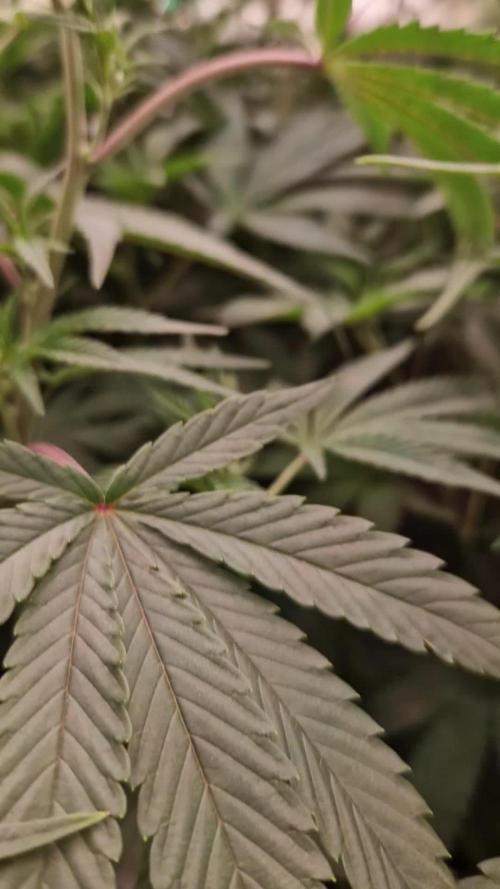
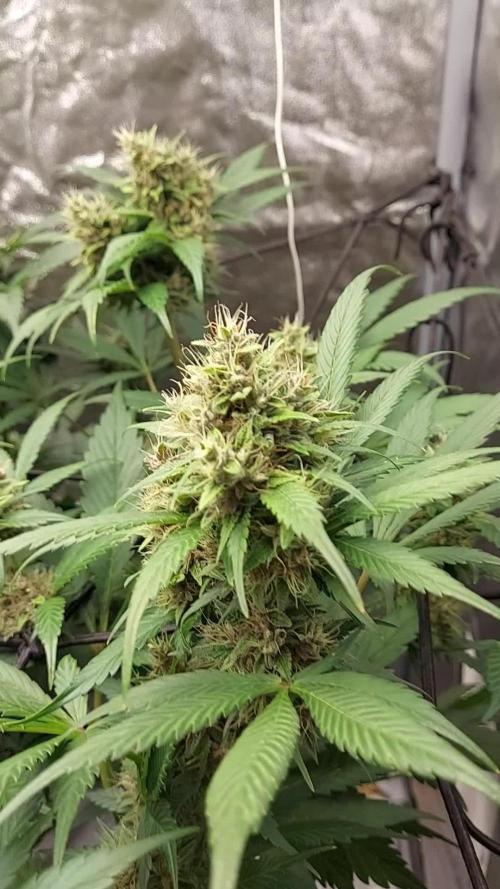
Well I finally got these girls in the dry tent did not get a wet weight will update on the trim and dry weight I will suggest if you are using 5 gallon pots definitely jump to at least a 7 gallon pot huge difference the buds look and smell awesome ready to set up 5x5 and 30 gallon pots
Likes
3
Share
This week was good, stopped feeding nutes, ro water only, the buds are so solid, nice and thick. Didn’t think this was going to be so big, the 16”x16” fits the growbed perfect, it the plant is a little cramped, a 24”x24” would be perfect, as the branches would be able to droop more and allow more light to some lower growth. However after this I’m using these tents to do smaller scrog plants, which are photos. And I’ll do the auto-flowers in a more open environment.
Likes
82
Share
Hello growmies! Welcome to week five of An Epsilon Adventure! Massive thanks to both Shogun and Royal Queen Seeds for sponsoring this grow! The girls are all at different early flowering stages, but they are only days apart from each other. I have a bit of a quandary now though, as I am no longer following the nutrient schedule as these plants are too fast for it. So I am unsure whether to start PK warrior or not yet. I have also realised I have probably underfed them in the last week or so, which to be honest isn't a big deal for me right now as they are already waaaaaaaaaaay bigger than expected. Let's talk about that a moment. This strain has an average height of 50-70cm. I wonder if those numbers were for soil grows? It seems for coco you will get even bigger plants. Case in point these six girls measured at 3pm 24/7 day 30 as follows: Plant 1: 111cm Plant 2: 99cm Plant 3: 90cm Plant 4: 89cm Plant 5: 85cm Plant 6: 84cm Plant 3 appears to have stopped stretching and is the most advanced into flower. Plant 4 is right behind it and has slowed down but not yet stopped stretching. Plant 2 is next in terms of flowering development her stretch is slowing. Plant 5 is still stretching rapidly and is coming to the end of preflower. No concern really at 85cm she has some room yet. Plant 6 is still stretching rapidly and is still in preflower. Slightly concerned despite her 84cm stature as she has been the most beefy looking plant all along, so I am expecting her to grow a good bit more. Plant 1 is still stretching rapidly and is still in preflower. Extremely very concerned about this one. The light is about as high as it can go. 111cm!! I have scoured the internet and the tallest Epsilon F1 I have found was 95cm. It's great that she is so happy this plant, but if she gets much taller I'm going to have to super crop her main cola. Whatever happens I am starting to dream of smashing my yield target out of the park, these girls are all impressive. Hard to believe they are just 30 days old. Daily Updates: ### Week 5 Day 2 15:00 24/7 Photographed. ### Week 5 Day 2 23:30 24/7 fertigated 1.6l and updated nutrient schedule for the week ### Week 5 Day 3 20:00 25/7 took a short video ### Week 5 Day 4 05:00 26/7 photographed ### Week 5 Day 4 18:00 26/7 Measured (brace yourself). Plant 1: 126cm Plant 2: 107cm Plant 3: 93cm Plant 4: 94cm Plant 5: 97cm Plant 6: 96cm Plants 3 and 4 have stopped stretching now and are fully into flower. At 93cm and 94cm respectively, by the end of flower these girls may hit 1m but they wont go much more than that. Plant 2 looks to have just about stopped as well. It might go another 10cm overall. Plant 5 is still stretching but I think not much more. Plant 6 is still stretching and I am still expecting quite a bit of growth from her. Then there is plant 1. 126cm and still stretching. It has now grown beyond the height of the light. I hope it can somehow finish itself before it hits the top of the tent. I mean the secondary colas are over 1m already. It is a great shame this giant plant doesn't have more horizontal space to itself, either way it is absolutely shocking to see. I really do not want to super crop her, but am out of options. This grow, incidentally, constitutes the first and last time that I let any indoor cannabis plant go untrained. With basically 4 x 4 x 4 of usable space, training my plants is not really optional - and now you can all see why. This "50-70cm" strain has rapidly outgrown my space. RQS it may be time to revisit the height claims on this strain. Just saying. ### Week 5 Day 6 01:00 28/7 Rearranged the tent and photographed. I have been regularly rotating the plants and periodically moving them around. My problem is now plant one has already hit the top of the tent and there is no easy way to give it anymore space... still not sure what I am supposed to do but it's fine for now... tried to capture the problem with the photos. As well as plant 1, plant 6 looks like it's going to keep going for a good bit yet, and plant 2 is still putting a bit of height on. I took plenty of photos today to try and capture the essence of the jungle. It is quite unbelievable what these plants have done. I just cannot stop looking at them, they are magnificent. I have not fed for 4 days, will probably feed later I am just trying to slow them down a bit by not feeding them. It doesn't seem to be working. ### Week 5 Day 6 23:00 28/7 Defoliated heavily all plants. Fertigated 2l each. Removed some more lower side growth off the smallest plant (plant 3) to make space. Might leave it a few days before I photograph again. Plants 2, 3, and 4 are all well into flowering now, plant 5 is not far behind them, but plants 1 and 6 are still in preflower. :( What is really remarkable right now is the difference in colour between the plants further into flower vs the plants still in preflower. The plants in flowering have much darker leaves. --- Thanks for reading growmies! 👊 ========== Tent: 120cm x 120cm x 180cm Light: 600w HID Elite Dual Spectrum HPS + Angel Wing Reflector Air: 5" duct fan system with carbon filter ~300 m3/hour + RAM 9" floor fan + 4" intake fan Pots: Air Pruner Fabric Pots 30l - UGro XL Coco + horticultural grade perlite (~20%) Seeds supplied by Royal Queen Seeds https://www.royalqueenseeds.com Nutrients supplied by Shogun Fertilisers https://www.shogunfertilisers.com/en ==========
Likes
36
Share
@cRypto666
Follow
Blütewoche 4 Ende der Blütewoche 3 noch mal kräftig Entlaubt und Lillipoping angewendet. Intensität der Lampe 100% 👽Outta This World 👽 🙏Peace🙏 cRypto666
Likes
81
Share
@Hou_Stone
Follow
This week i flush the roots with tap water ( PPM : 310 , PH : 7.5) after i add water with 0.7 grow powder and 0.1g of Booster PK+ to reach 720PPM and adjust PH to 5.8 ---------------------------------------------------- -Daytime temperature: 27°C -Night temperature: 23°C -Humidity: 45-65% -Lamp: Mars Hydro FC3000. intensity 80% at 40cm from the top leaves -Room: Mars Hydro 100x100x180cm -Extractor: Mars hydro 402 CFM Max. power 2/10 -Substrate : 70% coco, 25% perlite, 5% vermiculite. My instagram : https://www.instagram.com/p/CuMhQ_BsjRP/?utm_source=ig_web_copy_link&igshid=MzRlODBiNWFlZA==
Likes
52
Share
Let's realign our cosmic compass and embark on a harvest report for our magnificent Cosmos F1, a pure CBD strain that has taken us on an extraordinary journey. Brace yourself for cosmic revelations and interstellar delights! After an impressive 11 weeks from seed and 7 weeks of flowering, the time has come to witness the cosmic culmination of our efforts. I carefully hung the entire Cosmos F1 plant to dry, allowing the cosmic energy to infuse every inch of this botanical marvel. It's a sight to behold, with majestic branches reaching for the cosmos, reminiscent of a cosmic dancer frozen in time. As our cosmic queen gracefully dries, her vibrant hues continue to amaze. The shades of green, intertwined with delicate hints of purple and gold, are a testament to her genetic splendor. It's as if she has absorbed the cosmic essence of the universe, transforming it into a visually stunning spectacle. Now, let's talk about the cosmic power of CBD. Our pure CBD strain holds the key to a transformative experience. With minimal psychoactive effects, this cosmic treasure offers a realm of therapeutic benefits. It's like a cosmic massage for the mind and body, soothing and relaxing, allowing us to explore the depths of cosmic tranquility. The decision to hang the entire plant for drying is a testament to our dedication to preserving the cosmic integrity of our harvest. By allowing the branches to hang freely, we encourage a slow and controlled drying process, ensuring that the cosmic essence remains intact. It's a ritual that honors the plant's journey, preserving its cosmic magic for us to enjoy. As we eagerly await the cosmic transformation, let us express our gratitude to the celestial forces that have guided us on this cosmic odyssey. The cosmos has aligned to bring us the extraordinary Cosmos F1, a gift from the cosmic garden gods themselves. We extend our heartfelt appreciation to the cosmic harmony orchestrated by @James and Royal Queen Seeds. In the coming days, our dried cosmic buds will be ready for the next stage of our journey. From cosmic concoctions to cosmic culinary delights, the possibilities are infinite. Imagine infusing the cosmic power of CBD into soothing teas, cosmic creams, or cosmic confections. The universe is our canvas, and with our cosmic harvest, we can create cosmic masterpieces. As we bid farewell to our Cosmos F1, let us cherish the cosmic memories we've shared. The vibrant colors, the pure CBD power, and the cosmic connection we've established with the universe. May our future endeavors be as cosmic and awe-inspiring as this one. Until we meet again, my cosmic friends, lets keep exploring the cosmic wonders, nurturing our cosmic gardens, and let the cosmic energy guide our cosmic creations. May our harvest be abundant, our cosmic experiences be enlightening, and our cosmic journey be filled with celestial blessings. As always thank you all for stopping by and for supporting me on this journey, i am super passion about growing and fell blessed to have you all with me on
Likes
38
Share
Likes
14
Share
The OG Kush made it through her final week of flower...56 days in total. Super sticky and smells like a mix of limonene and pinene and a hint of sweetness on the back end. I'm definitely happy I have a couple more of these beans. Super smooth run, chunky resinous buds. Thank you to everyone that visited to check my first Grow Diary out. You made it a really cool experience ✌️☺️. https://www.instagram.com/ao.grows?igsh=MXR1dWZxMWhlNnF6bA== Check out my Instagram for clips I made for this grow.
Likes
5
Share
Still just trying to be patient, waiting for harvest time, hopefully I don't go past the harvest window that I'm looking for. Wanting Milky tricomes.
Likes
52
Share
Lacewings seemed to have mostly killed themselves by flying into hot light fixtures. I may have left the UV on which was smart of me :) Done very little to combat if anything but make a sea of carcasses, on the bright side its good nutrition for the soil. Made a concoction of ethanol 70%, equal parts water, and cayenne pepper with a couple of squirts of dish soap. Took around an hour of good scrubbing the entire canopy. Worked a lot more effectively and way cheaper. Scorched earth right now, but it seems to have wiped them out almost entirely very pleased. Attempted a "Fudge I Missed" for the topping. So just time to wait and see how it goes. Question? If I attached a plant to two separate pots but it was connected by rootzone, one has a pH of 7.5 ish the other has 4.5. Would the Intelligence of the plant able to dictate each pot separately to uptake the nutrients best suited to pH or would it still try to draw nitrogen from a pot with a pH where nitrogen struggles to uptake? Food for stoner thought experiments! Another was on my mind. What happens when a plant gets too much light? Well, it burns and curls up leaves. That's the heat radiation, let's remove excess heat, now what? I've always read it's just bad, or not good, but when I look for an explanation on a deeper level it's just bad and you shouldn't do it. So I did. How much can a cannabis plant absorb, 40 moles in a day, ok I'll give it 60 moles. 80 nothing bad ever happened. The answer, finally. Oh great........more questions........ Reactive oxygen species (ROS) are molecules capable of independent existence, containing at least one oxygen atom and one or more unpaired electrons. "Sunlight is the essential source of energy for most photosynthetic organisms, yet sunlight in excess of the organism’s photosynthetic capacity can generate reactive oxygen species (ROS) that lead to cellular damage. To avoid damage, plants respond to high light (HL) by activating photophysical pathways that safely convert excess energy to heat, which is known as nonphotochemical quenching (NPQ) (Rochaix, 2014). While NPQ allows for healthy growth, it also limits the overall photosynthetic efficiency under many conditions. If NPQ were optimized for biomass, yields would improve dramatically, potentially by up to 30% (Kromdijk et al., 2016; Zhu et al., 2010). However, critical information to guide optimization is still lacking, including the molecular origin of NPQ and the mechanism of regulation." What I found most interesting was research pointing out that pH is linked to this defense mechanism. The organism can better facilitate "quenching" when oversaturated with light in a low pH. Now I Know during photosynthesis plants naturally produce exudates (chemicals that are secreted through their roots). Do they have the ability to alter pH themselves using these excretions? Or is that done by the beneficial bacteria? If I can prevent reactive oxygen species from causing damage by "too much light". The extra water needed to keep this level of burn cooled though, I must learn to crawl before I can run. Reactive oxygen species (ROS) are key signaling molecules that enable cells to rapidly respond to different stimuli. In plants, ROS plays a crucial role in abiotic and biotic stress sensing, integration of different environmental signals, and activation of stress-response networks, thus contributing to the establishment of defense mechanisms and plant resilience. Recent advances in the study of ROS signaling in plants include the identification of ROS receptors and key regulatory hubs that connect ROS signaling with other important stress-response signal transduction pathways and hormones, as well as new roles for ROS in organelle-to-organelle and cell-to-cell signaling. Our understanding of how ROS are regulated in cells by balancing production, scavenging, and transport has also increased. In this Review, we discuss these promising developments and how they might be used to increase plant resilience to environmental stress. Temperature stress is one of the major abiotic stresses that adversely affect agricultural productivity worldwide. Temperatures beyond a plant's physiological optimum can trigger significant physiological and biochemical perturbations, reducing plant growth and tolerance to stress. Improving a plant's tolerance to these temperature fluctuations requires a deep understanding of its responses to environmental change. To adapt to temperature fluctuations, plants tailor their acclimatory signal transduction events, specifically, cellular redox state, that are governed by plant hormones, reactive oxygen species (ROS) regulatory systems, and other molecular components. The role of ROS in plants as important signaling molecules during stress acclimation has recently been established. Here, hormone-triggered ROS produced by NADPH oxidases, feedback regulation, and integrated signaling events during temperature stress activate stress-response pathways and induce acclimation or defense mechanisms. At the other extreme, excess ROS accumulation, following temperature-induced oxidative stress, can have negative consequences on plant growth and stress acclimation. The excessive ROS is regulated by the ROS scavenging system, which subsequently promotes plant tolerance. All these signaling events, including crosstalk between hormones and ROS, modify the plant's transcriptomic, metabolomic, and biochemical states and promote plant acclimation, tolerance, and survival. Here, we provide a comprehensive review of the ROS, hormones, and their joint role in shaping a plant's responses to high and low temperatures, and we conclude by outlining hormone/ROS-regulated plant-responsive strategies for developing stress-tolerant crops to combat temperature changes. Onward upward for now. Next! Adenosine triphosphate (ATP) is an energy-carrying molecule known as "the energy currency of life" or "the fuel of life," because it's the universal energy source for all living cells.1 Every living organism consists of cells that rely on ATP for their energy needs. ATP is made by converting the food we eat into energy. It's an essential building block for all life forms. Without ATP, cells wouldn't have the fuel or power to perform functions necessary to stay alive, and they would eventually die. All forms of life rely on ATP to do the things they must do to survive.2 ATP is made of a nitrogen base (adenine) and a sugar molecule (ribose), which create adenosine, plus three phosphate molecules. If adenosine only has one phosphate molecule, it’s called adenosine monophosphate (AMP). If it has two phosphates, it’s called adenosine diphosphate (ADP). Although adenosine is a fundamental part of ATP, when it comes to providing energy to a cell and fueling cellular processes, the phosphate molecules are what really matter. The most energy-loaded composition for adenosine is ATP, which has three phosphates.3 ATP was first discovered in the 1920s. In 1929, Karl Lohmann—a German chemist studying muscle contractions—isolated what we now call adenosine triphosphate in a laboratory. At the time, Lohmann called ATP by a different name. It wasn't until a decade later, in 1939, that Nobel Prize–-winner Fritz Lipmann established that ATP is the universal carrier of energy in all living cells and coined the term "energy-rich phosphate bonds."45 Lipmann focused on phosphate bonds as the key to ATP being the universal energy source for all living cells, because adenosine triphosphate releases energy when one of its three phosphate bonds breaks off to form ADP. ATP is a high-energy molecule with three phosphate bonds; ADP is low-energy with only two phosphate bonds. The Twos and Threes of ATP and ADP Adenosine triphosphate (ATP) becomes adenosine diphosphate (ADP) when one of its three phosphate molecules breaks free and releases energy (“tri” means “three,” while “di” means “two”). Conversely, ADP becomes ATP when a phosphate molecule is added. As part of an ongoing energy cycle, ADP is constantly recycled back into ATP.3 Much like a rechargeable battery with a fluctuating state of charge, ATP represents a fully charged battery, and ADP represents a "low-power mode." Every time a fully charged ATP molecule loses a phosphate bond, it becomes ADP; energy is released via the process of ATP becoming ADP. On the flip side, when a phosphate bond is added, ADP becomes ATP. When ADP becomes ATP, what was previously a low-charged energy adenosine molecule (ADP) becomes fully charged ATP. This energy-creation and energy-depletion cycle happens time and time again, much like your smartphone battery can be recharged countless times during its lifespan. The human body uses molecules held in the fats, proteins, and carbohydrates we eat or drink as sources of energy to make ATP. This happens through a process called hydrolysis . After food is digested, it's synthesized into glucose, which is a form of sugar. Glucose is the main source of fuel that our cells' mitochondria use to convert caloric energy from food into ATP, which is an energy form that can be used by cells. ATP is made via a process called cellular respiration that occurs in the mitochondria of a cell. Mitochondria are tiny subunits within a cell that specialize in extracting energy from the foods we eat and converting it into ATP. Mitochondria can convert glucose into ATP via two different types of cellular respiration: Aerobic (with oxygen) Anaerobic (without oxygen) Aerobic cellular respiration transforms glucose into ATP in a three-step process, as follows: Step 1: Glycolysis Step 2: The Krebs cycle (also called the citric acid cycle) Step 3: Electron transport chain During glycolysis, glucose (i.e., sugar) from food sources is broken down into pyruvate molecules. This is followed by the Krebs cycle, which is an aerobic process that uses oxygen to finish breaking down sugar and harnesses energy into electron carriers that fuel the synthesis of ATP. Lastly, the electron transport chain (ETC) pumps positively charged protons that drive ATP production throughout the mitochondria’s inner membrane.2 ATP can also be produced without oxygen (i.e., anaerobic), which is something plants, algae, and some bacteria do by converting the energy held in sunlight into energy that can be used by a cell via photosynthesis. Anaerobic exercise means that your body is working out "without oxygen." Anaerobic glycolysis occurs in human cells when there isn't enough oxygen available during an anaerobic workout. If no oxygen is present during cellular respiration, pyruvate can't enter the Krebs cycle and is oxidized into lactic acid. In the absence of oxygen, lactic acid fermentation makes ATP anaerobically. The burning sensation you feel in your muscles when you're huffing and puffing during anaerobic high-intensity interval training (HIIT) that maxes out your aerobic capacity or during a strenuous weight-lifting workout is lactic acid, which is used to make ATP via anaerobic glycolysis. During aerobic exercise, mitochondria have enough oxygen to make ATP aerobically. However, when you're out of breath and your cells don’t have enough oxygen to perform cellular respiration aerobically, the process can still happen anaerobically, but it creates a temporary burning sensation in your skeletal muscles. Why ATP Is So Important? ATP is essential for life and makes it possible for us to do the things we do. Without ATP, cells wouldn't be able to use the energy held in food to fuel cellular processes, and an organism couldn't stay alive. As a real-world example, when a car runs out of gas and is parked on the side of the road, the only thing that will make the car drivable again is putting some gasoline back in the tank. For all living cells, ATP is like the gas in a car's fuel tank. Without ATP, cells wouldn't have a source of usable energy, and the organism would die. Eating a well-balanced diet and staying hydrated should give your body all the resources it needs to produce plenty of ATP. Although some athletes may slightly improve their performance by taking supplements or ergonomic aids designed to increase ATP production, it's debatable that oral adenosine triphosphate supplementation actually increases energy. An average cell in the human body uses about 10 million ATP molecules per second and can recycle all of its ATP in less than a minute. Over 24 hours, the human body turns over its weight in ATP. You can last weeks without food. You can last days without water. You can last minutes without oxygen. You can last 16 seconds at most without ATP. Food amounts to one-third of ATP production within the human body.
Likes
216
Share
Well this was quite an experience, from the nice box the dutch passions come in to the germination , vigours sprouts came about, and took well to transplant. Potted each of these into their own soil and peat mix, layered seven of each i think with perlite. they got CELLMAX soil, best soil I've ever used for sure, it's horticultural soil so it's been steamed meaning no pollutants and no pests. The room itself this time i had reworked a bit, still loads of bends on the tubes though, but had a proper intake this time with a fine mesh filter so nothing got into the room. Had the pots elevated only by the time flower came around same for the CO2 so I only had a few good weeks with it. Didn't kill the plants though, so I'll review using it in my Six shooter diary, check it out . Anyway these plants veged out , and in the first weeks had the light too high for how strong/weak it was (it's crazy how close you need to have it actually!) and the little seedlings stretched some, so I LST'ed all of them. They all took to LST really well actually. The biotabs plant was the first one to sort of musle through her bindings, and i ended up feeling sorry for it and removing them thinking the bend was mostly done anyway. It didn't help that this was a corner plant and I just didnt really have access to it as nicely as the others. Anyway the LST wasnt done though and the plant fully redressed showing only a little bend towards its base at harvest time. The Mr. B's showed the best results on LST. It got bent 90° then grew out but managed to stick it's main cola out just in time i guess, so it had several mains maybe 3 maybe 4 and several side shoots. The Vertafort one took to LST the worst of the three (through no fault on vertafort's nutrient's part!) It basically got bent 90° but got held down too much by the bindings , and being a corner plant simply it got less light the whole grow, being overtaken by the other plants in the tent. Through veg though these grew to nice busheles, each in their own style, pushing out fat indica leaves , mostly being kept at appropriate VPDs. Note that the temps i've recorded are for maximum temperatures hey ! Anyway it I ended up with an uneven canopy by the start of flower stretch due to the different LST styles and the different growth rates, the vertafort one being basically stunted. During flower stretch these stretch ! lol doubled in size at a steady rate I can tell because the biotabs one was basically no longer LST'ed right? Anyway way blueberry styles not so much auto gsc styles that much I can tell you. The longer side colas a great too, they're much longer than the GSC's side colas and they have two or more flower nodes more each. By week 4 of flower the Mr. B's started to look pro, with a nice canopy and several distinguishable mains sticking out from the bush. The vertafort one was a corner plant so I just paid less attention to it - too bad for me ! Anyway the flowers themselves started to emerge with a calyx to larf ratio of 1:0 for the biotabs ones, and I started getting stoked. I could already tell from the squeeze that these would be nice and dense nuggy nug nugs just like I like them. The Mr.B's one was different though, the flowers grew all up and down the colas like they were all filled up. The sugar leafs themselves were like non-existant on Mr.B's but long and thin on the Mr.B's. Then the stacking began, last quite a while to finish up and rippen, i'd say from week 8 through 13. The trichomes reached out, filled up some, curled, in and were full white. I noticed some amber trichomes and it was time for the chop ! Throughout the grow I tried something new. From joining GD on my first grow I got loads of goodies from @Mrs_Larimar with the Mr.B's nutrients - thank you so much ! - and the biotabs contest , plus the Vertafort that came with seeds from the folks at Zambeza, Zamnesia, and RQS , all of these were dry nutrients, and I got those micro nutrients from my friends too. Great experience using dry nutrients, much more affordable on the whole, easier to measure too. That didnt stop me from messing up a few measures though ! So For most of the grow I planned to add my own micro. I had four micro powders made. One green one for early veg with all the "rare metals" in it at 2% , a bio cal mag, white powder for veg and early flower and a cal mag and mag sulfur I meant to use during flower. So I ended up giving a quarted dose of the organic cal mag most of the time then in flower still had them on a quarter dose of cal mag sulfur before i realised and switched up too late. My whole micro line up i think would cost 10 dollars retain and I had plenty of it left over i think it should last like 4 grows. Not that I'll use it again unless i can get a steady supply - a the travails of the underground micro nutrient market. Worked great though, pH neutral, i used it as spray too, next time I'll mix in humic acid directly in the same feed, because why not and because I would have massively helped. Sometimes in flower i used only calmagsulfur and maybe I didnt mix it in very well but i would dump everything on anyway , a couple time I would check after water and the clumps had formed like 3 inch crystal formations on the top of my soil... Anyone ever seen that before? maybe it's a good sign idk, i usually tried plain water to dissolve them asap. The biotabs worked great on the Colorado cookies though, that much I can say, no excesses of any sort detected, leaves weren't too dark green at all. Mr.B's turned out a BEAST , but that could be from the LST aswell... the vertafort one ended up being a very healthy plant that never lacked anything either. Around halfway through flower I started traing the colas upwards where they were drooping on the biotabs plants and the Mr.b's plant, glad i did because i think plants like to make colas going straight up right? Chopped these at the top of week 14 which is 95 days from the moment i dunked them into the water kept a calendar which I'll show you. Hung to dry for 10 days, then jarred with the 62% boveda, burped inspected daily for a week, then weekly for two weeks. I weighted what I kept lol , no small buds this time, finally my grower dream realized ! So happy i got two (maybe three phenos) because I loved the flowers on the biotabs but I also loved the yielding of the LST'ed pheno. Plenty of wasted cola space though if I'm honest, should have defoliated more, maybe done that just at the edge of veg or something, maybe next time I'll try to flux like @silky_smooth so I can keep them in veg longer and make me a couple beasts. Had to travel to for two halfway through, so what I did was to put perlite in the trays, get the pots off their grills and onto the perlite then i bottom fed plain water, the idea being that the perlite would keep the water from evaporating from the trays too quickly, just as i was loading up the trays , the nex day I saw three thrips but they were flying all wierd and all strange so i thought maybe the airflow was f-ing them up ... and i had to leave anyway. Got back and the pots were bone dry but the plants hadn't died, and the temps were way up. I think the remaining perlite absorbs heat... Anyway started top feeding them again but by this time they were showing signs of stress especially the biotabs one, the mr.b's kinda recovered, and the vertafort was healthy enough it just looked like a bit of magnesium issue. May this could be a good technique for other folks to try. Like i said the perlite might absorb heat, so remove it when you dont need it anymore (i had issues with heat). Over all these gens are yielders, had some of my best work in here, and some less good work. I like having been able to use the GD platform as a companion app, was great fun really. it's great to be able to put all your pictures up and see them side by side, i tried to keep it organised so you and I can see some interesting things like the "three stages of LST" and other interesting nuggets of info. Speaking of nuggets I'll try to get some more and some better pics of the nugs in. Hope you'll visit this again 🚀 EDIT: made some bubble hash for the first time, grower's priviledge ! only used the stems stalks and leafs for it, and it came out really delicious, smells like perfume, burns like incense and tastes like vanila and spices/hash lol basically used some bubble bags , rand the water through once, got negligeable 120s 75s and 45s but got some 25 quite a lot. ran it again, same results with just about the same amout of 25s, i thought i could go a third one, but got negligeable everything lol. Two passes for whatever that is in bubble hash lol, it's still got to dry for another week - bubble hash is kinda of the grower's priviledge, definitely recommend doing it ! 🚀
Likes
19
Share
@Takeaims
Follow
Look at the root ball on My f1 never seen anything like it there strong healthy plants easy to grow cheak out zamnesia
Processing
Likes
8
Share
it was a super week, the girls grew nicely, the full moon is always effective. :) I like to grow cannabis.
Likes
4
Share
@Facocero
Follow
Siamo giunti alla 2° settimana di fioritura 🤩 Sto iniziando a notare l'allungamento delle piccole.. per ora ha solo dei piccoli pistilli, ma credo che a breve esploderanno🤤🤤
Processing
Likes
3
Share
She looks suuper healthy and happy, she's gonna produce some big nice colas, I love the aroma of this strain the 5 phenos I have got the same smell,very sweet and floral,looks like it's gonna be a nice hitting indica.let's see how she performs guys! 😍💚
Likes
3
Share
@shimowi
Follow
preflowering still giving them the good stuff
Processing
Likes
36
Share
Hey everyone 🤗. A lot has happened this week ☺️. Not surprised that the plants look so extremely dark, is that because I sprayed them with neem oil as a preventive measure , because I discovered a very young trip on a plant. This annoys me extremely, because the attachment room is very clean and neither shoes nor dirty clothes come in when you enter the room 😩. But since I had the problem in most cases years ago, I am very confident that I will get the problem under control very quickly 😃. Otherwise, everything is developing very well as usual 👌. I wish you a lot of fun with the new update, stay healthy 🙏🏻 and let it grow 😃. You can buy this Strain at : https://sweetseeds.es/de/sweet-skunk-f1-fast-version/ Type: Sweet Skunk F1 Fast Version ☝️🏼 Genetics: Sweet Skunk Auto (SWS34) X Early Skunk 👍 Vega lamp: 2 x Todogrow Led Quantum Board 100 W 💡 Bloom Lamp : 2 x Todogrow Led Cxb 3590 COB 3500 K 205W 💡💡☝️🏼 Soil : Canna Coco Professional + ☝️🏼 Fertilizer: Green House Powder Feeding ☝️🏼🌱 Water: Osmosis water mixed with normal water (24 hours stale that the chlorine evaporates) to 0.2 EC. Add Cal / Mag to 0.4 Ec Ph with Organic Ph - to 5.5 - 5.8 .
Likes
23
Share
Esta semana entramos en pre flora Farmers, a ver cómo tira con el té compost que pusimos... aproximadamente 5% de melaza pescado hidrolizado ácido fulvico, mycorrizas, azos bacter and micro organismos para un buen rendimiento un saludo compañeros!
Likes
11
Share
Likes
Comments
Share
@Lynx_361
Follow
29.06.2025 Took a clone from each of my Plants on day one of flower. 30.06.2025 Did some LST..