


Likes
Comments
Share


@Ultraviolet
Follow
Voltage, also known as electric pressure, electric tension, or (electric) potential difference, is the difference in electric potential between two points. In a static electric field, it corresponds to the work needed per unit of charge to move a test charge between the two points. In the International System of Units (SI), the derived unit for voltage is named volt.
The voltage between points can be caused by the build-up of electric charge (e.g., a capacitor), and from an electromotive force (e.g., electromagnetic induction in generators, inductors, and transformers). On a macroscopic scale, a potential difference can be caused by electrochemical processes (e.g., cells and batteries), the pressure-induced piezoelectric effect, and the thermoelectric effect. Since it is the difference in electric potential, it is a physical scalar quantity.
A voltmeter can be used to measure the voltage between two points in a system. Often a common reference potential such as the ground of the system is used as one of the points. A voltage can represent either a source of energy or the loss, dissipation, or storage of energy.
Dropping the temps will slightly raise the humidity, air holds less % water the colder it is. Lights on 25-35rh% the same water content will spike to 50rh% + at night just by dropping the temps.
At night all the juice photosynthesis has been storing up is mashed and mixed up to make all the goodies we need for bud, water is used to transport all these things everywhere, like little solvent transport devices, once a nutrient/protein has been delivered to destination the plant needs to get rid of all this excess water molecules it was using to transport. The only solution at night is to spit it back out into the air at night. During the peak of flower, this can catch a grower unaware, with a 4x4 full tent it can be a challenge to control all that moisture exhaust overnight especially if you're really pushing the limits.
Got my first full whiff of the smell of purple lemonade, always surprises me how accurately the smell fits names, the dominant terpenes in the Purple Lemonade weed strain are carene, linalool, limonene, and myrcene. Carene gives this strain its sweet, citrus flavor and some woody notes, whereas the linalool I recognize so well from Granddaddy Purp. Myrcene has been shown to have sedative qualities while bringing musky, earthy elements to the flavor profile.
Trichome production started to ramp up, and the plant that grew taller/closer to UV showed noticeably thicker coatings. The taller plant shows slight yellowing of lower leaves, and the smaller plant is green and lush but the buds are slightly less progressed, interesting.
I super-cropped the main stem of the tall one just over a week ago (clean). I expected it to be the one slightly behind in development.
The plant has roughly 10-15% "Total resources" that it keeps in case emergencies arise. Reserves if you will.
My rationale behind breaking anything goes hand in hand with slowing things down as production is lost due to the time it takes to repair damage.
I recall watching a YouTube video, where a curly hair gentleman would super crop in a manner to damage but not disrupt using a twisting method, using fingers and thumbs placing them close together one goes clockwise other counter clock this varies a lot depending on the thickness of stem but what you wait for is a tiny snap, it may take several rolls to weaken if walls are tough I found. No snapping or bending of the stem, you want just to fracture it but not puncture this way the xylem and phloem channels remain flowing,the damage is repaired almost instantly and the 10-15% is dispatched with very little repair time. Everything in the general vicinity of the stress will now grow stronger so as to prevent further similar damage.
This is why I had expected the tall one to lag behind in development once I had cropped it but low and behold it worked and the tall one has slightly more developed buds.
The effects of birdsong on plant life may at first glance be far-fetched. Nigh on ten years ago an article appeared in Nexus Magazine on the discovery or invention of a method of growing plants using bird sounds. Christopher Bird and Peter Tompkins describe the development of Dan Carlson’s Sonic Bloom in their book The Secret Life of Plants. Many others have, it seems, recognized the role of birdsong in the growth of plants, and influenced or directly helped Carlson to develop his invention.
Dan Carlson’s desire to see that no one need be hungry through shortage of food sought to understand the optimum growth of plants. He discovered that plants also feed from ‘the top down’ as well as the roots. Underneath all leaves are pores called stomata which open to take in nutrients and moisture from the air. Carlson’s observation that the more bird life there is on the farm, the more abundant is plant life, has been echoed by farmers throughout history, except in modern times. Where there is little bird life, plants are stunted, and dwarfed. Nature has the birds sing at dawn and dusk, which dilates the stomata, and so feeds the plants. One can immediately see the importance of trees.
The development of Sonic Bloom was to create birdsong, which is played to the plants, while a foliar nutrient is sprayed onto the plants at the same time as they are being stimulated by the sound, to enhance their growth. This method produced fantastic results in the amount of abundantly nutritious produce from one plant, often in poor soils and in drought conditions. Carlson showed that the breathing leaves of plants are the source of the nutrient intake for growth. This of course is also true for humans—the breath is food. We shall discourse on this on another occasion. Plants transfer nutrients to the soil via this breathing, and Carlson showed that his plants improved the soil and helped earthworms proliferate.
The secret of Sonic Bloom was the development of the music of the same frequency as the dawn chorus of the birds. With the help of a Minneapolis music teacher, Michael Holtz, a cassette was prepared. It seems that both birds and plants found Indian melodies called ragas delightfully suitable. This is actually quite profound, although the American farmers, especially women, who had to endure this music whilst it was played to the plants, found it irritating. Holtz found the “Spring” movement of Vivaldi’s The Four Seasons appropriate and concludes: “I realized that Vivaldi, in his day, must have known all about birdsong, which he tried to imitate in his long violin passages.
Holtz, it is related by the authors Bird and Tompkins, also realized that the violin music dominant in “Spring” reflected Johann Sebastian Bach’s violin sonatas broadcast by the Ottawa University researchers to a wheat field, which had obtained remarkable crops with 66 percent greater yield than average, with larger and heavier seeds. Accordingly, Holtz selected Bach’s E-major concerto for violin for inclusion on the tape. “I chose that particular concerto,” explained Holtz, “because it has many repetitions but varying notes. Bach was such a musical genius he could change his harmonic rhythm at nearly every other beat, with his chords going from E to B to G-sharp and so on, whereas Vivaldi would frequently keep to one chord for as long as four measures. That is why Bach is considered the greatest composer that ever lived. I chose Bach’s string concerto, rather than his more popular organ music, because the timbre of the violin, and its harmonic structure, is far richer than that of the organ.
Birdsong has long been loved but also studied with reference to the musical scale and harmonics. As Holtz deepened his study he said, “I began to feel that God had created the birds for more than just freely flying about and warbling. Their very singing must somehow be intimately linked to the mysteries of seed germination and plant growth.
The spring season down on the farms is much more silent than ever before. DDT killed off many birds and others never seem to have taken their place. Who knows what magical effect a bird like the wood thrush might have on its environment, singing three separate notes all at the same time, warbling two of them and sustaining the others.
Tree and bird life are essential to Earth's existence, which Carlson, Holtz, and others have shown, but indeed others see and feel. “Plants”, says Steiner, “can only be understood when considered in connection with all that is circling, weaving, and living around them. In spring and autumn, when swallows produce vibrations as they flock in a body of air, causing currents with their wing beats, these and birdsong, have a powerful effect on the flowering and fruiting of plants. Remove the winged creatures, Steiner warns, and there would be stunting of vegetation. Nothing more needs to be added here.
It has been said that you cannot hurt the humblest creature or disturb the smallest pebble without your action having a reaction upon something else...You cannot think of an evil thought, no matter how private, without it having an effect upon somebody else. Whatsoever you do in life sets up some form of resonance.
When I say the morning chorus of the birds awakens the earth I mean that the characteristic song of the birds sets in motion a series of vibrations which react upon other forms of life. Remember, the soil of the earth is full of living microorganisms. The plants are also living organisms. You, yourselves, are living organisms. Now, this is the beauty and wonder of it all—when one aspect of nature has been moved into a state of resonance it immediately relays its vibrational motion to something else.
So when I say the dawn chorus awakens the earth I literally mean what I say. I do not suggest that the earth would come to a standstill without the bird song, but I do mean that life on earth would be sluggish and ineffectual without that first instigating outburst of vibrational power poured forth at just the right pitch and tone to set off a chain effect.
I know some of you will say, what happens in those parts of the world where there are no birds? Well, what does happen? Very little, I assure you. The hot deserts and the polar regions where there are few, if any, birds are not renowned for their wonders of nature. It is as though they are asleep. Nothing grows, few things live. Little resonates and there is a great stillness over everything.
You see, that outburst of sound just before dawn is like the little lever that works the bigger lever which turns the wheel which moves the machine…and so on. Never underestimate small things.
Animals are blessed with instantaneous and unthought-out wisdom. They are in direct contact with the divine, and they act and live as though they are fully aware of it. Men are also in contact with God, but most of them act as though they have never heard of God because they are largely veiled from their divine center by their own thinking minds, of which they are so proud.

Likes
5
Share


@dauntless
Follow
Week 4 starts Sunday July 17, 2022
Plants seem really nice and healthy. I really like Flora Nova, its a great product. 300ppm and the plants love it, even though the Gaia Green is in the mix, it seems to just love this combo, ever since I repotted with the amendments in the soil, and watered with Flora Nova Bloom (mix it crazy well before using) the plants just look really happy and green. It's not an organic product, maybe like 30% organic -- just like me haha.
I think by week's end we will be caught up and ready to intensify lights, threw the SF1000 in the tent finally for more light, but so far just keeping only the Phlizon white light full spectrum COBs on and the RB lights off, and not using the SF-1000 at all even though its mostly white. Despite what Phlizon says, the COBs are great during veg, the RB not so much. I like the COBs so much better than the smaller LEDs for veg.
July 19, 2022
Turned on the SF-1000 to 60% and measured light, I'm happy with it. I have another strain growing next to these and the extra light will help during flower as a side light but it will most likely hit the canopy too. The growth is vigorous right now. Added pics, today is day 28 since they were dropped into water
July 23, 2022
Tomorrow starts week 5, growth is super green, no funky yellow or leaf drama. Stalks are getting much thicker and stronger. Turned the lights up this week, added the 2nd COB, and temps are just fine! Who knew. Anyway, they look like they are very close to pre-flower. Added some tent mates for a future grow, check out the grow area vid. Maybe I forgot to mention added worm castings this week...
Likes
19
Share


@Tmasm
Follow
Saudações. Menina está bem seus botões estão ficar bonitos. Bem dei a ela um bom tacho de comida, 😂 primeras semanas de flor gosto de dar de comer, até semana 5/6. Dai para frente vou reduzido frequência de nutrientes e sua confirmação.
Bem estou satisfeito por não ter cortado minha menina, bem ela não mostrou mais sinais de macho, agora só resta esperar para ver se cortei bolas a tempo. Bem mas por aspeto de menina, não deve ter sementes, se tiver será um número muito reduzido.
Saudações até breve

Likes
11
Share

@sanibelisl
Follow
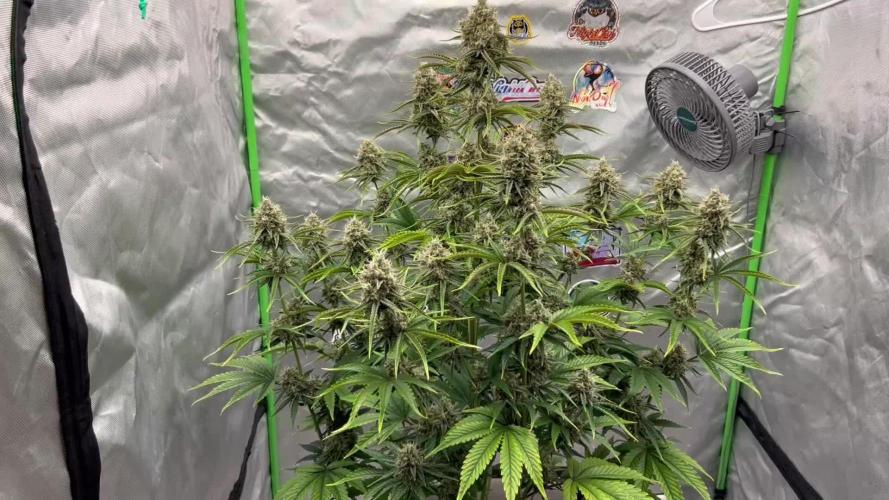
Mulberry F3 Day 70
All is good with Miss Mulberry this morning. Her flowers are in chunky mode. She responded well to increasing her lights. Her flowers resemble strawberries in shape and size with many very large flowers. Starting the pk 13/14 immediately after stretch has seemed to have a positive influence in flower formation. The increase in light intensity also has had a positive effect on flower growth. I haven’t defoliated her very much at all and if I tried hard I could probably count each leaf I removed, less than two dozen total I’m sure. I will however begin to remove a leaf or two each day until she is thinned out a bit.
Likes
18
Share


@DaddyPrime
Follow
6/1 day 10. Shes looking good and super healthy so far
6/2 growing fast. Onto 3rd/4th node

Likes
9
Share


@Headies
Follow
fantastic smells coming out of the tent! The purple punch smells delicious. The sour diesel smells dank. The girl scout cookies smells like GSC
Likes
26
Share


@Char23
Follow
So this week has been interesting for the gorilla and blueberry.
They are packing on some weight especially the gorilla the buds are getting super fat.
The zkittlez has been a lost cause for a while now. I decided to cut this down once I started to notice some amber trichs. I'll update and put in a harvest once this is dried and trimmed in about 7 days. There wont be much there. Will mainly make hash from this and edibles. My screens are on the way to make some nice sift.
I genuinely think I'll be lucky to pull 3.5gs of dried smokable bud.
I am now flushing with plain water both of the remaining plants and I am hoping the gorilla can hold off for another 2 weeks so I can cut these both down at the same time and utilize my tent for drying.
These should more than make up for the disappointment of the zkittlez. I had 3 oz in my head as a good yield from this first grow and I'm confident I could make 4 by the looks of these plants.
There is some nice fading appearing on the blueberry leaves as you can hopefully tell but they defo need to fatten up. Trichs are half cloudy on both plants maybe slightly further on the gorilla.

Likes
5
Share


@Zengrower
Follow
After some consideration I decided to move the DoSiDos back inside for her last stretch of blooming. The heat in the greenhouse caused her to foxtail and the buds became less compact. I have a tent I mostly use for drying, but with a 100W Led it can be transformed into a temporary home for the DoSiDos. I'm watching her closely the coming days to make sure she isn't too stressed and starts growing bananas.
As I had hoped the buds are growing mode dense by the day. Instead of foxtailing outwards the buds are now just growing upwards and continue to swell. Not too many brown pistils just yet, so the buds will keep growing bigger for a while.

Likes
19
Share


@A_Rolling_Stoner
Follow
For my first grow, I am very very happy and am looking on for the next one.


Likes
3
Share


@TS_Greens23
Follow
Due to the high number of tops that naturally produced themselves on the pop,,I had to start some LST,,and in the process,,accidentally knocked the top off it,,😁😂😂🙏 Thankfully the main stem plugged itself,,and the branches that have been trained,,,look promising,,,,🙏🙏💚🇦🇺


Likes
8
Share


@Microsun
Follow
Alright folks! So this harvest was fantastic! I mean! I’m a happy grower at harvest for any plant! I could harvest one amazing and one meh and be just as happy to cut dry and cure them both! This early miss smoked well and is only about two weeks in cure, this is a rank and musky strain with a whole plethora of combining smells, I find it had a massive pepper and spice hit with almost a food like consistency with its smell, I’m finding a even pine, spice, earthy almost cheesy platform with a fine kick of just a odd but interesting odder I can’t put my thumb on! The density of even the popcorn flower is unreal, rocks all of them. A very light almost desert sandy trichome layer in the interior of the nugs but toward the exterior it’s a lush dark green and red hue with purple calyxes also being seen from the top and Bottom inner and some outer calyxes. The trichome production was very impressive also the fast growth in veg was awesome! But I’m telling you! The big bud genetics and the white widow genetics in this are both prominent, and I love it! I’m saying for a auto it’s pretty potent! And not to say that other autos aren't! We all know they can be pretty Damn amazing! But yeah! The flavour is that of pepper and spice! Pine and a gassy greasy fresh herb blend! I wish I had taken more time to run her though because I believe if I had kept running her, her potency would have been a bit higher and definitely would have achieved a more full couch lock. But over all a easy grow and a dense dense grow. I recommend dropping rh and bringing head up a tad at the end to make those nugs as hard as you can! But that’s my bro advice lol

Likes
21
Share


@NONSENSE
Follow
Hello everyone, my friends!
Here is a new grow, sponsored by the guys from the RQS company.
Thanks for the seeds and organic fertilizers.
This time I growing just a genius strain that has excited the minds of multiplying cannabis lovers over the past years - Royal Gorilla . Auto version.
Like always I am using coco coir.
For the first two weeks, I add light fertilizers with PPM around 350-400.
I always keep the PH solution in the range of 6.2-6.5
I keep the coconut always moist to prevent salting.
It's really important.
The plant is already about 3 cm. In a few days I will move it in a large pot.
Likes
17
Share

@Chucky324
Follow
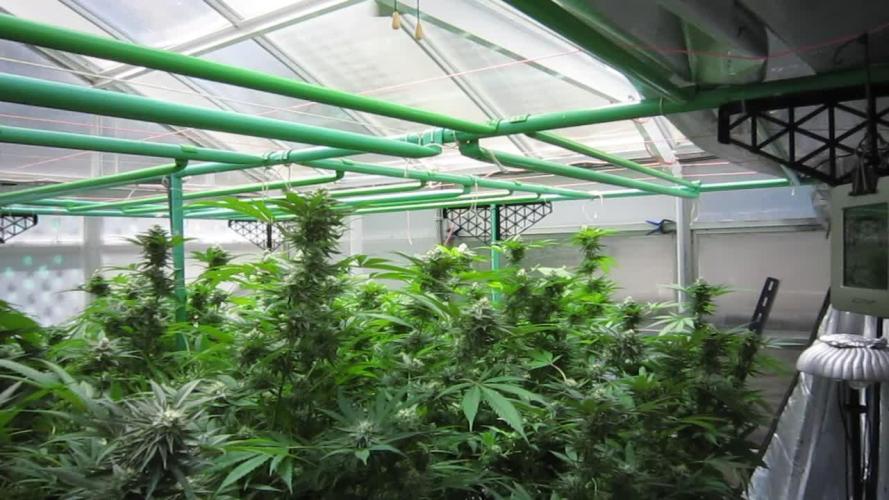
Hello. This is the end of week 5 and the beginning of week 6 of flowering.
The plants are bulking up. Getting some weight put on the buds.
I can see some branches starting to lean and wondering if I should raise my top net or leave it.... Hmm... Life's decision's...
It's been a coolish week here. I'm putting an extra floor fan on low in the tent at nights to ward off the evil... WPM.
Sometimes it just takes a bit more air flow and it won't bother you. Another good reason to trim some fan leaves in the middle for better air flow.
The stretch has stopped... some branches stopping 6 inches short of the roof.
Smells wonderful in here. An overall gelato type of smell with some sweet candy fruit smells.
Plant #5 is developing a funky sweet fruity cheezie type of smell. Funky.... The wife and I both said, Mmmm... when we smell it.
The garden is going good. Lots of zucchini flowers and tomato's started.
I didn't add any wood ash this year, it turns the soil alkaline and I have to guess the right amount of lime to add and get the ph lower, and I don't always get it right. Only added compost from my composter this year and just a sprinkle of lime. Plants love the wood ash but it takes handful's of lime to correct the balance.
OK. Have Fun.
Chuck.
Processing
Likes
5
Share


@Greenbean15
Follow
Watching her closely, she’s getting there but isn’t quite ready. Tried a bud off her and she’s already pretty potent. I am waiting 10-14 more days I think... maybe longer depending on trich’s.
Hoping to get a little more amber and a little more swelling to the buds. I had to put a trellis net in to help support the buds, some were getting close to snapping. My favorite bud is on the top right, she’s weighing that branch down nicely. I’m excited to see how this plant finishes up.
Likes
2
Share


@ao_grows1978
Follow
Week 3 for the solo is officially complete. She's been growing with no trouble. Root development has been excellent. As you can see, I decided to mainline. Seeing as she's in a solo cup, I'm not too worried about stunting. I'm horrible at measuring the water intake, but the cup needs to be watered daily. It's as lite as a feather everyday.


Likes
38
Share


@Dmars
Follow
6/17 Buds are forming fast and furious now and the stretch has stopped. I’m happy with how it all looks so defoliation is over for the duration of the grow. The smells are starting to ramp up too. Opening the tent now gives off a subtle orange and vanilla smell. Only issue is that it’s been raining off and on now for the past week and my humidity levels in the tent are a little higher than I’d like. Not the end of the world though.
6/18 Upped the light a touch. The highest reading I can get is 670 PAR / 29 DLI, but some other bud sites at the top are only getting around 600 PAR. I suppose that’s a consequence of having my bar light that close to the canopy as the areas between the bars will have less light. I will just have to keep in mind to veg a little less next time.
6/21 Fan leaves are in an aggressive praying stance. I did start to see a few leaves with small yellow spots appearing. Before just assuming it’s the light I did some additional poking around and discovered my VPD was a bit too high. I broke out the humidifier so I can more easily maintain the correct RH and so far things look perfect and are now dialed in. I’ll leave the light as is for now since we’re still technically on the low side of things.
6/22 Looking in today I saw a few problem areas with leaves stacked up on top of each other. I decided to do one more round of defoliation, focusing on any leaves that are right up on other leaves or any leaves that were egregiously pushed onto the side of the tent. By the time I was done my forearms were sticky all over. Lots of additional frost on every bud site too. Everything is going nicely.

Likes
18
Share


@Stonyways
Follow
12 on 12 off, missing my girls... I spent about 35 mins tops with them during the week, and then I love giving them the attention they deserve on the weekends, what else is there to do when the worlds gone mad?
2nd grow on the "smart plug cycle" and the cost is so low..I am extremely happy with the SPIDER FARMER SF2000, but there's times I just want to plug in the 1000w to penetrate deep into the plants but the reasons for the LEDs is to grow some heady herbs for less. LEDs can get expensive but its just start up costs, after that you don't have to change bulbs and you don't notice the pull on the electric bill. WIN WIN
the ladies have been busy this week and producing which means i'll need to go in tomorrow and do a clean up.
happy growing!
...GOOD VIBES here!!!
HAPPY GROWING!!!!!
1/26/21 had to switch up watering today due to demands from the plants. This is where it gets tricky, 2 weeks left of feeding before flush and all I am trying to do is keep as many leaves possible to feed all those buds. I am usually just a big bud person but I recently purchased a hash machine and I know a couple old heads that still love bubble soooo...
THE SEED PHARM.... I will be going back very soon for more of this nice plant and something different.
THERE IS NEVER ENOUGH ROOM!!!
Likes
3
Share

@AestheticGenetix
Follow
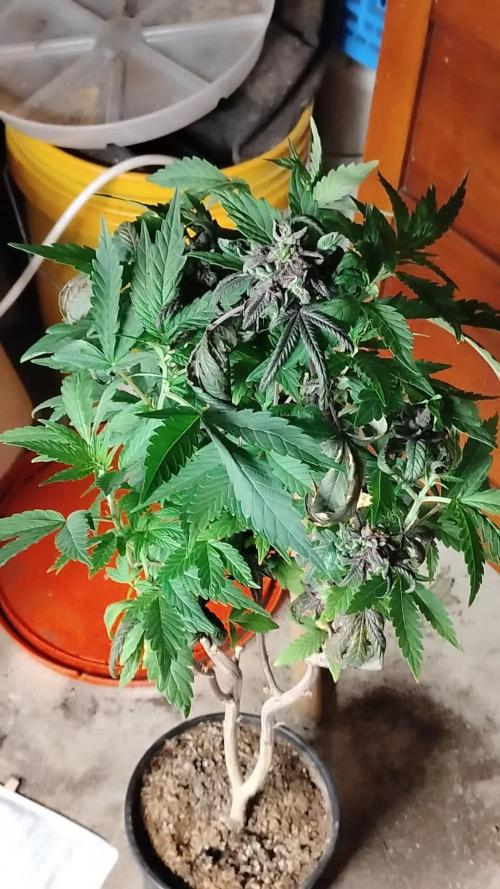
Looking better and better each day
Hopefully starting 12/12 before the plants fully revegged isnt super detrimental to the whole process.