


Likes
Comments
Share


@MrSpooky882
Follow
Wie man sieht hatte ich viel zum wegschneiden, das erste mal wurde gedüngt die Woche, ansonsten läuft alles ganz gut denke ich, bin sehr zufrieden bisher 😊
As you can see, I had a lot to cut away, fertilized for the first time this week, otherwise everything is going quite well I think, I'm very satisfied so far 😊

Processing
Likes
3
Share


@LittleBigTrees
Follow
Still not given any food at 35 days since popping. She's growing well and I've put her in a 4ltr pot.
I've pinched the top out to slow down the vertical growth.

Likes
112
Share

@Kushycat
Follow
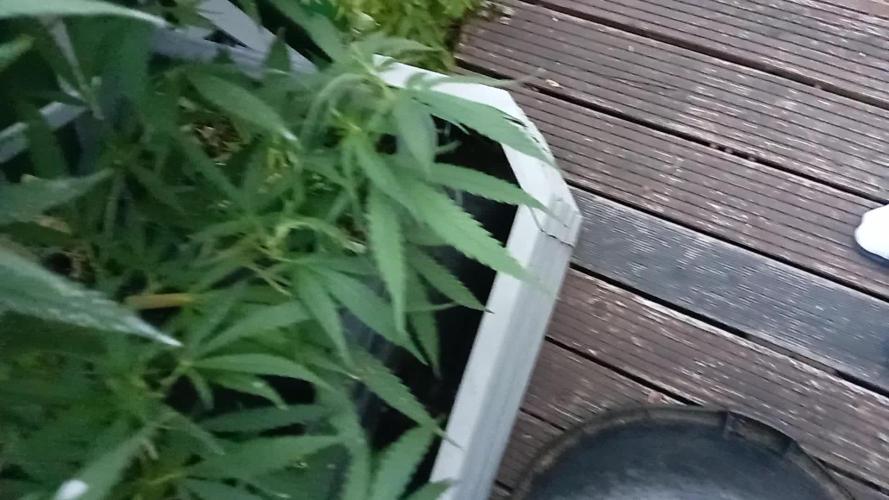
Man, time flies—and I forgot to post an update again. Taking care of so many plants at once, both outdoors and indoors, is more work than I expected, but it’s a joy.
She hasn’t really started flowering yet, so I’m still listing her as vegetative this week. I think next week I’ll be able to declare the first week of flowering. She’s doing great and got a new “haircut” a few days ago—I removed a few small branches.
Since I’m running out of Guerrilla Juice and would rather save the rest for the Colab grow with BioTabs, I made her a nice nutrient solution with the Flower Booster I still had on hand.
May the sun shine on you, and peace be with you. 🌞🌱

Likes
26
Share


@SmokeableHobby
Follow
1/5 - Day 51 / Day 23 flower - Feeding Day
Pots were mostly dry on this day, last time they were fed was a little over a week ago on day 43 (12/28). I've done two small waterings since last feed, about a half gallon of water for each of my 5 gallons and about 8oz of water for my bonsais. My plants are drying out within about 48 hours of each small watering.
For today's feeding I went to full strength on my nutes. My solution consisted of:
- 1 gallon distilled water
- 3ml CalMag
- 3 tsp of FF Big Bloom (full dose))
- 2 tsp of FF Tiger Bloom (full dose)
- pH: 6.9
- TDS: 342ppm
- EC: .7
I gave each of my 5 gallons about a half gallon of the fertigated water each which wasn't enough to produce runoff. I gave them each about another 1/4 gallon distilled water to generate enough runoff to test. I tested the runoff of my Z52 which gave me readings of:
- pH: 6.3
-TDS: 1600ppm
-EC: 3.2
I gave about 12oz of fertigated water to each of my bonsais. My ZB2 runoff posted readings of:
- pH: 7.2
- TDS: 594ppm
- EC: 1.2
My TDS readings are definitely low compared to the FF Soil Feeding Schedule. The suggested readings for week 7 are an EC of 2.8 - 3.0 and 1960-2100ppm. Not stressing too much over the reading as the girls are looking healthy and happy. Will add another feeding in between waterings if I start to see any nutrient deficiencies but I don't see any cause to do so at the moment.
As you can see from the picture on 1/3, the super cropping I did on 1/2 didn't hurt my girls one bit. By the following day, the tops were already bending back toward the lights. This was a big relief.
****************************************************
1/7 - Day 53 / Day 25 Flower
Light watering in the morning today using pH'd dechlorinated tap water w/ 4ml of cal mag. Gave about about a 1/4 gallon to each for my 5 gallons and another 8oz each for my bonsais.
****************************************************
1/8 - Day 54 / Day 26 Flower
Noticing signs of nutrient issue on the Z51. Surprisingly, no signs of nutrient issues on the Z52 despite using the same solution and roughly the same amount of water during the feeding day on 1/5. Decided to do a heavier watering tonight, using about 3/4 gallon of pH'd dechlorinated tap water. Hoping that dilutes the soil a little bit and pushes the salts toward the bottom.
****************************************************
1/9 - Day 55 / Day 27 Flower
Nutrient issues did not appear to get any worse overnight so that is encouraging. Did some minor defoliation on my 5 gallons this morning to remove any of the smaller branches on the lower 3rd of the plant. Haven't completely removed any branches that are below the trellis. Will start pruning more regularly every other day so I don't shock the plants too much.

Likes
35
Share


@SantaStone
Follow
🎅 So, as for the smoke after 30 days of harvest day. Biscotti Mints have a high concentration of THC, definitely above 25%, you can feel it.
Beginners should exercise caution.
-The taste, I wouldn't exactly call it mint. It's similar to peppermint, but it doesn't taste like mint, it tastes like flowers. Bottom line, the taste is similar to pepper flowers.
-The effect is only evening, not daytime. It will be good for an evening relaxation or in the company of friends.
-The appearance is something beautiful. Everyone who saw him liked him. Dense, stone buds, green-violet color.

Likes
28
Share


@MyLittleGarden
Follow
Blütewoche 8 - 02.10. – 09.10.2026
Sie entwickelt sich weiterhin richtig gut. Die Buds werden immer dicker, steinhart und sind ordentlich mit Harz überzogen. Klebt und stinkt wie Hulle! Der Geruch ist süßlich, würzig, frisch und etwas erdig.
Die ersten Blätter bekommen sogar leicht lilafarbene Ränder.
Ich denke, viele kämpfen gerade mit der Luftfeuchtigkeit. Bei mir schwankt sie zwischen 58 und 72 %. Daumen drücken, dass nichts anfängt zu gammeln.
Ansonsten läuft’s super! Obwohl die Trichome noch überwiegend glasig sind, sieht sie optisch schon fast fertig aus. Ein paar Wochen braucht sie aber wohl noch bis zur vollen Reife.

Likes
2
Share


@brown_tattooz
Follow
Week 9 started with having to bring down tent once again it was only for one day it did happen to rain lightly that night honestly plants are resilient af they have been thrown a lil bit of everything an they bounce back no problem all deficiencies it had in Earlier weeks seem to go away right away buds are just stacking up nice.. I do notice the plant in 7 gal fabric pot is bigger than 5 gal pot.. also all my training to keep it spread out kinda goes out the window everytime I have to remove scrog net..we are about halfway there..gonna flower for about 8-10 weeks


Likes
5
Share

@PlantMike
Follow
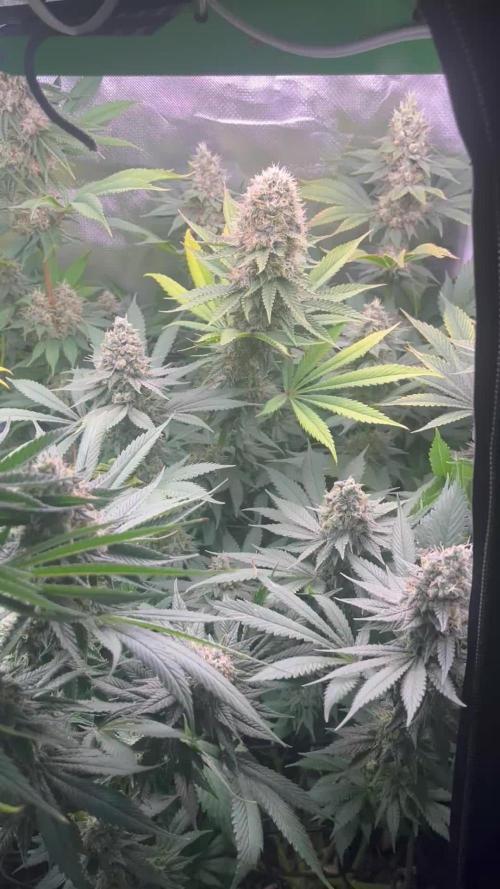
The BMR sisters have started to fade quickly in the last couple days. Been feeding plain cold water to usher shut down in the plants. The buds are beautiful the chemical grape smell still remains and the trichomes are just about 90% milky with very few amber so far. The plants have a strong base and with the double layer scrog I don't have to worry about branches toppling so we'll just ride out this last week and harvest when the time is right!

Likes
Comments
Share


@Agentecuatroveinte
Follow
Selección musical de esta semana: Clasica
PPFD: 700
DLI: 61
VPD: 0.94 kPa

Likes
14
Share


@HanfConnoisseur
Follow
Week 4: Late Flowering Stage
Welcome to the eighth weekly update of our cannabis cultivation journey in Germany! As we enter the fourth week of flowering, our strains—Pulp Friction, Cookies Haze, Eleven Roses, Poddy Mouth, Critical Lemon Kush, and OG Kush—are approaching their final stages of development with impressive bud growth and resin production.
Key Developments:
1. Bud Maturation:
- The buds have continued to swell and mature, becoming dense and resinous.
- Trichomes are now fully developed, with milky-white heads and some turning amber, indicating the approaching harvest window.
2. Environmental Management:
- Maintained stable environmental conditions with temperatures between 20-26 degrees Celsius and humidity levels around 40-50%.
- Continued to ensure adequate ventilation to prevent mold and maintain airflow around the plants.
3. Nutrient and Watering Management:
- Adjusted nutrient levels to support late-stage flowering and maximize resin production.
- Monitored soil moisture carefully, maintaining optimal hydration levels for the plants’ roots.
4. Final Care and Maintenance:
- Continued to support the plants’ structure with stakes and ties to prevent branches from bending under the weight of mature buds.
- Removed any remaining yellowing or dead leaves to promote airflow and redirect energy towards bud development.
Growing Medium and Setup:
- The plants have thrived in a blend of living soil, coco coir, perlite, and clay pebbles, enriched with mycorrhizal fungi cultures for enhanced nutrient absorption.
Next Steps:
- Monitor trichome development closely to determine the ideal harvest time based on desired effects (clear, cloudy, or amber trichomes).
- Prepare for harvest by gathering necessary tools and supplies, such as trimming scissors, drying racks, and storage containers.
- Stay vigilant for any signs of pests or diseases as the plants near maturity.
Stay tuned for next week’s final update, where we’ll discuss harvest preparations and the culmination of our cannabis cultivation journey. Feel free to ask any questions or share your experiences in the comments below!



Likes
12
Share


@2Stones1Bird
Follow
Checkout my Instagram @smallbudz to see the Small budget grow setup for indoor use, low watt, low heat, low noise, step by step.
22/11/2019 - Pot feels light and dry gave her 1,5l PH 6.2 water with 0.75ml-Grow, 0.75ml-Max, 1.5ml-Bloom, 2.25ml-Heaven and 2.25ml-Acti vera from Biobizz, noticed almost no runoff this time.
27/11/2019 - Pot feels light and dry gave her 1,5l PH 6.3 water, noticed a lot of burned tips no nuts this time I guess? some runoff appeared.
Processing
Likes
37
Share


@Chunkmasta1
Follow
Today is day 22 of flower. Currently I am on the 5th day of a flush with just water at ph of 5.9.
Two more days we will go back to regular nutes. She is stacking up nice at this point couldn’t be happier with how well the plant thrived. It’s like there was never any issues. Currently wishing I cleaned up the bottom of the plant more. This plant has been such and easy grow thanks to the genetics I’m sure. Looks like she will yield nicely. It’s been a little cold at night here lately but she is taking it well

Likes
2
Share


@Boomdrawfyah
Follow
78 dias de vida hace dos semanas que empezaron la floración la 1051 esta mucho mas avanzada que sus hermanas han sacado un lado genetico más sativo y van a tardar mucho mas en cogollar en general esta todo bien, ha sido temporada de lluvias, tormentas y hay una humedad constante el clima no ayuda, en el mediterraneo siempre en final de temporada vienen lluvias y hay que pelear con el tiempo para poder sacar buenos resultados y evitar plagas

Likes
19
Share


@DreamIT
Follow
Sponsored by:
🌸SUPER SATIVA SEEDS CLUB🌸-💡VIPARSPECTRA💡-💐GREEN BUZZ LIQUIDS💐-🛠️WEDRYER🛠️
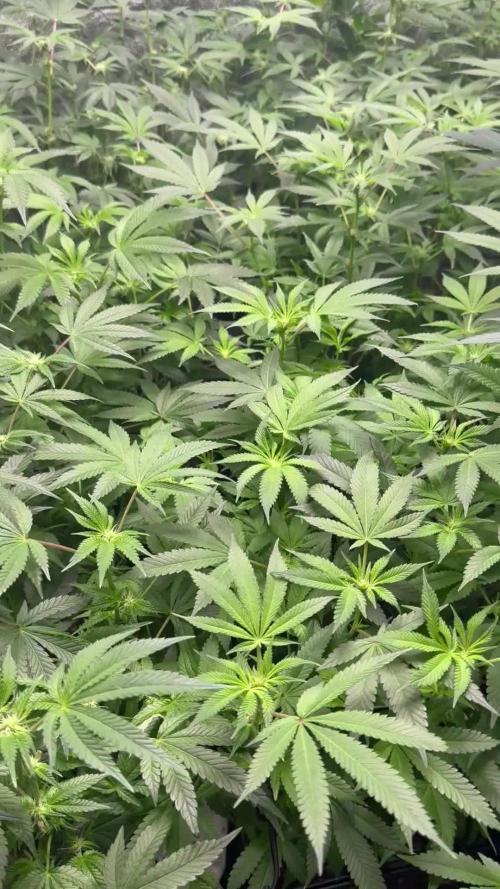
8/7 After several days of Growdiaries making it difficult for me to write and respond to comments, I found that I can still update the journals. I apologize to everyone for the non-replies but I have replaced the main email and the email to confirm the account never arrives, and Growdiaries' customer service seems to be non-existent.
10/7 everything is going well, nothing special to add🤘🦄
12/7 Everything's going great, yeah🤘
14/7 at the time of shooting it was slightly overwatering, but nothing to worry about
__________________________________________
Personal advertising (contains affiliate links)
__________________________________________
🦄Super Sativa Seeds Club, creators of premium and legendary genetics since 1985! Anonymous shipping!
✅https://bit.ly/Supersativaseeds
__________________________________________
Did you know that Green Buzz Liquids fertilizers are 100% vegan? A complete line of products ready to give the best to each of your plants! Visit the site and see my journals to see how they work 🦄
🤯 And with the code "dreamit" you will immediately receive a 15% discount on your purchases
✅https: //bit.ly/GreenBuzzLiquidsPro
__________________________________________
👀 Are you looking for a good lamp to start with? 👀
🌞Viparspectra has something more than the others, take a look at their site.
⏩ Use "GDVIP" for an extra discount or "DREAMIT3" for an extra 5 %% discount
👀 Search for it on Amazon
✅Amazon USA: https://amzn.to/30xSTVq
✅Amazon Canada: https://amzn.to/38udUVe
✅Viparspectra UE: bit.ly/ViparspectraUE
✅Viparspectra USA: bit.ly/ViparspectraUS
______________________________________________
🌈 Tired of blowing on your weed hoping it dries quickly? Check out the Wedryer website! You will find a well-made accessory that will help your weed dry in just 8-10 days without the annoying risk of finding mold or other annoyances! (no affiliate links)
✅https: //bit.ly/Wedryer_
______________________________________________
📷🥇Follow the best photos on Instagram 🥇📷
https://www.instagram.com/dreamit420/
Backup
https://www.instagram.com/dreamit4200/
🔻🔻Leave a comment with your opinion if you pass by here🔻🔻
🤟🦄💚 Thank you and enjoy growth 💚🦄🤟


Likes
8
Share


@Zucca
Follow
Plants are in good health and start to be covered of trichomes.
Leaves beagan to be quite sticky and here and there trichomes seems to be a thin layer of icy snow.
Completing the sixth week of flowering, plants overcome more than the half of flowering stage and I can't wait to see the final result.
Likes
7
Share

@GERGrowDesigns
Follow
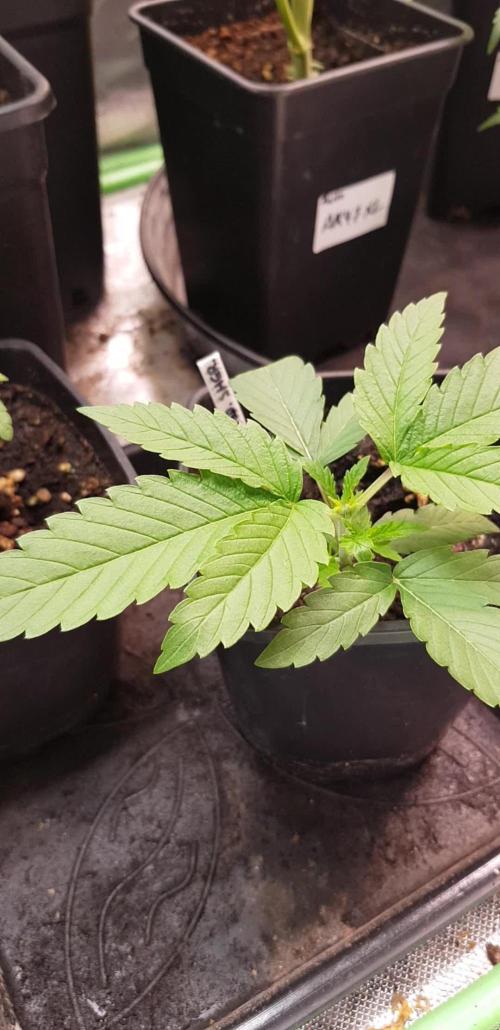
Welcome to Veg Week 3 of Fast Buds Papaya Sherbet
I'm excited to share my grow journey with you from my
FastBuds Project . It's going to be an incredible ride, full of learning, growing, and connecting with fellow growers from all around the world!
For this Project , I’ve chosen the Feminized Photo strain Papaya Sherbet :
Here’s what I’m working with:
• 🌱 Tent: 120x60x80
• 🧑🌾 Breeder Company: Fast buds
• 💧 Humidity Range: 60
• ⏳ Flowering Time: 58 Days
• Strain Info: 30%THC
• 🌡️ Temperature: 26
• 🍵 Pot Size: 0.5l
• Nutrient Brand: Narcos
• ⚡ Lights : 600W x 2
A huge thank you to Fast Buds for allowing me to try my Best with this amazing collection from Automatic and Photo Strains they managed to Sponsore . Big thanks for supporting the grower community worldwide! Your genetics and passion speak for themselves!
I would truly appreciate every bit of feedback, help, questions, or discussions – and of course, your likes and interactions mean the world to me as I try to stand out in this exciting competition!
Let’s grow together – and don’t forget to stop by again to see the latest updates!
Happy growing!
Stay lifted and stay curious!
Peace & Buds!

Likes
12
Share

@2Stones1Bird
Follow
Checkout my Instagram @smallbudz to see the Small budget grow setup for indoor use, low watt, low heat, low noise, step by step.
04/01/2020 - Did the last defoliation, removed about 1/4 of plant material.
06/01/2020 - Fed her 1.5l of 6.5PH water with 0,3ml Cal Mag (Atami) 0,25ml of Grow, 0,6ml of Bloom and 0,5ml Max, and 1ml of each: Heaven, Alga-mic and Vera, noticed some run off, I use about 1/3 of the nutrient dosage on the chart, to achieve about 200/300PPM (500 scale).
Likes
3
Share


@Rumyn88
Follow
Hey all, its our 2nd week after casing drop. Facing some issues with Night temp, sometimes it could fall to +12C, thinking about how to improve it. Also concerned about slow growth because of that. Using just 1/3 of Plagron recommended dose.
Modified a bit my tank, made some technical window. Also set up automatic irrigation, because wool started to dry up during the day
Upd Sunday 10.12.2023, Decided to put Babys finally to Seramis.
Washing ceramics is some kind of hell:
-First, I decided to sift all the dust through a sieve, stood in a half-bent position with bags of Seramis for 30m (my back didnt like it), but there was a lot of dust.
-then I decided to check the Ph and rinse thoroughly. Although the package says 5.5-5.7 Ph, after the first flush with a balanced solution at 5.5 Ph, there was 6.5 in the drainage.
- I was concerned by the very muddy brick colour water, then got tired of mixing 5.5 in a bucket for flushing and decided to rinse it with tap water from shower and then balance it back to 5.5 Ph . As a result, I poured from the hose for another 30 minutes until the water became more or less transparent.
-I also tested FloraFlex discs, they drip great and, although round, fit perfectly into my square grow bags.
-Meanwhile, the Milwaukee Ph meter broke down, even the readings of the calibration buffer were changing from 4-6 Ph within one minute. In the end, I spent another 30min and half a bottle of buffer on this too. It’s good that i had yellow Chinese Ph meter, which even after 3 years of rest in the box showed accurate buffer readings.
-Finally, the Ph of the drainage was 5.5-5.7 and it was transparent, so I began to move it into the growbox. I sprinkled it as much as I could, it was impossible to dig deeper. The plants do not yet reach the matrix disk, so for now they will grow with the usual felt.
-The cap of the tank is very thin and cannot withstand the weight of 2 grow bags, I’ll have to come up with something else, maybe I’ll put some kind of drainage grid.
Watering will be from a tank with a mixed solution of 5.8 Ph and 1.1 EC.