


Likes
Comments
Share


@Pakkapon2477
Follow
ทำใบ week 1 จากต้นโคลน ไฟ 18/6 hr
แอร์ 24 ชม
ปุ๋ย compost tea
Trmp 26
Rh 65-70%
Co2 1200 pom
Vpd 1.13


Likes
4
Share


@Budette_Botanics
Follow
She seems to responding well to the net, and defoliating. I have taken quite a few leaves from both this week. Hopefully it won’t stress her out too much, it was much needed. The leaves were shading nodes, and crowding each other. We will see how the week progresses. She has been very petite throughout, but this last week I have notice she is starting to have a growth spurt. I wasn’t convinced it would happen with this one, but she’s on it! She had a rough start, so how ever it goes I’m curious to see how she ends. No deficiencies to note (touch wood) she has been quite resilient in that sense, where as her neighbour s/b has been battling potassium deficiency. Fed the same, but they really are worlds apart.
Thank you for taking an interest 💚 Happy growing everyone 💚🌱


Likes
19
Share

@Northern_Ent
Follow
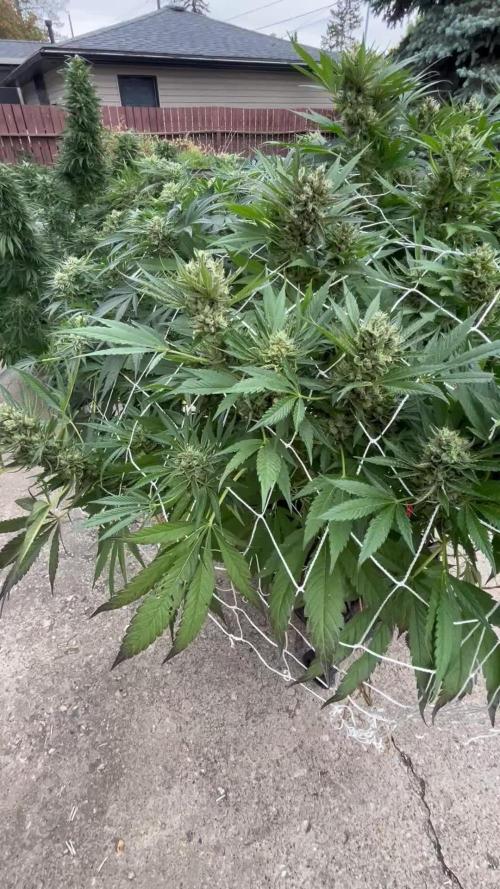
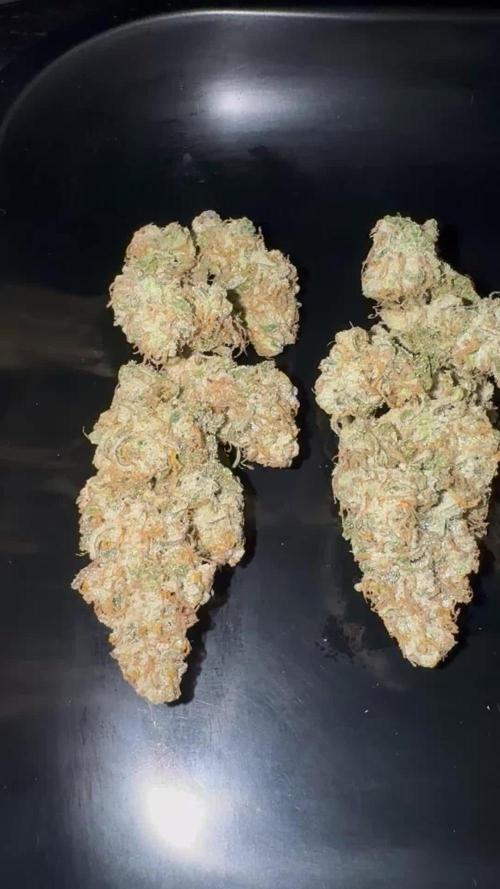
Sep 27: lots of buds remaining left and did a big defoliation to expose the buds to sunlight. Lowered scrog net during the defoliation.



Likes
9
Share

@Hempface86
Follow
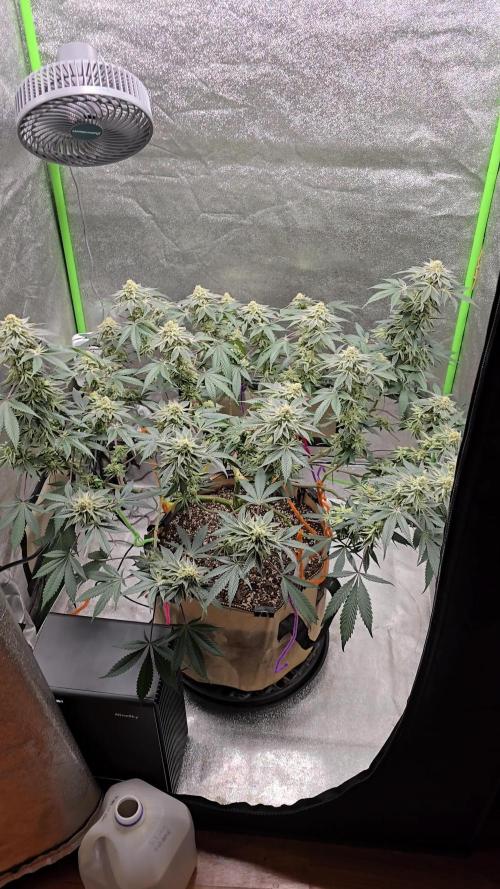
Ladies and gentlemen, we are nearing the end of this grow and I i am very pleased with how everything has gone so far! Smells very good but not overpowering strong .. always a good sign when there's frost on the fan leaves 🍃.. once again shout out to @Grow4releaf for the bean! Thank you everyone that checks her out .. for the last 2 waterings i've been just that, water only and that's what we're gonna do from here on, out... I'm gonna give her another week or two, but the branches are already bowing as if she's just spreading her wings .. hope everyone is doing well.God bless and happy growing 🙏

Likes
11
Share


@DarbGrowDiaries
Follow
Looking wonderful and smelling great!
pistils starting to turn orange and buds starting to swell up.
I'm hoping for some cooler days so I can crank up the lights, still at only about 70%
Will probably need the full 8 weeks of flower so I hope she still has time to catch some weight.
Likes
6
Share


@Green2Gold
Follow
Quarta e ultima semana de Vega assim eu espero, quanto a nutrientes vou continuar com os mesmos, planejo mudar apenas na floração.
Iniciei meu treinamento LST com arame e auxílio de palitos para afastar as folhas leque e dar espaço e luz para as gemas.
No meio da quarta semana ela entrou na flora
Nós vídeos a girl scout Cookies é a planta do fundo


Likes
11
Share


@GREENPHOENIX6262
Follow
* 02/08 - Week 1 Flower - Flushed out veg nutes - Feeding only flower nutes - light feeds to begin - heavy water feeds in between - bend clips have been applied until the end of the week*


Processing
Likes
10
Share


@Luv2Grow
Follow
Day 72 - Into week 11 now and gave her 2 gallons of water and nutes today. Overall she’s doing really well and budding up nicely. She’s already extremely frosty and looking forward to the next few weeks to see what she does at the end.
Day 73 - No real issues and nothing much else going on with the girl right now. Just took her out of the tent for some updated pictures and tucked a few leaves when I put her back for more light penetration.
Day 74 - Nothing much new really happening today. She’s frosty as hell and budding up nicely. She’s got another couple of days before she needs any sort of water or nutes but I’ll check in her tomorrow and if she needs some, I’ll give her some.
Day 75 - Nothing much to speak of with her right now. She got 2 gallons of water and nutes today and her buds are really looking gorgeous. She’s probably the strongest smelling plant that I’ve grown so far.
Day 76 - Almost the end of week 11 and all is good. Not much happening right now but did defoliate a few giant fan leaves. Other than that, just enjoying her smell and watching her swell.
Day 77 - It’s the last day of week 11 and she’s doing great. Not much really going on, she’s stacking buds and continuing to frost up even more than the beginning of the week. She should need some water and nutes by the end of the weekend. All in all it looks like this is gonna be a very easy trim for once.
Likes
20
Share


@Bread_n_Buds
Follow
Time flies, we have arrived in a flash at day 16, it seems like the other day that the first young ladies were appearing on September 1st. "Do you remember.....nanannana Septermber"
She is the Runtz and among the Zamnesia strains she is a diamond tip. I have grown her in all versions and she has always been super, I can only advise you to try her. The two Runtz are growing very balanced, the internodal distance is medium and regular like the growth, we have no leaps or stretching, she is a very proportionate plant. She is also slightly, very but very slightly under fertilized because I went too slow. Follow the table, especially if you make the personalized one from Plagron, you can't go wrong.
--- feeding program - As I mentioned I was shy about fertilizing and the plants are slightly, very slightly faded, let's learn to notice these small signs and with the normal doses after two or three waterings we should be fine. You have to look at the plants guys.
- Power Roots - 1ml/l
- Alga Grow - 2 ml/l (instead of 4 ml/l I made this mistake)
- Pure Zym - 1 ml/l
- Sugar Royal - 1ml/l
- Vita Race - 0,5 ml/l
- The 100% Organic pack by Plagron can be found on Zamnesia at the link: https://www.zamnesia.io/it/11457-plagron-easy-pack-natural.html We are giving a lot of humidity with a humidifier and we oscillate between 65% and 70%.
// Strain Description // Guys, we have really reached a turning point! Our breeders have recreated one of the most sought-after strains by Californians: the very powerful and exquisitely delicious Runtz. This cross between Gelato and Zkittlez is everything you could want from a cannabis strain: tasty, powerful, balanced, productive and fast flowering. Buy the seeds and try it yourself!
- Get a seed of this fantastic strain --- https://www.zamnesia.io/it/6000-zamnesia-seeds-runtz-femminizzato.html
- Soil and Fertilizers entirely organic --- https://plagron.com/en buy on www.zamnesia.io
- Growbox and air sistem --- https://www.secretjardin.com/
- Light - Sp3000 - https://marshydro.eu/
- Music and sound --- I made my girls listen to 432hz frequencies and music from www.radionula.com
- Z --- You can find these seeds, much more from the world of cannabis, mushrooms and an incredible series of accessories and gadgets on the reference site not only mine but of many growers ---- https://www.zamnesia.io
Sound’n’Buds weekly with Gangstarr - “You Know my steez” from “Moment of truth” Album, go and listen!
Likes
Comments
Share


Likes
6
Share

@sedygrows
Follow
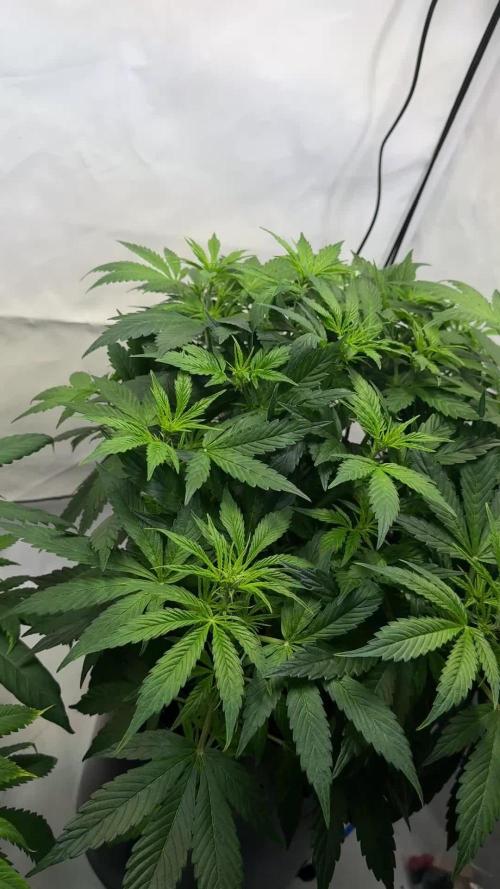
The scrog was no good idea. Had to remove it today. Problems: unable to change water properly and can‘t clean the tank during the process. So.. scrog is gone and the LST is back 😂 and i switched to 12/12 because of my other plants in the tent.
Likes
8
Share

@Canna055
Follow
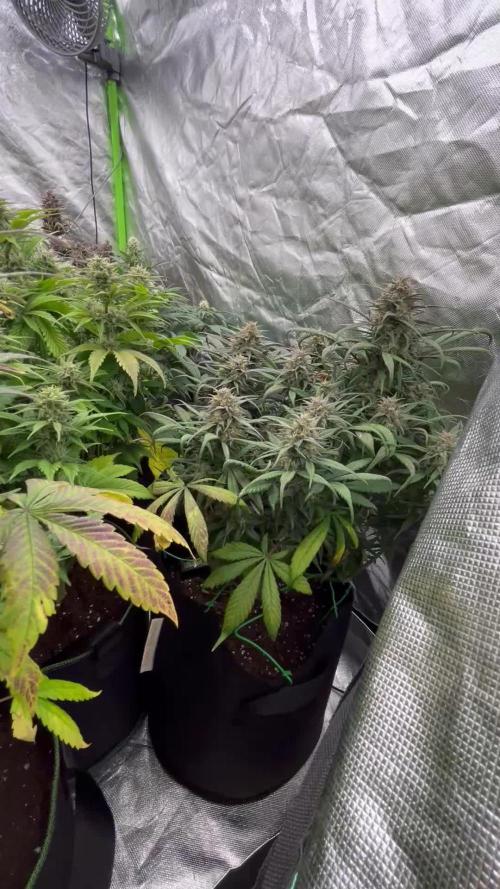
Woche 8 und weiterhin sieht’s gut aus ein bisschen entlauben sonst nur alle 2 Tage gießen
Die Gorilla Zkittelz struggelt weiterhin bildet aber unten wieder neue grüne Blätter
Likes
3
Share

@Lvnsource
Follow
[Feed Log]
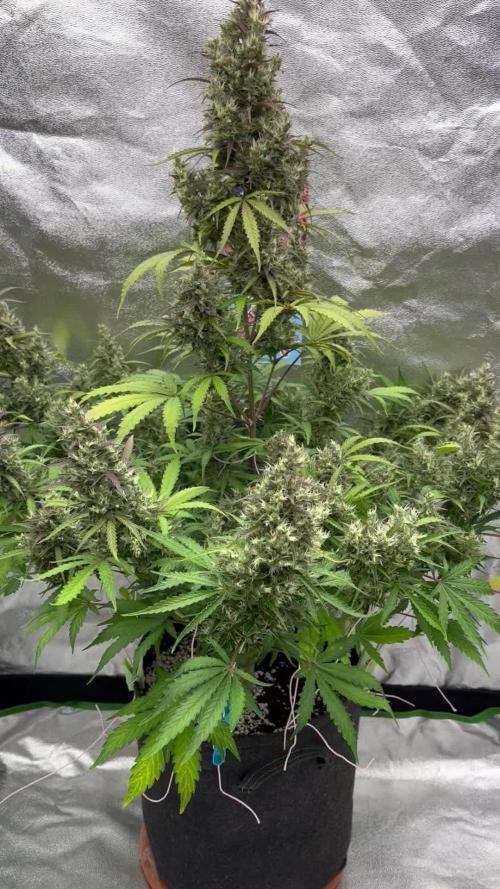
D: 79 - 10L - [ph 6.1] SI[0ml] ,Vega[5ml] , Flores[26ml],Ca/Mg[2.1g & 0.6g ] INPUT; [1.022 EC] OUTPUT; 4L ,6.2 pH , 2.1 EC Previous irrigation: D:75
Still in progress 👍 EC ended up coming down, it’s now at a more appropriate level
Auto #2 - was chopped on day 78
Likes
6
Share


@Viridios
Follow
The Slurricane IX is a beast of a plant to grow, the growth is quick and quite bushy. I would advise to train these plants SCROG..or something.. the stretch is just crazy..im gona say prepare for a 200% + stretch. Thy will easily get out of of control if not managed well.
Pest resistance is good, i did not have any bug problems, but i did have a small WPM issue, but it was very crowded in there. Sorted it out by defoliation and a treatment of hydrogen peroxide took care of the problem.
Very thirsty plants, at there peak, 9 plants was drinking 110L a week.
Very stong smelling plants. Extremely dense flowers covered in a sluricane of trichomes.
Harvest of the plant is quite easy, not a very bushy cola..so its a easy trim.
Overall a great genetic to grow and a beautiful plants in itself.
@InHouseGenetics .. superb.
Thank you guys so much for giving us the privilege to grow such amazing genetics.
Keep up the great work.
Happy growing. 😁
😜
Likes
51
Share


@eldruida_lamota
Follow
Vamos familia, otra vez de vuelta, y es que vaya como se están poniendo las cookies gelato de royalqueenseeds, parecen caramelos repletos de polen.
Variedad híbrida que al parecer tiene floración rápida y si no mirar cómo están con 6 semanas de floración, pronto lavado de raíces.
.
La humedad esta al 45% la temperatura está entre 21/28 grados , y como siempre el ph , ya que es de lo más importante,está en 5,8/6,0.
.
AgroBeta:
1 ml x L Flowering black line , vía radicular.
0,2 ml x L Beta shark, vía radicular.
0.5 gr x L mega PK , vía radicular.
0,8 ml x L Terminator, vía radicular.
0,5 gr x L Engordacogollos, vía radicular.
0,3 ml x L Tucán , vía radicular.
0,1 ml x L Betazyme, vía radicular.
0,3 ml x L Tricoma, vía radicular.
0,05 ml x L Gold Joker, vía radicular.
0,2 ml x L Silver, vía radicular.
.
Hasta aquí todo familia 🕸️ , un saludo y buenos humos fumetillas💨💨💨.
Likes
28
Share


@deFharo
Follow
🖐️👨🌾 Bienvenidos entusiastas de la marihuana clandestina!
Esta planta de raza libanesa, completamente establecida en su maceta, vive y crece feliz a la espera de mostrar todo su potencial en floración. Una semana más y cambio el horario a 12/12h.
Grande ha sido el crecimiento y fortalecimiento esta semana, el consumo de agua se ha duplicado, riego profundamente cada 3 días, aunque todavía no he llegado a la tasa máxima de agua que tengo previsto para esta maceta de 15L, actualmente la lleno con 1600ml, pero en las próximas semanas llegaré al máximo que tengo previsto será de 2400ml, de momento mientras esté en crecimiento vegetativo no quiero saturar de humedad el sustrato para favorecer la expansión de las raíces.
Esta semana dos riegos con Bio Estimulantes, una aplicación foliar a principios de semana y he añadido una mezcla de enmiendas secas para alimentar al sustrato y a la Microbiología
La planta se desarrolla muy saludable y compacta, ajusto regularmente las ataduras de las ramas para controlar la altura e igualar, en lo que pueda, la altura de todas las plantas de la carpa de cultivo, el objetivo es conseguir una altura máxima de 70cm para todos los cultivos, todavía quedan al menos 3 semanas de crecimiento, la actual, con horario de 20/4h, y las dos siguientes con horario de floración 12/12h, mientras tanto sigo intentando aplastar mis cultivos con intensidad de luz, he habilitado mis 3 lámparas principales del dosel al 100% de intensidad y a 15-20cm de los ápices, hasta que la planta pare de crecer voy a conservar los dos COB azules y el panel, las 3 lámparas con 450nm, cuando pare el crecimiento y comience la pre flora haré un cambio radical de estas lámparas y añadiré otras, para esta temporada tengo preparado un gran arsenal de luces para floración con espectros de color con muchos rojos y naranjas imitando al sol de agosto y septiembre (2100K, 2400K, 2700, 660nm, IR, UV)... todo por la causa!
HASTA LA PRÓXIMA...
SALUDOS A TODOS!
================================
Info de la cepa Black Lebanon de Super Sativa Seed Club: https://supersativaseedclub.com/cannabis-seeds/black-lebanon.html
"Esta es la Black Lebanon original que data de los años 80, una auténtica planta de Hash..." Super Sativa Seed Club
- Genética: Landrace
- Indica dominante
- Tiempo de Floración - 09 semanas
- Rendimiento en interior: 500 g/m²
- THC: 20%
- Sabores: Hachís, bayas, afrutado, ligeramente terroso
================================

Likes
6
Share

@DogDoctorOfficial
Follow
🌸 Week 4 Flower – RollerCoaster Haze 🌸
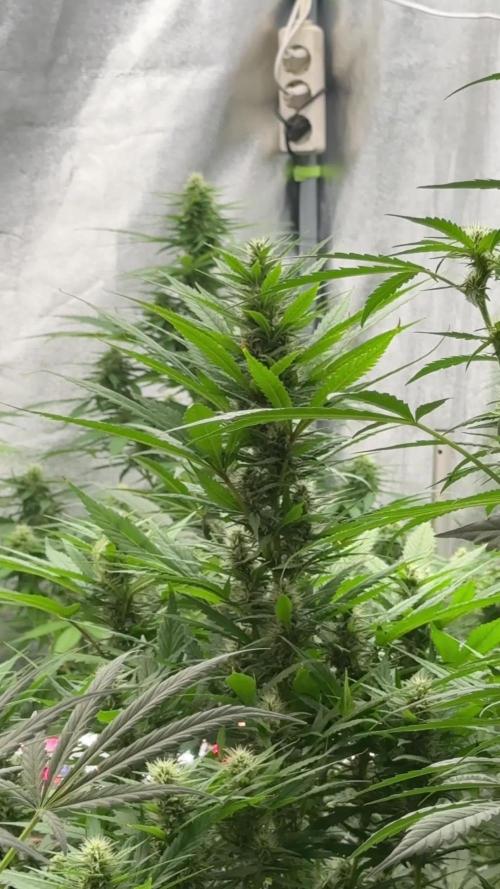
The girls are now deep into flower, and they are nothing short of stunning. Both phenos are stretching tall, stacking sites beautifully, and building those early bud formations that promise something special. White hairs are everywhere, and the canopy is vibrant, full of life, and thriving.
This week I cleaned the lowers again, focusing energy on the tops. The roots are still showing off their strength, breaking through the soil and proving how powerful this foundation is. You can really see how the balance of soil and feed is driving such healthy growth.
💧 Feeding Recipe (Aptus + Plagron)
This week, the nutrition is a beautiful synergy between Aptus and Plagron lines, all dialed in at 1ml/L:
• Aptus Regulator
• CalMag Boost
• Aptus All-in-One Liquid (light, occasional, as soil still has pellets)
• Plagron Green Sensation
• Plagron Sugar Royal
• Plagron Power Buds
Solution runs around pH 6.0–6.1, with EC balanced to keep the soil’s natural charge in mind. Roots, stalks, and leaves are showing us this recipe is working wonders.
Environment
• Soil Temp: ~24°C
• Room Temp: ~29°C
• Humidity: ~67%
• VPD: ~1.37 kPa
Slightly warm, but managed with airflow and care — and the plants are clearly thriving under these conditions.
🌱 Reflection
This week is a reminder of the beauty of balance. By combining nutrition strategies, experimenting, and adapting, the garden rewards us with strength and health. RollerCoaster Haze is branching massively, with countless bud sites forming — a true example of how much potential can come from testing, learning, and trusting the process.
The journey is as much about mistakes and improvisation as it is about success. And right now, these girls are teaching us that with a strong foundation, nature does the rest.
✨ The ride continues — RollerCoaster Haze Week 4 Flower is in full bloom!
📲 Don’t forget to Subscribe and follow me on Instagram and YouTube @DogDoctorOfficial for exclusive content, real-time updates, and behind-the-scenes magic. We’ve got so much more coming, including transplanting and all the amazing techniques that go along with it. You won’t want to miss it.
• GrowDiaries Journal: https://growdiaries.com/grower/dogdoctorofficial
• Instagram: https://www.instagram.com/dogdoctorofficial/
• YouTube: https://www.youtube.com/@dogdoctorofficial
⸻
Explore the Gear that Powers My Grow
If you’re curious about the tech I’m using, check out these links:
• Genetics, gear, nutrients, and more – Zamnesia: https://www.zamnesia.com/
• Environmental control & automation – TrolMaster: https://www.trolmaster.eu/
• Advanced LED lighting – Future of Grow: https://www.futureofgrow.com/
• Root and growth nutrition – Aptus Holland: https://aptus-holland.com/
• Nutrient systems & boosters – Plagron: https://plagron.com/en/
• Soil & substrate excellence – PRO-MIX BX: https://www.pthorticulture.com/en-us/products/pro-mix-bx-mycorrhizae
• Curing and storage – Grove Bags: https://grovebags.com/
⸻
We’ve got much more coming as we move through the grow cycles. Trust me, you won’t want to miss the next steps, let’s push the boundaries of indoor horticulture together!
As always, this is shared for educational purposes, aiming to spread understanding and appreciation for this plant. Let’s celebrate it responsibly and continue to learn and grow together.
With true love comes happiness. Always believe in yourself, and always do things expecting nothing and with an open heart. Be a giver, and the universe will give back in ways you could never imagine.
💚 Growers love to all