




Likes
13
Share


@JesusPapers
Follow
Not a heavy yielding lady. Which is not a surprise due to the cookie genetics. She is super frosty and stick. Her colors are constantly changing for the better.
I pollinated her with “Purple Punch x Cuvee “
And will soon have my own Cookies strain........ Purple GasFace Cookies......

Likes
6
Share


@ButterfliesLittleFarm
Follow
Hello Diary,
White Widow has finished the third week of flowering, and as you can see in the photos, it looks great.
I would say that she has stopped growing in height, only 4 cm this week.
Final 67 cm which is almost ideal considering the height of my grow box.
White Widow has formed its final shape and will now direct all its energy into the development of flowers, at least I hope so :).
The main cola dominates above the other branches and is completely covered with flowers on which trichomes are already visible.
All three plants have started to smell more intensely, when I open the grow box I immediately feel the smell that overwhelms me.
The leaves are a healthy green color, there are no signs that she is missing anything.
It is obvious that the new nutrients Bio Grow and Bio Bloom Fertilizer are doing their job.
Watering has become more frequent, the plants have become thirstier compared to the previous week.
I continued to add CalMg and Bio Bloom Fertilizer with each watering.
All in all, I am very pleased with how White Widow is progressing,
I try to provide her with the best possible conditions and she returns the favor in her own way.
Here is what the past week looked like.
29/08/2024 - Day 36.
Watering.
I prepared 9 liters of water, added CalMg and Bio Bloom Fertilizer and lowered the p.H. to 6.0.
With that amount of water, I watered all three plants on the "Farm".
01/09/2024 - Day 39.
Watering.
I repeated the same procedure as three days earlier.
03/09/2024 - Day 41.
Watering.
Same procedure.
04/09/2024 - Day 42.
End of the 6th week, or the third week of flowering. Photographing and measuring the height of the plants.
White Widow - Day 42. - 67 cm.
That's all from me for this week, see you soon and thank you all for your comments.

Likes
18
Share


@TheGreenLeopard
Follow
Oh lovely looking plant. Straight up looks a Cali girl. Have a lot less
Complicated grow this time with just tipping - kinda miss the trellis…but all good have too much work to do
Likes
24
Share


@Mrs_Larimar
Follow
2023-09-08
First of ll, thank you team @Kannabia, especially to Zoraida.
he hnded me the Freebees at the Spannabis this Year, after i showed him my previos Kannabia
Grow.
He said, "Oh as you liked our Strain " La Blanca" you will love the Super OG Kush"
he was right, i was fascinated from beginning how vigour and well structred those OG Kush were growing
and when Buds appeard i was totally overwhlmed.
so for me the Perfect Strain.
👉easy to grow
👉super structure
👉great ratio from Buds to Leaves
👉wonderful packed Colas
👉crusted with Trichomes
👉for me absolutely recommendable Strain👉👉https://www.kannabia.com/en/feminized-cannabis-seeds/super-og-kush

Likes
77
Share


@SuggaShane
Follow
I think it’s about flushing time for Gorilla Zkittlez. She stinks up the whole room. Carbon filter ain’t cutting it. Lol Gorilla Cookies on the other hand is getting huge. I think she should pull some nice weight. She’s stacking up trichromes and starting to smell pretty good. A weird smell but it’s good. Idk how to explain it. 😎 That’s all till next week. 🤙🏽💪🏽


Likes
15
Share


@Uwish
Follow
The run continues nicely, we still had some temperatures of nutritive solution a little high with the heat of Danielle. It drops drastically in 2 days so I will finally finish this growth in the calm one and will be able to begin my bloom on September 24th.
I apply hydrogen peroxide at a rate of 0.5ML/L, twice a week as a treatment. The root Rot X is used every ten days when changing the nutritive solution.
I put less water in my system, in order to create a wet zone and a dry zone, I make sure that the roots are always immersed of course.
As soon as the temperature drops, I will switch to 800 ppfd for the end of growth and depending on the evolution of the plants I may add some sensi grow a and b to increase the ec a little.
If you are attentive, you will observe on the tips of the leaves or even on the leaves, spots of burns or deficiencies, it is simply the consequence of the pythium a few days earlier.
The last growth update will be around September 24/25.

Likes
Comments
Share


@PW216
Follow
Update in progress...
11/23/24 - Chopped and hung whole in closet.
11/29/24 - Trimmed and jarred. Early samples detect incredible taste and smell. The high is immediate and very energetic. Felt up front and in the face. Very pleased with the initial weights, although I will make certain they are accurate and final before posting numbers.
12/11/24 - No clue why it only gives me an option to log the wet bud weight but I put 3.55 oz for my final weight and that is dry.

Likes
20
Share


@eldruida_lamota
Follow
Que pasa familia, traigo la 2 semana de esta farm cheese, la verdad que se está comportando muy bien y el alimento aportado de advanced nutrients como siempre lo agradecen.
Ph controlado, temperatura y humedad dentro de los parámetros, ya quitamos el propagador y ya es esperar hasta que cojan altura para pasarla a floración.
web: http://bit.ly/2uJAjgy
ts600: http://bit.ly/3cnv0Ev
code: an420
Nos vemos la semana que viene fumetillas

Likes
3
Share


@MarihuAchA
Follow
Empezamos el lavado de raíces de la Tropicana cookies. Sigo lidiando con la humedad pero voy a cambiar el extractor para el próximo cultivo. En breve haré corte y les adjuntaré fotos de.la.cosecha. cogollos muy grandes. Algo aireados pero púrpuras y muy frutales. Un gran abrazo amigos. Estamos en contacto


Likes
12
Share


@Staffedition
Follow
Привет друзья. Моей растихе сегодня 129 дней
Сегодня температура упала до +8°
Замёрзла моя девочка(
Буду делать сверху водяное отопление) а то так дело не пойдёт зимой)
20.10 перевёл свет в режим 12/12
Шишки наливаются)
Начал применять LST технику на 19 дне, а 18 августа добавил ДЕФОЛИЗАЦИЮ
С 20.08 ДЕФОЛИЗАЦИЮ делаю каждые 3,4 дня
С 20.08 LST технику делаю каждые 4.6 дней
На сегодняшний день влажность 54%
5.09.2023 заметил высокий Ph 7.9
С 48 дня Ph не ниже 5.8
На сегодняшний день Ph 6.0
Начал кормить с 60 дня Canna Terra Vega
PPM 870
Всем мира и добра!
Не забудь поставить лайк❤️, если понравилась как прошла неделя
И читайте наш TELEGRAM: https://t.me/smail_seeds
#Smail_Seeds 😀
Likes
6
Share

@El-Ecko
Follow
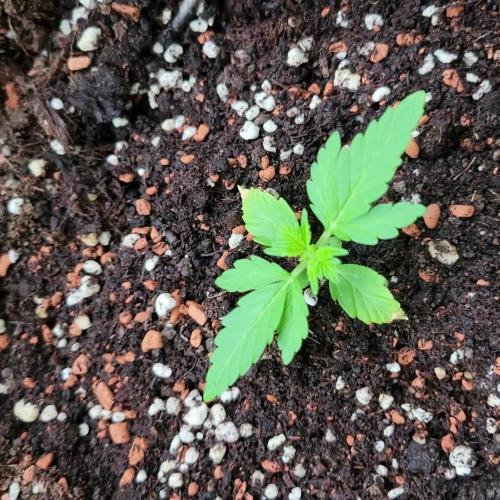
3 Weeks of Growth
Daytime temperatures have gone from 15° to 30° in just one or two days. But I really can’t complain… because I needed the warmth, too😅. Little Pearl is doing very well… the strong sun has played a part, but I’m still happy.
It is and always will be outdoors, so you just have to deal with the conditions as they come.🌊❄️☀️🌻🌱

Likes
14
Share

@eldruida_lamota
Follow
Que pasa familia, vamos con la cosecha de estas Rainbow Melon de FastBuds, las flores son bien compactas y van repletas de resina, son muy pegajosas, tienen tonos verde oscuros bien bonitos, y tiene unos aromas dulces y tropicales bastante marcados.
Es una cepa normal de cultivar, es de ciclo de 2 meses y medio y bien agradecida, tiene buenos satélites.
Hasta aquí todo, Buenos humos 💨💨💨
Likes
8
Share


@johnnybuds
Follow
Las plantas asimilaron bien el calcio y siguieron adelante, se realizó un trasplante en el día 20, de 300cc a 5lts airpot con solo coco, ahora solo queda esperar a empezar el lst💪💪💪


Likes
18
Share


@Roberts
Follow
Ze Chem Bang is is growing great. She is doing some bulking and gaining her aroma. I defoliated the center a little to open it up to more light. Everything is looking good. Thank you Terpyz Mutant Genetics, and Spider Farmer. 🤜🏻🤛🏻🌱🌱🌱
Thank you grow diaries community for the 👇likes👇, follows, comments, and subscriptions on my YouTube channel👇.
❄️🌱🍻 Happy Growing 🌱🌱🌱
https://youtube.com/channel/UCAhN7yRzWLpcaRHhMIQ7X4g.

Likes
9
Share


@Colo420
Follow
Todo marcha en orden, la floración interior va 10 puntos. A la de exterior le esta costando la adaptación por los excesivos calores 37°C.
Saludos a todos y gracias por las buenas vibras.

Likes
8
Share

@Stoney_Stark
Follow
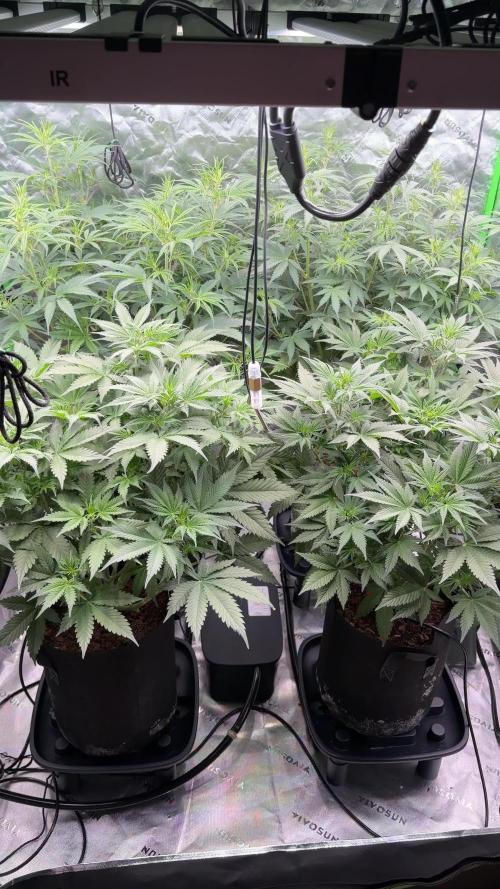
Sticky Broccoli Auto — Week 5 Update
Stage: Early Flower (Week 1)
Grower: Stoney Stark / Little Lilly Farms
⸻
Growth Overview
Week 5 marks the official transition into flower, and all four Sticky Broccoli autos are responding strongly. The two larger plants have entered an aggressive stretch phase, showing more sativa-leaning internodal expansion than expected for an indica-dominant cultivar. The two smaller plants remain shorter and bushier, expressing a more classic indica structure.
Overall vigor is excellent across the tent. Leaf color is vibrant, stems are thickening rapidly, and there are no visible deficiency or toxicity symptoms.
⸻
What’s Happening This Week (Plant Physiology Breakdown)
This week represents the flower initiation + stretch overlap, one of the most metabolically demanding phases of an auto:
1. Rapid Stretch (Hormonal Shift)
• Plants are responding to increased flowering hormones (gibberellins and auxins)
• Internode spacing is increasing rapidly on the larger phenos
• Energy is being redirected toward vertical growth while flower sites are forming
This explains why the two larger plants are stretching “harder” than expected, despite indica genetics.
2. Root Demand & Water Uptake Increase
• Daily feeding to runoff is necessary because:
• Root mass has expanded significantly
• Transpiration rates are high due to stretch
• Coco dries faster under increased metabolic load
The initial underwatering sign on one larger plant (2/18) aligns perfectly with this surge in demand.
3. Nutrient Uptake Shift
• Nitrogen demand is still present (for stretch), but tapering
• Phosphorus and potassium uptake are ramping up
• Enzyme activity and carbohydrate metabolism are increasing rapidly
Your slight drop from ~1100 ppm to ~1000 ppm combined with consistent runoff resets kept the root zone perfectly balanced during this sensitive transition.
4. Post-Defoliation Response
• The 2/20 defoliation and lollipopping improved:
• Light penetration to lower sites
• Airflow through the canopy
• Hormonal focus on top flower sites
The strong recovery seen by 2/21 confirms the plants were ready for it.
⸻
Watering & Feeding Strategy
Medium: Coco
Irrigation: Auto-watering system
Frequency: Near-daily
Runoff Target: 10–30% depending on reset goal
The alternating heavier runoff days (30%) and lighter days (5–15%) is ideal for:
• Preventing salt buildup
• Maintaining stable EC in the root zone
• Supporting rapid stretch without overfeeding
⸻
Nutrient Mix (Per Gallon)
• 0.5 ml Silicium Bloom
• 8 ml Cocos A
• 12 ml Cocos B
• 1 ml Green Sensation
• 1 ml Power Buds
• 4 ml Pure Zym
• 5 ml Ruby Fulvic
• 6 ml Photosynthesis Plus (added 2/24)
PPM: ~1000
pH: 5.8–5.9
⸻
Plant Status Summary
• Stretch is strong but controlled
• Root zone fully reset and balanced
• No signs of stress post-defoliation
• Flower sites stacking rapidly
• Photosynthesis support added at the perfect time
This week sets the foundation for bud size, structure, and final yield. If stretch continues another 7–10 days, that’s completely normal for autos expressing hybrid vigor.


Likes
4
Share

@JeyGanesha
Follow
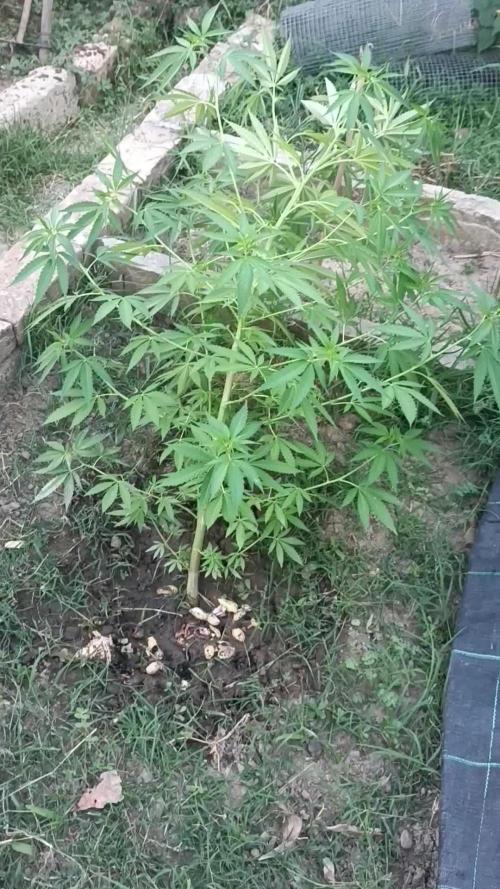
Questa matanuska alla fine è arrivata nel suo posto definitivo
.ha passato qualche stress ma alla fine sé ripresa....