


Likes
Comments
Share


@GirlGoneWeed
Follow
Recovery at its finest, that's what you will see on week 4 around here! Guess who's loving the CO2 with high temperature? Thats right, all plants are!
The comparison of last week with this week have such a difference, on day 24 I introduced a DIY CO2 bottle, the recipe consist in:
-CO2-
2 cups of sugar
1 tablespoon of yeast
1 tablespoon of baking soda
1 later of warm water
Mix all ingredients on a bottle, make a nail hole on the cap shake a little (when shaking put your finger on the nail hole, you should hear a hissssss when you release the hole) use it when lights are on, increase temperature to 30-35C, watch for high levels of humidity, and voila!
I haven't started any LST yet, I am waiting for a bit more growth to start bending, I have to make sure all 5 plants will have enough space inside this 2x4 tent.
All suggestions are welcomed :)
Thats is for now, Stay Lit folks!

Likes
7
Share


@SamDo
Follow
Week 19 of Vegetative Growth
(Transition Week – Pre-Flower Move)**
This week marks an important milestone for the Pineapple Upside Down Cake: she was finally moved into the tent where she’ll spend her entire flowering phase.
She’s not flipping yet — this stage is all about controlled acclimation before the real show begins.
Up until now, she was growing under a 5000K blue-leaning veg light at low wattage, which kept her compact and focused on structural development.
Inside the flowering tent, the lighting is completely different: a full-spectrum 3500K panel, warmer, broader, and naturally more stimulating.
A spectrum switch like this can easily stress a plant, especially in late veg, so the intensity was intentionally reduced to 300 PPFD to give her a soft landing.
Temperature conditions also shifted: about 21°C during the day and 17°C at night, with the light set to 25% power.
It’s a cool, stable environment — ideal for a plant adjusting to a brighter and wider spectrum.
The second key topic of the week was training strategy.
Her growth was accelerating fast, and the debate was wide open:
Should she be topped?
Should we go for a scrog?
Should we prune more aggressively?
In the end, the most coherent choice was a clean LST session.
Her main branches — roughly ten apexes — were gently bent and opened to create a wider, flatter canopy.
This approach keeps stress minimal while giving her a solid architecture to handle the upcoming stretch.
Over the next few days, she’ll naturally stand back up, and once she does, her true structure will become clearer.
At that moment, we’ll be able to judge whether she needs extra shaping: a light defoliation, selective pruning, or even a late top if it really makes sense.
For now, the plan is simple and strategic:
• monitor her adaptation to the new spectrum,
• watch how she reacts to the LST,
• keep the environment stable,
• and only move to flowering once she shows full vigor again.
Summary for Week 19 (Vegetative Growth):
– Successful transition into the flowering tent
– Spectrum shift managed smoothly with 300 PPFD
– Cooler environment helping with acclimation
– Clean LST performed on about ten apexes
– No visible stress, good potential for a controlled stretch
– Next step: wait for full adaptation before flipping
See you next week for the follow-up — the pre-flower phase is getting close.

Likes
28
Share


@QuantumSkies
Follow
ordered 10 gallon pots for the 2 blue dream and pineapple express they are going into a different tent. Plan on replanting Friday.
Autos all are doing fine, think I've been having issues with cal mag hopefully I can get it sorted out.
All the plants are pretty big at this point except the gelato #33 its so small lol. Very crowed in a 4x4 and the plants need more room maybe moving the photos out will help the autos out and let them spread out more.
Ordered some Recharge, excited to try out. I heard about it on dude grows lol great podcast 👏
Picked up some blue planet liquid seaweed and also their gold shield silica, also excited to try. Lastly got some Dynomyco to add in.
Both blue dream and pineapple express are in their new home another 4x4 tent. Only running 1 halide at 400 watts and a small mars led. Will boost the light up significantly during flower with 1200 actual watts and change out to super lumen hps. Running a terrabloom carbon scrubber out of the second hid hood all powered by a 6 inch AC Infinity cloudline venting outdoors. Also using another 6 inch to bring in fresh air and have a portable ac to keep it nice and cool
I think its important to mention after every grow I like to go in and clean out my tent. Vacuum up leaves/dirt, Wipe down all surfaces of the tent(I use paper towels and water in a spray bottle) and also clean off my lights. Wipe them down make sure the glass is cleaned(It makes a big difference). I grow strictly for my own personal consumption and I want the cleanest product.


Likes
12
Share


@Chubbs
Follow
What up family sorry for the late update, was out of town for the past week. Wow what a site when I opened the tent to plants that have tripled in size easily. They're just start the flower period so I'll switch the Nutrients over to Athena Bloom A & B as well as a P & K booster. They got a light defoliation before I left even though you can't tell, I'll be doing some more this week and doing a little lollipopping. All in all super excited for the flower period. Happy Growing
Likes
Comments
Share

@GREENPHOENIX6262
Follow
11/03 - Mother moved into her own 17 gallon tote - running lights on dome and in tote - super topped - running high humidity and high temps - nute feeds are the same - tied down all 4 coles thus far.

Processing
Likes
19
Share


@Ganjagrandaddy
Follow
Day 27 from seed: These ladies have not disappointed this week at all. Even poorly girl #2 has got busy and began growing again. I have switched nutes to Mega Crop and they have all been getting a feed of 1g per L and calmag and silica to keep the npk in balance. This stuff is great to work with and its results are brilliant . seeing some of the grows done with it and the low cost of too. This is made for us.
The Los girl is doing good with the Mc so far and as it is a mineral nute, the ph is not such an issue to worry over. #3 is still the most advanced and has been topped and her limbs are staked for her lst. Love the results of the silica when training plants. An absolute must !. No signs of any pistils.yet so some growth still to go before the stretch starts and becomes a monster crop.lol I have seen some great Fast Bud autos yield amazing.
Likes
24
Share


@Mr_Awesome_Badass
Follow
Well she is coming along great. Looks great, very healthy girl.
Can't wait to start revealing what is behind the curtain so to speak.
Good luck to all the other growers and DON'T FORGET TO UPLOAD A VIDEO EVERY WEEK!!

Likes
4
Share


@MarihuAchA
Follow
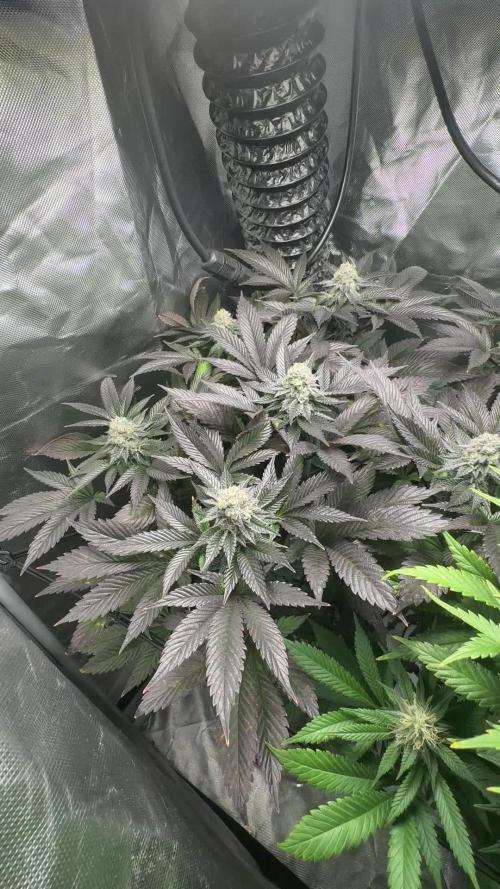
Última semana de alimentación. En estos días empezaré a lavar raíces para pronto cortar. Muy lindos cogollos en forma y olor.
Es la segunda vez que cultivo esta genética y estoy muy satisfecho. Vamos a ver cómo sigue amigos. Gran abrazo


Likes
13
Share


@FUH20
Follow
Alaskan still growing don't see much of a stretch
Speed plus 1 started to pre flower and stretched a good amount. 3 main sites
Speed plus 2 flowering started to show. Had 5 shorted sites that has not flowered or pre flowered
Came to terms with I might harvest total 10-15g for all 3 plants.
Trial and error taking it as a learning experience

Likes
49
Share

@masterofsmeagol
Follow
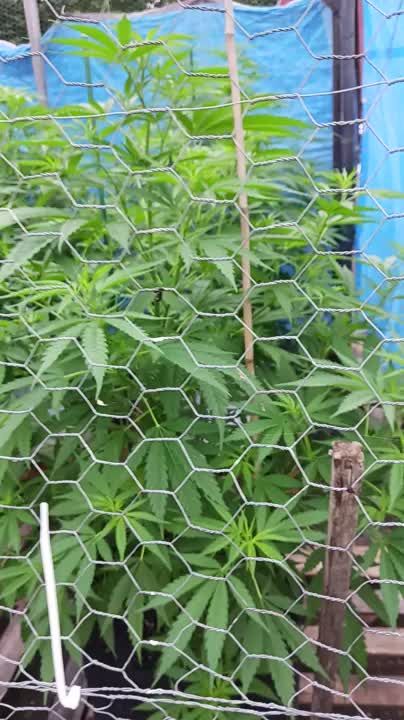
7/11 Got half in of rain last night. Glad I didn't water. Ph of rain water is very acidic. Added supports to the blueberry cheese in the 50. I just used string and went diagonal and attached to the cage. Wrote a ton but it disappeared. Anyway looking at previous diaries I was wrong about senescence. It wad the life cycle of those earwigs that did that to my plants (see other diaries). This soil mix is amazing. These plants gave only gotten like two small feeds of big bloom. I showed my commercial buddy and I'll keep it between us what was said but it made me feel really good. I'm considering either expanding the cage in one direction with some lumber I already have or moving a couple outside tge cage. That way I have more room. He said he's seen plants structurally similar reach huge heights (14f) so I'm just trying to avoid future problems. I at least need to get the trellis on. I hope poor that's food enough. Did a real nice video this morning but nothing wanted to upload and it just uploaded the same one twice. I'll try again and hopfully it will go up. If not I'll put it up tomorrow.
7/12 Dad has surgery this morning. I did a quick video and took some pictures. I need to do some rearranging with the plants and cut a pallet to fit in the back. Then I can put a vertical trellis up. Haven't decided if I'll add on to the cage, remove a couple plants or just rearrange things but I'm leaning towards the later. They will need water again and I'm wondering if I should start nutrients but everything looks so good. By this time on past diaries I'd be losing all my leaves bu now. MI think it wad part ear wigs and part to many nutes. This soil mix is taking these plants through veg. I'll probably do a feeding soon but it will be organic and it will he small like a big bloom or ancient amber. Im leaning towards not using growbig this year as my plants seem to be doing great without it. We'll see. I'll keep this updated.
UPDATE: Went back over and gave plants a full watering. Some were slightly drooping. I was going to add nutes but decided against it as I didn't see any deficiency. So far NO Earwigs! I comed through the plants and I did find a jpn beetle which I happily killed. I mixed up 8 gallons of water and gave it to the 11 plants so it wasn't quite a gallon a plant. I need to rearrange the plants so I have room to move around. I also need to cut another pallet and use the spaces I'm not. Trellis needs to go up.
7/13 I think I've got the watering amount down. Now just to find how often which will depend on weather. I've watered very little this year. They loved that gallon. I was going to use big bloom and kelp me/you but looking at my garden I decided not too. My buddy asked what i was addingvthings for and to wait fir what i added to do what I wanted it to do. I see no nutrient deficiencies so why add anything? I think this soil mixture will get me all tgexway through veg. I dont plan on using much in fliwer either. Definitely good genetics. I really need to cut that palley and move the 1 10gallon to the far back coener. It will open thibgs up so much better. The garden looked so beautiful this morning. Getting very aromatic. I started untangling trellis netting but had to leave. I'll update what I do. Happy growing folks
UPDATE: Went back over as I had a slight intuition that I needed to check the garden. I found and killed at least 7 jpn beetles. That's what's been making holes. They tried to escape and bounced off a tarp but I got it. I went through the interiors and found two pillars. If these beetles are gonna be around I'm ordering a net. I'm also close to positive I'm going to extend my cage in the back a few feet. Things are getting unmanageable in here. My buddy said I'll be having problems soon if I don't do something. I'll document what I decide to do.
7/14 Found ONE jpn beetle in the garden this morning. I can manage those well enough. The birds help too. I check my garden multiple times a day so I manually remove many pests. However I've noticed some thrip damage on a leaf and a leafhopper damage on "A" leaf so there are "some" pests around but not enough to spray shit. A couple wasps were doing there job while I was there. Supposed to get thunder storms after three and tonight. Supposed to get over a half inch of rain tonight. I lifted the bags and decided to hold off and let mother nature take care of it as the bags weren't totally dry. Only problem I really have is space. I AM moving that 10gallon (that's the same size as some 20's) in the back. There's 27in not being used and a few feet the other way. My buddy cautioned me that I'm going to have problems since my plants are so crowded. I agree with him. I spoke with me father and we have most materials to extend my cage four feet in the back. I think that's my plan. I'll extend the structure before the stretch then I can put up the supports. We'll see how this goes.
UPDATE: Went back over to check the girls as I had a feeling I ought to. When I got there I saw that a couple of the blueberry cheese were pretty light (liftng the smart pot) but the others seemed to be fine. ONE 10th planet was light like that and the purple punch in the 10 gallon was as well. Each plant thar needed it got at least a half gallon of water. I'm waiting to see if we get the thunderstorms and the half inch of rain. I watered the MASSIVE blueberry cheese in the 50 but I only gave it 1 pitcher which is like 1/4 gallon or so. Don't know why I even gave it that. Looked fine but the soil WAS pretty dry. Next year I'm giving myself way more room. I was running trying to chase these jpn beetles. This time I have the dawn and water and a measuring cup to knock them in. This ain't my first rodeo. I did notice some bright yellow streaks on a leaf edge and I'm hoping it's not septoria. I doubt it but I have an anxiety disorder and I worry. I hope I can get the cage extended sooner rather than later. It's getting hard to move in there and more importantly I can't take any more plant pathogen problems. I'm considering starting a plant doctor regimen just to be safe.
7/15 Got a bunch of rain last night. No jpn beetles in the garden and not really much damage. I did notice this (I think it's leaf hoppers) that leave those dots close together on a leaf so it appears I've got a variety of pests. I'm considering how to approach this. I mean the damage is very minimal but I don't want it to get out of hand. Another thing I need to look out for is leaf septoria or any other fungal pathogens. I believe that has been part of my problems in the past. I think that's what caused my earlier grows to drop all their leaves so quick. I think I'm being overly cautious but its very crowded in there. With my father just getting out of surgery the girls will need to wait a little bit before before I can extend the cage. I could still cut the pallet and move the 1 10gallon and that would give more room. I rearranged a LITTLE BIT so they have a little more room but I've really got to get this cage extended.
UPDATE: IT Rained so hard I had to pull the car over. We hydroplanned the whole way home. After working ob my house I went to see what the damage would be like. NOT A SINGLE BREAK THAT I COULD SEE. I took a video but since the wifi here sucks I'll have to upload it tomorrow. Walking around in the cage even if I cant get it extended I think I'll be OK. It obviously will open me up to lots more issues but at the very least I can reorganize before I build on. The 10 gal purple punch would fit perfectly in the back and I have a pallet I can cut to fit it in place. Putting that one back and pulling the others forward will be much better than what I've got going on now. I'm also thinking about running an extension cord and putting fans under the canopy or at an angle to keep the wind moving. Just thinking outloud. However after that storm the girls looked as happy as I've ever seen them. All happy praying to the sun, thankful for the much needed rain. Mother nature does a pretty good job with out me messing with it. I've noticed a couple interior lowest leaves turn yellow and die like a nitrogen deficiency but everything else is fine. Also noticed a leaf that looked like a p deficiency but again, it was the VERY bottom leaf on ONE plant. Again the rest of everything looks fantastic. I'll keep an eye out for anymore nutrient deficiencies and if anyone that reads this sees some please let me know. I should've taken stills since they looked so good but I got it on video.
7/16 It POURED last night and throughout the day. TORRENTIAL rain. The branch breaking sheet rain that us outdoor growers learned to fear. My plants aren't trellised currently. I know what I need to do now. I have a pallet to put in the back corner and I'm moving the purple punch in the 10 there. And pulling others forward where there's more room. Then when I extend it (it's gotta be done this week) everything g will be in their proper place and I can just throw on a vertical trellis. I also noticed more (leafhopper) damage on a leaf. Different leaf of the same plant so I'm considering spraying something. I have a number of products but I was trying not to use them. Luckily I have these diaries so I can look back and see certain plants reactions to certain nutes or fungacide/insecticide/nutes and the doses used. I haven't been using much but if my plants will remain cramped I'm going to start the plant doctor. I'm seeing more pillar damage too but BT is super narrow so I'm thinking when I fo spray for pests I might use cap jack and be done with it. Then I can apply the BT in flower if it's necessary. I took a video but I have to wait until tomorrow to upload. I took a quick snapshot though.
7/17 Despite the torrential rain I don't have any breaks. I'm noticing more pest damage though. Another leaf on the same plant had those closely shaped round circles. I forget what pest it is but it's there. Caterpillars are there I'm sure so I may do a preclcentative spray. Just unsure what I'm going to use. I lost a COUPLE very bottom interior leaves that look like they just got used up. After this rain I think think the plants might benefit from a feeding. Probably next water after they dry out. I REALLY need that cage extended. I expressed that today and it should be done this week. I'm looking for pallets today. I have the little one that I can put in the back which will allow me to move the 10 gallon and move the other forward. That will help some but I need more room. I'll update as I go.
UPDATE: GOT A SMALL PALLET AND IT FIT PERFECT IN THE BACK ROW. I MOVED THE PURPLE PUNCH IN THE 10 GALLON ONTO IT. I SHIFTED A BUNCHVIF THINGS AROUND. I ROTATED ON BLUEBERRY CHEESE 180 DEGREES SO IT WOULD FIR BETTER. CROP ROTATION IS GOOD ANYWAY. I TOOK VIDEOS AND YOU CAN NOW SEE THE ROWS MUCH BETTER. 2 WITH 3 and 1 WITH 4. IT'S SIGNIFICANTLY BETTER THAN IT WAS. I CAN GET AROUND ALL SIDES OF EVERY PLANT NOW. GRANTED THE LARGE 50 IN THE BACK IS GOING TO HAVE SOME TROUBLE BUT ILL JUST STAKE IT TO THE CAGE. IT WILL GROW TOWARDS THE SUN ANYWAY. IM SUPRISED I DIDN'T LOSE A BUNCH OF LEAVES AFTER THIS RAIN. MOVING THINGS AROUND AND LOOKING ON THE INTERIOR OF PLANTS I FOUND A COUPLE LEAVES THAT HAD BEEN USED UP. I REMOVED A COUPKE LEAVES THAT HAD DONE THEIR JOB. I'LL UPDATE AS I GO ALONG.
Processing
Likes
7
Share


@KarukeraOxymore
Follow
she likes the heat a lot, i added the co2 on the 21st day, i saw all the difference in the next hour, it's amazing how they can store so much light/she likes the heat a lot, i added co2 to the 21st day, i saw all the difference in the next hour, it's amazing how they can store so much light
* I still have not turned on the HLG 300
My instagram for more pics : KarukeraOxymore
Likes
2
Share

@GrowHero420
Follow
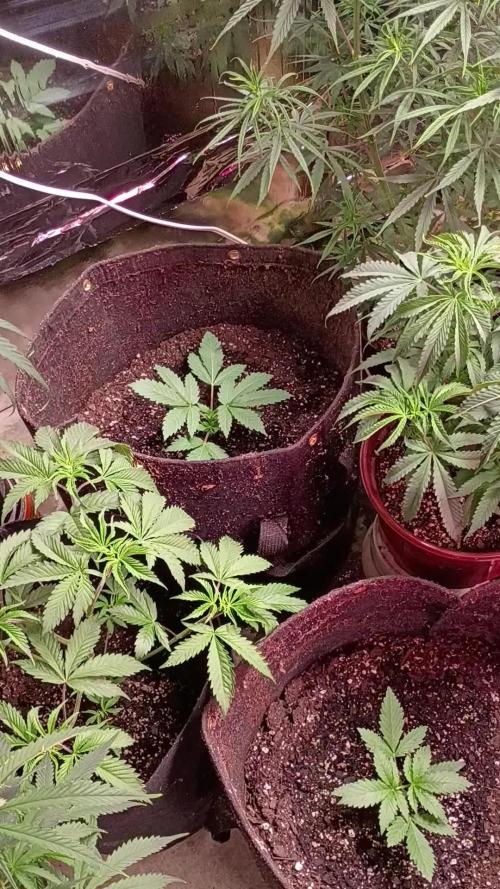
Freakshow,topped,with big bud sprouts, very green and healthy,big ridges starting leaves, Very unique strain.Autos starting to bud!!Amazing Week 3.



Likes
Comments
Share


@nonick123
Follow
En este caso es un diario un poco distinto...
Tengo en mi terraza (outdoor) una maceta de unos 25 litros, con sustrato reciclado de todos los ciclos hechos con BIOTABS este invierno pasado
Durante todo el invierno / primavera, he ido añadiendo a esta maceta los "restos" de estas macetas del indoor, cargados de vida, sustratos y materia orgánica
Cada vez que añadía sustrato reciclado, añadía / renovaba la capa de mulch (heno) para proteger la micro-vida
Además, ha estado protegido por un techo de metacrilato todo el invierno, para evitar que las lluvias torrenciales de mi zona se llevasen los nutrientes
He mantenido este sustrato húmedo con Agua RO
A principios de mayo, planté una tomatera (tomate canario) en esta maceta
Alrededor del 26 de mayo, decidí dejar caer aleatoriamente una semilla de Gorilla Z Auto que me regaló mi amigo StackFarms
Unos días después, nacía con fuerza y vigor una pequeña plántula! 😍💥
Esta maceta se mantiene hidratada con un sistema de riego por goteo (TEMU) muy ingenioso: Utiliza un gotero medico como se usan en los hospitales!
Este sistema ha demostrado (en mis pruebas) ser bastante consistente en el riego diario!
La maceta con la tomatera + Gorilla Z Auto se mantiene hidratada con 1 Litro de H2O diario (RO o agua declorada, depende como me pille)
A divertirse con este experimento!
🚀 FastBuds 15% DISCOUNT code "NONICK" 2fast4buds.com @fastbuds.official
💦 BioTabs 15% DISCOUNT code "GDBT420" biotabs.nl/en/shop/ @biotabs_official
🌱Substrate PRO-MIX HP BACILLUS + MYCORRHIZAE @promixmitch @promixgrowers_unfiltered


Likes
5
Share

@JoExotic
Follow
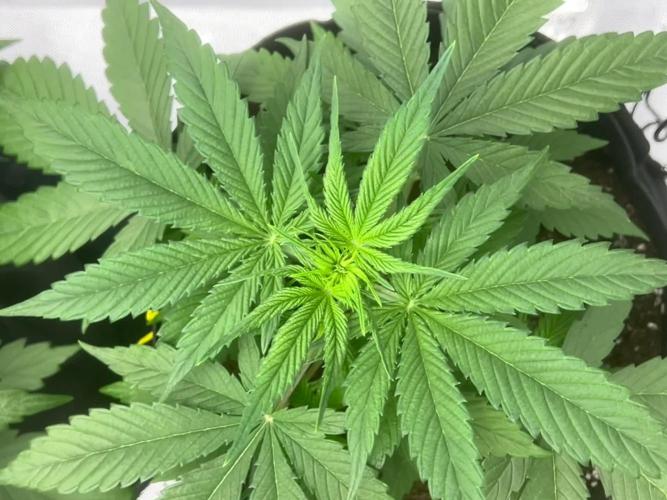
Week 4 -Apple Strudel Auto What an insane strain the smell is super gassy already ! I’ve just started adding Athena Grow A and B. I’ll see how the plants respond. Zero issues so far I’ll update next week. Never thought I’d grow Autos over photos FastBuds is a true Master !
Processing
Likes
2
Share


@Ay_ef_see
Follow
Repotted veg area. Most are still babies. Will receive final transplants before going into flower in a couple more weeks. The clone I took from the sativa-dom is doing well, as is the og lemon x cupcake. Will veg these two for the longest, and will eventually end up in 5-7 gal pots. Also plan to take some cuttings from these two.
Two girls in flower are approx 21 days apart. I call them the supercroppeds because that’s what they are. Sc1 is on day 49 of flower a/o aug28 and sc2 is on day 28. Both seem happy and healthy. Believe there may be an abundance of nitrogen in sc1 as some leaf tips are burnt and folding back. Two plants about a month in veg have been put into flower as well. A sort of 12/12 from seed kinda thing.
I have been experimenting with the basics thus far. A sea of green will be underway in a couple more weeks, once these babies grow to toddlers. Been outdoors mostly, no nutrients. Plain Jane from Mother Earth. Comes out great each year. All unknown strain bagseed. A tad different growing in a 2x2 room.
Likes
5
Share


@Dark_Shadow_420
Follow
No tiene muchos cambios ya qie necesita transplante, pero quiero esperar para qie no cesca mucho ya que tengo una psicodelicia en suelo
Likes
18
Share


@gdogfunk
Follow
Day 63 This should be the last week in veg. It might be a partial week...I'll make the call in a few days. I'm excited to see these babes flower!!!
Day 64: Last day of VEG! I set the timer to 12/12 and lower the lights to 18". These babes are ready to switch, based on my past experience. I hope they don't shoot too much in the next couple of weeks! Flower time is here at last!
Day 65: I tore part of a main top branch today and immediately put clonex gel and used some clear packing tape to secure it back together. I think it will be ok. I sure hope so! It's pretty much the biggest top of the plant. I don't know if the potassium silicate treatment is making the stalks too strong, but I only tried to tuck it into the next hole of the screen. Oh well, time will tell. Fed transistion week 1 nutes today.
Day 67: The branch survived! The plants are stretching nicely and I expect to run out of room on the screen at the outer edges.
Day 69: The canopy is so FULL! I'm amazed at how healthy they are and how many bud sites are filling up the screen!

Likes
Comments
Share

@Hou_Stone
Follow
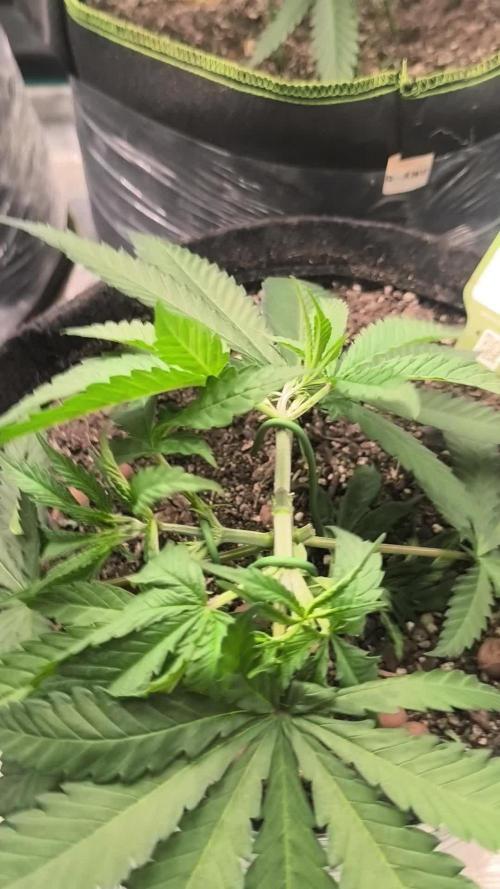
Week 4, after last week's pruning, the plant has recovered well. I'm using wires to do some LST and create space between the branches. Unfortunatly when doing that I broke one of the 4 last branches of the plant ? lets see how it turns

Likes
229
Share


@OrganicNature420
Follow
Germination date 🌱 12/07/2021
Day 29 12/08/2021
Strain 🍁 SinCity seeds Frosted Biscotti
(Biscotti Sundae x Whitenightmare)
THC% • Unknown
💡 Mars Hydro FC4800
• Power draw 480W + 5%
• Max coverage 5 x 5
• LED 2070pcsSamsungLM30B1&Osram660nm
• Max Yield 2.5g / watt
• Noise level 0 DB
• Removable Driver +2m cable
• Daisy chain (multiple lights)
https://marshydroled.co.uk/products/mars-hydro-fc-4800-led-grow-light-samsunglm301b-commercial-greenhouse-medical-indoor-kit 🇬🇧
https://www.mars-hydro.com/buy-fc-4800-480w-4x4-energy-saving-full-spectrum-commercial-led-grow-light-mars-hydro-for-sale 🇺🇸
PROMO CODE • (ORG420) DISCOUNT 👍🏻 marshydroled.com
⛺ Mars Hydro 120 x 120 x 200cm
📤📥 AC infinity 6inch
💧 10lt dehumidifier
❄️ 3.1kw air con system
💉 Nutrients GreenBuzzLiquids
Organic Grow Liquid • 1-4ml until 2wk flower
Organic Bloom Liquid • 2-4ml flower stage
Organic More PK • 2-4ml +wk3 of flower
Organic Calmag • 1-2ml/lt whole grow
Fast Plants Spray • first 3days at night lights off
More Roots • 2-5ml veg +2wks flower
Fast Buds • 5ml +wk2 of veg until 1wk flower
Humic Acid Plus • 2-5ml whole grow
Growzyme • 2-5ml whole grow
Big Fruits • 2-5ml flower stage
Clean Fruits • 5ml flush 1wk
Ph powder
Root Gel
Living Organics
https://greenbuzzliquids.com/
PROMO CODE • organicnature420 15% off ✌️🏼
🥥 Growing Media • Coco Coir
Notes 📝
The Strain I'm most exited about ❤️ topped and now ready for 8week veg. Light and nutrients doing their thing, well happy now I'm seeing some decent progress. See you next week GD
Happy growing fam ❤️🌱🍁👍🏻
