


Likes
Comments
Share


@Vegetoo420
Follow
Hey hey ! I left my girls during 4 days without watering due a hospitalization !
I discovered this girl like this when I opened the room and she exploded !!
Day 3 : floweeeers comin !
Day 6: little defoliation and 🍭 lollipop on this girl : she’s clean now !

Likes
8
Share


@CelticSmokey88
Follow
Almost time for harvest let's see tlwhat happens next week have others not to far behind


Likes
60
Share


@MrSpooky882
Follow
The week was nothing unusual, I fertilized today and see them growing very well 😍
Next week I will defoliate and thin out again and remove what is in the shade and will not wear anything ... otherwise I am very, very satisfied with the growth of the plants😁😏😊

Likes
10
Share


@SgtDoofy
Follow
3/27
Been fighting the warmth of the lights and the rising temps lately. Amnesia is still sacrificing leaves, but much more slowly now, letting me pick out about 5-10 per day. I really don't know what caused it all, but at least this could make trimming easier. I'm trying to make sure I pull off all the browning and crispy leaves so that they don't get absorbed by growing bud. Trainwreck is getting much more purple, but is also browning in some spots. Trainwreck doesn't let go of any leaves, as the base of them is still green, which makes it more difficult to sift through the brown leaves and pull them out. Fed at the end of last week, may have been Friday.
3/29
Feeding 3/4 nutrients today!
3/31
Fed 1/2 strength nutrients and lowering lights to 50% before going away for the weekend.
4/1
They survived my time away.
4/2
Some crispy leaves needed to be plucked from Trainwreck to open up other budsites. Trichomes are still not amber.
Likes
5
Share


@Mr_nugs_lover_David
Follow
I just moved this wonderful lady on her 4th week of life, I moved her into a 25l pot, and I'm starting to lst her. Let's see how she performs. Hope to be able to make a big nice bush


Likes
10
Share


Processing
Likes
39
Share


@Greenthumbguru
Follow
this plant is resilient she smells like a mint like smell puts me In the mind of a York she's got a few Weeks left and i got and inspection coming up yikes I'ma have to figure something out

Likes
2
Share


@Aleks555
Follow
Week 5 – Time to Bloom!
We’ve entered Week 5, and it’s time for a big change — we’ve switched the light schedule to 12/12 to trigger the flowering stage for our beautiful Gorilla Girl!
She’s growing impressively — now standing over 30 cm tall and stretching out nicely in width as well. To guide her structure and maximize light exposure, we applied some LST (Low Stress Training) and gently tied down the main stem. We’ve also carefully removed a few top shoots to help redirect energy where it’s needed most.
Everything’s going smoothly — our girl is strong, healthy, and ready to bloom!
Big thanks to Sweet Seeds for the outstanding genetics and to Xpert Nutrients for the support in every stage of growth. Let the flowering begin!
Likes
35
Share


@bioaccessory
Follow
Hello!
All plants have entered the active flowering phase (the left one is slightly behind), and have practically stopped in height. I like how the purple phenotype turned out, I will continue to monitor😎
Thank you for stopping by, and be healthy! 🙏
To be continued... 😶

Likes
78
Share


@Nebula420
Follow
This out grow for me is extreme, cause daylight time less than 12 hours,
Just awful weather, and at night temperature is 15 degrees.
Despite all the difficulties Blackberry grows very vigorously and healthy.
I am sure this strain will grow in any conditions.Nice genetics.
Plant have already started flowering, so fast, and easy strain.
For now buds r green, maybe just got the green pheno, or still early and i will see purple colors, color is not important to me.
Still weak smells like berries, very tasty.
Thanks Fast Buds, nice genetics, and thank to everyone who follow my grow report, Peace!😇
Likes
12
Share


@Archieballs
Follow
Everything is going well. Thought she would be a bit further on by now but she’s still tiny, hoping she takes a growth spurt soon.
Likes
1
Share

@mihixd
Follow
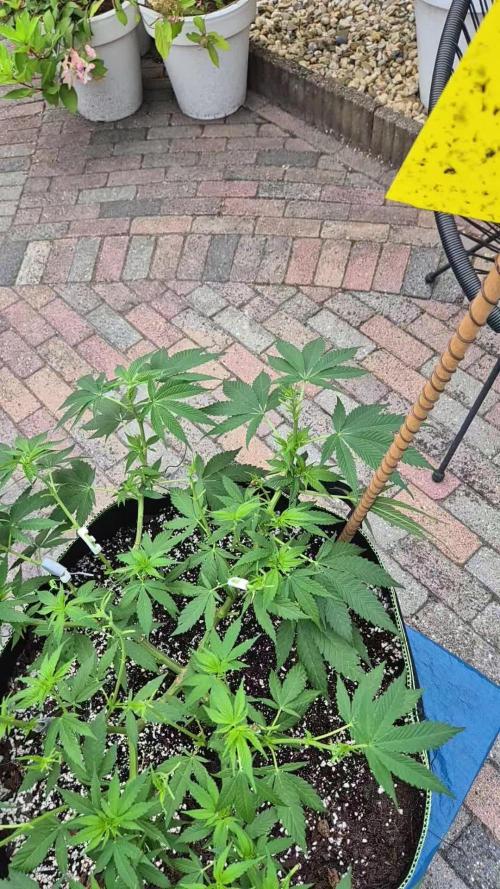
D64
Saw the plants lower growth drooping so gave 4Ls during peak sun.
D65
Defoliated the top growth nodes extensively, to allow the lower canopy to catch up. Cleared up lower canopy too and found some inhabitants🐝
D69
10

Likes
21
Share


@BigBudWolf
Follow
BLUEBERRY AUTOFLOWERS (QUEBEC CANNABIS SEEDS)
42 DAYS FROM SPROUT
ADVANCED NUTRIENTS (ORGANICS)
IM LIKING THE FLOWERS! EXCITEMENT BUILDS!

Likes
49
Share


@BATMAN_GROWS
Follow
Well guys first day of week 3 and she gets her head cut off, dont worry she didnt feel much pain and I soothed her with a little song to ease her pain nana nana nana nana BATMANNNN.
Let's see her recover over the week and boost her stems forth so I can start bending and building a shape for her
Likes
34
Share

@DogDoctorOfficial
Follow
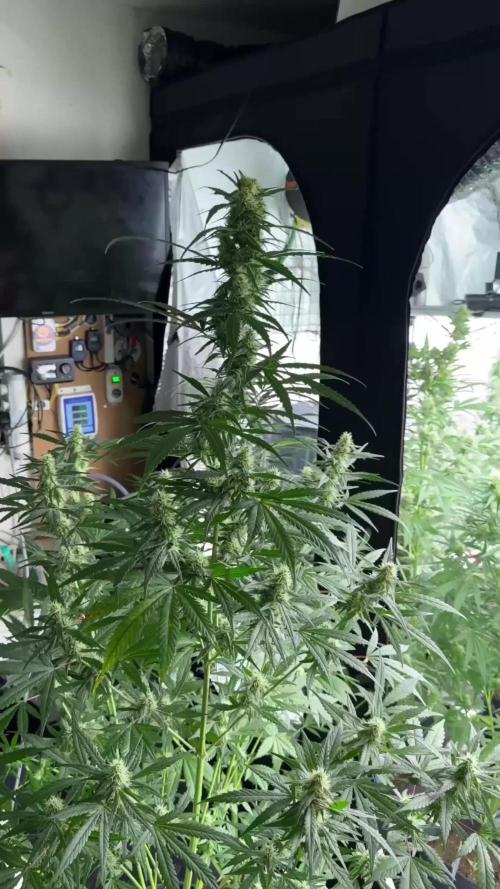
Week 5 Flower — Sundae Driver
Five weeks from seed, Week 5 of flower. The girls are tall, frosty, and carrying real weight. Supercrop results are showing: the knuckle site on the main top is packing beautifully and producing extra fruit around the bend. Photo sessions continue while they’re still mobile, but they’re quickly approaching the point where moving them will be risky.
⸻
From seed to here — short recap
• Very short veg, early flip (11/13) to encourage a quick transition.
• Strong genetics: both phenos established great branching early and then stretched in flower.
• Early training: leaf-tucking and one deliberate supercrop on Pheno #2 to control a “moon-shot” top, the plant has recovered and is producing strong bud sites.
• Feed strategy evolved from light steering (low solution EC) while relying on the active living soil, to a slightly stronger, targeted push now that the plants are bulk-building.
⸻
This week’s snapshot (numbers you gave)
• Solution EC: ~1.78 mS/cm (after adding All-in-One Liquid)
• Solution pH: ~5.87
• Water temperature: ~19.6 °C
• Substrate EC (measured): ~5.75 mS/cm
• Plants: ~heavy, visibly bulking, good frost and early trichome coverage; leaves lush and green.
⸻
Nutrition this week — what you added and why
You’ve blended the Aptus baseline with the Plagron bloom stack and added the All-in-One Liquid this week to “boost things up a little.” The working recipe (as you’ve been using it) is:
• Plagron Power Buds / Power products — PK and bloom stimulators to push flower initiation and fruit set.
• Plagron Green Sensation — complex bloom stimulator (PK, micros, and biostimulants) to compact and feed flowers.
• Plagron Sugar (Sugar Royal / Sugar Oil) — carbohydrate/amino support to feed microbes, aid terpene/aroma production and increase bud sugar availability.
• Aptus Regulator — stress resistance, cell wall strength, improved uptake.
• Aptus CalMag Boost — to prevent Ca/Mg shortages under heavier uptake.
• Aptus All-in-One Liquid (added this week) — a balanced liquid feed to raise available macros and micros slightly and bring the solution EC up to ~1.78.
Why this mix now: the plants are in active “bulk and stack” mode. The living soil is still providing a heavy base (substrate EC is high at ~5.75), so the water feed is being used as a steering input rather than the sole nutrient source. The Plagron items are targeted to maximize flower growth and aroma development while Aptus products protect tissue integrity and uptake efficiency under higher demand.
⸻
Soil & EC notes — some important observations
• Substrate EC 5.75 is high. If the plants are clean (no tip-burn, no slowed uptake, good turgor), and runoff/pH are stable, you can continue carefully. The living soil is likely holding a lot of available ions.
• Solution EC 1.78 is a meaningful step up from the earlier very-low steering feeds. Because the substrate is already rich, keep monitoring plant response closely.
• Actionable checks: measure runoff EC and pH after a couple of normal waterings. If runoff EC is very high and plants start showing nutrient burn/leaf edge bronzing, consider:
• reducing solution EC, and/or
• performing a controlled flush with target pH water to bring substrate salts down, then back to a gentler feed.
• If plants remain clean and uptake is quick, the current regime is probably supporting their needs as they bulk.
⸻
Watering & environment (practical reminders)
• Keep using your moisture cues (weight or probe). Don’t overwater — allow the root zone to breathe between feeds so the microbiome stays active.
• Heavy bud development brings higher transpiration and nutrient demand. Expect faster run-to-run uptake.
• Support heavy colas: start planning stakes, soft ties or a light trellis now. Buds are forming weight quickly and the supercropped area can benefit from light support as it fattens.
⸻
Supercrop update — why it worked and what you saw
• The deliberate bend on Pheno #2 created the classic healing “knuckle” and redirected auxins to many lateral sites.
• Response: a fast curve-up, faster side-site development, and an especially productive top where the bend is located.
• Recovery timeline you reported: the branch started to re-orient and carry load in just days — this is ideal.
• Keep an eye on the knuckle site for any signs of localized stress or moisture build-up, but good airflow and light will reduce issues.
⸻
What to expect next (and what not to expect)
Expect:
• Continued bulking and calyx swelling over the next 1–3 weeks. Flower stacking accelerates as plants move past the stretch.
• Increased trichome production and stronger terpenes/aroma as sugars and PK feed the resin pathway.
• Faster water uptake and higher potassium/magnesium demand under heavy LEDs.
• Need for physical support as colas get heavy.
Don’t expect (yet):
• Final resin peak or full density — that usually shows from mid to late flower (weeks 6–9+ depending on strain).
• Large changes overnight — bud density and terpene maturation are gradual.
• No problems automatically — a high substrate EC means vigilance; problems show first in lower leaves.
⸻
Practical tips & checklist for Week 6 planning
• Measure runoff EC & pH. Log changes. If runoff EC substrate EC and plant symptoms appear, step in with a mild flush and a gentler feed after.
• Keep airflow and RH optimized around flowers: small increases in RH can invite mold as buds thicken. Adjust RH downward stepwise if stacking accelerates.
• Maintain CalMag and Regulator levels; they’re supporting strong cell walls and uptake under heat/light stress.
• Prepare support (stakes/trellis) this week so you can gently secure colas when weight increases.
• Continue light, selective defoliation only if it opens important bud sites — avoid heavy stripping now.
⸻
Thanks, community and sponsors
Thank you to everyone following the diary, commenting, and sharing energy with these girls. Special nods to the brands and gear that helped make this possible — your tent ecosystem, lighting, nutrients and monitoring tools are all part of the outcome. Grateful for every like, read and watch that keeps the GrowDiaries momentum going.
⸻
Closing — a short reflection
Week 5 is where “shape” becomes “substance.” The plants have carried themselves through stretch and are now filling hard. The supercrop paid off: more usable sites, better light distribution, and a stronger, fuller canopy. With a measured push in solution EC and continued respect for the living soil beneath them, these Sundae Drivers are on a clear path to a heavy, fragrant finish.
📲 Don’t forget to Subscribe and follow me on Instagram and YouTube @DogDoctorOfficial for exclusive content, real-time updates, and behind-the-scenes magic. We’ve got so much more coming, including transplanting and all the amazing techniques that go along with it. You won’t want to miss it.
• GrowDiaries Journal: https://growdiaries.com/grower/dogdoctorofficial
• Instagram: https://www.instagram.com/dogdoctorofficial/
• YouTube: https://www.youtube.com/@dogdoctorofficial
⸻
Explore the Gear that Powers My Grow
If you’re curious about the tech I’m using, check out these links:
• Genetics, gear, nutrients, and more – Zamnesia: https://www.zamnesia.com/
• Environmental control & automation – TrolMaster: https://www.trolmaster.eu/
• Advanced LED lighting – Future of Grow: https://www.futureofgrow.com/
• Root and growth nutrition – Aptus Holland: https://aptus-holland.com/
• Nutrient systems & boosters – Plagron: https://plagron.com/en/
• Soil & substrate excellence – PRO-MIX BX: https://www.pthorticulture.com/en-us/products/pro-mix-bx-mycorrhizae
• Curing and storage – Grove Bags: https://grovebags.com/
⸻
We’ve got much more coming as we move through the grow cycles. Trust me, you won’t want to miss the next steps, let’s push the boundaries of indoor horticulture together!
As always, this is shared for educational purposes, aiming to spread understanding and appreciation for this plant. Let’s celebrate it responsibly and continue to learn and grow together.
With true love comes happiness. Always believe in yourself, and always do things expecting nothing and with an open heart. Be a giver, and the universe will give back in ways you could never imagine.
💚 Growers love to all 💚


Likes
10
Share

@ThatsmyGrow
Follow
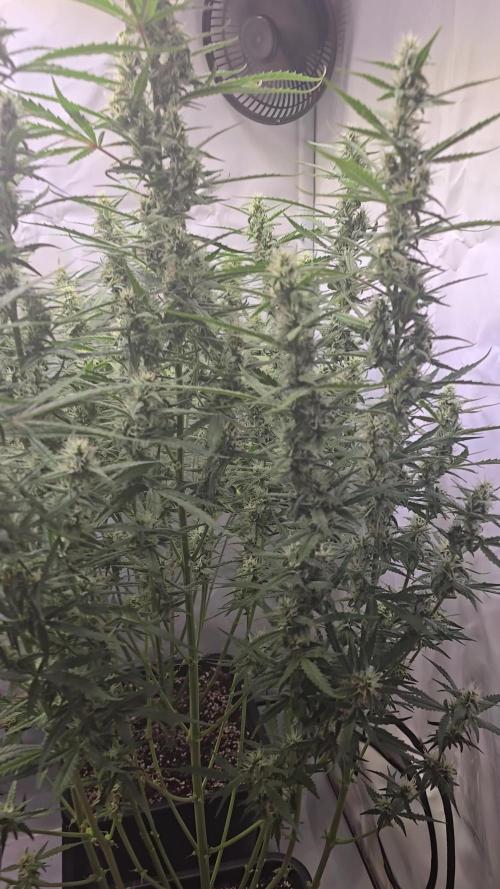
Wir wiederholen woche 4 des düngeschema, da sie sicherlich noch 3/4 wochen blüte brauchen wird.
Likes
29
Share


@JeyGanesha
Follow
Un altra settimana è passata senza problemi...grazie alla mia perseveranza nel curarla e debellare i ragnetti Rossi che bastardelli mi sono arrivati anche dentro al box... sicuramente c'è li ho portati io involontariamente quando sono andato a vedere delle piante di un amico che erano impregnate di ragnetti e ragnatele sui fiori....vabbè ora devo sbattermi un po' più ma non lascerò che mi rovinino la mia terapia 💪👍🙏🕉️🙏... Boom Shiva Shankar 🕉️ belle le mie coccinelle 🐞 che mi tengono pulita la mia terapia
Likes
10
Share

@SgtDoofy
Follow
2/28:
Amnesia has some yellowing of the leaves that appeared around about 12 hours before my usual every-3-day feedings and after I started to defoliating some of the previous yellow leaves from the previous accidental lack of water. I'm not sure if it is progressing, or it's just because I'm dialing in the watering schedule and she's using the nutrients in the extra, fatter, lower leaves. I've increased Amnesia's light distance to 16 inches and am lowering the humidity to stick between 60-70% RH with the automatic fan set to remove excess humidity near the higher end of that range. Fresh air fan blowing around the tent and into the 2 lower vents. Smells like a fresh garden outside of the tent, however smells green when the tent is opened. Not a strong green smell, but mildy recognizable.
3/1:
Welp, it's worsened, and has shown itself in both plants now. Since they share the same environment and nutrients, I suspect this to be a nutrient issue. Trainwreck was known for potentially having excess Nitrogen as shown by the extremely bushy growth, dark green leaves, and downward curling leaf-tips. However, Trainwreck is now no longer exhibiting those symptoms, and has lightened up and is stretching. But! Trainwreck is showing signs of potassium deficiency, with brown spots appearing on upper leaves. The same goes for Amnesia, brown spots have migrated their way to upper leaves. I'm thinking a banana tea will be good for them, so I've got a couple large banana peels steeping in the pump sprayer for this evenings watering.
My conclusions:
1. Nutrient burn hitting Amnesia hard, but Trainwreck is riding it out from its stored excesses.
2. Both are lacking some potassium now that they're beefing up in flowering stage.
Edit: I've decided to add a quarter-strength nutrient to this banana tea so as to not completely flush out the remaining nutrients. I believe that would leave her starved in between her next feeding, in 3-4 days from now.
3/2:
Welp! That made it worse! Time to test the PH of my soil. If the PH is too far in one direction or the other, certain nutrients will be locked out. I've ordered a PH meter instead of these PH testing drops. I didn't know that the difference between 6.0 and 6.5 would be so drastic, but with that said, I need to be more precise about my PH levels if I want to maximize these nutrients. Until the PH meter gets delivered tomorrow I may, if my research says that I should, flush with plain water ph'd water to try to flush out salts and try to get the PH back to 6.5 where it needs to be.
Edit: I do not believe this to be overfeeding, as I would expect nutrient burn on the tips of all leaves, but there are colas that are completely unaffected by the recent feedings. However, if the PH is off, and I suspect it is, individual deficiencies will pop up and affect the leaves differently. The other plant, trainwreck, which was planted later, may have contained less Ocean Forest nutrients from the top of the bag, and also more Happy Frog; so it's riding out these issues just fine.
3/4:
The discoloring on Amnesia has not spread to any other leaves. I've done a little bit of defoliating on the yellow and crispy leaves. Looks like they're already being replaced.
I've got my ph meter now, and doing a slurry test came out 6.4 on the top inch of soil, the only soil I could get to without ripping up the roots. Either way, I'm doing to be certain to PH tonight's feeding (half strength) perfectly to 6.5, as opposed to trying my best using PH testing drops, which is almost impossible! Trainwreck is getting some spots on her leaves, so she'll be ready for her feeding tomorrow.
Likes
36
Share


@GYOweed
Follow
Stem rubs are light lemon cake. Some have no taste. 3 are pretty big, 1 no smell nothing special. One is unwinding twisted root but has tight nodes lots of new growth but no stem rub.
They all nice n hairy good immunity some are very fast and nice smell!
Culled the two shortest ones after snell n node test they were just nothing special. Down to 3 with one lanky one small nodes but hairy n good smell gonna give her a week n see.
