


Likes
Comments
Share


@Curbyourenthusi
Follow
***********************************************************************************************************
START OF WEEK
The Hawaiian Lion (right) and Tricho Jordan (left) are the two plants that dominate the face-on tent photos, and for good reason. Each of those plants is twice the mass of either Chimera. The HL is superior in bud sites, resin, and terp intensity, but the Tricho and the good Chimera #3 are both not too far off in resin production and aroma profiles. The weird runt is frosting up too, so we're looking at getting something unique and quality from each.
That is, if I don't muck this up.
I fed last night, and as part of that process, I mix my nutrients in a four gallon batch at a double(ish) strength. I then add that to my reservoir, which is shut off at that time. This allows me to work in the res, to both get the ppms right and the ph within range. I just use plain water to level off the ppms and then I adjust for ph.
What I didn't do last night is TURN back on the flow of water from the reservoir. However, you wouldn't have guessed it from how the plants woke up today (see first image). I normally check the bases of each plant daily, and in doing so today, I noticed that one felt slight dry. All tanks were empty, but all plant bases were somewhere between wet to moist. This is how I spot check, and it's worked in the past. This isn't the first time these tanks have had a catastrophic issue leading to an unexpected no flow sitch.
There's a filter that sits between the reservoir tank and the primary feed line. That has unexpectedly clogged on me in the past, but with no deleterious effect to the grow. That was caught within a day as well by testing the plant bases. I don't blame autopot for either event.
Obviously, last night I was a baked potato and just forgot a step. The clog is because I use yucca in my mix, which is an organic material that over time in the reservoir leads to build up. I'm afraid to introduce hydrogen peroxide into the set-up, so I'm just maintaining my reservoir by cleaning it fully every other week for now. I don't want to kill off the bacteria in the environment. I'm also using some fungus, too, so I'd rather promote coexistence of a microbiome than serialize it, especially considering the plants seem to be on pace.
****************************************************************************************************************************************************************
END OF WEEK
Shit! I've got a herm. I've found four nanner clusters this week, all on the lower third-ish of the Hawaiian Lion. Someone, thankfully, spotted it in the purple flower pics. Turns out, while super fun to look at, those sweet violet flowers turned into harbingers of mother fucking doooooommm.
I've never seen this before. I guess I've been fortunate, but I've also never had a camera this capable before either. I had no idea how small these pee pee's were. I guess I was expecting girth, but shame on me for not knowing. I rapidly learned as much as I could over the last two days, and I've come to the conclusion that I may or may not be screwed. The consensus on my situation ranges from either burn my tent down to thank ja for the blessings of feminized seeds. We're riding this baby out.
I think I have fifteen to twenty days left and I think these little nanners might have been in action for ten days, hopefully less. I don't know what kind of damage will be done in that time, but honestly, I'm not too worried. While disappointing, my use case is a personal supply of bubble hash and flower rosin. If it's seedy, I'll wash most of it.
I don't know what caused it, but I'm thinking a light leak or genetics. The environment is dialed and that plant hasn't shown one sign of anything less than vigor throughout. The spots that developed the purple flowers (lower bottom half to bottom quarter) are all in the vicinity of where I found the herms (four locations) and these locations are close to the edge of the tent along the zipper. I'm vigilant about keeping my tent and grow space in order, but a light leak can't be ruled out. I'll have to test that after the harvest.
The herm flowers are minuscule and I'm surprised I found them. The camera was a great tool in this case. I sprayed the areas that I removed the nanners and then dried it, but for what it's worth, I think the damage was already done. That water bit felt more like ritual, but I'm still feeling optimistic that I'm not totally hosed.

Processing
Likes
6
Share


@ganjaman24
Follow
***Update*** have switched 2 of 3 to 5 gals will do the other one as soon as I get more coco..looking to veg maybe another 2 weeks then going to flip. Recently acquired LED light for my veg room so have 250w hps n 300w LED..ladies seem to be loving it.


Likes
39
Share

@MisterZ
Follow
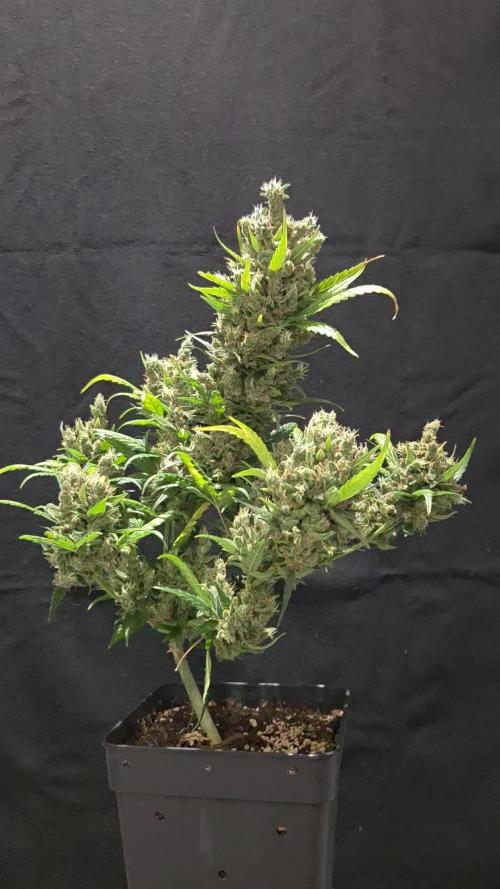
Bonjour les amis. C'est terminé, cette plante était une bonne surprise. Je m'attendais à une plus petite plante. L'odeur n'est pas très puissante mais très agréable. Les fleurs sont très denses avec une petite moisissure à l'intérieur. Beaucoup de foxtail probablement lié au stress de la canicule, la floraison a été longue le développement semble toujours en cours. J'ai détaillé toutes les fleurs pour un séchage rapide. Tout le substrat a été consommé et compacté, il n'est pas reutilisable. Merci pour vos messages et vos likes, portez vous bien, profitez de la vie, M.

Likes
154
Share


@Tropicannibis_Todd
Follow
💩Holy Crap Growmies We Are Back💩
Code Name FBT2311
Well growmies we are at 21 days in and everything is going great 👌
👉So the low stress training been going well 👈 We got some major Pre-flower showing already 👌 let the stretch begin 💪
Lights being readjusted and chart updated .........👍rain water to be used entire growth👈
👉I used NutriNPK for nutrients for my grows and welcome anyone to give them a try .👈
👉 www.nutrinpk.com 👈
NutriNPK Cal MAG 14-0-14
NutriNPK Grow 28-14-14
NutriNPK Bloom 8-20-30
NutriNPK Bloom Booster 0-52-34
I GOT MULTIPLE DIARIES ON THE GO 😱 please check them out 😎
👉THANKS FOR TAKING THE TIME TO GO OVER MY DIARIES 👈

Processing
Likes
3
Share


@Ogbangbang2981
Follow
I'm impressed with this C4 Auto, from fastbuds this is one of two plants I grew. This plant is a real indoor plant she grows lovely. The other plant is an outdoor plant it's pretty too don't get me wrong but where i thought the outdoors would produce a bigger plant i got the opposite of that, I got a Mutated plant, nice colored bud on here but she continues to mutate even in flowering stage my indoor plant is twice her height and size but love both my C4 Auto from fastbuds. Even if they broke my heart by changing payment policy, I'll never be able to get seeds from fastbuds again so I decided to spray my runt on the outdoors with tiresias mist feminized seed spray..... hopefully I get some pollen and able to pollinate my indoor C4 Auto..
Likes
139
Share


@Rusticbuds
Follow
Super stoked for last week, watching her flower is pretty incredible, so from pretty much week 9 of veg up till now I've been feeding her half strength base nutrients with fluctuating strengths of sensizym and Cal-Mag always mixed with 8L of basic filtered water.
Update January 5 2020. Back from my fishing trip! Happy to say that everything with the durban is going swimmingly, I fed her today 8L with half strength base nutrients and half strength of sensizym. I will probably do one more feeding with sensizym and call it good.. in two-three weeks I will start adding my Overdrive nutrients to my base.
January 11 update: Not much going. Just playing the waiting game now.
January 13 update: its gotten really cold here, like -37 with wind so I put a ceramic heat emitter back in, now back up to 250w heat running 24/7. Growing in an unheated shop is definitely a challenge! But with the other one in things are picking up and shits drying out finally. Should have put the other heater back in a week ago. My bad.
January 15 update: -37!! Holy fu*ck, fed her 3L of mixed nutrients at half strength. With just a splash of overdrive.
January 17 update: outside temps finally warming up to -25°c yay!! Inside grow box temps up to 28°c she likes it warm, Fed her the remaining food I had mixed up, she got about 5L. Seeing fattening of the bud sites👀👌
January 19 update: No idea when this happened but it did.. got a crack right at first top. Now I know to leave more of stem above where it splits off into two. Quick tape fix till I figure it out, fed her 5L of mixed food with just under full strength OverDrive and some organic growth plus.. it has a high pk so I'm using it once.
More updates to follow. Update pictures daily!!
Happy growing everyone!🌱👍 Stay warm my Canadian friends.

Likes
11
Share

@RockoCalenberg
Follow
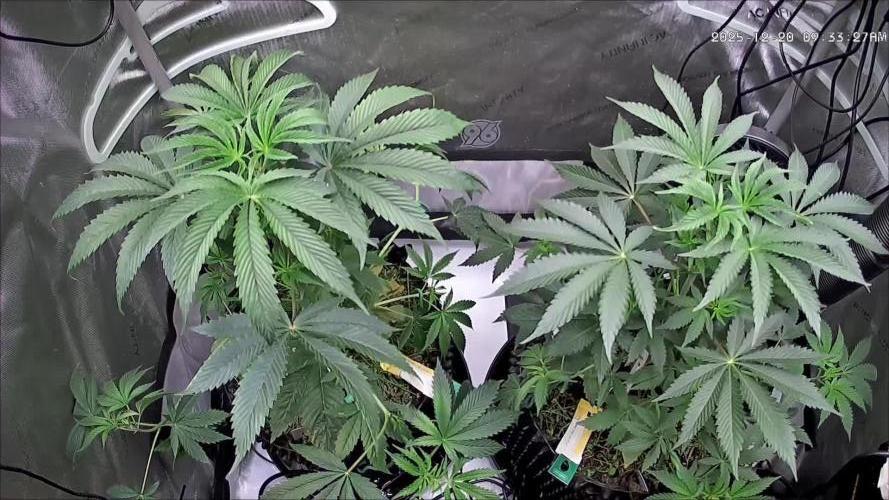
Die 7. Woche beginnt nach dem Umzug endlich im Zelt ⛺ .
📏Die beiden messen jetzt ca. 50 cm .
Nach dem toppen dürfen sie jetzt gerne etwas in die Breite wachsen ↖️↗️

Likes
44
Share

@1juan420
Follow
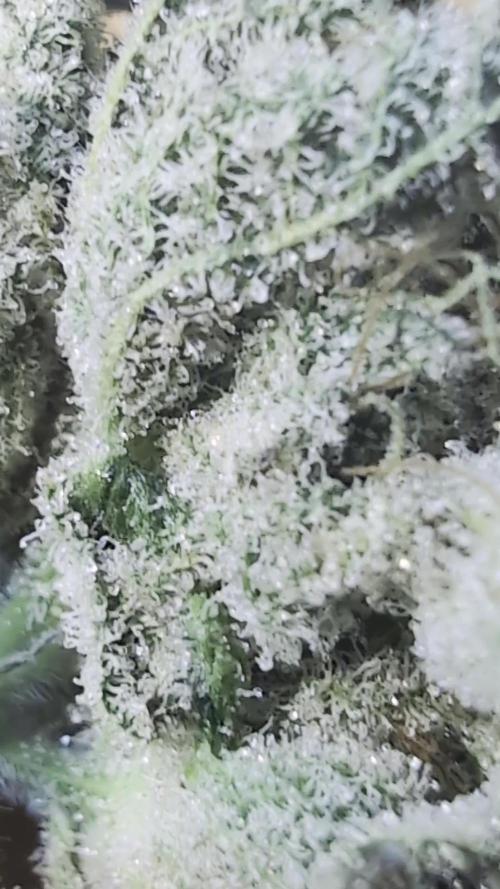
day 57 bloom 🥀
#5 and #2 are my favorite phenos so far. #5 is like a fruity ice cream cake. #2 smells citrus spicy and got bright purple buds which are dense as rocks already
Unfortunately a main cola of #5 started budrotting but I did not find more budrot anywhere

Likes
7
Share


@Fonzi
Follow
Es sieht gut aus. In den nächsten Tagen fällt die erste Strawberry Ak#2. Sie duften wirklich sehr gut. Jacky White sehr zitronig und ich hoffe das bleibt so. Die Strawberry Ak duftet wieder sehr erdbeerig fruchtig. Toller strain..


Likes
7
Share


@Ukfarmer420
Follow
Very nice smoke very smooth, made edibles out of the trim and small budlets...looking forward to the watermelon zkittles then the runtz

Likes
3
Share


@CalGonJim
Follow
My favorite strain for some reason. It always survives, I thought one seed died. So I planted another...week later the other one grew. Survived mealy root bugs and all the insect soap, neem oil both altered the pH massive 5 to 9 fluctuation burned other plants but she kept going. She's smells like chewing gum fresh when I grind her up. I only dry for a day or over night because I do 4 smaller colas that don't take much time to dry. Got about an 1/2 oz or something, I trim and smoke as I go along, my grow tent is like my refrigerator , I just take some when I need it. 😎👍


Likes
10
Share


Likes
16
Share


@GYOweed
Follow
If only you can smell the buds and especially rub on this thing such a sharp berry smell mmmmmph.
I got a clone of it!
It's already looking done lol
I should cross this with the slow veg strawberry sorbet i have.
Fixed day. Flipped 5/15

Likes
5
Share

@MO_PureLeaf
Follow
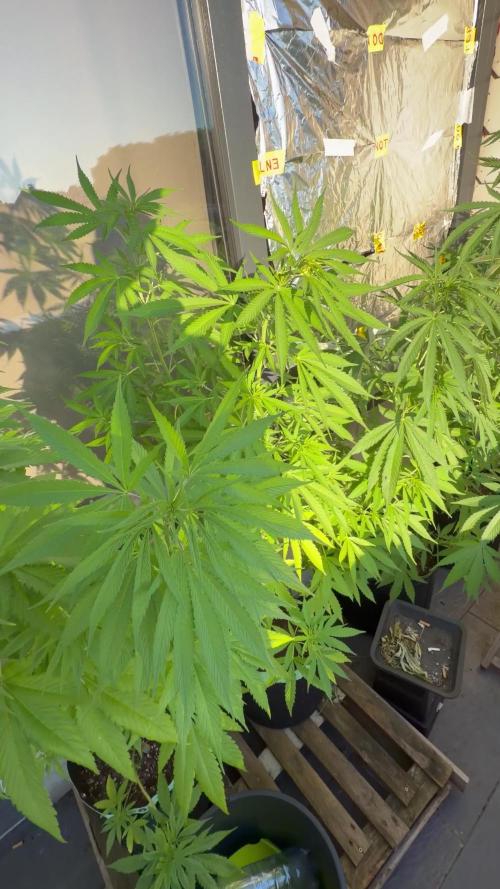
Die ein oder andere verliert etwas Farbe, werde etwas den Dünger erhöhen müssen. Eine Automatik is jetzt richtig die vorblüte gegangen :) man riecht es auch wenn man auf dem Balkon geht. Schade das ich nicht weiß welche Genetik das genau ist weil die wächst schon ganz gut für mein Balkon :)

Likes
46
Share


@Dr_Rook
Follow
Esta semana todo sigue acorde lo esperado, las flores empiezan a invadir mi jardín y ya se ven las primeras capas de resina.
He hecho una segunda poda de bajos, rellenado tierra y sujetado varías de ellas a sus tutores.
Varios días han pasado demasiado frío tras apagarse las luces, nada bueno para ellas, pero he conseguido un mini calefactor cerámico que lo está combatiendo muy bien.
Espero que la próxima semana siga la invasión de flores en mi jardín

Likes
241
Share

@Tropicannibis_Todd
Follow
💩Holy Crap We Are Back At It And Loving It💩
Growmies we are at DAY 28 and she's just killing💀it👌
👉We are in the Preflower stretch 👈
Today we moved our feeding to Bloom Booster and Bloom nutrients 👈
So Shit , I gave them just a tad to much nutes on the last feeding 👈 But I have since fixed it
So I'm starting to pull her over and do some low stress training 🙃 and some defolation 😳
Lights being readjusted and chart updated .........👍rain water to be used entire growth👈
👉I used NutriNPK for nutrients for my grows and welcome anyone to give them a try .👈
👉 www.nutrinpk.com 👈
NutriNPK Cal MAG 14-0-14
NutriNPK Grow 28-14-14
NutriNPK Bloom 8-20-30
NutriNPK Bloom Booster 0-52-34
I GOT MULTIPLE DIARIES ON THE GO 😱 please check them out 😎
👉THANKS FOR TAKING THE TIME TO GO OVER MY DIARIES 👈


Likes
44
Share


@Roberts
Follow
Bubba Kush Mintz Autoflower is doing great. She is growing nice, and steady. I have not really had any issues. I have only added a little water every few days. She us likely comming up for a solution change soon. Thank you Spider Farmer, Athena, and Aeque Genetics. 🤜🏻🤛🏻🌱🌱🌱
Thank you grow diaries community for the 👇likes👇, follows, comments, and subscriptions on my YouTube channel👇. ❄️🌱🍻
Happy Growing 🌱🌱🌱
https://youtube.com/channel/UCAhN7yRzWLpcaRHhMIQ7X4g
Likes
14
Share


@eldruida_lamota
Follow
Vamos familia octava semana de floración de estás Punch Pie de RoyalQueenSeeds .
Que ganas tengo de ver el final de progreso de esta variedad, las plantas están sanas, se ven con buen color.
La cantidad de agua cada 48h entre riegos, quitamos todos los nutrientes de la gama Agrobeta.
Y entramos en la recta final, últimas semanas de floración ya, y como se están poniendo las flores.
Estas próximas semanas veremos cómo acaban.
Mars hydro:
Code discount: EL420
https://www.mars-hydro.com/
Agrobeta:
https://www.agrobeta.com/agrobetatiendaonline/36-abonos-canamo
Hasta aquí todo, Buenos humos 💨💨💨.
Likes
20
Share

@eldruida_lamota
Follow
Vamos familia que ya actualizamos la cosecha de estas lava Cake de Zamnesia .
Y es que me han sorprendido para bien , vaya flores que se han marcado repletas de tricomas y las flores se marcan aromas dulces
Temperaturas máximas en 28 y mínimas en 25 y una humedad estable en torno al 36%.
Os comento que tengo un descuento y para que compréis en la web de Zamnesia de un 20%, el código es ZAMMIGD2023
The discount 20% and the code is ZAMMIGD2023
https://www.zamnesia.com/
Agrobeta:
https://www.agrobeta.com/agrobetatiendaonline/36-abonos-canamo
Mars hydro:
Code discount: EL420
https://www.mars-hydro.com/
Espero que lo disfrutéis, buenos humos 💨💨💨