The Grow Awards 2026 🏆 




Likes
Comments
Share
@Bigbombbudz
Follow
Another week closer.....
Well another week down and the girls are growing great...The only problem with this grow is these girls are big, very big, having to move and get creative with the plants so there not directly under the light but also not to far away....Dont get me wrong there under the light its just my ceiling is very low and these plants are almost 5 ft tall, so I needed to pull them back out from directly under them so not to burn or get to hot...Its tough but fun..
Besides that they are growing great and the smell is awesome.
The Mimosa shot from Herbiesheadshop seeds is kicking ass on budding out, just filling out like crazy.
The other 5 that are Mimosa x Orange Punch are a little behind on the budding size but everyday there catching up, no matter what there going to be nice.
Thats it for this week...
Until next week, smoke a fatty, help out your fellow grower.


Likes
6
Share


Likes
18
Share
@Earthsower
Follow
She has received no water after a full week I have pruned the soil early today to promote co2 for her roots. I think she is recovering her second true leaves have grown at a steady pace with no signs of deficiency I will keep her dry as long as she copes with the drought!


Likes
11
Share
@MadeInGermany
Follow
Hey everyone 😃.
This week she has done great 👍.
It was done again on all the drifted topping and sprayed one last time with neem oil so that the last trips are finally gone 😁.
We haven't had any pests for so many years and all of a sudden we have such little shit parts 😅.
This week it was poured twice with 1.2 l of water.
GHSC enhancer was added during a pouring (1 g per l)
The tent was cleaned every day this week and the plants were checked for health.
The humidifier is filled once a day.
Next week I will decide how I will continue the training because I have space again in the flower tent 😀.
This week I'll decide whether it goes straight into the flower tent or is pruned again.
Until then, I wish you and your families a good start into the new year 2021 🙏🏻.
Stay healthy and let it grow 🍀
You can buy This Strain at :
www.Zamnesia.com
☝️🏼☝️🏼☝️🏼☝️🏼☝️🏼☝️🏼
Strain
Gelato clone from mother (Zamnesia )
☝️
Genetics: Wedding Cake x Gelato x Gelato 33
Vega lamp:
2 x Todogrow Led
Quantum Board 100 W
💡
Bloom Lamp :
2 x Todogrow Led
Cxb 3590 COB 3500 K 205W
💡💡☝️🏼
Soil :
Canna Coco Professional +
☝️🏼
Fertilizer:
Green House Powder Feeding
☝️🏼🌱
Water:
Osmosis water mixed with normal water (24 hours stale that the chlorine evaporates) to 0.2 EC. Add Cal / Mag to 0.4 Ec Ph with Organic Ph - to 5.5 - 5.8 .

Likes
11
Share
@HuckingFot
Follow
This strains aroma is intoxicating, first test on 8/26. Smoked 3/4 of a big bowl And the high is a 8/10. Will cure for another 2 weeks and reassess..... at 66% humidity right now, Amber jar burping 1-2 times a day.
9/9 second test. same great taste and smell. Accidentally got too high and forgot to cover jar so humidity is around 48%. Smoked 3/4 of a small bowl and was really high all night.

Likes
12
Share
@GrowNugzCanada
Follow
Start of week sept 29.
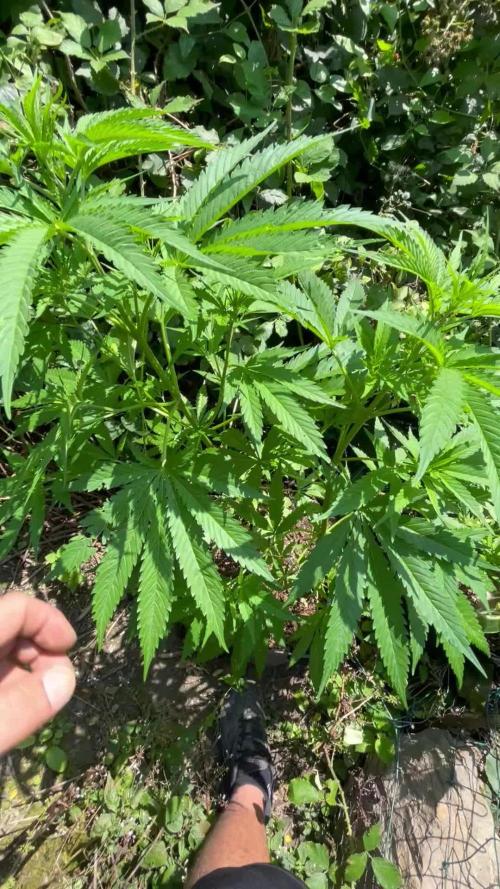
First seed did not pop. This one was put in to dirt today oct 1. It will be 3 days behind the other two. But still holding in to the first seed a few more days just in case.
End of first week sept 3.
First seed never sprouted. But the second one is going strong sitting at about 3/4” after 3 days in dirt.


Likes
15
Share
@Elektrolurch
Follow
They survived the nutrient burn pretty well that they got from early transplanting. All have been connected to the autopot tank.
The Mango Sherbet has been topped, the Apple Blossom and one OCP have been mainlined. Especially the Apple Blossom is growing like hell. Never had better genetics so far. Even though I topped/mainlined them there hasn't been any slow down or still stand in growth at all.
Also I've connected the pump to the airdomes on the first 3 in the lower row as the leaves already reached the edges of the pots.

Likes
33
Share
@Southwest_budders21
Follow
Black valium chop Day 101
I'm actually shocked with this one as i thought the foxtailing would make her airy but she seems quite dense considering 😍 smells fairly potent but like a Fruity skunky smell 🤤 got a small bit of finger hash to try later aswell. Didn't get to hang this one as wasn't to bothered as i was thinking of making butter but now i done a wet trim she looks a lot better so now i don't know weather to keep her to smoke 🤣 I don't bother weighing while wet as seems very pointless to me like what i could of had kind of thing 🤣 probably around 4oz I reckon though! I will update in about a week after she's dried in the herbdryer 💯😁✌️🏻💚
Likes
14
Share
@Bigbombbudz
Follow
All right another week....
Ok my Gorilla girls are growing beautiful right on schedule did some LST as you can see to try and keep the canopy as even as possible and get the lower branches up even with the rest ..I also tied down the main branch to keep it even with the rest as it grows...
I will be going into flowing probably Monday ..by then they will be pushed out and just the right size......
Not much else to say everything is dialed in perfect ..
Until next week....
Smoke a fatty, help out your fellow grower.


Likes
7
Share
@Krissci
Follow
Ending 1st week of flowering
Mainlining for 1st time
8x Nodes, topped 3x
Tied down to create even canopy
Flavour & yield is my biggest aim
Day 3 - Tie down training and defoliation. Both strong growers..
WC2 is the biggest so far
Likes
5
Share



Likes
2
Share
@BigHorn
Follow
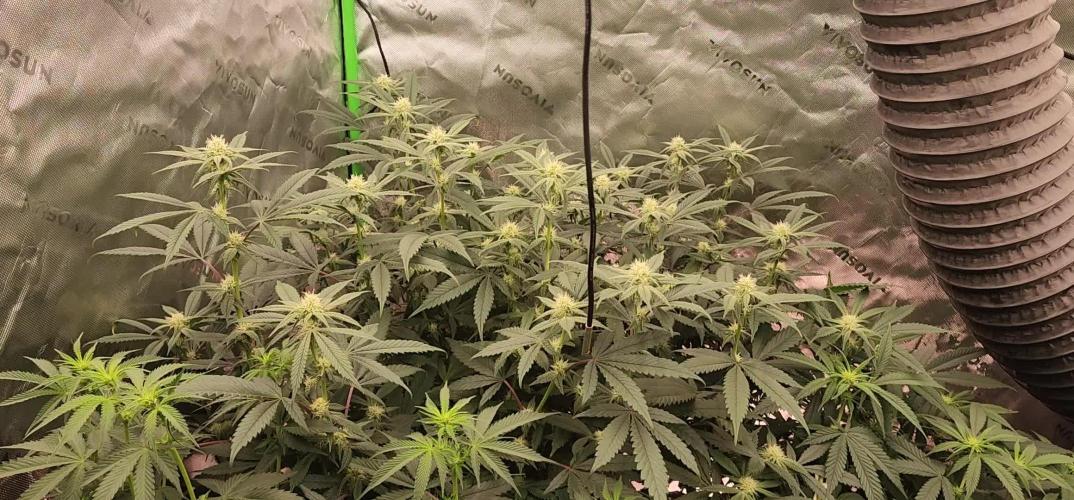
Growth has been steady I'm going to start budding coming week 7. I think I'm going to run out of tent room might be a lil late but it is what it is.
Likes
1
Share
@CheeRz
Follow
It's vegi week 4, and the two lemon ladies are doing splendidly. If they continue to grow like this, they should be ready to switch to the flowering stage by the end of week five.
Likes
6
Share
@Cannabeast40
Follow
Week 3 and a repot is done and now in day 3. Finally it’s settling down after the repot, which was not pretty at all😂
Hope to get some massive plants this run 🌱
________________________________________________________________________________________
Light from @MarsHydroLED 😎
FC-E6500 EVO🔥
730w±5%⚡️💥
PPE 2.9 μmol/J & PPFD 3.14 μmol/J🔥
Full Spectrum 🌈
WiFi smart connection 😱
Exhaust fan : Mars Hydro 6”.
Heating mat: Mars Hydro “48x20.75”

Likes
7
Share
@CanadianFillmore
Follow
Fed and defoliated to start week 7. The plant looks good, with a bit of yellowing, but the buds are on point and look as expected at this stage.

Likes
11
Share
@Cheeba_Inu
Follow
November 17, day 23, the Black Cream hit it's flowering stage very quickly. The second time around it continues to be the fastest strain I have grown. Some leaves are a little droopy/clawed, but it's growing quickly every day so I am not too concerned. The Mars Hydro SP-3000 is able to penetrate the canopy well so i have not removed very many leaves.
November 20, day 26, added video of irrigation.
🌱👉 Check out marshydro_aliexpress on Instagram (https://instagram.com/marshydro_aliexpress?utm_medium=copy_link)

Likes
15
Share
@TheUk420Show
Follow
Hi Guys Sorry I havent got around to updating this Ive been moving stuff around and having a clear out in my flat we have decided to kit out the room and try to get a little bit more yield from some more plants which new diary will be created for both rooms :) starting with jack herer clones around 28 I have :) around 4 LED lights so far 2 10 inch extractors and a shit ton of fans lol these plants had to be moved to a friend's house in order to set them up but they are still alive and kicking that is my friend on the video the first two plants are mine :) the first one is the melon and the larger one is the gorilla :)
Likes
5
Share
@Wookiepat
Follow
This her after 1 week of 12/12.
I was away for 3 days and visited the Mary Jane! Thanks for every new follower i met there and it was awesome to spread some kindness and information. Awesome weekend!
She will be defoliated at 21 days roughly so 2 more weeks and we will check her again.
Otherthen that she seems happy and healthy, also no unwanted visitors like pests or mildew ;)