The Grow Awards 2026 🏆
Likes
Comments
Share
Little bit of defoliation today just to allow light to hit as much as possible,.. day 21 from breaking soil, all look healthy, started a proper nutrient feed today also, still toying with the idea of topping or just some lst, not sure yet, will see how they look next week,.. stay tuned 😀
Likes
Comments
Share
La alegria que se palpita es mucha! Siempre soñe con tener cogollos oscuros y esta es la primera vez! Es notable la diferencia entre la planta fertilizada con namaste y la de feeding, aunque con este solo utilize el Grow y el Booster. Esta ultima tiene un aroma mas plano, sutil, pero gana en volumen. En cambio con la que utilize namaste destaca mas la precencia de ese aroma como a frutos del bosque, dulce y terroso. A comienzos de pre flora aparecieron unos gusanos verdes que se multiplican muy råpido. La mayoria la elimine a mano, pero lo ideal es utilizar jabon potasico + Aceite de neem para eliminarlos inmediatamente.
Likes
Comments
Share
She dried in about 13 days. It was the third plant out of four I had to trim. She trimmed up pretty easily. It was a pleasant surprise. Got 12 oz total. She has some nice chunky, dense, terpene rich buds. That are also covered in frost top to bottom. She took a little longer to dry because buds were so dense I had to let sit out overnight in trim bin before jarring. My test press went very well and she yielded a little over 15 percent. I still am curing the rosin but had a little test of it and was very nice. The terps are very thick and mouth coating. The flower is burning fine before any curing and the flavor is already shining I cant wait to see how it is after a little cure.
Likes
20
Share
Right so I’ve been pretty slack with these girls an very slack on my diaries so sorry to anyone who was checking in regularly, heads been a bit fried but I’m back and this girl is weird asf but I love it the whole thing is like twisted an super stinky now too đŸ€©
Likes
1
Share
Creciendo un mounstro No me esperaba que creciera tanto No sé cómo controlarla pero realmente de ve bien y estå creciendo muy grande y fuerte.... Sot feliz Estå creciendo con mucha fuerza Se empiezan a ver las flores y eso me pone bastante contento con tremendo matón jajaj
Likes
9
Share
@Mimi420
Follow
Day 21 of Flower 🌾 Girls looking real fire right now — stretch is finally done and the canopy has locked in. Big, chunky colas are stacking up and the tent smells absolutely crazy when I open the door (honest — forgot how sweet flower smell is after a few years off). Quick notes / vibes: Switched to 400W HPS + 300W LED (4k) for flower — you can see the HPS side blasting the fattest colas. The two plants that were smallest under the little LED pre-flip have blown right up under HPS and are now the tallest. Kush Crasher is showing beautiful dark colours from the cooler nights (~17°C). Some big fan leaves are almost black — gorgeous. I did some supercrop & last tucks earlier while there was still room; with the net full I’m mostly done training — one last clean tomorrow/the day after, then I’ll let them fatten out. Watering: still giving ~3 L per plant every 3–4 days — feeding organic BioBizz line + Top·Max, Green Sensation in the mix as needed. Environment: box is in a cold, damp garage so I have to switch the inline off at night to avoid freezing. Running a 150W cabinet heater and a small Peltier dehumidifier (not perfect but helps). Humidity still a fight (keep an eye on it) — big fan circulation 24/7 helps a lot. Plan next moves: 1. Final lollipop / net clean tomorrow — remove any junk under the canopy, open airflow. 2. Stop training after this last tidy; let buds fatten. 3. Keep watching trichomes from week 6 onward and stagger harvests as needed. 4. Push RH down as much as possible in late bloom Strains in this run : Wedding Cake (back-left), Kush Crasher (back-center), AK-47 (back-right), Double Krush (front-left), Wappa (front-center), Detroit Runtz (front-right) — 6 clones, planted 10/10. Running in 20 L Smart pots, BioBizz Light Mix, mycorrhiza, SCROG net @ ~25–30 cm. Feeling stoked — tent is filling out exactly how I wanted. Just gotta babysit humidity and let the buds get dense. Keep it green âœŒïžđŸ”„đŸŒż
Processing
Likes
6
Share
@Flydope21
Follow
Plants are doing well. Will probably be able to start flowering in 3 weeks.
Likes
11
Share
Georgeus strain smell taste energetic and beautiful buds with bloody red with tricomes snow đŸ˜ŽđŸ™ŒđŸ»
Likes
9
Share
Okay so I am now onto week 7 of flower ilgm Bruce Banner and SSH. Not only are these girls starting to pack on crystals but they are really starting to pack on weight. Extremely dense nugs everywhere and they wreak!! So far I am very impressed with this grow. I can't wait 2 try them out. Looks like one of the Bruce Banners is going to be an early finisher she is already fully milky with a couple Amber's I will let her go another week and a half to two weeks. And three weeks for the rest.
Likes
1
Share
. đŸŒ± : LST and defoliation on day 49 💧 : 💡 : Dli: 40 mol/mÂČ/d đŸ€” :
Likes
23
Share
@Gordy
Follow
These girls are putting on quite a bit of growth. The taller of the 2 really likes to drink a lot of water, and the smaller doesn’t seem to drink much at all. Tomorrow I’ll probably give them their first nutrients. They’ve been in that soil for about a month and only taking the nutrients from that. Hopefully with some more nutrients they’ll grow more aggressively. I couldn’t control myself with the tall clone. I planned to leave it alone and keep her as a mother, but I really enjoy training and figured I could get some pretty large clones from her if I trained her as well. Last night I moved more powerful LED light that I have into the room. My flowering plant just went into 36 hours of darkness before I harvest her, so may as well give these clones about a week and a half of this light. Is it possible to over train a plant? I feel I’ve just tied the smaller clone (biggie smalls) to the soil and haven’t allowed her to really bulk up

Likes
13
Share
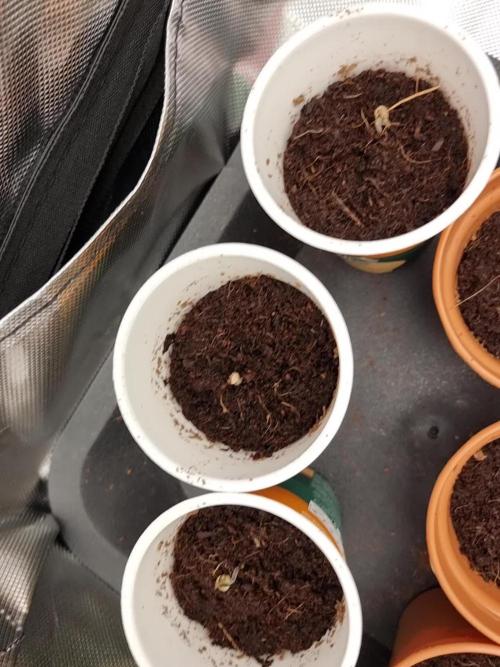
7 Days in, 9 since planting. On day 1 i did a time lapse and found that my fresh bagged soil came with bugs in it. got some 'Jakes' killed the bugs, but over saturated and by 5 of their life i found a bit of mold. lightly sprayed more 'Jakes' and turned on my clip fans.. since then the mold and bugs are 100% gone. the photos of the single seedlings are most recent.
Likes
13
Share
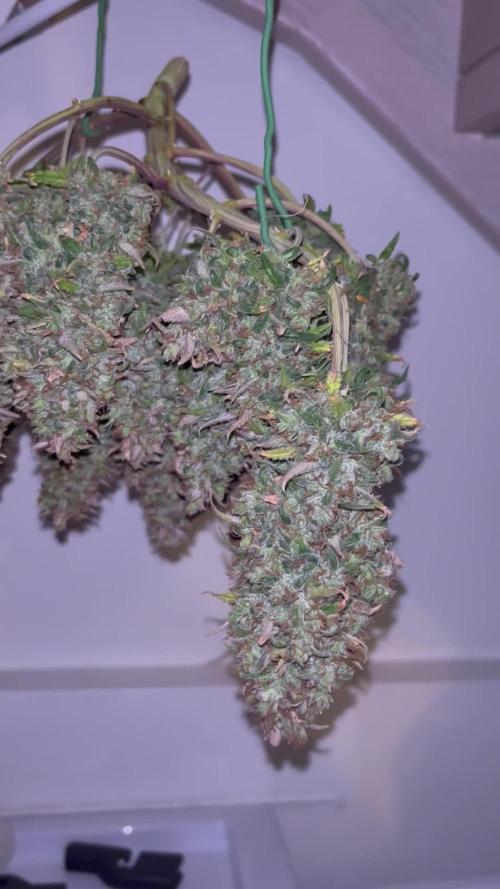
Started on Growdiaries at week 7 of flower. Back at the start there were four plants. Two were feminized and the other two turned out male. Unfortunate because those were the two Scooby Snacks. Actually the showcase plant. Playing the odds didn't work out for me this time. :) Two remaining plants started off at large size difference. Liberty Haze was almost twice the height of the Super Skunk. Used LST early and topping late in veg to control the canopy. Overall I got them to a pretty close height. The combination of the lolipopping and SOG produced some monster buds. Of course genetics helped but they were much larger than previous grows. The tent and the environment stayed nice and consistent throughout the grow. No unexpected incidents other then the two male Scooby Snacks. Used an updated Heavy 16 feeding schedule which seem to make the girls pretty happy. They both have been chopped and are hanging for 7 days-ish. I will take some pictures and give a taste review then. Sorry the pictures and video are so poor.
Likes
42
Share
I am absolutely over the moon with excitement to finally be at this stage in my journey with my beautiful cutie pie. The time has finally come to transplant her and I couldn't be happier to do it with the help of Aptus Mycormix. This mix is truly amazing and I know it will do wonders for my Gitl. One of the things that I love most about Aptus Mycormix is the way it supports root development. I mean, let's face it, strong roots are the foundation for a healthy and thriving plant. With Aptus Mycormix, I know that my plant's roots will be able to absorb nutrients more efficiently and grow even faster. This is particularly exciting since we are entering the third week of the vegetative phase where growth tends to really take off. But the benefits of Aptus Mycormix go beyond just the roots. This mix is designed to support the growth of beneficial microorganisms which can help protect my plant from disease and improve soil health. It's like a whole ecosystem of goodness! but I'm also mixing in some Aptus All-in-One pellets. These pellets are truly amazing and offer so many benefits to my plant. For starters, Aptus All-in-One pellets are a slow-release fertilizer that is designed to provide my plant with all the nutrients it needs throughout the vegetative phase. This is such a great feature because it means that I don't have to worry about overfeeding or underfeeding my plant. With the Aptus All-in-One pellets, my plant will get exactly what it needs, when it needs it. Another benefit of the Aptus All-in-One pellets is that they help to improve soil structure and texture. This is so important because it means that my plant's roots will be able to grow more easily and efficiently through the soil. When the soil is healthy and well-structured, it also allows for better water retention, which is critical for the health and growth of my plant.One of the things that I love most about Aptus All-in-One pellets is that they are made with organic and natural ingredients. This means that I can feel good about what I'm feeding my plant, knowing that I'm not exposing her to harmful chemicals or synthetic fertilizers. Of course, what I'm really excited about is the potential of this plant's genetics. I don't want to get my hopes up too high, but I am hoping for a taste that takes me back to the 90s. I can't wait to see how she develops <3 <3 <3 As always thank you all for stopping by and for supporting me on this journey, i am super passion about growing and fell blessed to have you all with me on this new journey <3 <3 <3 Genetics -Seeds Mafia Lavender Automatic Light - LUMATEK ZEUS 465 COMPACT PRO ‹Food - APTUS HOLLAND ‹ ‹All info and full product details can be find in can find @ https://seedsmafia.com ‹‹https://aptus-holland.com/‹ ‹https://autopot.co.uk/ ‹‹https://lumatek-lighting.com/ <3 <3 <3 Growers love to you all <3 <3 <3 Auto Lavender Feminized is a very popular type of cannabis, whose strong therapeutic effects are highly appreciated. It has a flowering period of approximately 9-10 weeks and can be grown both indoors and outdoors. It is a resistant variety which can be cared for easily. This variety is mostly appreciated because it produces strong, durable and resistant plants. Its branches and stem usually grow vertically rather than horizontally. It reaches heights of 120 cm and the harvests amount to 90 grams/plant. In addition, it contains high levels of THC- up to 20%. As their name suggests, the plants that grow from Auto Lavender Feminized seeds have a smell and taste similar to those of lavender, also comprising mint and rosemary tones. This is a variety of cannabis that is usually appreciated for its pleasant fragrance and high productivity, seeing as its buds and stem produce an impressive quantity of resin. If you’re looking for another kind of feminized, autoflowering variety, Auto Lavender Feminized will not disappoint you for sure! auto Lavender Feminized is a feminized, autoflowering variety, obtained by crossing the Lavender and Lowryder 2 species. The plants that grow from this variety have a very specific structure: they are tall, vigorous, and have large branches. At the end of the flowering period, the plants acquire an orange-gold shade.
Likes
14
Share
05/25/22 changed nutrient water PH 6.11 TDS 932. Planning on doing a small defoliation, plant has alot of leaves. Removed LST. 05/26/22 PH 6.19 TDS 906 05/27/22 PH 6.15 TDS 780 05/28/22 PH 6.09 TDS 900 found a couple leaves with spots. Calcium deficiency? Checked PH was fine, checked PH pen, was not fine 😱, recalibrate to proper and recheck PH. running at PH 5.67. Added PH-up and flushed. Fingers crossed đŸ€ž 05/29/22 PH 6.13 TDS 915 had to tie plant, the weight is making it tip in pot. Plant was leaning on back wall. 05/30/22 PH 6.18 TDS 756 05/31/22 PH 6.10 TDS 900
Likes
13
Share
Recette du tco pour 20 litres. (Grammes : gr) 50gr biochar 250gr zĂ©olite 3gr granulĂ© Micro-Organisme IT45 10gr pollen d’abeilles 10gr levure de biĂšre 3gr endomychorize 10gr consoude 20gr vers de farine 10gr cendre coque de ricin 12gr ortie microniser 15gr Kelp 10gr spiruline 10gr de cbd living soil 20ml de miel liquide 30ml de mĂ©lasse 20ml d’acide humiques et fluvic Mettre tous les ingrĂ©dients (sauf la mĂ©lasse ,l’acide h/f et le miel) dans un filtre 400micron, le placer dans un seau avec de l’eau (10litres). Rajoutez le miel et 10ml de mĂ©lasse Y mettre un micro bulleur alimenter sur une pompe Ă  air et faire oxygĂ©nĂ© le mĂ©lange pendant 24h. Rajout de 10ml de mĂ©lasse aprĂšs 12h le dĂ©but de la mise en route de la pompe. A la fin des 24h rajoutez le restant de mĂ©lasse et d’acide h/f, mettez y en plus 10litres d’eau au mĂ©lange. Reste plus qu’à arroser! j’y ai incorporĂ© 7litre de mĂ©lange La veille j’ai prĂ©parĂ© le pot Ă  l’arrosage avec 500ml d’eau et 2gr de Bacillus IT35 Amyloliquefaciens X5 Bacillus Amyloliquefaciens : rhyzosphĂšre, probiotiques. Aspersion et arrosage. Utilisable pour toutes cultures. La bactĂ©rie Bacillus Amyloliquefaciens se fixe dans la rhizosphĂšre en se nourrissant des exsudats racinaires. En contrepartie, elle stimule la croissance racinaire en sĂ©crĂ©tant des mĂ©tabolites de croissance et solubilise le phosphore en sĂ©crĂ©tant des phytases (enzymes). Effet probiotique consistant en l’utilisation de micro-organismes bĂ©nĂ©fiques pour la nutrition et la santĂ© des plantes. La spiruline, le plus riche et le plus complet des amendements organiques La Spiruline est une algue aquatique connue comme complĂ©ment alimentaire, la Spiruline est aussi un amendement organique et Ă©cologique trĂšs complet. D'une grande qualitĂ© nutritive, elle apporte Ă  vos plantes une quantitĂ© de nutriments, dont l'azote, phosphore, potassium, minĂ©raux, acides aminĂ©s, vitamines, chlorophylle et protĂ©ine. Le charbon vĂ©gĂ©tal actif est capable d’absorber jusqu’à cinq fois son poids propre en eau ainsi que les Ă©lĂ©ments nutritifs qui s’y trouvent. Il joue ainsi le rĂŽle de catalyseur et d'amplificateur pour les fertilisants traditionnels, qu'ils soient d'origine organique ou minĂ©rale. Ce pourquoi il est idĂ©al pour activer un sol et pour les thĂ©s de compost oxygĂ©nĂ©s. Le charbon vĂ©gĂ©tal amĂ©liore la diffusion et la disponibilitĂ© des Ă©lĂ©ments nutritifs dans le sol et offre des conditions propices au dĂ©veloppement des micro-organismes. Le Biochar peut ĂȘtre introduit dans une grande variĂ©tĂ© de sols. Il est particuliĂšrement efficace dans les sols pauvres, difficiles et acides. Pour faire agir rapidement et efficacement sa capacitĂ© d’amendement, le charbon vĂ©gĂ©tal est enrichi et biologiquement activĂ© avec des micro-organismes. Le Biochar se comporte ainsi comme un structurateur et un activateur dans le but de valoriser les sols. Composition : ‱ Charbon vĂ©gĂ©tal actif 31%‹‱ MatiĂšre organique 33%‹‱ MatiĂšre sĂšche 75%‹‱ C/N : 17‹‱ PH : 7,2‹‱ Azote (N) : 2,1 % dont 1,2 % azote organique‹‱ Phosphore (P205) : 0,74%‹‱ Potassium (K20) : 1,18%‹‱ Calcium (Ca) : 6,8%‹‱ MagnĂ©sium (MgO) : 0,65% Le pollen est l'ingrĂ©dient de base de la fabrication du miel par les abeilles. Riche en vitamines et minĂ©raux, il est qualifiĂ© « d'aliment parfait », y compris pour les plantes ! Les zĂ©olithes sont des roches cristallines, prĂ©sentant des capacitĂ©s d'adsorption particuliĂšrement importantes vis Ă  vis des polluants que l'on rencontre dans l'eau et dans certains liquides, ainsi que dans l'air et les gaz. Elles sont extrĂȘmement poreuses comme les charbons activĂ©s et elles peuvent ĂȘtre chargĂ©es Ă©lectriquement pour opĂ©rer comme des Ă©changeurs d'ions. La zĂ©olithe est un produit naturel qui respecte notre environnement. UtilisĂ© dans le milieu industriel depuis de longues annĂ©es dĂ©jĂ , ce minerai aux propriĂ©tĂ©s filtrantes particuliĂšres commence Ă  se vulgariser dans le domaine de la piscine privĂ©e, de l'aquariophilie, des bassins d'agrĂ©ment, de la rĂ©cupĂ©ration des eaux de pluie, ou encore de la culture des bonsaĂŻs et autres plantations diverses par exemple... 4 points techniques majeurs : - GrĂące Ă  leur propriĂ©tĂ© hydrophile, les zĂ©olithes peuvent adsorber l'eau jusqu'Ă  30% de leur poids total et sans aucune variation de volume : pas de gonflement en prĂ©sence d'eau ni de craquement en cas de dĂ©shydratation comme certaines argiles. Les zĂ©olithes sont d'ailleurs de puissants agents anti-mottant (anti-agglomĂ©rant). Cette propriĂ©tĂ© est trĂšs apprĂ©ciĂ©e dans le cas des terrains de golf et autres aires de jeux. - Les zĂ©olithes ne captent pas l'eau de façon irrĂ©versible, elles se comportent comme une rĂ©serve au voisinage des racines. Celles-ci peuvent capter l'eau en fonction de leur besoin. Les zĂ©olithes permettent ainsi de rĂ©duire les besoins d'arrosage jusqu'Ă  35 %. - Une zĂ©olithe se comporte comme une "Zone de Stockage" qui retient l'azote et les Ă©lĂ©ments minĂ©raux nutritifs au voisinage des racines et les relĂąche lentement en fonction des besoins de la plante. Cela se traduit par une croissance harmonieuse mais rapide du vĂ©gĂ©tal. - La capacitĂ© d'adsorption et l'Ă©norme rapport surface/volume des zĂ©olithes, vont permettre Ă  la fois la rĂ©tention de la solution du sol et une bonne oxygĂ©nation au voisinage du systĂšme racinaire. Les zĂ©olithes favorisent donc l'organisation biologique des sols en contribuant au dĂ©veloppement de la micropopulation. L'apport en nutriments (N, P, K) est rĂ©duit de 20 Ă  25 %. Ces derniers, adsorbĂ©s par la zĂ©olithe, sont beaucoup moins sensibles au lessivage et Ă  l'Ă©vaporation. Composition minĂ©ralogique : * Chabasite 70 % * Phillipsite 2 % * Feldspath 5 % * Augite 3 % * Illite - Mica 2% Analyse atomique: * Sio2 52 % * AL2o3 17 % * CaO 5,7 % * K2O 6,1 % * MgO 2 %, * Na2O 0,6 % * Fe2O3 3,6 % Amendement calcaire, dolomie et gypse avec prĂ©paration microbienne Ă  base de Bacillus Amyloliquefaciens IT45 et Saccharomyces cerevisiae LYCC6420 Formulation : micro granulĂ©s (1 – 1,6 mm) Ă  base de rhizobactĂ©ries favorisant la croissance des plantes qui se multiplient et colonisent rapidement la zone des racines, et de levures Saccharomyces cerevisiae souche LYCC ayant un effet probiotique. Les PGPR produisent des enzymes qui solubilisent le phosphore Ă  partir de complexes inorganiques et organiques dans le sol et stimulent la croissance des racines efficaces augmentant ainsi la zone d'interception des Ă©lĂ©ments nutritifs. Les levures LYCC permettent une occupation de la rhizosphĂšre par une flore bĂ©nĂ©fique. Composition :‹‱ MatiĂšre sĂšche : 96,8%‹‱ MatiĂšre organique : 91,5%‹‱ N total : 6,6% dont N soluble dans l'eau 0,17%‹‱ P total : 2%‹‱ K total : 1,7% Micro-granulĂ©s : ‹‱ Oxyde de calcium (CaO) total : 30%‹‱ Oxyde de magnesium (MgO) total : 7%‹‱ Anhydride sulfurique (SO3) : 13% La levure de biĂšre est une matiĂšre vivante qui permet un meilleur fermentation pour les thĂ©s de compost oxygĂ©nĂ©s notamment conseillĂ© pour accompagner les croissances ou apporter un gros coup de pousse pendant la floraisons. La levure stimule la vie des sols Ă©galement Ă  l'arrosage direct en apportant tout aussi bien que dans le TCO sa population l'espĂšce micro-bactĂ©rienne positive pour votre sols ainsi que des oligo-Ă©lĂ©ments et diverse vitamines. Composition : ‱ 2,8% (N) total dont 1% (Norg), ‱ 2,3% (P205) ‱ 1,6% (K20) ‱ 35% de MO ‱ C/N : 8. PH : 8,4. Sous forme de poudre mouillable. Il contient des spores du champignon mycorhizien Rhizophagus Irregularis MUCL57891 avec des levures inactivĂ©es spĂ©cifiques. 2000 spores/gramme d’endomycorhize Rhizophagus Irregularis MUCL57891 et Saccharomyces Cerevisiae LYC6420 inactivĂ©e. Se connecte efficacement au systĂšme racinaire et forme un vaste rĂ©seau souterrain de filaments, qui agissent comme des extensions pour atteindre les nutriments et l’eau au-delĂ  de la rhizosphĂšre Composition : ‱ Poudre contenant 2000 spores/g. d’endomycorhizes Rhizophagus irregularis La Consoude (Symphytum Officinale) est une plante prĂ©sentant de nombreuses propriĂ©tĂ©s. ParticuliĂšrement riche en Potassium (K) organique, la consoude est une alliĂ©e idĂ©ale pour les pĂ©riodes de floraison. La consoude a tout pour plaire : riche en vitamine B12, elle agira Ă©galement comme stimulateur racinaire, mais aussi comme biostimulant cellulaire, grĂące aux alcaloĂŻdes, aux allantoĂŻnes et jusqu'Ă  30% de protĂ©ine ! 100% dĂ©jection de vers de tĂ©nĂ©brions.‹TrĂšs riche en microorganismes, le guano de vers de farine est une matiĂšre directement compostĂ© par les vers. En effet, c'est bien la digestion de matiĂšres vĂ©gĂ©tales par des larves, insectes ou autres arthropodes qui valident le processus de compostage, que ce soit en zone de production de cultures d'insectes, pour le compost maison ou la dĂ©gradation de litiĂšre forestiĂšre. Les bactĂ©ries et autres champignons obtenus grĂące au systĂšme digestif de nos vers, permettent la dĂ©gradation accĂ©lĂ©rĂ©e des Ă©lĂ©ments nutritifs dans vos supersoils, et les symbioses permettant l'assimilation des Ă©lĂ©ments nutritifs. Cette bio-activation intense mettra dans vos sols, Ă  la disposition de vos plantes, un panel tellement variĂ© de nutriments frais qu'il nous est aujourd'hui technologiquement impossible de pouvoir tous les nommer et de les compter. Le guano de vers de farine fournit une grande polyvalence. TrĂšs Ă©quilibrĂ©, il s'utilise en entretien ou en apport ciblĂ© seul ou en complĂ©ment de d'autres amendements ou fertilisants organiques. Il agit comme un puissant activateur de sol et/ou de substrat. Cendre coque de ricin NPK 0,1-18,6-16,5. 0,1% (N-Azote), 18,6% (P205-Phosphore), 16,5% (K2O-Potasse), 11,7%(Ca0), 9,1 (Mg0) - Origine : Inde ACTION SOL ‱ rend rapidement accessible au sol Phosphore, Potasse, MagnĂ©sium et Calcium. ACTION PLANTE ‱ Apport aux stades agronomiques propices. ‱ Produit riche en Ă©lĂ©ments fertilisants : combinaison NPK 35%. ‱ RĂ©gularitĂ© de l’apport, milieu et fin de floraison. . Favorise la sĂ©nescence. Analyse chimique : ‱ NPK 0,1-18,6-16,5 ‱ N-Azote 0.1% ‱ P205-Phosphore 18,6% ‱ K2O-Potasse 16,5% ‱ CaO-Calcium 11,7% ‱ MgO-MagnĂ©sium 9,1% Ortie bio micronisĂ©e Stimule la vie du sol et la vĂ©gĂ©tation. Composition : ‱ 2,8% (N) total dont 1% (Norg), ‱ 2,3% (P205) ‱ 1,6% (K20) ‱ 35% de MO ‱ C/N : 8. PH : 8,4 KELP poudre‹ascophyllum nodosum‹- amendement sol Croissance et floraison - Meilleure germination - Meilleur dĂ©veloppement racinaire Meilleure assimilation - RĂ©sistance aux stress osmotiques - Augmente la production de chlorophylle = plantes plus vertes = lumiĂšre mieux captĂ©e - Lutte contre le stress osmotique - DĂ©veloppement des Micro-Organismes dans le sol – Riche en vitamines, fer, iode, oligo-Ă©lĂ©ments, hormones de croissance auxines et cytokinines - IdĂ©al en Ă©pandage et pour les thĂ©s de compost oxygĂ©nĂ©s. Important : notre Kelp est un goĂ©mon noir mais il n'est pas le varech bien moins fertile de la mĂȘme famille qui est l'algue qui pullule et pollue la Bretagne, notre algue pousse uniquement Ă  plus de 50 mĂštres de fond dans les grands courants froids au large de la NorvĂšge.