Processing
Likes
Comments
Share
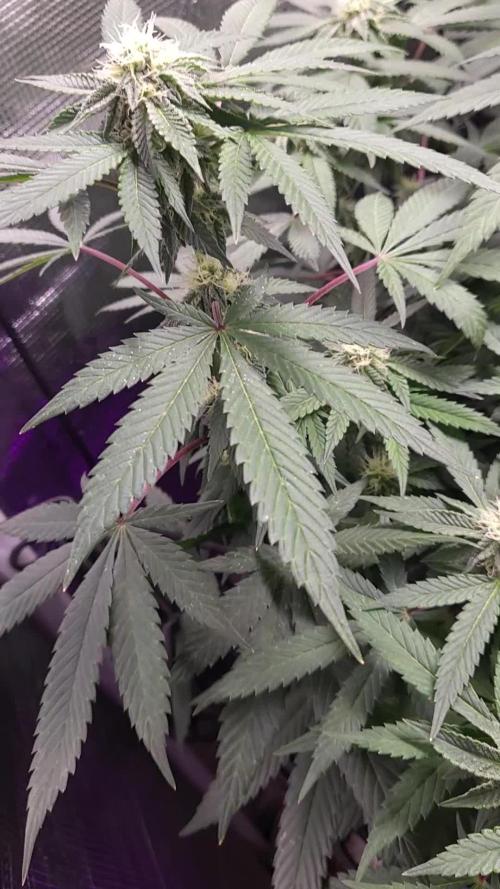
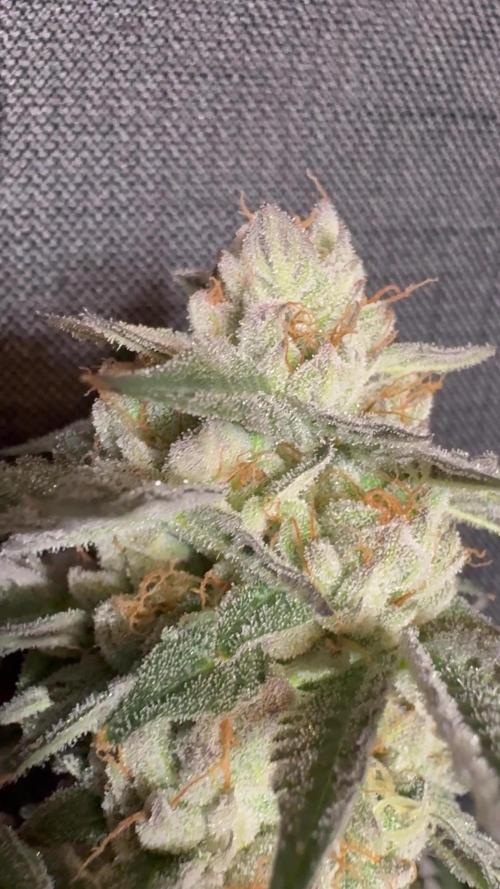
*If anyone read through my GDP diary, this is going to be mostly the same stuff. So, sad day friends. I got spider mites and had to throw all my plants out. This is what I think happened: About 2-3 weeks ago I noticed some freckling on the lower leaves. I looked at it and thought it might be a cal/mag issue so I added cal/mag that week and went about my business. I saw it about a week later and it wasn't getting any better so I added more cal/mag. This continued for about 2-3 weeks until I finally took off a leaf and examined it under my microscope. I saw little bugs crawling everywhere and my stomach just dropped. My fiance did some quick research while I was panic ripping leaves off (see pictures) and she correctly diagnosed it as spider mites. I debated with myself and my close friend and ultimately I decided to throw all the plants in my tent away. I know that there are a lot of people who will say that there are things I could have done to make it to harvest but what it came down to is the people I take care of and personal pride. I consider myself a caregiver and I give away product for free that I am not going to use to my family and close friends. I thought to myself "Would you smoke this?" and when my answer was "ehhh, I don't know", I thought about how it would feel giving it away and immediately made the decision to destroy them. I take an immense amount of pride in my product and this hobby and if I am not going to stand behind it I would rather just start over. I grow from my heart (shout out to the Grow From Your Heart Podcast!) to help people and make sure my family is not getting unsafe product from sketchy people. To spray pesticides in flower that may hurt people and have little bug carcasses in there just goes against that in every way and is just wrong in my opinion if you are giving it away to others. If you are the only one smoking it then it is one thing to take that risk but not with your patients. I want my medicine to help people, not create or exacerbate health issues. It is also important to note that the mites had moved from my flower tent into my veg space and took over my auto berry as well. Damn things are crafty and fast. So that is why I made the decision to destroy them all after 3+ months of res changes, pruning, and manifolding on a slow vegging strain. Feel free to chime in with your opinion but I do not regret my decision. I threw out my new clones, mother plant, and auto berry I had on my veg side as well. Shout out to all the other growers out there that do the right thing by their patients. Caregivers > Cash croppers. For anyone curious, I removed everything from my tent and scrubbed it all with a 20% bleach/water solution. All equipment has been wiped down and stored in the garage away from any organic materials. I will give them until tomorrow (2 days) to air out and dry and then I will wipe it down again with bleach and wait another 2 days. Hopefully that will make sure everything is dead and will not come back next grow. That next grow should start in about a week. It sucks but sometimes it happens and you gotta be ready for it. Lesson learned. Never bring outdoor plants into your indoor garden even if it is after just a day or two. A bunch of people on here and Reddit warned me and I did not listen. Now I have learned the hard way and it feels like when your parents "told you so" haha. Thanks to everyone who stopped by along the way. Stay tuned for a new grow coming soon. It is going to be some cool new limited edition Mephisto Illuminautos. I am pretty excited. Good luck out there and always grow from your heart folks. -Grim
Likes
13
Share
Week 5 day 1. I have a favourite for next run. I’m very happy, I haven’t really defoliated at all this grow, just letting it grow. Wish I was going for mains(topping) but still very good. Going to wait around week 9 so seeds will be good for next run. I have decided to do very hard hst next round to show max potential. Very happy with supercropping so will do it very heavy with scrog. I will try to reveg the one I really like but it is difficult having only 1 set of lights and 1 tent. Plants are about 7ft tall, might just run 2 next round in 4x8 or will still continue to go 4 in the 4x8.
Likes
9
Share
@Prof_Weed
Follow
Okay, started to give her Final Part, EC 2.6 and Ph 6.0 In 2.5 weeks is harvest time Top Bud smell very Lemon and are Rock hard
Likes
1
Share
@PapaTerps
Follow
British Delight - Wizard Trees Day 77 - Watered with 3L of RO tap water with nutrients, mixed individually, in order and then pH'd to 6.3! Week 6 of flower and she's growing good, she's very bushy so I had to remove a lot of foliage from her, especially at her canopy level, as it was blocking the whole plant from receiving sufficient light 😅 as a result, she's the shortest plant in the tent, so she'll have to be raised up to meet the rest of the canopy - let's hope she starts bulking fast now 🙏🏻
Likes
6
Share
Likes
11
Share
Get out the way she’s about to blow 💢💣💥 it’s been a hot week this week I’ve had to dim the lights a bit a take the drivers out the tent to cool it down a bit. Might be a good thing she seem to be fading a little so hopefully diming the lights will slow down the rate she’s using nutes. I fed the worms some banana within a couple of days the turned it into fresh casting she seems to have started her swell too. Until next week let’s get it 💪🏽
Likes
14
Share
@BLAZED
Follow
Week 11 (10-4 to 16-4) 10-4 Temperature: 24.4 degrees (lights on) 21.1 degrees (lights off) Humidity: 60% (highest) 52% (lowest) No pictures. Added 10L to the reservoir, and turned it on for a couple of minutes. 11-4 Temperature: 24.4 degrees (lights on) 21 degrees (lights off) Humidity: 61% (highest) 52% (lowest) 12-4 Temperature: 25.5 degrees (lights on) 22 degrees (lights off) Humidity: 65% (highest) 57% (lowest) Turned the reservoir on for a couple of minutes. 13-4 Temperature: 26.5 degrees (lights on) 23 degrees (lights off) Humidity: 65% (highest) 56% (lowest) 14-4 Temperature: 26.4 degrees (lights on) 22.1 degrees (lights off) Humidity: 64% (highest) 45% (lowest) Turned the reservoir on for a couple of minutes. The reservoir is almost empty, there is 850 ml left. 15-4 Temperature: 24.4 degrees (lights on) 20 degrees (lights off) Humidity: 59% (highest) 49% (lowest) No pictures. 16-4 Temperature: 23.5 degrees (lights on) 19.5 degrees (lights off) Humidity: 60% (highest) 53% (lowest) Today i defoliated both plants heavily for the last time, you can say i did a method called: schwazzing. Turned on the reservoir for a couple of minutes. (Till the AutoPots are full and the valve closes) Rised the pots aswell, so the canopy is very even. I let them recover from the heavy defoliation i did, and next week i will slowly increase the light's strength. (Now still at 50% 50cm)
Likes
11
Share
Been hard sourcing everything I have needed for this room with the current situation. Fortunatly everything seems to bouncing along and are comfortable in the new tent.
Likes
35
Share
Day 64 Okay so we're entering the last couple weeks things are looking good I've managed to bring the ppm's down I added three of just straight tap water waited 10 minutes and then added my 2 L of nutrients. Doing this for the last couple days has managed to bring my ppm's down a very large amount now it sits at 1973 PPM I am well on my way Day 66 not much to say just checking the trichomes and she is coming along well this my be the last week for her then on to flushing. PPM now 1836 and the solution is 1668 PPM so i'm doing good now Day 67 i'm happy to say that my ppm run off is now the same as the solution i'm putting in and that's a big win so now in going back to 2L of water then 2L of nute's Day 68 she is holding steady at 1550 ppm i now know the watering that works best more knowledge for the arsenal lol Day 69 not much to say. She is putting on weight fast now that i got the ppm's under control but at this point it may be a week 17 harvest as trichome development is still on the slow side ppm 1763 Day 70 by my estimation she had suffered a minor nute lock out that slowed growth a little bit. T he reason i think this is because now that i have the ppm's in check and at a steady 1550-1620 ppm she is ( for lack of a better word ) exploding with growth in bud size. some new growth has doubled in size in just 24 hrs and that's huge, because of this i'm going to keep her in flower for week 16 and how knows maybe 17 before flush..... side note i had a freak problem with my one Aglex light and the veg side of the light along with some bloom light diodes stopped working. with some help i found out it was 2 LED diodes were drawing on the power and in effect stopped half the light from working we bypassed the bad LED's and we are back in business 😀
Processing
Likes
1
Share
Bonjour à tous, ces derniers jours ce sont bien passé pour mes petit bébés elles grandissent doucement mais sûrement.C’est la première fois que je travail avec cette gamme de produits (je vous est mis des photos des produits 😉) pour l’instant j’en suis satisfait après, il faut voir le résultat final ce qui est moins facile 😂. Mes petit bébés commence leurs 5ème semaine (je me suis trompé d’une semaine 😕 désolé 😉) trop pressé!!! 😂 de mettre de nouvelles photos 😜. Je vous dis à là semaine prochaine vivement 😉 bonne journée à tous. Je vous remercie 😉.
Likes
Comments
Share
Plants are sometimes like kids: you don't see them for a while and they shock you. Now I see them every day, but looking back at how they were two weeks ago, I'm shocked. Nowadays, and probably thanks to Plagron, the plants are growing incredibly. Our Georgia Pie #2 had a great 5-week vegetative period and then went into flower. The result? It's nice and big, but once cleaned up, I hope it will give us beautiful flowers. We're now between the second and third flowering period, and it's very beautiful. Let's hope it finishes swelling properly and looks as it should. We're in an 11-liter square plastic pot, which is a classic for me. Techniques chosen: the plant was left to grow and simply cleaned. We're 100% organic and 1000% Plagron, as always. The soil we've chosen is the recently launched Plagron Bio LightMix, which will allow us to get our growing process off to a smoother and more reliable start, without the sudden changes that liquid fertilizers can cause. A week is more than enough, so let's not overdo it. We're in the early stages of flowering, but we're well-equipped with fertilizers and additives. We added: - Pure Zym 1 ml/l (3rd flowering last week) - Silic Rock 1 ml/l - CalMag Pro 1 ml/l - Sugar Royal 1 ml/l - Alga Bloom 4 ml/l - Power Buds 1 ml/l Once a week as a foliar spray: (until the first two weeks of flowering) - Vita Race 5 ml/l Choose your favorite style and calculate your results on the website: www.plagron.com Our new 720W Spider King lamp from Vanguard Hydroponics is now at 80% Z - https://www.zamnesia.io/en/531-growshop I can almost hear Ray Charles singing...Georgiaaa, try it. Z - https://www.zamnesia.io/en/11085-zamnesia-seeds-georgia-pie.html Z - Spice up your grow with this delicious US hybrid. Originally created in San Francisco, Zamnesia breeders worked hard to trace and stabilize the Gelatti x Kush Mints lineage that gave rise to the original Georgia Pie. The result? A 50/50 indica/sativa hybrid that grows beautifully both indoors and outdoors, quickly producing dense buds with deliciously sweet terpenes and a potent effect. Combining the genetics of two fantastic parent strains (Gelatti and Kush Mints), Georgia Pie is both productive and easy to grow. During the vegetative stage, plants grow vigorously, developing moderately spaced internodes and fairly broad fan leaves. Expect noticeable stretch when it transitions to flowering: mature plants can reach 130cm indoors and up to 200cm outdoors, with numerous side branches that will develop large buds. Thanks to its exuberant leaf growth, Georgia Pie responds very well to regular pruning, defoliation, and training. These interventions will open up the plant's canopy, exposing even the lower buds to light. Indoors, Georgia Pie typically requires 8–10 weeks of flowering to produce up to 500g/m², while outdoor plants are generally ready to harvest around mid-October, producing up to 500g/plant. You know it but I recommend it, here you will find many beautiful things basically "all the best that nature has to offer" Z - www.zamnesia.com Music // www.radionula.com + Feng Shui Music + Frequencies 432 Hz
Likes
8
Share
** Edición semana - se ha aportado al sistema 14 litros de agua con las cantidades discriminadas en función del número de litros considerado. Al sistema ya se ha empezado a introducir el Canna Zym y la consideración para el agua a 14 litros, se ha echo para que el día 17/08, se empiece la nutrición de floración y el cambio de ciclo lumínico a 12/12. Las próximas dos semanas corresponderán a un total de 5 semanas de vegetativo y por las tasas de crecimiento, seguramente en dos semanas tendremos la correspondencia a la dimensión final en altura del cultivar. (Mi cuenta a la altura del grow la hago, doblando la dimensión del grow cuando se produce el cambio de ciclo de luces. Así si a un vegetativo de 30 CMS cuando se produce el cambio a 12/12, representará que al final de floración la altura final estará siempre algo más del doble. O sea que si en dos semanas el grow esté sobre los 30/35 cma, al final de floración como máximo tendremos un grow sobre los 70 cms. Los grows siguen presentando un maravilloso desarrollo y la cepa fast afgana de Sweet Seeds se ha revelado un acierto magnífico para las condiciones de elevada temperatura y baja humedad que llevamos. Semana 1 1/2 - casi he cortado algo com tres días en total de la presente semana de desarrollo vegetativo y si miráis la entrada del diario anterior a esta, podrá resultar increíble lo cuanto se ha disparado el crecimiento de las "Afghanis" Fast de Sweet Seeds. Un acierto en casi toda la linea...líneas de fenotipo cara a la familia de genes del Hindu Kush. Plantas que reaccionan maravillosamente al calor y ya os había dicho que con una constancia de temperaturas que en luces está con más de 30ºC y que incluso a oscuras, sobre los 26,27ºC y donde la HR se.encuentra siempre entre máximos de 50% y mínimos abajo de 40%, y justo por su "pasado" de las montañas norte de la raya de Afghanistan/Pakistán, es muy claro que la genetica está lista para el calor...o también a frío, en otras cepas de las cuales destacó lo de Mazar-i-Shariff. Pues hoy la entrada de diario con video (en inglés) y con un nuevo set de fotos pone clara la cosa. Las plántulas pasada de jiffy al sustrato actual sobre el día 20 de julio, hoy 29 de julio - ocho días después, son muy reveladoras de lo que son las virtudes de asociar una de las más sencillas formas de hidroponia (pasiva o de APU, o sea de acción de gravedad) y que permite sin carencia ó exceso que la irrigación por Smart Mat (una forma especial de tejido, que toma la solución de agua y nutrientes desde un tablero/maceta de 10 litros y quedándose además otros 10 litros de solución en una cuba que irá vertiendo hacia el tablero por gravedad según la velocidad de absorción del sistema radicular de las plantas (o sea con gravedad se ponen a circular 20 litros en total del sistema y sobre el preparo de estos 20 litros que son la base para el calculo de PH y EC que los distintos momentos del cultivar,.necesitaran). Lo más sorprendente pasa por la siguiente análisis: cantidad de agua necesaria y cantidad utilizada, ahorro de nutrientes y cálculo mucho más efectivo en el control de cuestiones que cuando comparadas, por ejemplo, cuando hacemos riego por ejemplo, al echar 1.5 L con nutrientes y regarla cada dia y que conlleva desde temprano momento de desarrollo a aportar más agua y nutrientes que los necesarios y que al final, acostumbran a ser demasiado,.pues los cultivars se acostumbraran a una filosofía de "exceso" y con ello en regla, los flush finales muchas veces tienen que ser muy agresivos de modo a romper los cristales de nutrientes que se formam por exceso de sales en el sistema. Ya había tenido contacto con cultivars en coco, pero el cultivo en este medio cuando expuesto a las condiciones en que se hace uso racional de la introducción de agua y nutrientes en el sistema, se está revelando casi espectacular, el modo como dia pós dia, el crecimiento de las plantas sea un "espejo" del equilibrio de racionamiento de agua y nutrientes. Por ejemplo, comparar la anterior entrada antes de esta y ver lo que la estructura de tallo y hojas, su inserción y los cortos espacios internudos, es muy revelador de la principal virtud de los cultivos en coco y hidropónicos por gravedad. Algunos amigos con mayor experiencia, me habían referido que el crecimiento en vegetativo es simplemente, explosivo y lo que nos es enseñado en tan solo cuatro/cinco dias de vegetativo, pondrá el listón de calidad en esta temporada, muy por arriba. Según los entendidos, este crecimiento explosivo en vegetativo, ocurre por la manera proporcionada como el sistema de raíces que se encuentra junto al Smart Mat, termina siendo la única area mojada del medio de crecimiento Si comparáis con algunos de otros diarios que aquí presento y donde cultive en suelo, queda muy claro que tan solo en regla sobre la quinta a sexta semana se dá un estirón cualitativo y cuantitativo de los cultivars. En regla y si pensamos el riego normal en suelo y más en verano, lo primero serían las macetas que para suelo serían mayores que las padrones de hidroponia de 11 Litros. 11 litros en macetas de hidroponia corresponden a 23 litros en suelo regular. Después con temperaturas en la linea de las que estamos pasando, corresponderían a riegos de 2 Litros diarios de agua con nutrientes y con la temperatura y la adicción de agua necesarias, para suelo, en estas fechas, el estrés de temperatura y sobre todo el hídrico (por la cantidad de agua aportado) pasarían factura en el crecimiento. A contrário de otras temporadas (de suelo y riego diario), no tenemos, en primer lugar, áreas de suelo en la maceta que se sobrecargan de agua cuando aún no tiene materia radicular. Una de las señales que los grows en suelo y riego directo presentan en verano, suele ser las hojas curvadas hacia bajo y que el set primario de hojas, ya se habría puesto amarillento. Después uno de los sales más prófugo en bloquear otros sales por su exceso en el sistema, es el nitrógeno. Lo que los riegos diretos en verano crean, pasa por cuando saturan áreas de suelo que aún no tienen raíces, el nitrógeno tiende a quedarse fijado en sales en esas áreas y después si bien habrá muchas veces una cantidad muy larga de nitrógeno, al existir ese exceso, más tarde habrá influencia negativa en otros sales y sobretodo microelementos, que no se agregaran de la mejor manera al cultivar. Mucha gente no acostumbra a reflexionar sobre la forma como se hace la nutrición de raíces a través del suelo y si hay factores reductores en la integración de sales cuando más necesarios se convierten, eso pasa por ejemplo, por no haber conocimiento que por ejemplo excesos de nitrógeno pueden impedir que Fósforo o Magnésio o elementos como Boro, Hierro, Manganeso o Zinc, se integren al cultivar cuando más necesarios se hacen. En regla, los iniciados no entienden que un "overfert" de nitrógeno, que suele ocurrir más a común que se imagina (esa idea que se está haciendo la nutrición correcta cuando por ejemplo, el iniciado echa un vistazo a su "plantita" y la ve de un verde muy fuerte y lujuriante. En regla la gran mayoría de sobre fertilización ocurre con el aporte de agua. Un iniciado no será muy preocupado con el PH de su agua y con ello, también le dará poca importancia al EC y os dejo un poco esta idea " no es lo mismo preparar todos los días, soluciones de nutrición en base al preparo de 1,5 litro de solución (en base a una botella de agua de las normales) que por ejemplo preparar por ejemplo un botellón de 6 o 7 litros y usar ese botellón para riegos diarios sucesivos. Aún con medidas es muy distinto, que como en el sistema de hidroponia por gravedad que tengo a uso, pues preparó 20 litros de solución que pondré en una cuba, de esta cuba por una manguera con un sistema APU -bloqueo por gravedad- se llenará el tablero/cuba con cerca de 10 litros y en estos 10 litros estarán sumergidas las tiras Smart Mat, que al llenarse hasta el tope conducen el riego solamente en el área donde ya se encuentran formados los sistemas radiculares de la planta. O sea que en el sistema entrará justo el agua y nutriente necesario a lo que las raíces absorben....mientras que cuando haces riego directo sobre suelo, lo normal es que existan una área en proporción mucho mayor donde se satura el medio con agua y nutriente. Os explicaba que para lo que se puede controlar en PH y EC, hay diferencias muy significativas entre el preparo de 1,5 litros de solución para un día; que un botellón de 6/7 litros para riego a lo largo de 5 o más días ó que el preparo para mi sistema de hidroponia con 20 litros de solución que serán empleados tan solo por la estructura radicular que los absorbe paulatinamente. A quien en verano, perante el dilema del riego al ver incluso indoor que el suelo se seca rápidamente por la temperatura alta y baja humedad y que con eso puede en una maceta para suelo con 23 litros, llegar a hacer riego al menos dos veces al día con un total de 3/4 litros de agua y donde parte de esa agua con solución de sales será vertido en el suelo, pero en áreas del suelo donde no hay raíces...casi seguro, lo que estamos mirando con estos riegos es que tendremos seguro hojas de un verde muy bello y sin dar importancia a que las hojas se pondrán como gruesas y enrolladas hacia bajo y por el verde "bonito" no entender que la sobre fertilización ya esta en plena marcha y que más tarde en floración, por la presencia excesiva de cantidad de nitrógeno, por ejemplo lo que en floración ocurrirá, será que cuando necesitemos sobradamente de Fósforo y Magnésio, para las funciones de floración, engorda y evolución de terpenos y resinas, incluso para el "rippen", lo que suele pasar hace la alegría de los fabricantes de nutrientes, que se llenan de líneas de incluso 25 productos destinados en parte "a corregir las incorrecciones de formulación con que desarrollamos nuestros productos iniciales y a que decimos a nuestros clientes con menos experiencia, que debemos poner más que la cuenta, para que después necesitemos de otros productos en exceso, para equilibrar autênticas bombas químicas - ya sean biológicas o minerales-. Pues y sin alongar más el raciocinio, y por las evidencias y más por lo empírico de la cosa, lo que veo al menos para el periodo de verano y con la conjugación de los siguientes factores :FACTOR 1: semilla F1 Fast con genética Hindu Kush tanto por padre como madre y que guardan plantas que son por antonomasia, resistentes perfectas a las condiciones de mucho calor y poca humedad + FACTOR 2: sistema de hidroponia pasiva por gravedad, cuatro macetas de 11 Litros y responsable por una forma de riego óptima y en la cual la agua con la solución integra agua a partir de tejido Smart Mat y de aquí al sistema radicular que se desarrolla en el contacto del Smart Mat con el medio de cultura + FACTOR 3: medio de cultura formado por: Coco peat/powder con trichodermas naturales -bloque Ugro Basic 70 litros (75%) - Perlite fina (20%) + Bolas Arcilla Expandida Europebbles Plagron (5%) . A las áreas de colocación de las semillas germinadas en jiffy peat, se aporta como medio de refuerzo de protección mycorrizas Kraken - Glomus iranicus sob. + Tricofor 50 (Trichoderma harzanium) + FACTOR 4 - linea de nutrición CANNA Coco. Los cuatros factores son la base y eje de lo que de mejor tiene, en mi opinión, el sistema Quadgrow. Como hidroponia sencilla, creo que es muy buena cara a condiciones de verano, pues permiten que los riegos ocurran de modo muy regular. Habrá dudas con condiciones de invierno, pero en invierno a lo mejor habrá que contrarestar la cantidad de solución preparada y en vez a los 20 litros para una media de 12/14 días a lo mejor, será más interesante hacer el preparo de cubas de no más de 12 litros que podrán en máximo prorrogarse por un máximo de 11 dias. Para ejemplo, queda la enorme dimensión de este comentario y algunos análisis sobre las cuestiones técnicas del grow en hidroponia. Si todo lo técnico es importante, darle a la fé en el buen Dios Jah, para que todo pueda ocurrir en paz, para que los grows se hagan sin contratiempos y para que las miradas y habladurías de vecinos nunca acarreen problemas y eso siempre, por qué la más bella planta del universo, no es para generar una ganancia mayor que le de los amigos disfrutando de buenas películas, buena musica, buena compañía y en eso la mayor virtud de la cannabis como elemento de desarrollo del ser humano hace su hermano humano. Green greets y os invitó, a que disfruten del vídeo y de las fotos...
Likes
10
Share
I forgot to do a video every week, I hope I'm not kicked out of the contest, because this plant is pretty sweet
Likes
27
Share
Week 5 pretty successful, nothing bad happened, had good growth considering the troubles I had the week before. Leaving town for 3 days so they will be on their own. Plan on watering right before I leave and right when I get back. Got my lights on timers now. Pulled the light up to 24 inch assuming/expecting the plants will grow a bit while I'm gone. Had a lil bit of yellowing at some of the tips of one of the plants as seen in pic above. Any ideas y? Also posted a video and just curious if the wind is too much..?
Likes
22
Share
@Mazgoth
Follow
First week of flushing.Here is my schedule for flushing with flawless finish. First flushing is with just a LOT lot water. Second flush:watering normal with flawless finish and flush after 20/24 Hours,let it sit overnight but be careful because trichomes will go crazy,if you don’t have enough milky trichomes this method will increase the trichome production immediately the next day. Repeat this method until you are satisfied with the results but don’t go more than 12/15 days,im using flawless finish 3 times in total so use it at least twice. 24 hours flawless finish isn’t doing any damage extra than the 8 hour schedule that advanced Nutrients prefer,but after 24 hours will start to damage the plant so you need to give a good flush after using it IM USING 1.5L WATER SO 2/2.5ml flawless finish
Likes
4
Share
LAS BABYS VAN SE VAN ESTIRANDO Y SE EMPIEZAN A FORMAR LOS COGOLLITOS!
Likes
54
Share
@MrJones
Follow
MrJones Cream Mandeiran Auto XL - ViparSpectra XS2000 240W Infrared Full Spectrum LED Grow Light ´🍪⊱╮🍪╰⊰🍪 WEEKLY GOALS 🍪╰⊰´🍪⊱╮🍪 🏡Indoor - 3"x4"x8" Custom Built Grow Closet 🌞Environment - 80F and 50%Humidity - using Humidfyer as needed. 🌾LST and Defoliation - this strain likes to stretch! 🗓️Week 2 Seedlings ⚱️5-Gallon 📊6.2 PH 💧 Feeding / Using Dr. Earth Dry Organic Amendments - Home Grown & Bud / Bloom Booster 🌞ViparSpectra XS2000 240W x2 Infrared Full Spectrum LED Grow Light 🕷️ IPM - Will be using Green Cleaner" 1 OZ per Gallon, and CannControl from Mammoth alternating between products each month for Integrated Pest Management. ´🍪⊱╮🍪╰⊰🍪 PLANT UPDATES 🍪╰⊰´🍪⊱╮🍪 📝 Notes - Girls are just blowing up, they have doubled in size and started producing their second and third nodes, the leaves look perfectly healthy! The ViparSpectra XS2000's are just killing it! ╰⊰🍪╰⊰´🍪⊱╮🍪╰⊰🍪╰⊰🍪╰⊰´🍪⊱╮🍪╰⊰🍪╰⊰🍪╰⊰🍪⊱╮ 🔶Sunday 06.20.21/ Continuing feeding just H20 PHed to around 6.0/6.5 🔶Monday 06.21.21/ Continuing feeding just H20 PHed to around 6.0/6.5 🔶Tuesday 06.22.21/ Continuing feeding just H20 PHed to around 6.0/6.5 🔶Wednesday 06.23.21/ Continuing feeding just H20 PHed to around 6.0/6.5 🔶Thursday 06.24.21/ Continuing feeding just H20 PHed to around 6.0/6.5 🔶Friday 06.25.21/ Continuing feeding just H20 PHed to around 6.0/6.5 🔶Saturday 06.26.21/ Continuing feeding just H20 PHed to around 6.0/6.5 ╰⊰🍪╰⊰´🍪⊱╮🍪╰⊰🍪╰⊰🍪╰⊰´🍪⊱╮🍪╰⊰🍪╰⊰🍪╰⊰🍪⊱╮ Cream Mandarine XL Auto®️ Information Tall-stemmed auto-flowering strain. This high-yielding 4th generation auto-flowering strain is the resulting hybrid from the cross between selected specimens of our Cream Mandarine Auto®️ (SWS29)) and a Super Tai’98 elite clone. The genetic coming from the Super Tai’98 elite clone contributes with interesting Sativa characteristics to this hybrid, such as bigger size, but also subtle aromatic and spicy tones with hints of wood and nuts. The so much appreciated Cream Mandarine Auto®️ genetic contributes with traits from the Indica side, such as high flower and resin production, but also sweet and fresh aromas with tones of citric fruits of the mandarin orange type. DATA SHEET Variety SWS55 Indica: 35% / Sativa: 63,4% / Ruderalis: 1,6% THC: 18-23% · CBD: 0,6% Indoor Yield: 450-650 g/m2 Outdoor Yield: 50-300 g/plant Indoor/Outdoor Harvest: 9 weeks from germination Height: 110-150 cm