


Likes
Comments
Share


@Roberts
Follow
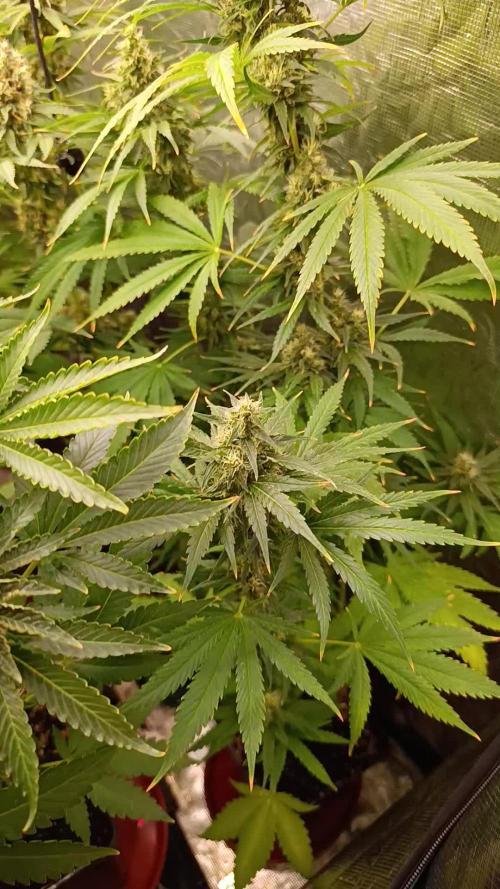
Baked Bomb autoflower grew really well. I had a issue getting a seed going, then some ph issues in vegging. Beside that she just thrived. Big dense colas with a cherry vanilla fruity smell. Loaded with trichromes as well. Can't wait to give her a try. Thank you Bomb seeds, and Spider Farmer. 🤜🏻🤛🏻🌱❄️🌱
Thank you grow diaries community for the 👇likes👇, follows, comments, and subscriptions on my YouTube channel👇. ❄️🌱🍻
Happy Growing 🌱🌱🌱
https://youtube.com/channel/UCAhN7yRzWLpcaRHhMIQ7X4g


Likes
62
Share


@masterofsmeagol
Follow
9/12 Sprayed 1 tbsp K Bicarb with 1/4tsp dawn. Only had time to use a half gallon. I've used more but with all the defoliation this seemed to work and I was in a hurry. I can't ask those watching my plants to do actual labor when I'm not home. I wouldn't want anyone working on my plants but me anyway. I defoliated dead stuff. Still have this rusty looking leaves dieing on my ice cream cake. I need to finish a little defoliating. Broke out my 100x scope and checked a few buds. Things are exploding. Another nice sunny day today. Beastie bloom had no negative effects. I'll use it again and I'll probably use cha ching as well. Went back down to defoliate a little more. I'm getting excited. Still a lot of work left but it's nice to see the progression. Had to cut out a small nug last night that looked like it might start to rot. It was probably fine but I wasn't taking chances. It's so dank and crystally. One of my mystery seeds in the 5 gallon will be done soon. Milky trichs and hard as a rock. Im hoping they will beef up a bit. Little to no amber but things are progressing so fast. I mean nights are in the 40°'s.
9/13 No need to water as it had rained so much the bags need to dry out. Sunny day today. Plants are doing great. Buds increase in bulk on the daily. Took a few pictures and defoliated what needed it. A dog was added to the grow for security. It hasn't gotten used to me yet but it's extremely loud and annoying. Nothing will get past it though. I tried to last night. I shut down the motion sensors informed the other growers (except the person who's shift it was to watch) and I couldn't make it down there on foot let alone a vehicle. Hope the dog liked me but it's certainly useful. It APPEARS we will be having some good weather so I'm excited. I think my plants will be able to finish properly. At least I hope. Either way if I have to harvest early do to the weather so he it but I'll cross that bridge when it comes. Plan to do a preventative BT spray this week.
9/14 FED TODAY. LOWERED GROW BIG TO HALF TBSP. AND AGAIN used 1/4 TBSP Beastie Bloom. Buds are swelling with the sunshine that we've had. I defoliated what needed it and found more dead foliage. It's so weird this damage. I'm pretty sure it's earwigs but the only bother new shoots so that's a good thing. Things are getting close and looking good. I need to do another app of BT. I heard a storm may be coming I'll need to check the weather.
9/15 After a few good days of weather we are in for some rain. Supposably a big storm but it looks like I won't get the worst of it. No water obviously. Something (probably earwigs or jpn beetles) eating or lollipopping lower things. They seem to leave flowers alone. It's just low shoots. Everything is flowering incredibly. I checked trichs on one of my mystery seeds and it looks done. I'm considering taking it. It's in my garage for 24 hrs of darkness and to avoid rain until I make my decision. I also took the two lowest branches off on DJ Short blueberry to taste test and see where I'm at. I probably shouldn't but o do this every year. It will be good to try the mystery bud before I harvest it all. It's just a little guy but the buds are rock hard and with the weather and pm and stuff I'm not sure what I'm going to do yet. UPDATE: APPARENTLY WE HAVE SEVERE THUNDERSTORMS WARNINGS WITH GOLF BALL SIZED HAIL. I can move the other little ones in the garage but everything else is firmly rooted and have taken a beating already. I pray things will be ok.
9/16 No damage from the ridiculous storm last night. I need to spray ASAP. I have a fungal infection with just a few weeks to go. Looks like PM but I know some is a different fungal issue. I'll probably use the k bicarb or citric acid. So far no bud damage or damage up top. The things the earwigs ate were low like the lollipoped lower limbs. It's getting so close. I've been checking trichs and they look great but the buds have some filling out to do.
9/17 DID K BICARBONATE TREATMENT THIS AM. I didn't even look to see if I needed to water. Fuck. buds were soaking wet though so it must've rained. I have to go back down anyway to add a couple strings and do a little more defoliating. Did a treatment with k bicarb this morning.. 1 tbsp with dawn in a half gallon sprayer. I also need to address this earwig problem. They are ravaging some secondary lower branches and Im sure they are spreading disease. I only have a few weeks left and I want the best quality I can possibly get. I plan to put gorilla tape on the outside of the grow bag (double width) and petroleum jelly on the stems. That way they can't climb the bag. If they are in the soil of the bag hopefully the jelly will stop them. I'll also try beer as I've heard that works. I really don't want to resort to borax. Oh and I may have had a visitor last night. I'll have to check the cams. Nothing on the ones I checked but I have some game cams at different angles I haven't checked yet. It was probably just a nocturnal animal. Great to know that the dog announces though. This was at like 12:30 and I was out quick. I only have a few more weeks. I hope the cannabis gods are with me.
9/18 Whatever is eating my plants (earwigs I assume) are progressing from lower secondary or tertiary branches and new shoots to small buds. Looking at trichs some plants look ready. One seedling and the blueberries. I'd like the blueberries to go longer but I'd risk losing them. Fungal and mold issues aren't the greatest either. I was hoping for a big swell but if the weather stays raining and foggy like this it might be better to harvest a little early. I got a second opinion this morning and I'm leaning on taking the seedling and at least the one blueberry with the worst damage that dropped most of its leaves. I'll see how the bottom branch smokes this afternoon and make my decision then. Didn't feed for fear of lockout or if decide to cut. UPDATE: After the second consult with a different local grower I decided to harvest the blueberry that was furthest along and dropping it's leaves. It was done. Luckily it had been flushed with all this sheet rain we've gotten. It rains hard as I speak. Last year I think I had two strings the length of the huge garage and that lasted me all year. This one plant took an entire string to itself. If the weather cooperates this will be a good day. I also flushed the mystery seed I was going to take hoping it might fill out but trichs are very Amber and the bud is DENSE. Not risking mold or insect damage or theft. This took hours to harvest this ONE Blueberry plant. I had to harvest limbs. This was when I could see damage best. I also am curing the buds from the lower branch I took earlier and the other bud that is done. I plan on testing it out tomorrow. I could smoke now but Im already burnt and tired and want to try this with a clear head. I can't believe how long this took. One Big and one little down 10 more to go. Phone died so I couldn't take any pictures.


Likes
21
Share


@greenthumbartisan
Follow
Day 68 - April 18, 2021 (Day 1 - Week 3 Flower)
Kicking off day 1 of week 3 in flower.
Worked on Canopy for F1, F4, F5, F8 most of the day. Ladies were thick. Starting to see some flowers forming. :)
Inspected each closely and all are female with no signs of hermis.
Remounted camera for timelapses and shouldn't have anymore movement on future videos.
Foliar Spray (9:00PM):
* ~1 Gallon RO Water (EC 0.05)
* 5ML Liquinox Iron & Zinc
* 5ML CalMag+ per Gallon
* 0.5ML Mills Nutrients Vitalize per gallon
* PH 5.85
* EC 0.64
Watering:
010:00AM-10:08AM
~0.25 gallons per pot
02:00PM-02:08PM
~0.25 gallons per pot
6:00PM-6:08PM
~0.25 gallons per pot
8:00PM-8:08PM
~0.25 gallons per pot
Reservoir:
* tested 8:45PM
* 1.87 EC
* 6.05 PH (Reducing PH ~6.0)
* 73.22F
Lights:
* Gavita LEDs On 12-hours (10:00AM - 10:00PM)
** 10:00AM Lights On (100%)
* Gavita LEDs Off 12-hours (10:PM - 10:00AM)
* UV Bars On 8-hours (12:00PM - 8:00PM)
Air control:
70F-82F (79F AVG) (Lights On)
66F (Lights Off)
65%-70% (69% AVG) humidity (Lights On)
65%-80% RH (Lights Off)
~1353PPM CO2 (Lights On)
~680PPM CO2 (Lights Off)
Day 69 - April 19, 2021
Watering:
010:00AM-10:08AM
~0.25 gallons per pot
02:00PM-02:08PM
~0.25 gallons per pot
6:00PM-6:08PM
~0.25 gallons per pot
8:00PM-8:08PM
~0.25 gallons per pot
Reservoir:
* tested 8:45PM
* 1.49 EC
* 6.19 PH
* 73.94F
Lights:
* Gavita LEDs On 12-hours (10:00AM - 10:00PM)
** 10:00AM Lights On (100%)
* Gavita LEDs Off 12-hours (10:PM - 10:00AM)
* UV Bars On 8-hours (12:00PM - 8:00PM)
Air control:
70F-82F (79F AVG) (Lights On)
66F (Lights Off)
65%-75% (72% AVG) humidity (Lights On)
65%-80% RH (Lights Off)
~1269PPM CO2 (Lights On)
~720PPM CO2 (Lights Off)
Day 70 - April 20, 2021
Watering:
010:00AM-10:08AM
~0.25 gallons per pot
02:00PM-02:08PM
~0.25 gallons per pot
6:00PM-6:08PM
~0.25 gallons per pot
8:00PM-8:08PM
~0.25 gallons per pot
Reservoir:
* tested 8:45PM
* 1.87 EC
* 6.19 PH
* 73.40F
Lights:
* Gavita LEDs On 12-hours (10:00AM - 10:00PM)
** 10:00AM Lights On (100%)
* Gavita LEDs Off 12-hours (10:PM - 10:00AM)
* UV Bars On 8-hours (12:00PM - 8:00PM)
Air control:
70F-82F (79F AVG) (Lights On)
66F (Lights Off)
65%-75% (72% AVG) humidity (Lights On)
65%-80% RH (Lights Off)
~1260PPM CO2 (Lights On)
~700PPM CO2 (Lights Off)
Day 71 - April 21, 2021
Pushing on the envelope on humidity. Dumidifier should be ready for pickup mid next week at the lastest barring any delays. In a worst case scenario, I'll turn off co2 and exchange air in the room until I can get dehu setup.
Overall, been busy and haven't done much in the room. Just watching the growth, think we should be at the end of stretch, maybe one or two days to go. F7 has really been reaching up.
Also recived my Jack's Nutrients today. Will finish out this grow with Mills Nutrients and will give Jack's a go on next run. Pretty excited to compare.
Mixed 50-gallons nutrient solution:
** 40-gallons RO Water
** 10-gallons Tap Water (In replace of Cal-Mag+)
*** RO + TAP water base ~0.38 EC
** 0.5 ML Mills Nutrients Vitalize (per gallon)
** 10.0 ML Mills Nutrients Basis A & B (per gallon)
** 8.0 ML Mills Nutrients C-4 (per gallon)
** 1.73 EC
Watering:
010:00AM-10:08AM
~0.25 gallons per pot
02:00PM-02:08PM
~0.25 gallons per pot
6:00PM-6:08PM
~0.25 gallons per pot
8:00PM-8:08PM
~0.25 gallons per pot
Reservoir:
* tested 8:45PM
* 1.89 EC
* 6.26 PH
* 73.94F / 23.3
Lights:
* Gavita LEDs On 12-hours (10:00AM - 10:00PM)
** 10:00AM Lights On (100%)
* Gavita LEDs Off 12-hours (10:PM - 10:00AM)
* UV Bars On 8-hours (12:00PM - 8:00PM)
Air control:
70F-82F (79F AVG) (Lights On)
66F (Lights Off)
65%-75% (72% AVG) humidity (Lights On)
65%-80% RH (Lights Off)
~1288PPM CO2 (Lights On)
~710PPM CO2 (Lights Off)
Day 72 - April 22, 2021
Watering:
010:00AM-10:08AM
~0.25 gallons per pot
02:00PM-02:08PM
~0.25 gallons per pot
6:00PM-6:08PM
~0.25 gallons per pot
8:00PM-8:08PM
~0.25 gallons per pot
Reservoir:
* tested 8:45PM
* 1.89 EC
* 6.19 PH
* 73.94F
Lights:
* Gavita LEDs On 12-hours (10:00AM - 10:00PM)
** 10:00AM Lights On (100%)
* Gavita LEDs Off 12-hours (10:PM - 10:00AM)
* UV Bars On 8-hours (12:00PM - 8:00PM)
Air control:
70F-80F (78F AVG) (Lights On)
66F (Lights Off)
65%-75% (72% AVG) humidity (Lights On)
65%-80% RH (Lights Off)
~1325PPM CO2 (Lights On)
~660PPM CO2 (Lights Off)
Day 73 - April 23, 2021
Watering:
010:00AM-10:08AM
~0.25 gallons per pot
02:00PM-02:08PM
~0.25 gallons per pot
6:00PM-6:08PM
~0.25 gallons per pot
8:00PM-8:08PM
~0.25 gallons per pot
Reservoir:
* tested 9:30PM
* 1.77 EC
* 6.19 PH
* 73.58F
Lights:
* Gavita LEDs On 12-hours (10:00AM - 10:00PM)
** 10:00AM Lights On (100%)
* Gavita LEDs Off 12-hours (10:PM - 10:00AM)
* UV Bars On 8-hours (12:00PM - 8:00PM)
Air control:
70F-88F (75F AVG) (Lights On)
66F (Lights Off)
65%-75% (72% AVG) humidity (Lights On)
65%-80% RH (Lights Off)
~1300PPM CO2 (Lights On)
~730PPM CO2 (Lights Off)
Day 74 - April 24, 2021
Watering:
010:00AM-10:08AM
~0.25 gallons per pot
02:00PM-02:08PM
~0.25 gallons per pot
6:00PM-6:08PM
~0.25 gallons per pot
8:00PM-8:08PM
~0.25 gallons per pot
Reservoir:
* tested 9:30PM
* 1.77 EC
* 6.19 PH
* 73.94F
Lights:
* Gavita LEDs On 12-hours (10:00AM - 10:00PM)
** 10:00AM Lights On (100%)
* Gavita LEDs Off 12-hours (10:PM - 10:00AM)
* UV Bars On 8-hours (12:00PM - 8:00PM)
Air control:
70F-82F (79F AVG) (Lights On)
66F (Lights Off)
65%-75% (72% AVG) humidity (Lights On)
65%-80% RH (Lights Off)
~1350PPM CO2 (Lights On)
~680PPM CO2 (Lights Off)

Likes
1
Share


@DeeDeeKushner
Follow
Overall, I would definitely grow this strain again and probably will to see if I can do better a second time around.

Likes
16
Share


@eldruida_lamota
Follow
Primera semana de floración de las Blueberry Cheese de Zambeza seeds, como el resto están fantásticas, tienen un buen color, no están para nada enclenques, tienen una buena vegetación y buenos laterales.
Al igual de 3 germinaron 3 pero una salió deforme y fue retirada así que de estas 2 aprovecharemos para valorar bien la variedad y hacernos a la idea de cómo es la genética en general.
No paso nada niñas haya de lo habitual, todo va sobre ruedas.
Agrobeta:
https://www.agrobeta.com/agrobetatiendaonline/36-abonos-canamo
Mars hydro:
Code discount: EL420
https://www.mars-hydro.com/
Las maximas de temperatura no superan los 26 grados y las mínimas no bajan 19, así que no me puedo quejar.
Los niveles de humedad también son los correctos van entre 50%/60%de humedad relativa.
Por supuesto el Ph lo estamos dejando alrededor de 6.
Hasta aquí es todo poco más la verdad, solo deciros que buenos humos 💨💨💨y nos vemos este finde en SPANNABIS.

Likes
82
Share


@BigBadLion
Follow
Heeeey all!
Sorry for the extremely slow update! The past few weeks have been crazy for me! 😱
This week I made a lot of defoliation and decided to be somewhat greedy. I'll let the plants grow a bit more so they'll stretch well during flower! So while I defoliate I'll allow the plants to recover properly! 💪
Near the end of the week I also made another mistake with Roko (poor baby! 😭). I broke another of the stems (the one that divided the plant in two, right in the middle) and I feared the worst! But so far the plant kept growing without any problems.
I'm still thinking a name for my 4th baby, she has surprised me greatly and I didn't notice how many new branches had grown until I defoliated her and I'm sure she'll deliver some great buds! 😍
Anyway everyone, this is all for now.
Thanks for reading this journal and soon I'll update the next week! 😃

Likes
7
Share


@ibbzy
Follow
Ahhhhhhh such beauties! And they’re starting to frost uppppp 😍
Will update with a few more shots in few days

Likes
25
Share


@FabioFobia
Follow
Incredibile!!! Ogni giorno dalla cistera svanisce più di un litro d'acqua.
Questa settimana sono sceso a livelli accettabili di EC.
La casa incomincia ad avere un profumo fantastico: tartufo dolciastro all'arancio, una delizia...
I due genotipi continuano a manifestare tratti diversi: la pianta posizionata a sinistra ora sta colorando di magenta le sue foglie ed emana diesel dolcissimo, mentre la pianta posizionata a destra rimane del suo colore ma ha un odore più terra e agrumi.


Likes
51
Share


@Chumpkilla
Follow
11/20/23 - Day 14 - Today the box flipped to Veg state. I made the decision in the software yesterday, its take effect the next day at the light on schedule.
The system will do a couple of things now that it's in Vegetative mode.
Lights will remain at 18Hrs On/6hours Off, however the intensity will slowly creep from 30% intensity to 100% within a couple of days.
Air Temp will remain the same at 79deg. F
Humidity will go down to 50%
Water temp and PH will remain the same, 64.5deg. F and 6.0Ph
Because I have it all hooked up for Auto water. It started the first video about 1 min after lights on. It drained the water, refilled it. After it refilled it, it turned on the air stone, started the water temp cool down, and it slowly over the next 30 minutes delivered nutes, and finished it off with balancing the PH. All of this was done on its own. I DID NOTHING. Other than verify because why not. I sat back and watched the system work.
This time around with everything hook up for auto I really am not doing much. The hardest part of this grow so far is not opening the door while the light is off.
the rest of the week I don't expect to do much. I will update daily with pictures and things that I am noticing.
This is an Auto strain. I am a little worried about growing an Auto in this box. usually, I can control the growth utilizing the lights because I'm space limited. This time the plants going to flip to flower on its own. I'll need to make sure I am training and cropping early on.
11/24/23 - Day 18 - Everything is starting to get aggressive in there. I say that because the new nodes are growing out of new nodes on the top. It's like its packed full of plant and it all wants to come out at the same time. The leaves have more serrated Leafs than I have seen on any of the other strains I have grown. Ill post a picture of the last time I grew this strain. I did it in Coco Coir. It will be cool to see the differences.
11/25/23 - Day 19 - The Leaves are all reaching up, and the plant is growing so fast! Its such a bushy plant.
Likes
3
Share


@Krautis_IndoorFarm
Follow
Tag 77 | Blütetag 37: Die Frost-Explosion! ❄️🚀
7 Tage nach dem letzten Update hat sich das Blatt im 90x90 Zelt gewaltig gewendet im wahrsten Sinne des Wortes!
Das Video von heute zeigt. Der Stretch ist endgültig vorbei, jetzt regiert der Zucker.
Das Update vom Feld (Montag zu Montag):
• Zapplez 2.0 (The Centerpiece): Sie hat in der letzten Woche massiv an „Frost“ zugelegt. Die dunkle Färbung bildet jetzt den perfekten Hintergrund für die weiße Trichomschicht. Ein absoluter Blickfang in der Mitte des Zelts! 🍇❄️
• Z-Vally Power: Die Buds schwellen ordentlich an. Man sieht deutlich, dass die Lichtausbeute nach dem Entlauben vor einer Woche die unteren Etagen jetzt voll befeuert.
• OreoZ Milkshake: Hier ist der Name Programm. Die Harzbesetzung ist für BT 37 phänomenal. Die 30L Stofftöpfe leisten ganze Arbeit und versorgen die Damen optimal für den Endspurt. 🥛🍪
Präzision zahlt sich aus.
Seit einer Woche gießen wir wieder präzise mit pH 6,0. In dieser Phase (BW 6) ist das entscheidend, damit die Nährstoffaufnahme für die Terpenbildung nicht stagniert. Das Living Roots Pro in Kombination mit der Feinjustierung lässt die Pflanzen vitaler denn je aussehen keine Mängel, nur pure Energie.
Der „Forest-Floor“ Effekt
Die Luftzirkulation ist trotz der dicken Kolben perfekt. Die Entscheidung, letzten Dienstag radikal zu entlauben, war genau richtig, um die RLF im Griff zu behalten, während die Blüten jetzt ihre maximale Dichte erreichen.
Die Crew & Partner:
🌿 Genetik: @conscious__genetics & @positronicsseedsgermany
🤝 Support: @panova25.de & @living_roots_pro
📍 @cannacommunity.deutschland


Likes
23
Share

@eldruida_lamota
Follow
Que Pasa familia,Tenemos cambios , 12/12 empieza lo bueno(floración), empieza a oler el cuarto a un aroma especial 😉, os voy a dejar muchos vídeos para que no tengáis ninguna queja.
•primer problema y único , es la temperatura. (Max30 min28 con Luz).
Llevaba varios días comiéndome la cabeza , de mientras tengo medio abierto las compuertas del indoor.
Todo lo demás funciona, se las ve Sanas, veremos las próximas semanas.


Likes
9
Share


@Headies
Follow
So I have spider mites. I screwed up so much i think this is going 15 weeks. Lost coast to the rescue! time to finish these buggers off
Likes
6
Share

@420DeepGrow
Follow
📆 Semana 7
El engorde continúa con fuerza y los cogollos siguen aumentando de volumen gracias al apilado constante de cálices. La producción de resina se intensifica, cubriendo cada vez más las flores, mientras los aromas ganan intensidad. Las variedades de floración rápida muestran una gran densidad y las de dominancia sativa continúan desarrollando flores más largas y voluminosas.
El consumo de agua y nutrientes sigue siendo elevado, por lo que mantener un riego constante, una nutrición equilibrada y un ambiente estable será clave para completar el engorde de forma uniforme.
⚡ EC: 1.8–1.9
💧 pH: 6.2–6.5
🌡️ Agua: 21 °C
🌫️ Humedad: 50–55 %
💡 Intensidad: 1000–1050 PPFD
🔥 Nota de cultivo: Mantener la estabilidad del cultivo permitirá maximizar el engorde, la producción de resina y la expresión de terpenos.
¡Seguimos creciendo fuerte! 💪

Processing
Likes
15
Share

@eldruida_lamota
Follow
Buenos días familia, hoy traemos la 3 semana de floración de nuestras crazy cookies, zambezaseeds.
Es una cepa bastante vigorosa con un tallo robusto 6mm, exactamente a mitad altura.
Su cultivo es fácil, apenas se ve bloqueo alguno, traga muy bien en lo que se refiere a nutrientes.
Ph en 6,5 y humedad por debajo de los 45 % . 48h entre riego y riego, no olvidemos que están en tiestos de 7L.
Su floración está siendo bastante rápida estas semanas se verá como engordan nuestras flores, sin duda este es el momento para meter caña a big bud y bud candy.
Likes
14
Share


@MrReeferMadness
Follow
Thought I'd show you guys some root growth. The 3 plants in the video are all gorrila zkittlz.... Non of which look the same or are growing the same way lol. No complaints its just interesting too see such difference characteristics from the same strain.
GS#3 The tallest isn't as busy but has huge root growth and strong branches (thinest leaves darkest green)
GS#1 The smallest the probability the most symmetrical but shortest in root growth (widest leaves and lightest green leaves)
GS#2 The Mid size plant is basically a mix of both all round


Likes
2
Share

@GoodWeedBerlin
Follow
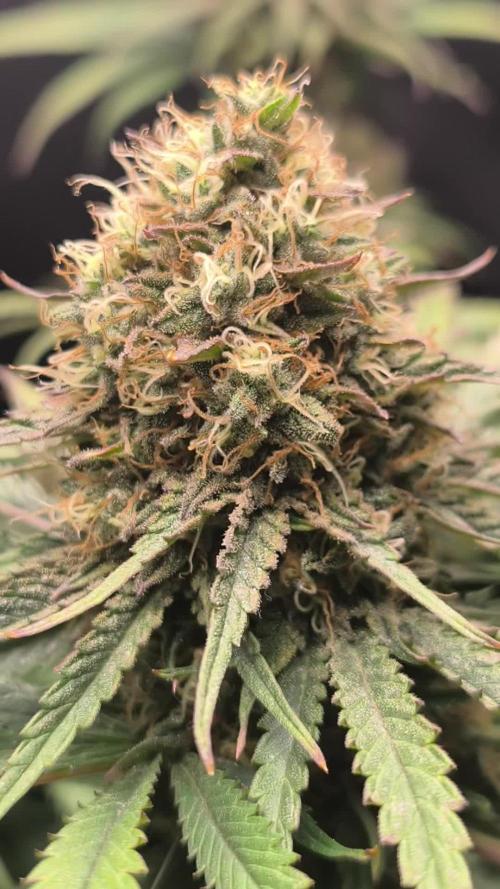
Die letzte Woche gab es nur noch Wasser und es war täglich zu beobachten wie die Reifung vorangeschritten ist.
Die Thripse waren zum Schluss deutlich weniger, haben aber durchgängig genervt.
Die Tangerine-Band steht jetzt am Fenster, um dafür eine Kunstlichtumgebung laufen zu lassen ist sie mir zu klein. Das wäre Energieverschwendung.
