The Grow Awards 2026 🏆
Likes
4
Share
Likes
67
Share
@PeaceLane
Follow
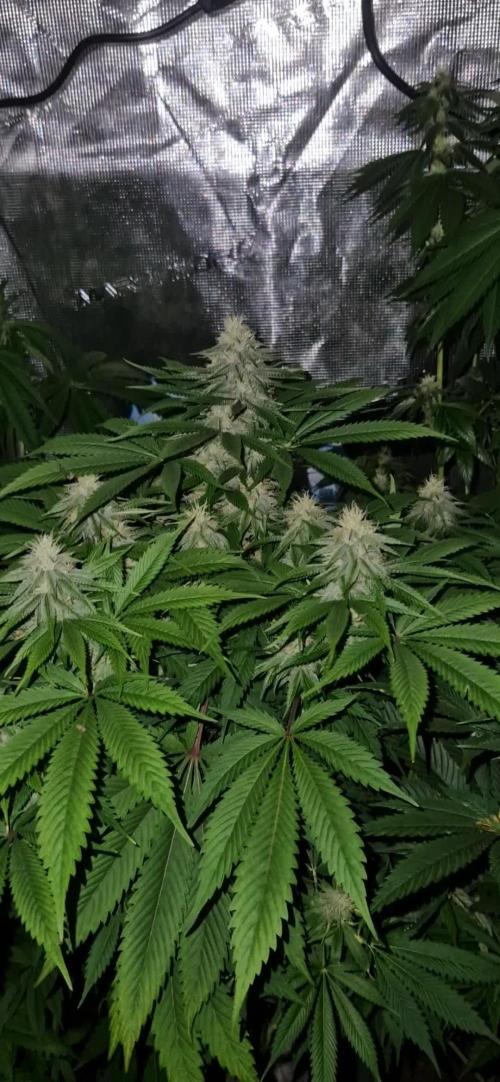
Hey guys back with the update, everything is going smooth the buds are forming very well. They're all golfball size. Just ordered a microscope so I follow up the trichome development. If I had to guess I'm gonna feed for a week and then I'll start flushing the ladies. I'll keep y'all posted and thanks for your support Keep on growing 💯🍀❤️
Processing
Likes
18
Share
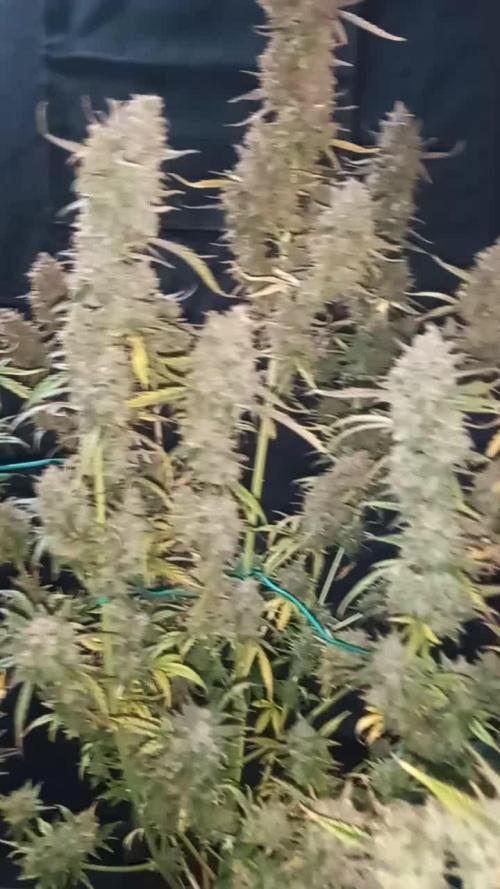
Kio familia, que ya actualizo. Jaja Al lío finalizamos la 3 semana de floracion, y esta genética también creció bastante se nota su tamaño xL. Aumentamos la cantidad de comida por litro, Al ser grandes piden más. La humedad no aumenta de 50% y la temperatura baja Algo en comparación al principio. 27 grados de media. En la imágenes y vídeos podemos apreciar bien la evolución esta semana.
Likes
52
Share
Lacewings seemed to have mostly killed themselves by flying into hot light fixtures. I may have left the UV on which was smart of me :) Done very little to combat if anything but make a sea of carcasses, on the bright side its good nutrition for the soil. Made a concoction of ethanol 70%, equal parts water, and cayenne pepper with a couple of squirts of dish soap. Took around an hour of good scrubbing the entire canopy. Worked a lot more effectively and way cheaper. Scorched earth right now, but it seems to have wiped them out almost entirely very pleased. Attempted a "Fudge I Missed" for the topping. So just time to wait and see how it goes. Question? If I attached a plant to two separate pots but it was connected by rootzone, one has a pH of 7.5 ish the other has 4.5. Would the Intelligence of the plant able to dictate each pot separately to uptake the nutrients best suited to pH or would it still try to draw nitrogen from a pot with a pH where nitrogen struggles to uptake? Food for stoner thought experiments! Another was on my mind. What happens when a plant gets too much light? Well, it burns and curls up leaves. That's the heat radiation, let's remove excess heat, now what? I've always read it's just bad, or not good, but when I look for an explanation on a deeper level it's just bad and you shouldn't do it. So I did. How much can a cannabis plant absorb, 40 moles in a day, ok I'll give it 60 moles. 80 nothing bad ever happened. The answer, finally. Oh great........more questions........ Reactive oxygen species (ROS) are molecules capable of independent existence, containing at least one oxygen atom and one or more unpaired electrons. "Sunlight is the essential source of energy for most photosynthetic organisms, yet sunlight in excess of the organism’s photosynthetic capacity can generate reactive oxygen species (ROS) that lead to cellular damage. To avoid damage, plants respond to high light (HL) by activating photophysical pathways that safely convert excess energy to heat, which is known as nonphotochemical quenching (NPQ) (Rochaix, 2014). While NPQ allows for healthy growth, it also limits the overall photosynthetic efficiency under many conditions. If NPQ were optimized for biomass, yields would improve dramatically, potentially by up to 30% (Kromdijk et al., 2016; Zhu et al., 2010). However, critical information to guide optimization is still lacking, including the molecular origin of NPQ and the mechanism of regulation." What I found most interesting was research pointing out that pH is linked to this defense mechanism. The organism can better facilitate "quenching" when oversaturated with light in a low pH. Now I Know during photosynthesis plants naturally produce exudates (chemicals that are secreted through their roots). Do they have the ability to alter pH themselves using these excretions? Or is that done by the beneficial bacteria? If I can prevent reactive oxygen species from causing damage by "too much light". The extra water needed to keep this level of burn cooled though, I must learn to crawl before I can run. Reactive oxygen species (ROS) are key signaling molecules that enable cells to rapidly respond to different stimuli. In plants, ROS plays a crucial role in abiotic and biotic stress sensing, integration of different environmental signals, and activation of stress-response networks, thus contributing to the establishment of defense mechanisms and plant resilience. Recent advances in the study of ROS signaling in plants include the identification of ROS receptors and key regulatory hubs that connect ROS signaling with other important stress-response signal transduction pathways and hormones, as well as new roles for ROS in organelle-to-organelle and cell-to-cell signaling. Our understanding of how ROS are regulated in cells by balancing production, scavenging, and transport has also increased. In this Review, we discuss these promising developments and how they might be used to increase plant resilience to environmental stress. Temperature stress is one of the major abiotic stresses that adversely affect agricultural productivity worldwide. Temperatures beyond a plant's physiological optimum can trigger significant physiological and biochemical perturbations, reducing plant growth and tolerance to stress. Improving a plant's tolerance to these temperature fluctuations requires a deep understanding of its responses to environmental change. To adapt to temperature fluctuations, plants tailor their acclimatory signal transduction events, specifically, cellular redox state, that are governed by plant hormones, reactive oxygen species (ROS) regulatory systems, and other molecular components. The role of ROS in plants as important signaling molecules during stress acclimation has recently been established. Here, hormone-triggered ROS produced by NADPH oxidases, feedback regulation, and integrated signaling events during temperature stress activate stress-response pathways and induce acclimation or defense mechanisms. At the other extreme, excess ROS accumulation, following temperature-induced oxidative stress, can have negative consequences on plant growth and stress acclimation. The excessive ROS is regulated by the ROS scavenging system, which subsequently promotes plant tolerance. All these signaling events, including crosstalk between hormones and ROS, modify the plant's transcriptomic, metabolomic, and biochemical states and promote plant acclimation, tolerance, and survival. Here, we provide a comprehensive review of the ROS, hormones, and their joint role in shaping a plant's responses to high and low temperatures, and we conclude by outlining hormone/ROS-regulated plant-responsive strategies for developing stress-tolerant crops to combat temperature changes. Onward upward for now. Next! Adenosine triphosphate (ATP) is an energy-carrying molecule known as "the energy currency of life" or "the fuel of life," because it's the universal energy source for all living cells.1 Every living organism consists of cells that rely on ATP for their energy needs. ATP is made by converting the food we eat into energy. It's an essential building block for all life forms. Without ATP, cells wouldn't have the fuel or power to perform functions necessary to stay alive, and they would eventually die. All forms of life rely on ATP to do the things they must do to survive.2 ATP is made of a nitrogen base (adenine) and a sugar molecule (ribose), which create adenosine, plus three phosphate molecules. If adenosine only has one phosphate molecule, it’s called adenosine monophosphate (AMP). If it has two phosphates, it’s called adenosine diphosphate (ADP). Although adenosine is a fundamental part of ATP, when it comes to providing energy to a cell and fueling cellular processes, the phosphate molecules are what really matter. The most energy-loaded composition for adenosine is ATP, which has three phosphates.3 ATP was first discovered in the 1920s. In 1929, Karl Lohmann—a German chemist studying muscle contractions—isolated what we now call adenosine triphosphate in a laboratory. At the time, Lohmann called ATP by a different name. It wasn't until a decade later, in 1939, that Nobel Prize–-winner Fritz Lipmann established that ATP is the universal carrier of energy in all living cells and coined the term "energy-rich phosphate bonds."45 Lipmann focused on phosphate bonds as the key to ATP being the universal energy source for all living cells, because adenosine triphosphate releases energy when one of its three phosphate bonds breaks off to form ADP. ATP is a high-energy molecule with three phosphate bonds; ADP is low-energy with only two phosphate bonds. The Twos and Threes of ATP and ADP Adenosine triphosphate (ATP) becomes adenosine diphosphate (ADP) when one of its three phosphate molecules breaks free and releases energy (“tri” means “three,” while “di” means “two”). Conversely, ADP becomes ATP when a phosphate molecule is added. As part of an ongoing energy cycle, ADP is constantly recycled back into ATP.3 Much like a rechargeable battery with a fluctuating state of charge, ATP represents a fully charged battery, and ADP represents a "low-power mode." Every time a fully charged ATP molecule loses a phosphate bond, it becomes ADP; energy is released via the process of ATP becoming ADP. On the flip side, when a phosphate bond is added, ADP becomes ATP. When ADP becomes ATP, what was previously a low-charged energy adenosine molecule (ADP) becomes fully charged ATP. This energy-creation and energy-depletion cycle happens time and time again, much like your smartphone battery can be recharged countless times during its lifespan. The human body uses molecules held in the fats, proteins, and carbohydrates we eat or drink as sources of energy to make ATP. This happens through a process called hydrolysis . After food is digested, it's synthesized into glucose, which is a form of sugar. Glucose is the main source of fuel that our cells' mitochondria use to convert caloric energy from food into ATP, which is an energy form that can be used by cells. ATP is made via a process called cellular respiration that occurs in the mitochondria of a cell. Mitochondria are tiny subunits within a cell that specialize in extracting energy from the foods we eat and converting it into ATP. Mitochondria can convert glucose into ATP via two different types of cellular respiration: Aerobic (with oxygen) Anaerobic (without oxygen) Aerobic cellular respiration transforms glucose into ATP in a three-step process, as follows: Step 1: Glycolysis Step 2: The Krebs cycle (also called the citric acid cycle) Step 3: Electron transport chain During glycolysis, glucose (i.e., sugar) from food sources is broken down into pyruvate molecules. This is followed by the Krebs cycle, which is an aerobic process that uses oxygen to finish breaking down sugar and harnesses energy into electron carriers that fuel the synthesis of ATP. Lastly, the electron transport chain (ETC) pumps positively charged protons that drive ATP production throughout the mitochondria’s inner membrane.2 ATP can also be produced without oxygen (i.e., anaerobic), which is something plants, algae, and some bacteria do by converting the energy held in sunlight into energy that can be used by a cell via photosynthesis. Anaerobic exercise means that your body is working out "without oxygen." Anaerobic glycolysis occurs in human cells when there isn't enough oxygen available during an anaerobic workout. If no oxygen is present during cellular respiration, pyruvate can't enter the Krebs cycle and is oxidized into lactic acid. In the absence of oxygen, lactic acid fermentation makes ATP anaerobically. The burning sensation you feel in your muscles when you're huffing and puffing during anaerobic high-intensity interval training (HIIT) that maxes out your aerobic capacity or during a strenuous weight-lifting workout is lactic acid, which is used to make ATP via anaerobic glycolysis. During aerobic exercise, mitochondria have enough oxygen to make ATP aerobically. However, when you're out of breath and your cells don’t have enough oxygen to perform cellular respiration aerobically, the process can still happen anaerobically, but it creates a temporary burning sensation in your skeletal muscles. Why ATP Is So Important? ATP is essential for life and makes it possible for us to do the things we do. Without ATP, cells wouldn't be able to use the energy held in food to fuel cellular processes, and an organism couldn't stay alive. As a real-world example, when a car runs out of gas and is parked on the side of the road, the only thing that will make the car drivable again is putting some gasoline back in the tank. For all living cells, ATP is like the gas in a car's fuel tank. Without ATP, cells wouldn't have a source of usable energy, and the organism would die. Eating a well-balanced diet and staying hydrated should give your body all the resources it needs to produce plenty of ATP. Although some athletes may slightly improve their performance by taking supplements or ergonomic aids designed to increase ATP production, it's debatable that oral adenosine triphosphate supplementation actually increases energy. An average cell in the human body uses about 10 million ATP molecules per second and can recycle all of its ATP in less than a minute. Over 24 hours, the human body turns over its weight in ATP. You can last weeks without food. You can last days without water. You can last minutes without oxygen. You can last 16 seconds at most without ATP. Food amounts to one-third of ATP production within the human body.
Likes
12
Share
@NONSENSE
Follow
Good day to every one. The plant feeling like it should be, flowering without any problem. I really like the genetic. Hope to finish within 2 weeks. Look at these beautiful and long inflorescences, which are covered with crystals every day and pull their antennae to the sides. trichomes change color. The aroma is tolerable and I am not using the filter yet.
Likes
11
Share
@RadDad
Follow
I originally had applied to Green House Seed Co.'s Taste of the USA Contest here on Grow Diaries. Turns out I was ineligible but the good folks at GHS still had the big hearts to send me seeds anyway. So big ups to them for hooking this grower up. Welcome to the Sea of Fire 🔥 For this grow were using the Dark Phoenix seeds that GHS sent to me to create a Sea of Green. I've got 8 plants in 8 1L pots. I've decided to use Black Swallow's living soil for this grow so we won't need to add anything but water for the first 3 weeks or so. Our goal for this grow is to have these girls ready for harvest in about 20 weeks which will bring us to the beginning of November 2021. If all goes according to plan these firey buds should be filling my friends stockings this Christmas.
Processing
Likes
7
Share
@DarkOG
Follow
4º Semana Pré - Flora - Poda estratégica nas folhas - LST nas #2 #4 - Inicio da flora #3 #4 #5 - nao mechi na #1 Todas se ramificando bem, unica que não deu uma crescida foi a #3 . Fiz uma poda nas folhas pra receberem luz pra entrada da flora!
Likes
34
Share
@AsNoriu
Follow
Day approx 30 since seed touched soil. They are good, on last day before holidays i visited them, all are growing, a bit overstretched, but the lack of good light on such low level is blocked by surrounding, they should be better when i will return. One month of holidays ;))))) Happy Growing !!!
Likes
8
Share
The plants are doing amazing! Both are producing more and more trichomes, and the buds are noticeably thickening up.🌱 #1 (the tall one) continues to impress—it’s now giving off a strong tropical mango scent! The aroma is so sweet and fruity, it’s crazy. Meanwhile, #2, despite being so small, has developed a surprisingly large main bud! The smell is completely different, though—leaning more towards a hazy, complex scent that’s hard to describe.🤔 Super happy with the progress so far—let’s see what the next weeks bring!😊
Likes
25
Share
Giorno 14 Le piante stanno bene e non c'è molto da dire Rispetto al giro precedente(è la terza volta che faccio le Crystal Candy) non smetterò mai con la fertilizzazione visto che spesso avevo dato solo acqua e mi sono ritrovato con un po' di problemi. A questo punto penso siano delle mangione e lo scopriremo di sicuro in questo giro 🤞 A settimana prossima 🖐️ 🤗 ❤️
Likes
4
Share
I'm having a hard time judging an approximate finish time with this plant. Its definitely in its final push though. Starting to yellow off quite a bit. I've never grown a plant that has stayed this small. Makes me wonder if I did something wrong along the way. I'll honestly be very happy once this thing is out of my tent. No issues to report this week. Happy growing everyone!!
Likes
18
Share
Despite slight damage by overzealous gardener with a weed wacker, causing shot through holes and torn leaves, the plants are doing OK. Supplemented feed on two different days with 7.5 ml/gallon Cytokin and 30 ml/gallon molasses. Had to remove visible eggs of unknown insect on several leaves (I hope it's not a beneficial). Increased but not overwhelming leaf miner damage. I need to start measuring these for height and width. The growth seems to have slowed but I am also on leave and observing the plants more so I don't know if it as situation where a watched pot never boils.
Likes
Comments
Share
She's looking very good imo, growing nice firm buds and allready smelling real fruity and sweet. Absolutely love this lady,she will deff turn out a looker and a taster too I bet.
Likes
Comments
Share
Likes
14
Share
Okay so I'm trying something new, since I've gone away from a switch to water for the last week flush I harvested the tops and best smalls and packed the cannatrol full. I'm giving the under growth a bit more time to rippen before I harvest that for the the freezer. If this turns out to be a bad idea I'll not do it again in the future. The last long video is what's left in the tent right now. Let me know if any of you have experience doing this. Updated with a bunch of pictured of dried and cured. Ended up with 186g of beautiful flower. 72g of untrimmed smalls I'll make into RSO, I have a lot of back and nerve pain and RSO hands down the only thing that brings me actual relive, I'm late to the party on this one but I set a side part of the grow for it now. I let the under canopy and shorter tops go another 10 days feed at half strength and I'm glad I did, it ripened up nicely and definitely got a lot of color. I forgot to get pictures of that harvest but I will when I pull it from the freezer to wash. My test jar of this washed at 4+% (the last picture). Last update will be results of that wash. Last update on this one, I added a couple hash/rosin pics at the end. She washed from plant to rosin at 4.03% the terps are musky skunk, sweet pastries, and fresh Linen. I'd definitely grow this one again.
Processing
Likes
14
Share
Week just starting off and the one baby has still not broken thru so I take matters into my own hands and attempt emergency surgery!!! I sanitized a Raw loader stick and gently pulled the sprout up. It laid over after and I'm going to give it a few hours before I try to put something to hold it up if it doesn't manage to orient properly. Any advice would be appreciated, This week just started so will edit it throughout the week.. 11/18 Transplanted into 1ga pots and gave first n00tz FF 3tsp/GA Big Bloom. 11/19 Ok so my humidy has been plumiting to 33-36% so I tried putting a rag over a fan, putting a rag in a bowl over the inlet and nothing helped so I went to amazon and bought this! https://www.amazon.com/gp/product/B08GQZDS9J It has a gallon or so tank and a humidity sensor so it cycles to maintain humidity. 11/20 Anyways humidifier shows up today and I kicked it up to 80% and its about 70% after 4 hours.. I'll drop it down once the babies get to growing a bit more. I'm actually worried I transplanted too soon. Shout out to my boy Jeff! And a smaller shout out to James! 11/22 So no real changes the last few days, the plants still aren't thirsty so holding off on that. I did rearrange grow tent to allow me to set up a camera to capture time lapse of the process and I had to get some power to it so it doesn't cut off when the lights go out hehe. I mean all is well I guess, I'm still concerned bout my little plants and the one with the crooked stem. Although I'm thinking the more I keep hands off right now the better chance they'll have! Wish me (and my babies) luck! 11/24 So everything looks smooth, today I uploaded a time lapse of the last couple days which if you speed thru it can see movement of the plants which is cool, but I'm stressing that my 3 way meter isn't correct. Its reading like 6-7 on moisture scale after about 7 days of being on the same water/feeding. I am anxious to water again but don't want to overwater...I mean I do feel some moistness if I press down on the soil. I'm quickly learning this is a great means to work on your patience!!! Oh and I'm rapidly losing hope for the bent girl, so sad.
Likes
30
Share
I'm quite impressed by this week's development. The girls are starting to show their fatness. I did a flush at the beginning of the week and it helped a lot. Now I'm starting to give them less and less nuts, as they show obvious tip burns. What a big coincidence that they are both polyploids(gene mutation). I'm starting to question myself if the guys from RQS are making experiments with these types of mutations to increase yield and potency???
Likes
9
Share
harvested and cured 67g trimmed bud + 2g bubble hash out of 61.5w light
Likes
1
Share
Gave each plant 500ml of Nutrients mixture Watered on 3/06 Microbes are 0,4g/L Dynomyco was 10g/plant (Total 80g) All heights are from the soil to the highest point of the plant.
Likes
4
Share
WK2F - regular scheduled watering day 2 week 2 of flower in 3x3 tent. Beginning to see first signs of bud(lets) forming on clones. Raining this week, so increased airflow and running humidifier to maintain a 53-55% ROH. LED lighting adjusted to maintain 12" distance during flower stretch. PPFD adjusted PAR to maintain range of 600-900. Scheduled IPM foliar spray. WK6V - regular scheduled watering day 6 week 6 in 2x4 tent. Raining so increased airflow and running humidifier to maintain 55-60% ROH. LED lighting set at 12" height during veg. PPFD adjusted PAR to maintain range of 400-600. Scheduled IPM foliar spray. WK1V - first full watering of Afgooey Autos in one gallons day 1 week 1 in 2x2 veg tent. 12 clones (variety of cuttings) Day 7. Day6 added 1+ cups of water to base of tray to hydrate peat pellets and closed humidity vents 90% shut. Maintain high misty humidity in dome. Clones appear fine, but no sign of rooting. Maintain current environmental conditions thru days 8-9.