


Likes
Comments
Share


@BudBoutique
Follow
! this is my current status, gonna upload my last veg weeks within the next week - got a bit busy around Spannabis - thank you for your understanding! 💚
Welcome to Bud Boutique Grow Diary - really appreciate all your love and support :)
Dont forget to check out my other current grows!
🗓️ This Week:
- Day 24: attaching once a week APTUS Foliar with Regulator & Nutrispray with the amazing CannaFogger by Petra Grow
- Day 28: bud development is super beautiful and praying up
Thank you for still staying with me 💚
___________________________________________
--- 🌱 Strain (Sponsor) ---
🏷️ Stardawg by MSNL
https://www.marijuana-seeds.nl/stardawg-feminized-seeds
--- 🥗 Nutrients and Feeding (sponsored by APTUS: APTUS Ambassador) ---
🍸 APTUS: full nutrient schedule extreme
-- Regulator, N-Boost, P-Boost, CaMg-Boost, K-Boost, Allin1 Liquid, Startbooster, Topbooster, Enzym+ every feeding
-- Fulvic-Blast, NutriSpray as Foliar each once a week
🔗 https://aptus-holland.com/
--- ♻️ Grow Control (Sponsor) ---
TROLMASTER: TENT-X + LM14 Light Adapter to dim/sunrise/sunset lights + Temp & rH Sensor all remote on App
🔗 https://www.trolmaster.eu/
--- 🚿 PetraGrow (Sponsor) ---
CannaFogger Foliar Spray
🔗 https://www.petratools.com/product/petragrow-cannafogger-atomizer-new-mini-fogger
--- 🏭 Grow Setup ---
💡LUMATEK Zeus Pro 600
* 🏠🌿 Indoor: Homebox 120x120x200cm (4x4)
* 📐🌀 PrimaKlima exhausting Fan 1180m3/h (running on 60-80%)
* 🌀 Can Light Filter 800m3/h & 1x Fanbox 1x Dyson fan for Air circulation
🔗 https://lumatek-lighting.com/zeus-600w-pro-29/
🔗 https://primaklima.com/de/shop/ventilatoren-de/ec-ventilatoren/pk160ec-tc/
🔗 https://canfilters.com/products/filters/
All Likes and comments are highly appreciated!!!
👨🌾 don't forget to check out my Instagram for daily educational content: budboutiquee
- Bud Boutique

Likes
22
Share


@Trip614
Follow
because I fell behind last week, I had to much vegetation in the middle and under the canopy, I had to remove the net, omg, that was a 2 day hassle,but it is out, I have untwisted the branches, I'm am very lightly defoliating daily just a couple here and ther to try and get them thinned out so I can drop humidity, I have a 90 pint dehumidifier, and it has been on non stop and still can't bring my rh down, the smell is very sweet and fruity, very excited, they all look much better after getting them un clumped up, I'm aiming for a 9-10 week flower, and with it only being week 5, I am very excited.

Likes
92
Share


@Cannibalgardens
Follow
Boy Moby Dick is one tough girl she can and has taken a beating ...Between cold weather ,rain , humidity and just about everything it could get she pushed on ... It is a beautiful plant with lots of red and pink the smell is citrus and earth I can not wait to harvest her ...dinafem has some bomb genetics and I can't wait to get this harvest started and my next bean from them going as well ...cheers and thanks canna family hit up my Instagram for lots of pictures @cannibal19888

Likes
16
Share


@valiotoro
Follow
Hello everyone 😎
Week 9 of flower for the strawberry banana auto from Fast Buds 🍓🍌
One was ready !
She grew fast with beautiful color,for the nutrient 4ml/L terra bloom & 1ml/L power buds next week i will introduce Green sensation at very low doses from Plagron ✔️
Now only plain water💧
Amazing smell 🤤super fruity 🍓🍌
The buds are super sticky ✂️
Mars hydro SP-6500 100%
Have a nice day 😋

Likes
10
Share


@Smokwiri
Follow
Welcome to my Super Silver Haze diary.
Genetics: Zamnesia seeds
Looks great, grows fast, nice big leaves alteady on day 15
Going to put it on 12/12 in a couple of days, when she grows past 20 cm

Likes
11
Share


@Bthumb
Follow
She's starting to stack and fill out. I added a second circulation fan for the bottom of the canopy. The growdots and recharge has worked well for me so far. I am running a very user friendly setup, and have been extremely lucky so far.
Likes
15
Share


@SmokingDwarf420
Follow
28/08/2023
I just water them and trim the leaves that are completely yellow. I'll wait a few more days, but this week I'll probably trim all the big leaves to leave only the small ones near the buds.
At a certain point during the day, my humidity can drop down to 35%, but typically, I'm around 40%.
The smell might seem strong when I open the tent, but it dissipates rather quickly. But what a delight, it smells really good.
Still no nutriments

Processing
Likes
10
Share


@yaron
Follow
Most of the day the ladies are under a roof due to rain.
Maybe tomorrow a bit of sunshine but the weekend doesnt look good.
Like i said another rainy Day,hang in there ladies!
Likes
43
Share


@TheCannaProphet
Follow
~ FastBuds PAPAYA SHERBET Photoperiod~
Well here we go on another journey together through 'Canna-land' and this one's kinda special... forget that, it's VERY special because this is FastBuds newest surprise for the community, a FEMINIZED PHOTOPERIOD STRAIN!🤯
I was fortunate enough to score these seeds, of which only 1000 were available and can't wait to see what this strain can do! This Papaya Sherbet, according to FastBuds, is a hybrid with a 9-10 weeks flowering period. For a more detailed and accurate description of this strain the following from FastBuds says it best:
"Combining the massive stature of Papaya (Oni Selection) with the strength and resilience of one of our best keeper cuts (Sunset Sherbet), this strain develops into a big, expansive bush adorned with numerous bud sites that later transform into a generous harvest of medium-sized buds. Papaya Sherbet flowers deliver a signature flavor of premium cannabis with subtle citrus undertones that emerge upon inhaling. During growth, her aroma makes for a sweet yet pleasantly bitter fragrance, giving you an idea of what the smoke will taste like. Notably stress-resistant, Papaya Sherbet is a great choice for growers working in challenging environments. She is very forgiving and rebounds quickly from any adversity, allowing growers the freedom to experiment with confidence that she will take everything like a champion she is. This strain embodies resilience, flavor, and abundant yields in every grow cycle."
Sounds like an epic strain and I personally cannot wait for this lady to strut her stuff!😍
________________________________________________________________________________________________________________________________________________________________________________________________________________________________________________________________________________________________________________________
The Setup:
This is going to be an outdoor grow, but I have started the Papaya Sherbet photoperiod indoors as our weather is still a bit too chilly to put a newly sprouted seedling outside (nighttime temp's dipping regularly into the 40's℉).
The plan is simple... let her grow inside under a 19/5 light schedule until the nighttime temperatures are in the mid 50's℉, which shouldn't be long. After which, she'll be moved outside and transplanted into the soil which I have already setup and inoculated with beneficial microbes from BioTabs and slow release dry amendments from Gaia Green. Once she's established herself outside she'll be given periodic top dressings of Gaia Green 4-4-4 and 2-8-4 along with worm castings and Compost Tea's. Her grow area is approx. 5'x5' and I have posts and a trellis net set up already for when she gets bigger to aid in training her. Let the fun begin!🤪💚
________________________________________________________________________________________________________________________________________________________________________________________________________________________________________________________________________________________________________________________
Weekly Updates:
7/10- The FastBuds Papaya Sherbet photoperiod is now entering her ninth week since breaking ground and she is gaining height by the day now!
The Papaya Sherbet photo continues to display excellent vigor and overall health. She has a fairly wide node spacing, which is nice as it makes her easier to manage than a bushy plant with tight node spacing.
7/12- Our summer weather continues to be hot, although we do get a break from the heat when we're lucky enough to get some rain which also helps mitigate the daily watering.
7/14- The Papaya Sherbet photoperiod from FastBuds is definitely going through a growth spurt and is gaining inches by the day now!
Yesterday it rained the better part of the day, which provided over an inch of rain. Today,I went ahead and watered in the afternoon, but only gave the Papaya Sherbet photo approx. 3g of well water from the garden hose.
7/16- Well the weather and the FastBuds Papaya Sherbet photo are both on fire! Hopefully the weather will cool down soon, and the Papaya Sherbet photo will continue to impress!🤩 There's another week of veg for this beauty and I can't wait to see how big this lady gets!
Thank you for checking out my diary, your positive comments and support make it all worthwhile! 💚Growers Love!💚😎🙏
Processing
Likes
23
Share


@DeadwebsiteBoringcommunity
Follow
I'd like to title this Diary entry Screw You Advanced Nutrients. 7th week done.. 3 weeksish left on the Lsd-25 and 4 weeksish on the purple Lemonade.. Gonna be some chunky mothers.
Purple coming up everywhere, pretty colours. Oh yes we are very pleased so end of 7th week for these ladies and stretching has stopped thank goodness and we are now into bud building/mass building. The two lsd-25 plants definitely went into full flower "mode" sooner. The Colorful lady seems to have benn mass building all week. Probably gonna have different harvest windows on these ladies. Was hoping for same time but it's okay we are creative and will figure a way ahead. There is some CO2 being fed in the tent. With a smaller co2 bucket.
We will be trying out a new one for us and it is a product called dense from green planet. We will using dense when the regular reservoir change is suppose to happen. Before we feed only Dense we will be prepping the ladies with an extra feeding of GP3 micro. Buffering the leaves and prepping the uptake for the feeding. So with dense there will be only a feed of Dense with UC roots and ph down. The formula of dense is 0-0-62 so this is a very concentrated Potash supplement. We will be using 1/2 recommended doses as per our system and it's requirements. This will run for 4-5 days and significantly increase the Amount of Potash in the Plant fear not.. The next 2-3 days will run with just phed water then onto P-k spiking with Bloom Booster alone. At this stage Massive Bloom formulation would be great as well but we wanna cut out our nitros while still have some micros.. So we will feed smaller amounts of GP3 Micro with Powdered bloom booster, rezin and liquid weight. Right up until we do a 3 day flush before harvest.
Nutrients and Light is the idea so we will see turn outs and everything. If you are wondering what is the difference between the plants and the lady on the left looks so burnt. Left side only fed Flora Series w/ Advanced Nutrients supplements the plants on the right side is fed only Flora Series with Green planet supplements.
The nutrient formulas provided in this diary are for right plants only. We can not express the amount of disgust we feel towards Advanced Nutrients as we spent good money on their product and feel genuinely ripped off. The words smelly disgusting mess describe what happened when we added big bud to left side. Bottle smells fine but the Formula is obviously way off as we did not have issues like this when using it the first dozen or so times. We will be using chemical nutrients and powders for life now and will not use Advanced Nutrients again or recommend it for anyone. The Organic Big Bud Formula is no good for hydroponic growing and they obviously rushed it to market to make money.....
We really wanted to finish with Advanced Nutrients being the supplement on the left side but we can not. The product itself has basically made it impossible to continue confidently using any Advanced Nutrients labeled as both Organic and Safe for hydroponics. The proof is in the pudding and so glad and happy really now that we are using Green Planet and continue on this trend of cleaner greener growing and a more intelligent approach.
On a further note just to go a bit further Bud Candy for example contains sugars that are basically present in Black Molasses. So what they've basically done is filtered and bleached Black Molasses and watered it down and are selling it to us at around 40 bucks a litre. Bunch of crooks Screw you Advanced Nutrients.


Likes
13
Share


@GanjaJack
Follow
Really impressed with this SCHLUX SZ-PT400 light. Done another round of LST really bringing th bud sites to the light. Also been tucking my bug fan leaves, don't believe in trimming autos. Captain Redbeard Seeds are really impressive at this point. Will be top dressing with Coast of Maine lobster compost, as well as worm castings and the OG bloom dust. Happy growing


Likes
Comments
Share



Likes
7
Share

@Growbody
Follow
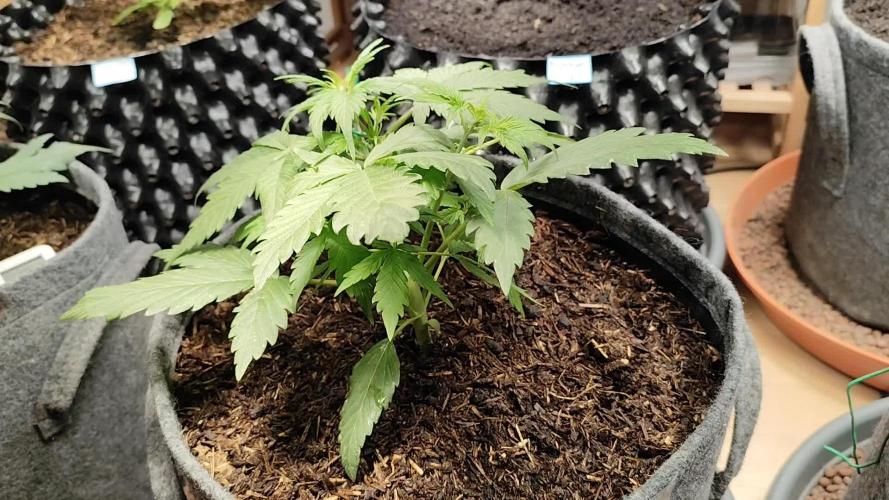
Willkommen zu meinem Growbericht der Glue Gelato Auto von Barney's Farm. Die Samen sind von Zamnesias Tribe Programm als automatische Überraschungssamen angeboten worden. Das sind meine ersten Gorillas und diese hier soll schokoladig, fruchtig, beerig schmecken, da bin ich richtig wunderfitzig drauf 🍫
Der 15 Liter Stofftopf von ROOTiES kommt hier wieder zum Einsatz.
Die neue Bio Hanferde von Sonnenerde wird verwendet.
Und die zamnesia Smart Start Plugs mit Plagron's seedbooster plus haben sich bewährt.
Tag 29: Die Glue Gelatto Automatic von Barney's Farm zeigt erste Blütezeichen. Wegen des starken Höhenwachstums nochmal LST.
Tag 32: Über 20 cm hat sie diese Woche zugelegt. Und nochmal LST.
Schön, das du dir meinen Bericht ansiehst. Schau gerne wieder rein. 👋😎

Likes
11
Share


@RoyColt
Follow
Day79 17/02
4lt ro water -16ml BloomA -16ml BloomB,
Total 1100 ppm, ph 6,1
Drain 150 ml, 1250 ppm.
Day80 18/02
Some Defoliation.
Day81 19/02
4lt ro water -2 ml sensi cal mag extra -4 ml growA -4 ml growB -16ml BloomA -16ml BloomB -8 ml Big Bud,
Total 1300 ppm, ph 6,1
Drain 600 ml, 1550 ppm.
Day82 20/02
Some Defoliation.
Day83 21/02
4lt ro water -4 ml seni cal mag extra,
Total 200 ppm, ph 6,1
Drain 1 lt, 1200 ppm.
Day85 23/02
Some Defoliation.
900 ppfd.
Day85 23/02
4lt ro water -8ml sensi cal mag extra,
Total 250 ppm, ph 6,1.
Drain 800 ml , 1050 ppm.

Likes
16
Share


@Ieiogrow94
Follow
Eccoci qui,
Settimana all'insegna del Topping e dell'LST per far si che la piccola cresca con cime di serie a!
Verrà eseguito scrog a breve non appena si allungheranno le cime.
Topping eseguito il 16/01/2024, dopo un giorno ha reagito molto bene, sarà interessante lo sviluppo!!!
Grazie a tutti per il supporto ❤️🔥🌲
Likes
4
Share


@dreamLife
Follow
Comienzan a florecer las bebes, la planta de maceta café presenta mayor desarrollo que la de maceta negra. Se comienza la fertilización con aquellos encargados de la floración.
Likes
25
Share


@XperencdGmanXG
Follow
wow what a month. June was down right chilly at night up until almost fathers day. Then we go into this mini drought. The forecast is saying that we are going back to normal hopefully quickly with some more gentle rain.
Likes
35
Share


@MrSpooky882
Follow
Heute um gepflanzt gab keine Probleme soweit, bin weiterhin gespannt wie sich anesia Seeds schlägt👌😁
Aber 100 von 100 keimqoute is schon mal bestens 👌😊
Diesmal 12 Pflanzen weniger mehr Platz und neue aufstellung mal sehen ob es am Ertrag was macht. 😊
Erde is Biobizz all mix also kein Dünger!
Planted today there were no problems so far, I'm still curious how anesia Seeds will do👌😁
But 100 out of 100 germ rate is great 👌😊
This time 12 less plants more space and new setup let's see if it does anything to the yield. 😊
Soil is Biobizz all mix so no fertilizer!
