


Likes
Comments
Share


Processing
Likes
44
Share


@I_and_I
Follow
First grow completed, turned out far better than I could ever have hoped, the plants totally bossed it for all the winging it and improvising I put them through, but we got there in the end haha,
Looking forward to next grow, can't wait to enjoy using all good genetics, already have some Bruce banner #3 seeds ready to roll out :)
Thanks for reading
Likes
3
Share


@Sp3cia1Ag3n7
Follow
Finally starting to fill out! And the smell is starting to become noticeable if you agitate the plant.

Likes
4
Share

@Mexicanasseeds
Follow
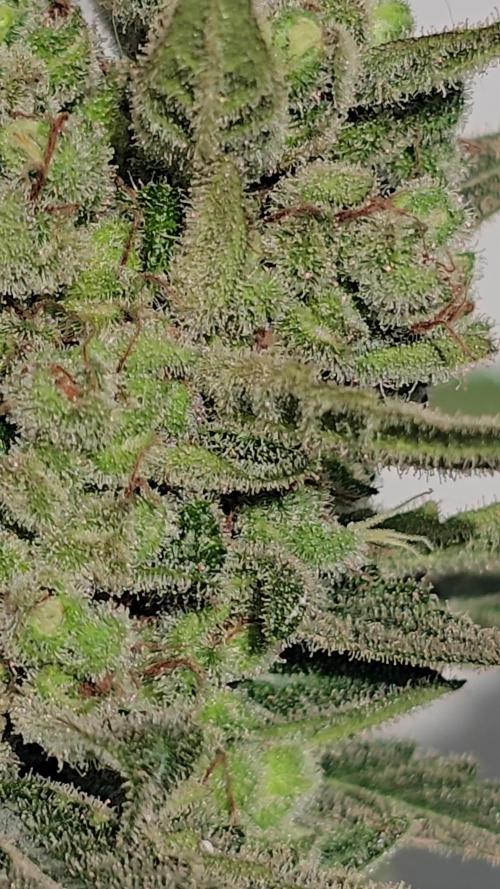
Gelato - Semana 7
1 Optimización de la Maduración y Corrección del Balance ( N-K)
Durante el inicio de esta fase, se identificó un ligero espigamiento o foxtailing (cola de zorro) en las inflorescencias apicales.
Etiología: Este fenómeno se atribuyó a una persistencia elevada de Nitrógeno (155 ppm) durante la semana 6. El exceso de en etapas avanzadas de floración puede reactivar procesos vegetativos en el ápice de la flor, promoviendo la formación de nuevas hojas de azúcar y estructuras espigadas que comprometen la densidad.
Acción Correctiva:Se recalibró la solución nutritiva reduciendo el aporte de Nitrógeno a 90 ppm.
Resultado: Esta restricción nitrogenada detuvo el crecimiento apical desordenado y forzó a la planta a entrar en una senescencia controlada. Al limitar el , se redirigen los carbohidratos de la síntesis de nuevas proteínas estructurales hacia la ruta de los metabolitos secundarios, mejorando significativamente la compactación de los cálices y la deposición de resina.
2. Ajuste del Balance Cationico y Presión Osmótica
Se realizó una intervención crítica en la concentración de Potasio (K) para proteger la integridad del transporte de nutrientes en la zona radicular:
Reducción de : El aporte se ajustó de 220 ppm a 195 ppm.
Fundamento Técnico: Niveles de Potasio superiores a 200 ppm en esta fase aumentan drásticamente la presión osmótica en la rizósfera. Esto genera un antagonismo competitivo, donde el exceso de cationes de bloquea los sitios de absorción de Calcio y Magnesio .
Consecuencia: Al bajar a 195 ppm, se redujo la interferencia iónica, permitiendo que el Calcio mantenga la estabilidad de las paredes celulares en los cálices maduros y el Magnesio continúe soportando la transferencia de energía (ATP) sin provocar bloqueos radiculares por saturación de sales.
3. Suplementación Final de Vitaminas del Grupo B
En concordancia con el protocolo de maduración, se aplicó la penúltima dosis de Tiamina (B1), Piridoxina (B6) y Cobalamina (B12) (100mg / 5mg / 50mcg respectivamente) diluida por cada 10 litros de agua.
Mecanismo: Estos activos actúan como agentes de mitigación de estrés abiótico. Dado que la planta está operando bajo una alta demanda metabólica y una solución nutritiva de alta precisión, el complejo B facilita el metabolismo de los carbohidratos y refuerza el sistema inmunitario radicular ante la fluctuación de la presión osmótica.
4. Estado de los Tricomas y Senescencia
La reducción de macronutrientes ha acelerado la maduración bioquímica visible en las flores:
Tricomas: La relación actual es de un 75% lechosos y un 15% ámbar, con una disminución notable de tricomas hialinos (transparentes).
Arquitectura: La flor ha dejado de estirarse, logrando un cierre de corona mucho más denso. La coloración de las hojas de azúcar muestra un inicio de degradación de clorofila (fading), señal de que la planta está movilizando sus reservas móviles hacia la floración final.
5. Parámetros de Control Climático (VPD)
Se mantiene un VPD de 1.4 kPapara asegurar que, a pesar de la reducción de Potasio, el flujo transpiratorio sea suficiente para movilizar el Calcio hacia las zonas de mayor densidad floral, previniendo necrosis interna en los cogollos más compactos.
Likes
31
Share


@Twojoint
Follow
I planted my seeds directly in substrate but i did also pre-soak the seeds for 12h. in a glass of water with a little hydrogen peroxide.
I 'm really amazed by the fast germination. Before, i bought a lot of seeds from cheaper vendors and the germination was sometimes hard.
These seeds look amazing quality and i am really looking forward to this grow.
I started in 1,5L pots and repotting will be done in 12L pots.
I'm not going to adjust the PH in this grow because it's all organic.
It's also my first grow with Cellmax soil and products. Really curious how they wil perform.

Likes
14
Share


@Snickelfritters
Follow
11/15
Coming along but not without problems. 3+ weeks in now I'm in the stage where I'm just trying to push all the right buttons and guide it to harvest. They've all demonstrated some level stress but bud formation is coming along well. I dont know if I'm just used to the smell but it hasn't really gotten much stronger. I'll try to take some more pics later on. The past week has been a little busy.


Likes
13
Share


@cookingwithninja
Follow
Pretty happy with this grow. Going to either reveg 1 and pop s2 for next or do all s2. Absolute 0 herm through all flower and all plants.
Chopped them. Will try to reveg 2
I am very baked


Likes
6
Share

@Growzzbud
Follow
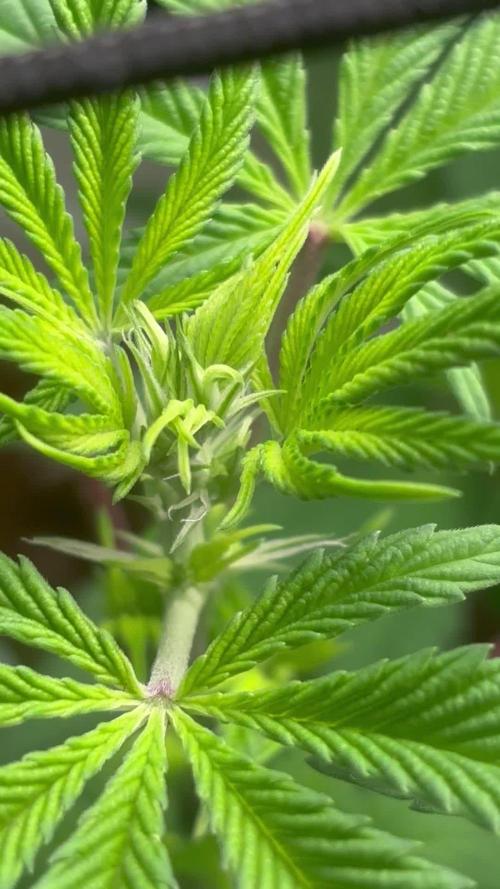
En un par de días o tres según evolución dejaré de tejer. Las de adelante se me han quedado algo más chicas pero están en camino de prácticamente igualarse todo en altura.


Likes
49
Share


@Roberts
Follow
I had a horrible germination rate then the seedling I finally got was very weak. So I made the best of it, and finished the grow. Frosty buds nice color. Great smell. The Gen 1:11 nutrition works good. Was just the first time using it in DWC. Good looking nugs. Just not one of my best grows. Thank you Mars Hydro, Gen1:11, and Humboldt seed company. 🤜🏻🤛🏻🌱🌱🌱
Thank you grow diaries community for the 👇likes👇, follows, comments, and subscriptions on my YouTube channel👇. ❄️🌱🍻
Happy Growing 🌱🌱🌱
https://youtube.com/channel/UCAhN7yRzWLpcaRHhMIQ7X4g

Likes
57
Share


@SmokieMcPot
Follow
PSA!! PSA!! PSA!!
WATCH those ZeroWater pitchers... when the filter goes, it goes FAST. Leaves you with a ton of undesirables, and AN EXTREMELY ACIDIC PH!! Acidity in the body leads to CANCER! will kill your plants fast as fuck too.
========================================================================================================
2 Girls 1 Cup week 11? We should come to a finish this week... oh the excitement. Can't wait to see WG without her leaves. Going to have to cut each branch and hang individually due to the density of its structure. Got this far, don't want to risk moldy weed.. damn I'm gonna get bored while drying/curing not having a plant or diary to occupy the time.
Day 77- currently flushing the girls. GC isn't ready for it, but she isn't in charge here. She should have stuck with WG when she extended a helping hand. Since falling behind, WG has thrown up a peace sign to GC as to say "see ya sucker". It's my favorite bud by far on WG. Bitch has got an attitude 🤣. RES sitting at 87ppm @5.9. Yellowing has started.. going to have to check trics more often so I get that sweet spot I'm looking for.
========================================================================================================
Day 78- these girls are starting to stink! Come on WG... ripen up so we can get this over with.. lowered lights power a bit today. RES climbed from 87 to 137. Drained 2gal, added 2gal RO. down to 38ppm. Forgot to mention the ice probe has been unplugged for over a week now. Been putting a 3/4 full 1L frozen bottle in the RES to chill. Rotate out every 12hr with a fresh. At lights on, and 12hr later. Full bottle got Temps too low for my liking.
========================================================================================================
Day 79- tick tock.. tick tock.. come on WG.. she's showing a little fade on her leaves. Seeing more of a calcium difficiency on her fans than fading honestly. Trichomes taking their time ripening as well. I'm SURE this strain ambers up.. taking their time for me though.. dont know how long I feel comfy flushing hydro though.. I did notice a few exploded trichomes up top, which has me thinking I need to go ahead and chop within the next couple days. If I notice any more ruptured anywhere else I haven't poked it with the scope.. I'm hanging the bitch that night. May give her 24hr dark period, since I've tried some other bro-science and it seemed to help.
*edit* felt bad starving WG and she's not more amber coated. Gave her a bit of nutrition tonight. GHE aggressive ripen. M-2.8mL/g G-2.8mL/g B-4.5ml/g and 5mL calmag (using RO). Came out high @ 867 so I pulled 2L and dumped 2L RO in. Sitting at 613 @ 5.9.
========================================================================================================
Day 80- well, the 3 days starving the girls kicked their metabolism back in gear. I want more amber before chop chop. They quit eating and were drinking MUCH less signaling the end. Was down to topping off once a day, maybe a liter to a liter and a half. Since feeding yesterday, they've started eating and drinking like they were on week 10 again. Topped off 3.5L in the last 16hrs. TDS dropping with water level, even more when topped off with straight RO. I'm not giving em any more nutes. Last push for some extra weight before the end. ALLOT more frosty today than yesterday as well.
========================================================================================================
Day 81- Started flushing again. Maybe starting their metabolism again will help ripen these trics. If not, they're getting chopped @ day 84. Don't want to let em go too long and regret it. I may have f'd em up feeding again after the 3 days starving. Time will tell
========================================================================================================
Day 83- still waiting... 💤
Going to order some bubble bags. Freezing all GC and trim/larf from WG for some bubble hash. GC is frosty and all white like WG, just tiny popcorn shit everywhere since it's been neglected and abused over and over and over and over 🤣.
========================================================================================================
As always, thanks for stopping by and checking out my current grow. full timelapse added to this week 27-70 (looks better on YT.. https://youtu.be/8JdUkR36Wfc)

Likes
6
Share


@pzwags420
Follow
Week 6 went well. The buds are putting out a second wave of pistils and are starting to fatten up. Jilly is starting to smell more and put out more trichs on sugar leaves. She smells very sweet and fruity so far.

Likes
6
Share


@Piupao
Follow
Start of the week 10. I like the size of buds, i hope it continues gaining weight like that

Likes
143
Share


@SwissKush
Follow
Blue Dream Auto, Fastbuds, I will train this one very aggressively, and test a new ripening blend I have been developing with the help of @GrowerAR.
I will not be using any organics or biological supplements this run, so no GHE Diamond Nectar, Pro Roots, Pro Bloom, only mineral based fertilizers, Tri-Part Flora Series, Cal Mag, Armor Si, Mineral Magic etc.
This is a very old seed, but has been in the refrigerator with the rest of my collection since I purchased it.
Started dry seed in wet Root Riot on 17-08-2022
Day 1
a. dry blue dream seed is in Root Riot branded root plug with PH 5.5 water on it.
b. I will add 5-10ml to the root riot 2 times per day
Day 3
a. first signs of the plant are visible
b. she may be up tomorrow!!
Day 4 - video
a. she is in the middle of rising when I took first photo
b. lights have been 24/7, temperature in tent is 27 degrees right now
c. she is up! wow! 56 hours from dry seed we have a plant!
d. in the open with micro humidifier providing nice RH.
e. video uploaded
Day 5 - hello world
a. she is up, and looking nice and strong
b. she still gets 24 hrs of light, I will change to the schedule soon.
Day 6 - she is up and strong!
a. the seedling has solidified its color, and its new first leaves are very strong
b. grew 3x overnight, great little seedling
c. top water rocks daily
Day 7
a. she is vigorous, getting tall
b. topped up the rest of the Expanded clay, the stem has about 3cm of coverage now for new roots


Likes
1
Share


@Raddawg
Follow
Leaves are fading already.. a little too many yellow leaves.. still trying to figure that out.. buds look and smell fantastic tho! Increased nutrients/ppm this week

Likes
21
Share


@BelgianBudtender
Follow
Got a new tent with a little more space, whilst still staying stealthy. I gave them their first full watering with RQS Easy Grow Booster early this week.
white monster is looking a bit sad at the end of the week, I'm thinking she may have been too close to the fan, her stalk is thick though, twice as thick as the Auto Ultimate
The White Monster Automatic was a freebie from Zamnesia and it was really a last minute decision to grow alongside the Auto Ultimate, It has Almost half the advertised growing time when compared to the Auto Ultimate, Its going to be interesting to see how that works out.
Zamnesia also advertises the White Monster as a great newbie strain.
Both girls are very short and the nodes are nice and close together, really happy I got no stretching!

Likes
9
Share


@Jbuttch
Follow
DOY POR INICIADO A LA PREFLORACIÓN! Que mejor que en un nuevo indoor ya más grande.


