


Likes
Comments
Share


@MilkyMisty
Follow
They're coming along really quickly they're on week 2, the custom strain I have in here I crossed the sherb tree from the plug with EL chapo and this plant looks amazing and smells like cherry refreshers platinum Z is also looking very nice with a lovely sweet watermelon with a hint of diesel and they really do stink even though they are weak 2 getting excited already haha, they all look very good so far,, I did have 25 but a few of them looked quite sick and a few abnormalities and they really didn't like the feed I was given them so the one's got eliminated and I am now left with 15 of the ones I like, this small room is just for my testers before putting them in main room, the LED that is running is lumatek zeus 600 pro, this is my first try with LEDs I've always been HPS but I'm definitely turning my head towards them as these ones are shooting up and look very healthy, once this run is done if I feel that it comes out better with LED I will swap out all 6 lights in the main room and replace them with 4 LEDs, I have some sherb tree x meringue from Dutch passion, running concurrent I will try and get another diary going with them they are awesome. Thanks 😊


Likes
37
Share


@DaddyPrime2
Follow
5/5/2024
Pistils pistils pistils
5/8 these plants are fucking exploding! Super exciting to see them like this. Pistils everywhere and they’re just STACKING! don’t even see budlets yet, just pistils. The structure of these plants is beautiful. They handle training fairly well. I topped one and super cropped it and did a bit of lst. I was feeling impatient so I decided to see what happened if I pushed the one a little harder and left the other to grow naturally.
Likes
7
Share


@RivenWaters
Follow
Girls are still growing great! I went away for the weekend and they were not watered for 48 hours and they dried out a little to much. One plant got curled leafs and brown spots. I’ve noticed a very small amount of PM hiding in some undergrowth. I just removed the effected leaves, I think it might be from where I water the back plants. Some water drips onto those areas

Processing
Likes
19
Share


@Skunk_Life85
Follow
Did some tie down on the side branches to help with light penetration. When I touch her, she gives off a amazing lemon sweet fuel smell, very intoxicating can't wait to cure it. Hairs are starting turn. She has been loveing a 6.8- 7 ph as well.
Had a healthy feed. Added norish-L (humic acid). @ 2 drop/L

Likes
4
Share

@Selkot
Follow
.
YEAR 5 - 2nd quarter
-----------------------
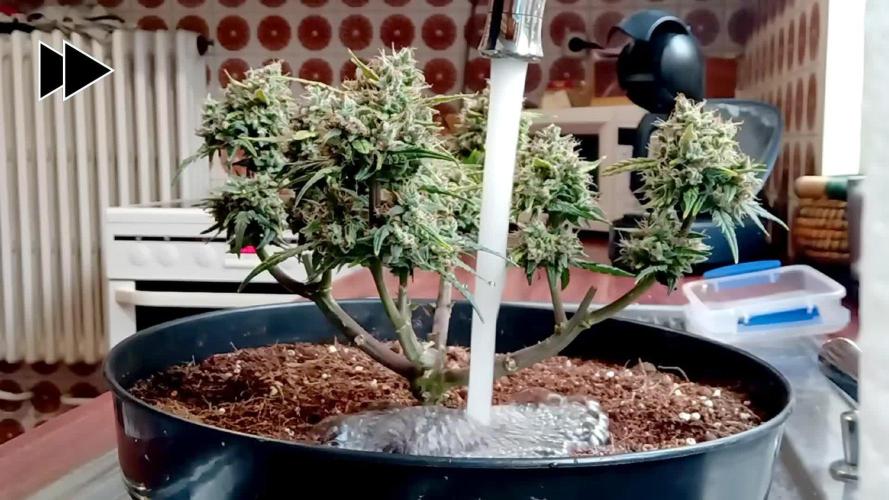
The 5th season continues with 3 Gorilla Punch from FB and 3 Original XXL from GB in the same tent.
A disappointment: with 6 plants, they yield 179 g, less than the previous 5. But in only 10 weeks.
Green Brand did better than Fastbuds for a first try.
Likes
18
Share


@TVance32
Follow
Buds just keep getting bigger and bigger each day.
Having problems replying to people I've confirmed my email 100x but still can't reply
No it's not mites I've almost finished this grow I'm just slow on posting.
Yes soil is miracle grow didn't realize it was a bad thing till 3/4 through veg

Likes
Comments
Share

@Daw33d41
Follow
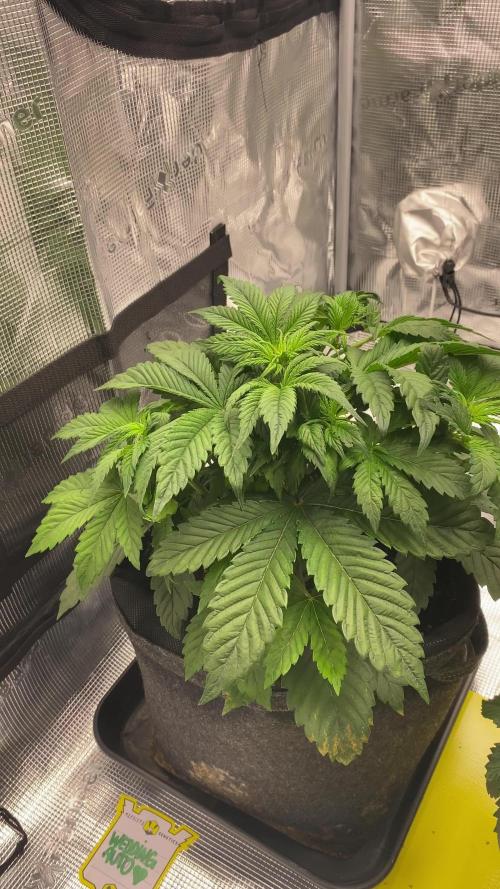
🇺🇸 First week of flower has started. Still watering with plain dechlorinated water only. I’ll probably need to hook up the carbon filter soon as the smell is slowly starting to come through. The Wedding is looking beautiful and very healthy with massive leaves. I’m a bit worried they might block too much light from reaching the buds, but for now everything looks great. Chemdoggin is also in flower and starting to give off a light sweet aroma. I think it might have had a little too much water recently, so I’m easing back on the watering for now while making sure the soil doesn’t dry out completely.
🇨🇿 Začíná první týden květu. Zalévám jen odstátou vodou. Brzy bude potřeba zapojit pachový filtr, protože holky začínají vonět. Wedding je krásná a zdravá, má obrovské listy. Trochu se obávám, aby přes ně měly palice dostatek světla. Chemdoggin je taky v květu a začíná lehce sladce vonět. Pravděpodobně měl v poslední době trochu moc zálivky, takže teď méně, ale zároveň si hlídám, aby living soil nevyschl.


Likes
19
Share


@Sato_Growing
Follow
Sorry for not uploading i had some ups and downs in my life, and with the college is really hard to work all those things together. But now i am back and going to hustle really hard.


Likes
33
Share


@Prof_Weed
Follow
Der Orange Buds geht es ganz gut 👍.
In Hydroponic dauert es am Anfang immer ein wenig länger bis die Pflanze richtig durchstartet..
Ich denke mal in 2 Wochen fängt es dann richtig an.
DLI liegt bei 16.92 ( 20 h Licht bei 235 PPFD).
Heute wechsle ich das 1. Mal Wasser und gebe additiv Silicate von Terra Aquatica hinzu.
Die ersten Tage hatte ich Schwankungen im PH Wert,ich denke weil der EC Wert so niedrig ist und weil die Blähton Kugeln auch erstmal den angestrebten Ph Wert annehmen müssen.
Die Pflanze bekommt hier und da gelegentlich Streicheleinheiten von dem Mini Ventilator damit sie kräftiger wird
Bye


Likes
31
Share


@kross
Follow
Cada vez tiene mas pelos, mas pistilos, ya estan tomando la forma de cogollos. Estos a su vez se ven blancos, en buen estado.
La planta se ve bien, saludable y esta captando los nutrientes rapidamente

Likes
11
Share


@Skunkiest_bender39
Follow
10tage re-veg hat super funktioniert. Sogar einigeSonnensegel sind besetzt. Die bananas riechen super Süß und fruchtig.
Die Zake haben einen absolut heftigen Basilikum Minze Diesel duft! Alle samt super weiter gewachsen. Habe mich ins Zelt gesetzt und komplett abgedunkelt, stelle in 2 Tagen auf 12/12 um
Likes
7
Share


@JeyGanesha
Follow
4 sett.ho iniziato subito con un hst.non voglio che cresca troppo alta in balcone

Likes
100
Share


@Njanne
Follow
The plants are coming along nicely for the most part. I have been finding bud rot in big mama... not much but I'm a little bit worried. I've been cutting it out when I find it. The trichomes are cloudy with sparse amber. The wind has been a concern the past week or so. I shared a video which kind of gives an idea of what we are dealing with. We are looking at harvest two weeks out - max. Maybe sooner. FFT2 is significantly behind the other varieties... fattening up more slowly.

Likes
19
Share


@Mzsnoop2001
Follow
Último día del año y último día de la semana 9 de las bebas. Está semana que entra sería la última de la white quizás llegando a fin de semana corte solo las puntas y dejé una semana más los bajos o en caso que le falte la esperaré una semana más (creo que es lo mejor) viene muy compacta y olorosa, resina no veo tanto como en blue moby que viene con menos producción pero que dejó en segundo y tercer lugar a las otras en producción de resina le quedan 2 semanas veremos cómo sigue evolucionando pero estoy fascinado. Moby dick viene atrasada pero avanzando de a poco espero que no quede estancada y me quedé flaca seguro se atraso por el estrés de que se cortó su punta principal hace un par de semanas pero bueno creo que vale la pena esperar a todas!!
Desde lo personal les deseo que empiecen un año mejor al que paso y que les traiga más lindas experiencias con el cultivo y los más bellos cogollos, un avance hacia la legalización en dónde todavía se les prohíbe está hermosa planta, felices fiestas y próspero año nuevo! Buenos humos! 🙏💪

Likes
52
Share


@xbabybitchx
Follow
Hello errrbody.
Another week down for the gals, and let me tell ya whuuut. I am proud of myself, these look so much better than my previous grows!
I did a feed after i took these photos~ I'm thinking they will be another 2 weeks! which gives me perfect time to start new girls! Trying out pink lemonade! weooo
anyways nothing to say, i need a new tent, so something i have to do asap lol.
hope yall been safe n keep it sleeeeezy.
Likes
3
Share


@Dunk_Junk
Follow
She grew 10cm this week.
Day 42 - I cut off a few huge leaves to allow better light penetration.
This is the last day of 20/4 lighting. From now on it's 12/12.

Likes
9
Share


@russrahl
Follow
Flipped to flowering on these girls as the screens are now almost full across the 4x8 tent and we will still need to train them along the screens for the next 2-3 weeks. So working for a packed tent this time hopefully. Plants have been exploding in growth daily. Water was changed out and new water added with 3/4 Remo Flowering lineup and UC Roots at full strength. Smell is starting to get noticeable when you open the tent and is very pleasant.
