




Likes
6
Share


@eldruida_lamota
Follow
Venga familia, cosecha de estas Thunder Banana de Seedstockers, que ganas que tenia ya de darles machetazo.
No veas que pinta que tienen estas plantas.
Las flores aparte se ven bien resinosas, prietas, aparte son aromáticas huelen bien fuerte.
En general es una genética con la que disfruté bastante cultivarla, la genética es perfecta para cultivos de floración corta con rangos entre los 20/25 grados en interior, es de dificultad media cultivarla y bien resistente, es excelente para cultivadores algo experimentados y con algo de conocimientos.
Hasta aquí es todo, espero que lo disfrutéis, buenos humos 💨💨.

Likes
22
Share


@Smith420
Follow
First go and journey is almost done. It was fantastic fun and educational. Gonna leave to dry for 7days or until stem cracks. Then gonna cure for another 7 days or until bakefully satisfied 🤤😎. Best of wishes and luck to everyone out there.

Likes
27
Share


@Dedon
Follow
Hi everyone !
Theses babies are groing well. roots progression is very fast. i add a small peace of spreader mat today
i water them yesterday, with a 0.8 EC solution ( 4 drop A & B and 2 drop Roots excelurator for 1L )

Likes
105
Share


@Green_Friends_Inc
Follow
Commencing Week 14 - 6th week of flowering - Day 92 from germination - Day 42 of 12/12 on January 23rd
D.98/48 wooooooooooooooooh this Garden is super stinky right now in a good way 👃💪👍👌👏😁
The colors are changing up beautifully signaling the end of life and the beginning of a whole new level of appreciation for these beautiful flowers 💚 - 💛🧡💜❤️
I'm currently under the impression that hydroponics can speed up production, (in my experience with organic growing growth is a little slower and as well as the ripening / muturation rate) so I'm may even be able to harvest a majority of this a few days early. There is also a few tricks I might employ in order to speed this process up. It's fine by me either way I can wait so we'll see 😁
So far this has been my first successful indoor DWC grow in quite some time and I am very patiently yet very anxiously awaiting the time when I can enjoy the fruits of my labor.
at this point as long as I don't mess anything up it should be smooth sailing right up to the very end which is now what I am looking forward to the most coming up: the harvest and smoke report
To all the breeders so I put in the hard work for for me and allowed me to grow their strains thank you!
To all the fellow growers and enthusiast who have been paying attention and chiming in from time to time I especially appreciate you and thank you for your patience in dealing with my late updates. I promise my smoke report will be incredibly thorough and make up for your patience throughout the recording of this journal.
As usual if anyone has any questions about any specific techniques I use or why or nutrient lines or strain related to this grow information please feel free to ask, comment, etc


Likes
2
Share


@HighOhioAn
Follow
Rainbow melon has stolen my heart From day one the plant was bigger as nice strong stock handles low stress training well some of the biggest buds I’ve ever had. I am truly in love with this plant fade is absolutely one of the Most beautiful like an Indian summer Cannot wait to see what they come up with next💪🔥💯

Likes
41
Share


@CannaTrope
Follow
I was selected to test some of Fastbuds new genetics. Seeds germinated and 4 days later it broke ground and is looking great.
This grow is in my 4x4ft grow space located in an uninsulated shed. Each plant has a dedicated 150-200w LED from Viparspectra or Mars. Winter Temps in my area spike to -15C or more in Jan and Feb, so this will be an interesting and challenging grow. The grow room is 20-30C above ambient temperature, so there is a little manual and auto manipulation of grow Temps. See my video
Lights 50-75%, 30 inches, 75-120w per plant
Soil temp: 21-25C
Light cycle: 5:1
Air temp: 18-27C
Likes
16
Share


@UnkleSkunk
Follow
Bene bene..
La pianta continua a crescere le cime si stanno mostrando..e gli internodi allungano
Come anche il tempo..la davano x 10 settimane ma dovrebbe farne 2/ 3 in più...
Ma se la resa è come prevedo non sarà di certo un problema..
Cosa ho fatto...
Niente le solite regolazioni ho aumentato la frequenza di irrigazione leggermente
Ahh si siamo passati a 12/12 per questioni di femminizzate da fare fiorire purtroppo con un solo box è sempre un problema...


Likes
6
Share

@Pompeyblue
Follow
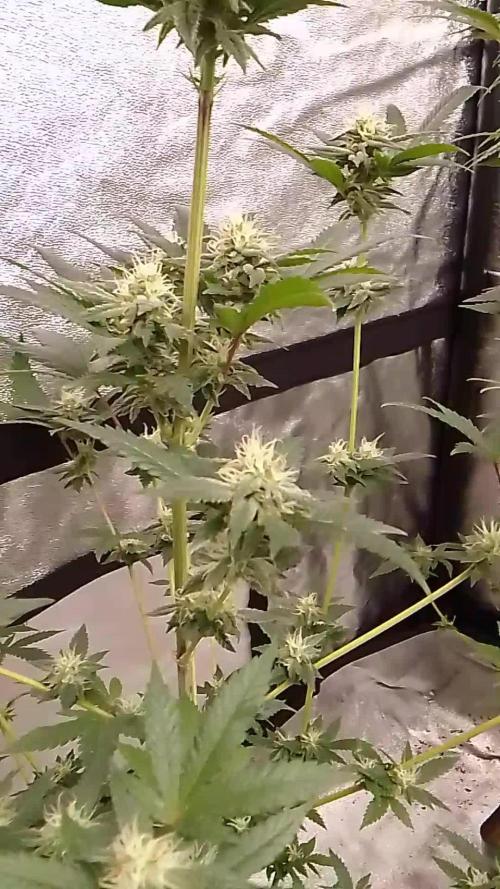
They are all going fantastic
Day 37 F
Getting some nice hints of sugary citracy pine smell coming from them 🤤
Likes
2
Share


@EtnoGrow
Follow
Seeing how the results are, the big ones I made apical and fmi species or the one you cut 3/4 I think they came out in a few days, some just cut the leaf and sprouted, I helped the biggest one with its final production and all of them general the different techniques, although curious results for a beginner, the techniques were not done well, they were cut halfway or only the leaves and not the apex itself ahahahaha, it turned out but very good in the end I would say
Likes
226
Share


@Kitties_and_Colas
Follow
~_~_~_~_~_~_~_~_~_~_~_~_~_~_~_~_~_~_~_~_~_~_~_~_~_~_~_~_~_~_~_~_~_~_~_~_~_~_~_~_~_~_~_~_~_~_~_~_~_~_~_~_~_~_~_~_~_~_~_~_~_~_~_~_~_~_~_~_~_~_~_~_~_~_~_~_~_~_~_~_~_~_~
9/18/21
😺 Week 4 of flower!! Everyone is looking pretty good but the mainlined plant seems to be locking out calcium again (and they're clawing slightly, this is on me, I was pushing it lol)..its early but we've increased calcium supplements by 3ml, cut all grow solutions and PK feeds consistent ..we'll update on this again midweek.. thanks for reading grow family and happy harvests!💡🌱 😽💨
Week 4 on YouTube:
https://m.youtube.com/watch?v=EL-n5MUawFY
~_~_~_~_~_~_~_~_~_~_~_~_~_~_~_~_~_~_~_~_~_~_~_~_~_~_~_~_~_~_~_~_~_~_~_~_~_~_~_~_~_~_~_~_~_~_~_~_~_~_~_~_~_~_~_~_~_~_~_~_~_~_~_~_~_~_~_~_~_~_~_~_~_~_~_~_~_~_~_~_~_~_~

Likes
1
Share

@HazeMember
Follow
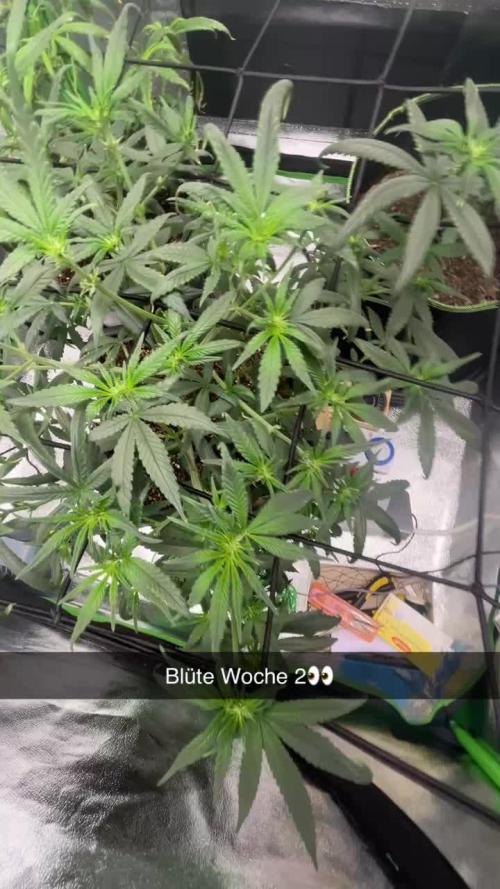
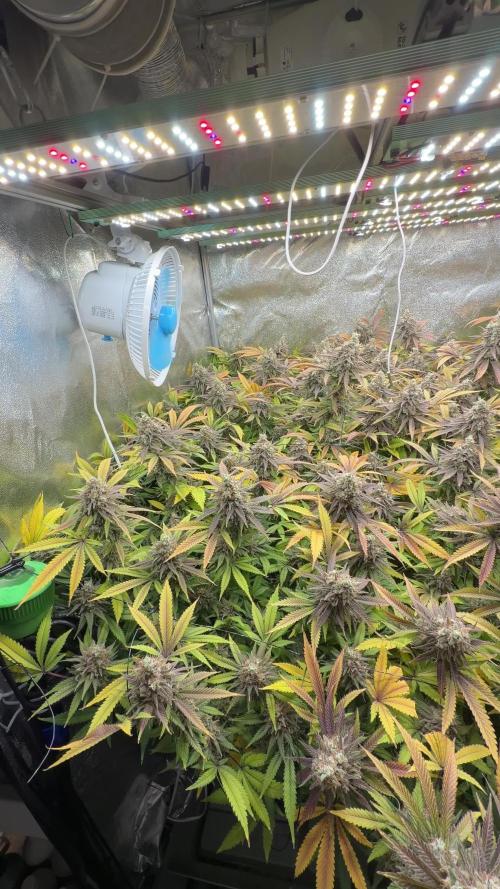
Blüte Woche 7 aktuell, Härchen zu 60% meinst überall braun und trichome brauchen aber noch um sich überall fertig zu bilden und dann noch milchig zu werden.





Likes
11
Share


@Ferelite
Follow
Week 4 Bloom
31/08 - Mass defoliation day, #1 was suffering from the amount of leafs it had, #2 was not as bad, has filled its own structure out nicely and outgrown #1.
Flushed and changed water. Upped the liquid potash. Added a tiny bit of CMX due to #2 showing a slight magnesium deficiency. Switched from PSI to cyco silica due to running out of PSI.
Humidity and temperatures have been near perfect, 28-38% RH and 20-25 degrees celsius, extra exhaust ventilation helped a lot.
Likes
1
Share


@Lovemabud
Follow
All set for another shed grow now the temps a dropping. This is another tin shed grow and they certainly have there challenges.
I thought I would waterproof my shed, unfortunately I sealed the outside not realising that run off channels run down the panel, I effectively stopped all drainage and due to a shipload of rain the last few days it's wet inside. Lucky I have my tent raised. A problem that will certainly need to be fixed prior to flowering, for now I'll just make sure I'm wearing my gumboots.


Likes
13
Share


@Ginger_gnome
Follow
Hope everyone had a great Christmas!!!
We have had some crazy cold weather here the last 4 days and for the first time in 13 years had snow on Christmas day. So with the cold and snow came grow room issues. My grow space is outside and not attached to the house so maintaining a proper temperature and humidity has been a bit on the difficult side. Even with the lights running 24 hours, it's had a few drops down to 19c and the humidity has gone up to 68% a few times. Now luckly I'm still in veg and the humidity isn't a issue yet but the temperature has been making me worried. Going to put togther a heater with its own temperature switch increase it drops below 20c.
Did some training over the last week with some LST and FIMing. With the LST every 3nd day I've been adjusting them and pulling the plants back a bit more and more. Since I don't think I'll be able to set up a SCRog net this go around (spent to much for Christmas and wont be able to affordthe PVC tubing) ive got to figure out something else and fast. Plants are getting big and it's going to get hard to bend then properly without braking stuff.
Because I was showing some issues with 2 of my plants I started adding a bit of Revive to my res to see if they get better and they have. But because of the cold that's been hitting us my tank has had a hard time staying warm. Even with my 50w tank heater it's been fighting a up hill battle because the area outside the main room where the tank is, has been sitting around 14-17c. So with that the air pump I use to circulate the tank, it is pulling in cold air and thats been fighting the tank heater in getting it up to what I like it at. I tried using my water pump instead of the air pump for circulation and the res went up to 25.6c soooo I would much rather have 19c res then water that could kill my plants.
So let's talk about the plants themselves. Both Special Queen plants are doing great but as you can see from the picture, one is doing absolutely amazing. Great growth (understatement) and has bounced back from training like a pro. The other plant is still doing really good when compared to all the other plants in the room but still could be a little bit better. Depending on what I'm going to do for supporting the plants this might be the last week of veg. Well see.
So this plant was doing great and then about 2 days ago I started to notice issues. Almost looks like leaf rust or a Ph problem but ive tried my best to keep them correct and I'm hopping that like my Ripper badazz plants that they well just grow out of it. Doing a big clean up today in the room so I'm going to keep my eyes open for any pests just incase that's the issue but fingers crossed it isn't.
Well that's everything for now. Happy growing growmies!!!