The Grow Awards 2026 🏆
Likes
Comments
Share
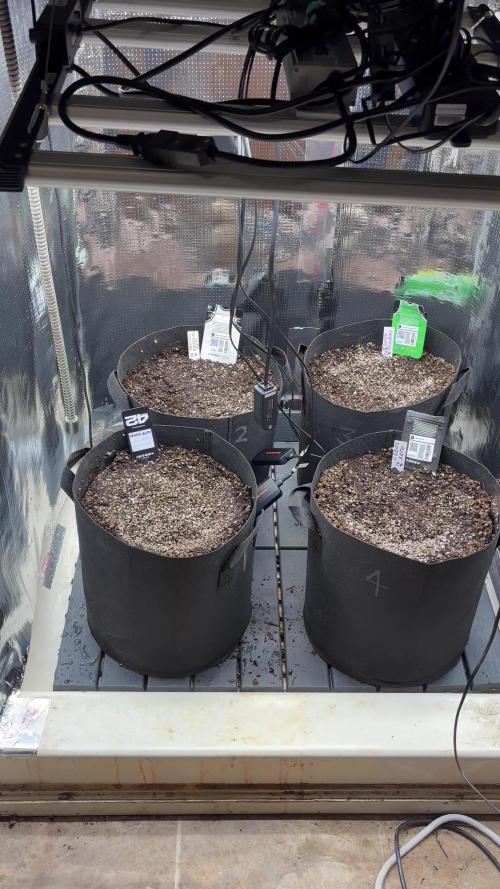
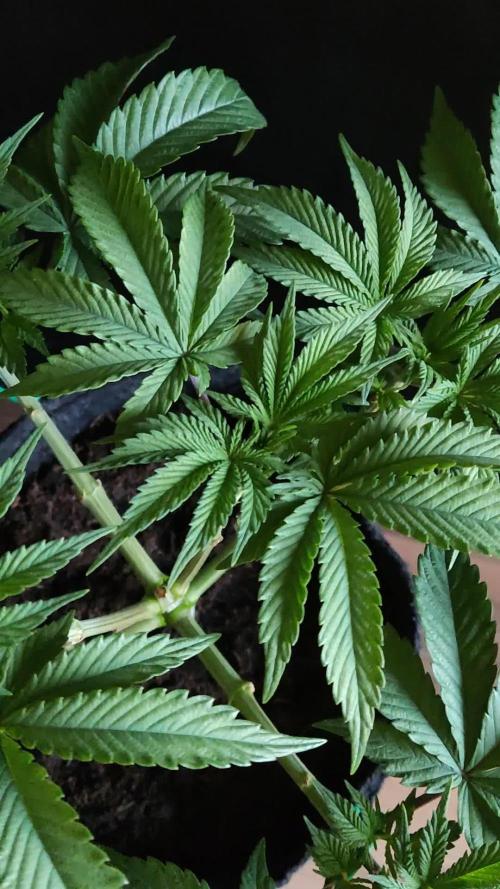
Week 14- Flo week 5 Pretty good flowering; interesting stage with a profusion of white and thick pistils announcing some meaty buds. All plants are healthy, no signs of nutrients deficiency (Cal/Mag) or excess. No LST or SCROG; so I don’t really have a canopy, the plants structure are not optimized. However the light is efficient: the 2 light panels (120W x 2) are placed on different heights: it’s well adapted to the plants sizes. - Special Queen: elegant plant, long branches and lots of of flowers with plenty of whites pistils - Criminal+: well developed bushy plant, producing numbers of little smelly flowers. - Indigo Berry Kush: stocky plant, robust. Flowers are enlarging, starting to produce resin and to change into purple color. - NYC Diesel: rustic, healthy with big sticky flowers. 2 Watering: 3L— 4 plants -Water rain + Cal/mag + fructification nutrients + p13/14 -Water Rain + Cal/mag + overdrive + Bud XL To be continued
Likes
13
Share
Day 49 of flower. Lovely! The Buds begin to bring flesh to them self. They grow up. The smell is a little bit diskret till now. I mean the strength of it. Sweet! SWEET! Glorious. I know for the most of north and south (maybe) it's an old wallpaper from Yesterday. But for me, its the first time I smell sticky Watermelon Zkittlez on my Fingers. AMAZING. (If in normal zkittlez is no watermelon smell) than:Like a voice of an God. "BONUS! DOUBLR XP FOR THE REST TIME OF THE GROW! YOU CHOOSE! MORE YIELD? UNIQUE COLORS?" "God(of Ganja maybe)…?" "YES? MY GROWMI?" "can i have both bonus?" WHAT THE FUCK! TRY TO DEAL WITH A GOD? What followed know is unknown. Just you heared some screams in the night. Not the funny ones. except you re an sadomasochist. Than you had really fun. I got still some aphids. But less than ever before. Still 3 weeks of flowering.. I can wait. The yield will not be big. I don't care about. I care about mouthwatering strong healthy weed. Thats why i grow. (and, i love to see them grow. But that was unexpected). WATERMELON ZKITTLEZ. I Love this plant. The colours. The height, the smell, and the sticky buds. Day 52 of flower. TRICHOMES RE MILKY the most 75% ca. The Buds re hard. The smell has changed to Haschisch. The fruity smell is still there, but getting less. Lets see. Phylaxien re 50% brown. Down under(Australia?). 20% and the lowest 5% brown. 18 days still to go. BARNEYS FARM, once again you satisfie me.. Hello @ day 54 of flower. The buds re becoming harder , and now they begin to grow up. In height. The colors of buds. Brown phylaxien, till bottom. She got 16 days to go now. Lets see if we take some amber trichoms till the harvest. The chop will be in stages, because Iwant the maturity ( is this right?) In every bud, and light helps. Day 55 of flower. The Light Spektrum has been Modified. I kill switched the blue Spektrum. In previous Grows it helps to increase the trichom productivity and faster maturity. But warning! If you kill the blue light to early, she stretches a lot.. Thank you for reading. I hope you enjoyed it. Day 55again. Aphids found! Damn! Should i defoliate the infested leaves? Day 57 of flower. I will not defoliate. I will wash the buds. Stay strong baby, youre my first photo period plant. And this is my first plant without any influences from a ruderalis.. And she is a beauty. By the way still some glass trichrome DAY 58 OF FLOWER. nothing happend Phylaxien went brown. Some new came... The buds re still hard. But they grow up.. 😛 24.09. 59 days of flower. Everything pretty. 25.09 AMBER trichomes starting on top buds. 60 days of Flowering. 27.09.... The Buds. Not soo big. But soo solid! I ve the pheno with the hard buds and slow growing but heavy earthy and INDICA lasting one! WITH THE HARD STEELBUDS YES, HAPPY!! Fruity smell is like zkittlez, but with an heavy earthy tone. Still not many Amber trichoms. But Hey we are in FLOWERWEEK 9!!! And 8-10 weeks the Breeder said. Did a defoliation cause prepare to harvest soon. And to get to the lowest benches some light, so they get harder. Trichome check says. WAIT! Gave water ph 6,5. Trichomes re mostly foggy. Still some clear Trichomes. AMBER ist not so much. Maybe on every bud 1%. Harvest, were coming closer... Boah SMOKE REPORT: First bong hit. Häh? Something happend. 30 sec later... Ok here we go, should i take another one? Its so smooth... Three minutes later... Damn my eyes, im so fxxxxxx relaxed, i liked to take a nap. Smooth A Smooth Criminal (AYE) The Buds re heavy. And the hardest i ever had. 30.09. 65 day of flower. Did a little prechop. The Rest still can ripen.
Likes
11
Share
@BudBeezy
Follow
Welcome to week 20 of my grow diary. Fortunately, the weather has improved again. Apart from the location, nothing else has changed. See you next week ✌️
Likes
2
Share
Apple strudel what can I say checking all the boxes for me cannot wait to see her buds her she is a chunky girl. The video you guys have on YouTube of the plant is absolutely amazing. Had my mouth watering every second 🔥
Likes
19
Share
@creichs
Follow
Switched to my 5 gal pots now, dumped 6L of water into each plant to get the pH back down still waiting for them to dry out a little before the next watering which should be less so next week will have water amounts Height is for the holy punch again. Power flower is still around 1.5"
Likes
78
Share
Flushed the grow medium with 35 gallons of water! Just de-chlorinated tap water from here on out. Harvesting her a little bit earlier than normal, for the lighter vibing herb. She looks like she's done growing yield, and is finishing off with a nice fade.
Likes
18
Share
For my first photo period run this seems to be going well but looks like she will be in flower a bit longer than expected as she had a very slow 3rd week
Likes
4
Share
@GODAXE
Follow
2024.09.12 D64 Its been two busy week, as i trim the 1 pond mother, get aknowledge that my wife use my grow sniper two pruned is badly infested rose bush, since 2 week and never proper clean it whith alcool.😱😱😱😷 in result a massive PM & mithe contamination in my grow tent... 😱😭😷😭 all plant have been shoot with H2O2 at 0.5% and set ouside for 2 day, wich turn to be rainy as f***, until i clean and serilized everything, twice and run the hepa filter .😷😰 the plant look ok, lightly over wartered, but no more pest or PM sign as they return in the tent.. 3 days later PM hardly bonce back, no choice to use more agressive treatment so they all have been shoot with saffer's defender 3 in 1. after 3 shoot in 24h and another tent desinfection we should have get rid of it 🙏 8 day laters everything look fine👍, all damage leaf have been removed, i also prune some unrelevant lower and inner grow
Likes
56
Share
hello weed friends!welcome back to Peaky's Enchanted Gardens!Our beautiful girls are in excellent health and everything seems to be going well! Meanwhile they continue their phase of fattening the buds and sweating of trichomes and to help their development we have added PK Stay up to date my friends that soon I will show you a lot of glue😜🤪😎🍭
Processing
Likes
7
Share
@Kushizlez
Follow
Days 35-42 (Day 36) Some minor problems starting to arise here. A few times this week it got up to 90+ degrees which I think may have caused a bit of heat stress in some of the plants. I’m seeing a bit of cupping/crinkles on some of the fan leaves and some of the new growth is looking pretty gnarled and twisted. I hear windburn can cause this too so I’m turning my fans down to low speed. This could also be a problem with humidity so I’m going to turn off my humidifier, dim the lights and raise them. During my last feeding I mulched in some worm castings but it seems like they’re keeping the soil/coco from drying out. Pots are still decently heavy and even the surface is still quite moist but they aren’t showing any major signs of overwatering. I figure it will only be a few weeks before the castings break down so I will just leave it. A few of the plants are starting to show yellowing leaf tips which is probably some kind of micro nutrient lockout from my PH being slightly too high. It could also be from nute burn so I will water in 6.0 until I see some runoff. Although the most likely culprit is potassium excess. I’ve been feeding potassium almost as much as nitrogen so far. I know that can cause the yellowing of leaf tips by locking out trace minerals. It can also cause leaf problems like crinkling. Excess K can even cause water retention! Will water at 6.0 until run off next watering. The lst is coming along nicely. It was a good idea to remove the first two sets of branches (not leaves). Now I have 4-6 perfectly even stems coming from each plant that I plan to top one more time each. (Day 37) Today I’m going to vacuum, clean, wipe down and spray all my equipment in the tent. I’ve been letting the floor get quite dirty and I haven’t had the chance for a thorough clean since last round. I’m kind of surprised I haven’t seen any powdery mildew yet. I guess the prevention spray is working because the room has to be infected from my last crop. (Day 40) I was reading that you can foliar spray whatever you are deficient in for an immediate uptake. I‘m going to try that with my current potassium excess since it locks out trace minerals. I’m going to foliar feed a bit of phytoplankton at 15ml/L and some MagnifiCal + VeloKelp from Remo nutrients both at 5ml/L. The cal mag is not organic but as long as it’s not going into the soil and doesn’t contain chlorine I’m fine with it. I’m also going to be changing the light cycle to 18/6 for the remainder of veg. This will be their first dark cycle so they can properly foliar feed. Edit: humidity shot up to 85% a few hours after foliar spray. I went to top dress everything today and I mixed up the plants while doing so! So the ones I was unsure about I gave 1 extra tablespoon. I won’t top dress again for at least 10 days. Might give a light tea sometime next week. I also tilled the shit out of the top of each pot. It had a hard crusty layer on top that was keeping the medium from drying out properly. I’m not going to water again until everything is bone dry. Then I will water until slight runoff at 6.0 ph with some Dr. Marijane bacteria/root probiotic. I’m starting too see a lot more of these abrasions on some of the bigger fan leaves. It almost looks like thrip damage but I’m 100% sure it’s not a pest above ground. It could be bulb mites, which I found in my worm castings but I can’t check until the roots are more established in their pots. The leaves themselves are cold and feel damp to the touch. I haven’t even seen a fungus gnat since I last fed. I’m hoping it’s related to the K excess and clears up with the troubleshooting. (Day 41) Just ordered a wire cube rack to prop my plants up with and help evaporation/root warmth. Each cube is 11.8”x11.8”x11.8” and it comes with 16 cubes. So it will fit just perfectly in my 4x4. Depending on the size, I might order another one for the flower room where I would need 25 cubes.
Likes
24
Share
Flipped tent to flower Strawberry truffle is so sticky, just defoliating veg growth and your hands are extremely tacky, Healthy plants, All leaves are fat and genetics proving themselves to be strong+vigorous
Likes
12
Share
@Chamed33
Follow
It was fun growing Critical+ 2.0 and really recommend it for any new grower who would love to experience his first smoke from his personal garden
Likes
7
Share
@HookahCli
Follow
La Kosher Kush de la derecha abajo, tiene las hojas más finas y es más alta, las otras 3 Kosher Kush tienen las hojas más gruesas, la del medio abajo tiene un poco de color morado en el apical. Las Kandy Kush se parecen bastante, un poco más altas la de los laterales, pero se las ve bastante bien. Las Lemon Krystal son pequeñas y no se nota mucho, pero la del centro izquierda, tiene las hojas un poco más anchas. Si os fijáis en la de abajo izquierda, tiene una planta pequeñita al lado que es la anterior 1024 que se quedo una ahí en la tierra y la otra la saqué y la puse en una maceta de cactus, que también ha germinado, pero les ha costado, por eso están fuera y tenemos las Lemon Krystal, en el próximo trasplante, la sacare y la pondré en alguna maceta por el patio. Se han trasplantado a maceta de 6L.
Likes
16
Share
La planta sigue ramificando e inicia la pre floración, se prepara para dar el último estiron. Mientras tanto yo le cambié el fotoperiodo a 20/4 y le agregué un foco de sodio de 400w a los 200w de cfl que ya tenía en vegetación. Volví a ajustar el lst creo que por última vez antes de dejarlas ser hasta el final. Riego cada 4 días aproximadamente con 2L de agua estacionada con ph entre 6.2 y 6.4. Ayer le tocó agua pura y en cuanto me pida más le daré un poquito de extracto de algas de top crop. Big one y top auto en muy bajas dosis, pues la planta no ha mostrado signos de deficiencia alguna.. Hice un riego foliar con aceite de Neem, extracto de canela y jabón potásico a modo preventivo. Ha respondido bien a la nueva luz, la distancia entre el sodio y la copa es de 60cm, iré acortando más adelante 10cm más si la temperatura me lo permite, La sigo!
Likes
2
Share
The girls are smelling really nice…turned out a seed project but I sure would get some fire smoke. I’ve been feeding her 3 gallons of water daily preparing her for some charcoal ash…
Likes
18
Share
The end of week 1 has arrived. We all know how it goes. Just playing the waiting game. At this stage these girls are just working on building their root system. The roots should be hitting the reservoir in the bottom of the buckets soon then they should take off. Got the water pumping and the lights beaming 24 hours a day. Running a low dose of maxigro. Keeping the ph around 6. Will probably be topping them around day 12. Would be amazing if I can get them ready to switch to flower at the end of week 3. But for now I'm just going to check on them 420 times a day hoping they don't die. Might be back next week if they are alive. Happy growing!
Likes
13
Share
Veg day 39 week 6. These plants were mainlined to produce 12 to 14 colas ( branches) , completed last round of topping. They are now free to start growing upwards. They have developed really strong thick branching due to pinching the stems, H.S.T. Have done my share of damage to them, getting a little bit rough with some of the branching, splits & breaks in stems. Although they are very hardy plants & don't seem to be affected by it to much & it also helps to strengthen stems & branches to support the weight of BIG DENSE BUDS, & also aids in the increase of nutrients being delivered to your plants because it also increases the size of the Nutrient highway! (The hollow inner middle of the branches gets bigger allowing the uptake of more nutrients and water.
Likes
34
Share
Yellow butterfly came to see me the other day; that was nice. Starting to show signs of stress on the odd leaf, localized isolated blips, blemishes, who said growing up was going to be easy! Smaller leaves have less surface area for stomata to occupy, so the stomata are packed more densely to maintain adequate gas exchange. Smaller leaves might have higher stomatal density to compensate for their smaller size, potentially maximizing carbon uptake and minimizing water loss. Environmental conditions like light intensity and water availability can influence stomatal density, and these factors can affect leaf size as well. Leaf development involves cell division and expansion, and stomatal differentiation is sensitive to these processes. In essence, the smaller leaf size can lead to a higher stomatal density due to the constraints of available space and the need to optimize gas exchange for photosynthesis and transpiration. In the long term, UV-B radiation can lead to more complex changes in stomatal morphology, including effects on both stomatal density and size, potentially impacting carbon sequestration and water use. In essence, UV-B can be a double-edged sword for stomata: It can induce stomatal closure and potentially reduce stomatal size, but it may also trigger an increase in stomatal density as a compensatory mechanism. It is generally more efficient for gas exchange to have smaller leaves with a higher stomatal density, rather than large leaves with lower stomatal density. This is because smaller stomata can facilitate faster gas exchange due to shorter diffusion pathways, even though they may have the same total pore area as fewer, larger stomata. Leaf size tends to decrease in colder climates to reduce heat loss, while larger leaves are more common in warmer, humid environments. Plants in arid regions often develop smaller leaves with a thicker cuticle and/or hairs to minimize water loss through transpiration. Conversely, plants in wet environments may have larger leaves and drip tips to facilitate water runoff. Leaf size and shape can vary based on light availability. For example, leaves in shaded areas may be larger and thinner to maximize light absorption. Leaf mass per area (LMA) can be higher in stressful environments with limited nutrients, indicating a greater investment in structural components for protection and critical resource conservation. Wind speed, humidity, and soil conditions can also influence leaf morphology, leading to variations in leaf shape, size, and surface characteristics. Small leaves: Reduce water loss in arid or cold climates. Environmental conditions significantly affect gene expression in plants. Plants are sessile organisms, meaning they cannot move to escape unfavorable conditions, so they rely on gene expression to adapt to their surroundings. Environmental factors like light, temperature, water, and nutrient availability can trigger changes in gene expression, allowing plants to respond to and survive in diverse environments. Depending on the environment a young seedling encounters, the developmental program following seed germination could be skotomorphogenesis in the dark or photomorphogenesis in the light. Light signals are interpreted by a repertoire of photoreceptors followed by sophisticated gene expression networks, eventually resulting in developmental changes. The expression and functions of photoreceptors and key signaling molecules are highly coordinated and regulated at multiple levels of the central dogma in molecular biology. Light activates gene expression through the actions of positive transcriptional regulators and the relaxation of chromatin by histone acetylation. Small regulatory RNAs help attenuate the expression of light-responsive genes. Alternative splicing, protein phosphorylation/dephosphorylation, the formation of diverse transcriptional complexes, and selective protein degradation all contribute to proteome diversity and change the functions of individual proteins. Photomorphogenesis, the light-driven developmental changes in plants, significantly impacts gene expression. It involves a cascade of events where light signals, perceived by photoreceptors, trigger changes in gene expression patterns, ultimately leading to the development of a plant in response to its light environment. Genes are expressed, not dictated! While having the potential to encode proteins, genes are not automatically and constantly active. Instead, their expression (the process of turning them into proteins) is carefully regulated by the cell, responding to internal and external signals. This means that genes can be "turned on" or "turned off," and the level of expression can be adjusted, depending on the cell's needs and the surrounding environment. In plants, genes are not simply "on" or "off" but rather their expression is carefully regulated based on various factors, including the cell type, developmental stage, and environmental conditions. This means that while all cells in a plant contain the same genetic information (the same genes), different cells will express different subsets of those genes at different times. This regulation is crucial for the proper functioning and development of the plant. When a green plant is exposed to red light, much of the red light is absorbed, but some is also reflected back. The reflected red light, along with any blue light reflected from other parts of the plant, can be perceived by our eyes as purple. Carotenoids absorb light in blue-green region of the visible spectrum, complementing chlorophyll's absorption in the red region. They safeguard the photosynthetic machinery from excessive light by activating singlet oxygen, an oxidant formed during photosynthesis. Carotenoids also quench triplet chlorophyll, which can negatively affect photosynthesis, and scavenge reactive oxygen species (ROS) that can damage cellular proteins. Additionally, carotenoid derivatives signal plant development and responses to environmental cues. They serve as precursors for the biosynthesis of phytohormones such as abscisic acid () and strigolactones (SLs). These pigments are responsible for the orange, red, and yellow hues of fruits and vegetables, while acting as free scavengers to protect plants during photosynthesis. Singlet oxygen (¹O₂) is an electronically excited state of molecular oxygen (O₂). Singlet oxygen is produced as a byproduct during photosynthesis, primarily within the photosystem II (PSII) reaction center and light-harvesting antenna complex. This occurs when excess energy from excited chlorophyll molecules is transferred to molecular oxygen. While singlet oxygen can cause oxidative damage, plants have mechanisms to manage its production and mitigate its harmful effects. Singlet oxygen (¹O₂) is considered a reactive oxygen species (ROS). It's a form of oxygen with higher energy and reactivity compared to the more common triplet oxygen found in its ground state. Singlet oxygen is generated both in biological systems, such as during photosynthesis in plants, and in cellular processes, and through chemical and photochemical reactions. While singlet oxygen is a ROS, it's important to note that it differs from other ROS like superoxide (O₂⁻), hydrogen peroxide (H₂O₂), and hydroxyl radicals (OH) in its formation, reactivity, and specific biological roles. Non-photochemical quenching (NPQ) protects plants from damage caused by reactive oxygen species (ROS) by dissipating excess light energy as heat. This process reduces the overexcitation of photosynthetic pigments, which can lead to the production of ROS, thus mitigating the potential for photodamage. Zeaxanthin, a carotenoid pigment, plays a crucial role in photoprotection in plants by both enhancing non-photochemical quenching (NPQ) and scavenging reactive oxygen species (ROS). In high-light conditions, zeaxanthin is synthesized from violaxanthin through the xanthophyll cycle, and this zeaxanthin then facilitates heat dissipation of excess light energy (NPQ) and quenches harmful ROS. The Issue of Singlet Oxygen!! ROS Formation: Blue light, with its higher energy photons, can promote the formation of reactive oxygen species (ROS), including singlet oxygen, within the plant. Potential Damage: High levels of ROS can damage cellular components, including proteins, lipids, and DNA, potentially impacting plant health and productivity. Balancing Act: A balanced spectrum of light, including both blue and red light, is crucial for mitigating the harmful effects of excessive blue light and promoting optimal plant growth and stress tolerance. The Importance of Red Light: Red light (especially far-red) can help to mitigate the negative effects of excessive blue light by: Balancing the Photoreceptor Response: Red light can influence the activity of photoreceptors like phytochrome, which are involved in regulating plant responses to different light wavelengths. Enhancing Antioxidant Production: Red and blue light can stimulate the production of antioxidants, which help to neutralize ROS and protect the plant from oxidative damage. Optimizing Photosynthesis: Red light is efficiently used in photosynthesis, and its combination with blue light can lead to increased photosynthetic efficiency and biomass production. In controlled environments like greenhouses and vertical farms, optimizing the ratio of blue and red light is a key strategy for promoting healthy plant growth and yield. Understanding the interplay between blue light signaling, ROS production, and antioxidant defense mechanisms can inform breeding programs and biotechnological interventions aimed at improving plant stress resistance. In summary, while blue light is essential for plant development and photosynthesis, it's crucial to balance it with other light wavelengths, particularly red light, to prevent excessive ROS formation and promote overall plant health. Oxidative damage in plants occurs when there's an imbalance between the production of reactive oxygen species (ROS) and the plant's ability to neutralize them, leading to cellular damage. This imbalance, known as oxidative stress, can result from various environmental stressors, affecting plant growth, development, and overall productivity. Causes of Oxidative Damage: Abiotic stresses: These include extreme temperatures (heat and cold), drought, salinity, heavy metal toxicity, and excessive light. Biotic stresses: Pathogen attacks and insect infestations can also trigger oxidative stress. Metabolic processes: Normal cellular activities, particularly in chloroplasts, mitochondria, and peroxisomes, can generate ROS as byproducts. Certain chlorophyll biosynthesis intermediates can produce singlet oxygen (1O2), a potent ROS, leading to oxidative damage. ROS can damage lipids (lipid peroxidation), proteins, carbohydrates, and nucleic acids (DNA). Oxidative stress can compromise the integrity of cell membranes, affecting their function and permeability. Oxidative damage can interfere with essential cellular functions, including photosynthesis, respiration, and signal transduction. In severe cases, oxidative stress can trigger programmed cell death (apoptosis). Oxidative damage can lead to stunted growth, reduced biomass, and lower crop yields. Plants have evolved intricate antioxidant defense systems to counteract oxidative stress. These include: Enzymes like superoxide dismutase (SOD), catalase (CAT), and various peroxidases scavenge ROS and neutralize their damaging effects. Antioxidant molecules like glutathione, ascorbic acid (vitamin C), C60 fullerene, and carotenoids directly neutralize ROS. Developing plant varieties with gene expression focused on enhanced antioxidant capacity and stress tolerance is crucial. Optimizing irrigation, fertilization, and other management practices can help minimize stress and oxidative damage. Applying antioxidant compounds or elicitors can help plants cope with oxidative stress. Introducing genes for enhanced antioxidant enzymes or stress-related proteins over generations. Phytohormones, also known as plant hormones, are a group of naturally occurring organic compounds that regulate plant growth, development, and various physiological processes. The five major classes of phytohormones are: auxins, gibberellins, cytokinins, ethylene, and abscisic acid. In addition to these, other phytohormones like brassinosteroids, jasmonates, and salicylates also play significant roles. Here's a breakdown of the key phytohormones: Auxins: Primarily involved in cell elongation, root initiation, and apical dominance. Gibberellins: Promote stem elongation, seed germination, and flowering. Cytokinins: Stimulate cell division and differentiation, and delay leaf senescence. Ethylene: Regulates fruit ripening, leaf abscission, and senescence. Abscisic acid (ABA): Plays a role in seed dormancy, stomatal closure, and stress responses. Brassinosteroids: Involved in cell elongation, division, and stress responses. Jasmonates: Regulate plant defense against pathogens and herbivores, as well as other processes. Salicylic acid: Plays a role in plant defense against pathogens. 1. Red and Far-Red Light (Phytochromes): Red light: Primarily activates the phytochrome system, converting it to its active form (Pfr), which promotes processes like stem elongation and flowering. Far-red light: Inhibits the phytochrome system by converting the active Pfr form back to the inactive Pr form. This can trigger shade avoidance responses and inhibit germination. Phytohormones: Red and far-red light regulate phytohormones like auxin and gibberellins, which are involved in stem elongation and other growth processes. 2. Blue Light (Cryptochromes and Phototropins): Blue light: Activates cryptochromes and phototropins, which are involved in various processes like stomatal opening, seedling de-etiolation, and phototropism (growth towards light). Phytohormones: Blue light affects auxin levels, influencing stem growth, and also impacts other phytohormones involved in these processes. Example: Blue light can promote vegetative growth and can interact with red light to promote flowering. 3. UV-B Light (UV-B Receptors): UV-B light: Perceived by UVR8 receptors, it can affect plant growth and development and has roles in stress responses, like UV protection. Phytohormones: UV-B light can influence phytohormones involved in stress responses, potentially affecting growth and development. 4. Other Colors: Green light: Plants are generally less sensitive to green light, as chlorophyll reflects it. Other wavelengths: While less studied, other wavelengths can also influence plant growth and development through interactions with different photoreceptors and phytohormones. Key Points: Cross-Signaling: Plants often experience a mix of light wavelengths, leading to complex interactions between different photoreceptors and phytohormones. Species Variability: The precise effects of light color on phytohormones can vary between different plant species. Hormonal Interactions: Phytohormones don't act in isolation; their interactions and interplay with other phytohormones and environmental signals are critical for plant responses. The spectral ratio of light (the composition of different colors of light) significantly influences a plant's hormonal balance. Different wavelengths of light are perceived by specific photoreceptors in plants, which in turn regulate the production and activity of various plant hormones (phytohormones). These hormones then control a wide range of developmental processes.