


Likes
Comments
Share


Likes
2
Share

@PhinolaGreen
Follow
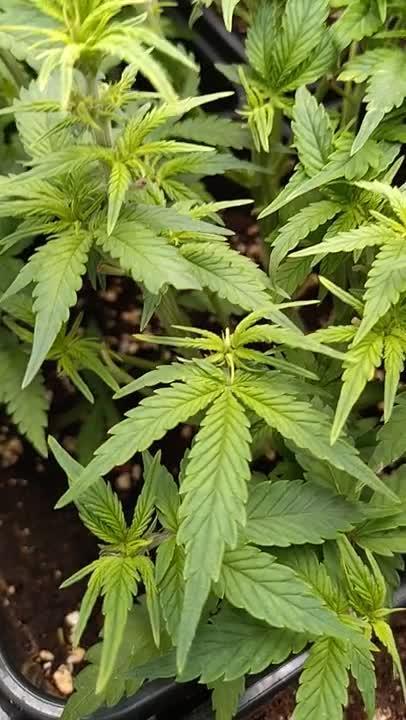
7. Woche
Ich habe sie jetzt nochmal ordentlich gerupft und ein bisschen Calmag gegeben, die Lampe läuft auf 80 Watt. Der Übergang in die Bloom ist voll dabei 😀

Likes
2
Share

@KannaGrowing
Follow
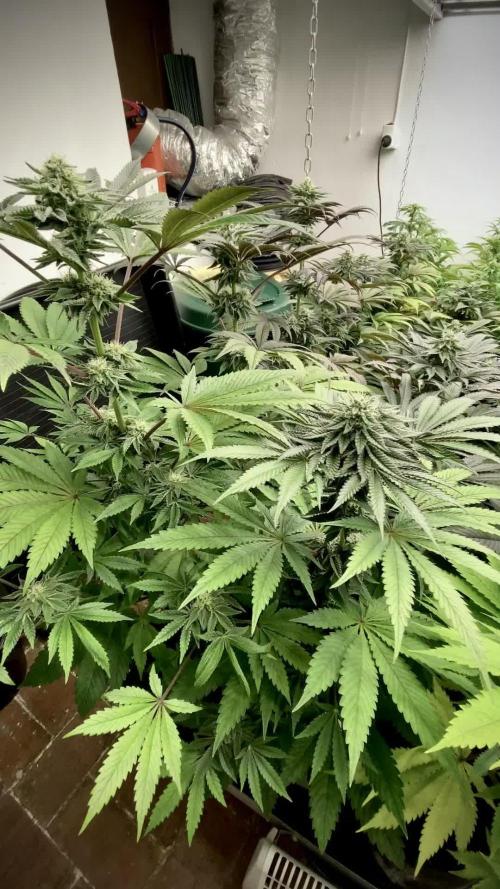
Sin grandes cambios.
Seguimos con la dieta de fertilización intercalando riegos solo con agua.
Reducimos la humedad relativa de forma progresiva.

Likes
42
Share


@Oregonist
Follow
[This is a beginner's journey to grow a Blue Dream plant outdoors, from seed, for the very first time. I added 3 clones in week 7, and I will include their progress, but each week this journey will feature Foster, the Blue Dream. Thanks for joining me as I learn to grow outdoor cannabis in the beautiful Willamette Valley.]
Foster is doing very well this week. At the recommendation of my local organics shop, I've switched my nutrients from Fox Farms (Big Bloom & Grow Big) over to GreenGro's Nature's Pride veg nutrients (info here: http://www.thegreengro.com/product/veg-6-3-3-5/). It's a powder, and I'm feeding 14ml/gal (or, since she's in a 45 gallon pot, 630ml) as a top dressing once/week. I really like the nutrients--it includes mycorrhizae. I will also add a microbial compost tea next Friday at feeding. The Nature's Pride nutrients are a bit more expensive than the Fox Farm nutrients I was working with, but the folks at my organics shop have the plant science background, and its what they use, so I'm going to track the results in the coming weeks.
At any rate, It's been a very hot, windy, and humid week in Western Oregon, and she's been drinking nearly 2 gallons/day. New growth looks very healthy, and the sites where I've topped are growing 2 new vibrant colas.

Processing
Likes
16
Share


@Andres
Follow
I have problems with her. I think it's because of the local water. the earth is not fertilized with any product. only earthworm humis.

Likes
20
Share


@Enollam
Follow
Servus zusammen 🏽
Im Vergleich zum Rest im Zelt ist alles beim Alten... Sie hängt ein paar Tage hinterher... Was aber nichts ausmacht... Sie macht sich gut und zeigt eben etwas langsamer in welche Richtung sie will😁
Ich bin zufrieden und weiterhin gespannt

Likes
16
Share


Processing
Likes
10
Share

@CrackinBeans
Follow
The mephisto is has bounced back and pushing hard. All the plants still have a high runoff but has been pushing hard this last week or so. Ph run off has been around 7.6 from around 8.4ph😬😬
I kinda gave up on the freeze berry but I started checking it out and I didnt notice how well the branching is on that plant and how frosty it is.
the freeze berry has been getting set up nicely hoping it fills out nicely because the branching and spacing on that one is not too shabby
I'm not sure wth is going on with the big bomb that one decided to just grow like a bush real fast and has soo many bud sites but is flowering super slow.. I started all the seeds at the same time except the mephisto is about a week or two younger than the rest.
The crystal meth is about ready I'm going to start flushing that here sometime this week when I get my new ph pen.


Likes
30
Share


@coyote2thick
Follow
*clears throat* NOOB SPEAKING! So I fudged up and just realized that I’ve been using the kool bloom POWDER way too early. Never realized the difference between the liquid and powder. She seems to be doing good and fattening up fine. I’ve never seen a issues from using it too early. Smell fruity, spicy, and sweet.... maybe from the kool bloom being used too lol early I dunno. From what I read it may hurt the yield but with two week left in flower only time will tell 😞 thankfully I know it’s strong so only ever used very small amounts. Thoughts???

Likes
31
Share


@Mrs_Larimar
Follow
2024-05-09
I transplanted the Tangie today, it was not totally necessary,
but i was in the mode ( transplanting nearly every Plant who need to)
and i know now, she will be fine for the next 3 weeks
she sits in 8l smartpot, filled with Terra preata MJ Mix-
BREEDER INFO
Tangerine Snow F1 Fast Feminised is a 75% sativa, four-way cross of (Boost x Tangelo) with (Lavender x Power Plant).
This Fast F1 hybrid is bred from Cali genetics and boasts great citrus terps, high resin production for extracts,
high levels of THC, very good yields and excellent mould resistance.
Tangerine Snow F1 Fast can be grown indoors as well as outdoors. Indoor flowering times are between 8 - 10 weeks
while harvest time in northern latitudes is during September while in the southern hemisphere growers will be harvesting during March.
Recommended climate regions are hot, dry, humid and warm. These are tall, semi-branched plants that grow in excess of 200cm
and display a high degree of vigour with very good uniformity.
In common with many other heavily sativa-dominant strains, Tangerine Snow F1 Fast offers excellent resistance to mould
as well as to plant pests and diseases. The combination of citrus terps and plenty of resin makes thi
a very good extract strain with the 'washing' method delivering very good yields of hash.
The citrus terpene profile is reminiscent of mandarins and tangerines and also has sweet candy notes.
THC production has been lab-verified at a strong 24% while CBD is low. The effect is uplifting and energising,
perfect for use during the day and early evening.

Likes
Comments
Share


@Ctrellis90
Follow
So here we go on another journey through growth.
It's the end of the first week after germination and things are moving along how I would expect for fresh seeds... although a few of these may have some mutations going on.
Regardless we're just doing water and Ferments for another week or two then we'll start the Athena blended line.
Thanks for stopping by.

Likes
106
Share


@StarLorr
Follow
Welcome to my autø Øpium Diary.
In this Diary:
Seeds: Sponsored by Ðivine Seeðs
Media: Pro~Mix HP *•ns
Nutrients: Remo Supercharged Kit *•ns
*•not sponsored
___________________________
Feeding:
Tue 22Oct: 2L Remo/Recharge pH'd 6.5
Thu 24Oct: 2L Remo/Recharge pH'd 6.5
Sun 27Oct: 2L Remo/Recharge pH'd 6.5
___________________________
Things are going smoothly, had to put her on a pedestal as her roomie moon rock2 is hugging all the lights😄
___________________________
Thanks for stopping by, likes and comments are appreciated!👊🏻😎
Keep on growin!
Keep on tokin!!!
😙💨💨💨💨💨
Likes
3
Share



Likes
9
Share


@eldruida_lamota
Follow
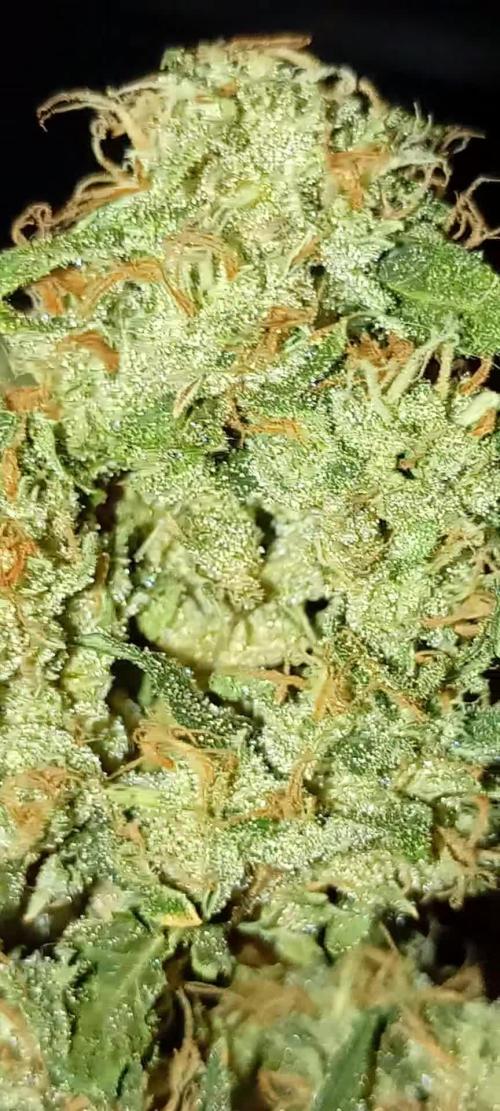
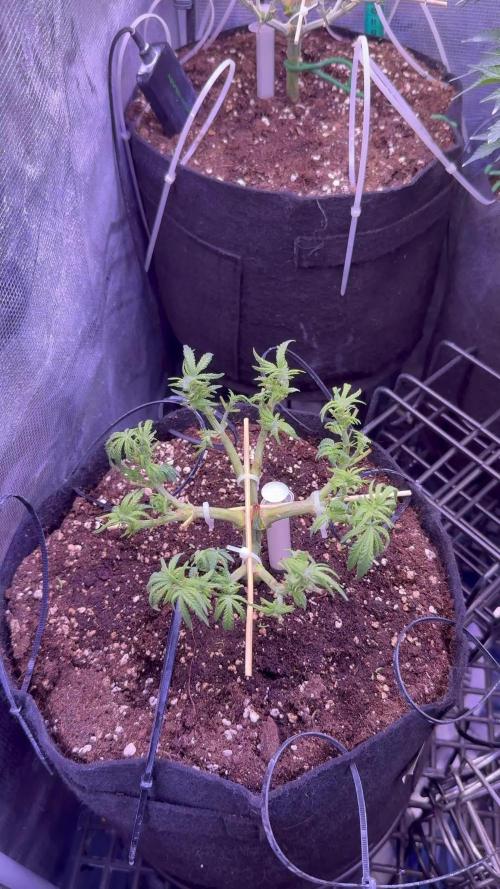
Que pasa familia, estamos actualizando la primera semana de floración de estas Kritical de GrowBarato.
Cómo podéis apreciar en las imágenes el color que tienen es espectacular y con esa vegetación y vigorosidad pintan de miedo.
Además siendo tan rápidas , de 57/63 días, las tendremos listas como quien dice en un abrir y cerrar de ojos.
Agrobeta:
https://www.agrobeta.com/agrobetatiendaonline/36-abonos-canamo
Mars hydro:
Code discount: EL420
https://www.mars-hydro.com/
Las maximas de temperatura no superan los 26 grados y las mínimas no bajan 19, así que no me puedo quejar.
Los niveles de humedad también son los correctos van entre 50%/60%de humedad relativa.
Por supuesto el Ph lo estamos dejando alrededor de 6.
Hasta aquí es todo poco más la verdad, solo deciros que buenos humos 💨💨💨y nos vemos el finde en SPANNABIS.


Likes
14
Share


@TherealNICOGREEN
Follow
Går rigtig fint 😊, er virkelig begyndt at få fat i solen og vende sig til det udendørs klima.🤗💚🧡🖤☮️jeg er begyndt at bruge bud candy fra start til slut, da det skulle have en super effekt på rodnettet ( har jeg set✌️🤞🧐😇☮️🖤🧡. Jeg har utroligt nok ikke haft en pige der ikke har overlevet de Alle KANNABIA 🖤🧡pigerne:-) og de strutter af sundhed.

Likes
11
Share


@Madman2020
Follow
Yeesh, what a ball drop
Circuit Breaker kept tripping.
Using 3 450w, co2, exhaust fan, 3 fans.
I unplugged the Co2 after 3 days of troubleshooting.
Vpd got totally screwed, plants didnt get watered and messed up the steer.
Irrigation system clogged(probably from stagnating)
Reservoir has buildup of organic material.
Think it was caused from Kelp, and microbes being added to the tank
A bubbler didn’t help, covering it didn’t help. I did not try “hydrogaurd”
I will stop adding organic nutes.
I am now watering by dubbing a bucket into the tank and gand waterin
Also, no more than 1000w of lighting in a room.
I prefer to use a full quality setup with less plants. No Co2 is ridiculous. Each test ive done has shown that co2 gets me heavier yields.

Likes
58
Share


@Professor_Chaos
Follow
This grow was fun.. I did 12/12 from seed and grew it in a 32oz McD cup.. Wow.. These are some super fat, super dank, and super citrusy colas! ETHOS FTW! Will be updating!!!
24 Hours Drying...
Relative humidity in the dry area is between 68% - 72%.. I have been running the little computer fan off and on within the last 24 hours.. About 8 hours constant then off for another 8 hours then kinda blah not knowing whether I wanted it on or off the last 8 hours lol.. But hours 24-48 I'm going to leave it off and the hours 48-72 I havent got that far into the process in my head yet.. Lolol I'm sure I am WAAAY over thinking this.. But I dont want my first mold experience to be with ETHOS.. and I dont want my 3rd too dry too fast either with this strain.. The dankness is so incredible with this one.. My mind is blown by how epic ETHOS is.. If anybody knows of any other breeders that are as good as or better.. Please let me know in the comments!.. Anyways.. ZzZzZz...
72 hours of drying...
Leaves are a bit crispy.. Buds are still moist a bit.. Small branches are still pretty bendy.. There was an 8 hour period that I did run the fan... The smell is a little hay like.. But this bud is so dank I'm sure the dank smell will come back.. Starting to notice that some strains smell like hay, but come back.. Some never smell like hay ever.. Idk.. Just something I've noticed.. It could just be my shitty environment tho.. Ugh.. So far so good with this one tho! Should be at least another 2 days.. But I'm shooting for a week at least.. Then into jars!!!
Dried and beginning of cure...
Took 5 days.. Not bad I suppose. Trimming only took about 45 minutes. It was almost difficult to WANT to trim alot of these sugar leaves because they were so incredibly covered in trichomes! But I can make a nice little bit of bubble hash with the trim so I trimmed her nice and close.. Gonna let her cure for a week or so then I'll get the weight.. I try to get them into the jars a little early.. Its easier to just burp them alot if they are too moist.. But impossible to get the up to 62% if they are too low.. I'd rather them be about 68% - 70% RH because thats technically just adding more "drying" time if you really think about it.. Then once they get to about 65% RH I slow the burping quite a bit.. Like only once or twice a week.. I've found this really helps terps and whatnot.. But anyhoo.. They have been in jars for about 24 hours.. They are already reading jar (2) 68% RH and jar (3) 64% RH.. Oh.. Let me explain the weird numbering. Lol.. My jars were already numbered.. Jar (1) is currently unavailable lol.. So jar (2) has all the nice, big, top shelf nugs and jar (3) has all the smaller, but still nice and dank as fuck nugs lol.. So excited for this! And normally I would have already started smoking what I've dried.. But since I cannot smoke, this will be perfect to actually give them plenty of time to cure nicely! So happy with ETHOS Genetics.. Fucking EPIC!!! Lol...
Beginning of cure..
I tried a nug lol.. So smooth.. So fucking tasty too.. You can literally taste the citrus.. I love this strain! I can't wait to see some other ETHOS strains and see what they are about...
Week one of curing..
Ive been burping daily.. Sometimes twice daily. I went ahead and put both jars into one.. Fuck it lol.. But 37 grams dried.. After 1 week of burping jars it is now reading 62% - 63%.. So now Ill stop burping daily.. Im gonna try to just go weekly.. If I can resist getting wiffs of it.. Lol.. It smells so fucking amazing
Processing
Likes
4
Share

