


Likes
Comments
Share


@mikearon
Follow
The problem encountered during the growth :
- Water (at the beginning) too little pumps that didn’t propagate the water equally so I went for a bigger industrial pump that pumps equally in the whole tent.
- RC : Some problems with the humidity at the beginning but got sorted out when I got the de humidifier
- Babies almost died mid-grow, came in with the ultimate save of the day, one day later and it was over.
- Had a problem with the container that held the water as water was empty when I’d get back at the end of the week (during flowering mode) so I went with a 120L container which works just fine.
- Didn’t flush properly because I was in a rush


Likes
1
Share


@18six12twelve
Follow
Day 3 of switching to 12/12, the temps are getting a bit high due to the weather but apart from that shes doing okay. I'll switch over to flowering nutrients on the next feed.


Likes
3
Share


@KushManAdam420
Follow
Been a good week no signs of shock at all.
I have only been watering them with Mills Vitilize silica supplement , i think ive been doing 1 mls per gallon, slowly increasing the dosage.
topped 2 plants in here , now am i wishing i did it for some of the others .
Day 1 for all of these was the 03-08-24


Likes
14
Share


@Kakui
Follow
16 Diciembre: El runoff ha alcanzado los 10EC, las plantas siguen creando puntos de floración con espacio internodal corto, gracias al stress generativo, están de 80~85cm de alto aprox. Hay una sola planta que tiene más de 90cm. En unos 2 días más se alcanzarán los 21 días de floración, ese día se hará una defoliacion grande y Lollipop, después de esa defoliacion se volverá a riego vegetativo para estimular el engorde de los cogollos.
18 Diciembre: hoy la EC del runoff alcanzó los 12EC, mañana se harán más disparos de riego para bajar la EC del sustrato. Hoy también se realizó una defoliacion agresiva + Lollipop, para que haya mejor penetración de luz en el Canopy y mejor flujo de aire. Queda solo una semana de riego Generativo, después de eso se vuelve al riego vegetativo para engordar los cogollos.

Likes
2
Share


@Organic473
Follow
Just been feeding her water once a week..she continues to swell I will give her some molasses one for the road and just water until week 8.
Likes
6
Share

@MaxWax
Follow
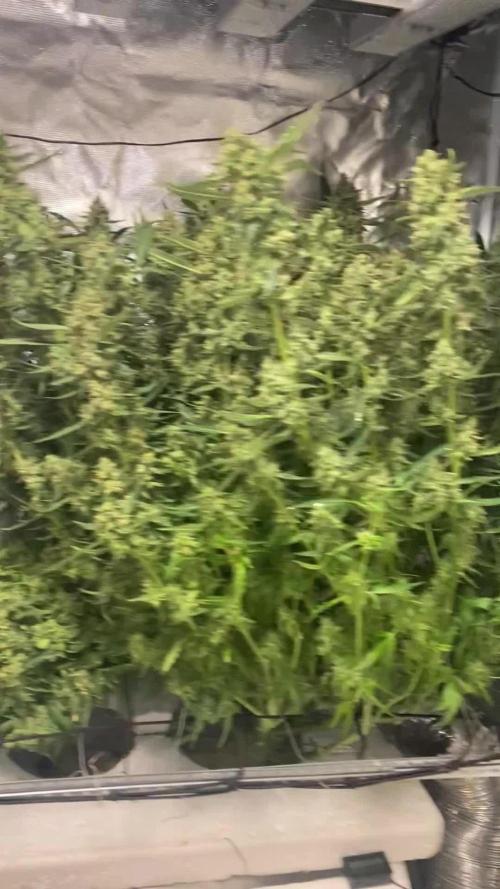
It was a chaotic weekend. After a wild night, I topped the small plant on Saturday morning. I was too drunk and forgot to take pictures, but everything else went smoothly 😅
The big one is getting harvested tomorrow. I ran a 48h FlashClean and turned the lights off for the last 24h with ice water. I have to harvest tomorrow night because I'm leaving for a two-week vacation this Friday. Otherwise, I wouldn't have flushed her this early and would have harvested later 😬?😀

Likes
17
Share


@420DeepGrow
Follow
Gracias al equipo de Seedsman Marshydro XpertNutrients y Trolmaster sin ellos esto no sería posible.
💐🍁 Tangerine Snow F1 Fast:
Esta gran cepa es un cruce de cuatro vías 75% sativa de (Boost x Tangelo) con (Lavender x Power Plant). Este híbrido Fast F1 proviene de la genética Cali y cuenta con excelentes terpenos cítricos, alta producción de resina para extractos, altos niveles de THC, muy buenos rendimientos y excelente resistencia al moho. Tangerine Snow F1 Fast se puede cultivar tanto en interior como en exterior. Los tiempos de floración en interiores son de entre 8 y 10 semanas, mientras que el tiempo de cosecha en las latitudes del norte es en septiembre, mientras que en el hemisferio sur los productores cosecharán durante marzo. Las regiones climáticas recomendadas son cálidas, secas, húmedas y cálidas. Se trata de plantas altas, semiramificadas, que superan los 200cm y que presentan un alto vigor con muy buena uniformidad. Al igual que muchas otras variedades con fuerte dominancia sativa, Tangerine Snow F1 Fast ofrece una excelente resistencia al moho, así como a las plagas y enfermedades de las plantas. La combinación de terpenos cítricos y mucha resina la convierten en una cepa de muy buen extracto, cuyo método de "lavado" produce muy buenos rendimientos de hachís. El perfil de terpenos cítricos recuerda a las mandarinas y mandarinas y también tiene notas dulces. La producción de THC ha sido verificada en laboratorio en un fuerte 24%, mientras que el CBD es bajo. El efecto es edificante y energizante, perfecto para usar durante el día y las primeras horas de la noche.
🌻🚀 Consigue aqui tus semillas:
💡TS-3000 + TS-1000: se usaran dos de las lámparas de la serie TS de Marshydro, para cubrir todas las necesidades de las plantas durante el ciclo de cultivo, uso las dos lámparas en floracion para llegar a toda la carpa de 1.50 x 1.50 x 1.80.
https://marshydro.eu/products/mars-hydro-ts-3000-led-grow-light/
🏠 : Marshydro 1.50 x 1.50 x 1.80, carpa 100% estanca con ventanas laterales para llegar a todos los lugares durante el grow
https://marshydro.eu/products/diy-150x150x200cm-grow-tent-kit
🌬️💨 Marshydro 6inch + filtro carbon para evitar olores indeseables.
https://marshydro.eu/products/ifresh-smart-6inch-filter-kits/
💻 Trolmaster Tent-X TCS-1 como controlador de luz, optimiza tu cultivo con la última tecnología del mercado, desde donde puedes controlar todos los parametros.
https://www.trolmaster.com/Products/Details/TCS-1
🍣🍦🌴 Xpert Nutrients es una empresa especializada en la producción y comercialización de fertilizantes líquidos y tierras, que garantizan excelentes cosechas y un crecimiento activo para sus plantas durante todas las fases de cultivo.
Consigue aqui tus Nutrientes:
https://xpertnutrients.com/es/shop/
📆 Semana 10:
Esta semana ha explotado 💣, los cogollos comienzan a tomar densidad y llenarse de resina, parece que esta en floracion aunque todavía faltan 20 dias para que se declare la floracion por descenso de las hiras de luz.
Me hubiera gustado aplicar algo mas de nutrientes en la fase vegetativa, la próxima vez será aunque el clima no ha ayudado demasiado.
Continuo con las dosis de nutrientes recomendadas por el fabricante


Likes
27
Share


@Nevinkush99
Follow
Yellow tips otherwise all good
Idk if its nute burn or other issue trying to get it fixed 😄

Likes
265
Share


@Budz_Bunny
Follow
Grow report week 6: The recovery and the training
Hello dear growers and growerettes,
it’s time for an update on my grow. My plants have completed the sixth week and have grown further. But they also mastered some challenges that I will tell you about.
The recovery
This week I had to save my plants that suffered from a nutrient deficiency. The reason for this was the combination of osmosis water and BioBizz fertilizer, which the plants did not like. I came across reports on the internet that reported the same problems and switched back to normal tap water. The plants already started to turn yellow and showed signs of a calcium/magnesium deficiency.
On the day of realization, I fertilized the ladies with normal tap water, as well as twice a week a mix of water, Acti-Vera and Fish-Mix from BioBizz as a foliar fertilizer. To be on the safe side, I watered two liters per plant today after almost complete drying out of the pots, which is a lot, but I wanted to make sure that the soil is equally well supplied. Since I have fabric pots, I worry less.
I believe to recognize that the plants will make it, as their development has improved greatly. The next two weeks will show it.
The training
This week I continued the low-stress training and bent and tied the plants further. The low-stress training is a method to gently bend and tie the plants to improve the light distribution and air circulation. The goal is to keep the plants low and wide and promote more side branches and flower clusters.
The training works very well with the gained experience now. The plants are bent in one week and will then be allowed to come up again. I hope all the work will pay off despite the short weakening of the plants.
The outlook
I am very satisfied with the result of the sixth week. My plants have recovered well and trained and have shown great growth. I look forward to the next two hopefully healthier weeks.
Thanks for stopping by and see you next week! 😊

Likes
13
Share


Likes
37
Share

@wolfvb
Follow
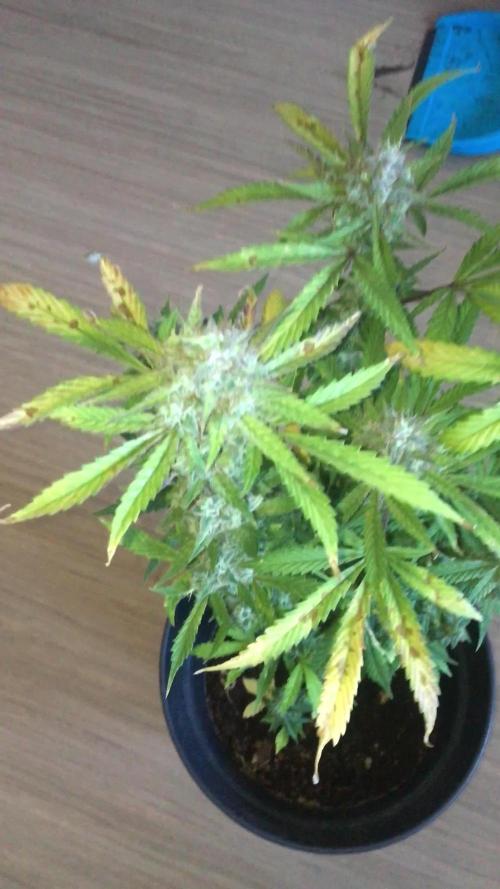
We made it to the finish line and cake is out of the oven and drying, another one has been done.
Thanks everyone for the support and love!
Likes
3
Share


@TheGreenGroomer
Follow
We’re kicking off week 3 of veg today, and things are looking up. She seems to be bouncing back nicely from that magnesium deficiency—leaves are perking up, color's evening out, and overall growth is picking up again.
I topped her at the 5th node and gave her some light LST. After about 3–4 days of recovery, I removed a few lower leaves that were sitting in the dirt and getting in the way during watering.
Feeding her 500 PPM at a pH of 5.8

Likes
15
Share


@UberSmokez
Follow
Plant is growing well. First 2 sets of leaves had deformities so had me worrying but another growmies from here told me totally normal for first set of leaves today I have started using biobizz bio grow feed following the feed chart of 2ml per litre of water the only thing
I am struggling is how much should I water my plant currently watering 100ml - 170ml. Per 5 days
But other than that she seems to be growing nice and healthy. And strong
I was advised to tilt my fan towards my plants a little to help with oxygen and to help stiffen stems ! So I have done that
I am wondering when I should start low stress her
And is she the right size for her age
Likes
17
Share


@GrowYourFive
Follow
Dear friends, I wish you a Merry Christmas and a Happy New Year! I can’t say that something more important happened to me this week than your time spent with your family)) But I’ll tell you a couple of things! Firstly, I set up a camera and recorded timelapses, enjoy)) Secondly, I started new pallets while both bushes are on the same, but will stand on different ones when they grow large. In third place this week, but the most important is automatic watering. One pump waters 2 plants with a solution at once, watering occurs evenly at 1100 ml per minute per plant. At this stage, I water the plant 4 times a day, 300 ml each. 700-800ppm. pH 5.8 is strictly observed. In fourth place is the news that I cut off the tops, after that I will try to bend them in different directions before installing the scrog mesh.
Next week we will install a scrog net, a co2 tank, an automatic co2 supply system.
By the way, I forgot to tell you, all growbox systems work from the application on the phone: watering, nutrient solution, fans, and we will add co2. next week.
In the meantime, friends, I wish you happiness and great harvests in the new year! I love everyone!
Processing
Likes
21
Share


@LittleBigTrees
Follow
The plants were so crowded I decided to put them into a Larger tent to allow some light to the lower bud sites and to help lower the humidity amongst the plants. I'm sure they will love the extra space.
The light has now been raised 20cm (20cm taller tent)
Allowing me to turn out right up which is 45000 lux in the centre right below it.
I will up the bloom to 2ml/l this coming week.
Likes
2
Share


@eldruida_lamota
Follow
Que pasa familia, vamos con la tercera semana de floración de estas Gorilla Cookies Fast Flowering, de FastBuds.
Agradezco a Agrobeta todos los kits obtenidos de ellos 🙏.
Hasta aquí veis que llevan buen progreso y el color que se marcan es espectacular.
Vamos al lío, el ph se controla en 6.2 , la temperatura la tenemos entre 22/24 grados y la humedad ronda el 50%. El fotoperiodo a 12-12. Estás próximas semanas veremos cómo avanzan.
Agrobeta:
https://www.agrobeta.com/agrobetatiendaonline/36-abonos-canamo
Hasta aquí todo, Buenos humos 💨💨💨
Likes
2
Share


@Drlee
Follow
Umgetopft in 3,2L Sonnenerde Hanf mit ca. 5cm Blähton als Drainage.
Ich habe diese Woche sowohl getaucht als auch von unten gegossen und werde es so beibehalten, dabei gieße ich immer kurz von oben an.
Die Purple Lemonade, die etwa 1 Woche hinterher ist, habe ich trotzdem auch jetzt schon umgetopft.
Die Beleuchtung wird auf ~23 DLI hochgefahren.
