


Likes
Comments
Share


@DTHGenetics
Follow
Training main stems down to expose second ones looking good week 8 they are in 10 gallon now watering 2 cups or more if needed every 2-3 days

Likes
21
Share


@lemonairlines
Follow
I think the nutritional value of ready-made water is low and its not enough for Ca or something like that

Likes
26
Share


@Ukfarmer420
Follow
So I'm on day 14 of flower now and there doing brilliant.
They will probably finish there stretch after this week.
Another fan coming tomorrow.
Day 16 of flower, added new fan for under the netting 👌 plants are rocking now lol still stretching had to raise the light 🤣 temts and humidity are on point, absolutely stinks in the room, and I'm loving it 😀.
Day 18 of flip and there getting fatter, starting to produce trichomes now they smell really skunky, I really need to do a defoloation for those lower buds but ill do it day 21 and then its done.
Temp and humidity have been good so far highest humidity when lights off was 67% with my fan ac controller set on fan speed 7 and I just watered them that night.
Day 20. So today I just performed a major defoliation on the ladys as there was alot of leafs blocking bud sites.
I been struggling with humidity these lst few days 😫 so tomorrow I got a big dehumidifier coming tomorrow to hopefully help But other than that everything is going good and entering the week 6 of the biobizz feed charge.

Likes
15
Share


@Marquise_ao_Sul
Follow
i moved to new home. i'm a Litlle sad because i have to quit my indoor growing...
for another hand i going to Start outdoor way...
this plant resist One week of strong wind and Rain.. when weather allows i post a foto!
happy grow
I found 5 minutes rest on the storm and Pickup the plants on the Woods for safety place... They are strong fighting outdoor... Specially when comming from my. Indoor tent...loloo


Likes
13
Share


@StoneyMelony
Follow
Week 11 Day 71, i suffer a little bit of heat stress, temperatures where a bit high the past week, so leaves are a bit clawing and cupping on the main cola’s. They are still maturing tho.
Day 72 ,Buds are becoming heavy, i found my plant and one of the 4 big buds is broken off the stem and lying on the floor. She was attached just a little bit , so i helped her up, and tied her down. I hope she will survive . I didn't make pictures, a had a little bit stress 🤣, also because i was busy it looked like every branch was collapsing, and i had to tie a lot of them. Hope for the best. i did try to make some close ups of the buds, also i try to picture the whole plant. The big bud in the end stares me right in the eyes when i'm standing up 😃 also one funny thing to mention is when i did shoot the video on day 71, i didn't notice that the bud on the right was all ready on the floor and missing, You can see the difference with the pictures from day 72. it is the bud on the far right.
Day 75 finally my pistols are turning inside and i see calyx little bit swell up. My other plant did mature a lot faster and have already swollen calyx, it seems to take a lot longer but the buds are also way bigger. so i don't mind if that means i got more weight in the end. tomorow i will give a other pk boost, i think she is a heavy feeder.

Likes
20
Share


@eldruida_lamota
Follow
Que pasa familia, ya estamos de vuelta y empezamos la primera semana de floración, ya cambiamos el ciclo a 12/12 , y ya marco su sexo, es hembra.
Pues seguimos controlando ph, lo bajamos un poco a 6,2 a ver si chupan mejor los nutrientes, temperatura y humedad controlados, siempre dentro de los parámetros correctos, hemos bajado un poco la distancia del foco, ahora en floración lo agradecerán.
Así que esto es todo, ya veis que va bien tiene buen color y no hay problema ninguno, nos vemos la semana que viene fumetillas.

Likes
18
Share


@GYOweed
Follow
The sour sorbet dna copy is outdoors doin ok.
Bruce banner in the left and trainwreck on the right both getting milkier and pungent.
Just getting ro now.


Processing
Likes
10
Share


@Dunk_Junk
Follow
9cm growth this week.
She is very short, very bushy. Not sure what I've done wrong... 😞
Likes
189
Share


@Green_Man_420
Follow
Big shout to RQS and @James for the beans for this grow. Once again the genetics from these guys is unbelievable.
Really appreciate all the likes messages and support from you awesome bunch of growers. ✌️🙌💚
Week 9 is upon us. Loving the way this Mimosa is filling out. Really putting some weight on. The pics aren’t doing much justice. Will carry on feeding for another 2 weeks the start the flush. The colours are really starting to come through. I will monitor the progression closely now and let the plants tell me what they need. Have a great week people ✌️👊🏻

Likes
12
Share


@2Stones1Bird
Follow
Checkout my Instagram @smallbudz to see the Small budget grow setup for indoor use, low watt, low heat, low noise, step by step.
04/01/2020 - Did the last defoliation, removed about 1/4 of plant material.
06/01/2020 - Fed her 1.5l of 6.5PH water with 0,3ml Cal Mag (Atami) 0,25ml of Grow, 0,6ml of Bloom and 0,5ml Max, and 1ml of each: Heaven, Alga-mic and Vera, noticed some run off, I use about 1/3 of the nutrient dosage on the chart, to achieve about 200/300PPM (500 scale).


Processing
Likes
70
Share


@Kid_Colombia
Follow
Finally back to the garden after 4 weeks away.
They were really in need of love by the time I got back to take care of the garden.
BIG NEWS! Now running a California Lightworks Solarxtreme 500 as my main light.
Will add a second SX500 light into the room once I start flower.
Hit the LST on the again and just making sure they are getting fed and lots of love.
Will have to push back my starting flower by another few weeks. See how the recover


Processing
Likes
2
Share


@Justrite
Follow
Topped and defoliate the CDS cuttings
Also started some seeds off last week
Just in progress setting up veg tent
CDS also repotted
Likes
7
Share


@FourTwenty_Plants
Follow
The temperaturs are very good for the girls and they are enjoying the Sun. They get bushier everyday im happy
Date: 15.08.2024
Likes
3
Share

@Milky_way
Follow
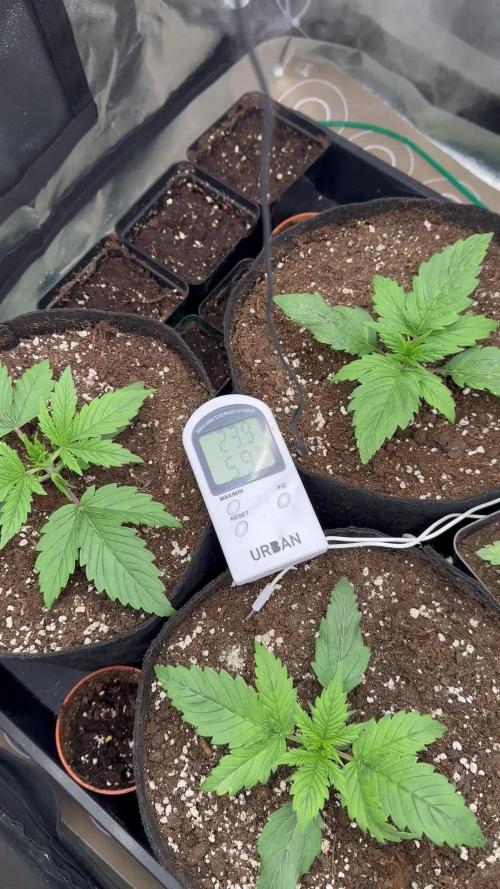
2.week - first day and other..
Nutrients are 3-4in1 products combo.
Watch and looking 🌱🤫
After days one stress one topping.
Likes
6
Share


@Averynate
Follow
As we venture into week one of the flowering stage, the living soil within our garden beds has already been enriched with carefully selected amendments, laying a robust foundation for our plants to thrive. Living soil is not a static entity; it's a dynamic, breathing ecosystem that needs as much care and attention as the plants it supports. At this crucial juncture, our primary responsibility is to maintain the delicate balance of this ecosystem. Watering practices continue to play a pivotal role—moisture levels are kept at an optimal level, allowing the soil to dry between watering sessions, thereby preventing saturation and promoting oxygen uptake to the roots. Such measures are not merely about quenching the plants' thirst but also about preserving the intricate web of life that exists within every handful of soil.
This web of life has indeed become more intricate with a massive explosion of predator mites that have become an integral part of our soil's community. These tiny but formidable allies are voracious predators of various pests that can threaten our plants. Their increased activity is not just a sign of a healthy ecosystem but also a natural form of pest management that reduces the need for chemical interventions. These mites, along with a host of other microorganisms, play a critical role in nutrient cycling and disease suppression, further enhancing the resilience of the plants during their flowering phase. The very life of the soil is now visibly bustling, indicating a thriving micro-ecosystem that contributes to the health of our plants.
Above and beyond these microscopic interactions, the larger creatures in our ecosystem—the worms—have begun their vital work. The 'chop and drop' cover crops and clover that were introduced earlier have now become fodder for these earthworkers. As they consume this organic matter, they are not just feeding themselves but are also processing it into rich castings, a natural fertilizer full of available nutrients for the plants. This activity does not just nourish; it aerates the soil, creating spaces for roots to expand and for air to circulate. The sight of such activity is evidence of a living soil that is not just a growing medium but a thriving ecosystem in its own right. The soil, with all its biodiversity, is an orchestra where every organism, from the tiniest mite to the diligent earthworm, plays a critical part in the symphony of growth that supports our flowering plants. As each day passes, this ecosystem draws closer to perfect harmony, bolstering the plants in their quest to bloom with vitality.


Likes
49
Share


@Hashy
Follow
Because of the start I had I ended up having to use all 3 seeds. Only 2 germinated.
The lemon pie went from seed to harvest in 93 days. This was the only plant that I had any real problems with during the grow. I accidentally broke one of my colas shortly after I topped her, so instead of 6 mains I only had 5. She also looked very sorry for herself for a long time, like she was being over watered. Anyway she went from a duck to a Swan. Turned out with some real nice colour to her, she could have really done with another week in the tent to hit her full potential.


