The Grow Awards 2026 🏆 










Likes
45
Share
@masterofsmeagol
Follow
LAST WATER 6/4
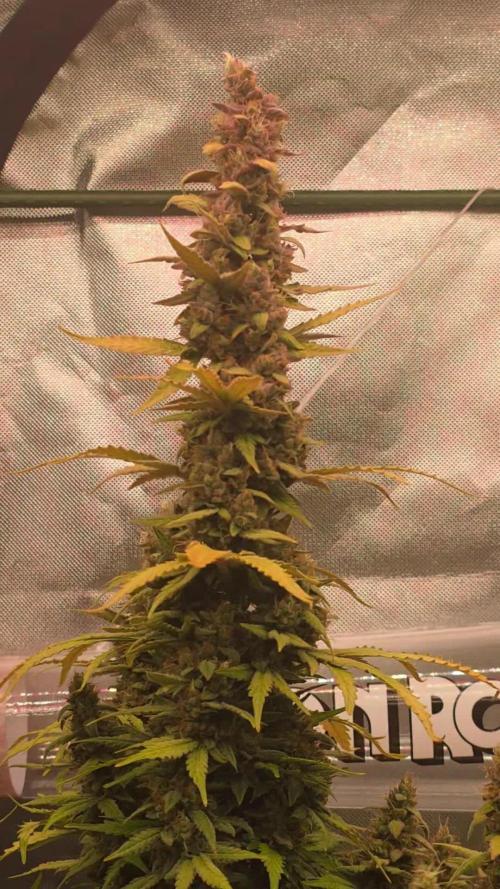
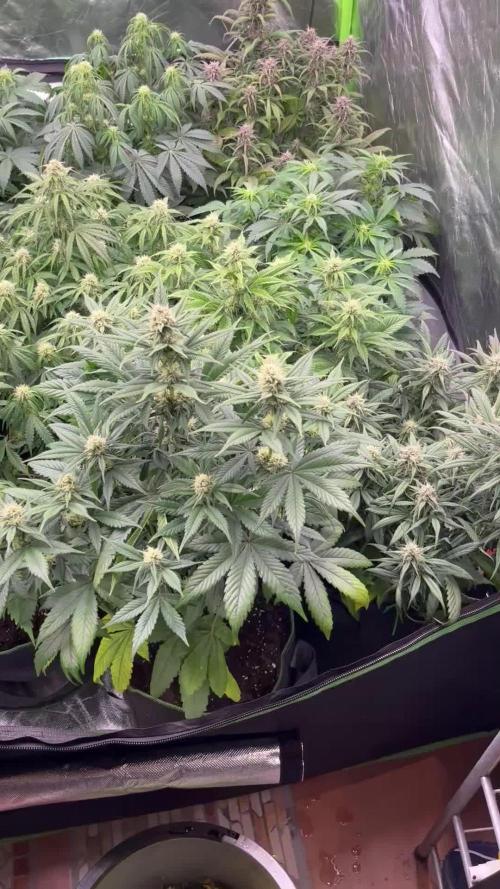
6/5 The sun has been relentless and has caused some bleaching and burns on some older leaves. It seems that the gmos ate having the hardest time (except one). It's been extremely hot though. It's overcast and we are supposed to have thunderstorms and a few more mild days. Plants loved tje water yesterday. I hope it does rain. Plants are growing and seem to be surviving. Burns are on old growth. If I notice more I'll put my back tarp up which will block the sun in the afternoon and put them in shade. I wish I had done that earlier. Oh well. With what these girls have encountered and overcome I think I'll be OK.
EDIT: IT WAS IN THE 80'S TODAY. PROBABLY HIT 90. I HAD TO GET MY CAR INSPECTED AND WAS GONE EXPECTING IN THE MORNING THAT THE THUNDERSTORMS WOUKD START. INSTEAD WE HAD A VICIOUSLY SUNNY HOT DAY UNTIL 4PM. AT 4PM SHIT HIT THE FAN AND IT RAINED SO HARD I WAS UNABLE TO DRIVE. I LIVE IN MAINE SO I KNOW HOW TO DRIVE IN INCLIMENT WEATHER. THIS WAS ANSOLUTE ZERO VISABILITY. I WANTED TO PUT A TARP UP TO SHIELD THE GIRLS FROM THE SUN BUT I WASNT ABLE TOO. WHEN I GOT TO THE GROW RIGHT BEFORE THE STORM IT HAD RAINED A LITTLE AND IT SMELLED SO GOOD. LIKE SOIL. I THINK THIS DOWNPOUR WILL REALLY HELP THE GIRLS. ONLY TIME WILL TELL.
6/6 Plants faired ok through the storm. The 3 earliest transplants and what WERE the nicest looking gmos are getting some burns and bleaching. It's all on old leaves though. I think they're pulling out of it and will grow through it. Some plants seem to not be stressed at all. With tje elements being the way they have I'm suprised they aren't far worse. I was going to put up my back tarp to block sunlight later in the day but I didn't. The burns are on the other sides of the plants and it's supposed to be overcast with showers for a full day. It's clear right now but the new growth and tops of the plants seem fine now. When I got there a few were limp. As soon as the sun came up though they all perked back up. Only time will tell.
6/7 Showers today. It's good to have a break from that horrific 80-90 degree weather with 90% rh isn't run for me or the plants. Plants are recovering from the burns quite nicely. Obviously the burnt leaves won't repair but they did a good job of shielding some of the others. Things are going.
6/8 Still overcast with showers. I removedc a couple burnt fan leavesxand accidently ripped off a bud site.
6/9 Another overcast day. Rained last night. Soil is saturated from all the rain we've gotten. Plants seem to be settling in nicely. The 3 GMOs that WERE the best looking plants are the ones in the worst shape. The got transplanted a day earlier in a lot of sun and wind. They're coming back though. I've noticed that after it rains and they get even a little sun they grow significantly. Those event horizons are tough. The toasted toffy is a reveg but it looks like its going to be a huge plant. I have the 3 seedlings still in small pots. I'll transplant them soon.
6/10 Overcast and a chance of showers. I removed a few bleached fan leaves on a few of my GMO'S that strain took the most damage. They are bouncing back though. We've had a few dayscof rain and milder weather. Few more days with a chance of showers then back to the sunny days. Plants seem to have come out of shock and out grown the light burn. After the rain, when the sun comes out they grow a noticeable amount. Things are still going fairly well.
6/11 Rained and I didn't do

Likes
11
Share
@Original_Growers
Follow
Day 1.
The cuttings after being rooted in the special tray were transplanted into small jars and allowed to acclimatize in the appropriate boxes. After a few days we transplanted them into 18 L pots filled with plagron growmix, a prefertilized substrate, and then they were placed inside our cultivation box, the one in the photos. Being a prefertilized substrate we watered with only water with a pH of 6.5 until the water ran out into the saucers. As the 18 L pots are very large, no more water was needed for the first 5 days.
DAY4.
The plants were topped.


Likes
27
Share
@GrowInger420
Follow
Last week i found some seeds grown in the bids and i released them. Was a bit of work but i think its worth it. I start to give just water for both kush, the haze will get 2 weeks nutrients. Hope that come more seeds. Have a nice week✌️


Likes
10
Share
@Dunk_Junk
Follow
She's done!!
Super, super stinky!!!!!!!!
Covered in trichomes!!!!!!!!!!!
Will be harvested within 24h.

Likes
4
Share
@AustinRon
Follow
OG 4Q24 Flower Week 10
Orangegasm (Fem) [ IRIE Genetics ]
12/12 @ Bolt (Day 21)
Germination: 20 November 2024
#3A Earliest Harvest Date: 9 February 2025
#3B Latest Harvest Date: 19 February 2025
_________________________________________
Start of Week: [Wed Feb 12, 2024 CR2 4Q24 64:F:9:1]
End of Week: [Tue Feb 18, 2024 CR2 4Q24 70:F:9:7]
OrangeGasm Fertigation:
- MAX: EC: [ 1.6, mS]
- LightIntensity MAX: [ 850, µMol/m2/s]
______________________________________
__
Wed Feb 12, 2025
OG 4Q24 64:F:9:1
Refresh Reservoir
- Amount: [ 5, gal]
- EC: [ 1.6, mS]
- Primer A&B: [ 48, ml]
- SLF-100: [ 15, ml]
Reclaim Dehu
- Amount: [ 4, gal]
EC: 1.6
Runoff
- Amount: [ 1.25, gal ]
- EC: [4.3 , mS/cm2]
- EC∆: [ 1.6 , mS/cm2] # Danger!!! (I don’t think so - Happy Plants)
__
Thu Feb 13, 2025
OG 4Q24 65:F:9:2
Runoff
- Amount: [ 2, gal ]
- EC: [ 4.6, mS/cm2]
EC: 1.5
Refresh Reservoir
- Amount: [ 2, gal]
- EC: [ 1.5, mS]
- Primer A&B: [ 32, ml]
- SLF-100: [ 10, ml]
Reclaim Dehu
- Amount: [ 2, gal]
If we see the pistils of the last two plants shrink/collapse in the next 3 days, we may be ready Tuesday/Wednesday . . .
I also note we’re about 2 days after from OPTIMAL BUD Structure, Foxtailing is becoming less well formed at largest top and some of the sooner ready buds …
__
Fri Feb 14, 2025
OG 4Q24 66:F:9:3
EC: 1.4
1.5 gal dehu
3 gals+ refresh
Reduced Fertigation Time 50% as Tank is at refill after 4+ gal yesterday, again. :-{
__
Sat Feb 15, 2025
OG 4Q24 67:F:9:4
Reclaim Dehu
- Amount: [ 2.5, gal]
Refresh Reservoir - 2 Gal
- Primer A&B: [ 17.9, ml]
- Resin Bloom: [ 9, ml]
EC: 1.3
Runoff
- Amount: [ 0.5, gal]
- EC: [ 3.0, mS/cm2]
- EC∆: [ 1.7, mS/cm2]
__
Sun Feb 16, 2025
OG 4Q24 68:F:9:5
Refresh Reservoir - 2 Gal
- Primer A&B: [ 16.5, ml]
- Resin Bloom: [ 8.3, ml]
Runoff
- Amount: [ , gal]
- EC: [ , mS/cm2]
- EC∆: [ , mS/cm2]
EC: 1.2
__
Mon Feb 17, 2025
OG 4Q24 69:F:9:6
EC: 1.1
__
Tue Feb 18, 2025
OG 4Q24 70:H:9:7
1000
- Remove Plants from Tent
- Remove Drip Tray
- Remove Light
- found water unseen in bottom tray - the reason for unreasonable humidity
- Removed Drip Rings
- Dried bottom drip tray
- Resealed Tent - Low RH
_______________________
Harvest Log
Max Min Average
Height (in)
40 21.5 29.875
Weight (g)
700 157 385.5
Secondary Stem Count 30 17 21.125
Est Dried Trimmed Wt 140 31.4 616.8

Likes
82
Share
@MrHightimes
Follow
Halfway done. TRIM JAIL IS REAL!
Big fat black colas. Couldn't as for better looking buds!!!!
Definitely my biggest yet!!
Will update more once done trimming, drying and curing,
_______________________________
Finally finished!!!! Needed a bit of manacuring to get it the last home stretch but
the lemonade stand is open and the reviews are raving!!!
Gonna be a nice treat for EVERYONE with 1 1/2 pounds to share!!!! Greatest yield, Prettyiest buds!!
Complete Success!!
Thanks Again Fastbuds!!!
Likes
6
Share
@All_about_420
Follow
Wir stehen kurz vor der Ernte.
Die Farben und die Blätter sprechen für sich, das ist eindeutig der Herbst.
Dem Duft nach, könnte ich direkt reinbeißen.
Aufs ernten freue ich mich schon, da die Mimosa Cake mit eher weniger Blättern ausgestattet ist, so wie ichs gerne hab.
Das macht die Arbeit leichter und schöner...
Likes
8
Share
@TommyBVRSA75
Follow
Entrada dia 30 (sin marcación de desarrollo de plántula) : Señores y Señoras, un mes desde el comienzo de vegetativo y creo que cuando miréis el vídeo que he colgado no vais a creerlo, por que yo tampoco me lo creería, ni por un millón de florines filipinos.
Os explico, todas las cuentas de crecimiento, nutrición y desarrollo expectables se han ido sencillamente a la basura y os explicó por qué.
Primero, estamos en un ritmo que en cerca de seis dias, los cuatro cultivars están tomando la friolera de 24 litros, o sea que estamos con un ritmo de 4 litros de absorción diarios y eso sencillamente y por aritmética nos va con un litro por grow. El calor ha sido impiedoso la pasada semana y incluso ahora que la temperatura ya ha caído en torno a cinco grados (en temperatura máxima), la increíble tasa de absorción de agua se debe ahora esencialmente al increíble tirón que la cepa afgana fast de Sweet Seeds, ha tenido en los últimos días.
Hubo cambio en el ciclo lumínico pasando ya a 12/12, y en este limbo entre final de vegetativo y empiezo de floración, en los últimos cinco dias los cultivars han ganado como 25 centímetros en altura y la multiplicación de ramas laterales ha sido exponencial. Sencillamente os invito a que echéis un vistazo a la entrada del pasado viernes y que registréis, la diferencia de crecimiento en tan solo 5/6 días. Con ello, cuestión número 1 : hasta que talla seguirán las chiquillas afganas "tirando"...todo lo que tenía pensado de cultivars sobre los 65/70 centímetros se han ido al garete y tendremos cultivars de talla de metro muy próximamente y con ello un armario abarrotado y sin un palmo más de espacio.
Cuestión número 2: que vamos a hacer con el olor de esta cepa?!? En entrada de pré-floración, ese olor dulzón (casi al puro skunk) ya se hace sentir tremendamente en la habitación donde está el kit del armario de grow. Ya he instalado el ventilador de ozono y algo de olor se dispersa pero si la realidad en pré-floración es esta, cuando empezemos a ganar cogollos, hojas de azúcar y tirón de terpenos, no se a lo cierto, lo que será necesario para evitar la dispersión del olor y eso en un apartamento en un condominio, no es algo que pueda ser despreciable y habrá que intentar crear algún cultivo de plantas de compañía en mi terraza de modo a que se pueda ocultar el fuerte aroma que esta cepa tiene.
Cuestión número tres - nutrientes necesarios y consumo de solución nutritiva. Como os he dicho, ahí vamos con nuestro Quadgrow, "chupando" por via de los "smart mat" que caben a cada una de las macetas, más de 20 litros en 5 días...empezé la entrada del diario haciendo aritmética simple, o sea que cada uno de los cuatro grows se toma un litro al día. No hay misterios, grows con crecimiento tremendo, sujetos a calor elevadísimo y humedad relativa que en los días más próximos, llegó a los casi 75% (os había dicho en otras entradas que estuvimos con humedad muy baja, sobre 40%, pero en la última semana y con el tiempo de "levante" (vientos de norte de África y con humedad llegada del Mediterráneo) hemos tenido días de casi 80% de humedad. Si en invierno, 80% ya es una humedad respectable y que no puede prolongarse mucho tiempo, por las condiciones de aparecimento de hongos, en verano, si sumamos a temperaturas sobre los 35ºC, humedades a los 80%, tenemos el "cóctel" perfecto para cualquier ser viviente (sea animal, vegetal o de otro reino biológico) tenga necesidad casi permanente de água (el calor y humedad, tienen la función reversa de causar deshidratacion rapidísima y con ello, hay necesidad biológica de reponer el agua perdida.
Estos factores son también determinantes para que nuestra hidroponia y su reserva de 25 litros, sea suplida a los grows en cada 6 días, cuando mi idea sería que habría que rectificar solución nutritiva tan solo a cada diez/doce días, pero la verdad es simple y salta a la vista, a menos de cada semana es necesario hacer nueva cuba de solución y dejar que el sistema radicular de los grows se encargue de marcar el ritmo de riego.
Como podéis también ver, esta semana ya hemos empezado a aplicarle la "forma" deseable para sacar renta a los grows. Ya ha sido colocado el entranzado SCROG para que podamos direccionar el sentido de crecimiento de las ramas laterales y también ha sido puesto en práctica, una primera defoliación, para limpiar exceso de hojas y sobretodo por la necesidad de la no existencia de áreas de sombra junto al sustrato de coco y evitar que puedan crearse hongos patógenos, pese a que mis grows siempre son "brindados" con micorrizas y trichodermas, justo para evitar cualquier disgusto a causa de un "menos pensado o deseado" Botritys, Fusarium o "amiguete" del estilo.
Para final, que Dios Jah siempre nos proteja a todos, en los grows, en los que mal nos desean y a los que nos pueden hacer daño sin que algo tengamos echo para tal.
Green greets y la semana que viene, espero volver y para enseñaros algun esbozo de floración inicial.


Likes
43
Share
@Lukush
Follow
Hey growmies its flushing time for mi watermelon 🍉 🍉!!
Her smell is vary fruity and sweet, can't wait to smoke this one !!
WhiteWidow also is in flushing time !
All the girls are looking good 👍💪❤️
I just installed mi new Sp 6500 👍💪👍💪 we gonna finish them up whit some good extra wats !
Check out this led on the website💪👍
https://marshydro.eu/products/mars-hydro-sp-6500-led-grow-light/
SP6500, as one of the huge single bar LED grow lights, installed with top quality Samsung LM301B diodes, designed with enhanced red in broad-spectrum light, emits the highest central PPF and has the superb penetration that its major applications are for high-wire plants and greenhouses.
Wattage – 650w
Veg Coverage – 4×5 ft
Flower Coverage – 3×5 ft
Featuring a thick aluminium passive heat sink and densely arranged chips, the SP Series provides high efficacy but low heat output while minimizing obstruction to natural LIGHT!

Likes
18
Share
@RFarm21
Follow
20 abril - 26 abril
22 abril - o gráfico representa a alimentação da cheese #2
24 abril -cheese #1 início do flush 😀😀 (2L só água)
Likes
15
Share
@DRO420
Follow
Just need about 5 more inches of growth before I flip to flowering. Hopefully they will do that in the next week. Looking great , zero deficiency been fed perfectly. Leaves are perfect color green through out.


Likes
3
Share

Likes
6
Share
@420DeepGrow
Follow
📆 Semana 7:
La Candy Bubatz XL avanza con fuerza en floración. Los cogollos se densifican y brillan con una capa creciente de tricomas, mientras el aroma dulce se vuelve más penetrante. La estructura sigue firme y la planta responde bien al plan de riego y nutrición, sin mostrar carencias ni estrés.
¡Seguimos creciendo fuerte! 💪

Likes
8
Share
@Canna055
Follow
Erste Mängel sichtbar in Woche 7, die Gorilla Zkittelz scheint mir etwas gelb und hungrig zu sein
Die 2 strawberry Gorilla haben adlerkrallen da ich aber alle Pflanzen gleich gegossen hab denk ich nicht dass es Überwässerung war … den Grund der Ursache weis ich aber auch nicht 😂💀
Trotzdem muss ich sagen das ich mit dem Living soil zufrieden bin, die Zkittelz bekommt jetzt zusätzlich BioBizz Bloom 2ml pro Liter gedüngt
Likes
86
Share
@DogDoctorOfficial
Follow
Apolo F1 Mission Diary - Week 4: The Symphony of Growth Continues!
Greetings, fellow cultivators and stewards of the green kingdom! Week 4 of our Apolo F1's journey has unfolded with a crescendo of growth, as we continue to shape this botanical masterpiece. Join me as we explore the ongoing ballet of bending, leaf manipulation, and the new addition – topping!
Our Apolo F1 has truly become a prima ballerina in the art of controlled chaos. The mainlining technique continues to guide the branches into a dance of elegance and efficiency. Each bend and twist is a stroke on the canvas of growth, ensuring even light distribution and robust development. It's like watching nature paint its own masterpiece!
Leaf manipulation adds an extra layer to our botanical canvas. Gently coaxing the leaves to bend and expose more surface area to light is like unlocking the full potential of each leaf. The result? A foliage symphony that's not only beautiful but also optimized for photosynthesis. Our Apolo F1 is not just growing; she's composing a green opus!
In a bold move, I've decided to top our flourishing Apolo F1. Topping is like giving her a stylish haircut, redirecting the energy to create multiple colas and enhance bushiness. It's a calculated risk, and judging by the vibrant response so far, our green virtuoso is ready to embrace the challenge. The stage is set for a richer, more complex growth performance!
The nutrient-rich serenade persists with a TDS of 390 ppm and a pH of 6.0, ensuring our Apolo F1 has a nutrient banquet at her disposal. The temperature remains a cozy 20 degrees Celsius, providing the ideal backdrop for this botanical performance.
Beneath the soil surface, the root rhapsody continues. Roots are not just anchors; they're the silent applauders to our botanical spectacle. Their dance beneath the surface ensures our Apolo F1 remains anchored and well-nourished.
As always, a heartfelt thank you to Aptus Holland for crafting the nutrient symphony that fuels our green odyssey, and to Royal Queen Seeds for gifting us the botanical star of this vibrant show.
Join me in the next chapter of our Apolo F1 Mission Diary, where we'll witness the continued symphony of growth and the unfolding drama of a topped and trained botanical virtuoso! Until then, may your gardens flourish and your green endeavors be evergreen!
As always thank you all for stopping by and for supporting me on this journey, i am super passion about growing and fell blessed to have you all with me on this new journey
Likes
18
Share
@TheGreenLeopard
Follow
Endish week 8 - taken for safety - shame not to run to good trichomes - weight wise ok, don’t like too post weight very little leaf as you see
Likes
7
Share
@Johnjah
Follow
Week 7: day 49-55
Day 51: 2 ml/l bio grow, 3ml/l bio heaven, 2 ml/l bio bloom, 1ml/l top max
Day 54/55:
It rained quite a bit last night, let's hope the buds don't form mold!
Likes
5
Share
@eldruida_lamota
Follow
Que pasa familia, vamos con la quinta semana de floración de estas Papaya Zoap F1 de Sweetseeds.
Vamos al lío, me quede con 3 por espacio, siempre pongo alguna semilla de más por si no abriese alguna por no perder ese hueco del indoor.
También se trasplantaron a su maceta definitiva, en este caso de 7 litros.
Y también superaron el shock por el trasplante se recuperaron 100%.
El ph se controla en 6.2 , la temperatura la tenemos entre 20/22 grados y la humedad ronda el 50%.
El fotoperiodo esta a 12/12 para floración. Las jodidas estiraron bastante, y es algo que no me gusta de todas las F1, que cultive hasta ahora.
El olor que desprende es muy peculiar es muy dulce y empalagoso, a mi parecer, no pinta nada mal.
Hasta aquí todo, Buenos humos 💨💨💨