The Grow Awards 2026 🏆
Likes
10
Share
@KcKush
Follow
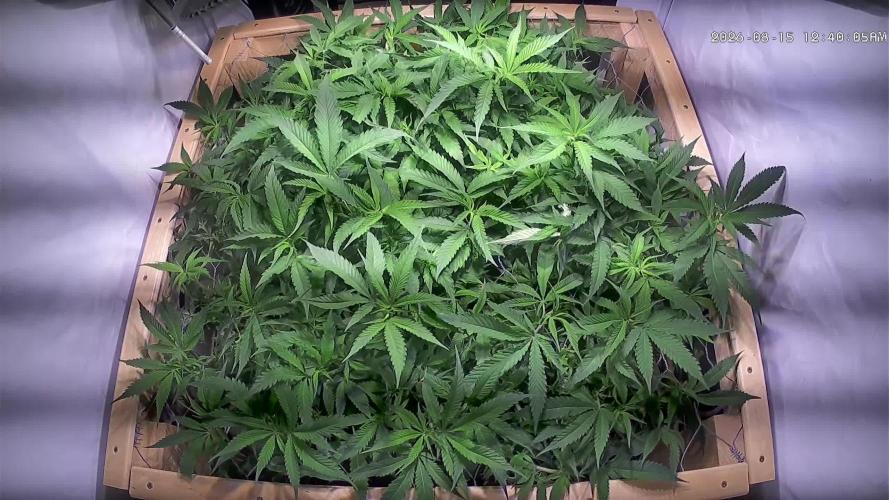
*Increased PPM from 800 to 850 *Week 2 of flowering tomorrow. *Out of the 4 only one looks like it’s more advance into flowering. *Did some Lolipoping.
Likes
23
Share
@Zuppler
Follow
🤤**Grow Report by Zuppler - Week 5 Flowering Phase** 🌅 Yooo, what’s good? Zuppler here with that Week 5 flowering update, straight from the capital. We’re deep in the game now, and these girls are lookin' like straight-up champs. Buds are swellin’ up nice, and the resin’s startin' to drip like syrup on pancakes, ya feel me? The canopy’s thick, them colas just stackin' higher every day. That front-left queen I mentioned last week? She’s still flexin’, lookin’ even better than before. Buds on her are fattenin' up like she knows she’s the star of the show. Definitely a keeper, no doubt about it. Environment’s still locked in tight, no changes on my end. Lights are sittin' right where they need to be, and them girls are lovin’ every minute of it. Advanced Nutrients still doin’ the trick, and the RO water’s keepin' everything clean and mean. Ain’t no issues here – just lettin’ the magic happen. Trichs are startin’ to cloud up, and the smell? Bruh, it’s gettin’ loud in here, like a bass drop in the club. We’re just lettin’ them do their thing now, and it’s lookin' like we’re on track for some serious heat. That front-left queen, she’s gonna be somethin’ special when it’s all said and done. Zuppler out. Stay hard!
Likes
13
Share
*english version below* **HydroLab – Blüte Woche 1: Der Stretch entfesselt & der Teppich lebt** Willkommen zurück im HydroLab, dem einzigen Ort, an dem Pflanzen schneller wachsen als meine Stromrechnung. Die 12/12-Umstellung liegt nun offiziell sieben Tage zurück – und die Damen haben das Memo verstanden. Der Stretch? Vollgas. Der angekündigte „Kräuterteppich“? Er ist da. Und er rollt sich gerade selbst aus. 🌿🔥 Systemstatus: Wissenschaftlicher Wahnsinn in Zahlen EC: stabil auf 1.5 Wasser: Vollentsalzt, nur noch 0.05 EC – so sauber, dass es vermutlich als „Destillat Light“ durchgeht CalMag: jetzt Pflicht! Leitungswasser war nett, aber wir gehen jetzt pro pH: von 5.8 hochdriftend bis 6.2, dann korrigiere ich Klima: kalt draußen → warm im Labor dank Luftentfeuchter + 130W IR-Heizung (Nachtschicht-Modus) Operation „Wurzel-Schutzschild“ Die Netpots haben ein Upgrade bekommen: Alufolie-Abdeckung! Nicht hübsch, aber verhindert sicher, dass irgendwo Licht in die Root-Zone kommt. (Hydrolab-Regel Nr. 18: Wenn’s reflektiert, funktioniert’s. 🤓) Pflanzenverhalten: Unkontrollierte vertikale Energie Ich habe in dieser Woche nichts geschnitten und die Mädels einfach machen lassen. Ergebnis: 🔬 Hypothese: „Sie werden etwas wachsen.“ 🔬 Ergebnis: Sie sind komplett durchgedreht. Der Stretch ist massiv, die Tops schießen überall nach oben, die Mitte wird dichter, und die ersten Blütenansätze zeigen sich bereits in voller, flauschiger Pracht. Die Mykos arbeiten im Untergrund weiter wie ein italienischer Straßenbau-Trupp auf Koffein: die Wurzeln sind dick, cremefarben und gesund. Labor-Kommentar Manchmal muss ein Wissenschaftler lernen, loszulassen. Und manchmal heißt das: „Ich lass sie einfach eine Woche wild wachsen und schaue später, was weg muss.“ Genau diese Methode wenden wir hier an. Aktuell sieht alles brutal vital, extrem dicht und herrlich chaotisch aus – genau wie ein Sativa-Scrog aussehen muss, bevor der Dompteur eingreift. Ausblick Nächste Woche geht’s ans Feintuning im Netz, am Lollipop wird nachjustiert und Bud Blood sollte sein Zauberwerk tun, damit sich das Ganze bald in ein Meer aus weißen Härchen verwandelt. Bis dahin: Das HydroLab beobachtet, misst, lacht – und füttert. 🌱⚗️😄 _________________________________________________________ **HydroLab – Bloom Week 1: Stretch Protocol Activated** Welcome back to the HydroLab, where the plants grow faster than my ability to explain what’s going on, and where chaos is considered a valid research method. The flip to 12/12 was seven days ago — and the ladies took that as a personal challenge. The stretch? Immediate and aggressive. The “herbal carpet” I predicted last week? Fully deployed. 🌡️ System Diagnostics EC: holding steady at 1.5 Water: ultra-clean, 0.05 EC from the deionization unit CalMag: now part of the baseline (unlike with tap water) pH: adjusted to 5.8, drifting naturally up to 6.2 before correction Climate: cold nights outside → warm enough inside thanks to a 130W IR heater + dehumidifier tag-team 🛡️ Root Protection Protocol I covered the pot tops with aluminum foil — not pretty, but absolutely effective at blocking any stray light from entering the root zone. HydroLab Law #7: If it looks improvised but works perfectly, it’s not a bug — it’s a feature. 🌱 **Plant Behavior Report: Unrestricted Vertical Ambition** This week I didn’t cut anything… And the plants responded with: “Okay, we’ll take over now.” The stretch is in full swing, tops are pushing upward everywhere, and the first flower sites are forming beautifully. The canopy is dense, lively, and wild — exactly what a sativa-leaning scrog looks like right before it becomes a jungle. Roots? A fluffy, creamy, active masterpiece. The mycorrhiza is clearly having the time of its life. 🔬 Researcher’s Note Sometimes science requires intervention. Other times… science requires stepping back, folding your arms, and whispering: “Let’s see what happens if I just don’t touch anything this week.” This was one of those weeks. And honestly? The system handled it better than expected. 🔭 Next Week’s Outlook canopy refinement begins lollipopping adjustments Bud Blood should fully kick in floral development expected to accelerate Until then: The HydroLab observes. The HydroLab measures. The HydroLab feeds. And the HydroLab cackles quietly in the corner. 🌿⚗️😄
Likes
105
Share
@BioBuds
Follow
FastBuds - Forbidden Runtz Showdown We started another grow. This time we are going to start off with 2 sets of two auto's, after which we will start in three regulars right away. So we will double use the 18-hour schedule and try to save power that way. In addition to this challenge, we are going to do a Runtz Showdown between two respected breeders with comparable strains. Her opponent will be... drumroll: the Runtz XL Auto by Sweetseeds. Let's see where this will bring us. We did some witchcraft since we sowed the seeds by moonlight, on Imbolc; the pagan day of celebrating Bridget, the Goddess of Spring, we dedicate this grow to her. We asked for abundance and health, love and happiness and put the seeds in the ground. The Soil Of course, we started in our trusty organic super soil or living soil, I will include the recipe again for anyone wanting to emulate it. The Light And to help us again to hopefully get way over 600 grams this grow with the total grow of autos and regulars, the SP 300 by Mars Hydro will be helping us out again! The Genetics Fastbuds Forbidden Runtz Taste: Earthy, Fruits, Sweet THC: Up to 26% CBD: < 1% Harvest EU Indoor: 450 – 550 gr/m2 Harvest US Indoor: 1.5 – 1.8 oz/ft2 Harvest EU Outdoor: 50 – 150 gr/plant Harvest US Outdoor: 2 – 5 oz/plant Size: XXL Height: 90 – 130 cm Height US: 35 – 51 inches Flowering: 9 weeks Room: Indoor/Outdoor Gender: Feminized Genes: Sativa 35%/Indica 65% Genetics: Forbidden Runtz Auto Autoflowering: Yes Thank you for checking out our new grow and for following! Big Hug Biobuds and Sunshine.
Likes
3
Share
Crecimiento espectacular! Siguen explotando en resina y cálices. Da gusto abrir el armario cada día y observar el desarrollo que tienen. Se les realizó una defoliación a medianos de semana. Ahora ya regamos solo con agua, controlando el pH para dejarlo a 6.2 y conseguir un ph residual de 6.5
Likes
3
Share
At the and of the week all lST supporting thenfs were removed: canopy is formed and all the stems are hardened. The progress is very slow, but I like how the plant looks, it seems to be healthy and has more flowering points than I've seen on any autos I grew before. I also adjusted the fertilizers ratios to get more optimal for flowering stage and added pH-down to improve the solution assimilation.
Likes
13
Share
@DreamIT
Follow
Sponsored by: 🏡GANJA FARMER SEEDS🏡-💡VIPARSPECTRA💡-💐GREEN BUZZ LIQUIDS💐-🛠️WEDRYER🛠️ 28/7 it shows some signs of deficiency but I check the soil before decanting and flowering 2/8 it is starting to lose color, my fault that I neglected it a bit in these days. let's see how it behaves when cutting and cloning. yeah __________________________________________ Personal advertising (contains affiliate links) __________________________________________ 🦄 Huge collection of exquisite genetics since 2009! Anonymous shipping! ✅https: //bit.ly/Ganjafarmer __________________________________________ Did you know that Green Buzz Liquids fertilizers are 100% vegan? A complete line of products ready to give the best to each of your plants! Visit the site and see my journals to see how they work 🦄 🤯 And with the code "dreamit" you will immediately receive a 15% discount on your purchases ✅https: //bit.ly/GreenBuzzLiquidsPro __________________________________________ 👀 Are you looking for a good lamp to start with? 👀 🌞Viparspectra has something more than the others, take a look at their site. ⏩ Use "GDVIP" for an extra discount or "DREAMIT3" for an extra 5 %% discount 👀 Search for it on Amazon ✅Amazon USA: https://amzn.to/30xSTVq ✅Amazon Canada: https://amzn.to/38udUVe ✅Viparspectra UE: bit.ly/ViparspectraUE ✅Viparspectra USA: bit.ly/ViparspectraUS ______________________________________________ 🌈 Tired of blowing on your weed hoping it dries quickly? Check out the Wedryer website! You will find a well-made accessory that will help your weed dry in just 8-10 days without the annoying risk of finding mold or other annoyances! (no affiliate links) ✅https: //bit.ly/Wedryer_ ______________________________________________ 📷🥇Follow the best photos on Instagram 🥇📷 https://www.instagram.com/dreamit420/ Backup ig https://www.instagram.com/dreamit4200/ 🔻🔻Leave a comment with your opinion if you pass by here🔻🔻 🤟🦄💚 Thank you and good growth 💚🦄🤟
Likes
9
Share
Se realiza transplante a maceta definitiva de 20 LT AIRPOT Sigue el riego día por medio
Likes
52
Share
Its time to prepare for war. *Blows bagpipe* FISH SH!T THE ORGANIC SOIL CONDITIONER (used twice before and always noticed instantly) Fish Shit is a living product! It provides a complex Microbial profile that includes thousands of different species of bacteria, fungi, and protozoa. This profile is closer to a natural ecosystem than anything you will find on the market. Fish Shit helps release essential oils and terpenes which contribute to the building of a myriad of flavonoids. Flavanoids play a key role in the development of the most potent aromas and tasteful flavors of a plant and its fruit. Fish Shit contains beneficial microorganisms that help plants maximize nutrient uptake. It does this by transforming nutrients into more usable forms and keeping these nutrients in the soil longer. During photosynthesis plants naturally produce exudates (chemicals that are secreted through their roots). Through these exudates, plants can attract the types of good bacteria that are beneficial to them at different points in their growing cycle. These good bacteria cover the roots and act as a barrier to the invasion of disease-causing organisms that may harm the plant. What Are Enzymes? Before we dive headfirst into how, exactly, enzymes can benefit cannabis plants, it helps to understand a little about what these microscopic proteins do. Essentially, enzymes facilitate chemical reactions. They do so by binding with a substrate and forming or breaking molecular bonds. In this context, the substrate is the molecule upon which an enzyme acts to boost the efficiency of a reaction. •substrate /sŭb′strāt″/ •noun •The material or substance on which an enzyme acts. A surface on which an organism grows or is attached. An underlying layer; a substratum. Enzymes are proteins with complex 3D shapes that feature regions called active sites. When the substrate binds to these active sites, it forms an enzyme-substrate complex that causes a chemical reaction to take place, temporarily changing the structure of the enzyme and ultimately causing molecules to either come together or break apart. As a result, molecular products are released, and the enzyme returns to its original shape. Specific enzymes are capable of binding with certain substrates, as the substrate fits into the active site more or less via a lock-and-key principle. Although, new research suggests a more accurate theory of "induced fit", in which enzymes and substrates undergo structural changes to facilitate the reaction. If you take the human body as an example, we have an abundance of enzymes in our saliva and digestive system. These molecules bind with substrates in these regions (food particles), working to break down the food we eat into usable parts before converting them to energy. Enzymes in cannabis work in a similar way to the example highlighted above. Typically, enzymes occur in soil naturally, but if your soil mix is lacking organic material, or you're growing hydroponically, then adding enzymes directly to the substrate is crucial. By using them in cannabis growing, enzymes not only help break down essential nutrients into smaller, more readily available pieces, but they also support the digestion of dead root cells, clearing a direct path for nutrients. Overall, enzymes make it easier for your cannabis plants to absorb all the elements they need to reach their full potential. For growers, a plant that reaches its full potential means a bucketload of juicy buds come harvest. This is essential if you want to reuse a pot with old systems left over like mine. Common plant enzymes include: •Cellulase •Xylanase •Beta-glucosidase •Hemicellulase •Amidase Amino acids are a crucial, yet basic unit of protein, and they contain an amino group and a carboxylic group. They play an extensive role in the gene expression process, which includes an adjustment of protein functions that facilitate messenger RNA Nitrogen, phosphorus, and potassium are the three main pillars of nutrient solutions and fertilizers, but there are countless other nutrients that your cannabis plants need to produce the best possible harvest. Amino acids are one of them. You may have noticed that amino acids get a lot of attention from bodybuilders and other athletes. That’s because they play a key role in the synthesis of protein, which, as you probably know, is super important for sports recovery and muscle growth. Amino acids are the building blocks of protein and the foundation of both plant and animal life. But what do amino acids do for cannabis? WHY IS PROTEIN IMPORTANT FOR CANNABIS? Just like proteins are important for the human body, they are equally important for the growth and development of plants. For example, proteins help plants: •Facilitate the growth of intracellular plant structures •Promote energy generation •Stimulate metabolic processes •Facilitate the absorption and transportation of nutrients So, where do plants get these vital proteins from? Well, unlike humans, plants can’t source proteins or amino acids from other organisms. Instead, they need to create their own amino acids, and then use these to build protein. That's why gardeners, much like athletes, go wild for amino acid supplements. Amino acids help plants by… • Increasing their production of chlorophyll, which ultimately improves their ability to photosynthesize • Serving as an easily absorbable form of nitrogen • Stimulating the synthesis of key vitamins • Improving their resistance to pests and diseases • Boosting the strength of their cells Amino acids also serve as the precursors to auxins, a group of plant hormones produced in the meristems—the apex of the stems where new leaves and stems are born. Auxins play a key role in the plant, activating genes for plant growth and development by triggering a multitude of vital plant functions. In other words, they determine what its size and architecture will look like. Auxins influence the development of branches, flowers, and roots, and even help to regulate the photoperiod response of the plant. Some amino acids, like cysteine, also work together with antioxidants like glutathione to help cannabis plants deal with oxidative stress, which can be caused by high-intensity lighting, some nutrient solutions, and high levels of CO₂. Unlike humans, plants can synthesize all the amino acids they need to survive and develop properly. Unfortunately, however, amino acid synthesis is a really high-energy process, and plants may struggle to produce enough amino acids when exposed to stress. WHAT FACTORS AFFECT A PLANT’S ABILITY TO SYNTHESISE AMINO ACIDS? Any kind of stress can affect a plant’s ability to produce enough amino acids. This includes: • Drought • Temperature extremes • Poor soil health • Pests • Diseases • Poor lighting • Lack of space • Poor root health WHAT DOES ALL OF THIS MEAN FOR WEED PLANTS? If you want to push your plants to their extreme in terms of floral growth and resin production, you should look into amino acid fertilizers. By making amino acids readily available to your plants, they’ll be able to use crucial energy to grow and bloom, rather than focusing on synthesizing amino acids themselves. Game of Inches, this is another Plants can absorb amino acids via their roots and leaves. They can also benefit from amino acids during both their vegetative and flowering phases. The fastest way for plants to absorb amino acids is via their leaves. The foliar application of amino acids is believed to improve the transportation of nutrients, increase transpiration, and boost photosynthesis. Hence, I recommend feeding your plants with foliar amino acid fertilizers. When doing so, however, carefully measure the amount of fertilizer you use, as—like with any nutrient—overfeeding can damage your plants. FOLIAR FEED AND SOIL SOAK • 1 crushed queen anne carrot • Add 2 tbsp of NPK Raw powdered water-soluble cane molasses • 20ml h2o2 • 1 crushed radish • 0.25 tsp NPK Enzymes • 0.25 tsp NPK Amino Acids • 50ml coconut water ( nature's own amniotic fluid packed with amino, enzymes ) + The sound of songbirds. Onto the predators 1250 -Green Lacewings Lacewings are extremely voracious predatory insects that feed on several pests. In adulthood, it feeds on pollen and nectar. In the larval stage, it feeds on aphids, thrips, and mealybugs at all stages of growth. It can also attack spider mites in moderate quantities. It is initially an aphid predator, but very effectively controls thrips and mealybugs infestations. It is so voracious that in the absence of prey, it will feed on its congeners. Lacewings are cannibalistic if there is no food available for them. It is therefore important to introduce them into an infestation situation, and not just preventively. •congener /kŏn′jə-nər/ •noun •A member of the same kind, class, or group. •An organism belonging to the same taxonomic genus as another organism. •A thing of the same kind as. or nearly allied to, another; specifically, in botany and zoology, a plant or an animal belonging to the same genus as another or to one nearly allied. Ideal temperature 20°C – 26°C Ideal humidity 60% – 70% Predatory stage life cycle 21 days Introduction rate 4 weeks Storage Refrigerator Use Immediately Are there any specific instructions on how to use this predator? Lacewings are available on small paper cards that you can hang to plant stems. On the cards are dozens of eggs ready to hatch. There are also sterile eggs they can feed on once they have hatched before they are ready to disperse in the foliage. It is important to use them quickly upon receipt to avoid cannibalism. If you don't use them right away, you can store the cards in the refrigerator for 24 to 48 hours to prevent the eggs from hatching too quickly. Avoid storing them for longer than this or you risk losing eggs. 1250 eggs are divided into 7.5 cards, 2500 eggs on 15 cards, and 5000 on 30 cards. The application rate is one card per square meter of growing surface. Is this predator best used for preventive or curative treatments? Lacewings are used as a curative solution. Anything else I should know? Lacewing eggs hatch approximately 24-72 hours after the cards are exposed to room temperature. When they emerge, the lacewings are just 1.5-2 mm long. They are very small so they are difficult to see. Once hatched, they will stay on the cards for a few hours and then disperse in the foliage. You quickly lose sight of them if you have not witnessed the hatching. They then live in the foliage for about 3 weeks. Often, you will see them towards the end of their larval cycle. After feeding for 3 weeks, they will triple and even quadruple in size. At that point, they are easier to see. But they remain very discreet insects, it is not abnormal not to see them. Egg carcasses left behind on the cards do not disappear after the hatching has happened. It's normal to see eggs still on the cards. Visually it is very similar before and after hatching. Also, on the boxes, there are sterile ephestia eggs which are used to feed the lacewings once hatched. Not all lacewing eggs are viable either. Only a certain percentage of lacewing eggs will hatch. Once hatched, the eggs are white. You can observe this using a magnifying glass. With, 5000 Stratiolaelaps Scimitus It is used to prevent or control thrips pupae, fungus gnats larvae, and root mealybugs in the soil. It can also be used for red mites in bird farms or hen houses. The adult is about 1 mm long and is medium brown with a beige triangle on its back. Another fun fact about them is they can survive without prey. They can eat algae and plant debris. This is why they can reproduce and stay in plants for long periods. Ideal temperature 15°C – 23°C Predatory stage life cycle 18 days Introduction rate 2 weeks Storage Room temperature Use Within one week Are there any specific instructions on how to use this predator? Sprinkle directly on the growing media. They can live in all types of substrates like potting soil, coconut fiber, rock wool, cedar mulch, etc. Stratiolaelaps establish easily so they are permanently fighting pests. One introduction is generally enough unless you have an infestation. In this case, introduce them at least twice at a 2-week interval for best results. If you grow your plants in a 100% mineral substrate, it will have to be released more often since there is less organic matter than in traditional soil. Do I need to take any specific precautions? Stratiolaelaps breed in the top layer of the soil. So it is important not to disturb them in the first days following their introduction. They don't like temperatures below 8 ° C. So be sure not to introduce them in a water-saturated or cold environment. Release them 24-48 hours after your last watering. They are very sensitive to chemical acaricides and diatomaceous earth. These methods are incompatible with their use.
Likes
229
Share
Hi everyone 😁 I would like to thank you all fellow growers and breeders for such a great support on this journey. Thank you Grow Diaries and Green House Seeds. Without you all this wouldn't be possible. Love you all First ever recorded diary so don't know where to even start 😅 I am returning to growing after many many years of break. This is my first ever experience with autoflowers, scrog, lst, led and such tiny grow space. Choice of strain - Big Bang Auto from Green House Seeds. I have run so many strains from this seed bank in the past and I was always happy with the final outcome. Was looking for indica dominant strain, fast flowering cycle and very important heavy yields on small spaces. Again thank you GHSC in very happy of choosing this strain. Little bit about my cabinet. External dimensions: 64 x 50 x 114 cm (W x D x H) Growing area: 55 x 47 cm cm (0.26 m2) Panel based on SAMSUNG LM301B diodes Spectrum: Samsung LM301B – 5000 x72 Samsung LM301B – 3000k x136 Samsung LM301B – 660nm x9 Samsung LM301B – IR 760nm x1 Regulation in the range of 20W - 110W - Meanwell XLG 100-H-AB PPF 300 umol/s PPFD 890 mol/m2/s @30c Total of 6 adjustable fans, 4 exhaust fans 4 modes - silent/drying, vegetation, flowering, full power Active carbon mass in the filter 2kg Absolutely love my grow cabinet. Thinking of next build already. My grow 3 beautiful ladies - Nuna, Luna and Sweet Mary Jane. This was a pleasure experience growing autos for the first time. All 3 ladies on the end developed perfectly. Nuna, left corner lady- tall and beautiful. She had some problems to switch to flowering and was even considering removing her but very happy that I was patient enough and turned great. Luna, right corner lady - have to say she is the queen. She has the most heavy buds from all, the most. colorful. Her wet weight was 420g, can't say how much of dry but guessing approx. 100g Sweet Mary Jane, front seat lady. I think she was the most pleasant to grow of her location but due to no other spare space for drying I belive that I have harvested her at least a week to early. If keep longer I belive she could be the most yielder from all 3. Thank you all for all the support, help, comments, likes, messeges. Love you all 💚💚💚 Will update this diary in some time and when puff perfectly cured 😎 Peace and love ✌️💚
Likes
49
Share
@Roberts
Follow
The Mandarin Squeeze sisters have made contact with the solution. They are both looking healthy, but are a bit behind the others in the grow room. I plan to lst them apart from one another they get bigger. Nothing more to report. Thank you Spider Farmer, and Terpyz mutant Genetics. 🤜🏻🤛🏻🌱🌱🌱 Thank you grow diaries community for the 👇likes👇, follows, comments, and subscriptions on my YouTube channel👇. ❄️🌱🍻 Happy Growing 🌱🌱🌱 https://youtube.com/channel/UCAhN7yRzWLpcaRHhMIQ7X4g
Likes
6
Share
Week 2 I got Pistils showing The New Check out my other Dairies (Gelato Cake & The New) Nutrients (floraflex) are in Grams/gal* Light: HLG Follow my IG @therealterpio for more updates & content! I tend to low feed the first 2 weeks then ramp it up a little later into flower
Likes
151
Share
@LGreen
Follow
Schönen Sonntag euch 😊 🌿 Wochenupdate Alles läuft weiterhin stabil =) Mein Fokus liegt aktuell auf dem Messen und Erhalten der Nährstofflösung. Bulking hat begonnen und ich freu mich jedes Mal, wenn ich das Zelt aufmachen kann =D Wer den Run hier mitliest, hat mitbekommen, dass ich mich bewusst für einen relativ hohen Start-EC entschieden habe. Das lag zum einen am Bedarf der Genetiken, die sich im Bereich zwischen Middle und Heavy Feed bewegen (wobei der Cross rückblickend nicht so der schlauste Take war 😅). Zum anderen lag es daran, dass ich recht viel Reservoirvolumen habe und möglichst wenige Eingriffe geplant waren =) Ziel war es dabei, jederzeit eine Mindestverfügbarkeit zu gewährleisten. Durch dieses, nennen wir es mal, frühe Gewöhnen – natürlich immer mit Blick auf die Reaktion der Ladies, konnte ich den EC komplett stressfrei bis 2,3 anheben. Danach war für mich Schluss, weil ich ehrlich gesagt keinen Mehrwert darin erkannt habe, sie nicht verheizen wollte und vor allem die Messungen gezeigt haben, dass der selektive Wasserverbrauch zu heftige Maße angenommen hat.. Sprich: Die Lösung selbst konzentriert sich über Zeit zu stark und der EC steigt in zu großen Schritten. Ich habe also damit begonnen, ab diesem Peak-Point den reinen Wasserverbrauch – Achtung, festhalten =DD mit Cal/Mag versetzt wieder aufzufüllen. In den Messungen hat sich dabei ein klares Pattern abgezeichnet 📊 Über 24 Stunden zeigt sich ein leichter Anstieg im EC, bedingt durch primären Wasserverbrauch, bei gleichzeitig sinkendem pH-Wert. Parallel habe ich natürlich immer beobachtet, wie die Ladies auf die Verläufe reagieren =) Sobald ich sehe, dass sich dieses funktionierende Pattern minimal verschiebt, in meinem Fall ein ansteigender EC bei gleichzeitig steigendem pH, refreshe ich 30 Liter der Lösung . Nach dem 30-Liter-Refresh fällt das System wieder in sein vorheriges, stabiles Pattern zurück. Für mich ist das ein klarer Hinweis darauf, dass der Mini-Shift das erste Anzeichen eines beginnenden Ungleichgewichts war =) Ab hier geht’s wieder weiter im Loop 🔄 Ich habe hier echt für mich mitgenommen, dass ein Teil-Refresh ein gutes Diagnose-Werkzeug sein kann. Wenn sich Verläufe nur minimal anders verhalten als gewohnt und man keine klare Ursache validieren kann, kann ein moderater Refresh dabei helfen zu prüfen, ob das System wieder in sein normales Uptake-Pattern zurückfindet. Normalisiert sich das Verhalten danach, kann man unter diesen konstanten Bedingungen davon ausgehen, dass die Ursache in der Lösung lag und nicht bei den Plants oder im Klima 🌸 Pflanzenstatus & Training Endlich ein spannenderer Teil zu berichten =D Das ganze Zelt riecht einfach wie ein Traum, ich würd da am liebsten den ganzen Tag davor sitzen =)) 🌿 Blueberry Cupcake frostet schön weiter ❄️ Bildet aktuell schön homogene Sites und zeigt sich als echt solide Genetik 💪 Sie macht viel mit und lässt sich wirklich gut trainieren. Meine Freundin sagt, die Gute riecht extrem nach Blaubeere – surprise, surprise =D Ich finde eher, sie riecht wie Blaubeerquark? =D Bin wirklich gespannt. Purpz entwickelt sich auch wirklich traumhaft 😊 Schöne kleine Golfbälle, allesamt synchron im Aufbau. Die Trichombildung ist mittlerweile auf Augenhöhe mit BBCC und wirkt nur durch die hellere Pflanzenfarbe selbst weniger spektakulär ✨ Vom Geruch her sehr fruchtig-süßlich, klar in den hellen Noten, aber nicht wirklich definierbar 🍬 Meine Freundin sagt, sie stinkt nach „Gras“ 😂.. Notorious THC frostet aktuell etwas hinterher, was bei den Infos, die ich dazu habe, auch zu erwarten war. Das Blattbild irritiert mich nach wie vor ein wenig, aber da sie sich sichtbar weiterentwickelt und sonst alles sauber läuft, schiebe ich das aktuell auf die Genetik =) Deckt sich auch mit den Infos drüber. Vom Aufbau her ist sie absolut gleichauf mit ihren Schwestern. Sie riecht ziemlich kush-mäßig, musste direkt an so einen dumpfen, aber geilen OG-Smoke denken🔥 =D Meine Freundin wollte ich hiermit nicht belasten – Dessert-Strains only ist hier die Erkenntnis 😄 Guzzlerz kommt auch langsam. Ihre Sites sind recht zart im Vergleich und leider auch deutlich weniger. Sie frostet mittlerweile und ist für ihren Stand synchron gegangen =D ❄️ Ihre Schwestern sind einfach zu dominant – man sieht, das war der schwächste Seed und das zieht sich 😬 Die Ansätze sind trotzdem sehr vielversprechend und in Zukunft gehe ich das auf jeden Fall nochmal an 💚 ⚙️ System Top-Ups erhalten weiterhin die Lösung =) 🔧 1,20 kPa VPD 700–800 ppm CO₂ im Durchschnitt EC 2.000–2.100 µS/cm 1.000 PPFD Danke mal wieder für eure Zeit 😊 Auf ein gutes neues Jahr und feiert schön 🎉🥂
Likes
6
Share
@GrowTF
Follow
Viel weggeschnitten, wächst sehr gut
Likes
27
Share
As you can see this poor girl had a hard night last week but we are happy to say that she survived it. We did have to top most of the branches because they had died off but she is recovering very well. This is going to be a bushy plant and we look forward to seeing her bloom, at the moment we are sorting out placement of all of our ladies! It is soon time and we are very excited! Once we transplant all feeding info will be recorded, it’s been a muddled winter season to say the least!
Likes
8
Share
I messed up big on this one so I think I was very lucky to get what I did...she had problems the moment I switch to 12/12 she even went 3 weeks with no watering at one point so I decided to just flush and chop so I could Lower the light for the purple glue