


Likes
Comments
Share


Likes
13
Share


@Skinnytalls420
Follow
Day 1- 08/04/22 14:30pm Germination Time!!!!! Here we have 21 wonderful seeds from the amazing fastbuds!!!! Placed in a glass of water for 18-20hours!!! So excited!!!!
-
Day 2-09/04/22 seeds have been placed on a wet paper towel!!!!!
-
Day 3-10/04/22 getting the pots filled with soil ready for planting tonight or tomorrow!!!!!
-
Day 4-11/04/22 most of the seeds had popped last night so I planted most of them and the rest I planted this morning!!! 1 seed out of the 21 didn’t pop so germinating another to make it back up to 21!!!! So there all in the tent except 1!!!!
-
Day 5-12/04/22 one has come through so far and should be planting the last seed tonight!!!! A few more should pop out by tomorrow!!!!
-
Day 6-13/04/22 14 out of the 21 have come out so far!!!!
-
Day 7-14/04/22. 19 of the 21 have come through!! I think one isn’t going to come through so I’m germinating another seed to replace it and if the other one doesn’t come through tomorrow I’ll germinating another one to replace that Aswell!!!.

Likes
2
Share

@Ensign420
Follow
|»» LOG DISCLAIMER: Not intended as a grow guide. Grow log entries are usually posted 3-4 weeks later and are for my learning reference. ««|
Introduction - Week 24 Summary -
Ensign's log, stardate 17765.6,
Another grow week.
In the main tent, harvested all plants and the drying process has already begun.
In the veg tent, been mainly tending to solo cup waterings.
Onwards to next week.
[START OF WEEK 24]
==========================================================
---------- [ 3x3 VEG TENT – GR3 ] ----------
Heady OG BX1 #1 – WEEK 16 – Full Veg
TKO #2 – WEEK 06 – Full Veg
Chill Out OG #3 – WEEK 13 – Full Veg
Chill Out OG #2 – WEEK 09 – Full Veg
---------- [ 4x4 MAIN TENT – GR30 ] ----------
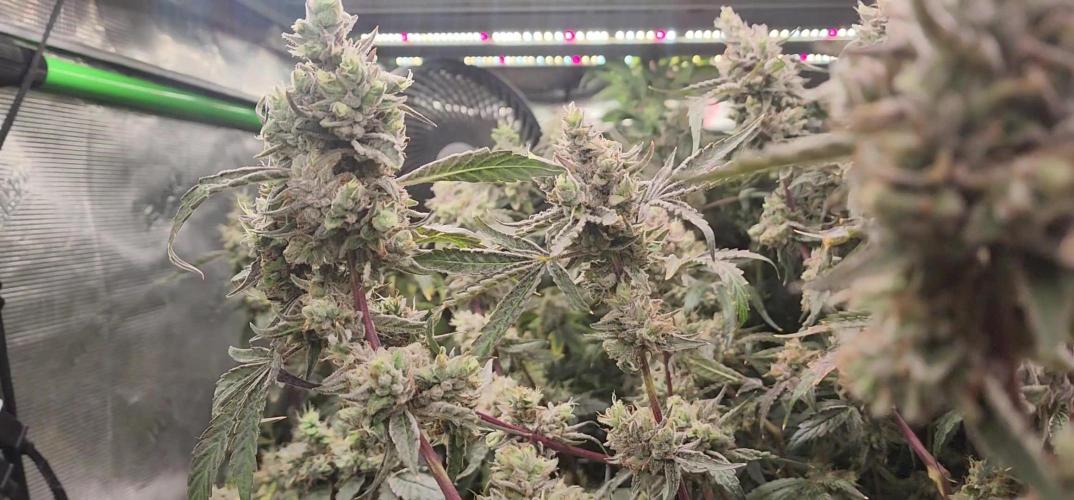
Chill Out OG #2 – WEEK 24 – HARVEST
TKO #2-2 – WEEK 18 – HARVEST
Heady OG BX1 #1 – WEEK 20 – HARVEST
04/13/26 → 04/19/26 [WEEK 24]
This Week's Estimated Goals
----------------------------------------------------------------------------------------------
DLI: ~16 mol/m²/d
PPFD: ~400 μmol/m²/s
VPD: ~1.2 kPa
This Week's Meter Readings & Averages
----------------------------------------------------------------------------------------------
Light On/Off: 16:00 - 10:00 | Wattage: ~268.6W [LV03]
Distance From Canopy: ~[19”, 3”, 3”]
Plant Height: ~[33”, 49”, 49”]
Max Plant Height: ~52” [Lamp-to-Soil Distance]
DLI: ~14.73 mol/m²/d
PPFD: ~372 μmol/m²/s
VPD: ~0.74 kPa
Soil %: ~[52.0, 42.9, 48.6, 44.3, 50.3, 56.0, 51.9, 58.1, 52.1, 97.9]
==========================================================
Day 01 - Monday - 04/13/26 - Total Days: 159
-----------------------------------
Daily Averages ~[+01:00]
- Temps: 76.6°F [24.8°C]
- Humidity: 80.8%
- VPD: 0.59 kPa
- Soil %: [52, 44, 48, 45, 51, 56, 51, 58, 51, 94]
-----------------------------------
- [21:37]: Night check on the 4x4 tent.
--- Wow 3 more days until harvest and the garden is looking great.
--- Bud growth is ripening and terpenes are louder than ever.
--- The under canopy is also looking clean and all pots look good.
- [21:40]: Checked the Ecowitt soil moisture sensor data:
------------------ [ 3x3 VEG TENT – GR3 ] ----------------
------ 52% - [CH01 » M1 » VBL – Heady OG BX1 #1-1]
------ 44% - [CH02 » M2 » VBR – TKO #2]
------ 48% - [CH03 » M3 » VFL – Chill Out OG #3]
------ 45% - [CH04 » M4 » VFR – Chill Out OG #2]
----------------- [ 4x4 MAIN TENT – GR30 ] ---------------
------ 50% - [CH05 » P1 » FLT – Chill Out OG #2]
------ 56% - [CH06 » P1 » FLB – Chill Out OG #2]
------ 51% - [CH07 » P2 » BLT – TKO #2-2]
------ 58% - [CH08 » P2 » BLB – TKO #2-2]
------ 51% - [CH09 » P3 » FRT – Heady OG BX1 #1]
------ 95% - [CH10 » P3 » FRB – Heady OG BX1 #1]
--------- Veg: ~38%-45% | Flower: ~45%-55%
--------- General: ~30% [Dry] «| ~45-60% [Moist] |» ~70% [Wet]
- [21:47]: Checked the 3x3 veg tent.
--- Veg garden is looking good.
--- Two solo clones need watering.
- [21:52]: Here are the starting initial watering ranges:
------ Chill Out OG #3 » 260.0g → 335.3g
------ Gorilla Goat #1-2 » 294.4g → 325.4g
--------- General Weight Range: [Dry] ~275g «| [Dryback] ~300g |» ~325g-400g [Wet]
--- Both cups were last watered 5 days ago.
--- Took the starting weight of both clones before watering,
------ Chill Out OG #3 » 294.3g
------ Gorilla Goat #1-2 » 300.8g
--- While on a scale,
--- Evenly misted the top of both cups with RO water.
--- Did not spray the top growth.
--- Misted 10-20 sprays. Waited a moment, then misted again.
--- Repeated this process until both cups weighted at least 300g.
--- There was no runoff.
- [22:08]: Took the saturated weight of both cups after watering,
------ Chill Out OG #3 » 345.6g
------ Gorilla Goat #1-2 » 245.5g
--- Updated the wet weight and watering dates for both cups.
--- Placed both cups back into the tent.
--- Veg cuttings for the next grow cycle are looking good.
--- Misted the top growth with RO water.
- [22:18]: Checked the humidifiers.
--- Tanks are still full and no leaks found.
Day 02 - Tuesday - 04/14/26 - Total Days: 160
-----------------------------------
Daily Averages ~[+01:00]
- Temps: 76.2°F [24.6°C]
- Humidity: 80.7%
- VPD: 0.59 kPa
- Soil %: [52, 43, 49, 45, 50, 56, 52, 57, 52, 96]
-----------------------------------
- [21:13]: Night check on the 4x4 tent.
--- Garden is looking and smelling great.
--- Terpenes are definitely getting louder and growth is ripening nicely.
--- The under canopy also looks good.
- [21:18]: Checked on the BluMat soil moisture sensors:
------ Chill Out OG #2 » 63mbars
------ Heady OG BX1 #1 » 57mbars
------ TKO #2 » 90mbars
--------- Watering Range: [Too Wet] ~25mbars «| [Ideal Target] ~40-80mbars |» ~125mbars [Too Dry]
--------- BluMat Max Values: [10mbars «||» 750mbars]
- [21:23]: Checked the Ecowitt soil moisture sensor data:
------------------ [ 3x3 VEG TENT – GR3 ] ----------------
------ 52% - [CH01 » M1 » VBL – Heady OG BX1 #1-1]
------ 43% - [CH02 » M2 » VBR – TKO #2]
------ 47% - [CH03 » M3 » VFL – Chill Out OG #3]
------ 44% - [CH04 » M4 » VFR – Chill Out OG #2]
----------------- [ 4x4 MAIN TENT – GR30 ] ---------------
------ 51% - [CH05 » P1 » FLT – Chill Out OG #2]
------ 56% - [CH06 » P1 » FLB – Chill Out OG #2]
------ 52% - [CH07 » P2 » BLT – TKO #2-2]
------ 58% - [CH08 » P2 » BLB – TKO #2-2]
------ 51% - [CH09 » P3 » FRT – Heady OG BX1 #1]
------ 96% - [CH10 » P3 » FRB – Heady OG BX1 #1]
--------- Veg: ~38%-45% | Flower: ~45%-55%
--------- General: ~30% [Dry] «| ~45-60% [Moist] |» ~70% [Wet]
- [21:27]: Checked the 3x3 veg tent.
--- Veg garden is looking great.
--- Three solo clones need watering.
- [21:35]: Here are the starting initial watering ranges:
------ Heady OG BX1 #1-2 » 255.4g → 335.4g
------ TKO #2 » 252.5g → 335.5g
------ Gorilla Goat #1-2 » 294.4g → 325.4g
--------- General Weight Range: [Dry] ~275g «| [Dryback] ~300g |» ~325g-400g [Wet]
--- All cups were last watered 2-6 days ago.
--- Took the starting weight of all clones before watering,
------ Heady OG BX1 #1-2 » 292.9g
------ TKO #2 » 290.3g
------ Gorilla Goat #1-2 » 287.4g
--- While on a scale,
--- Evenly misted the top all cups with RO water.
--- Did not spray the top growth.
--- Misted 10-20 sprays. Waited a moment, then misted again.
--- Repeated this process until all cups weighted at least 300g.
--- There was no runoff.
- [21:57]: Took the saturated weight of all cups after watering,
------ Heady OG BX1 #1-2 » 365.4g
------ TKO #2 » 365.4g
------ Gorilla Goat #1-2 » 365.4g
--- Updated the wet weight and watering dates for each cup.
--- Placed all cups back into the tent.
--- Cuttings in the propagation tray look good.
- [22:08]: Checked the humidifiers.
--- Tanks are still full and no leaks found.
--- Oh yea,
--- Tomorrow is Harvest Day.
Day 03 - Wednesday - 04/15/26 - Total Days: 161
-----------------------------------
Daily Averages ~[+01:00]
- Temps: 76.5°F [24.7°C]
- Humidity: 78.7%
- VPD: 0.66 kPa
- Soil %: [52, 43, 48, 44, 51, 56, 52, 57, 52, 96]
-----------------------------------
- [09:12]: Harvest Day.
--- Before harvesting, adjusted the tent environment for drying.
--- Within the AC Infinity App,
--- For the Main Tent [4x4] controller,
--- Switched the schedule from 'Flower [12/12]' to 'Drying [0/24]'
--- Also verified the initial settings for each device were correct for drying:
------ GROW LIGHT (MARS HYDRO FC-6500):
--------- The Mode is set to ‘OFF MODE’ (temporarily set to ‘ON MODE’ during checkups)
--------- The MAX value is set to 0 (temporarily set to 1 during checkups)
------ EXHAUST FAN (AC INFINITY CLOUDLINE T6):
--------- The Mode is set to ‘CONTINUOUS VPD’
--------- The VPD target value is set to 1.3kPa
--------- The MIN/MAX values are set to 0/5
--------- The VPD Dynamic Transition buffer value is set to 0.2kPa
------ HUMIDIFIER (AC INFINITY CLOUDFORGE T7):
--------- The Mode is set to ‘CONTINUOUS VPD’
--------- The VPD target value is set to 1.3kPa
--------- The MIN/MAX values are set to 0/8
--------- The VPD Dynamic Transition buffer value is set to 0.2kPa
------ HEATER (AC INFINITY THERMOFORGE T3):
--------- The Mode is set to ‘CONTINUOUS TARGET’
--------- The Temperature target value is set to 60°F
--------- The MIN/MAX values are set to 0/8
--------- The Temperature Dynamic Transition buffer value is set to 2°F
--- Since heat is still my weakest link with an average room temperature of 80-85°F, will continue to use VPD (1.3 kPa) to help to control drying for 10-14 days. This should keep humidity levels around 60-65% which is going to have to be good enough.
--- Plan to check daily and will adjust VPD levels as needed.
- [09:25]: Time to start the harvest.
--- Using a pair of scissors, cut the scrog strings and tried to remove all I could.
--- Then chopped and harvested all three plants.
--- Removed all plants and gently stacked them in a pile on top of flattened paper bags.
--- Then defoliated each plant one at a time (outside the tent) using a pair of trimmers.
--- Removed the large fan leaves.
--- Once defoliated, hung each plant upside-down in the tent.
--- Chill Out OG #2 and TKO #2 were able to be whole plant hung.
--- For Heady OG BX1 #1, had to break her down into several sections.
- [12:23]: Done.
--- Will use the bowl trimmer for dry trimming later.
--- Once everything is fully dried, will do a final dry trim before placing and curing in glass mason jars.
--- Leaving the soil in the tent for drying.
--- Everything will hang with the oscillating fans left ON to circulate the air.
--- The bottom (6in) fan is set to a medium speed (5 out of 10) and pointed down towards the floor.
--- The top (9in) fan is set to a medium/high speed (8 out of 10) and pointed up towards the ceiling.
- [17:12]: Checked the Ecowitt soil moisture sensor data:
------------------ [ 3x3 VEG TENT – GR3 ] ----------------
------ 52% - [CH01 » M1 » VBL – Heady OG BX1 #1-1]
------ 43% - [CH02 » M2 » VBR – TKO #2]
------ 48% - [CH03 » M3 » VFL – Chill Out OG #3]
------ 44% - [CH04 » M4 » VFR – Chill Out OG #2]
----------------- [ 4x4 MAIN TENT – GR30 ] ---------------
------ 51% - [CH05 » P1 » FLT – Chill Out OG #2]
------ 56% - [CH06 » P1 » FLB – Chill Out OG #2]
------ 52% - [CH07 » P2 » BLT – TKO #2-2]
------ 58% - [CH08 » P2 » BLB – TKO #2-2]
------ 54% - [CH09 » P3 » FRT – Heady OG BX1 #1]
------ 96% - [CH10 » P3 » FRB – Heady OG BX1 #1]
--------- Veg: ~38%-45% | Flower: ~45%-55%
--------- General: ~30% [Dry] «| ~45-60% [Moist] |» ~70% [Wet]
- [18:58]: Checked the 3x3 veg tent.
--- Veg garden is looking healthy and next grow cycle’s cuttings are looking good.
- [19:04]: Checked the humidifiers.
--- Tanks are still full and no leaks found.
Day 04 - Thursday - 04/16/26 - Total Days: 162
-----------------------------------
Daily Averages ~[+01:00]
- Temps: 77.2°F [25.1°C]
- Humidity: 75.8%
- VPD: 0.77 kPa
- Soil %: [52, 43, 49, 44, 50, 56, 52, 58, 53, 99]
-----------------------------------
- [16:04]: Evening check on the 3x3 veg tent.
--- Veg garden is looking good.
--- Two solo cups need watering.
- [16:47]: Here are the starting initial watering ranges:
------ Heady OG BX1 #1-2 » 255.4g → 335.4g
------ Gorilla Goat #1-2 » 294.4g → 325.4g
--------- General Weight Range: [Dry] ~275g «| [Dryback] ~300g |» ~325g-400g [Wet]
--- Both cups were last watered 2 days ago.
--- Took the starting weight of both clones before watering,
------ Heady OG BX1 #1-2 » 288.2g
------ Gorilla Goat #1-2 » 291.9g
--- While on a scale,
--- Evenly misted the top of both cups with RO water.
--- Did not spray the top growth.
--- Misted 10-20 sprays. Waited a moment, then misted again.
--- Repeated this process until both cups weighted at least 300g.
--- There was no runoff.
- [17:03]: Took the saturated weight of both cups after watering,
------ Heady OG BX1 #1-2 » 265.4g
------ Gorilla Goat #1-2 » 365.4g
--- Updated the wet weight and watering dates for both cups.
--- Placed both cups back into the tent.
--- Rooting cuts in the propagation tray are looking good.
- [17:15]: Checked the 4x4 tent.
--- Day 1 of drying and everything is looking good.
- [17:19]: Checked the Ecowitt soil moisture sensor data:
------------------ [ 3x3 VEG TENT – GR3 ] ----------------
------ 53% - [CH01 » M1 » VBL – Heady OG BX1 #1-1]
------ 43% - [CH02 » M2 » VBR – TKO #2]
------ 47% - [CH03 » M3 » VFL – Chill Out OG #3]
------ 44% - [CH04 » M4 » VFR – Chill Out OG #2]
----------------- [ 4x4 MAIN TENT – GR30 ] ---------------
------ 50% - [CH05 » P1 » FLT – Chill Out OG #2]
------ 56% - [CH06 » P1 » FLB – Chill Out OG #2]
------ 52% - [CH07 » P2 » BLT – TKO #2-2]
------ 58% - [CH08 » P2 » BLB – TKO #2-2]
------ 53% - [CH09 » P3 » FRT – Heady OG BX1 #1]
------ 100% - [CH10 » P3 » FRB – Heady OG BX1 #1]
--------- Veg: ~38%-45% | Flower: ~45%-55%
--------- General: ~30% [Dry] «| ~45-60% [Moist] |» ~70% [Wet]
--- Hmm. Even though the front right’s bottom sensor is at 100%, the tent’s floor is dry.
--- Should not be an issue, but will continue to check for flooding.
- [17:34]: Checked the humidifiers.
--- Tanks are still full and no leaks found.
Day 05 - Friday - 04/17/26 - Total Days: 163
-----------------------------------
Daily Averages ~[+01:00]
- Temps: 76.5°F [24.7°C]
- Humidity: 73.6%
- VPD: 0.82 kPa
- Soil %: [52, 43, 49, 44, 50, 56, 52, 58, 52, 100]
-----------------------------------
- [21:33]: Evening check on the 3x3 veg tent.
--- The veg garden is looking healthy.
--- Heady OG BX1 needs watering.
- [21:41]: Here is the starting initial watering range:
------ Heady OG BX1 #1-2 » 255.4g → 335.4g
--------- General Weight Range: [Dry] ~275g «| [Dryback] ~300g |» ~325g-400g [Wet]
--- Been a day since the last watering.
--- Took the starting weight before watering,
------ Heady OG BX1 #1-2 » 292.8g
--- While on a scale,
--- Evenly misted the top of the cup with RO water.
--- Did not spray the top growth.
--- Misted 10-20 sprays. Waited a moment, then misted again.
--- Repeated this process until the cup weighted at least 300g.
--- There was no runoff.
- [21:58]: Took the saturated weight after watering,
------ Heady OG BX1 #1-2 » 365.5g
--- Updated the wet weight and watering date.
--- Defoliated a few leaves.
--- Also decided to top.
--- Using a pair of trimmers, cut the taller branches and lowered the height by a good 5-6 inches.
--- Placed the cup back into the tent.
--- The next grow cycle of cuttings are looking a bit stressed in the propagation try.
--- Defoliated a damaged leaf.
--- Also misted the top growth with RO water.
- [22:13]: Checked the Ecowitt soil moisture sensor data:
------------------ [ 3x3 VEG TENT – GR3 ] ----------------
------ 52% - [CH01 » M1 » VBL – Heady OG BX1 #1-1]
------ 42% - [CH02 » M2 » VBR – TKO #2]
------ 46% - [CH03 » M3 » VFL – Chill Out OG #3]
------ 44% - [CH04 » M4 » VFR – Chill Out OG #2]
----------------- [ 4x4 MAIN TENT – GR30 ] ---------------
------ 50% - [CH05 » P1 » FLT – Chill Out OG #2]
------ 56% - [CH06 » P1 » FLB – Chill Out OG #2]
------ 52% - [CH07 » P2 » BLT – TKO #2-2]
------ 58% - [CH08 » P2 » BLB – TKO #2-2]
------ 53% - [CH09 » P3 » FRT – Heady OG BX1 #1]
------ 100% - [CH10 » P3 » FRB – Heady OG BX1 #1]
--------- Veg: ~38%-45% | Flower: ~45%-55%
--------- General: ~30% [Dry] «| ~45-60% [Moist] |» ~70% [Wet]
--- Interesting that the soil moisture for the front right pot’s bottom meter is reading 100%.
--- No signs of flooding so going to let it be.
- [22:18]: Checked the 4x4 tent.
--- Wow the garden is loud and looking great.
--- No signs of mold and air circulation is good.
- [22:22]: Checked the humidifiers.
--- Tanks are still full and no leaks found.
Day 06 - Saturday - 04/18/26 - Total Days: 164
-----------------------------------
Daily Averages ~[+01:00]
- Temps: 76.5°F [24.7°C]
- Humidity: 72.7%
- VPD: 0.85 kPa
- Soil %: [52, 42, 49, 44, 50, 56, 52, 59, 53, 100]
-----------------------------------
- [19:06]: Night check on the 3x3 veg tent.
--- Veg garden is looking great.
--- Three solo cups need watering.
- [19:17]: Here are the starting initial watering ranges:
------ Chill Out OG #3 » 260.0g → 335.3g
------ TKO #2 » 252.5g → 335.5g
------ Gorilla Goat #1-2 » 294.4g → 325.4g
--------- General Weight Range: [Dry] ~275g «| [Dryback] ~300g |» ~325g-400g [Wet]
--- All cups were last watered 2-5 days ago.
--- Took the starting weight of all clones before watering,
------ Chill Out OG #3 » 293.9g
------ TKO #2 » 287.1g
------ Gorilla Goat #1-2 » 283.4g
--- While on a scale,
--- Evenly misted the top all cups with RO water.
--- Did not spray the top growth.
--- Misted 10-20 sprays. Waited a moment, then misted again.
--- Repeated this process until all cups weighted at least 300g.
--- There was no runoff.
- [19:35]: Took the saturated weight of all cups after watering,
------ Chill Out OG #3 » 365.2g
------ TKO #2 » 365.3g
------ Gorilla Goat #1-2 » 365.2g
--- Updated the wet weight and watering dates for each cup.
--- Placed all cups back into the tent.
--- Cuttings in the propagation tray are looking better.
- [20:05]: Checked the Ecowitt soil moisture sensor data:
------------------ [ 3x3 VEG TENT – GR3 ] ----------------
------ 52% - [CH01 » M1 » VBL – Heady OG BX1 #1-1]
------ 42% - [CH02 » M2 » VBR – TKO #2]
------ 46% - [CH03 » M3 » VFL – Chill Out OG #3]
------ 44% - [CH04 » M4 » VFR – Chill Out OG #2]
----------------- [ 4x4 MAIN TENT – GR30 ] ---------------
------ 50% - [CH05 » P1 » FLT – Chill Out OG #2]
------ 56% - [CH06 » P1 » FLB – Chill Out OG #2]
------ 52% - [CH07 » P2 » BLT – TKO #2-2]
------ 59% - [CH08 » P2 » BLB – TKO #2-2]
------ 52% - [CH09 » P3 » FRT – Heady OG BX1 #1]
------ 100% - [CH10 » P3 » FRB – Heady OG BX1 #1]
--------- Veg: ~38%-45% | Flower: ~45%-55%
--------- General: ~30% [Dry] «| ~45-60% [Moist] |» ~70% [Wet]
- [20:09]: Checked the 4x4 tent.
--- Day 2 of drying.
--- No signs of mold and air circulation looks good.
Day 07 - Sunday - 04/19/26 - Total Days: 165
-----------------------------------
Daily Averages ~[+01:00]
- Temps: 76.9°F [24.9°C]
- Humidity: 71.2%
- VPD: 0.91 kPa
- Soil %: [52, 42, 48, 44, 50, 56, 52, 60, 52, 100]
-----------------------------------
- [19:32]: Night check on the 3x3 veg tent.
--- Veg garden is looking great.
--- Garlic Budder OG#2 needs watering.
- [19:35]: Here is the starting initial watering range:
------ Garlic Budder OG#1 » 276.8g → 335.4g
--------- General Weight Range: [Dry] ~275g «| [Dryback] ~300g |» ~325g-400g [Wet]
--- Been 6 days since the last watering.
--- Took the starting weight before watering,
------ Garlic Budder OG#1 » 300.6g
--- While on a scale,
--- Evenly misted the top of the cup with RO water.
--- Did not spray the top growth.
--- Misted 10-20 sprays. Waited a moment, then misted again.
--- Repeated this process until the cup weighted at least 300g.
--- There was no runoff.
- [19:41]: Took the saturated weight after watering,
------ Garlic Budder OG#1 » 365.4g
--- Updated the wet weight and watering date.
--- Placed the cup back into the tent.
--- All cuttings in the propagation tray look good.
- [20:01]: Checked the Ecowitt soil moisture sensor data:
------------------ [ 3x3 VEG TENT – GR3 ] ----------------
------ 52% - [CH01 » M1 » VBL – Heady OG BX1 #1-1]
------ 42% - [CH02 » M2 » VBR – TKO #2]
------ 48% - [CH03 » M3 » VFL – Chill Out OG #3]
------ 44% - [CH04 » M4 » VFR – Chill Out OG #2]
----------------- [ 4x4 MAIN TENT – GR30 ] ---------------
------ 50% - [CH05 » P1 » FLT – Chill Out OG #2]
------ 56% - [CH06 » P1 » FLB – Chill Out OG #2]
------ 52% - [CH07 » P2 » BLT – TKO #2-2]
------ 60% - [CH08 » P2 » BLB – TKO #2-2]
------ 51% - [CH09 » P3 » FRT – Heady OG BX1 #1]
------ 100% - [CH10 » P3 » FRB – Heady OG BX1 #1]
--------- Veg: ~38%-45% | Flower: ~45%-55%
--------- General: ~30% [Dry] «| ~45-60% [Moist] |» ~70% [Wet]
--- Still not quite sure the front right pot’s moisture sensor is reading 100%.
--- There’s still no flooding so not going to worry about it.
- [20:07]: Checked the 4x4 tent.
--- Day 3 of drying.
--- Everything looks good.
- [20:14]: Checked the humidifiers.
--- Tanks are still full and no leaks found.
[END OF WEEK 24]

Likes
2
Share

@PhinolaGreen
Follow
7. Woche
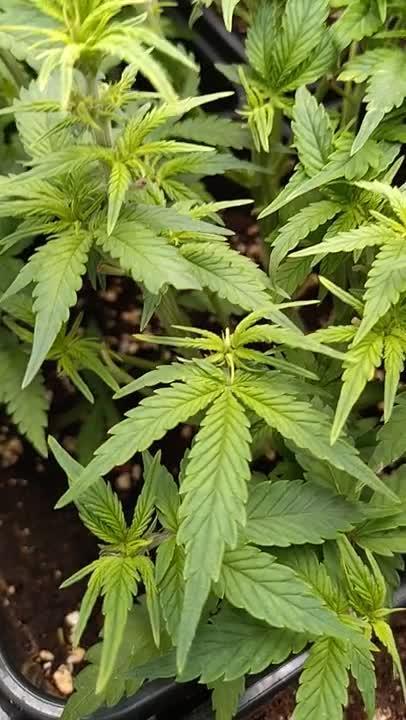
Ich habe sie jetzt nochmal ordentlich gerupft und ein bisschen Calmag gegeben, die Lampe läuft auf 80 Watt. Der Übergang in die Bloom ist voll dabei 😀
Likes
7
Share

@DogDoctorOfficial
Follow
🌿 Nectar Drip – Week 4 Report
Early Vegetative Phase (12/12 from Seed)
Zamnesia Seeds x TICAL – Pack #268
🌱 Growth Overview – Entering Structure
This week marks Week 4 since germination (often considered Week 3 in growth rhythm), and the plants are now clearly transitioning from early establishment into structural development.
All plants are healthy, vibrant, and responding beautifully to the environment. Growth remains steady rather than explosive — exactly what’s expected when running 12/12 from seed. What’s most exciting this week is that we’ve officially begun training, and with it, the first real divergence in plant architecture.
⸻
🌡️ Environment – Gradual Shift, No Shock
We’ve started to gently guide the environment toward a more “grown” climate, without rushing anything.
• Relative Humidity: ~65% (slowly lowered from previous weeks)
• Day Temperature: ~26 °C
• Night Temperature: ~18 °C
• CO₂: ~666 ppm
• Lamp Distance: ~1.70 m from canopy
• Substrate Temperature: ~22 °C
• Solution Temperature: ~22 °C
Airflow is still kept soft, but this week we’ve begun increasing movement slightly. The goal is to start encouraging stem strength and plant responsiveness, preparing them for the phases ahead while keeping stress close to zero.
⸻
💡 Lighting – Raising the Bar, Naturally
Light intensity continues its progressive increase, following plant demand rather than forcing development.
• Previous Weeks: ~400–500 PPFD
• Current Week: moving from ~500 toward 600 PPFD
The plants are clearly growing into the light, which is exactly what we want to see. This gradual ramp-up will continue week by week, allowing the canopy to adapt naturally as structure and leaf mass increase.
⸻
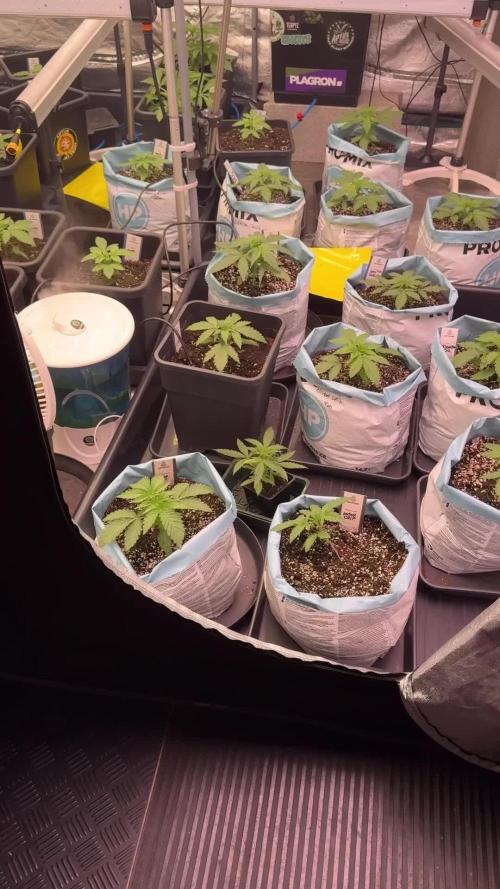
Substrate & Containers
• Medium: ProMix
• Containers: 15 L plastic bags
Root activity is clearly accelerating now. Even though top growth remains compact, internal development is well underway — something that becomes very apparent once training begins.
⸻
Nutrition – Consistency Over Reaction
Nutrition remains unchanged and stable, reinforcing the idea that plants don’t need constant adjustments when they’re already happy.
Current inputs:
• Plagron Terra Grow
• Power Roots
• Pure Zym
• Sugar Royal
• Vita Race (foliar application)
This balanced organic–mineral approach continues to deliver excellent results: lush green color, healthy leaf posture, and no signs of deficiency or excess.
As always, the philosophy here is simple:
don’t fix what isn’t broken.
⸻
✂️ Training Focus – Low Stress, High Intention
This week, we introduced Low Stress Training (LST) on one selected plant.
Using long clips, the main stem is gently bent and guided almost parallel to the ground, opening the plant structure and allowing light to reach the lower growth sites. Leaves are carefully repositioned to expose side branches without damaging tissue or creating stress points.
This technique:
• Breaks apical dominance
• Encourages lateral branch development
• Keeps the plant shorter and wider
• Promotes a more even canopy later on
The trained plant is currently the shortest of the group, but already showing strong response. She’s entering her fourth node, and lower branches are clearly waking up and pushing upward.
The other plants remain untrained for now, growing naturally. This will allow us to directly compare structure, stretch, and expression later on — same genetics, same environment, different guidance.
What to Expect:
• Slower vertical growth on the trained plant
• Increased side branching
• A more compact, bushy structure
What Not to Expect:
• Immediate explosive growth
• Stress reactions
• Delays in overall health
This is guidance, not force.
⸻
🍃 General Observations
• Leaf color remains deep, healthy green
• Growth is compact and intentional
• Plants are calm and responsive
• Training response is already visible
• No signs of stress or imbalance
Videos included this week show the entire room and all plants, giving a full-picture view of how the Nectar Drip is progressing as a group.
⸻
🔮 Reflections on 12/12 From Seed
This week reinforces why I’m really enjoying the 12/12 from seed approach. Growth may be slower on the surface, but structure, balance, and root development feel extremely solid. The plants are building themselves quietly — and that patience usually pays off later.
⸻
🤝 Gratitude & Community
Huge thanks once again to:
• Zamnesia Seeds
• TICAL
• Plagron
• Future of Grow
for supporting this run and making this collaboration possible.
And thank you to the community — supporters, critics, newcomers, and long-time followers alike. Everything shared here reflects my personal experience and opinion, including my choices, lessons, and mistakes. It’s a privilege to share this journey openly so we can all learn together.
⸻
🌟 Week 4 Summary
• Environment gently shifting
• Light intensity rising naturally
• First training introduced
• Plants healthy and responsive
• Structure beginning to form
The Nectar Drip is no longer just settling in — it’s taking shape.
More to come.
Growers love always 💚
FOR DISCOUNT CODES AND MORE JUST FOLLOW THE LINK https://website.beacons.ai/dogdoctorofficial
📲 Don’t forget to Subscribe and follow me on Instagram and YouTube @DogDoctorOfficial for exclusive content, real-time updates, and behind-the-scenes magic. We’ve got so much more coming, including transplanting and all the amazing techniques that go along with it. You won’t want to miss it.
GrowDiaries Journal: https://growdiaries.com/grower/dogdoctorofficial
Instagram: https://www.instagram.com/dogdoctorofficial/
YouTube: https://www.youtube.com/@dogdoctorofficial
⸻
Explore the Gear that Powers My Grow
If you’re curious about the tech I’m using, check out these links:
🔆 Lighting & Environmental Control
• Future of Grow — Advanced LED lighting technology
https://www.futureofgrow.com/
DISCOUNT CODE: DOG20
• Lumiflora — Under-canopy LED lighting
https://lumiflorade.com/
• TrollMaster — Environmental controllers and automation gear (past collaboration)
⸻
Genetics
• Zamnesia Seeds — Genetics used in this project
https://www.zamnesia.com/
⸻
🌱 Soil, Substrates, Boosters & Root Support
• Plagron — Substrates, bio mixes, and supportive products
https://plagron.com/en/
⸻
🎒 Storage, Curing & Preservation
• Grove Bags — Curing and storage solutions
https://grovebags.com/
⸻
📸 Photography Equipment & Tools
(Not sponsors, but part of my creative toolkit)
• Sony A6700
• Sony full-frame macro lens + few more
• Stacking photography workflow - learning
• iPhone (for behind-the-scenes shots)
We’ve got much more coming as we move through the grow cycles. Trust me, you won’t want to miss the next steps, let’s push the boundaries of indoor horticulture together!
As always, this is shared for educational purposes, aiming to spread understanding and appreciation for this plant. Let’s celebrate it responsibly and continue to learn and grow together.
With true love comes happiness. Always believe in yourself, and always do things expecting nothing and with an open heart. Be a giver, and the universe will give back in ways you could never imagine.
💚 Growers love to all 💚
📸 P.S. – The Eye Behind the Lens
All photos in this diary (for now — except for the ones showing the camera, which I took with an iPhone) are taken with a Sony A6700 paired with a Sony full-frame macro lens and a few more.
Photography is part of the story — it’s how we share the fine textures, the glow, and the quiet details that words can’t always capture.
I’ve also started experimenting with photo stacking — a technique where multiple images, each taken at a slightly different focus point, are layered together to create one perfectly sharp image from front to back.
It’s not digital enhancement or AI; it’s pure photography — a way to reveal the plant’s beauty in microscopic depth, from trichome to petal.
You’ll even see a few shots of "ghost me" capturing the shots — camera, lens, setup — because every grow deserves not just to be cultivated, but documented like art.
FOR DISCOUNT CODES AND MORE JUST FOLLOW THE LINK https://website.beacons.ai/dogdoctorofficial
NEW DISCORD - Official Server Invite Link : https://discord.gg/ksjAkA5T74

Likes
Comments
Share

@avan1garde
Follow
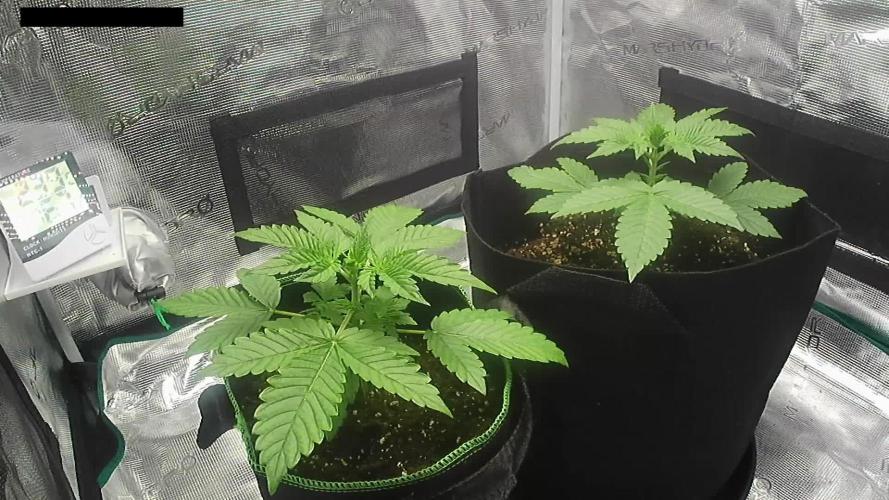
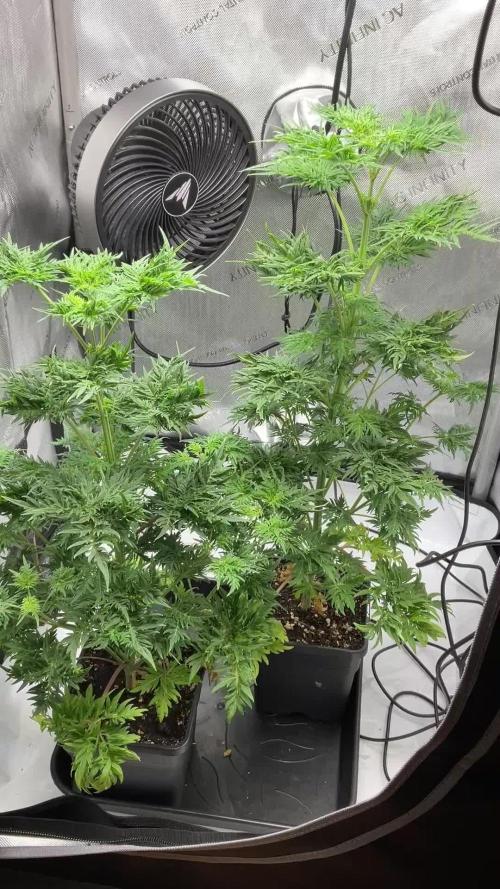
Very bushy grow, gonna have the net up soon to spread the leaves out a bit.

Likes
12
Share


@AllieO
Follow
1/12: lots more leaf tucking today. She's taking waterings like a champ. I'm always so worried about overwatering but she seems to be growing well
1/14: did a little more lst, so she's looking a little bit like an ugly duckling. Hoping the effort plays out. Attempted to adjust some clips and accidentally broke a stem. I splinted that up with some tape... Also my attempt at a fim is growing out... She's looking a little rough right now, but honestly, aren't we all?
1/15: watered and some leaf tucking this morning. Excited for the top to not look like a hot mess!
1/17: the ugly duckling phase is strong with this one. Gave her a good watering today and attempted some leaf tucking, only sacrificing one fan leaf.
Processing
Likes
74
Share


@PureMedicin
Follow
Still a few week before harvest. I have stopped adding N as much as possible to my nutrient solution. It might help the bud swell up a little more the last few weeks. Also been adding big bud and bud candy from Advanced Nutrients. I will feed the girls 2 weeks more before going into flush.
My soil Sour diesel is ready for flush anytime soon.
#1 (back right) have suffered from being to close to the light while also not having enough airflow around it. Have fixed the air problem but cant bring my light any further up. kept around 22 cm from the tallest branch 30< cm from the rest which is the minimum recommended.
They smell really pungent and the suger leafs and buds are coted with crystals. My autoflower (front left) is doing good too and i really cant wait to taste it.
A good week (kinda)

Likes
20
Share


@Hashy
Follow
Week 1
Light cycle=22/2
Light Power=86w 36%
Extractor controller settings
High temp= 24c
Low temp= c
Temp step=0c
High Rh= 70%
Low Rh= %
Rh step=0%
Speed max=5
Speed min=1
Smart controller settings (during lights on).
Lights on=22/2 (02.00am)
Radiator on= below 19c
Radiator off= above 20c
Humidifier on= below 64%
Humidifier off= above 67%
Dehumidifier on= not in use.
Dehumidifier off= not in use.
Smart controller settings (during lights off).
Lights off=22/2 (00.00am)
Radiator on= below 16c
Radiator off= above 18c
Humidifier on= not in use.
Humidifier off= not in use.
Dehumidifier on= not in use.
Dehumidifier off= not in use.
VPD aim=0.4-0.8
DLI aim=15-18
EC aim=0.4
PH aim=6.2
Thursday 28/12/23
#2 (Day 1)
📋 Looks fine.
Friday 29/12/23
#2 (Day 2)
📋 she looks ok
Saturday 30/12/23
#2 (Day 3)
📋 Wet the soil.
Was H=7cm D=77cm DLI=17.5
Now H=7cm D=70cm DLI=17.8
10.00pm
Switch to 20/4
Light power was=86w=36%
Light power still=86w=36%
Lowered light by 7cm.
Extractor controller settings
High temp= 24c
Low temp= c
Temp step=0c
High Rh= 68%
Low Rh= %
Rh step=0%
Speed max=5
Speed min=1
Smart controller settings (during lights on).
Lights on=20/4 (04.00am)
Radiator on= below 19c
Radiator off= above 20c
Humidifier on= below 62%
Humidifier off= above 65%
Dehumidifier on= not in use.
Dehumidifier off= not in use.
Smart controller settings (during lights off).
Lights off=20/4 (00.00am)
Radiator on= below 16c
Radiator off= above 18c
Humidifier on= not in use.
Humidifier off= not in use.
Dehumidifier on= not in use.
Dehumidifier off= not in use.
Sunday 31/12/23 (New year's eve)
#2 (Day 4)
📋 Happy New Year.
Monday 1/1/24 (New year's day)
#2 (Day 5)
📋
💧💧💧💧💧💧💧💧💧💧💧💧💧💧💧💧
Method= manual
Neutralise=0.1ml/L
Roots=5ml/L
Feed=nutes
Volume=200ml
Easy Ph down=0 drops/L
Ec=0.27PH=6.1/6.2
Time=9.00pm
Runoff.
Total runoff=60ml
Ec=2.2 PH=5.7
💧💧💧💧💧💧💧💧💧💧💧💧💧💧💧💧
Tuesday 2/1/24
#2 (Day 6)
📋Humidifier didn't come on autopilot.
Wednesday 3/1/24
#2 (Day 7)
📋 H=8cm D=69cm DLI=17.0
She has done fine this week and is exactly where I'd expect her to be. Rooting is good and I could possibly transplant her at the same time as the others next week.
Back soon.
Take it easy.
Processing
Likes
7
Share


@x_grower
Follow
Last week, first of flowering, was outstanding, I could water the girls regulary and the work paid off they stretched a lot and are looking super healthy. The girl right below the upper fan is suffering a bit with the shadows and is notoriously shorter than her sisters, I will need to rethink the air circulation for the next grow. Another concern of mine is their height, hoping they dont stretch anymore as the lights are already at maximum possible height inside tent and there is only 20cm gap between it and the plants.

Likes
3
Share


@Marshydrots1000
Follow
Opened them both up and trimmed up some lower branches and the likes. Defoliation aswell on some leaves. Flower stretch under way ! Still having issues with one not absorbing what she needs was advised to up the ph in autopot res to 5.8 6.0 ph so have done so to see if that helps ! All in all looking good
Likes
4
Share


@t0m420
Follow
Since now the plants are ok...zero deficiencies or problems
Hopefully next week the plants will start flowering stage.
Likes
14
Share


@JamieKnolliver
Follow
Grüßt euch Freunde!
2 Tage vor dem Ende der 7. Woche sieht es doch schon sehr nach Herbst aus. 👌
Habe die ganze Woche keinen Dünger zugeführt und jeden zweiten Tag 6 Liter Wasser auf 6,5 ph‘ed gegeben.
Die Farben die sich hier entwickelt haben flashen mich immernoch jedes mal wenn ich das Zelt aufmache.
Der Geruch ist wirklich intensiv und hat was fruchtig erdiges mit leichter Gas Note.
Mehr dazu natürlich erst nach dem trocknen und cure.
Schätze mal das wir so in 14 Tagen am Ziel sind, bleibt also spannend was da noch passiert.
Bis dahin euch allen eine gute Woche!💚
Processing
Likes
9
Share


@YD_59
Follow
One of the plants is budding nicely, I think the seeds were mixed as one is small and theres still two plants that aren't budding yet, other than that plants seem to be growing well, the plant that's budding smells Diesely/Sour with a bit of citrus [Not classing the growdiary as flowering yet as only one of the plants is flowering at the moment] I've also added some rope to some of the branches to pull them towards the ground and further into the light, will update with pictures when I next go water them
The training seems to be having an effect already and some of the trained branches are growing upwards now
Likes
9
Share


@OGbros
Follow
ITA: siamo giunti quasi alla fine del viaggio. Ho tolto tutta la soluzione presente nel sistema e l'ho sostituita con acqua del rubinetto senza sali. Le piante resteranno così dai 2 ai 4 giorni per il lavaggio delle radici. Insieme all'acqua ho utilizzato Flora Kleen (ex flush kleen) della GHE, a concentrazione di 2ml al litro. La raccolta si avvicina!!!!
edit: ho finalmente raccolto le piante ma che fatica ragazzi! In 4 ci abbiamo messo tutto il pomeriggio e le prime ore della sera per finire di trimmare!! Ho tagliato le piante ramo per ramo in modo che l'essiccazione sia più veloce. Ho appeso i rami in una box 80x80cm con all'interno un deumidificatore e un estrattore da 10mm. L'umidità oscilla dal 48% al 55%, direi ottimo! Aggiornerò il diario dopo aver pesato le cime secche e dopo alcune settimane di concia per la smoke review
ENG: we have almost reached the end of the journey. I removed all the solution in the system and replaced it with salt-free tap water. The plants will remain in this way for 2 to 4 days for washing the roots. Together with the water I used Flora Kleen (formerly flush kleen) from GHE, at a concentration of 2ml per liter. The harvest is approaching !!!!
edit: I finally harvested the plants but what an effort guys! 4 of us took the whole afternoon and early evening to finish trimming !! I cut the plants branch by branch so that drying is faster. I hung the branches in an 80x80cm box with a 10mm dehumidifier and extractor inside. The humidity ranges from 48% to 55%, I would say excellent! I will update the diary after weighing the dry buds and after a few weeks of tanning for the smoke review

Likes
23
Share

@Tower84
Follow
🇩🇪 Woche 7 – Mentha de Croco (Terpyz) 🌱🔥
Die beiden Mentha de Croco entwickeln sich weiterhin absolut top und zeigen in Woche 7 kräftiges, gesundes Wachstum 💪🌿
Mit aktuell ca. 56 cm und 50 cm Höhe haben beide Pflanzen nochmal ordentlich zugelegt und wirken sehr robust und vital.
Die Blattfarbe ist weiterhin schön sattgrün 💚✨, die Struktur kompakt und stabil. Beide Pflanzen machen insgesamt einen sehr gesunden Eindruck und kommen mit dem bisherigen Wechsel zwischen Indoor und Outdoor hervorragend klar ☀️🌬️
Am Dienstag ist es endlich soweit: Der finale Umzug nach draußen steht an ?🌳
Da die Nachttemperaturen jetzt stabil über 10 °C bleiben, können die Ladies endlich dauerhaft Outdoor stehen und ihr volles Potenzial entfalten 🚀🔥
Bis hierhin läuft alles genau nach Plan und ich bin mit beiden Pflanzen wirklich sehr zufrieden 🙌🌱
⸻
🇬🇧 Week 7 – Mentha de Croco (Terpyz) 🌱🔥
The two Mentha de Croco plants continue to perform extremely well and show strong, healthy growth in week 7 💪🌿
At around 56 cm and 50 cm tall, both plants have gained a lot of size and look very robust and vigorous.
The foliage remains a beautiful deep green 💚✨ with a compact and sturdy structure. Overall, both plants look very healthy and are handling the indoor/outdoor transition perfectly ☀️🌬️
Tuesday will finally be the big day: permanent move outdoors ?🌳
With nighttime temperatures now staying above 10 °C, the ladies are finally ready to stay outside full-time and unleash their full potential 🚀🔥
Everything is going according to plan so far, and I’m really happy with how both plants are developing
Likes
11
Share


@DrDuhboto
Follow
This week I inoculated the room leaves and plants with Neoseiulus cucumeris, I have had minor thrip problems all summer, Usually I use lady bugs to combat them but none have been available this year.
I inoculated the plants by shaking the bottle full of Cucumeris and bran over the leaves. I will do this a few times before pre flowers show.
Cucmeris are predatory mites that eat the thrip larvae. And are supposed to work for spider mites as well.
I added the scrog nets to the room and began training the plants through them.
I then flipped the lights over to 12 and Initiated pre flower.
All vegetative growth was very vigorous.
The goal of this grow is to do a preliminary test to begin to determine if Mycelium provides any additional benefits to Cannabis when allowed to colonize in super soil before being added to bottom layer of the pot.
The Process:
1) 8 weeks Prior to Germination Super Soil is mixed (see super Sub cools super soil recipe further down the page) and added to spinning two part composter, water is added and the super soil mix is allowed to break down for a week.
2) 7 weeks Prior To germination 1L of colonized mycelium is added to each side of composter. Mycelium is now allowed to colonize the super soil.
3) After 8 weeks total the Mycelium has had enough time to colonize throughout the super soil mix and is ready to be added to the bottom 1/3rd of the pots. See Pictures for an example of what this looks like.

Processing
Likes
68
Share


@themartian911
Follow
hello some news on the flowering day 14.
we have to wait another 41 days of flowering approximately.
I do not change my fertilizer dosages this week. Next week more BB.
😀👍

Likes
27
Share


@RDWCGrowing
Follow
I had a lot of fun with this strain and it was grown against 400 growers so let me say PHENO hunting is a true thing. Overall the Bud was a nice dense structure and the smoke on it was smooth and the high nice and even.

Processing
Likes
29
Share


@Hasard
Follow
Starting week 6
Tent is being slowly full
A little bit too hot for the next days as the weather outside will climb to 36-38°C, I thnk I will bring them some CO2. I will check with the growshop. Any idea is welcome.
The stretch is really impressive, 1 of them get 20cm in 7 days
Waiting for the buds 😁
Day 39 I have now added CO2 with an organic boost, it is linked it to the fan. Should be a little bit better with that temperature

Likes
57
Share


@DogDoctorOfficial
Follow
behold the epic conclusion of my Medusa F1 odyssey! Week 11 brings us face to face with an absolute masterpiece – our mighty Medusa in all her glory. She has blossomed into a cannabis goddess, and I can't help but feel a mix of pride and hilarity.
So, picture this: with scissors in hand and a grin on my face, I bravely took the plunge and performed the cosmic haircut of the century. I snipped the entire girl, leaving her looking like a botanical version of a cool, upside-down pineapple cake! It was a sight to behold, and I couldn't help but laugh at the quirky transformation.
With our Medusa delicately suspended upside down, she's now getting ready for her final act of drying. It's like she's doing an acrobatic performance, waving her buds at us from above. Who knew cannabis cultivation could be so entertaining!
In all seriousness, though, our Medusa's buds are absolutely mesmerizing. They've reached their peak density and glisten with an abundance of trichomes. The colors are a true botanical wonder, like a vibrant firework display against a night sky.
Speaking of trichomes, I continue my daily trichome investigation with the precision of a detective. Each day, I observe those tiny resinous diamonds, searching for the magical moment when they're just right – cloudy with a hint of amber.
And the aroma, oh the aroma! Terpenes fill the air with an intoxicating fragrance that makes my nose dance with joy. If only we could bottle this cosmic perfume!
Before I conclude, I must extend my heartfelt gratitude once again to Royal Queen Seeds. Their Medusa F1 genetics have granted us this cannabis goddess, and I can't thank them enough for this delightful journey.
As we prepare for the final chapter, drying and curing our Medusa to perfection, I invite you all to join me in celebrating the whimsy and wonder of cannabis cultivation. Let's cherish this upside-down adventure, savor the captivating colors, and delight in the celestial magic of our Medusa F1.
As always thank you all for stopping by and for supporting me on this journey, i am super passion about growing and fell blessed to have you all with me on this new journey <3 <3 <3
Genetics - RQS MEDUSA F1
Ligth - LUMATEK ZEUS 465 COMPACT PRO
Food - APTUS HOLLAND
All info and full product details can be find in can find @
https://www.royalqueenseeds.com
https://aptus-holland.com/
https://autopot.co.uk/
https://lumatek-lighting.com/
With true love comes happiness <3<3<3 Always believe in your self and always do things expecting nothing and with an open heart , be a giver and the universe will give back to you in ways you could not even imagine so <3<3<3
<3 <3 <3 Growers love to you all <3 <3 <3
Medusa F1
Medusa is a true F1 hybrid created from pure, inbred cannabis lines. She boasts uniform grow traits, mouthwatering aromas and flavours, and plenty of potency. If you're looking to bring stable, elongated plants into your room, tent, or garden, look no further. Mouthwatering Aromas, High Potency, and Mid-Size Plants
Though she won't turn you to stone like the mythical goddess after which she's named, Medusa F1 is bound to get you plenty stoned in her own special way. Combining genetics from inbred lines deriving from Sugar Magnolia, a thick and sweet indica, and American Beauty, a fast, fruity hybrid loved for its well-balanced, positive high, the result is an autoflowering F1 variety that produces fresh flavours, a unique cannabinoid profile, and large yields.
A very aromatic cultivar with a vibrant concentration of terpenes bearing notes of fresh mint alongside an upfront peppery kick, backed up by hints of fresh fruit, berries, and tangy fuel. Her thick, frosty flowers consistently produce high levels of THC and CBG, as well as high concentrations of myrcene, ocimene, farnesene, and caryophyllene. As a result, Medusa F1 has strong effects that relax and stone the body from head to toe (brought on by particularly high concentrations of myrcene and farnesene) while motivating the mind with an uplifting, creative, and motivating kick (thanks to high concentrations of ocimene).
Medusa F1 seeds produce elongated autoflowering plants with long, strong branches and well-spaced internodes. Plants regularly grow up to 80–85cm tall and boast a fast flowering time of just 42–45 days (72 days from germination to harvest). Thanks to her genetics, Medusa F1 produces plenty of thick flowers with big, swollen calyxes that make for very easy trimming. Medusa F1 is very stable, handling stress and unfavourable growing conditions with ease, though she is somewhat susceptible to Botrytis, so make sure to keep tabs on the humidity in your grow room/garden