The Grow Awards 2026 🏆
Likes
Comments
Share
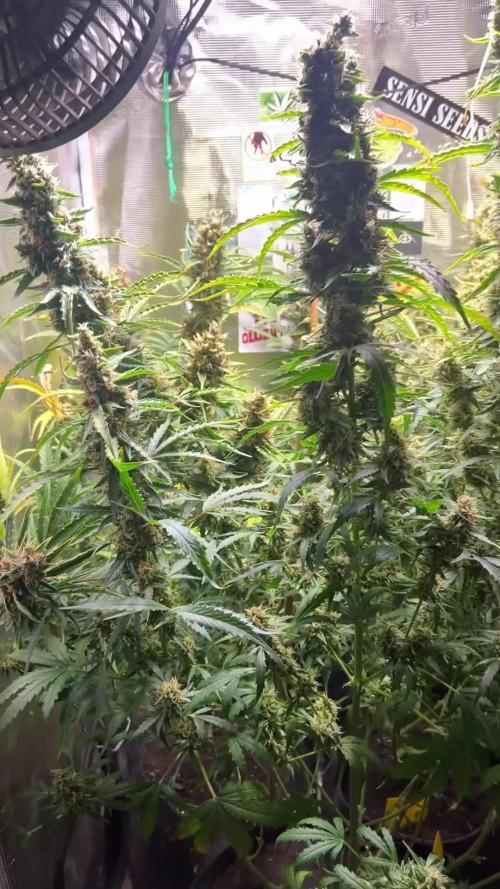
Some nice Balcony Bombs forming, internodial distance is still very short and i did not notice much of a stretch overall to be honest. The Smell is getting more intense day by day, but the profile is kinda flat, albeith sweet. Excited to see it further down the road
Processing
Likes
23
Share
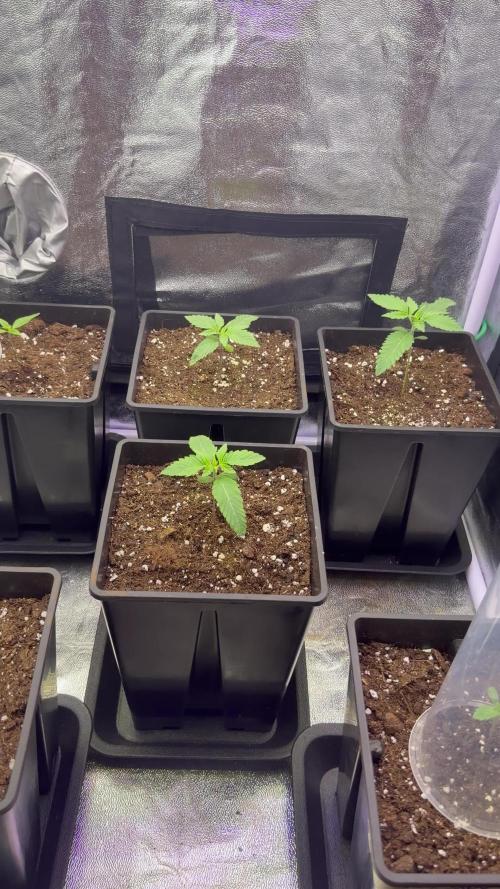
Holas familias de nuevo.esta tercera semanaNo hay ningún cambio en cuanto a lo climático, temperaturas de 26 maximas y 20 de mínimas y humedad 40% mínimas y maximas de 70%.( el problema vendrá cuando cambiemos a sodio). Eso si crecer van creciendo a buen ritmo , las más lentas son las power plant xl. Esta semana las aguante en tiestos pequeños, pero en nada trasplantó a los 7 L y las pasamos a floración conforme cambiemos Al Sodio
Likes
24
Share
@nonick123
Follow
Día 80 (19/08) Riego 500 ml H2O pH 6,55 Día 81 (20/08) Riego 250 ml H2O pH 6,55 Día 82 (21/08) Riego 500 ml H2O pH 6,55 Día 83 (22/08) 💥Comienza la floración! 💥 No riego. Día nublado y de bajas temperaturas Día 84 (23/08) Riego 500 ml H2O pH 6,55 Día 85 (24/08) No riego. Día nublado y de bajas temperaturas Día 86 (25/08) Riego con 1 Litro de Té Floración de Lurpe Solutions. Preparación: 24 horas con bomba de aire (oxigenación) con ingredientes: Healthy Harvest 8 ml/L + Insect Frass 16 ml/L + Hummus Lombriz 8 ml/L + Melaza 1 ml/L + Kelp Hidrolizado 0,25 g/L 💦Nutrients by Lurpe Solutions - www.lurpenaturalsolutions.com 🌱Substrate PRO-MIX HP BACILLUS + MYCORRHIZAE - www.pthorticulture.com/en/products/pro-mix-hp-biostimulant-plus-mycorrhizae
Likes
4
Share
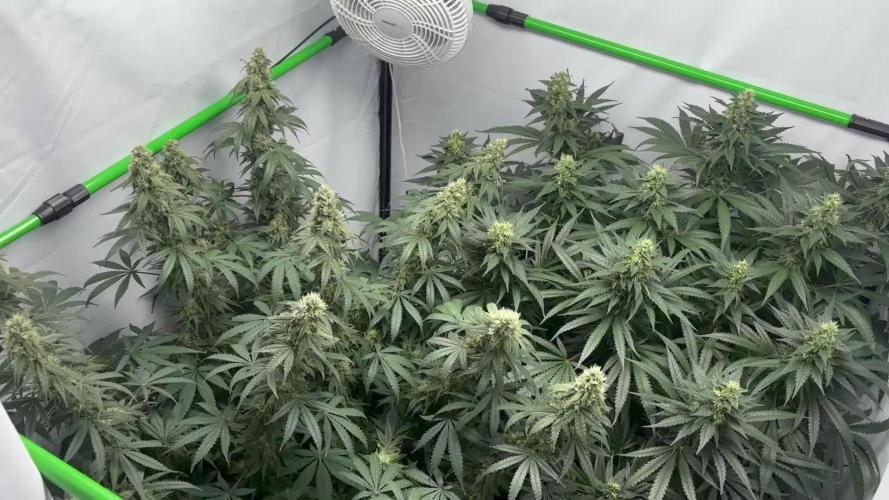
Really starting to fill out now. Dont know whether its the stronger light or dry ammendments but my ladies seem a lot frostier than my last run.
Likes
Comments
Share
Hola a todos Lsa imagenes corresponden al periodo 28/08 al 03/09. Regue con agua 400ml ph 6.3 100ml con top veg. Ph 6.4. También esta semana empece a aplicar algo de LST.
Likes
24
Share
@OGOZHigh
Follow
So Buddy‘s Den Ladys geht es hervorragend. Sie machen ordentlich Fortschritte. Wetter spielt wieder Perfekt mit. Updates folgen ✌️
Likes
5
Share
@GODAXE
Follow
01.07.2024 Back home in the PM. one blackberry have pop out showing 1 set of true leaf the two fast berry have pop out 1 showing 1set of true leaf the second hardly strugling with the seed shell 04.07.2024 i broke the shell lock fastberry while trying to help her no sign of the second blackberry, look heavily over soaked 07.07.2024 the two viable Berry sister have been removed from the germination tray. the roots and the rockwool base have been dips in Cyco cyclone rooting gel before being set in their hydroponic basket with expended clay, cap with foil to prevent any light leak. they will be in kratky pot in a 300 ppm nutrient solution of megacorp and sweet candy, from greeleaf nutrients, in a 10 for 1 ratio for few day before hitting their final DWC bucket. special thank to Barry the camping keeper for is help on this grow.
Likes
53
Share
Hello, my amazing green-thumbed friends! Welcome to the Week 1 flower report for our beloved P.C.R.s. The transition from veg to flower is a magical time, and our plants are already showing signs of their future glory. Let’s dive into the exciting details of this week! Entering the Flower Stage Our P.C.R.s have officially entered the flowering stage, and the transformation is already visible. The stretch has begun, and you can see the plants reaching up, preparing to produce those beautiful buds we’re all waiting for. This stage is all about supporting their growth and ensuring they have everything they need to thrive. NutriSpray Magic This week, we’ve been diligently spraying Aptus Holland NutriSpray, and the results are phenomenal. NutriSpray is like a spa treatment for our plants, providing essential micronutrients directly to the leaves. It helps with nutrient uptake, reduces stress, and boosts overall plant health. Our P.C.R.s are absolutely loving it, standing tall and proud with their leaves praying to the light. Nutrient Transition With the start of the flowering stage, we’ve made some important adjustments to our nutrient regimen. We’ve stopped using StartBooster and replaced it with TopBooster, which promotes flowering and bud formation. Additionally, we’ve introduced P-Boost, a phosphorus booster that enhances root development and flower production. TopBooster: Encourages larger and more abundant flowers. P-Boost: Provides essential phosphorus for robust root and flower development. NutriSpray: Continues to support overall plant health and stress reduction. Optimal Conditions Maintaining the perfect environment is crucial as we move into the flowering stage. Our TDS is now at 360, with a pH of 5.9 and a temperature of 21°C for watering. These conditions are optimal for nutrient uptake and overall plant health, ensuring our P.C.R.s have everything they need to produce those beautiful, resinous buds. Care and Attention Paying close attention to our plants during this stage is key. Regularly inspecting for any signs of stress or nutrient deficiencies and adjusting care as needed ensures our plants stay happy and healthy. The love and care we put into this process are reflected in the vibrant health of our plants. In Conclusion Week 1 of flowering has been all about setting the stage for a bountiful harvest. With the help of Aptus Holland NutriSpray, TopBooster, and P-Boost, along with our careful attention, our P.C.R.s are off to a fantastic start. The excitement is building, and I can’t wait to see how they develop in the coming weeks. Shout Outs A huge shout out to @aptusholland, our main sponsor, for their incredible products that keep our plants thriving. Another big thank you to @artgenetix for creating the phenomenal P.C.R. strain. And to the wonderful community at Grow Diaries and all our followers, your support and enthusiasm keep us going. Let's continue to grow together! Until next time, happy growing, and may your gardens be full with love and green! Genetics - P.C.R. @Art_Genetix_Team https://artgenetix.world/ Nutricion @aptusholland https://aptus-holland.com/ LED Power @Lumatek and @viparspectra As always thank you all for stopping by , for the love and for it all, i fell blessed to have you all with me for one more love journey Thank you Thank you Thank you , you guys are great and have been amazing , thank you for everything ! #aptus #aptusplanttech #aptusgang #aptusfamily #aptustrueplantscience #inbalancewithnature #trueplantscience #dogdoctorofficial #growerslove
 With true love comes happiness , Always believe in your self and always do things expecting nothing and with an open heart , be a giver and the universe will give back to you in ways you could not even imagine so ! Growers love to you all
Likes
28
Share
Great week, cant stop looking at these ladies, smell amazing all is going nicely
Likes
5
Share
@84ruk
Follow
En la tercera semana de vegetación la planta fue trasplantada, los primeros días se vio estancado si crecimiento pero más adelante continuó su crecimiento normal.
Likes
14
Share
11/15 Coming along but not without problems. 3+ weeks in now I'm in the stage where I'm just trying to push all the right buttons and guide it to harvest. They've all demonstrated some level stress but bud formation is coming along well. I dont know if I'm just used to the smell but it hasn't really gotten much stronger. I'll try to take some more pics later on. The past week has been a little busy.
Likes
7
Share
Hace un par de días le he dejado de dar nutrientes y he suspendido todo tipo de alimentación para terminar con una cosecha más limpia. Ahora solo toca ir aumentando el volumen de riego e intercalar los riegos de agua sola y enzimas para aprovechar todo el alimento que pueda quedar en el sustrato y así lograr la cenecencia.
Likes
119
Share
@Roberts
Follow
Divine indica is growing great. I am topping her today. I also will be removing the 1st node growth as well. Everything is looking really good. She has made it to her own grow space now. She is growing fast and strong. 🤞🏻it continues. Thank you Divine Seeds, and Spider Farmer. 💪🏼🤜🏻🤛🏻🌱🌱🌱 Thank you grow diaries community for the 👇likes👇, follows, comments, and subscriptions on my YouTube channel👇. ❄️🌱🍻 Happy Growing 🌱🌱🌱 https://youtube.com/channel/UCAhN7yRzWLpcaRHhMIQ7X4g
Likes
21
Share
A-Day 81, B&C-Day 77 A- Is already 1/2 way through week 12, she almost all cloudy, with some amber tricomes now. I have started her “flush” just water for two feeds now. I’m going to keep watch, and see when is the right time, no rushing this go around . 🌱😎💨 B- is doing great, fattening up daily. A few more weeks at least, I hope she gets as big as her sister A 😍she got a full strength dose of nutrients twice this week and a water only feed in between. PPM was close to 1000 . C- is thickening up, I have her a slight defoliation and tied her down a bit to spread her branches. She is turning into a beast 🤩she also got 2 full dose feeds, and a water in between. Just keep spinning them around to get the even coverage.
Likes
92
Share
@Krisis
Follow
04/02/24. Here we are starting week 6. Not too much has changed since last week. 2 of the girls leaves seem to be changing colors no matter what intensity of light I try, or what nutrients I give, or don’t. Both of their pistols have gotten really dark as well. #1 (middle plant) has stayed pretty dark green, pretty sure she has too much nitrogen before. Her pistols seem to be darkening much slower. It seems as the other 2 are very similar to each other, and seem more mature. I figured they would maybe drink less water as time went on but instead it seems they are drinking more than ever. Some days the soil is so dry and they look droopy after having been watered thoroughly the day before. Others they seem alright, so watering schedule is typically every other day unless they demand more. I’ve been giving them about a gallon- watering in very slowly. I also gave them some tea, which I’ve listed up top. Trying to help their leaves. Maybe this is just normal, but I don’t know, just think it’s too early for colors. The smell I mentioned in another week has gotten louder. I swear I smell spices mixed in there now too. It’s been nice out the past few days so I opened the windows. Oops. Could smell them outside. Smelled like weird spicy food cooking with a side of chemical, gas, and a skunk spraying? Yeah idk lol.
Likes
71
Share
Hello, Grow Diaries family! 🎉🍌 I’m beyond excited to share the harvest report for my incredible Red Banana Pudding! This journey has been nothing short of amazing, and I can’t wait to dive into the details. Let’s get into it! 🚀 🌿 The Harvest After a wonderful flowering period, it’s time to celebrate the fruits of our labor. The Red Banana Pudding has reached its peak, and I’m thrilled with the results! 🌈🍑 Visuals: The buds have developed beautifully, showcasing an array of stunning colors and a perfect density. The aroma is incredibly sweet and fruity, promising a delightful smoke. 😍 🌟 Harvesting Process • Timing: Harvested at the perfect moment to ensure maximum flavor and potency. The trichomes were checked and showed an ideal mix of cloudy and amber for peak effects. ⏳✨ • Technique: I followed a meticulous process, ensuring each branch was trimmed with care. The process was smooth, and the final product is a testament to the love and effort put into this grow. ✂️💪 Fun Fact: Did you know that Red Banana Pudding is renowned for its unique banana-like flavor with a hint of creaminess? It’s a true treat for the taste buds! 🍌🍰 🌿 Post-Harvest • Curing: After trimming, the buds were carefully hung to dry in a controlled environment, maintaining optimal humidity and temperature. The curing process will enhance the flavor and potency, making for a truly exceptional smoke. 🌬️💨 • Batches: The buds are being sorted into batches to ensure even curing and to preserve the quality of each nugget. The anticipation is building as we wait for this next phase! 🎉 Pro Tip: Proper curing can significantly impact the final taste and smoothness of your buds. Make sure to store them in airtight jars and burp them regularly! 🍁 🌱 Looking Ahead The Red Banana Pudding has set the bar high, and I’m excited to see how it turns out after curing. This has been an incredible experience, and I’m grateful for the support and engagement from the Grow Diaries community! 💚 Sneak Peek: Stay tuned for upcoming content, including taste tests and smoke reports! You won’t want to miss out. 😉👀 🎥 Catch the Full Journey For a detailed look at the entire grow process, including the harvest, be sure to check out my YouTube channel, where I share in-depth updates and tips. Dive into the full experience and see how it all came together! 🌟🎥 Thank you for following along with this amazing journey. Your support means the world to me! 🌍💚 Happy growing and see you in the next update! ✨🌿
Likes
47
Share
All content on this diary is for inspirational and educational purposes only. The ideas shared are not a substitute for professional advice. This diary/account is not officially affiliated with Alan Watts or his estate. All materials are used under the principles of fair use. I honor the legacy of Alan Watts by sharing his wisdom respectfully and with the intention of inspiring awareness and self-understanding. 2nd net is up. Early bud formations are promising. holding up to the extremes pretty well, some leaves taking minor damage, but overall, she is holding up, gave her 1 night at 50F see how she would react, stressful. Not advised as it messes with her metabolism, but I want to see if it triggers any anthocyanin response. Love to see her purp up but no signs yet. Remember, For every molecule of glucose produced during photosynthesis, a plant needs to split six molecules of water. This process provides the hydrogen needed for synthesizing glucose and other organic compounds, while oxygen is released as a byproduct. Homework. If Rubisco activity is impaired and it cannot properly function or regenerate its substrate, the plant's leaves are likely to turn a pale green or lime green, a condition known as chlorosis. Essentially, Rubisco activity is highly regulated and susceptible to various environmental and metabolic factors that can cause it to become inhibited, leading to an apparent failure in RuBP regeneration due to a lack of consumption. Rubisco regeneration is intrinsically linked to nitrogen supply because Rubisco is a major sink for nitrogen in plants, typically accounting for 15% to over 25% of total leaf nitrogen. The regeneration phase itself consumes nitrogen through the synthesis of the Rubisco enzyme and associated proteins (like Rubisco activase), and overall nitrogen status heavily influences the efficiency of RuBP regeneration. RuBisCO is a very large enzyme that constitutes a significant proportion (up to 50%) of leaf soluble protein and requires large investments in nitrogen. Insufficient nitrogen supply limits the plant's ability to produce adequate amounts of RuBisCO, thereby limiting the overall capacity for photosynthesis and carbon fixation. Maintaining the optimal, slightly alkaline pH is crucial for the proper function and regeneration of Rubisco. Deviations in either direction (too high or too low) disrupt the enzyme's structure, activation state, and interaction with its substrates, leading to decreased activity and impaired RuBP regeneration. (Lime/yellowing) Structural Component: Nitrogen is an essential building block for all proteins, and the sheer abundance of the Rubisco protein makes it the single largest storage of nitrogen in the leaf. Synthesis and Activity: Adequate nitrogen supply is crucial for the synthesis and maintenance of sufficient Rubisco enzyme and Rubisco activase (Rca), the regulatory protein responsible for maintaining Rubisco's active state. Nitrogen deficiency leads to a decrease in the content and activity of both Rubisco and Rca, which in turn limits the maximum carboxylation rate, Vmax, and the rate of RuBP regeneration Jmax, thus reducing overall photosynthetic capacity. Nitrogen Storage and Remobilization: Rubisco can act as a temporary nitrogen storage protein, which is degraded to remobilize nitrogen to other growing parts of the plant, especially under conditions of nitrogen deficiency or senescence. Nitrogen Use Efficiency (NUE): The allocation of nitrogen to Rubisco is a key determinant of a plant's photosynthetic nitrogen use efficiency (PNUE). In high-nitrogen conditions, plants may accumulate a surplus of Rubisco, which may not be fully activated, leading to a lower PNUE. Optimizing the amount and activity of Rubisco relative to nitrogen availability is a target for improving crop NUE. Photorespiration and Nitrogen Metabolism: Nitrogen metabolism is also linked to the photorespiration pathway (which competes with carboxylation at the Rubisco active site), particularly in the reassimilation of ammonia released during the process. To increase RuBisCO regeneration, which refers to the process of forming the CO2 acceptor molecule Ribulose-1,5-bisphosphate (RuBP) during photosynthesis, the primary methods involve optimizing the levels and activity of Rubisco activase (Rca) and enhancing the performance of other Calvin-Benson-Bassham (CBB) cycle enzymes. Biochemical and Environmental Approaches: Optimize Rubisco Activase (Rca) activity: Rca is a crucial chaperone protein that removes inhibitory sugar phosphates, such as CA1P (2-carboxy-D-arabinitol 1-phosphate), from the Rubisco active site, thus maintaining its catalytic competence. •Ensure optimal light conditions: Rca is light-activated via the chloroplast's redox status. Adequate light intensity ensures Rca can effectively maintain Rubisco in its active, carbamylated state. •Maintain optimal temperature: Rca is highly temperature-sensitive and can become unstable at moderately high temperatures (e.g., above 35°C/95F° in many C3 plants), which decreases its ability to activate Rubisco. Maintaining temperatures within the optimal range for a specific plant species is important. •Optimize Mg2+ concentration: Mg2+ is a key cofactor for both Rubisco carbamylation and Rca activity. In the light, Mg2+ concentration in the chloroplast stroma increases, promoting activation. •Manage ATP/ADP ratio: Rca activity depends on ATP hydrolysis and is inhibited by ADP. Conditions that maintain a high ATP/ADP ratio in the chloroplast stroma favor Rca activity. Enhance Calvin-Benson-Bassham (CBB) cycle enzyme activity: The overall rate of RuBP regeneration can be limited by other enzymes in the cycle. •Increase SBPase activity: Sedoheptulose-1,7-bisphosphatase (SBPase) is a key regulatory enzyme in the regeneration pathway, and increasing its activity can enhance RuBP regeneration and overall photosynthesis. •Optimize other enzymes: Overexpression of other CBB cycle enzymes such as fructose-1,6-bisphosphate aldolase (FBA) and triose phosphate isomerase (TPI) can also help to balance the metabolic flux and improve RuBP regeneration capacity. Magnesium ions, Mg2+, are specifically required for Rubisco activation because the cation plays a critical structural and chemical role in forming the active site: A specific lysine residue in the active site must be carbamylated by a CO2 molecule to activate the enzyme. The resulting negatively charged carbamyl group then facilitates the binding of the positively charged Mg2+ion. While other divalent metal ions like Mn2+ can bind to Rubisco, they alter the enzyme's substrate specificity and lead to dramatically lower activity or a higher rate of the non-productive oxygenation reaction compared to Mg2+, making them biologically unfavorable in the context of efficient carbon fixation. The concentration of Mg2+ in the chloroplast stroma naturally increases in the light due to ion potential balancing during ATP synthesis, providing a physiological mechanism to ensure the enzyme is activated when photosynthesis is possible. At the center of the porphyrin ring, nestled within its nitrogen atoms, is a Magnesium ion (Mg2+). This magnesium ion is crucial for the function of chlorophyll, and without it, the pigment cannot effectively capture and transfer light energy. Mg acts as a cofactor: Mg2+ binds to Rubisco after an activator CO2 molecule, forming a catalytically competent complex (Enzyme-CO2-Mg2+). High light + CO2) increases demand: Under high light (60 DLI is a very high intensity, potentially saturating) and high CO2, the plant's capacity for photosynthesis is high, and thus the demand for activated Rubisco and the necessary Mg2+ cofactor increases. Mg deficiency becomes limiting: If Mg2+ is deficient under these conditions, the higher levels of Rubisco and Rubisco activase produced cannot be fully activated, leading to lower photosynthetic rates and potential photo-oxidative damage. Optimal range: Studies show that adequate Mg2+ application can enhance Rubisco activation and stabilize net photosynthetic rates under stress conditions, but the required concentration is specific to the experimental setup. Monitoring is key: The most effective approach in a controlled environment is to monitor the plant's physiological responses e.g., leaf Mg2+ concentration, photosynthetic rate, Rubisco activation state, and adjust the nutrient solution/fertilizer to maintain adequate levels, rather than supplementing a fixed "extra" amount. In practice, this means ensuring that Mg2+ is not a limiting factor in the plant's standard nutrient solution when pushing the limits with high light and CO2. Applying Mg2+ through foliar spray is beneficial to Rubisco regeneration, particularly in alleviating the negative effects of magnesium (Mg) deficiency and high-temperature stress (HTS). While Mg can be leached from soil, within the plant it is considered a mobile nutrient, particularly in the phloem. Foliar-applied Mg is quickly absorbed by the leaves and can be translocate to other plant parts, including new growth and sink organs. Foliar application of: NATURES VERY OWN MgSO4 @ 15.0g L-1 in a spray bottle. For those high-intensity workouts when 1 meal a day is just not enough! Foliar sprays are often recommended as a rapid rescue measure for existing deficiencies or as a supplement during critical growth stages, when demand for Mg is high. Application in the early morning or late evening can improve absorption and prevent leaf burn. The plant was getting a little limey yellow in the centre. Shortly thereafter, she was back in business, green mostly regenerated. The starting point [of creativity] is curiosity: pondering why the default exists in the first place. We’re driven to question defaults when we experience vuja de, the opposite of déjà vu. Déjà vu occurs when we encounter something new, but it feels as if we’ve seen it before. Vuja de is the reverse—we face something familiar, but we see it with a fresh perspective that enables us to gain new insights into old problems. Confidence is evidence... nothing more. You are confident because you have driven 10,000 times, you are confident because you have spoken 10,000 times. People think confidence is a feeling, but it's not. If you want more confidence, then you need to create evidence, take more shots, collect more data, build more experiences, take more risks; fail, confidence doesn't come first; it is the reward you get for doing the work. no one else wants to do.
Likes
8
Share
The Vipraspectra par 450 seems to be the reason my little plant is giving it all it has! Best light to start plants and heal them from our mess ups outside of nature.