


Likes
Comments
Share


@Ferelite
Follow
Week 4 Bloom
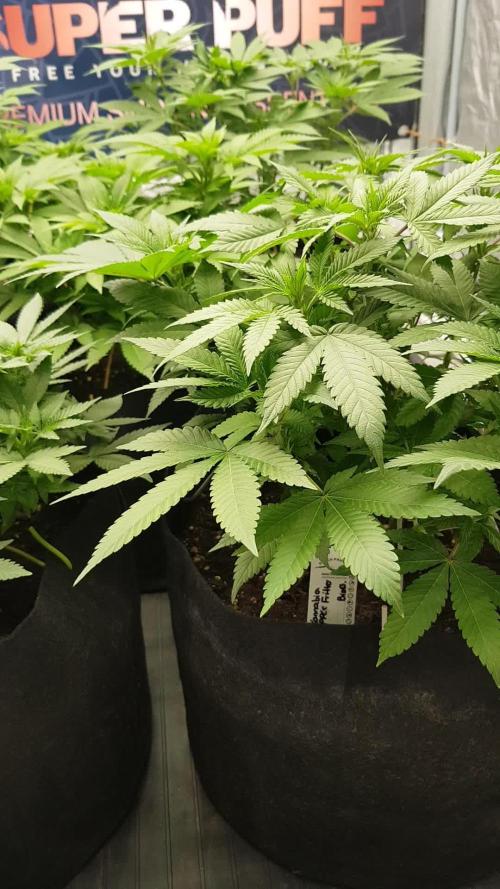
31/08 - Mass defoliation day, #1 was suffering from the amount of leafs it had, #2 was not as bad, has filled its own structure out nicely and outgrown #1.
Flushed and changed water. Upped the liquid potash. Added a tiny bit of CMX due to #2 showing a slight magnesium deficiency. Switched from PSI to cyco silica due to running out of PSI.
Humidity and temperatures have been near perfect, 28-38% RH and 20-25 degrees celsius, extra exhaust ventilation helped a lot.

Likes
12
Share

@GERGrowDesigns
Follow
Welcome to Flower Week 1 of Kannabia Apple Fritter BioBoost Edition
Need a Fail-Safe Germination and Express Flowering?Kannabia Makes It Easy with BioBoost, Sproutly and Its Fast Genetics . More informations to find at The Kannabia Blog on GrowDiaries.
Check out Kannabia Seeds with my link [https://www.kannabia.com/de?ref=61966] and grab the germination device or the strains I used . Trust me – it’s worth it for sure !
Get another 20% Discount at all products using the code [GGD] at the checkout.
For this Project , I’ve chosen the Feminized Photo Strain Apple Fritter BioBoost :
Here’s what I’m working with:
• 🌱 Tent: 120x60x80
• 🧑🌾 Breeder Company: Kannabia Seeds
• 💧 Humidity Range: 60
• ⏳ Flowering Time: 63 Days
• Strain Info: 24%THC
• 🌡️ Temperature: 26
• 🍵 Pot Size: 20
• Nutrient Brand: Hy-Pro
• ⚡ Lights : 600W x 2
A huge thank you to Kannabia Seeds for allowing me to try my Best with this amazing collection from Photo Strains they managed to Sponsore . Big thanks for supporting the grower community worldwide! Your genetics and passion speak for themselves!
Let’s grow together – and don’t forget to stop by again to see the latest updates!
Happy growing!
Stay lifted and stay curious!
Peace & Buds!
Likes
25
Share


@nonick123
Follow
Día 8 (20/01) Subo a DLI 20
Elimino la cúpula de humedad y oriento el ventilador para que les llegue una ligera brisa que fortalezca el tallo
Hago un riego de unos 30 ml en la maceta de 1 Litro
Día 9 (21/01) Se ve saludable y se empiezan a formar las primeras hojas reales!
Día 10 (22/01) Desarrollo esperado para el día 10
Día 11 (23/01) Sigue desarrollándose bien. Las raíces se asoman la parte inferior de la maceta
Riego con 100 ml H2O RO
Día 12 (24/01) Buen aspecto y desarrollo
Día 13 (25/01) Riego con 50 ml H2O RO
Día 14 (26/01) Hoy procedemos a trasplantar a las chicas a su maceta definitiva de 6 litros con la siguiente mezcla:
Substrato PRO-MIX HP BACILLUS + MYCORRHIZAE
BIOTABS estrategia de cultivo de "Solo agregar agua", donde todos los nutrientes están premezclados en la tierra:
SILICIUM FLASH 5 g/L de sustrato
STARTREX 5 g/L de sustrato
DOLOMITA 2 g/L de sustrato (ya que riego con H2O RO)
MYCOTREX 5 g en el agujero del trasplante
BIOTABS: 1 unidad a 10 cm de profundidad
Se llena la maceta con las manos (limpias) y rompiendo los trozos de sustrato más gruesos, para que el sustrato esté aireado y esponjoso, sin presionar
Se coloca una maceta vacía para que quede la forma perfecta de la maceta donde están las plántulas
Se llena hasta arriba, y se hace un 1er riego muy lentamente con 0,75 Litros de H20 Osmosis RO
Después de que el sustrato haya compactado y bajado de nivel (algo normal), se vuelve a rellenar con la mezcla de sustrato + nutrientes de BIOTABS hasta el borde
Se saca la plántula de su maceta actual (bonitas raíces 😍) y se coloca en la maceta final
Se vuelve a regar 0,5 L H2O Osmosis (RO) y se coloca en el armario ajustando la luz a DLI 25
El riego total es de 1,25 Litros H2O Osmosis (RO)
A ver como reacciona al trasplante!
Se aplica BoomBoom Spray 5 ml/L para ayudar con el estrés del trasplante!
💦 BioTabs 15% DISCOUNT code "GDBT420" biotabs.nl/en/shop/ @biotabs_official
🌱Substrate PRO-MIX HP BACILLUS + MYCORRHIZAE @promixmitch @promixgrowers_unfiltered
💡2 x Mars Hydro FC1500 EVO Led Grow Light (2024 NEW FC 1500-EVO Samsung LM301H 150W LED) - https://marshydro.eu/products/fc1500-evo-led-grow-lights/ - https://www.amazon.de/dp/B0CSSGN5D8?ref=myi_title_dp


Likes
5
Share


@Deli_Weed
Follow
Esta fue una de mi primer cosecha con éxito, esperaba una mayor producción, y mejores efectos y sabor, pero para ser la primera ves esta muy bien 👏🏻 aún me quedan un par de semillas, la próxima ves espero crecerla mejor.

Processing
Likes
29
Share


Likes
Comments
Share

@Weedman268
Follow
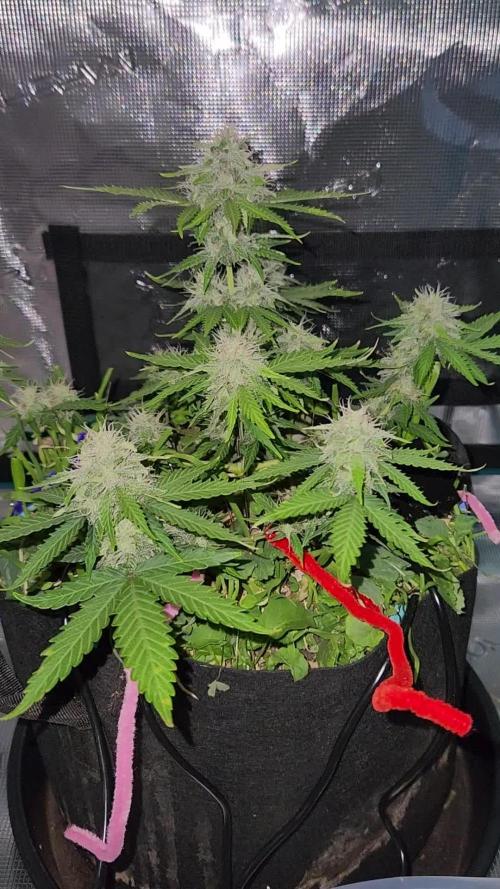
This was week 4 of flower, she smells nice! I use living soil so there isnt much to do. I just observe make sure all is going well.

Likes
3
Share


@No_Clout
Follow
I definitely will be growing this again but I’ll make sure my humiditys on point so I never have to be in this situation again, I’d recommend this strain to anyone novice or expert. I did nothing to these plants dident top them, defoliate or LST I let them grow all natural. I’ve heard glueberry O.G. is a squirter when put in a rosin press so I’ll update everyone on that once flowers are dry.0

Likes
31
Share

@Splashy
Follow
24.04.2026
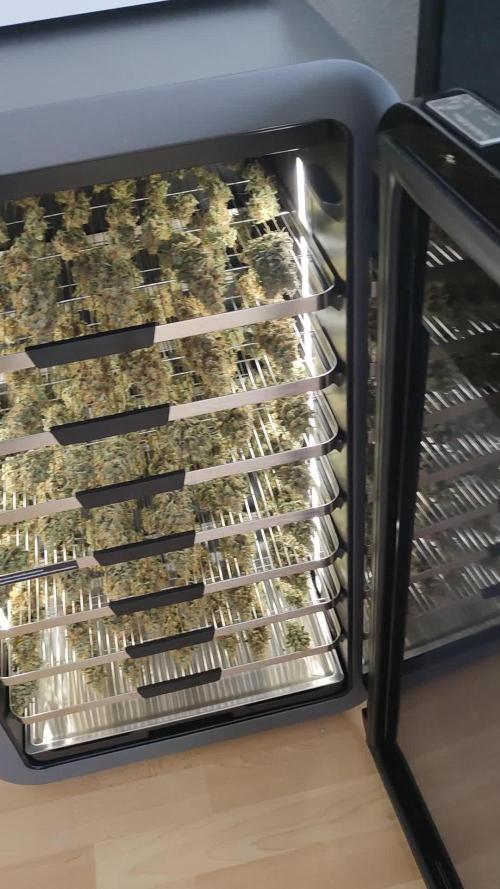
Heute habe ich mich dazu entschlossen die Damen zu ernten. der Hauptpunkt welcher mich jetzt dazu gebracht hat zu ernten waren die trichome, es sind jetzt auf jeder Pflanze Bernstein farben zu erkennen. sie trinken auch nicht mehr all zu viel und ich musste am Ende nur noch alle 3 tage gießen anstatt alle 2 Tagen.
sie sind jetzt grob getrimmt und trocknen und curen jetzt in der vcure von vivosun. ich werde noch mehr Bilder machen, sobald sie fertig sind. freue mich schon auf das Ergebnis. die buds werden jetzt 5 Tage getrocknet und dann 9 Tage gecured, also gibt es in 14 Tagen neue Bilder.
ich wünsche allen die bei dem Contest mit machen viel glück und einen guten grow, am Ende sind wir alle Gewinner eines guten grows.
danke an zamnesia und plagron für das bereitstellen der Samen und des düngers.
es gab mir Mal die Chance einen Strain von zamnesia zu testen und in den dünger von plagron rein zu schnuppern. hat mir beides gefallen und ich werde drauf zurück greifen in Zukunft, ganz sicher.
Update:
08.05.2026
Heute habe ich die Ernte aus der vcure geholt und habe mich echt gefreut. Sehr gut getrocknet und noch nicht crispy außen. Es gab nochmal eine kleine Beschneidung um die schönheiten von buds zu Geltung kommen zu lassen. Die vcure macht einen super Job und ich muss mich nicht um die ganzen Werte kümmern, das macht alles die vcure.
Da ich in Deutschland lebe, muss ich leider alles bis auf 50g vernichten. Ich habe mir die schönsten headbuds aufgehoben und den Rest mit Katzenstreu von meiner Katze vermischt. Mir hat es im Herzen weh getan das machen zu müssen, jedoch will ich zu meiner eigenen Ruhe und Sicherheit im gesetzlichen Rahmen bleiben.
Ergebnis:
Es kamen getrocknet 481g raus, was ein ordentliches Ergebnis war bei einer 300w LED. Behalten darf ich mir 50g laut des deutschen Gesetzes.
Likes
37
Share


@Roberts
Follow
AMS Supreme is doing really good with the Athena Nutrition, under the Mars Hydro FC4800 light. She is stacking nicely , and starting to develop a aroma. She is due for a solution change very soon. She has been drinking a lot, she should be a nice harvest if she stays on current path. Nothing else to report at this time. Thank you Athena, Mars Hydro, and Amsterdam marijuana seeds. 🤜🤛🌱🌱🌱
Thank you grow diaries community for the 👇likes👇, follows, comments, and subscriptions on my YouTube channel👇. ❄️🌱🍻
Happy Growing 🌱🌱🌱
https://youtube.com/channel/UCAhN7yRzWLpcaRHhMIQ7X4g


Likes
21
Share


@Budhunter
Follow
As I did the flushing in day 68 I was watching the trichomes and on day 87 I could see 25-35% amber so I decided to cut it. I cut the whole plant on the base and hang them all to dry. For this reason I will update my findings later when it gets dry and trimmed. So far really happy with the results. It won’t yield much but the quality is impressive
Likes
14
Share

@TrickzGrowz
Follow
Servus Moin!
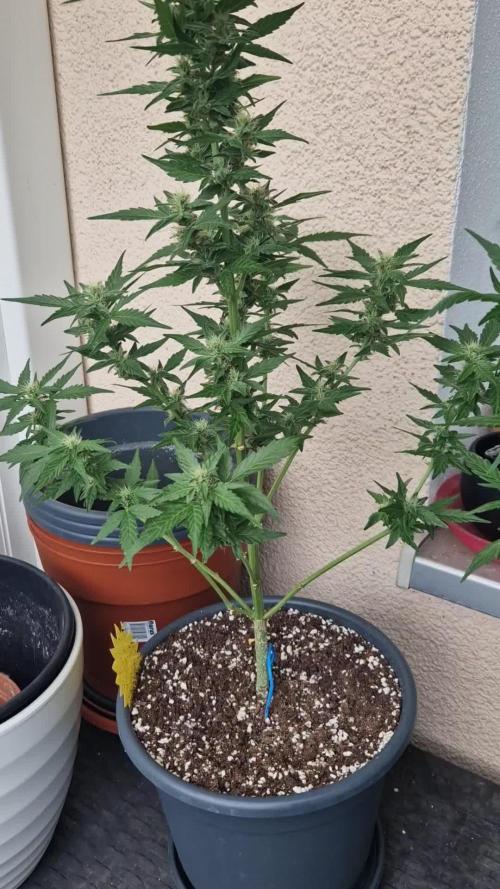
Die Super Lemon Haze macht sich eigentlich ganz gut. Die Blüten werden immer dicker.

Likes
19
Share


@Mzsnoop2001
Follow
Está semana se siente bastante el aroma de whithe widow y blue moby, mientras que moby Dick sano y viene en viaje entrando en flora. Me quedé sin medidor de ph y sufren un desvalance de ph, más que nada ww pero ya lo voy a solucionar! Muchas Gracias por ver! Acepto críticas y concejos.

Likes
14
Share


Likes
10
Share


@pHilosophy420
Follow
She’s almost ready for harvest, just one more week of watching the weather, a big flush, and then it’s time. She’s looking incredibly frosty for a CBD plant; the buds are more like what you’d expect from a high-THC strain. Can’t wait to see how she tastes and what the effects are like in the next few weeks.


Likes
51
Share

@nonick123
Follow
Día 71 (30/12) Christmas holidays. Only watering
Día 72 (31/12) He recibido mi nueva lampara Mars Hydro FC1500 EVO Led Grow Light (2024 NEW FC 1500-EVO Samsung LM301H 150W LED) - https://marshydro.eu/products/fc1500-evo-led-grow-lights/ - https://www.amazon.de/dp/B0CSSGN5D8?ref=myi_title_dp
Procedo a instalarla, de modo que tengo la tienda de 120x60 cm perfectamente cubierta con las DOS (2) lámparas FC1500 EVO
Es ideal tener dos lámparas, porque así puedo ajustar la distancia a la lampara en función de la altura de capa planta
Ajusto ambas lámparas al 75% de potencia (Total 225W), que es más que suficiente para cubrir el área de 120x60 cm
Día 73 (01/01) CBD Auto 20:1 #1 - Muestra una ligera deficiencia con algunas puntas de las hojas dobladas hacia arriba y clorosis... Creo que le voy a dar otra ración de BIO PK 5-8
OG Kush Auto - Está apilando cogollos de forma brutal. Increíble el olor y la cantidad de tricomas que está formando 😍
Día 74 (02/01) CBD Auto 20:1 #1 - Se empiezan a formar tricomas entre los incipientes cogollos
OG Kush Auto - Una pena que se haya intensificado la deficiencia de CalMag en las hojas, porque los cogollos son gordos y densos, y cubiertos de tricomas
Día 75 (03/01) CBD Auto 20:1 #1 - Voy a darle un boost para las 4 semanas que le quedan hasta la cosecha con SILICIUM FLASH
Hago un pequeño agujero cerca del tallo, espolvoreo 25g de SILICIUM FLASH en el agujero, lo cubro de tierra.
Riego con una solución de 2g de BACTREX por litro de agua.
OG Kush Auto - Impresionante densidad de los cogollos que empieza a doblar las ramas 😍 La ventana de cosecha se acerca! 💥
Día 76 (04/01) CBD Auto 20:1 #1 - Investigando me doy cuenta de que lo que le pasa es quemadura de luz, ya que la parte externa de la planta sufre clorosis, y la parte interna (donde no alcanza la luz) está completamente verde
Ajusto la lampara sobre esta planta para 40 DLI
OG Kush Auto - Sigue poniendo los cogollos duros como rocas y muy llenos de tricomas! 😍💥
Día 77 (05/01) CBD Auto 20:1 #1 - On going
OG Kush Auto - Empieza la senescencia en las hojas de abanico, acelerada por la deficiencia de CalMag que ha tenido.
💦Nutrients by Bio Tabs - www.biotabs.nl/en/
🌱Substrate PRO-MIX HP BACILLUS + MYCORRHIZAE - www.pthorticulture.com/en-us/products/pro-mix-hp-biofungicide-plus-mycorrhizae
"GDBT420" 15% DISCOUNT code for the BIOTABS Webshop https://biotabs.nl/en/shop/
With 2 x Mars Hydro FC1500 EVO Led Grow Light (2024 NEW FC 1500-EVO Samsung LM301H 150W LED) - https://marshydro.eu/products/fc1500-evo-led-grow-lights/ - https://www.amazon.de/dp/B0CSSGN5D8?ref=myi_title_dp
Likes
47
Share


@hawkeye_diesel66
Follow
She is looking great. I topped all of her mains and then waited a few days then started to clean up the bigger fans to expose the lower sites to light and air.


Likes
43
Share


@MadeInGermany
Follow
Hey everyone 🤗
It's getting full of buds 😍. When you open the tent, an extreme smell of gelato wafts through the room 😍.
They develop super fast, look beautiful and hardly stop :-). Next week I'll go down a bit with the Ec.
I wish you a lot fun with the update, stay healthy and let it grow 🌱👌
You can buy This Strain at :
www.Zamnesia.com
☝️🏼☝️🏼☝️🏼☝️🏼☝️🏼☝️🏼
Strain
Gelato clone from mother (Zamnesia )
☝️
Genetics: Wedding Cake x Gelato x Gelato 33
👍
Vega lamp: 2 x Todogrow LED CXB3590 COB 55 W
1 x Sanlight S2W 62 W
💡
Flower lamp : 2 x Todogrow LED CXB3590 COB 55 W
1 x Sanlight S2W 62 W
💡 ☝️
Grow Aero System : Growtool 0.8
☝️
Fertilizer:
Canna Aqua Vega A + B , Canna Aqua Flores A + B , Rizotonic, Cannazym, CANNA Boost, Pk 13/14, Canna Cal / Mag, Canna Ph - Grow, Canna Ph-Bloom
☝️🌱
Water:
Osmosis water mixed with normal water (24 hours stale that the chlorine evaporates) to 0.2 EG. Add Cal / Mag to 0.4 Ec Ph with ph- to 5.5 - 5.8
💦 💧