The Grow Awards 2026 🏆 









Likes
Comments
Share
@Zengrower
Follow
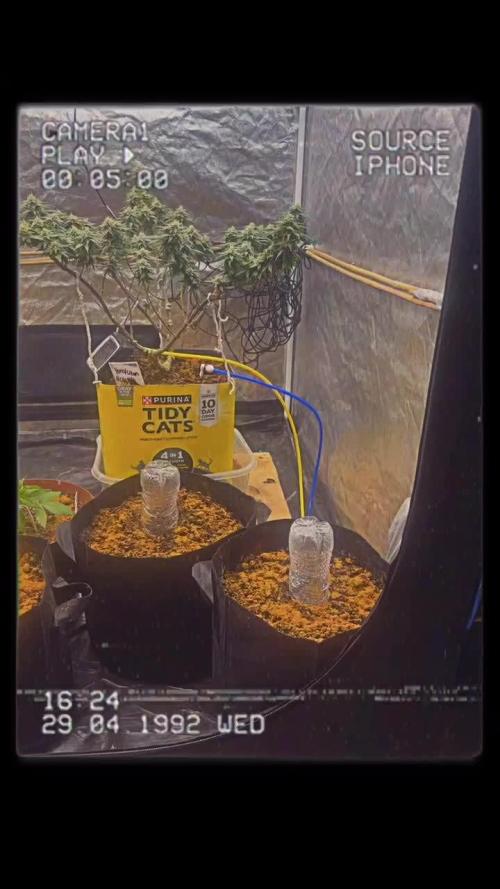
The Fruity Donutz are doing great! Still stretching but not as much as last week. I turned on the airco in the growroom at a constant 21 degrees to keep the temperature under 25 in the GTools. Heat can also cause the plant to stretch more, and it has another advantage because it helps to keep the humidity down. The Sanlight is now fully raised to the ceiling and the plants have enough space to build those colas.
Removing the suspension cords all together and just attaching the clips to the ceiling was a great solution. Silly that I never thought of this before. Now I don't have to supercrop! Supercropping is HST for the plant, but also High Stress for the grower (at least for me 😅). Not much more to say at this point, but I will post more pics of the developing buds later this week ✌️. Cheers and happy growing!
Likes
Comments
Share
@Smokeygrows420
Follow
3 gal brown pot and the rest are in fabrics and are a little behind not fully started yet

Likes
121
Share
@ctm_dzagi
Follow
Very strongly cut off, I prepare to the beginning of flowering,
he released a call that for some reason had a pair of leaves, because of which it turned out to be a little more torn off than it cost, I will give her a couple of days and we will begin the translation into flowering,
also revealed a call which has 3 points of growth on each floor. Changed lighting: 37 watts white 55 watts blue, 38.5 watts red,
Today I fully watched the side lighting and the electrics,
controlled from a smartphone similar to the top lamp

Likes
167
Share
@PapaNugs
Follow
Here we are. At the end of week 7. This cultivar is scheduled for 45 days but at day 49 I can confidently say she is not ready yet. Thinking another week and she should be ready. All is looking good and these girls buds are super fat! Especially for Humboldt. The smell isn't as intense as I'd like but still there. A sweet smell.
Still defoliating as I can and as needed. Getting watered daily or every other day. Here's to the home stretch! 🍻
Lights at 100% power.
Here are the lights details:
Medic Grow Mini Sun-2 150W LED
Model: MN150-022
Spectrum mode: V1
Efficacy: 2.8 umol/J
Thanks for stopping by!
You can find the light on Grow Diaries:
https://growdiaries.com/grow-lights/medic-grow/mini-sun-2-150-watts
You can find the light on Medic Grow's website:
https://medicgrow.com/


Processing
Likes
3
Share
@Kushizlez
Follow
Day 33-40 (May 24th-May 31st)
(Day 34) I just found a herm branch on the tight blueberry pheno. It looks like a random pollen sack opened right above a lower branch. I removed the sack but I saw a small amount of dust fall onto one of the lower branches. I’m going to leave it to see if it will pollinate that small branch at all. I spent a good 5 minutes looking closely for bananas or claws but couldn’t find anymore. The main bud is clearly unaffected so I will just leave it unless it is visibly seeding itself. Too bad because I’m really excited for this plant.
(Day 36) Not a lot has happened since I flushed them. Growth actually looks healthy and I don’t see any deficiencies on anything yet.
(Day 37) Both of these badazz cheese phenos are picture perfect and easily hold up against Canadian and California quad grade. I might try to reveg them at the end and take some clones. They have this unique pungent, grassy, sour milk smell that is just wonderful. The density and bud structure is looking great too. This whole plant will probably take 3 minutes to trim if that.
(Day 38) Just found a banana on the shitty blueberry pheno. This pheno is trash and I would honestly throw it away if it didn’t mess up the 3 perfect rows. It has almost no frost, no smell, is airy and has bad structure. I’ve actually never seen a plant with such little frost. Even outdoors.
(Day 39) I think most of this tent will be done by day 60 but I will probably ride it out until day 70+. I don’t think the blueberries or the jacks will fill out very much either way but taking it too day 70 will ensure maximum production from each plant.


Likes
4
Share
@FrecheOma60
Follow
The plants are looking amazing. Iam happy that all effort i put into these plants got rewarded. The plants are from 2 mother plants some of them got very purpleish / black leafs some very dense buds all have purple touch in the buds. The sugar amount is insane they all look very beautiful altough the buds are not the biggest. Its around 1-2 weeks left till harvest . Today ive watered with clear rainwater to flush.



Likes
3
Share
@Luke_Lee
Follow
—————————————————————
WEEK 5 / DAY 29-36
Mars Hydro FC-E3000
Floragard Professional GrowMix
11L Plant bag made of fleece
Light: 55cm / 55%;
Schedule: 24/0;
PPFD: 650 umol/m2/s
20° C - 70 RH
500ml per Plant
PH 6,5-7
2ml BioGrow; 0ml TopMax ; 0ml BioBloom; 1ml CalMag
1ml CalMag
#1 Royal Critical Automatic
#2 Royal Critical Automatic
Fan, extractor and pump ON 24/0.
—————————————————————
-17.02.2025
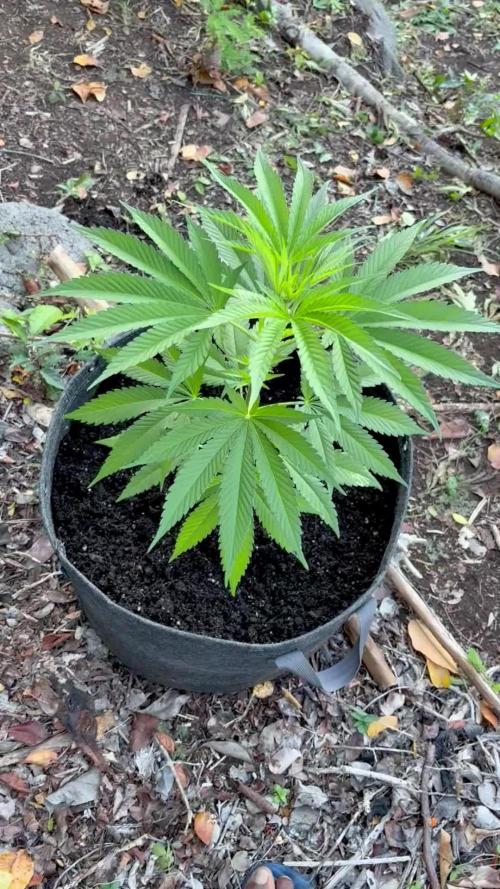
The fourth week of vegetation begins.
The plants are looking very good so far and I'm happy with the grow so far. There have been no significant complications so far.
The lowest few leaves have been removed and light LST applied using plastic benders.
-19.02.2025
The plants get their typical “white hairs”, pre-flowering has started.
-23.02.2025
The plants are doing well, I haven't been able to look after them for the last few days. But they have survived.
The fourth week of vegetation is coming to an end and as you can see the plants are starting to flower.

Likes
8
Share
@Elixire
Follow
More buds are comming out this week and the main cola’s are getting all the energy that was prevent by the small bids beside
Likes
125
Share
@SlowpokeFuegobud
Follow
🍊 🍋 🍮 🍭 🍊 🍋 🍮 🍭 🍊 🍋 🍮 🍭 🍊 🍋 🍮 🍭
Welcome to the harvest, dear friends!! 😘
The Sacitrus Bomb Auto was a real diva, not that she needed special attention but look how she turned out!! 💄 😍 Amazing! A star is born! ⭐
A star got chopped.. 😁
Trimming went fast, and now I got many jars filled with yummy weed! 😋 Lucky me, blessed I am! 🙏 Thanks universe, thanks @SeedsMafia!! 🖤
Thanks, everybody!! 💚 💚 💚 Grower love!!! 😘🙏 🌱
______________________________________________________________________
Rick Simpson Oil - very easy tutorial, fast recipe. Let's call it Fuego RSO.. 😎
you will need:
30g / 1 ounce trim or flowers, ground coarsely or blitzed
1 litre alcohol (better the expensive one which is food safe, butthen it would be nice to have a distiller to catch it.. so i take rubbing alcohol 99,9%)
a cheap rice cooker, you need to be able to operate it with an open lid, and it needs to switch to keep warm function by itself!
a USB cup heater
a container for mixing the weed with the alcohol, made from ceramic or glass or something
a stick for stirring
a container to catch the green liquid
(alcohol is magically dissolving many colors and other things so make sure you use the right materials here)
a straining cloth, sieve, coffee filter etc to seperate the plant material from the green alcohol trichomes solution
a scraper or spatula
a heat proof glass to put on the USB heater for last finish
a glass container or cyringe to store the finished oil
some coconut oil and some small glass jars
° first you pour half of your alcohol over the flowers or trim and then stir for several minutes
° sieve the material, catch the green liquid
° put the material back into the bowl and mix with the other half of the alcohol, repeat
° put the minimum demanded amount of liquid in the rice cooker and switch on, stay there!!! keep the lid a bit open, this is really prone to catch fire now. i do it in the garden when it's windy.. DON'T SMOKE NOW! 😃
° frequently pour more and more of the liquid in the rice cooker, until all is gone, you can add 2-3 drops of water.. it will prevent burning.
° there will be a brown sticky mass left, scrape this mass into the heat proof glass and out on the USB heater until there are no bubbles coming out anymore (all the alcohol should be gone)
° fill into the cyringes or containers as long as it's warm!! this is hell!
° pour some coconut oil in the warm rice cooker and dissolve the remaining RSO (this makes a good THC loaded skin treatment!), same with the glass container
° when first consuming this, try half the size of a rice grain, wait until the next day, then adjust the dosage
get well soon!! 💚🙏😘
_________________________________________________________________________________
SETUP:
80x80x180 cm Zelsius
240W Full Spectrum LED IR UV dimmable
DW240H-A6-HS
Heatsink color red
LED Chips:
512pcs SAMSUNG LM301H + 24pcs Osram 660nm + 8pcs Osram IR 730nm + 8pcs UV 385nm
Color mix: 2700K + 4000K
2,8umol/J
Driver HLG-240H-C2100B
Coverage: veg 5x3ft / flower 4x2ft
Product size: 628x205x68mm
Green Buzz Nutrients
Shouts go out to my sponsors @GreenBuzzNutrients, thanks so much for your support! ❤️
If anyone would like to try their amazing organic products, use code GD42025 for generous 25% discount (for orders of minimum 75€) ✨
https://greenbuzznutrients.com/
Mills Nutrients
Biobizz Lightmix
custom exhaust fan 320/270cm³/h
Carbon Active Granulate 240cm³/h
tab water pH 8 - EC 0,25 with Calmag to 0,5
Advanced Hydroponics pH minus Grow + Bloom to pH 6.2
🍊 🍋 🍮 🍭 🍊 🍋 🍮 🍭 🍊 🍋 🍮 🍭 🍊 🍋 🍮 🍭

Likes
5
Share
@GmiadlichGanjaGrown
Follow
Mein pH Messgerät war kaputt, aber auf eine eklige Art und Weise, es hat nämlich falsche Werte angezeigt. Das führte dazu, dass der pH überhaupt nicht gepasst hat und die Pflanze ringsum knusprige Blätter hatte. Das habe ich korrigiert und das Wasser getauscht, jetzt explodiert sie förmlich. Schon Wahnsinn wie die immer anschieben wenn die Bedingungen passen.

Likes
4
Share
@pzwags420
Follow
On the 5th week of flowering day 1 the girls are chugging along, growing bigger by the day and smelling excellent :). On day 5 the girls are putting on a lot of weight. I'm very excited about harvest:). On day 7 The girls are doing well. I had a small clog in my bluat system on one of my carrots. I have fixed the clog by massaging the small pipe that was clogged. it has been tough using powdered nutrients with this system as there has been a few clogs. I will be switching to water soluble nutrients with drip clean to keep lines clear on my next grow. I just need to make it through the next few weeks to harvest :)
Likes
9
Share
@SolitudeCorners
Follow
Can't wait to blazeeee
Feeding💪
10/17 Water30L+Cleanse80ml+calmag@190ppm
Ph6.3
Ebb 10.42/11.32/12.26/13
Clone 11.35/12.21/13.05/14
Average runoff ec1.5
Keeper 300ml per pot
10/18 Water26L+Flawless90ml+calmag@300ppm
Ph6.3
Ebb 11.38/12.24/13.17
Average runoff ec1.2 ph6.5
Clone 12.38/13.56/15.20/16.10
Average runoff ec1.5 ppm750
10/19 Water26L+Cleanse80ml+calmag@200ppm
Ph6.3
Ebb 11.12/11.48/12.24
Average runoff ec1.4
Clone 11.50/12.12/12.37/13.37/14.40
Average runoff ec1.3 ph6.6
10/20 Water30L+Cleanse30ml+Calmag@190ppm
Ph6.4
Ebb11.42/12.22/13.20/14
Clone 12.40/13.20/14.20/14.45/15.15
Average runoff 1.2ec ph6.4-6.7
10/22 last light day
10/23 2 Pm Cut and hang
Plan 21day at 23temp 55rh
Likes
42
Share
@MrGrow
Follow
7.12.2021
55 giorni di vegetativa.
Applicato la rete alle piante, ho ripulito completamente la parte bassa, che non verrà illuminata, dai rametti più piccoli.

Likes
49
Share
@LockDownGrow
Follow
Really into the massive stretch now I am having too move the climate control probe and thermostat every day now and these girls will soon cover the WiFi camera too , probably growing around 2 or 3 cm per 24 hours at this stage , " day 4 of week 5 "
The tent is filling up nicely but the fbt7 is a clear winner so far , be is my cock up of snapping the main stem and fixing it ? The ftb7 is double the size of all the other 3 plants and is a very nice little bush , the smoothie has been very consistently healthy and vigorous and is around 22cm now and is one I did not lst , the BlackBerry has finally woken up and is now the same height as the others another plant I didn't lst , the c1 started very vigorously and was strong , them week 3 started too show signs of very early flower , she is now is fully fledged flower at week 5 and looking fantastic , and I was lucky enough too get all the side branches out and bend over the main cola too the netting and has made up for in lst what it lacked in size due too the early flowering ,

Likes
210
Share
@HAPPYWEEDS
Follow
Top strain. Big monster yield. Really hard stems. So beauty buds. I will upload more info when it will be cured. I will upload smoke review and dry weigh too

Likes
10
Share
@Lazuli
Follow
Still only gave them rain water. Time to let them go dry and start the feeding


Likes
14
Share
@Whiteybulger1814
Follow
Day 52 to 59
These girls are on autopilot been chasing VPD a bit opening flaps and closing them on the tent until it's as close as I can get but other then that it's a no brainer right now

