


Processing
Likes
Comments
Share


@Ferenc
Follow
Day 86: Everything continues the same way light, ventilation, humidity... water intake raied up 450ml daily. Buds are getting thicker Zkittlez form the Bakery Seed Co. is in flush with 2nd week now... No fertilization 2nd week...Next week is harvest time. I start flushing Blue Sherbet S1 this week and stop fertilizing as well She should be ready on the 14th-15th week. Fruit Tree and 24K Gold need more time so my plan is to start flushing them from next week to be done by the 15th, 16th week. Today I watered them after 2 days except Zkittlez because she is in flush.
I am happy with them only one thing that I don't like is the LED I bought. It is weak, I should have sticked with the previous one. It can be stronger better results with more dense buds but I think I have done the maximum with this LED. But the Girls are nice let's see the outcome soon. ✌️
Day 87: Very strong smell in my room! !!! Marijuana ❤️🤭😂
Day 89: Last day watering for Zkittlez. Friday, Saturday, Sunday no more water and on Monday is harvest!🤭
Day 90: Today I have changed the old lamp just wanted to get rid of it and placed a new Viparspectra PAR 600W.


Likes
18
Share


@Mastr
Follow
I'm going to stop nitrogen from now till harvest and see the different
Update day 38 I move her into different tent due her size with 600hps light let see the result 💪
Update day 41 I remove hps light due damage my eye and cause headache and get too hot inside tent so I change it with spider farmer sf1000 she is so thirsty she drank every other day 3l nuts without run off today I done very aggressive defoliation let see results

Processing
Likes
23
Share


@eldruida_lamota
Follow
Buenas a todos familia, 4 semana ya.Recta final del periodo de crecimiento,conforme cambiemos el foco cambiamos el fotoperiodo a 12/12 .
El trasplante fue un éxito, no hubo complicación ninguna.
La tierrra que usamos fue PLAGON LIGHT MIX.
Todo va sobre ruedas , la condiciones en crecimiento fueron óptimas , las power plant xl, aún que parezca que no, acabarán recuperando, solo les falta ese pequeño estirón y ale.

Processing
Likes
19
Share


@Fire_Farmer
Follow
Seems I told a lie last week, I'm late one day and I've done videos again cos again 🤥
Its been a good week for bud production regardless of a hiccup this week which shows as cal/mag and nitrogen deficiencies throughout each plant🤒
My ph pen malfunctioned and I ended up feeding them all 4.5 and didn't notice till the leaves told me 🍂
The ph pen has been replaced, amendments made to buffer the root zone and fingers are crossed 💉🤞
Super stinky grow this, going to replace my carbon filter before starting a new one because I caught wiffs of them when I entered my home today. If the flavours match the smells in this tent I'm in for a treat come smoke time.👃⛽🍋🍇
Its that magic time in the tent now where each girls really showing their own characteristics, both the purple punches and the zkittlez are different phenos to their siblings so I'm excited to see what they finish up like🏁
So far mostly good 👍
Thanks for reading 📖
One Love💚
Fire Farmer🔥👨🌾
Likes
23
Share


@FrostRailz
Follow
Turned out amazing still hanging for a week. You definetely need a carbon filter for these. No pests or disease, eady to grow . She will eat everything you give her 💪. 2 distinct Phenotypes. All have dense buds dripped in resin.
Responds very well to lst and topping once. The only bad thong is there is a phenotype that is very small and not on par as the other two huge difference. Loving it. Learned alot.

Likes
23
Share


@EmperorOfBud
Follow
Switched the plants to flower this week and have noticed tons of growth since. Both plants have turned out to be female and are both producing pistils. Have run into a potential problem while defoliating I noticed a couple leaves on one stem that look like they were burnt almost. They weren’t bad but I haven’t noticed it anywhere else. I looked over a lot of the leaves with a healers loupe under 60x magnification and didn’t notice and insects, the leaves were also growing into the side of the tent so that might be what cause it but not too sure.

Likes
8
Share

@Roberts
Follow
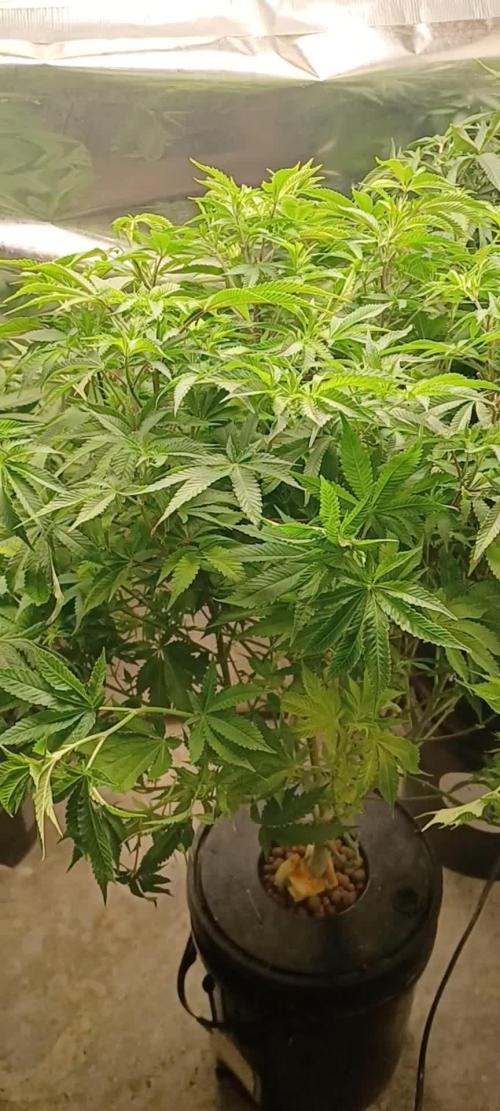
White widow has been doing better, but has not fully pulled out of her issues. She is doing a lot better in the overall. Thank you Seedsman, Medic Grow, and Athena nutrition. 🤜🏻🤛🏻🌱🌱🌱
Thank you grow diaries community for the 👇likes👇, follows, comments, and subscriptions on my YouTube channel👇.
❄️🌱🍻 Happy Growing 🌱🌱🌱
https://youtube.com/channel/UCAhN7yRzWLpcaRHhMIQ7X4g.

Likes
65
Share

@BudVision
Follow
Hi Growers,
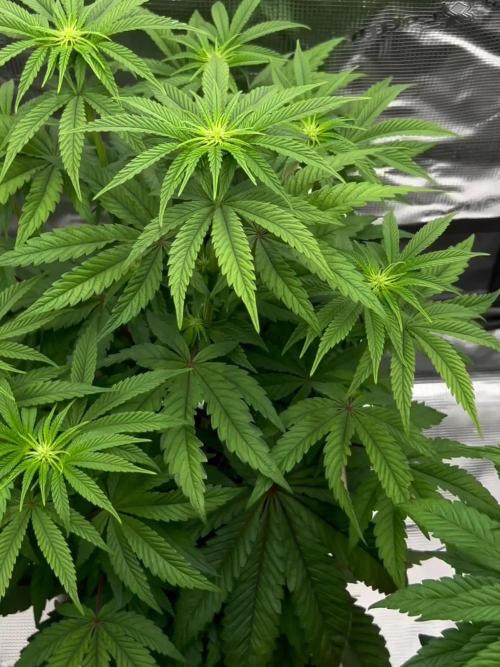
Week 2 of flower is here and the plants are clearly in full stretch mode. Every day they grow taller and fill the space nicely. Both ladies look healthy, strong and full of vigor. The male has already opened his first pollen flower, so pollen production has begun. I’ll start collecting some pollen soon and pollinate the two females.
———————————————————————————
Druhý týden květu je tady a rostliny jsou jasně ve fázi stretche. Každý den rostou a krásně zaplňují prostor. Obě samice vypadají velmi zdravě, silně a vitálně. Samec už otevřel první pylový květ, takže produkce pylu začala. Brzy začnu sbírat pyl a opylím obě samice.
Peace and happy growing ✌️
Likes
16
Share


@AestheticGenetix
Follow
7/10/24
testing testing. can i post updates now?
beautiful buds. the leaves are changing into a blue color. it reminds me of some of the blue city diesel i got from a buddy back in the medical days.

Likes
24
Share


@TerpTurtle
Follow
White Truffle x Red Pop by Detroit Seed Co
BuildASoil 3.0 LOYAL TO THE SOIL
Strawberry truffle | Vivosun 2x4 | Mars hydro sp3000 | 7 gallon pot
Chem 91 x Red pop | AC infinity 2x3 | AC Infinity Iongrid 24 | 5 gallon pot


Likes
Comments
Share


@IranBudz
Follow
unfortunately I don't have any Content from Veg state.
i will happy if You have any comment or criticism 😍

Likes
388
Share


@yan402
Follow
🌸🍏✨🍭🌸🍏✨🍭🌸🍏✨🍭🌸
Hi and welcome to another Kannabia grow!
This time I’m running their Apple Fritter (feminized photoperiod). She’s going to veg under 24hr light and be manifolded.
Still cleaning the rest of my Candy Cream GF (11.04.25) — going to sow the seed tomorrow (12.04.25)
*been lazy, sowed on 14.04.25
🌸🍏✨🍭🌸🍏✨🍭🌸🍏✨🍭🌸
---
💭❗💭❗💭❗💭❗💭❗💭❗💭
❗Events & thoughts worth noting❗
💭❗💭❗💭❗💭❗💭❗💭❗💭
12.04.25 (GW1) – Cleaning + flushing the old coco coir. Might need to add another brick. *No new brick needed ✅
This is how I recycle my coco coir — fast, cheap, no BS.
🌿 Harvest plant
✂️ Chop roots small — they stay in for structure (organic perlite)
💦 Hot water rinse — remove salts & dust
🍶 Pre-soak with light feed:
Micro 10ml
Bloom 0ml
GreenBuzz 10ml
Cal-Mag 60ml
FFJ/FPJ 10ml (new disgusting batch)
pH down (citric acid)
♻️ Media stays — Roots stay — Back in service.
14.04.25 (GW1) – Planted seed in final pot ✅
16.04.25 (GW1) – Did last tent clean up + setup ✅📸
17.04.25 (GW1) – Seed germinated 🎉📸 — roughly 48hrs in final pot. Solid start👌♥️
23.04.25 (VW1) – Minimal burnt tips 📸 — not progressing, not a concern.
26.04.25 (VW1) – Started using the new batch of FPJ/FFJ
https://growdiaries.com/diaries/266849-grow-journal-by-yan402
30.04.25 (VW2) – Increased TriPartMicro & GreenBuzzBloom 10ml → 15ml
03.05.25 (VW2) – Increased TriPartMicro again 15ml → 20ml, topped the plant, and added final layer of clay pebbles around the base, trimmed side branches and did LST in preparation for "manifold" 📸
08.05.25 VW3 finished manifold📸
13.05.25 VW4 Increased TriPartMicro to 30ml and GreenBuzzBloom to 20ml.
15.05.25 VW4 Done defoliation and LST 📸
18-19.05.25 VW5 pruned all the shoots bellow my "mains" and did a full defoliation📸
24.05.25 VW6 increased GreenBuzzBloom to 30ml
04.06.25 VW7 did a cleanup📸
11.06.25 VW8 increase TriPartMicro to 40ml
17.06.25 (VW9) – Final structure pass 💈🌿
Did a clean perimeter prune + removed weak shoots. Ended up with 12 tops, was aiming for less, but she made the call
Didn’t fight it, just shaped it the best I could
Airflow’s good, structure’s stable
🛑 No more cuts until post-stretch
Pics coming shortly 😘
Flip coming soon — we’ll see how she handles it.
20.06.25 VW9 Switched lighting to 12 hours, may the stretch begin 🤞
22.06.25 VW10 Did a good LST session,made some pics, and came to some conclusions and a small change of plans:
Originally planned for 8 mains — long, spaced colas and maybe a couple stronger “titans” if she wanted to go that way.
But she’s showing me something else, and I’m not here to fight her — just guide her.
Now after stretch, I’m keeping side shoots only if they: Fill real canopy gaps
Don’t crowd neighboring tops (minimum 15cm spacing)
Aren’t growing into walls or toward the next plant
Anything too close, too low, or heading into shade gets removed. No point forcing it.
Looks like I’ll finish with 14–16 solid tops, depending on how she settles.
I’m just trying to give each one enough light and space to stack properly.
No overcrowding, no larf — just letting her do her thing with a bit of structure.
Increased Tri Part Micro to 50ml as well.
28.06.25 VW11 one week since I flipped to 12/12 and she is stretching nicely, a bit shy in showing pistils compared to the Fantasy Feast regulars I have in the same tent.
29.06.25 VW11 increased GreenBuzzBloom 30→ 60ml
06.07.25 FW1 TriPart Micro: 50→ 30ml
TriPart Bloom: 0 → 20ml
Home-made FFJ/FPJ (Watermelon + Pumpkin): 10 → 30ml
12.07.25 FW1 GreenBuzzBloom 60 →40ml, TriPart Bloom: 20 → 60ml, fpj 30→60ml
🌱💦🌱💦🌱💦🌱💦🌱💦🌱
🌿 Day to day tasks & actions 🌿
🌱💦🌱💦🌱💦🌱💦🌱💦🌱
11.07.25 FW1 – Fed 5l of #1 → 2l runoff
12.07.25 FW2 – Fed 5l of #1 → 2l runoff
(*RUNOFF reused for tomato plants)
🍶💧🍶💧🍶💧🍶💧🍶
💧 Nutrients in 30L #1 – Week 11 Veg
🍶💧🍶💧🍶💧🍶💧🍶
💧 TriPart Micro: 10 → 15 → 20 → 30 → 40 → 50ml → 30ml (1.00ml/L)
🍶 TriPart Grow: 0ml (0.00ml/L)
💧 TriPart Bloom: 0 → 20 → 60ml (2.00ml/L)
🍶 GreenBuzz Bloom: 10 → 15 → 20 → 30 → 60→40ml (1.33ml/L)
💧 Cal-Mag: 60ml (2.00ml/L)
🍶 Home-made FFJ/FPJ (new batch): 10ml → 30→60ml (2.00ml/L)
💧 pH Down: Citric acid (buxXtrade)
📦 TOTAL: 250ml per 30L
🔬 8.33ml/L
🍶💧🍶💧🍶💧🍶💧🍶
⚙️✂️⚙️✂️⚙️✂️⚙️✂️⚙️
✂️ Tools & equipment ✂️
⚙️✂️⚙️✂️⚙️✂️⚙️✂️⚙️
✂️ 2× MarsHydro SP3000
⚙️ MarsHydro 150mm ACF Ventilator
✂️ Trotec dehumidifier (big unit)
⚙️ Mini no-name dehumidifier
✂️ Kebab skewers (LST – stainless)
⚙️ Wire + roast skewers (LST assist)
✂️ Scissors (HST)
⚙️ Vacuum (for spills & cleanup)
✂️⚙️✂️⚙️✂️⚙️⚙️✂️⚙️✂️⚙️✂️⚙️
---
🍏🍪🌬️🍬🍏🍪🌬️🍬🍏🍪🌬️🍬
Apple Fritter (Kannabia Seeds)
🍏🍪🌬️🍬🍏🍪🌬️🍬🍏🍪🌬️🍬
Species: 50% Indica / 50% Sativa
Genetics: Sour Apple × Animal Cookies
THC: Up to 25%
Effect: Euphoric, relaxing, creative
Flavor: Sweet, fruity, pastry notes
Flowering: 56–63 days
Resistance: High
Indoor yield: 450–500g/m²
Outdoor yield: 600g/plant
Structure: Strong, bushy, dense buds

Likes
3
Share


@MicroHidroGrow
Follow
Día 48.
El frío ha afectado bastante el crecimiento. Pero aún así va a salir algo interesante. Creo que la mala genética puede tener mucho que ver. Por el momento falta poco para que los cogollos se terminen de cerrar. Calculo que en una semana cuando se cierran ya paso a usar el overdrive. Entre tanto, ya está abriendo la semilla para la próxima madre. Calculo que en 3 días ya va a estar para poner en el sistema hidropónico. Seguiré viendo que sucede.
Likes
31
Share


@Bbfcfm3414
Follow
SCROGING is an amazing technique that I will get better at but this being my first real attempt I clearly see how important it is to get everything cleaned up under the net. I’m not touching anything now and I’ll just do better next time.
Anyways my garden looks really good, and the buds look real good and my canopy is pretty even. I mean it’s 4 or 5 inches off and if I would have tucked one more time I could have got things a bit more even. The Grand daddy purples buds are definitely going to be lighter. The vanilla frostings buds are going to dense and thick.
If I take what I’ve seen from the past couple harvests my light will really turn these buds into little dense monsters. The viperspectra PAR1200 is a good light and makes heavy dense buds. I highly recommend the PAR1200 for a 3 x 3 space.
Happy 420!
Update - I think I missed 1 week in my grow. Today’s the last day of week 4 and I gave the girls a little trim today and cleaned those big fan leaves off. What a difference a little trim makes! I took these new photos about 8 hours after their trim. All those buds sites that were being covered reached out and here’s a few pictures of what was underneath. Have a great weekend!


Likes
25
Share


@Ultraviolet
Follow
Thorium (chemical symbol Th) is a naturally occurring radioactive metal found at trace levels in soil, rocks, water, plants and animals. Thorium is solid under normal conditions. There are natural and man-made forms of thorium, all of which are radioactive. In general, naturally occurring thorium exists as Th-232, Th-230 or Th-228.
The atomic number of 90 - Thorium
1. Dobereiner’s Triads
German chemist Johann Wolfgang Dobereiner attempted to classify elements with similar properties into groups of three elements each. These groups were called ‘triads’. Dobereiner suggested that in these triads, the atomic mass of the element in the middle would be more or less equal to the mean of the atomic masses of the other two elements in the triad.
An example of such a triad would be one containing lithium, sodium, and potassium. The atomic mass of lithium 6.94 and that of potassium is 39.10. The element in the middle of this triad, sodium, has an atomic mass of 22.99 which is more or less equal to the mean of the atomic masses of lithium and potassium (which is 23.02). 9 controls the 6 and 3.
The Limitations of Dobereiner’s Triads are :
All the elements known at that time couldn’t be classified into triads.
Only four triads were mentioned – (Li,Na,K ), (Ca,Sr,Ba) , (Cl,Br,I) , (S,Se,Te).
2. Newland’s Octaves
English scientist John Newlands arranged the 56 known elements in increasing order of atomic mass in the year 1866. He observed a trend wherein every eighth element exhibited properties similar to the first. This similarity in the properties of every eighth element can be illustrated as follows.
Classification of Elements and Periodicity in Properties
Newland’s Law of Octaves states that when the elements are arranged in increasing order of atomic mass, the periodicity in properties of two elements which have an interval of seven elements in between them would be similar.
Azomite has an average of 180ppms of THORIUM...........I'm fucking mindblown
Alot if big things happening this weeeeek plants final form starts to take shape, light defoliation on lower parts of the plants I know make the cut later in life. Going to restrict defoliation to week 2-3. Going more cautious this time round as my excessive defo last grow was tooooooo much and effected yield greatly.
Added steel weights 💪. Big buds require a solid frame, I'm still trying to find balance for this part, I'd like to have had the reinforcement done earlier. Ever learning.
Can already tell by early flower formations these are going to be madness :
AZOMITE:
Most farmers have not had a proper understanding of what is azomite and how to use it in gardening, especially if you practice organic farming. Continuous propagation and leaching effects of water deplete the essential minerals and micro-nutrients from the soils. Such soils remain weak, not able to support the production of fruits and vegetables. Azomite mineral contains micronutrients that supplement the soil. It also balances the minerals for growth and overall productivity. Constant use of this mineral rejuvenates your soil renewing its potency again. Azomite is a naturally mined mineral product that is ready to use. It’s a unique rock that comes from a mine in central Utah. Azomite requires no mixing or special preparation before use. It is derived from volcano ash that spewed out millions of years ago. It contains the widest range of minerals of all the rock dust in the world. Azomite provides the plants with 70% essential elements. These elements include magnesium, calcium, potassium, and silicon for plant growth.
Facts About Azomite Fertilizer
It’s a natural mineral – 100% natural with no fillers or additives
Does not contain any harmful elements
Requires no special preparation before use
It’s odorless – very friendly to use
Does not restrict water penetration or aeration
Is easily broken down and absorbed into the soil
Does not burn plants
GREENSAND
Espoma Greensand, love Greensand. If you have never used the product (or never heard of it) Greensand is a mineral called glauconite, which is found on the ocean floor and mined for use as an organic fertilizer and soil conditioner. Greensand supplies marine potash, silica, iron oxide, magnesia, lime, phosphoric acid, and 22 trace minerals. Greensand works great on Southern “hard as a rock” clay soil this spring, to help improve its texture, and enrich the nutrient content of my soil without using chemicals. Greensand is one of the oldest and most generally useful tools in the organic gardening tool box. Greensand has been used since the eighteenth century as a soil amendment and slow-releasing fertilizer (0-0-3). It is one of the best certified organic sources of potassium. It comes from sandy rock or sediment containing a high percentage of the mineral glauconite (greenish-black to blue-green). It contains potash, magnesium, iron, silica and can contain as many as 30 other trace minerals. The recommended usage is to broadcast 50 to 100 lbs. per 1,000 square feet. It improves plant health in general and is also be used to loosen heavy, clay soils. It will also improve the moisture retention of sandy soils. Greensand is OMRI listed for organic use.
Sea Kelp – Ascophyllum Nodosum
Sea kelp, also known as brown algae, is the generic name for the seaweeds that make the order Laminariales. Kelp grows in huge underwater forests in shallow parts of the ocean, with some forests covering over 2230 square miles! Kelp thrives in cold and turbulent ocean water with strong currents that bring enough nutrients for the algae to grow. The coasts of Norway, Japan, Mexico, and California are some of the most abundant in terms of natural kelp density. Sea Kelp BenefitsSea kelp is rich in a wide range of nutrients, minerals, and active compounds. Some of them have great nutritional value, others show antioxidative and anti-inflammatory properties, help with diabetes, and may even fight off some types of cancer. In other words, sea kelp is jam-packed with health benefits. Let’s explore some of them in more detail one by one!
Macronutrients in sea kelp
Energy – 43 kcal
Protein – 1.68 g
Total fat – 0.56 g
Carbohydrate – 9.57 g
Fiber – 1.3 g
Sugars – 0.6 g
Minerals in sea kelp
Calcium – 168 mg
Iron – 2.85 mg
Magnesium – 121 mg
Phosphorus – 42 mg
Potassium – 89 mg
Sodium – 233 mg
Zinc – 1.23 mg
Copper – 0.13 mg
Manganese – 0.2 mg
Selenium – 0.7 mcg
Vitamins in sea kelp
Vitamin C – 3 mg
Vitamin B1 – 0.05 mg
Vitamin B2 – 0.15 mg
Vitamin B3 – 0.47 mg
Vitamin B5 – 0.642 mg
Vitamin B6 – 0.002 mg
Vitamin B9 – 180 mcg
Vitamin A – 6 mcg (116 IU)
Vitamin E – 0.87 mg
Vitamin K – 66 mcg


Likes
16
Share

@Zerpses
Follow
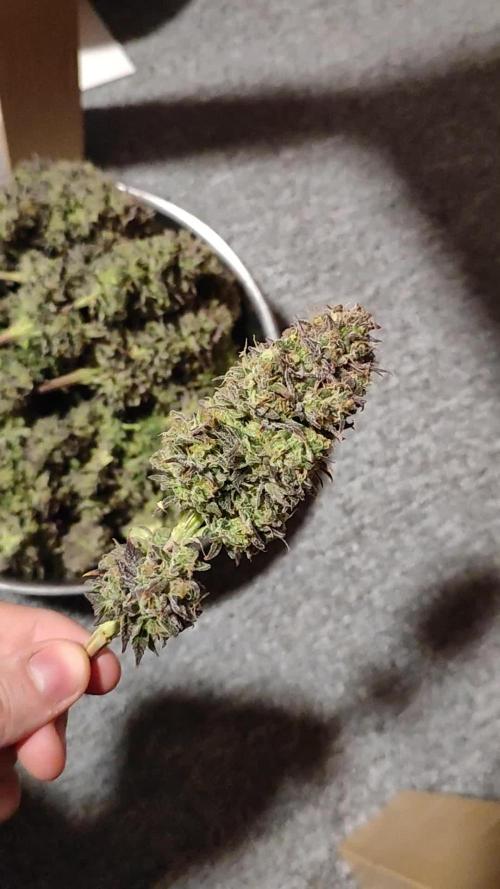
Nach 68 Tagen Blüte ist der Tag der Ernte gekommen. Glücklicherweise habe ich kein Problem mit Schimmel, Krankheiten oder Ungeziefer gehabt.
Beide Pflanzen riechen gut und sind sehr harzig, wobei die Pflanze 2 stellenweise sogar extrem harzig ist.
Mit dem Ergebnis bin ich für meinen ersten Grow mehr als zufrieden.
Wenn das Trocknen genauso gut verläuft ist alles in bester Ordnung.
Likes
52
Share


@The_Good_Twin
Follow
14 Jul 2021
The plant is still looking lovely, and her buds look wonderful. I’m continuing with the flush of properly pH’ed water chilled to 46.3F. My initial pH was 7.7, so I added 15 gtts (1.5ml) of pH DOWN which adjusted the pH to 6.2. I’d like it to be higher, but working with pH DOWN is so much harder than pH UP! The TDS going in was 75 ppm. Our heat wave is still going strong, and the temperature in the tent was 88F with humidity at 44%. The runoff pH was 5.3, and TDS runoff was 1897 ppm. That’s a reduction of 410 ppm from the watering on the 12th. At this rate it’ll be next week or later till I can harvest. If it does, I may end up harvesting sooner and curing longer. 🤷♂️ I’ll have to wait and hope I guess.
16 Jul 2021
I’m continuing with the flush today, and I’m beginning to think I should start flushing more often, yet I don’t want to damage the plant. At this stage of growth I don’t know if overwatering is as detrimental as it is to a younger, less developed plant. I want to harvest it before she gets too far along in her trichome development. She was clearly ready when I checked them on July 10th, and I don’t want her to get much farther along. Today I’m giving water at tap temps because at this point I don’t believe it matters. Everything I’m deciding to do is purely by instinct and trial and error. I feel like a researcher working on viable material that has a known outcome in general, but getting to the final stage (harvest) is detrimental in how the individual works the issues, or problems, and prepares for a desired outcome. Only each strain is different, and learning to adjust to those differences is the learning process. I never knew that growing weed could be so much fun, or as stressful! But I dig it!
Today she received a gallon of water with an initial pH of 7.7. I added pH down 5 gtts (.5ml), which adjusted the pH to 6.4. TDS going in was 91 ppm. Runoff pH was 5.9, and TDS runoff was 1407 ppm. Temperature in the tent was 84F, and humidity was 60%. There was a 390 ppm reduction from the last watering 2 days ago. At least it’s moving in the right direction.
18 Jul 2021
The flush is going well as you’ll be able to see once I post my numbers a little later in this note. Her buds are still looking awesome, and she still looks healthy for the most part. Her leaves on the fan side still look dried up on the edges, but not completely dead. Since it’s happening on both of my plants in the same location, the cause was easy to surmise as I’ve noted it before. I’ll be ready for harvest in about a week or less, and then her tent mate will be left alone for a while. Today she was given a gallon of water chilled to 57.2F with an initial pH of 8.0. I added 8 gtts (>1ml) of pH DOWN in 2 separate increments to adjust it to pH 6.7. The TDS going in was 80 ppm. The runoff pH was 6.1, and TDS runoff was 784 ppm. That’s a reduction of 623 ppm since the last flushing/watering. So I’m down into the 3 digit realm now, so hopefully it won’t be too much longer! She smells like blueberry muffins! I’m not even kidding a little. Like blueberry muffins. I’ve never seen a better named strain ever!
20 Jul 2021
Flushing continues in my grow room today. I swear this part takes so long and is so frustrating. I only have myself to blame, but all is still good. She is ready for harvest, but I still need to finish this up first. The TDS runoff shows that the level is still dropping, just not as fast as I’d like it to be. Today I chilled a gallon of water to 57.7F, then got her ready to give my baby. The initial pH was 8.1, so I added pH DOWN 10 gtts (1ml), which adjusted the pH to 6.8. The TDS going in was 74 ppm. Runoff today: pH 6.3, and TDS 658 ppm. Our heat wave is still kicking hard, so the tent temperature was 88F, and humidity was 49%. I’m still hoping to harvest in a few days to a week from now. It all just depends on the flush. I didn’t bother with any pics today. Mainly because the lights went off as I was finishing up and figured there aren’t any changes from 2 days ago to bother. However, today ends a week, so the next will be a fresh week, so I’ll take pics then.


