The Grow Awards 2026 🏆 









Likes
Comments
Share
@eldruida_lamota
Follow
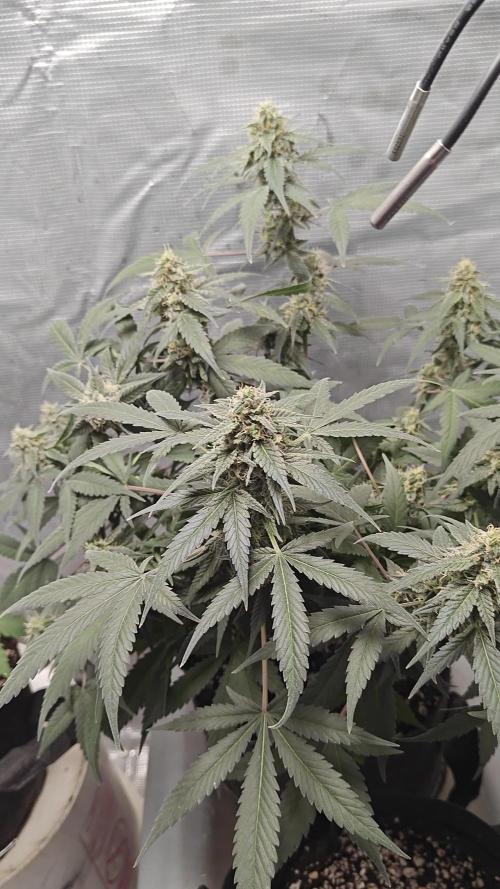
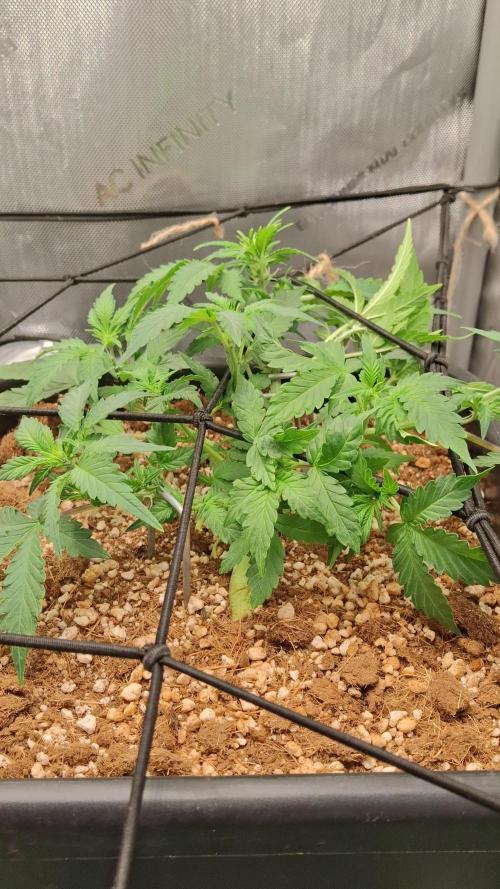
Que pasa familia, vamos con la cuarta semana de vida de estas Gorilla Cookies Fast Flowering, de FastBuds.
Agradezco a Agrobeta todos los kits obtenidos de ellos 🙏.
Vamos al lío, el ph se controla en 6.2 , la temperatura la tenemos entre 22/24 grados y la humedad ronda el 50%. El Tetra 9 fue añadido de manera foliar, cambiamos el fotoperiodo a 12-12 desde que actualizó esta semana.
Estás próximas semanas veremos cómo avanzan.
Agrobeta:
https://www.agrobeta.com/agrobetatiendaonline/36-abonos-canamo
Hasta aquí todo, Buenos humos 💨💨💨

Likes
10
Share
@6toecat
Follow
Using a Rhaspberry Pi 4 to automate the watering and a TP-link 105 smart plug to automate the Viparspectra P2000 LED grow light.
You can see how I automated it here: https://hackaday.io/project/188129-rhaspberry-pi4-basic-watering-system-for-balcony
Basically, this is an "Automated Watering how-to Guide for Dummies" - as simple as technically possible. You still require some basic command line expertise, but the steps have been proven and I provide links to the gear I used AND the Node Red code, making this EASIER than anything else I've seen online.


Processing
Likes
5
Share
@Mr_nugs_lover_David
Follow
Looks like there are no issues with this ladie she was planted on August 3rd and looks like she's developing perfect, let's see how she performs.

Likes
11
Share
@GREENPHOENIX6262
Follow
*Week 6 of flowering 10/01*
Critical +2.0 - Apple Fritter
Both plants are nearing harvest and have maxed out at a height of 48 inches.
Buds have developed heavy trichomes and are giving off a bright and vibrant smell.
85% of both plants have grown in their orange hairs and have a bright green and orange tint,
Today will be the last nutrient feed, I will be using the "Lotus Carboflush" starting tomorrow (10/02) to remove the salt build up until harvest which will be next week (10/09)
* 10/8 - Cut down*
Both are heavy on top - Covered in trichomes - smells deep (Citrus)
Dry trimming in two weeks - aiming for 14 day cure.
*Day 2 Dry Hang Video uploaded 10/09*
*10/15 - Harvest should be completed by the end of this week - 10/20*


Likes
19
Share
@Wolf47
Follow
Pics are from 1/18-1/24
Girls are still behaving really well!! My “fan leaf” OCD has been kept in check, and am proud of myself!! The only other annoying thing, is that, one plant is almost twice as long, as the other 3!!
Likes
19
Share
@growbville
Follow
Last week I fought some yellowing of the leaves. Did some small adjustments on PH to keep it in the 5.6 range. Seemed to stop it from progressing.
For Week 3 Veg I topped the plants. I plan to flip the lights at the end of week 3 and move into flower.
Day 15
I continued to have yellowing leaves even though I had everything looking right. (Added Pic). I decided to look into the PH to see if I was having issues with it. I have a meter in the water 100% of the time taking a reading every 1 sec. It all looked right. But I decided to Calibrate it in 4,7,10 solutions. Found out that my meter was off. So new to the check list is to calibrate the meter before each grow.
I was thinking my PH was High, when in reality it was low. put in some PH up to get it back to 5.5 and over the last 16 hours things look pretty good. Leaves look darker.
Day 17
Things are looking good. Leaves are getting darker and new growth coming in.
Day 18
Turned room temp down to 73F from 76F. Fearing it is warming up my res tank too much.
Day 19
Starting to get yellowing again. checked everything and can't find a good reason for it. Did notice some cloudiness in my res tank. Added 2 ML/Gal of peroxide. have Hydroguard on the way to help. I'll be adding more fans this weekend. I have light air movement currently.
Also found a few spider mites and sprayed Greencleaner to all plants.
Current environment settings:
Room Temp 72.74 F
Room Humidity 63.63% (After spraying, Trending down).
Room CO2 589PPM
Tank PH 5.70
Tank PPM (500 Scale) 953
Tank Temp 74.05 F
Day 20
Recalibrated my EC probe just to be sure it was also accurate. wasn't off by much.
Dialed back my flooding to every 5 hours to encourage Rooting. <-- Strong roots = strong Plants
Sprayed for mites
Likes
9
Share
@MaltedMadness02
Follow
She's filled out really nicely in these final weeks. The leaves are maturing and turning amber, I hope to cut the plant here soon, I don't want too much amber in the buds, as I'm aiming for a more cerebral head high. She's got really nice citrusy diesel tones. Very similar to my first grow with notable different tones. Make sure to check back again soon as I will add more pictures throughout the week! Thank you for checking in!


Processing
Likes
5
Share
@Spazmagi
Follow
1/6/2020 - What a week! She is finally flowering for real and so I changed her nutrient schedule to "Early Bloom". Increasing FloraMicro and FloraBloom while decreasing FloraGro and adding Liquid KoolBloom. Despite their difference in height, they are the same distance from the light due to the awkward mounting of these lights on the ceiling of this tent. Currently sitting ~40cm from the light. This should allow room for the buds to grow up towards the light and benefit from the increased umols around 30cm. I also took the opportunity to remove select foliage that was more than 90cm from the light, mostly removing growth-tips and leaving the leaves to their transpiration duties. I still feel like they are crowding each other, but they do seem quite happy nonetheless.
Thanks for stopping by the garden, and, as always, Grower Love.
~Spaz


Likes
17
Share
@Sativa_Juice_Grows
Follow
Lovin her so far. Fingers crossed
but i havent had a problem with her yet.
Did my math wrong on the nutes so i fixed
that this week. Spread out leaves so shes easy to defoliate
and she doesnt really need it much cause all the parts still
get light. She just started showing pistils
which im super happy happy about
The stems smell super dank
but still a pretty weak smell so far.
3 days later and shes even taller and the pistils are starting
to look like buds. She dried up already so i gave them an extra litre of water
this time so i adjusted the nutes a bit.
I plucked a lot of the big leaves again.
IDK if that was a good idea or not but it felt right
because so many of the lower branches werent getting that much light.
I didnt go too crazy and left some leaves.
She bounced back fine last time so im not worried.
Cant wait to see some buds!!
Likes
30
Share
@Sonic_Y
Follow
Day 29:
Pre-flowering did start. Changing now to Hesi Nutrients. Watered them with 1,25 l. Since they are not dried completely out. Wanted to boost them into flower now!
Letting them dry out now to the half of total weight. I'm a bit nervous about the nutrients cocktail though. :)
Day 32:
music for plants:
"Jules Reidy - Trances"
"Cousin - HomeSoon"
"Yara Asmar - synth waltzes and accordion laments"
Processing
Likes
29
Share
@Reaper
Follow
if u wanna skip details just read the CAP LETTERS
day 29 - januari 2
waterleaves from under the stems got cut off, also trimmed the lowest branches because the leaves were getting too big
the soil plant has gotten no trim or cuts at all
day 31
the ph of the res was 5.3 i changed water , roots look brown, not rotten or slimy just brown.
day 32
the hydro plant gets healthy growth after the water change. ph is still too low (5.5) im waiting for my *PH up*
i ordered online. never tought i would need it lol. she goes well on 5.5 but not enough calmag is absorbed like it does on 6.2
The pictures of day 32 display the difference is very big in the stems, the soil plant only got topped while the hydro plant had already a litle trim on the lowest branches and the branches above (in the midle of the bush where i topped them) so she got more stress and still is bigger then the soil.
day 33
i got no ph up (for now yikes)
sooooo i took 8 liters out of the res and replaced it with pure rainwater and 170 ppm calmag in it without nutrients to keep the acid level a bit higher.
it worked as u can see in the final pictures the plant gets new growth a bit faster.
ph up should be here by end of the week.
day 35:
plant start to stretch finnally, while i was doing LST later in the evening one of the top stems just snapped off completely OOOPS 😆.
theres still a lot of branching going on and a nice bush she will recover very fast from this loss as i summoned the Cannabis Gods into my room as the planets lined up and perfected my PH up to 6 by adding the purest rainwater from the universe the roots cleaned themselves back to pearlwhite and started absorbing the nutes faster then ever. in all silence i knew this was my destiny and the stems grew so fast i could hear them grow. the whole experience was too much as i collapsed to the ground and stood up left the room and knew... i would never see these ph and calmag problems ever again and went down the stairs with my new powers
THE PLANTS BOTH GOT GERMINATED ON SAME DATE. BOTH GOT TOPPED ON SAME NODE. I WAS FORCED TO TRIM 4 BRANCHES OF THE HYDROPLANT BECAUS IS WAS BLOCKING TOO MUCH LIGHT I ALSO CUT OFF THE 4 BIGGEST WATERLEAVES ON THE MAIN STEM.
THE SOILPLANT DID NOT NEED ANY TRIMS AS SHE IS NOT GROWING AT AN INSANE SPEED, HOWEVER THE SOIL PLANT LOOKS HEALTHIER AND BIGGER BECAUSE THE FANLEAVES ARE STILL THERE. IF U WATCH THE STEMS IN THE PICTURES OF DAY 32 U CAN CLEARLY SEE THE HYDRO IS WAY BIGGER. I NEED TO CORRECT MY PH SO SHE ABSORBS MORE CALCIUM MAGNESIUM FOR EXPLOSIVE GROWTH.
Likes
101
Share
@DogDoctorOfficial
Follow
One more week up we go :)
i'.m doing 14h light 5h out 1h light 4 out since they are enjoying it so much i'm going to keep it up until i change to 12/12. the one hour ligth in the midle is just to prevent them from switching to flower.
I'm Trying too keep it arround 500 umol/s/m2 for a total of 15h a day ligth for now this guives me a 27.00Mol/M2Day, i know i could go up to 34.00Mol/M2Day but sometimes less is more and i dont want to take my girls to a point were they are so tired that they cant process more light
I'm learning and testing all this since it's my first time growing with this tecnologie , but i belive we have to keep moving fowerd and i belive this is the road to walk 😅
Girls:
1-BlueBerry
2-Alaskan Purple
3-Poyote Gorilla
4-Hindu Kush
5-Whitw Mango
6-Super Glue
7-Badazz Cookies
8-S.A.D.
tent -8x8 / 2.4x2.4 but i'm only using 1/2 so 4x4 / 1.2x1.2
Led - Lumatek 465w Compact Pro at 75%
All i Grow is medicine for myself,
Stay safe, stay tuned and B Happy
Peace out


Likes
13
Share
@MARLEYtheDAWG
Follow
Wow, I can't believe the sea of green my tents turned into! I'm actually amazed all 6 are doing really well for my first time!
I've started to add some dutchpro explode to my feed and the buds have done what it says on the tin!
Purple queen is still taking the lead and I cannot wait to try her! 😍 she's so sticky and oozing with Trichomes.
I've made my own spray that has organic honey, brown sugar, bicarbonate of soda, green tea which I spray on them before I turn the lights out and I'm not sure if it's helping but they are looking amazing weather it's from that or not.
I'm not sure how longs left to be honest they seem to be all at different stages at the minute.
Hats off to Royal queen seeds for this amazing purple queen pheno I wish it wasn't an auto so I could take some clones 💚

Likes
Comments
Share
@Cainb
Follow
The pre-flower is just starting and they are putting on good growth.
One of the plants doesn't have the same vigour as the other, but it is still doing well.
Likes
97
Share
@DudeGrowsWeed
Follow
Things are starting to turn around. The girls are looking much better overall. Starting to see some nice color and growth from the older girls and the new seedling is looking great. I've beed watering mostly with plain ph'ed water. But I've also started adding a little Cal-Mag (from Symbys) and Recharge once per week.
Likes
1
Share
@Jazelle420
Follow
Harvest day this is my 3rd grow (1st photoperiod grow) so far definitely the densest buds I’ve gotten now I just gotta work on keeping the stretch minimum to allow better stacking next go if u all have any tips or strain recommendations feel free to let me know :)
