


Likes
Comments
Share


@GermanGrow182
Follow
Sehr schlechtes Wetter, kalt, regnerisch, kaum Sonne. Aber kein frost. Die laubblätter verfärben sich durch kalte Nächte und beschädigten wurzeln( zu nass).. es läuft, aber suboptimal..
Bis nächste Woche ✌️

Likes
6
Share


@AustinRon
Follow
TH 1Q2025 - Week 12 - Flower 9
(ON Haze X Original Haze) X Northern Lights #2
“Todd’s Haze”
Objective
- 8 Female Plants, Topped ONCE @ Flip, 12” when topped
- Modified Sea of Green
Seeds Wet: 1139PM, 28.2.2025
Germinated: 2.3.2025
Flip: 21.3.2025
Harvest: 77 Days, DATE: 6.6.2025
_________________________________________
__
Fri May 23, 2025
TH 1Q25 64:F:9:1
It’s a new day …
__
Sat May 24, 2025
TH 1Q25 65:F:9:2
__
Sun May 25, 2025
TH 1Q25 66:F:9:3
1/2 gal runoff @ EC: 3.2 mS/cm
2 gal refresh @ EC: 1.6 20xA,B; 10 ml SLF-100
__
Mon May 26, 2025
TH 1Q25 67:F:9:4
__
Tue May 27, 2025
TH 1Q25 68:F:9:5
__
Wed May 28, 2025
TH 1Q25 69:F:9:6
Need to CalPhos to day.
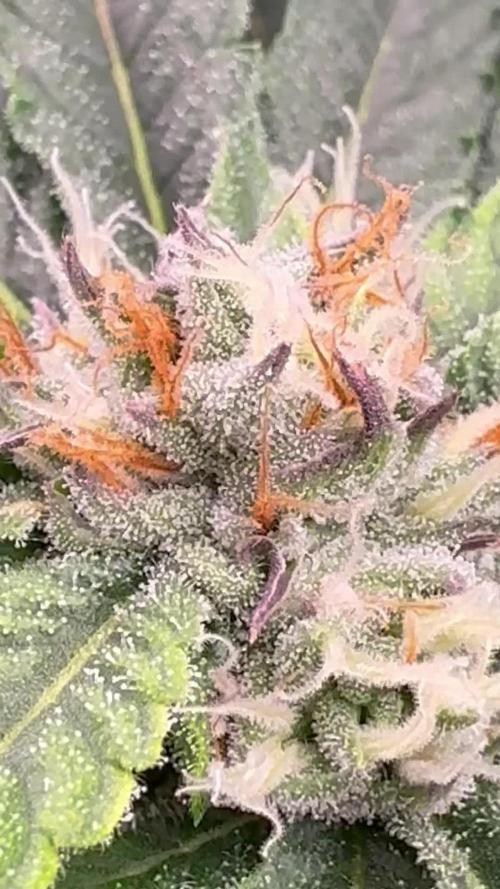
We’re a week from our ‘scheduled’ harvest- that’s not happening. We could have another FIVE WEEKS of flower to remediate reveg Flower Week
I think we’ll need up to 40 days more - to Flower Day 109 . . . (6 more weeks?)
__
Thu May 29, 2025
TH 1Q25 70:F:9:7


Likes
120
Share


@Themythicalchristine
Follow
Another big jump in height this week; we are starting to lose sunlight here by about three minutes a day now.
I heavily defoliated these plants at the end of this week, and took off any “unviables”.
I also topdressed with some extra bloom nutes and some new soil to help keep some moisture in.
As of the date of this post, we are just coming out of a heat warning, and it’s been 47 days without measurable rain in my area, we are also seeing pollution from forest fires northeast of us in our province.
It’s hot; it’s dry, and now, we have this eerie light that I call “the fire sun”
Luckily the goils seem to be thriving as best they can in the midst of it all.
☀️ 🔥


Likes
9
Share


@DeepRootsGrowTrees
Follow
KICKASS AUTO by KANNABIA
Week #11 Overall
Week #5 Flower
This week she continues to pack on weight as her buds develop some density to them. The trichomes just shine in the sunlight. Overall she's doing great being outside no issues!!
Stay Growing!!
Kannabia.com KICKASS AUTO

Likes
8
Share


@STAYINGONMYMAINCBATORUNTWO
Follow
Was a bit worried in the first weeks of flower as the buds formed early but... i was left with the most densest of buds literally hard like arnie in his terminator days lol! I didn’t quite get the amount I expected but defiantly enough! Will defo grow again!
After time went on she developed so much frost literally like diamonds 💎
Resistance was very strong on this one too and drank so much more than the rest had to be smart with watering! I’m the end the result was as intended can’t wait for the next couple of weeks for the flavour to really come out but as of now really reminds me of skittles as you can taste the sweetness but also that cake 🍰 comes right through too and this is before a full cure. Happy growing buddies I say this one is a top one to grow!
Added a few photos since cure! These buds are dense and colorful and fruity! Tastes like it smells until you get a lovely bit of cake come through! Heaven!
High is full body literally one point I felt it in my feet rose to my chest!
Likes
42
Share


@MrGrow
Follow
17.12.2021
65 giorni di vegetativa dal clone.
La talea è stata presa da una pianta madre in piena fioritura e fatta rivegetare. La struttura della pianta è fantastica, cresce cespugliosa ma con un allungamento più vicino a sativa.
Con 6 piante il box sta completamente esplodendo! Questa settimana faccio lo switch e le mando in fioritura🌻
Likes
8
Share


@Midwest_X_Mayhem
Follow
GSCE is making crazy gains. The BB has also started to pack on great weight but much more bushy and has passed the GG4 in both size and appetite. As for the GG4 for not sure why she slowed down for a little while but as of today(Day30) she is starting to strech out more like the GSCE. The rando bag seed is starting to really take off as well noticed small pistils starting just a couple of days ago. Bumped the watts up to 290w(85%) probably wont go any higher.
4/11 Week 5 has ended and im more then pleased with the results so far being that this is my very first time growing. The GG4 has shown the most growth these past couple of days as far as the autos go. The bag seed on the other hand had streched at least 8" in less than 1 week. If anyone has any suggestions, tips, criticism whatever ill take any and all of it.

Likes
51
Share


@Seldom_Seen
Follow
Day 1: I got two of these Sweet Gelato seeds free from @Zamnesia. I’m only planting one at the moment . I’m really excited about growing it. I’ve really loved any Gelato I have tasted. I have my substrate prepared and my veg space is ready to go. I have put the seed in Ph’d water for 24hrs first and I will add to the soil tomorrow night. I’ll wet the soil down tomorrow morning with Ph’d water and I’ll put it the veg space with the lights on to warm up the soil before adding the seed.
Day 2: Seed has been moved into the substrate and pot is now in Veg Space under 40watt CFL bulbs but once the seed germinates I will switch on the 200watt CFL. This is my least favourite part of growing, the wait for the seedlings 🌱 to break through the soil. I’ve planted the seed to one side of the pot as I find this makes LST easier. The plant will be spending it’s first 2 to 3 weeks in this veg space while I wait for my Purple Punch to finish in my main grow space.
72hrs Later: Houston we have lift off 🚀
The seed first started to peed through the soil after only 48hrs. That’s the fasted I’ve ever seen, hopefully it’s a sign of things to come. Leaves still haven’t opened but it’s fully above ground now.

Likes
12
Share


@cookingwithninja
Follow
day22 video. now adding more pk booster than earlier weeks, should be done week 7-8 we will see
day23 I start adding more pk, still will 4x more pk now. Some nice pics today, videos of each, frost on fan leafs, no issues other than pros: bridal frost on fan leafs+sugar, cons 6ft tall. I think I should have pumped more pk earlier into flower/pre Its cool. Adding 2tbsp soluble pk into 5gal vs quarter tbsp in beginning 22 days ago. I am feeding soluble pk, +3 pk soil conditioners and carbs every day. There is no water day.
day 25 stacking up. been spraying old cs I made 3ish years ago to test, works on unrooted so I may potential cross. Bridal starting to smell like a mix between fresh watermelon, and lemon+lime or a citrus aroma.

Likes
37
Share


@DaddyPrime2
Follow
4/7/24 added worm casting(finally) lol
4/8 took off lowest node
4/10 they may have slower growth. Worried about my humidity at night.
4/11 growing more wide now. Trying to tuck leaves to show more of the nodes but they aren’t quite tall enough
4/14 day 21 end of week 3. Both phenos are thick and fluffy. I’m impatient and curious and decided to top one of them.
Ps. Early this week, they have shown pistils but it may just be showing sex

Likes
18
Share


@PEAKYPLANTERS
Follow
Hi everyone, brothers of the Weed.
Welcome back to the enchanted gardens of Peaky, these two sweet dolls are developing solid and fatty buds ... I think you miss the harvest little
see you around
I hope the contents are of interest to you
best regards

Likes
8
Share

@GERGrowDesigns
Follow
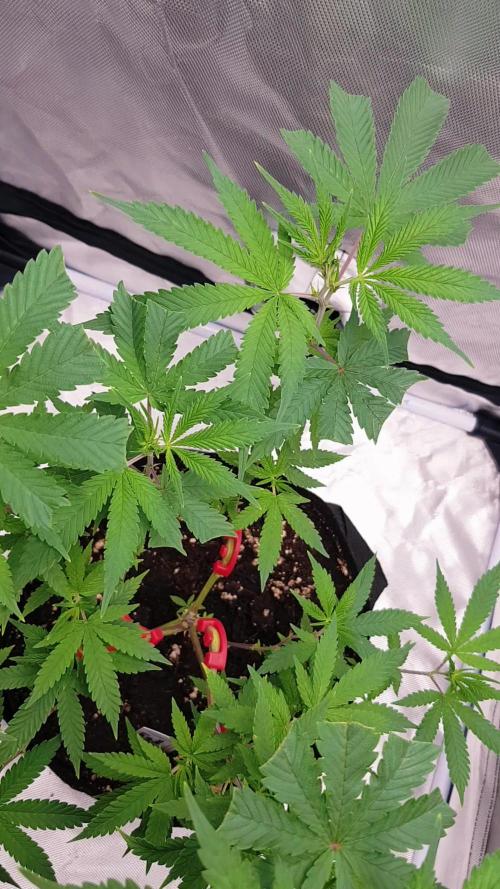
Welcome to GERGrowDesigns Breeding Cut Phenohunt #1 Diarie Week 5
This diary is designed for a documentation of an indoor grow, with a strong focus on plant health, environmental control, and optimized nutrient strategy to hold this Genetic and use her for Breeding in Future projects .
The Harvested Mother Plant ,can be found in the older Strawberry Cola Sherbet Diarie💚
What happend in the past ?
-Cut removed from Mother in Flower Week 2
-Clonex Gel used ~10 days Rooting Process
- 2-3Weeks Revege Process
-transplanted in 0.3l pot
-fourth Puplic Diarie Week
-transplanted in 12litre pot + Bigger Tent
-Plant/Health/Root Care
-Motherplant Feeding Shema , low EC , Spraymix
Grow Setup & Strategy:
• 🌱 Genetics: Strawberry Cola Sherbet -Sweet Seeds
• 🏕️ Grow Space: 60x60x150cm
• 💡 Lighting: 1x100W LED
• 🌡️ Average Temperature: ~26°C
• 💧 Humidity: ~60%
• 🍵 Pot Size: 12L
• 🌿 Base Nutrients: Hy-Pro
• ⏳ Flowering Expectation: 5 weeks
Special attention will be given to Hy-pro during all phases, aiming to enhance Structure , nutrient uptake efficiency, and final quality, while closely monitoring plant response.
Feedback, questions, and constructive discussion are always welcome. Community interaction is a key part of what makes competitions like this valuable.
🌿 Happy growing & good luck to everyone!
Likes
23
Share


@Ezzjaybruh
Follow
Chugging along.
Much better fertilization rate than expected. All looking good up and down each branch. Almost all budsites are stacked with seeds even the lower ones
Moved to different tent cuz original one was a damn mess with plant matter and whatnot on the floor.
Only one that looks possibly behind us the PotG. I just think it’s a matter of not having seeds busting out the bracts quite like the others.
Very happy with the results
Check out previous weeks for procedure information. I’ll add them to each with soon. If not showing now go back to first couple weeks of the diary to see specifics on what I used, and how.


Likes
33
Share


@Mrs_Larimar
Follow
March, 11th
Tomorrow the autoflower CBD White Widow moves into another Tent
Because all other Plants are Photoperiods, and moving into Floweringmode
She will love it to have plenty of Space just for herself
She has Fowers along the colas, and they are stacking up every Day
Girl looks great
March, 13th
The CBD White Widow moved into another tent, where she has good Space for Flowering
She just shares it with another Small Photoperiod Plant

Likes
14
Share


@Fatbudz
Follow
I'm sorry, but at the time I stopped updating the diaries because I moved to a new house and changed my routines. I'll leave a photo of the final product here, but don't worry, I'll be back at full speed. 🚀🚀
new diaries coming 🔜🔜
Likes
41
Share


@MrHightimes
Follow
Fun Contest. Maybe coulda gone a week longer but i was ready! And trichomes were done enough


