


Likes
Comments
Share


@Fibro_Witch
Follow
Welp, this is not a September plant😆 This girl is still going for at least another week. Pistils are starting to brown but trichs are still clear and cloudy, no amber yet. I'm hoping to get a little more sugar on her before she finishes. Hopefully it doesn't get too cold and rainy before she's done.
All I can say is that I've been impressed with how strong this plant is and I'm looking forward to seeing what kind of numbers she puts out. She's been very healthy and easy to care for so I'm happy so far! She has a little bit of a spicy undertone, so definitely high in Myrcene (which is a pretty safe assumption) and maybe caryophyllene.

Likes
23
Share


@Mr_McNasty408
Follow
12/14/20
Today is Day 1 of veg but day 8 of life. For nutrient measurements, I will be using (ml/gal) as (g/gal) I have the light on 24/0 but will be switching to 18/6 when they are at a good size. Noticed a little burn on #4 and starting on #2 so I flushed substrate at 140ppm cropsalt veg a&b.
Nutes:
Veg A: 0.382g/gal
Veg B: 0.257g/gal
PPM: 140
Water temp: 64°F
pH: 6.0
12/15/20
I elevated the light to be 10in-11in away from the surface of the leaves. I also added a heater to keep temps steady day n night.
Nutes:
Veg A: 0.382g/gal
Veg B: 0.257g/gal
PPM: 140
Water temp: 64°F
pH: 6.0
12/16/20
Nutes:
Veg A: 0.382g/gal
Veg B: 0.257g/gal
PPM: 140
Water temp: 64°F
pH: 6.0
12/17/20
Nutes:
Veg A: 0.382g/gal
Veg B: 0.257g/gal
PPM: 140
Water temp: 64°F
pH: 6.0
12/18/20
Changing light to a 18/6 schedule today. Added humidifier because heater was dropping rh
Nutes:
Veg A: 0.382g/gal
Veg B: 0.257g/gal
PPM: 140
Water temp: 64°F
pH: 6.0
12/19/20
Nutes:
Veg A: 0.382g/gal
Veg B: 0.257g/gal
PPM: 140
Water temp: 64°F
pH: 6.0
12/20/20
Nutes:
Veg A: 0.382g/gal
Veg B: 0.257g/gal
PPM: 140
Water temp: 64°F
pH: 6.0
Likes
9
Share


@DogDoctorOfficial
Follow
🌱 Animal Mints — Week 5 from Seed (12/12)
Special Report: Mixed Timelines – Pre-Flower & Flower
Quick recap for new readers
This run is a 12/12 from seed project, designed to observe structure, resilience, and expression without extended veg.
This week is special because two different timelines are happening in the same room, offering a clear comparison of development paths.
⸻
Plant Timelines Overview
🌿 Plant A — “12/12 from Seed”
• Timeline: 12/12 from seed
• Stage: Entering pre-flower
• Training: Light leaf bending & tucking only
• Condition:
• Extremely lush, deep healthy green
• Calm posture, no stress signals
• Very balanced structure when viewed from above
This plant is transitioning gently and naturally, exactly what we want to see at this stage.
⸻
🌸 Plant B — Short Veg → Flower
• Timeline: ~15 days under 16h light, then flipped
• Stage: Early flower, clearly more advanced
• Training: No training at all
• Structure:
• Classic Christmas / pine tree form
• Strong apical dominance
• Already showing clear calyx formation and bud building
Despite no training, the structure is beautiful and symmetrical. From above, both plants resemble a compact bush — a great illustration of how genetics express across timelines.
⸻
🌡️ Environmental Conditions (Week 5)
This was a tricky environmental week due to cold external conditions:
• Outside: ~4°C with ~98% RH
• Inside tent:
• Temperature: ~21°C
• RH: ~58% (stable and acceptable)
• CO₂: ~666 ppm
• Plant response: Calm, steady, resilient — no signs of stress
The plants are handling the cold remarkably well so far.
⸻
💡 Lighting Strategy
• Top lighting:
• 100% power
• PPFD: 700–850, depending on plant height
• Under-canopy lighting:
• Being introduced by the end of this week
• Starting at 30% power, intentionally low
The goal is not intensity yet — just to signal photon availability from below while maintaining strong top-down light.
🙏 Thanks to Lumiflora for the under-canopy lights being tested
🙏 Thanks to Future of Growth for the main fixtures
⸻
💧 Watering, Nutrition & Philosophy
Water source
• Rainwater + dehumidifier water mix
• This is why Cal-Mag Pro has been added preventively
• Not due to deficiency
• But to ensure stability during early flower with low-mineral water
This is explained intentionally to avoid future issues, not to correct current ones.
⸻
Feeding structure
Autopots (6 plants – mineral only)
• EC: 2.29
• pH: ~6.0
• Reservoir = mineral only (organic mixes don’t behave well in tanks)
Hand-fed plants (including some Autopot plants)
• EC: 1.43
• pH: 5.9
• Organic + mineral mix
• Autopot plants receive top feeding once per week
This approach requires more work — but it allows:
• Individual plant observation
• Weight checks before watering
• Natural dry-backs
• A deeper connection with each plant’s drinking behavior
Dry-outs are intentional and combined with enzyme applications, helping recycle dead root matter into available nutrients and encouraging active root exploration.
⸻
Genetics & General Impression
I’m genuinely impressed by Animal Mints genetics:
• Consistent structure across timelines
• Strong health signals
• Calm, resilient behavior under less-than-ideal external conditions
Both plants are showing real promise, each in their own way.
🙏 Thanks to Zamnesia
🙏 Thanks to Plagron
And thanks to everyone following along — supporters, skeptics, haters, lovers — everyone has a place here.
⸻
🔮 What to Expect Next Week
Expect:
• Clear flower progression on the vegged plant
• Pre-flower stacking on the 12/12 plant
• Plants responding to under-canopy photons
• Increased differentiation between timelines
Don’t expect:
• Heavy defoliation
• Aggressive feeding changes
• Forced development
This run is about listening, not pushing.
⸻
Final note
This week is officially marked as Week 5 Flower in GrowDiaries, but in reality it’s a blend of pre-flower and flower stages — and that’s exactly why this report matters.
👽 New team member
Meet Mr. Baggy
Our new fluffy alien/beaver/whatever-he-is friend, won through a Grow Diaries contest.
Expect to see him around — he’s officially part of the grow now.
Week 5 Veg/pre-flower | 8×8 Tent | Master Conditions
🌍 External Environment (Context) • Outside temperature: ~5 °C
• Outside RH: 92–96% (very high humidity)
• Strong seasonal pressure influencing internal stability
⸻
🌡️ Internal Tent Conditions
• Tent temperature: ~21.8 °C
(noted drop due to cold external temps)
• Tent RH: ~58%
→ Very good considering outside conditions
⸻
💨 Airflow & Circulation
• Primary airflow: Bottom → top → wall return
• Pattern: Full-room vortex circulation
• Additional fans: Central airflow to break blind spots and mix layers
• Goal: No stagnant pockets, uniform VPD across canopy
⸻
💧 Water Source & Rationale
• Water: Dehumidifier water + rainwater
• Base EC: force
• Systems designed to support plant intelligence, not override it
FOR DISCOUNT CODES AND MORE JUST FOLLOW THE LINK https://website.beacons.ai/dogdoctorofficial
📲 Don’t forget to Subscribe and follow me on Instagram and YouTube @DogDoctorOfficial for exclusive content, real-time updates, and behind-the-scenes magic. We’ve got so much more coming, including transplanting and all the amazing techniques that go along with it. You won’t want to miss it.GrowDiaries Journal: https://growdiaries.com/grower/dogdoctorofficial
Instagram: https://www.instagram.com/dogdoctorofficial/
YouTube: https://www.youtube.com/@dogdoctorofficial
⸻
Explore the Gear that Powers My Grow
If you’re curious about the tech I’m using, check out these links:
🔆 Lighting & Environmental Control
• Future of Grow — Advanced LED lighting technology
https://www.futureofgrow.com/
DISCOUNT CODE: DOG20
• Lumiflora — Under-canopy LED lighting
https://lumiflorade.com/
• TrollMaster — Environmental controllers and automation gear (past collaboration)
⸻
Genetics
• Zamnesia Seeds — Genetics used in this project
https://www.zamnesia.com/
⸻
🌱 Soil, Substrates, Boosters & Root Support
• Plagron — Substrates, bio mixes, and supportive products
https://plagron.com/en/
⸻
🎒 Storage, Curing & Preservation
• Grove Bags — Curing and storage solutions
https://grovebags.com/
⸻
📸 Photography Equipment & Tools
(Not sponsors, but part of my creative toolkit)
• Sony A6700
• Sony full-frame macro lens + few more
• Stacking photography workflow - learning
• iPhone (for behind-the-scenes shots)
We’ve got much more coming as we move through the grow cycles. Trust me, you won’t want to miss the next steps, let’s push the boundaries of indoor horticulture together!
As always, this is shared for educational purposes, aiming to spread understanding and appreciation for this plant. Let’s celebrate it responsibly and continue to learn and grow together.
With true love comes happiness. Always believe in yourself, and always do things expecting nothing and with an open heart. Be a giver, and the universe will give back in ways you could never imagine.
💚 Growers love to all 💚
📸 P.S. – The Eye Behind the Lens
All photos in this diary (for now — except for the ones showing the camera, which I took with an iPhone) are taken with a Sony A6700 paired with a Sony full-frame macro lens and a few more.
Photography is part of the story — it’s how we share the fine textures, the glow, and the quiet details that words can’t always capture.
I’ve also started experimenting with photo stacking — a technique where multiple images, each taken at a slightly different focus point, are layered together to create one perfectly sharp image from front to back.
It’s not digital enhancement or AI; it’s pure photography — a way to reveal the plant’s beauty in microscopic depth, from trichome to petal.
You’ll even see a few shots of "ghost me" capturing the shots — camera, lens, setup — because every grow deserves not just to be cultivated, but documented like art.
FOR DISCOUNT CODES AND MORE JUST FOLLOW THE LINK https://website.beacons.ai/dogdoctorofficial
NEW DISCORD - Official Server Invite Link : https://discord.gg/ksjAkA5T74


Likes
18
Share


@ill_noise_homegrown
Follow
At 10 oz cured, it’s not the yield I was interested in but the quality and is it ever! This shit smacks, will def be growing it again but now, on to the lemon berry candy autos from ethos for my next grow. Check it out!

Likes
13
Share


@SzkolaZiola
Follow
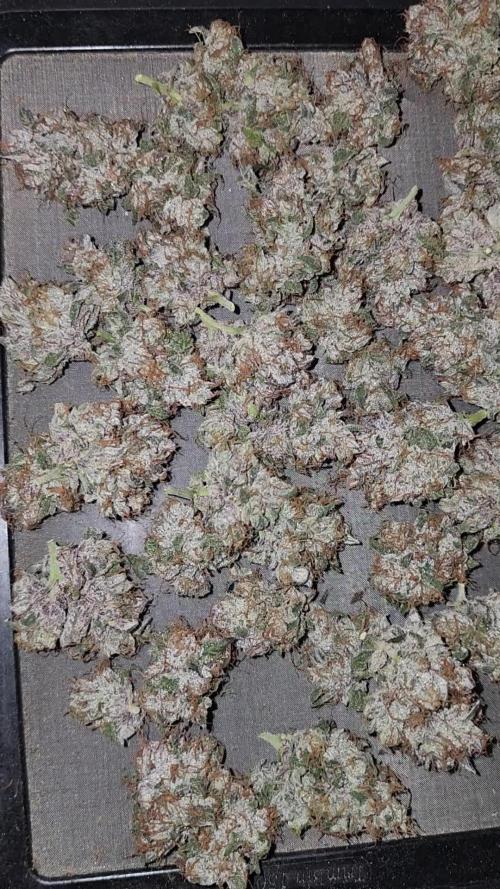
Ladies are doing fabulously. Today I did some defoliation and added ScrOG - they started to lie down due to weight of the colas.
Mimozz and Grandpa's Cookies are smelling super duper great - one of the best I ever smelled.
Cherry Atomic is fire as always - big, fast, sticky and kush-y.
Strawberry Cough is TALL as sativa should be - also her colas are stacked like crazy - they are 40cm / 15" in length! She is much slower than her sisters - will need extra 3-4 weeks probably to fully mature after I'll harvest rest of the tent. But I can't wait to see results. This will be something good 😎


Likes
Comments
Share


Likes
5
Share


@Slappin719
Follow
All is going well day 50 for these pics been flushing with molasses and ph water.

Likes
42
Share


@Green_Man_420
Follow
Well week 7 day 1 (day 50) and the girls are starting to progress. Looking very sticky indeed. Bat taking a cold spell at the moment. Hopefully it passes quick.
Day 51, added a small fan to circulate a bit more air as the buds are now starting to fatten up.
Day 52, watered them tonight and took this little video.
Day 53, just letting them be ✌️
Day 54, only one needed some water the other are still damp.
Day 55, watered and fed the other two, really starting to frost up now.
Thanks for checking in and I hope you all have a great week! ✌️

Likes
2
Share


@KeemBboomin
Follow
So at the bottom tent we have amnesia haze who is very frosty with a sweet gassy smell.
Then there is bubble gum more on the earthy side.
At the top tent we have that GMO Cookies I got from the bottom of a bag is extremely frosty out of the three in there
Likes
27
Share


@Bread_n_Buds
Follow
Here we are again ready to start again, always under the sign of Zamnesia, we make our fantastic plants and we show you what we are capable of. We have 5 autoflowering strains and 5 photoperiodic ones and now we present them to you.
The fifth and last autoflowering for now of this round that we present to you is another classic of the classics always in the Zamnesia version. We have already grown it once and we sincerely hope to find the purple phenotype, Mythical mythological herb really in music and in everything, WE ARE TALKING
To explain my germination method which is a combination of experiences acquired in the field and readings of right advisors, I have chosen to divide it into phases so whoever wants can follow them and understand better step by step.
- Preparatory Phase ---- Check the average temperature in the room, humidity status to understand well whether it is the case to start or wait, I decided for the end of August because the temperatures start to drop towards the 22-25 degrees recommended for germination.
Then another thing more or less credible depending on the sensitivity is the control of the lunar phases. I believe in it a lot, it is a method that ancient farmers used to understand when it was best to plant depending on the attraction of the moon. To make my life easier I use a simple app that advises you on the right time to plant, harvest and put in a jar (depending on the lunar phases).
- Phase 1 --- Soaking in water. There are many authoritative friends who advise against this method due to the risk of drowning, but I have always been fine and I follow the rule if it opens in water almost certainly the seed is healthy and will come out of the ground 90% normally.
- Phase 2 --- Opening of the seed in water. As soon as the seed opens and the root comes out a little you have to be very very careful not to leave the seed in water open for too long. This is why there is a risk of drowning. So as soon as the root has come out it must be planted. Do not wait for it to stretch out too much, in the absorbent paper you can wait a little longer in water no.
- Phase 3 --- While I soaked the seeds I prepared my pots: I use small biodegradable pots (choose the ones with holes underneath for drainage). A few hours before working with the opened seeds I moistened the soil with water adjusted to the right pH (5.8 - 6.2) and Plagron Power Roots. The small root is now open and we can make a little hole with a toothpick, widen it and insert the seed. Not too deep with the root facing downwards. From Serious Seeds we learned the dome technique: if you put a small dome of soil on the seed the water will settle on the sides avoiding overwatering problems.
- Phase 4 --- The plant emerges from the soil. Up to now I have not put the light on, now I turn it on at minimum after half a day of soil to give direction to the seedlings. The first week the light will be gradually brought from 40% to 60% to go to 70% - 75% in the remaining weeks of veg. During the first week maximum, I keep the cycle of 24 hours to avoid stretching. Be careful not to exceed the first week at least with photoperiodic.
- Germination % --- In water 20/20 seeds have opened for good luck I'm waiting to talk when they come out of the ground but it seems that we are going towards an excellent percentage of germination..."Not too bad"...
- Soil and Food --- The soil used is entirely organic in every part and is the Plagron Promix that will be used with the 100% organic pack supplied by Zamnesia complete with all the main fertilizers for your plant buy it at the link --
https://www.zamnesia.io/it/11457-plagron-easy-pack-natural.html
// Strain Description // New Strain testing coming soon... -
- Get a seed of this fantastic strain --- https://www.zamnesia.io/
- Soil and Fertilizers entirely organic --- https://plagron.com/en
- Growbox --- https://www.secretjardin.com/
- Music and sound --- I made my girls listen to 432hz frequencies and music from www.radionula.com
- Z --- You can find these seeds, much more from the world of cannabis, mushrooms and an incredible series of accessories and gadgets on the reference site not only mine but of many growers ----
https://www.zamnesia.io
Likes
4
Share


@Growstopher
Follow
5.13.25. 2nd week of flower and she is drinking a gallon a day! Tie down has stopped and now mainly just defoliation and leaf tucking! Showing nice trichomes and has strong earthy smell already!
Thanks for checking out my grow I have 2 more active grows now check em out!
Enjoy the rest of week🏼
Likes
3
Share


@Dysons12
Follow
Day 7 i I transplanted the seedlings in jiffy’s to the DWC basket water level was “just” touching the bottom of the basket which meant there was 1mm- 2mm air gap between the water level and the jiffy’s. The high pressured air in the water to spit when air was released at the top which kept the bottom of the jiffy moist which had minimal roots showing to the exterior of it.
Day 7-13 I originally had 7.5 litres of water that was to the bottom of the basket. I replaced the water on the 13th which meant the water was changed after 6 days at such an early stage I will regularly change the water in the buckets. You can change every 7-14days but I am taking no chances.
I refilled and added nutrients on Day 13 which was yesterday. And the plants are doing really well and are a nice VEG green colour. Hard to tell on the pictures with the light colour but you can see their progress.
When I replaced the water this week I put 6.5L of water in each bucket With nutrients PH’d as close to 5.8 as possible. Some varied from 5.72 - 5.9. I have noted these on each bucket so that I can check if one does better than the others or shows deformities or stress I can amend it to match the others but hopefully not in such a close proximity of 5.8ph with an EC of 700+-
The roots are now showing in every pot with the longest being some 6inches.
The new Wakyme grow light is top notch so far with VEG button on only. Anyone contemplating buying one it cost me £99.00 from amazon and so far is performing just how I would like.
Humidity has been taken care of with a cold air intake fan which is pulled from another area of the building of a cooler environment.
Temperatures are spot on where I want them but I do allow a 2degree +- allowance but it does change back to its original temperature quickly enough.
5 more speed bud germinated and 2peyote critical feminised photoperiod germinated.
Crystal candy XL auto ordered x10
Gorilla glue, Pineapple Express and Cali Kush waiting in the wings. I have these already
If I can be anymore help to anyone let me know. Your diaries are helping me and hopefully I can provide the same to you

Likes
20
Share


@L8bloomr1008
Follow
She got a nice fade going. Been feeding just ph’d water this week. Idk if she’s slowed down drinking or if my soil is a little water logged but the pots definitely staying heavier throughout the week.
Dropped my light closer to the canopy but lowered the I reality slightly cause temps were creeping into the 80’s. I think we’re cruisin. Can’t wait to see how she turns out.

Likes
7
Share

@Stacy_smokez
Follow
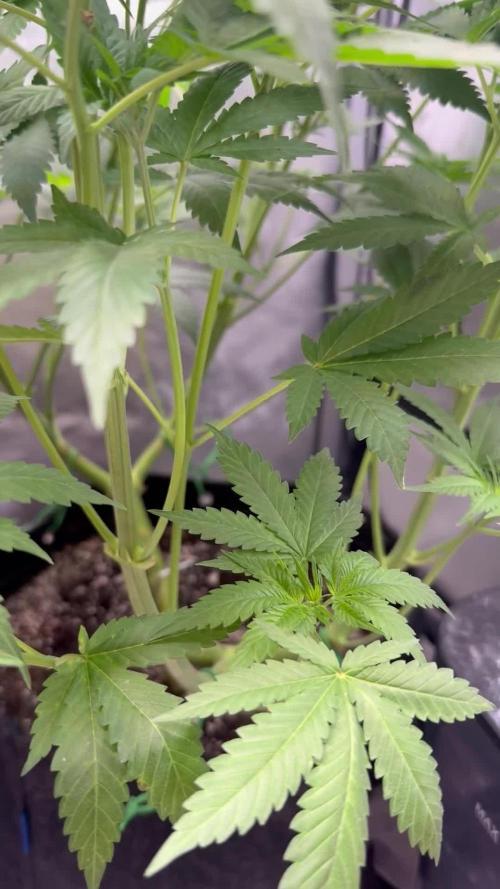
Topped again and allowed her to recover also flipped into a 12/12 at the end of this week . Everything is going well overall with my grow . I did a little defoliation as well.

Likes
16
Share


@Ultraviolet
Follow
Seedling managing 93F 30%RH, around 20 DLI. Vpd is in the 3's. No I don't recommend.
Signum Magnum.
"A great sign appeared in the sky
a woman clothed with the sun
with the moon under her feet
and on her head a crown of twelve stars.
Sing ye to the Lord a new canticle:
because He has done wonderful things.
Glory to the Father, and to the Son, and to the Holy Spirit
As it was in the beginning, and now, and ever shall be, world without end."
The plant nutrient nitrogen exists in forms with both positive and negative charges. Ammonium (NH4+)(immobile in soil)(Cation) has a positive charge, while nitrate (NO3-) (highly mobile in soil)(Anion)has a negative charge. Nitrogen is unique among plant nutrients in that it can exist in both positively charged (ammonium, NH₄⁺) and negatively charged (nitrate, NO₃⁻) forms in the soil. This makes it a special nutrient. In that it is responsible for providing balance for reactionary trade offs when it comes to ph. Because ph itself in the medium will always slowly drift towards acidicity, such is nature. 80% of nitrogen should be nitrate and no more than 20% ammoniacal nitrogen.
Ca, mg, and K are the big 3 cations related to soil composition, pH & base saturation.
When nitrogen is in the form of ammonium, it can compete with calcium, magnesium, and potassium for absorption sites in the plant root. This competition can lead to a reduction in the uptake of these other essential nutrients. Nitrogen, particularly in its nitrate form (NO3-), can increase soil acidity, which can also affect the availability of calcium, magnesium, and potassium. The form of nitrogen applied (ammonium vs. nitrate) can influence its interactions with other nutrients. Ammonium nitrogen can have a more pronounced negative effect on the uptake of calcium, magnesium, and potassium compared to nitrate nitrogen.
Common forms of ammonium nitrogen include ammonium ion (NH4+), urea, and ammonium compounds like ammonium nitrate, ammonium sulfate, and ammonium phosphate.
Common forms of nitrate nitrogen include potassium nitrate (KNO3), sodium nitrate (NaNO3), calcium nitrate (Ca(NO3)2), and ammonium nitrate (NH4NO3).
Phosphorus is an essential plant nutrient, and its availability in the soil is strongly linked to the presence of oxygen. Plants primarily absorb phosphorus as phosphate (PO4), and oxygen is a key component of this molecule. Furthermore, the availability of phosphorus in the soil can be impacted by factors like soil aeration and temperature, which in turn affect the oxygen supply to the roots.
Phosphorus uptake in plants is most critical during the early stages of growth, particularly within the first few weeks of plant development.
Young plants actively growing tissues have a high demand for phosphorus. They may absorb up to 75% of their total phosphorus requirements within the first few weeks of vegetative growth, with up to 51% of uptake happening overnight, primarily in the first few hours or early nightfall.
⑨Anaerobic root respiration, or respiration without oxygen, is detrimental to plants because it's less efficient and produces toxic byproducts, leading to reduced energy production, nutrient uptake issues, and ultimately, root damage and plant stress.
⑨Anaerobic respiration, unlike aerobic respiration, doesn't utilize oxygen as the final electron acceptor in the electron transport chain. This results in a significant drop in the amount of energy (ATP) produced, which is necessary for various plant functions, including growth, nutrient uptake, and maintenance of cellular processes.
⑨In the absence of oxygen, plants produce byproducts like ethanol and lactic acid during anaerobic fermentation. These byproducts can be toxic to the roots and inhibit their function,
⑨When oxygen is depleted in a medium, the pH tends to decrease (become more acidic) due to the production of metabolic byproducts. This is particularly relevant in biological systems where aerobic respiration relies on oxygen as the final electron acceptor.
⑨When oxygen is scarce, plants may switch to anaerobic respiration. This process produces carbon dioxide (CO2) as a byproduct.
⑨CO2 dissolves in water to form carbonic acid (H2CO3). This acid lowers the pH of the medium, making it more acidic.
⑨Anaerobic conditions can impair a plant's ability to regulate its internal pH, leading to a drop in cytoplasmic pH and potentially cellular acidosis.
⑨The change in pH can also affect the availability of certain nutrients to the plant, as pH influences the solubility of micronutrients like iron, manganese, zinc, copper, and boron.
⑨The lack of oxygen in the plant medium leads to a decrease in pH due to the production of carbon dioxide during anaerobic respiration and impaired pH regulation within the plant.
In plant cells, cellular acidosis, a drop in the internal pH of the cytosol, is a significant stress response, particularly during conditions like flooding or hypoxia. This acidification can be triggered by a decrease in oxygen levels, leading to the production of metabolic byproducts like lactic acid and CO2. The plant's ability to tolerate and recover from these conditions depends on its cellular mechanisms to regulate pH and mitigate the effects of acidosis. When plants are subjected to low oxygen environments, such as those experienced during flooding, anaerobic metabolism, which produces lactic acid and ethanol, becomes the primary source of energy. This can lead to a build-up of these acidic metabolites in the cytosol, causing a drop in pH.
OXYGEN
Atomic oxygen (single oxygen atom, O) is the lightest form of oxygen, as it has the lowest mass of the oxygen molecules. Oxygen also exists as a diatomic molecule (O2) and an allotrope called ozone (O3), which have higher masses due to the number of oxygen atoms combined.
Atomic Oxygen (O):
This refers to a single oxygen atom, which is the most fundamental form of oxygen.
Molecular Oxygen (O2):
This is the common form of oxygen we breathe, consisting of two oxygen atoms bonded together.
Ozone (O3):
This is an allotrope of oxygen, meaning it's a different form of the same element, consisting of three oxygen atoms bonded together.
Since atomic oxygen has the fewest oxygen atoms, it naturally has the lowest mass compared to O2 or O3.
Ozone (O3) Lifespan:
Ozone has a relatively long lifespan in the stratosphere, particularly at lower altitudes. For example, at 32 km in the middle latitudes during spring, ozone has a lifetime of about 2 months.
Oxygen (O) Lifespan:
Atomic oxygen, on the other hand, has a much shorter lifespan. At the same altitude, its lifetime is about 4/100ths of a second.
Ozone-Oxygen Cycle:
The ozone-oxygen cycle involves the rapid exchange between atomic oxygen (O) and ozone (O3). UV radiation can split molecular oxygen (O2) into atomic oxygen (O), which then reacts with O2 to form ozone (O3). Ozone can also be photolyzed by UV radiation, creating atomic oxygen again, which can then react with O3 to reform O2.
Dominant Form:
The partitioning of odd oxygen (Ox) between ozone and atomic oxygen favors ozone in the lower stratosphere. This means that a much larger proportion of odd oxygen exists as ozone than as atomic oxygen, especially in the lower stratosphere.
Recombination:
Atomic oxygen has a high energy and reactivity. When it encounters another oxygen atom, they can combine to form O2. This process releases energy, contributing to the heating of the atmosphere.
Ozone Formation:
Atomic oxygen can also react with molecular oxygen (O2) to form ozone (O3). Ozone plays a significant role in absorbing harmful UV radiation.
Other Reactions:
Atomic oxygen can react with various other molecules in the atmosphere, like nitrogen (N2), water (H2O), and carbon dioxide (CO2), forming different compounds.
UV light below 240nm (peak 185nm) creates ozone (O₃) through a process called photolysis, where UV light breaks down dioxygen molecules (O₂) into single atomic oxygen atoms (O). These single oxygen atoms then react with other oxygen molecules to form ozone (O₃). Specifically, UV-C light with wavelengths shorter than 240 nm can cause this photolysis.
UV light with wavelengths between 240-280 nm, (peak 254 nm) breaks down ozone (O₃) into dioxygen molecules (O₂) and atomic oxygen atoms (O). 280nm does not have the energy potential to break apart the stable bond of (O₂) into enough (O) to make (O₃)
At ground level, atomic oxygen (single oxygen atoms) has a very short lifespan. This is because it's highly reactive and quickly combines with other molecules to form stable diatomic oxygen (O2) or other compounds. While the exact timeframe varies depending on the specific circumstances, its lifespan is typically measured in nanoseconds or picoseconds.
Likes
1
Share


@GoldenWeedGrower
Follow
WEEK 31 March-7 April. I just finished all setup afteer transplantation and so far all is working fine. Now she is comfortable and has plenty of space. I'm very proud of my AQUALOOP homemade system, that works perfectly. I'm going to increase nutes until 1.8 / 2.0 EC and go to make her blooming in a couple of weeks. Update 09/04: I've made a big defolation and strong LST. I decided to start soon the blooming stage, maybe during the WE.


