


Likes
Comments
Share


@Rangaku
Follow
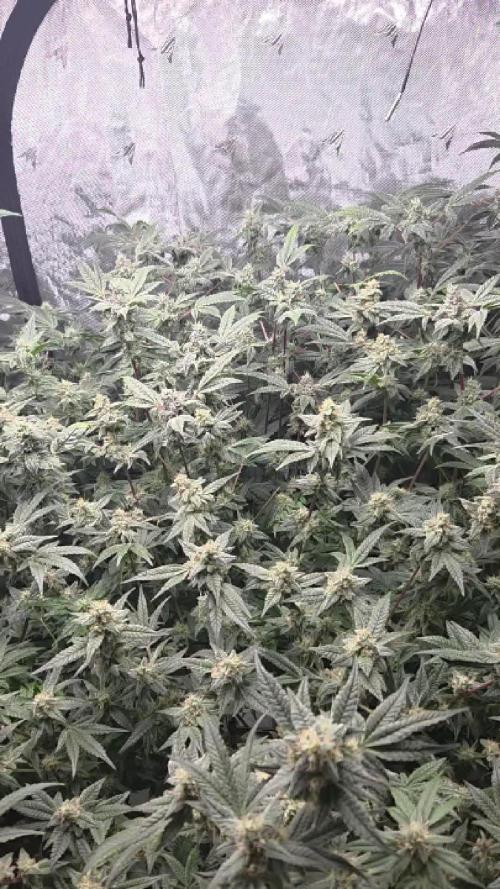
Big phatty is healthy as and ready to flip into flower, defoliating on the reg and spreading her out some more . Here comes the stretch


Likes
185
Share

@LGreen
Follow
Einen schönen Sonntag mal wieder & frohes Neues 😊
🌿 Wochenupdate
Es läuft alles in allem weiterhin stabil =)
Ich tracke und erhalte nach wie vor die Nährstofflösung.
Mir ist lediglich ein kleiner Interpretationsfehler unterlaufen…
Notorious hat erste Anzeichen von Salzstress durch einen konstant zu hohen EC gezeigt.
Kein starkes Schadbild und ziemlich sicher nichts, was den Run oder ihre Entwicklung gefährden würde zum Glück =D
Trotzdem hat es mich zu dem Zeitpunkt ehrlich gesagt ziemlich abgefuckt 😅
Ich hätte hier deutlich intensiver hinschauen sollen.
Da sie von ihrer Blattstruktur her generell eher hart bzw. rau ist, ist mir der Fehler erst relativ spät aufgefallen, jetzt zeigt sie bereits leichte lokale Verbrennungen.
Sonst sind keine klassischen Mängelbilder vorhanden, keine Root-Probleme und keine pH-Ausreißer.
Die anderen Ladies performen im selben Reservoir völlig unauffällig 😊
Ich gehe davon aus, hier einen EC-empfindlichen Phäno erwischt zu haben.
Natürlich habe ich mich direkt nach dem ausgiebigen Ärgern daran gemacht, die Nährstofflösung etwas zu entspannen =D..
Ich bin jetzt runter auf 1.800 EC und beobachte zunächst ein paar Zyklen des Uptake-Patterns.
Danach entscheide ich, wie es weitergeht 😊
🌸 Pflanzenstatus & Training
Blueberry Cupcake Frostet fleißig weiter ❄️
Ich finde, sie sieht einfach traumhaft aus 😄
Ihr Geruch hat sich nochmal deutlich intensiviert und geht jetzt klar in Richtung beerig, der Joghurt Teil ist verschwunden =D
Bin wirklich gespannt, was da noch kommt und wie sie sich weiterentwickelt 🔥
Purpz ist Aktuell für mich ganz klar der Eyecatcher im Zelt =)
Top Frost, sehr schöne homogene Sites und ich meine bereits leichte Anthocyan-Einlagerungen erkennen zu können 😍
Der Geruch geht inzwischen eher in Richtung Diesel, mit einem leicht fruchtigen Abgang 🍋
Schwer zu greifen, aber extrem spannend 😄
Notorious THC Entwickelt sich ebenfalls gut 😊
Abgesehen von den lokalen Burns macht sie insgesamt einen guten Eindruck.
Der kushige, eher dumpfe Geruch hat sich manifestiert, allerdings muss man bei ihr schon etwas näher rangehen =)
Vom Frost zieht sie gut nach ❄️
Vom Aufbau her habe ich generell den Eindruck, dass sie etwas später dran ist.
Dafür sehe ich aber klar das Potenzial auf richtig schöne Buds, die Ansätze sehen sehr vielversprechend aus =D
Guzzlerz Hat auch echt gut aufgeholt, bin ehrlich gesagt überrascht 😄
Optisch immer noch etwas zart, das hat sie noch nicht ganz abgelegt,
aber von der Entwicklung her würde ich sagen mittlerweile auf Augenhöhe mit NTHC 👍
Bei ihr meine ich einen leichten bläulichen Schimmer in der jungen Blüte erkennen zu können, für mich bleibt es auch hier absolut spannend =D
Geruchs review gibt's hier beim nächsten update.
⚙️ System
Top-Ups erhalten weiterhin die Lösung 🔧😊
VPD: 1,35 kPa
CO₂: 700–800 ppm im Durchschnitt
EC: 1.800–1.850 µS/cm
PPFD: 1.000
Vielen Dank fürs Lesen und Mitfiebern 😊
Ich wünsche euch allen eine schöne Woche 🌱


Likes
15
Share


@Messypies
Follow
Buds are glistening now with an incredibly strong smell inside the tent. My rhino carbon filter manages to sort that thought :).
1 nanner developed on 1 bud site but as I'm so close to harvest, I'm not worried.
Plants have had their final nute feed and next will be plain water for a few days
Will be starting 4 x new autoflower grow next week


Likes
60
Share


@julian100614
Follow
Otra semana mas y esta gorilla empieza a formar esas puntas llena de pistilos y desprende un olor muy agradabre afrutado y cítricos 👌🍋
Empezamos a suministrarle diferentes azucares y nutrientes para la formacion y engorde del cogollo 🔥
La humedad la mantenemos en un rango enre 40-55% y la temperatura entre 20 y 28°C.
El agua se mide continuamente para mantenerlo en el rango de 6.


Likes
Comments
Share

@Budhunter
Follow
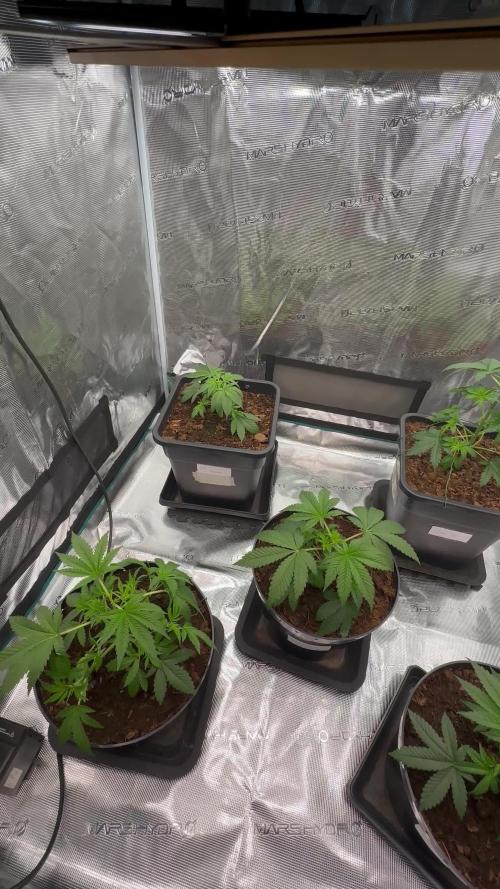
Week 3 of veg, day 30.
I decided to top my plants as I still have few weeks in veg. I did some lst too and removed some lower branches that there is no potential. Did the topping on day 26. It is responding well and the growth has started again. Let’s go

Likes
14
Share


@UnkleSkunk
Follow
Ed arriviamo ad "oggi"
Sono le ultime foto che ho fatto
La pianta inizia a bere di più...
Sto passando alla fertilizzazione x la fioritura...
Guardando le dimensioni delle foglie la pianta dovrebbe darmi molte soddisfazioni
Defogliamento leggero come sempre
Likes
21
Share

@Chubbs
Follow
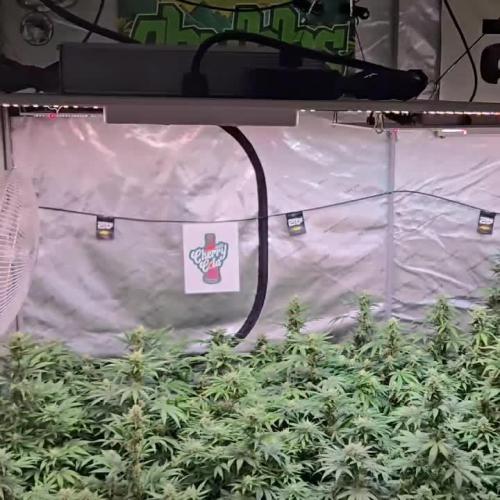
Weekly update on these beautiful ladies. They're progressing nicely and definitely starting to get close. I'll go into the tent today and check trichs to get a good idea how much longer until harvest. All in all Happy Growing.

Likes
119
Share


@DogDoctorOfficial
Follow
Greetings, fellow cultivators and stewards of the green realm! It's time to embark on the Week 4 Flower Report for the enchanting Jealousy in the Power Buds competition. The grow room has transformed into a sanctuary of blossoming beauty, and our verdant queen continues to captivate with her botanical grace.
As we venture deeper into the fourth week of flowering, Jealousy's prayerful demeanor remains steadfast. It's like a perpetual botanical meditation, where every leaf is a testament to the serene communion between plant and light. The grow room echoes with the hum of chlorophyll, and Jealousy stands as a living embodiment of lush greenery.
The flower formation is a sight to behold. Buds, adorned in trichome-laden splendor, emerge like jewels on a botanical crown. The pace at which they're developing is nothing short of remarkable—almost turbocharged. It's like witnessing a botanical sprint, where each bud races toward maturity with an urgency that adds an extra layer of excitement to our horticultural odyssey.
And now, let's talk root porn! Brace yourselves for a visual feast as we delve into the underground world of the clones. The roots, like intricate threads weaving a subterranean tapestry, tell a story of vitality and success. These clones, offspring of our majestic Jealousy, have not only taken root but have done so with a vigor that speaks volumes about the genetic prowess passed down from their botanical matriarch.
The success of these clones is a testament to the health and vitality of Jealousy herself. It's like witnessing the circle of life in a green kingdom, where each rooted clone is a promise of continuity and a nod to the resilience of the plant lineage.
As we navigate the fourth week of flowering, let's extend our gratitude to Zamnesia and Plagron, the unseen architects of our botanical masterpiece. Their contributions continue to shape the narrative of our green adventure.
A standing ovation to the Grow Diaries community – your shared experiences and boundless enthusiasm are the pillars of our collective knowledge.
To my fellow contestants and growers, may your buds swell with magnificence, and may the vibrancy of your grow rooms reflect the success of your botanical endeavors. Here's to a week of perpetual prayer, turbocharged growth, and the anticipation of a harvest that will leave us all in awe. Stay green, stay inspired, and keep cultivating those dreams!
As always, thank you all for stopping by, for the love and for it all. This journey of mine would just not be the same without you guys. The love and support are very much appreciated, and I feel honored and blessed with you all in my life !!!
With true love comes happiness. Always believe in yourself and always do things expecting nothing in return, with an open heart. Be a giver, and the universe will respond in ways you can’t even dream of .
Friendly reminder: all you see here is pure research and for educational purposes only.
Genetics - Jelousy @Zamnesia
Nutrients @Plagron
Light - @viparspectra P2000
Room size - 3x3 - 0,9x0,9


Likes
27
Share


@eldruida_lamota
Follow
Vamos actualizar la primera semana de floración de estas Biscotti de RoyalQueenSeeds.
Primera semana a 12/12 en un SOG, se ven con un buen color y avanzan progresivamente.
La humedad es perfecta, la temperatura me gustaría tenerla par de grados más abajo pero aún así es pasable.
Aplico el flash root de Agrobeta y Blue line B de Agrobeta.
Esta semana añadí tucán, gold joker, silver y génesis también de Agrobeta.
Mars hydro:
Code discount: EL420
https://www.mars-hydro.com/
Agrobeta:
https://www.agrobeta.com/agrobetatiendaonline/36-abonos-canamo
Hasta aquí todo, veremos como progresan pronto. Buenos humos 💨💨💨
Likes
17
Share


@StoneJackson
Follow
Loved growing this unknown Indica Strain the effects are medicinal, the experience is euphoric and pleasant being surrounded by flowery herby scents while you bliss out. A true gem and pleasure to grow
Processing
Likes
Comments
Share


@Batista
Follow
We are watching trichomes every day and it looks like it is almost ready so we are thinking of harvesting next week. It is already possible to see some amber trichomes. Unfortunately it seems that we are not going to harvest the expected amount, the buds were not very dense and fat, apparently the buds are just small leaves with trichomes.


Likes
92
Share

@DogDoctorOfficial
Follow
🌱 Week 2 Report: The Journey Evolves 🌱
Grow Fam, the adventure is in full swing! 🌟 The Gorilla Melon from Fast Buds is out and shining its light, and the Papaya Zoap has made its debut in the Cannakan, bringing with it a story that adds even more depth to this incredible run.
When the universe speaks, we listen. 🍈✨ I didn’t plan on popping Papaya Zoap from Sweet Seeds just yet, but sometimes things just have a way of aligning. After a few other seeds didn’t germinate, I felt an inner pull toward this special strain. As it turns out, the universe had something beautiful in mind! Just days later, my brother @daggadna also began germinating the same genetics—gifted to us during Spannabis. Was it a coincidence? I don’t think so. 🌱 This is more than just a grow now—it’s a journey with purpose, guided by synchronicity and connection. I can already feel the magic building up with this one, and I can’t wait to see where this road takes us!
Now, onto the Papaya Zoap… something tells me this plant is going to take us on a ride we didn’t expect but absolutely needed. 💚 Let’s make something incredible, Brother Dagga—this one’s going to be legendary.
Gear Updates: All Systems Go 🚀
This week, everything’s dialed in perfectly with the TrolMaster system. Shout out to the incredible DSH-2U Humidity Station! 🌬️ This tool is giving me precision control over the RH (relative humidity) ranges in the room, keeping the environment just right for my babies. Having that accurate readout and control allows me to maintain optimal levels for each stage of growth. It’s like magic—you plug it in, set the desired ranges, and let it do its thing! 🌡️
By monitoring and adjusting humidity levels on-the-fly through the TrolMaster app, I can ensure the environment remains stable, and that means happier plants and healthier growth! No more guessing games. From anywhere—whether I’m working in the garden or chilling out—I can track and tweak it all. Heck, I could be on the toilet and still have complete control over my room! 😂
The AMP-3 Precision Meter has been running 24/7 in my water solution, giving me real-time updates so I can make any corrections when needed, right from my phone. This tech has taken my grow to another level. ✨
Nutrition Update: Keeping It Balanced 🍃
As for feeding, we’re sticking with the basics to give the plants what they need, without overloading. Right now, I’m running:
• Regulator: 0.15ml/l
• Startbooster: 0.25ml/l
For now, I feel like this is the sweet spot—just enough to encourage root development and early growth without overloading them. I’ll be adjusting the feed as we go deeper into the grow, keeping an eye on how they respond. You know me, always tweaking and improving along the way!
Shoutouts & Gratitude 🙌💚
Huge love to everyone following along—whether you’re here on Grow Diaries, over on YouTube, or on IG. Your support keeps this journey alive, and I am so grateful for every comment, like, and message! Special shoutout to my sponsors for fueling this project:
• Nutrition: @aptusholland @aptus_world @aptus_es @aptusbrasil @aptus_thailand @aptus_portugal @aptususa_official @aptusplanttechnz @aptusplanttechaus
• Controls: @trolmaster.eu @trolmaster.eu.support @trolmaster.support @trolmaster.agro
• Soil: @promix_growers_eur @promix_cannabis @promixmitch
More to come soon, and you won’t want to miss it! 📺 I’m also documenting everything on my YouTube channel, and I’ll be sharing behind-the-scenes content on IG, so hit that subscribe button and follow along. Let’s grow together, fam!
Growers Love to All 💚
The love and support from the grow community is something I never take for granted. This journey wouldn’t be the same without all of you! I’m so honored to be part of this amazing community, and I can’t wait to share more updates and insights along the way. Remember, this isn’t just about growing plants—it’s about growing together. 🌱
Until next time, stay positive, stay inspired, and keep pushing forward!
This week’s shoutout is dedicated to the synchronicity of life, my growing community, and of course, Papaya Zoap and Gorilla Melon. Let’s see what magic we can create together!
#HighFrequency #PositiveVibesOnly #PapayaZoap #GorillaMelon #TrolMaster #InBalanceWithNature #GrowLife #AptusTruePlantScience #GrowersLove


