The Grow Awards 2026 🏆
Likes
Comments
Share
@nonick123
Follow
Cosecha Reporte de Peso húmedo & Peso Seco de KS1 by Terpyz Mutant Genetics ⚖️ Total peso húmedo 404 ⚖️ Total peso seco TBD 💦Pérdida de H2O durante el proceso de secado TBD 🎨Colores Un color verde claro completamente perlada de tricomas! 👃Olores 💐Floración Principalmente kush: terroso (predominante), notas de pino, combustible, toque de cítricos y ligero fondo de skunk 🏜️ Secado TBD 🍗 Curado TBD 🍽️Sabor A definir cuando esté bien curada en el reporte de humo Variedad 💪Resistencia Resistente 5/10! - MUY afectada por el bloqueo de nutrientes que se ha presentado en la mayoria de plantas de este ciclo. No he conseguido erradicar la mosca blanca que ha estado presente en toda la floración! 🏋️‍♂️Entrenamiento: Se ha adaptado bien al topping (en 2 ocasiones), supercropping y LST! 🌱Vegetativo: Un vegetativo sin incidencias, aunque no creció mucho... 💐 Floración: Cogollos no muy densos por el bloqueo de nutrientes, pero cubiertos de muchos tricomas y con un aroma kush delicioso! Genética: Regular trabajo de breeding de Terpyz 👨‍⚖️Conclusión: Una cepa a probar en otras condiciones. No resistente. Pero perfil terpenico kush muy apreciado!
Likes
3
Share
Likes
5
Share
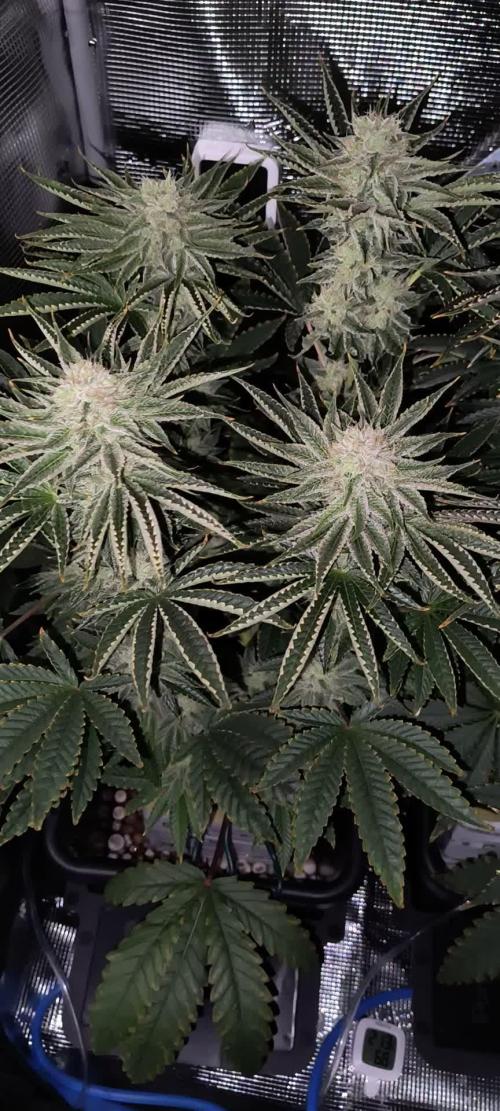
I’m starting the fifth week, and balancing humidity and temperature is becoming a bit challenging; it feels like I’m always slightly off on one of them. I applied a preventive antifungal treatment since the humidity has been a bit high. The buds have finished forming and are beginning to compact. Some leaves are still yellowing slightly. The smell is getting much stronger, and some pistils are already starting to turn brown.
Likes
3
Share
The"cream" de la Caramel Auto is one funny and delicious strain i am so happy also with these one is another gol in faster strains I just can say sweetseeds are for the most quickly seeds compare day to day with 3 other's. I just see the picture and videos and is. Really a good seedbank .we are Also using a co2enhancer bottle for TnB naturals and the megacrop one time every two weeks and the biobizz also every two weeks separate like these they get every week feeding
Likes
1
Share
Clyde established itself really well after the transplant. Feeding has started this week with Biobizz Bio-Grow at half strength. Clyde was topped today at the 4th node, 6 nodes were already established, and LST has began also.
Likes
2
Share
@MistaOC
Follow
25.05. 🌿 Day 25 – Stretching Begins! The plants have noticeably stretched since the last update — a clear sign that they’re moving deeper into the vegetative phase. The vertical growth is picking up pace, but they’re still looking strong and well-balanced. Despite the rapid upward growth, structure remains solid, with thick stems and healthy leaf development. The 19L pots and BioGrow feeding seem to be doing their job — no signs of deficiencies or stress. Light distance and environment are being carefully managed to control the stretch and keep the plants from getting too lanky. So far, they’re adapting really well. 💪 Overall: they’re thriving! —————————————————————— 27.05.
Likes
28
Share
The ladies has been having issues since day one, but im not giving up on these fighters! I have only been feeding ph 6.3 water, with no nutrition. Monitering moisture level in soil, and feeding before dry. -Temps - 26-27 day / 22-23 night -RH% - 65%(+-1.5) day / 70% night (+-1.5) -VPD 0.8 - 1.0 KPA 👉12/9 Climate on point, still recovering. 👉13/9 Letting them be. 🙏14/9 Praying every day. 👉15/9 The 3 bigger ones, is showing signs of adapting and overcoming the struggle. 👉16/9 The 3 smaller ones is still behind by a lot. 👉17/9 Topping two of the biggest and cloning the tops. *********First nutrients added to watering. (The 3 smallest got a bit of Biobizz root juice as top feed.) 👉18/9 In the mist of gathering data, to dial in vpd. I have only been feeding ph 6.3 water, with no nutrition. Monitering moisture level in soil, and feeding before dry. -Temps - 26-27 day / 22-23 night -RH% - 65%(+-1.5) day / 70% night (+-1.5)
Likes
5
Share
Likes
13
Share
Gracias al equipo de AnesiaSeeds y XpertNutrients sin ellos esto no sería posible. 💐🍁 Frozen Face Auto Nueva variedad autofloreciente, tan refrescante como una mañana helada con un toque de cereza y lavanda. Esta variedad es una auténtica obra maestra de la cría, con un linaje dominante 70% Sativa que aporta una vibración edificante y energizante a tu cultivo. Perfecta para los que aprecian la belleza veloz de las semillas autofeminizadas y la mezcla única de dicha aromática. Con un contenido de THC del 30%, Frozen Face Auto promete una experiencia tan estimulante como una zambullida en un lago fresco, dejándote fresco y vigorizado. Ofrece rendimientos impresionantes de 550 g/m² en interior y hasta 300 g por planta en exterior. Con un ciclo de 70-75 días. 🚀🌻 Consigue aqui tus semillas: 🍣🍦🌴 Xpert Nutrients es una empresa especializada en la producción y comercialización de fertilizantes líquidos y tierras, que garantizan excelentes cosechas y un crecimiento activo para sus plantas durante todas las fases de cultivo. Consigue aqui tus Nutrientes: https://xpertnutrients.com/es/shop/ 📆 Semana 10: Parece que el tiempo va mejorando, los cogollos son grandes y siguen acumulando resina. Engorde final y lavado de raices
Likes
7
Share
@ibbzy
Follow
Just got back from holiday. Few days late on update. watering system wasn’t too shabby as it was a last minute holiday ahaha. 6 days away in Greece. Lovely. 1x Sweet Mandarine Zkittlez 1x Mimosa Bruce Banner Ready for harvest. Been put into two days of darkness!
Likes
5
Share
@Lazuli
Follow
Day 14 flower, nice bushy plant dont need much attention she opens up nice
Likes
4
Share
We had some days of hanging leaves after placing them in new pots, probably root stress. After some days they recovered and now they are doing well in their new homes 🌱✨ I topped them on the weekend, let’s see how they’ll react 🧙‍♂️
Processing
Likes
27
Share
2/10: I watered today with about 3/4 gallon each, plus cal-mag, signal, bembe, armor si, a little open sesame, and their final dose of endoboost. The short one never did stop making the hook leaves on all her new growth, but she seems happy..budding faster than anybody else.. 2/11: Wife home sick today....postponing construction project to raise the lights. 2/12: Today, I tackled the project to raise my ceiling another foot. In addition to that project, I installed and hooked up my new AC Infinity 6" intake fan. It's pulling in fresh air from the soffit vent on the eave of the attic, and currently feeding the garden with 46f fresh air. I'm able to easily maintain daytime temps in the lower 70f's now. I am able to drive the nighttime temps as low as I want. The only issue is that the outdoor RH varies quite a bit, so I ordered a 30-pint dehumidifier to put in the top of the closet. I sprayed everybody with boomboom spray to try and mitigate the light burn damage that is likely to ensue. 2/13: The taller one is still stretching a little bit, but the 2-footer is just budding up. 2/14: I fed them today with about 3/4 gallon each including grow big, big bloom, tiger bloom, cal-mag, signal, bembe, humic acid, and I switched over from Open Sesame to Beastie Bloomz. Raised the lights another couple of inches. I did some training on them and defo'd a little bit. 2/15: Installed the new dehumidifier and rigged the continuous drain on it...works great. 2/16: I rotated the edge plants and removed some old leaves. I added another 22w 3000k 4' bar light under the canopy. 2/17: I rearranged the garden and defoliated a little bit. That's it for week 8-
Likes
12
Share
Harvest day 70 since time switch to 12 / 12 h Hey guys :-) Finally it's time 💚 The lady is done the large leaves have been removed and hung upside down to dry in the dark drying room. You can now stay there for 13-15 days at a temperature of 18-20 degrees and 55-62% humidity. After 13-15 days it is neatly trimmed by hand and placed in jars with boveda packs 62. After 4 weeks Boveda 58% come in and are ready for testing ;-). After everything has been cut cleanly, the last update comes with the smoke report and the finished pictures. Let's get to the plant 💚. First of all I would like to compliment Green House for this genetics. Unfortunately, the rating system at Growdiaries is a bit strange because I have to give the stars before the Smoke Report and in the end it might have led to more stars in terms of taste. The growth was great from start to finish. She had no problems at all and also had no problems with animals 👍. I'm amazed at the great smell the beautiful buds give off😀. Of course I cut cuttings and if the taste is as good as the smell it will be grown again ☺️. A final report comes with the Smoke Report. Until then, I would like to say thank you to the whole Green House team and wish you all the best fun with the diary 💚🙏🏻 Have fun and stay healthy 💚🙏🏻 👇🏼👇🏼👇🏼👇🏼👇🏼👇🏼👇🏼👇🏼👇🏼👇🏼👇🏼👇🏼 ‘Powered by GreenHouse Feeding’ Copy the link for 10% off all Nutrients 👇🏼 http://shop.greenhousefeeding.com/ affiliate/madelngermany_passiongrower/ 👇🏼👇🏼👇🏼👇🏼👇🏼👇🏼👇🏼👇🏼👇🏼👇🏼👇🏼👇🏼 Water 💧 💧💧 Osmosis water mixed with Cal/Mag (24 hours stale that the chlorine evaporates) to 290 ppm and Ph with Ph- to 5.8 - 6.4 MadeInGermany
Likes
15
Share
@MariBomba
Follow
I will create other diaries for the other strains :) the light is a 100 watt CXB3590 from Cf Growlights.
Likes
9
Share
@Szamba
Follow
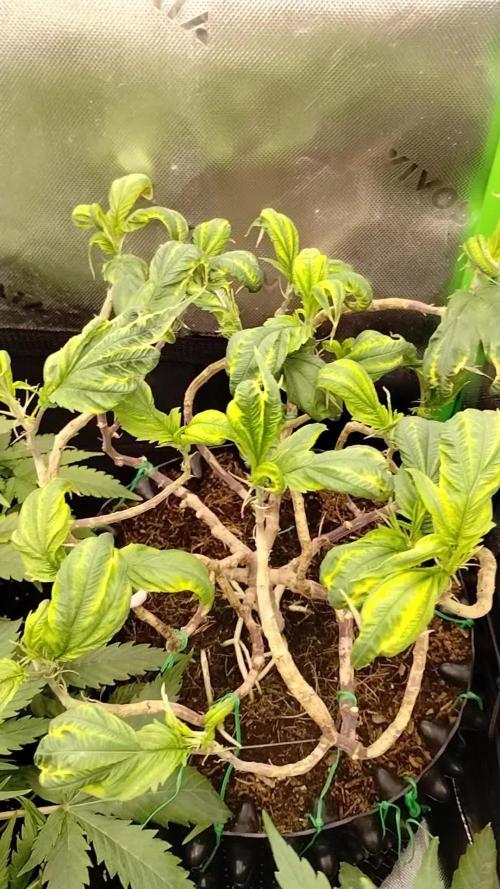
Another Friday! I think I made a bonsai but really like her! Smells good!
Likes
19
Share
Yellow butterfly came to see me the other day; that was nice. Starting to show signs of stress on the odd leaf, localized isolated blips, blemishes, who said growing up was going to be easy! Smaller leaves have less surface area for stomata to occupy, so the stomata are packed more densely to maintain adequate gas exchange. Smaller leaves might have higher stomatal density to compensate for their smaller size, potentially maximizing carbon uptake and minimizing water loss. Environmental conditions like light intensity and water availability can influence stomatal density, and these factors can affect leaf size as well. Leaf development involves cell division and expansion, and stomatal differentiation is sensitive to these processes. In essence, the smaller leaf size can lead to a higher stomatal density due to the constraints of available space and the need to optimize gas exchange for photosynthesis and transpiration. In the long term, UV-B radiation can lead to more complex changes in stomatal morphology, including effects on both stomatal density and size, potentially impacting carbon sequestration and water use. In essence, UV-B can be a double-edged sword for stomata: It can induce stomatal closure and potentially reduce stomatal size, but it may also trigger an increase in stomatal density as a compensatory mechanism. It is generally more efficient for gas exchange to have smaller leaves with a higher stomatal density, rather than large leaves with lower stomatal density. This is because smaller stomata can facilitate faster gas exchange due to shorter diffusion pathways, even though they may have the same total pore area as fewer, larger stomata. Leaf size tends to decrease in colder climates to reduce heat loss, while larger leaves are more common in warmer, humid environments. Plants in arid regions often develop smaller leaves with a thicker cuticle and/or hairs to minimize water loss through transpiration. Conversely, plants in wet environments may have larger leaves and drip tips to facilitate water runoff. Leaf size and shape can vary based on light availability. For example, leaves in shaded areas may be larger and thinner to maximize light absorption. Leaf mass per area (LMA) can be higher in stressful environments with limited nutrients, indicating a greater investment in structural components for protection and critical resource conservation. Wind speed, humidity, and soil conditions can also influence leaf morphology, leading to variations in leaf shape, size, and surface characteristics. Small leaves: Reduce water loss in arid or cold climates. Environmental conditions significantly affect gene expression in plants. Plants are sessile organisms, meaning they cannot move to escape unfavorable conditions, so they rely on gene expression to adapt to their surroundings. Environmental factors like light, temperature, water, and nutrient availability can trigger changes in gene expression, allowing plants to respond to and survive in diverse environments. Depending on the environment a young seedling encounters, the developmental program following seed germination could be skotomorphogenesis in the dark or photomorphogenesis in the light. Light signals are interpreted by a repertoire of photoreceptors followed by sophisticated gene expression networks, eventually resulting in developmental changes. The expression and functions of photoreceptors and key signaling molecules are highly coordinated and regulated at multiple levels of the central dogma in molecular biology. Light activates gene expression through the actions of positive transcriptional regulators and the relaxation of chromatin by histone acetylation. Small regulatory RNAs help attenuate the expression of light-responsive genes. Alternative splicing, protein phosphorylation/dephosphorylation, the formation of diverse transcriptional complexes, and selective protein degradation all contribute to proteome diversity and change the functions of individual proteins. Photomorphogenesis, the light-driven developmental changes in plants, significantly impacts gene expression. It involves a cascade of events where light signals, perceived by photoreceptors, trigger changes in gene expression patterns, ultimately leading to the development of a plant in response to its light environment. Genes are expressed, not dictated! While having the potential to encode proteins, genes are not automatically and constantly active. Instead, their expression (the process of turning them into proteins) is carefully regulated by the cell, responding to internal and external signals. This means that genes can be "turned on" or "turned off," and the level of expression can be adjusted, depending on the cell's needs and the surrounding environment. In plants, genes are not simply "on" or "off" but rather their expression is carefully regulated based on various factors, including the cell type, developmental stage, and environmental conditions. This means that while all cells in a plant contain the same genetic information (the same genes), different cells will express different subsets of those genes at different times. This regulation is crucial for the proper functioning and development of the plant. When a green plant is exposed to red light, much of the red light is absorbed, but some is also reflected back. The reflected red light, along with any blue light reflected from other parts of the plant, can be perceived by our eyes as purple. Carotenoids absorb light in blue-green region of the visible spectrum, complementing chlorophyll's absorption in the red region. They safeguard the photosynthetic machinery from excessive light by activating singlet oxygen, an oxidant formed during photosynthesis. Carotenoids also quench triplet chlorophyll, which can negatively affect photosynthesis, and scavenge reactive oxygen species (ROS) that can damage cellular proteins. Additionally, carotenoid derivatives signal plant development and responses to environmental cues. They serve as precursors for the biosynthesis of phytohormones such as abscisic acid () and strigolactones (SLs). These pigments are responsible for the orange, red, and yellow hues of fruits and vegetables, while acting as free scavengers to protect plants during photosynthesis. Singlet oxygen (¹O₂) is an electronically excited state of molecular oxygen (O₂). Singlet oxygen is produced as a byproduct during photosynthesis, primarily within the photosystem II (PSII) reaction center and light-harvesting antenna complex. This occurs when excess energy from excited chlorophyll molecules is transferred to molecular oxygen. While singlet oxygen can cause oxidative damage, plants have mechanisms to manage its production and mitigate its harmful effects. Singlet oxygen (¹O₂) is considered a reactive oxygen species (ROS). It's a form of oxygen with higher energy and reactivity compared to the more common triplet oxygen found in its ground state. Singlet oxygen is generated both in biological systems, such as during photosynthesis in plants, and in cellular processes, and through chemical and photochemical reactions. While singlet oxygen is a ROS, it's important to note that it differs from other ROS like superoxide (O₂⁻), hydrogen peroxide (H₂O₂), and hydroxyl radicals (OH) in its formation, reactivity, and specific biological roles. Non-photochemical quenching (NPQ) protects plants from damage caused by reactive oxygen species (ROS) by dissipating excess light energy as heat. This process reduces the overexcitation of photosynthetic pigments, which can lead to the production of ROS, thus mitigating the potential for photodamage. Zeaxanthin, a carotenoid pigment, plays a crucial role in photoprotection in plants by both enhancing non-photochemical quenching (NPQ) and scavenging reactive oxygen species (ROS). In high-light conditions, zeaxanthin is synthesized from violaxanthin through the xanthophyll cycle, and this zeaxanthin then facilitates heat dissipation of excess light energy (NPQ) and quenches harmful ROS. The Issue of Singlet Oxygen!! ROS Formation: Blue light, with its higher energy photons, can promote the formation of reactive oxygen species (ROS), including singlet oxygen, within the plant. Potential Damage: High levels of ROS can damage cellular components, including proteins, lipids, and DNA, potentially impacting plant health and productivity. Balancing Act: A balanced spectrum of light, including both blue and red light, is crucial for mitigating the harmful effects of excessive blue light and promoting optimal plant growth and stress tolerance. The Importance of Red Light: Red light (especially far-red) can help to mitigate the negative effects of excessive blue light by: Balancing the Photoreceptor Response: Red light can influence the activity of photoreceptors like phytochrome, which are involved in regulating plant responses to different light wavelengths. Enhancing Antioxidant Production: Red and blue light can stimulate the production of antioxidants, which help to neutralize ROS and protect the plant from oxidative damage. Optimizing Photosynthesis: Red light is efficiently used in photosynthesis, and its combination with blue light can lead to increased photosynthetic efficiency and biomass production. In controlled environments like greenhouses and vertical farms, optimizing the ratio of blue and red light is a key strategy for promoting healthy plant growth and yield. Understanding the interplay between blue light signaling, ROS production, and antioxidant defense mechanisms can inform breeding programs and biotechnological interventions aimed at improving plant stress resistance. In summary, while blue light is essential for plant development and photosynthesis, it's crucial to balance it with other light wavelengths, particularly red light, to prevent excessive ROS formation and promote overall plant health. Oxidative damage in plants occurs when there's an imbalance between the production of reactive oxygen species (ROS) and the plant's ability to neutralize them, leading to cellular damage. This imbalance, known as oxidative stress, can result from various environmental stressors, affecting plant growth, development, and overall productivity. Causes of Oxidative Damage: Abiotic stresses: These include extreme temperatures (heat and cold), drought, salinity, heavy metal toxicity, and excessive light. Biotic stresses: Pathogen attacks and insect infestations can also trigger oxidative stress. Metabolic processes: Normal cellular activities, particularly in chloroplasts, mitochondria, and peroxisomes, can generate ROS as byproducts. Certain chlorophyll biosynthesis intermediates can produce singlet oxygen (1O2), a potent ROS, leading to oxidative damage. ROS can damage lipids (lipid peroxidation), proteins, carbohydrates, and nucleic acids (DNA). Oxidative stress can compromise the integrity of cell membranes, affecting their function and permeability. Oxidative damage can interfere with essential cellular functions, including photosynthesis, respiration, and signal transduction. In severe cases, oxidative stress can trigger programmed cell death (apoptosis). Oxidative damage can lead to stunted growth, reduced biomass, and lower crop yields. Plants have evolved intricate antioxidant defense systems to counteract oxidative stress. These include: Enzymes like superoxide dismutase (SOD), catalase (CAT), and various peroxidases scavenge ROS and neutralize their damaging effects. Antioxidant molecules like glutathione, ascorbic acid (vitamin C), C60 fullerene, and carotenoids directly neutralize ROS. Developing plant varieties with gene expression focused on enhanced antioxidant capacity and stress tolerance is crucial. Optimizing irrigation, fertilization, and other management practices can help minimize stress and oxidative damage. Applying antioxidant compounds or elicitors can help plants cope with oxidative stress. Introducing genes for enhanced antioxidant enzymes or stress-related proteins over generations. Phytohormones, also known as plant hormones, are a group of naturally occurring organic compounds that regulate plant growth, development, and various physiological processes. The five major classes of phytohormones are: auxins, gibberellins, cytokinins, ethylene, and abscisic acid. In addition to these, other phytohormones like brassinosteroids, jasmonates, and salicylates also play significant roles. Here's a breakdown of the key phytohormones: Auxins: Primarily involved in cell elongation, root initiation, and apical dominance. Gibberellins: Promote stem elongation, seed germination, and flowering. Cytokinins: Stimulate cell division and differentiation, and delay leaf senescence. Ethylene: Regulates fruit ripening, leaf abscission, and senescence. Abscisic acid (ABA): Plays a role in seed dormancy, stomatal closure, and stress responses. Brassinosteroids: Involved in cell elongation, division, and stress responses. Jasmonates: Regulate plant defense against pathogens and herbivores, as well as other processes. Salicylic acid: Plays a role in plant defense against pathogens. 1. Red and Far-Red Light (Phytochromes): Red light: Primarily activates the phytochrome system, converting it to its active form (Pfr), which promotes processes like stem elongation and flowering. Far-red light: Inhibits the phytochrome system by converting the active Pfr form back to the inactive Pr form. This can trigger shade avoidance responses and inhibit germination. Phytohormones: Red and far-red light regulate phytohormones like auxin and gibberellins, which are involved in stem elongation and other growth processes. 2. Blue Light (Cryptochromes and Phototropins): Blue light: Activates cryptochromes and phototropins, which are involved in various processes like stomatal opening, seedling de-etiolation, and phototropism (growth towards light). Phytohormones: Blue light affects auxin levels, influencing stem growth, and also impacts other phytohormones involved in these processes. Example: Blue light can promote vegetative growth and can interact with red light to promote flowering. 3. UV-B Light (UV-B Receptors): UV-B light: Perceived by UVR8 receptors, it can affect plant growth and development and has roles in stress responses, like UV protection. Phytohormones: UV-B light can influence phytohormones involved in stress responses, potentially affecting growth and development. 4. Other Colors: Green light: Plants are generally less sensitive to green light, as chlorophyll reflects it. Other wavelengths: While less studied, other wavelengths can also influence plant growth and development through interactions with different photoreceptors and phytohormones. Key Points: Cross-Signaling: Plants often experience a mix of light wavelengths, leading to complex interactions between different photoreceptors and phytohormones. Species Variability: The precise effects of light color on phytohormones can vary between different plant species. Hormonal Interactions: Phytohormones don't act in isolation; their interactions and interplay with other phytohormones and environmental signals are critical for plant responses. The spectral ratio of light (the composition of different colors of light) significantly influences a plant's hormonal balance. Different wavelengths of light are perceived by specific photoreceptors in plants, which in turn regulate the production and activity of various plant hormones (phytohormones). These hormones then control a wide range of developmental processes.