


@Plantinator
Follow
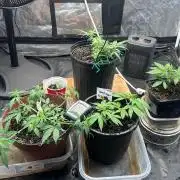
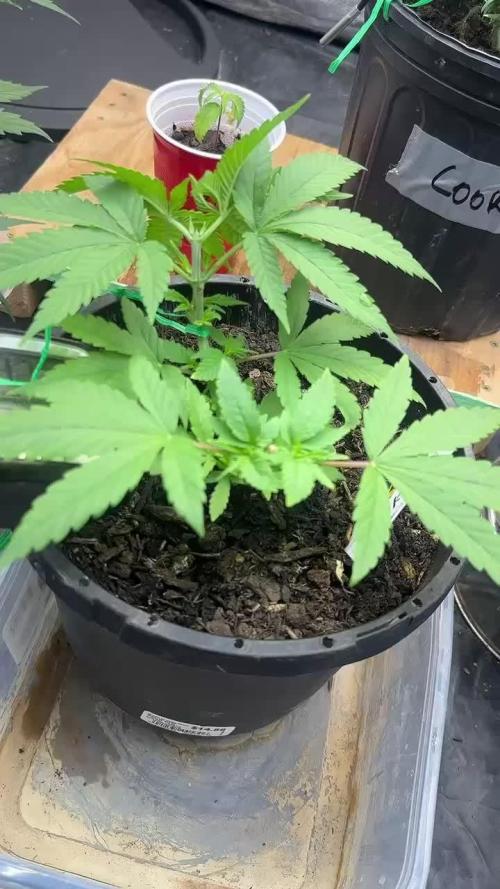
It's safe to say she was reacting well to LST so far. It's time to stop pinning down and let her grow vertically as now she is showing signs for pre-flower.
I lowered the light's position a little and cranked the DLI value up to 30.
Also, dropped down the humidity to 60%.
From this week I will give her 2.5L of water.




@Aedaone
Follow
This week started off a vegative week and about halfway through became a flowering week. Since I had already started it as vegative I didn't change it. Number one and number two, the two big ones, showed their sex on day 51 or day two of this week. Plant 3 showed sex on day 53 or day 4 of this week. I've increased their feed to my veg two formula and the iron supplement has really improved the color it rained day 1,2, and 3 so far this week and I included a 10 day forecast from day 3. We've had rain and high humidity at night cloud cover all day and nights dropping below 70f. These girls are eating it up with no issues. This was a hard week. One of my other big plants split right down the middle from the wind. It rained so much twice a day to all day this whole week. I had to add dry organic nutrients and let the rain water it in. I added 2 cups of 2-4-3, 1 cup of 0-10-10, and 1 cup of 12-0-0. These have really been troopers for some very difficult outdoor conditions.


@Ultraviolet
Follow
My homework.
Rubisco regeneration is intrinsically linked to nitrogen supply because Rubisco is a major sink for nitrogen in plants, typically accounting for 15% to over 25% of total leaf nitrogen. The regeneration phase itself consumes nitrogen through the synthesis of the Rubisco enzyme and associated proteins (like Rubisco activase), and overall nitrogen status heavily influences the efficiency of RuBP regeneration.Structural Component: Nitrogen is an essential building block for all proteins, and the sheer abundance of the Rubisco protein makes it the single largest storage of nitrogen in the leaf.
Synthesis and Activity: Adequate nitrogen supply is crucial for the synthesis and maintenance of sufficient Rubisco enzyme and Rubisco activase (Rca), the regulatory protein responsible for maintaining Rubisco's active state. Nitrogen deficiency leads to a decrease in the content and activity of both Rubisco and Rca, which in turn limits the maximum carboxylation rate, Vmax, and the rate of RuBP regeneration Jmax, thus reducing overall photosynthetic capacity.
Nitrogen Storage and Remobilization: Rubisco can act as a temporary nitrogen storage protein, which is degraded to remobilize nitrogen to other growing parts of the plant, especially under conditions of nitrogen deficiency or senescence.
Nitrogen Use Efficiency (NUE): The allocation of nitrogen to Rubisco is a key determinant of a plant's photosynthetic nitrogen use efficiency (PNUE). In high-nitrogen conditions, plants may accumulate a surplus of Rubisco, which may not be fully activated, leading to a lower PNUE. Optimizing the amount and activity of Rubisco relative to nitrogen availability is a target for improving crop NUE.
Photorespiration and Nitrogen Metabolism: Nitrogen metabolism is also linked to the photorespiration pathway (which competes with carboxylation at the Rubisco active site), particularly in the reassimilation of ammonia released during the process.
To increase RuBisCO regeneration, which refers to the process of forming the CO2 acceptor molecule Ribulose-1,5-bisphosphate (RuBP) during photosynthesis, the primary methods involve optimizing the levels and activity of Rubisco activase (Rca) and enhancing the performance of other Calvin-Benson-Bassham (CBB) cycle enzymes.
Biochemical and Environmental Approaches:
Optimize Rubisco Activase (Rca) activity: Rca is a crucial chaperone protein that removes inhibitory sugar phosphates, such as CA1P (2-carboxy-D-arabinitol 1-phosphate), from the Rubisco active site, thus maintaining its catalytic competence.
•Ensure optimal light conditions: Rca is light-activated via the chloroplast's redox status. Adequate light intensity ensures Rca can effectively maintain Rubisco in its active, carbamylated state.
•Maintain optimal temperature: Rca is highly temperature-sensitive and can become unstable at moderately high temperatures (e.g., above 35°C/95F° in many C3 plants), which decreases its ability to activate Rubisco. Maintaining temperatures within the optimal range for a specific plant species is important.
•Optimize Mg2+ concentration: Mg2+ is a key cofactor for both Rubisco carbamylation and Rca activity. In the light, Mg2+ concentration in the chloroplast stroma increases, promoting activation.
•Manage ATP/ADP ratio: Rca activity depends on ATP hydrolysis and is inhibited by ADP. Conditions that maintain a high ATP/ADP ratio in the chloroplast stroma favor Rca activity.
Enhance Calvin-Benson-Bassham (CBB) cycle enzyme activity: The overall rate of RuBP regeneration can be limited by other enzymes in the cycle.
•Increase SBPase activity: Sedoheptulose-1,7-bisphosphatase (SBPase) is a key regulatory enzyme in the regeneration pathway, and increasing its activity can enhance RuBP regeneration and overall photosynthesis.
•Optimize other enzymes: Overexpression of other CBB cycle enzymes such as fructose-1,6-bisphosphate aldolase (FBA) and triose phosphate isomerase (TPI) can also help to balance the metabolic flux and improve RuBP regeneration capacity.
Magnesium ions, Mg2+, are specifically required for Rubisco activation because the cation plays a critical structural and chemical role in forming the active site: A specific lysine residue in the active site must be carbamylated by a CO2 molecule to activate the enzyme. The resulting negatively charged carbamyl group then facilitates the binding of the positively charged Mg2+ion. While other divalent metal ions like Mn2+ can bind to Rubisco, they alter the enzyme's substrate specificity and lead to dramatically lower activity or a higher rate of the non-productive oxygenation reaction compared to Mg2+, making them biologically unfavorable in the context of efficient carbon fixation. The concentration of Mg2+ in the chloroplast stroma naturally increases in the light due to ion potential balancing during ATP synthesis, providing a physiological mechanism to ensure the enzyme is activated when photosynthesis is possible. At the center of the porphyrin ring, nestled within its nitrogen atoms, is a Magnesium ion (Mg2+). This magnesium ion is crucial for the function of chlorophyll, and without it, the pigment cannot effectively capture and transfer light energy.
Mg acts as a cofactor: Mg2+ binds to Rubisco after an activator CO2 molecule, forming a catalytically competent complex (Enzyme-CO2-Mg2+). High light + CO2) increases demand: Under high light (60 DLI is a very high intensity, potentially saturating) and high CO2, the plant's capacity for photosynthesis is high, and thus the demand for activated Rubisco and the necessary Mg2+ cofactor increases. Mg deficiency becomes limiting: If Mg2+ is deficient under these conditions, the higher levels of Rubisco and Rubisco activase produced cannot be fully activated, leading to lower photosynthetic rates and potential photo-oxidative damage.
Optimal range: Studies show that adequate Mg2+ application can enhance Rubisco activation and stabilize net photosynthetic rates under stress conditions, but the required concentration is specific to the experimental setup.
Monitoring is key: The most effective approach in a controlled environment is to monitor the plant's physiological responses e.g., leaf Mg2+ concentration, photosynthetic rate, Rubisco activation state, and adjust the nutrient solution/fertilizer to maintain adequate levels, rather than supplementing a fixed "extra" amount.
In practice, this means ensuring that Mg2+ is not a limiting factor in the plant's standard nutrient solution when pushing the limits with high light and CO2.
Applying Mg2+ through foliar spray is beneficial to Rubisco regeneration, particularly in alleviating the negative effects of magnesium (Mg) deficiency and high-temperature stress (HTS). While Mg can be leached from soil, within the plant it is considered a mobile nutrient, particularly in the phloem. Foliar-applied Mg is quickly absorbed by the leaves and can be translocate to other plant parts, including new growth and sink organs.
Foliar application of: NATURES VERY OWN MgSO4 @ 15.0g L-1 in a spray bottle.
Foliar sprays are often recommended as a rapid rescue measure for existing deficiencies or as a supplement during critical growth stages, when demand for Mg is high. Application in the early morning or late evening can improve absorption and prevent leaf burn.
The starting point [of creativity] is curiosity: pondering why the default exists in the first place. We’re driven to question defaults when we experience vuja de, the opposite of déjà vu. Déjà vu occurs when we encounter something new, but it feels as if we’ve seen it before. Vuja de is the reverse—we face something familiar, but we see it with a fresh perspective that enables us to gain new insights into old problems.
shorts_status_processing


@kushh
Follow
Hello friends. I have 1 problem
Could you help ?
[seed , genetic, manufacturer company, I do not know.]
day 37 flower started. day 65 low flower.


@Artemis
Follow
This week was an absolute scorcher with daytime temps in the low 30C, but we had no rain so I had to water more frequently. Seen a lovely burst of growth after last week's nutrients. Decided to bend and secure today to learn new technique. I'm fairly happy with the results. Think I might need to book up a scrog net worth all my girls after this training.


@GanjagrowingGal
Follow
Started flushing today, day 55, seeing what looks like trichomes going amber but my scope arrives tomorrow so I’ll finally get to see exactly what is going on. But I’m sure the scope is gonna show that the trichomes are screaming that they’re ready lol


@emeraldlabs
Follow
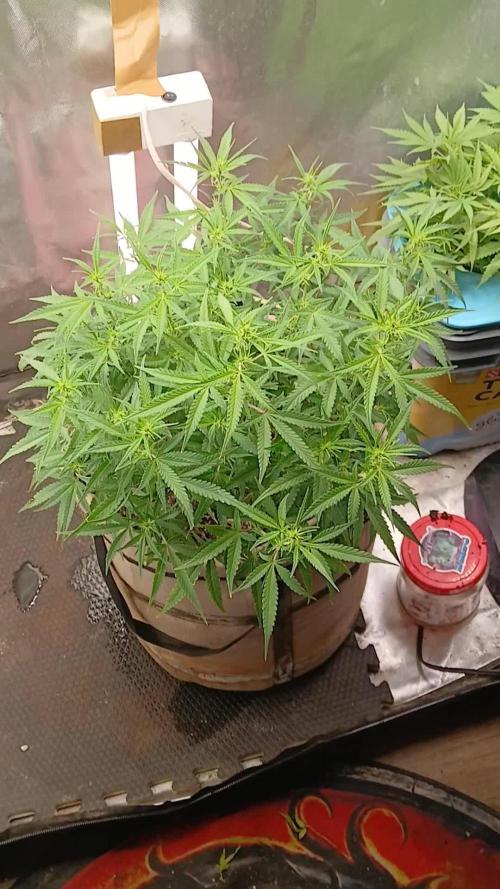
Time to move to flower tent; hopefully she fits!
Defoliating and topping the soil before moving her. Will continue defoliation for a few weeks.
Photos/video taken 77 days after breaking soil.



@BasedBuds_89
Follow
Started to defoliate and lollipop her slowly, cut back on nitrogen completely and will only be using a tiny amount of Micro and Big Buds nutrients for the remainder of the grow.



@DogDoctorOfficial
Follow
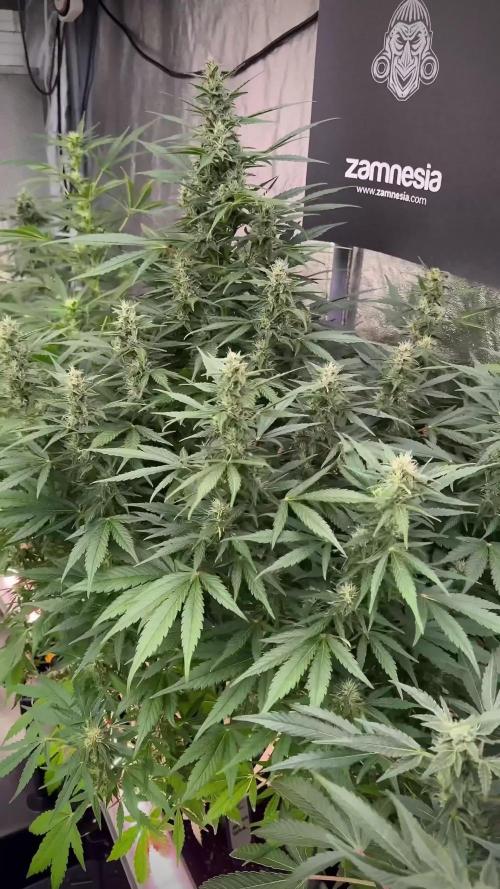
🌱 Zamnesia LSD — Week 10 (Week 6 Flower)
12/12 from seed | No veg | Full bloom expression
⸻
🔁 Quick Recap — The Journey So Far
From day one, this run has been about intention and rhythm.
12/12 straight from seed pushed these girls into early maturity, building structure while already preparing for reproduction. What we saw through the early weeks was a balanced hybrid behavior—but now, in full flower, they are clearly leaning into a more sativa-style expression.
Vertical stretch held longer than expected, apical dominance is evident, and the architecture speaks for itself:
a strong central spear with secondary sites orbiting around it.
No unnecessary stress, no over-handling—just guidance.
This allowed the plants to self-organize into efficient light-capturing structures.
⸻
🌸 White Hairs (Pistils) — What’s Happening Now
At this stage, the explosion of white hairs is the plant fully committing to reproduction.
These pistils are not just visual markers—they are active receptors, designed to catch pollen. In our case (sinsemilla), they remain unpollinated, which triggers the plant to keep pushing energy into flower production.
That’s why you’re seeing:
• Rapid formation of bud sites
• Increased stacking along branches
• Fresh, bright white pistil growth at the tips
This is peak “build phase” energy.
As long as pistils stay white and vibrant:
👉 the plant is still actively growing flowers, not finishing them.
⸻
✨ Trichomes — The Beginning of Resin Production
Now we enter the real magic.
Trichomes are the plant’s chemical defense system—tiny resin glands that protect against pests, UV, and environmental stress. But for us, they are also the carriers of:
• Cannabinoids (THC, CBD, etc.)
• Terpenes (aroma & flavor)
At week 6 flower, what we’re seeing is:
• First full coverage forming on sugar leaves
• Early frost development on calyxes
• Sticky texture beginning to build
Right now, most trichomes are still clear → early cloudy, meaning:
👉 potency is developing, but not yet at peak.
This phase is about production, not ripening yet.
⸻
🌬️ The Room — Same Recipe, Bigger Presence
Nothing changed… and everything changed.
We kept the environment stable because the plants told us they were happy:
• 🌡️ ~26°C
• 💧 ~60% RH
• 💡 Strong, consistent light
But the room itself evolved:
• Bigger biomass
• Denser canopy
• More transpiration
• More microclimates forming inside the canopy
That’s why this week’s move was key:
👉 selective defoliation (room-focused, not plant stress)
We opened airflow channels, improved light penetration, and reduced moisture traps.
This isn’t about removing leaves—it’s about guiding the environment through the plant mass.
⸻
Nutrition — Feeding the Demand
At this stage, the plant is no longer asking—it’s demanding.
Our current stack is perfectly aligned with this phase:
• Terra Bloom → Core flowering nutrition (PK-driven development)
• Green Sensation → Flower hardening + metabolic boost
• Sugar Royal → Carbon allocation + terpene precursor support
• CalMag Pro → Structural integrity + metabolic stability under high demand
• Power Buds → Supports rapid bud formation and site activation
EC at 2.0 shows they are eating confidently without stress.
⸻
⚖️ pH Control — Precision Matters Now
Now more than ever, nutrient availability is everything.
• pH: 6.5 → Sweet spot for soil-based bloom uptake
• Lemon Kick (pH Down) → Bringing solution into range naturally
• pH Plus → Fine-tuning when needed
At this stage:
👉 Incorrect pH doesn’t just slow growth—it limits flower development and resin production.
You’re not just feeding nutrients…
you’re unlocking them.
⸻
💧 Water & Environment Synergy
• Water temp: 18°C → ideal for oxygen retention and root health
• Outside: ~10°C / 84% RH
That external humidity is actually helping stabilize your internal environment, reducing stress on your system and making it easier to maintain that 60% RH sweet spot.
This is one of those hidden advantages:
👉 working with nature, not against it.
⸻
🔮 What to Expect — Week 7 Flower
✅ Expect:
• Increased bud stacking and density
• Pistils still forming, but starting to cluster tighter
• Trichomes shifting more into cloudy territory
• Stronger aroma development (terpenes waking up)
• Plants focusing less on vertical growth, more on mass
⚠️ Don’t Expect (yet):
• Significant amber trichomes
• Final swelling phase (that comes later)
• Major fade in leaves
We’re still in the construction phase, not the finish line.
⸻
🤝 Shoutouts & Gratitude
Big love to:
• The GrowDiaries platform for giving growers a space to document and share
• All the growers on here, from beginners to masters—everyone adds value
• The OG followers who’ve been here since day one
• The new ones joining the journey
• The skeptics and critics—you keep things sharp and honest
And of course:
• The genetics behind this beautiful LSD expression
• The sponsors and supporters who help make these runs possible
⸻
From grower to growers.
We observe, we adjust, we learn—and we share.
Week 6 flower is alive, active, and full of promise.
Let’s see what they show us next 🌱🔥
📡 DELETED @ 1K Please stay tuned.we never quit https://www.youtube.com/@TheDogDoctorOfficial NEW 🙏 Thank you for your patience and continued support.
FOR DISCOUNT CODES AND MORE JUST FOLLOW THE LINK https://website.beacons.ai/dogdoctorofficial
📲 Don’t forget to Subscribe and follow me on Instagram and YouTube @DogDoctorOfficial for exclusive content, real-time updates, and behind-the-scenes magic. We’ve got so much more coming, including transplanting and all the amazing techniques that go along with it. You won’t want to miss it.
GrowDiaries Journal: https://growdiaries.com/grower/dogdoctorofficial
Instagram: https://www.instagram.com/dogdoctorofficial/
YouTube: https://www.youtube.com/@dogdoctorofficial Deleted by Youtube - https://www.youtube.com/@TheDogDoctorOfficial NEW
Vimeo : https://vimeo.com/dogdoctorofficial Under construction stay tuned ⸻
Explore the Gear that Powers My Grow
If you’re curious about the tech I’m using, check out these links:
🔆 Lighting & Environmental Control
• Future of Grow — Advanced LED lighting technology
https://www.futureofgrow.com/
DISCOUNT CODE: DOG20
• Lumiflora — Under-canopy LED lighting
https://lumiflorade.com/
• TrollMaster — Environmental controllers and automation gear (past collaboration)
⸻
Genetics
• Zamnesia Seeds — Genetics used in this project
https://www.zamnesia.com/
⸻
🌱 Soil, Substrates, Boosters & Root Support
• Plagron — Substrates, bio mixes, and supportive products
https://plagron.com/en/
⸻
🎒 Storage, Curing & Preservation
• Grove Bags — Curing and storage solutions
https://grovebags.com/
⸻
📸 Photography Equipment & Tools
(Not sponsors, but part of my creative toolkit)
• Sony A6700
• Sony full-frame macro lens + few more
• Stacking photography workflow - learning
• iPhone (for behind-the-scenes shots)
We’ve got much more coming as we move through the grow cycles. Trust me, you won’t want to miss the next steps, let’s push the boundaries of indoor horticulture together!
As always, this is shared for educational purposes, aiming to spread understanding and appreciation for this plant. Let’s celebrate it responsibly and continue to learn and grow together.
With true love comes happiness. Always believe in yourself, and always do things expecting nothing and with an open heart. Be a giver, and the universe will give back in ways you could never imagine.
💚 Growers love to all 💚
📸 P.S. – The Eye Behind the Lens
All photos in this diary (for now — except for the ones showing the camera, which I took with an iPhone) are taken with a Sony A6700 paired with a Sony full-frame macro lens and a few more.
Photography is part of the story — it’s how we share the fine textures, the glow, and the quiet details that words can’t always capture.
I’ve also started experimenting with photo stacking — a technique where multiple images, each taken at a slightly different focus point, are layered together to create one perfectly sharp image from front to back.
It’s not digital enhancement or AI; it’s pure photography — a way to reveal the plant’s beauty in microscopic depth, from trichome to petal.
You’ll even see a few shots of "ghost me" capturing the shots — camera, lens, setup — because every grow deserves not just to be cultivated, but documented like art.
FOR DISCOUNT CODES AND MORE JUST FOLLOW THE LINK https://website.beacons.ai/dogdoctorofficial
NEW DISCORD - Official Server Invite Link : https://discord.gg/ksjAkA5T74


@Ninjabuds
Follow
Gas tax x obama runtz there is not alot to update this week. They have not grown very much the past week. They got extra dark last time when I watered and gave 2ml per gal of grow big. They are still the smallest 2 plants in the tent. They both have started making their 1st set of leaves with 5 point although the other leaves have not started to get larger yet. I don't think they have rooted solid quite yet.
Happy late turkey day grow diaries world!!!! It's now day 24 from seed for all the seedlings I have going. The past few days the plants have really started to take off. There roots have really started to dig in. Every other water I am still giving 2ml per gal of fox farm grow big. I keep having to tell myself not to add any more nutes other than that. I don't want to fry my plants but I also want they to start jumping. I'm quite excited for the coming week, I think the next 7 days or so is when the plant really starts to transform and look more like a pot plant than just some random little green thing.
A few days ago I decided to move the plants from under my 55w cheep amazon light to under my spider farmer 100w newer version light with the good leds in it. The plants will hopefully be ready to up pot them here soon and get them in the large tent.
Sometimes when growing multiple different strains it can be really hard to balance giving to much or to little light. You don't want the faster growing plants to get to stretched out waiting on the slower plants to catch up
I spend Thanksgiving day morning transplanting the plants into 2gal pots. I am useing spme promix potting soil it's my 1st time tring this soil. It is actually doing really well the roots were all white and nice looking. I think next time I'm going to add some worm casting, kelp, granular mycos, and a little bit extra perlite. I just didn't have the money with christmas coming to splurge for all the extra stuff. I got rid of 2 plants 1 of the bubble og and 1 skunk apple runtz. There is only room for 10 pots in the 2x4 tent. I will peob only bring 8 of them to flower, always good to have back ups. Yesterday I also stuck the plants back under the 500w medicgrow mini sun 2 in my 2x4 tent. They did great under it the 2nd half the day I was happy they didn't get stressed. I had put them under that light a little early about 10 days ago or so. I am expecting in a week these plants will ge going crazy with growth

@Bdog7878
Follow
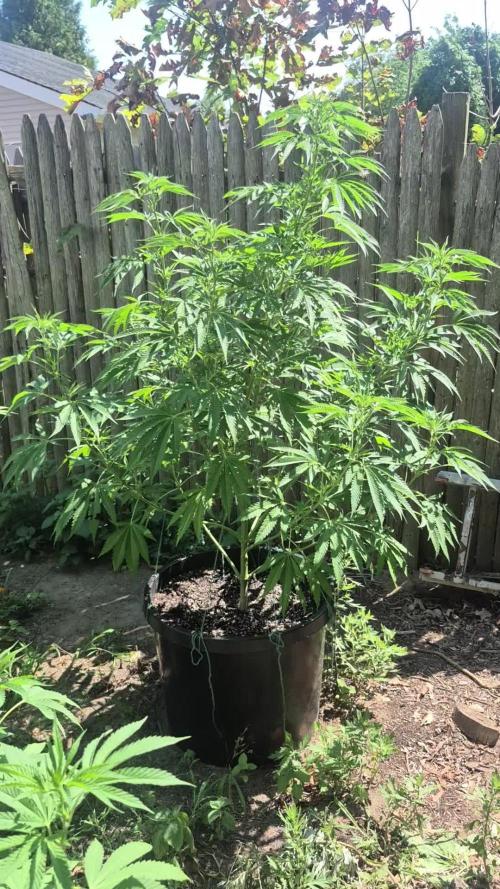
Everything is going good there all looking healthy and flower should be coming any day now. The next few feeds ill be giving 2 teaspoon grow 2 tea micro and 2 tea bloom as per the gh feeding chart than backing down on the grow. One of the end games is 5 foot without the pot its over a 6 foot fence with the pot. Smell is getting stronger the yard stinks lol. They been taking 2 gallons of water almost every day its been hot and sunny they are drinking and eating heavy.



@BrigadeDesTerps
Follow
Jour 76
Et commence à développer leur pistils
Les plantes sont saine et prennent beaucoup de hauteur je dois en palisser quelques une
J’ai fais un thé de compost oxygéné pour les booster pour la floraison
Recette :
5g cendre coque de ricin
25g biochar
5 gr levure de bière
4gr pollen d’abeille
7gr ortie micronisé
5gr spiruline
10gr tourteau de karanga
8gr Kelp
20gr zéolithe chabasit
5gr de consoude
3gr hydrolysât de Kelp
5gr vers de farine
12,5gr bactérie soluble
5gr levure saccharomyces cerevisae souche myco 6420
12,5gr de prêle sauvage sécher
125gr lombricompost
2gr big foot mycorhize gold
Mycorrhizae (400 propagules per gram)
Endomycorrhiza
Glomus aggregatum -100 propagules/gram
Glomus etunicatum – 100 prop/gram
Glomus intraradices – 100 prop/gram
Glomus mosseae – 100 prop/gram
Bacillus subtilis – 350,000,000 cfu/gram
Bacillus licheniformis – 200,000,000 cfu/gram
Bacillus megaterium – 200,000,000 cfu/gram
Bacillus simplex – 200,000,000 cfu/gram


@Weediz
Follow
This is my side-grow. I do have 2 girls in flower, but I wanted to fill my room, and I started these as soon as I could. This is my first time (Well second, counting the flowering girls) growing in coco, and I still not all sure what I do, but I will try my best to do right, and learn from this. I am using RO water. The girls are on day 22, and everything seems to go good. I see they are dark green and are going to lay down on the nutrients on the next feed. The girls have been topped around day 12, and later done LST
Day 24: Decided to do some more LST on these girls. Girls are growing strong, and looks healthy, other than they are a little dark greenish
Day 26: The dark green leaves are getting worse. They are almost shining, and I'm sure I have a Nitrogen toxicity. I think I mad a bum-bum, giving my babies the nutrient water for my grown-ups 😱, so I have given them a good flush with ph 6.0~ RO water, and let them dry out, before giving them a light-mix, and hopefully this will do the trick as they are still growing strong 💪


