


Likes
Comments
Share


@dvr147
Follow
12-16-2024 - Plants continue to do well. Found some rust spots on several of the leaves for the Granite Runtz...could be a bit of over-feeding as I top dressed recently despite being on Grow Dots...not too worried about it though. These guys are drinking like crazy so there is plenty of time between feedings where they're getting a little flush action. I'm going to guess that we're about 3-5 weeks out from chopping these down and I'm impressed with their size so far. Now I'm really just waiting for the buds to continue developing and see what kind of size we can put on these gals. This grow has gone unbelievably well and I feel like I have the tent dialed in pretty good. More to come!
12-17-2024 - Well this morning the girls got a bath in Recharge and Sweet Berry. They were very thirsty! The nuggs on these plants are getting massive and I'm expecting to see branches start to struggle to carry the load. At this point I'd say they're probably 3-4 weeks out from chop...but that is a very loose estimate. I'll keep a close eye on them as we go. Having so much fun watching these girls grow huge. CANNOT wait to weigh these things dry. I really think I'm gonna be close to a pound with this tent.
12-19-2024 - Got some nutrient burn going on with the Granite Runtz...just the top leaves and other than some orange speckles on the leaves the flowers look good and overall the plant looks healthy. The GR's have by far the thickest/most dense flowers of the three. The Frosted Cherry O's look very balanced and is the most attractive plant in the tent. The Mystery Seed, which is the only one I topped, is just growing in every direction and has tons of flowers but is clearly behind the rest in terms of maturity. I'd say in a few days to a week it'll be much thicker. Today I watered each plant with 3 Liters of dechlorinated tap water PH'd to 6.5. I'll take a look at them on Saturday morning and see how dry they are. Basically they're drinking a half gallon of water per day. Probably 4 weeks out from harvest is my best guess right now.

Processing
Likes
13
Share


@Cheesefarmer420
Follow
This plant has a solid stench of pure ripe lemons. So much aroma and color in every bud, purples, to dark green, to lime green, to solid frost. This one definitely a fun strain to watch grow and tend too for the last few months. She’s definitely a hungry girl, seemed to be the only strain out of the three that accepted and thrived with full feed nutrients. Would definitely recommend this Strain to someone For a nice uplifting day smoke, also seems to do me good for some pain and stress relief.
Likes
2
Share

@Jardineiro_Br
Follow
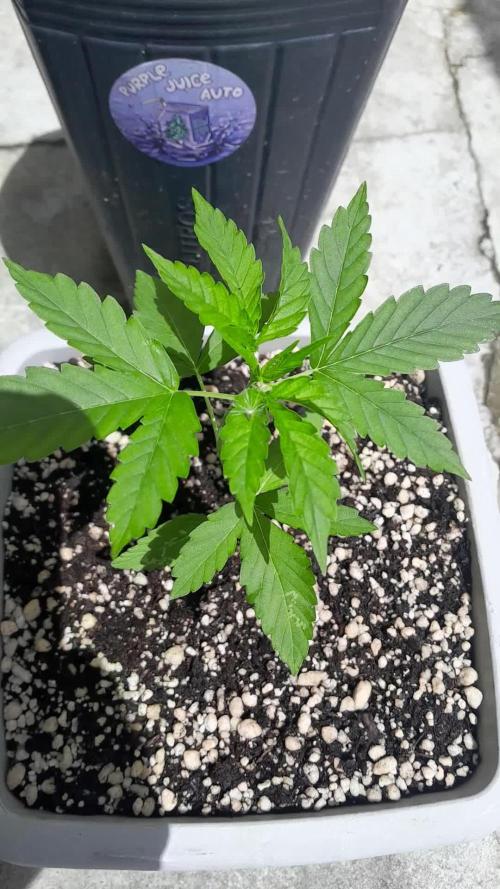
Plantas estão ficando muito afastadas da iluminação na sala de cultivo por isso estou deixando elas passarem o dia na sol pois estavam muito esticadas e com poucas folhas .

Likes
47
Share


@Ultraviolet
Follow
All content on this diary is for inspirational and educational purposes only. The ideas shared are not a substitute for professional advice. This diary/account is not officially affiliated with Alan Watts or his estate. All materials are used under the principles of fair use. I honor the legacy of Alan Watts by sharing his wisdom respectfully and with the intention of inspiring awareness and self-understanding.
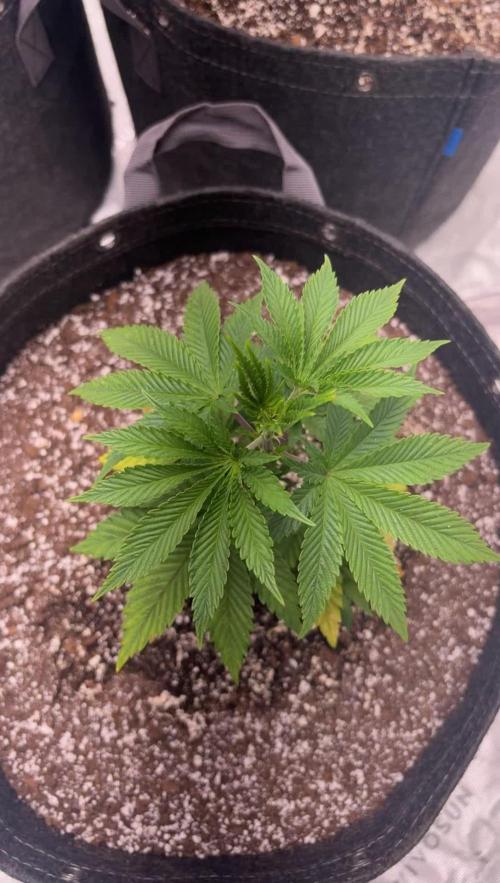
2nd net is up. Early bud formations are promising. holding up to the extremes pretty well, some leaves taking minor damage, but overall, she is holding up, gave her 1 night at 50F see how she would react, stressful. Not advised as it messes with her metabolism, but I want to see if it triggers any anthocyanin response. Love to see her purp up but no signs yet. Remember, For every molecule of glucose produced during photosynthesis, a plant needs to split six molecules of water. This process provides the hydrogen needed for synthesizing glucose and other organic compounds, while oxygen is released as a byproduct.
Homework.
If Rubisco activity is impaired and it cannot properly function or regenerate its substrate, the plant's leaves are likely to turn a pale green or lime green, a condition known as chlorosis. Essentially, Rubisco activity is highly regulated and susceptible to various environmental and metabolic factors that can cause it to become inhibited, leading to an apparent failure in RuBP regeneration due to a lack of consumption.
Rubisco regeneration is intrinsically linked to nitrogen supply because Rubisco is a major sink for nitrogen in plants, typically accounting for 15% to over 25% of total leaf nitrogen. The regeneration phase itself consumes nitrogen through the synthesis of the Rubisco enzyme and associated proteins (like Rubisco activase), and overall nitrogen status heavily influences the efficiency of RuBP regeneration. RuBisCO is a very large enzyme that constitutes a significant proportion (up to 50%) of leaf soluble protein and requires large investments in nitrogen. Insufficient nitrogen supply limits the plant's ability to produce adequate amounts of RuBisCO, thereby limiting the overall capacity for photosynthesis and carbon fixation. Maintaining the optimal, slightly alkaline pH is crucial for the proper function and regeneration of Rubisco. Deviations in either direction (too high or too low) disrupt the enzyme's structure, activation state, and interaction with its substrates, leading to decreased activity and impaired RuBP regeneration. (Lime/yellowing)
Structural Component: Nitrogen is an essential building block for all proteins, and the sheer abundance of the Rubisco protein makes it the single largest storage of nitrogen in the leaf.
Synthesis and Activity: Adequate nitrogen supply is crucial for the synthesis and maintenance of sufficient Rubisco enzyme and Rubisco activase (Rca), the regulatory protein responsible for maintaining Rubisco's active state. Nitrogen deficiency leads to a decrease in the content and activity of both Rubisco and Rca, which in turn limits the maximum carboxylation rate, Vmax, and the rate of RuBP regeneration Jmax, thus reducing overall photosynthetic capacity.
Nitrogen Storage and Remobilization: Rubisco can act as a temporary nitrogen storage protein, which is degraded to remobilize nitrogen to other growing parts of the plant, especially under conditions of nitrogen deficiency or senescence.
Nitrogen Use Efficiency (NUE): The allocation of nitrogen to Rubisco is a key determinant of a plant's photosynthetic nitrogen use efficiency (PNUE). In high-nitrogen conditions, plants may accumulate a surplus of Rubisco, which may not be fully activated, leading to a lower PNUE. Optimizing the amount and activity of Rubisco relative to nitrogen availability is a target for improving crop NUE.
Photorespiration and Nitrogen Metabolism: Nitrogen metabolism is also linked to the photorespiration pathway (which competes with carboxylation at the Rubisco active site), particularly in the reassimilation of ammonia released during the process.
To increase RuBisCO regeneration, which refers to the process of forming the CO2 acceptor molecule Ribulose-1,5-bisphosphate (RuBP) during photosynthesis, the primary methods involve optimizing the levels and activity of Rubisco activase (Rca) and enhancing the performance of other Calvin-Benson-Bassham (CBB) cycle enzymes.
Biochemical and Environmental Approaches:
Optimize Rubisco Activase (Rca) activity: Rca is a crucial chaperone protein that removes inhibitory sugar phosphates, such as CA1P (2-carboxy-D-arabinitol 1-phosphate), from the Rubisco active site, thus maintaining its catalytic competence.
•Ensure optimal light conditions: Rca is light-activated via the chloroplast's redox status. Adequate light intensity ensures Rca can effectively maintain Rubisco in its active, carbamylated state.
•Maintain optimal temperature: Rca is highly temperature-sensitive and can become unstable at moderately high temperatures (e.g., above 35°C/95F° in many C3 plants), which decreases its ability to activate Rubisco. Maintaining temperatures within the optimal range for a specific plant species is important.
•Optimize Mg2+ concentration: Mg2+ is a key cofactor for both Rubisco carbamylation and Rca activity. In the light, Mg2+ concentration in the chloroplast stroma increases, promoting activation.
•Manage ATP/ADP ratio: Rca activity depends on ATP hydrolysis and is inhibited by ADP. Conditions that maintain a high ATP/ADP ratio in the chloroplast stroma favor Rca activity.
Enhance Calvin-Benson-Bassham (CBB) cycle enzyme activity: The overall rate of RuBP regeneration can be limited by other enzymes in the cycle.
•Increase SBPase activity: Sedoheptulose-1,7-bisphosphatase (SBPase) is a key regulatory enzyme in the regeneration pathway, and increasing its activity can enhance RuBP regeneration and overall photosynthesis.
•Optimize other enzymes: Overexpression of other CBB cycle enzymes such as fructose-1,6-bisphosphate aldolase (FBA) and triose phosphate isomerase (TPI) can also help to balance the metabolic flux and improve RuBP regeneration capacity.
Magnesium ions, Mg2+, are specifically required for Rubisco activation because the cation plays a critical structural and chemical role in forming the active site: A specific lysine residue in the active site must be carbamylated by a CO2 molecule to activate the enzyme. The resulting negatively charged carbamyl group then facilitates the binding of the positively charged Mg2+ion. While other divalent metal ions like Mn2+ can bind to Rubisco, they alter the enzyme's substrate specificity and lead to dramatically lower activity or a higher rate of the non-productive oxygenation reaction compared to Mg2+, making them biologically unfavorable in the context of efficient carbon fixation. The concentration of Mg2+ in the chloroplast stroma naturally increases in the light due to ion potential balancing during ATP synthesis, providing a physiological mechanism to ensure the enzyme is activated when photosynthesis is possible. At the center of the porphyrin ring, nestled within its nitrogen atoms, is a Magnesium ion (Mg2+). This magnesium ion is crucial for the function of chlorophyll, and without it, the pigment cannot effectively capture and transfer light energy.
Mg acts as a cofactor: Mg2+ binds to Rubisco after an activator CO2 molecule, forming a catalytically competent complex (Enzyme-CO2-Mg2+). High light + CO2) increases demand: Under high light (60 DLI is a very high intensity, potentially saturating) and high CO2, the plant's capacity for photosynthesis is high, and thus the demand for activated Rubisco and the necessary Mg2+ cofactor increases. Mg deficiency becomes limiting: If Mg2+ is deficient under these conditions, the higher levels of Rubisco and Rubisco activase produced cannot be fully activated, leading to lower photosynthetic rates and potential photo-oxidative damage.
Optimal range: Studies show that adequate Mg2+ application can enhance Rubisco activation and stabilize net photosynthetic rates under stress conditions, but the required concentration is specific to the experimental setup.
Monitoring is key: The most effective approach in a controlled environment is to monitor the plant's physiological responses e.g., leaf Mg2+ concentration, photosynthetic rate, Rubisco activation state, and adjust the nutrient solution/fertilizer to maintain adequate levels, rather than supplementing a fixed "extra" amount.
In practice, this means ensuring that Mg2+ is not a limiting factor in the plant's standard nutrient solution when pushing the limits with high light and CO2.
Applying Mg2+ through foliar spray is beneficial to Rubisco regeneration, particularly in alleviating the negative effects of magnesium (Mg) deficiency and high-temperature stress (HTS). While Mg can be leached from soil, within the plant it is considered a mobile nutrient, particularly in the phloem. Foliar-applied Mg is quickly absorbed by the leaves and can be translocate to other plant parts, including new growth and sink organs.
Foliar application of: NATURES VERY OWN MgSO4 @ 15.0g L-1 in a spray bottle. For those high-intensity workouts when 1 meal a day is just not enough!
Foliar sprays are often recommended as a rapid rescue measure for existing deficiencies or as a supplement during critical growth stages, when demand for Mg is high. Application in the early morning or late evening can improve absorption and prevent leaf burn. The plant was getting a little limey yellow in the centre. Shortly thereafter, she was back in business, green mostly regenerated. The starting point [of creativity] is curiosity: pondering why the default exists in the first place. We’re driven to question defaults when we experience vuja de, the opposite of déjà vu. Déjà vu occurs when we encounter something new, but it feels as if we’ve seen it before. Vuja de is the reverse—we face something familiar, but we see it with a fresh perspective that enables us to gain new insights into old problems.
Confidence is evidence... nothing more. You are confident because you have driven 10,000 times, you are confident because you have spoken 10,000 times. People think confidence is a feeling, but it's not. If you want more confidence, then you need to create evidence, take more shots, collect more data, build more experiences, take more risks; fail, confidence doesn't come first; it is the reward you get for doing the work. no one else wants to do.
Likes
1
Share


@420Baddie
Follow
White hairs are growing. I see at least 10 bud sites. Had issues with thrips, but used diatomaceous earth to get rid of them.

Likes
23
Share


@SmokingBrownAndTalkingBrown
Follow
Just watered with water this week. Sometimes I add some Bio-Bizz products but rarely.
The plants need trimmed.
I am going to wait until next week which will be 21 days from 12/12 to give them a nice trim to open them up for more light and clear the lower growth.
Everything is perfect temperature and humidity, light, Co2, air circulation... All on point. 👌

Likes
20
Share


@Boomdrawfyah
Follow
El 10 de mayo pusimos las 4 semillas en un vaso de agua para germinarlas, y el dia 15 salieron en el sustrato, con una maceta de 2 L , a partir de la primera semana bebieron bionabis, este cultivo vamos a seguir la tabla de elicitación y nutrición como el anterior, ademas probaremos el enzynabis y el living soil de terranabis ! Ya vamos por la segunda semana de vegetación, en breves nos ponemos al dia ! Saludos.

Likes
Comments
Share


@OnePrettyFlyGuy
Follow
Something tried to nibble on Plant B, however there are no signs of pests and no further damage anywhere else (I have 6 other plants in the garden too). Plant A has already begun to develop stipules on its first set of true leaves too!
Had their first feed on day 14 (2ml Fish Mix + 0.1ml Mono-silicic Acid), and were fed again on day 16 (2ml Fish Mix, 2ml Bio-Grow, 2ml Bio-Bloom, 0.1ml Mono-Silicic Acid).


Likes
3
Share


@Comfrey
Follow
This week I continued with LST and while I bend down my Kush on day 39, the stem bent over. I could fix it and within some days the plant repaired the injury quite well. At the end of the week I was surprised how good she handled this big stress. This is not the most beautiful of my plants but I love her like the other ones. 😍

Likes
294
Share


@StarLorr
Follow
Welcome to my Ðivine ØĠ Ķush diary.
In this diary:
Seeds: sponsored by Ðivine Șeeds
Media: Promix HP
Nutrients: Advanced Nutrients, Diablo Nutrients.
Light and Weather: Şun☀️and Mother Earth.🌎
___________________________
Feeding:
Tue 02Jul: 6L water not pH'd
Wed 03Jul: 8L nutrients pH'd 6.5
Thu 04Jul: 6L water not pH'd
Fri 05Jul: 6L water not pH'd
Sat 06Jul: 6L water not pH'd
Sun 07Jul: 6L water not pH'd
Mon 08Jul: 11L water not pH'd
*please note that most water only feedings are 2L at the time throughout the day in bottom saucer*
___________________________
Weather wise nothing to complain about, again some showers overnight nothing to serious, warm nights and days.
I've been slapping Japanese Beetles down a bucket with water and dish soap, they have an appetite for my Ðivine Gals i have leaves to spare but enough is enough😤🤨speaking of which i did some minor defoliation on lower part fan leaves and branches that would never reach their full potential.
______________________________
Thanks for stopping by, likes and comments are appreciated!👊🏻😎
Keep on growin!
Keep on tokin!!!
😙💨💨💨💨💨

Likes
Comments
Share

@Cruzito
Follow
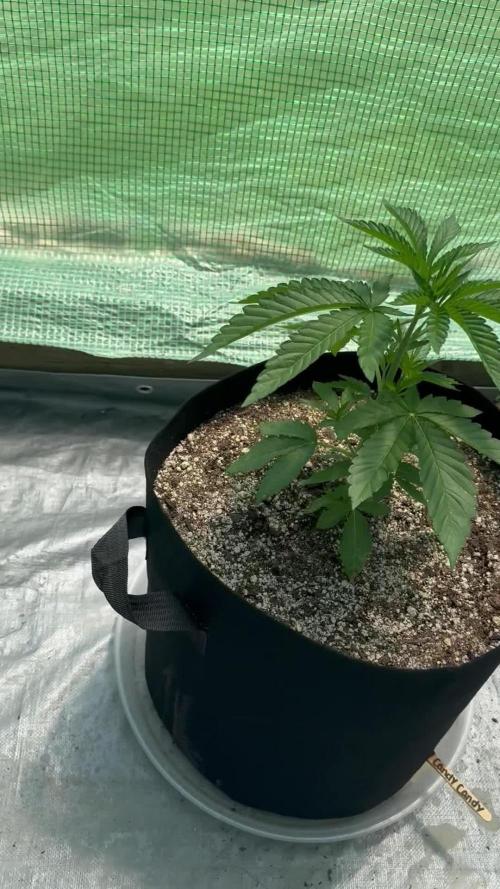
Almost killed one of the candy candy plants today by watering too fast ended up LST-ing all of the plants with the exception of the other candy candy which I am letting grow natural.


Likes
65
Share


@hannabis420
Follow
12/8 Soil still damp from last water, nutrients today or tomorrow, bottom leaves are yellowing, trichomes are forming on colas.
12/10 Fed nutrients today she got enough water for runoff, top inch soil was dry and she just looked hungry as hell, looking to defoilate the yellow leaves pictured, 26 inches today, top cola is 5 inches from light other colas are at least 10 inches from light, now i know why people LST!!! Next grow for sure. seeing some yellow tips on the top fan leaves.. nothing major, but understandably so.
12/13 watered today not too much but top soil was dry, more defoliation of yellow fan leaves, temps and humidity are back up, she smells like skunk so far, hard to describe, definitely getting chunky and filling up the main cola👍
12/14 high humidity 90%, leaves are looking glossy, more defoliation of bottom fan leaves

Likes
2
Share

@MaltaHerbman
Follow
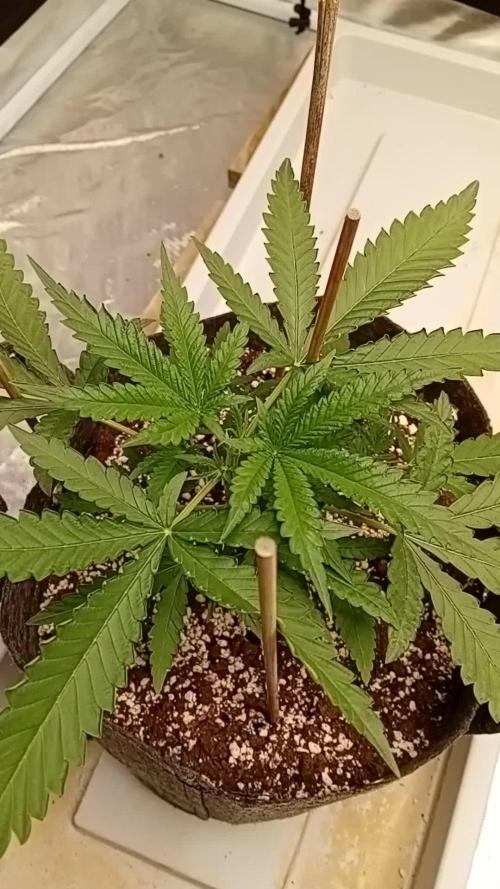
Day 22 Lights are 18/6 now yesterday at day 21 had feed 5ml fish force with other plagron nutrients,before the Dank Berry sleeps i have done first topping,she looked wake up happy.

Likes
Comments
Share

@Tropical_Growerz
Follow
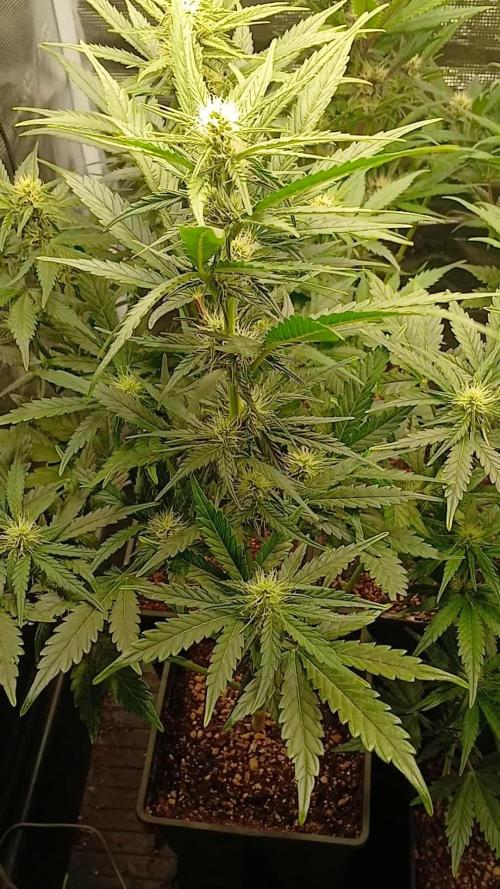
Hi, the plants are doing great.
There's a problem with one GorillaZ that's taking its time to flower, so I moved it to a grow tent under a 12/12 light cycle.
I'm keeping a close eye on it because it seems to be photoperiodic. Enjoy the beautiful colors of the Purple Punch.
Likes
4
Share

@Minuteman_Organics
Follow
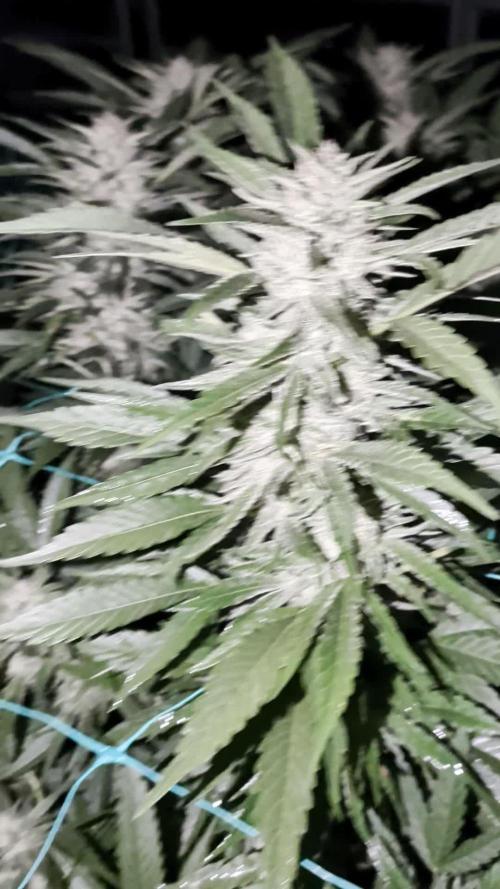
Great. Week. No signs of mold or pests. Seeing plenty of lady bugs still and this is now almost a month after I first released them. Seeing some dragon flies and assassin bugs too. Niceeee
Plants are doing super well. No deficiencies with plenty of swell occuring. More in some than others. The zkittles phenos that flowered early are almost ready. Maybe one more week or less.

Likes
1
Share


@alexb420
Follow
been AFK for while, been focusing on work and my new main tent run. here’s the update
2 on the left and the one back right are my strains, the AF x Turk. back right is the one in the video, stacked main cola. smells range from a earthy spice to a foul rotting fruit smell. the rotting fruit sting the nostrils it’s so powerful. the one in the front left is a Terp Town Ticket from a controversial UK breeder named blue skies vienna. he claims to have real deal skunk genetics from OldTimer1, a legend in the UK weed scene. he apparently played a part in getting the skunk to the dutch, and these are “pre dutch” skunks. mine smells like a cherry coke with a real musky/funky/ “skunk” smell, but not full on skunk spray. she’s about 2-3 weeks behind my ladies. will probably post when everything is done and dried.
Processing
Likes
25
Share


@Greengirl420
Follow
Ok so this week has been awesome! These girls are so much fun to watch! They seem to be doing very well!
We have stronger lights now, We are using a 1000 watt, Plus a 2000 watt Spider light LED. Our room is 2x5. We raised them up today to 24inches away hoping to gain some height.
Plant #1 we topped at 11 days and did some LST and girl #2 we just let it be. We have removed leaves from both plants.
I am super excited to see how it goes 💨 💨 🤞🏼🤞🏼🤩🤩
Likes
3
Share

@JeyGanesha
Follow
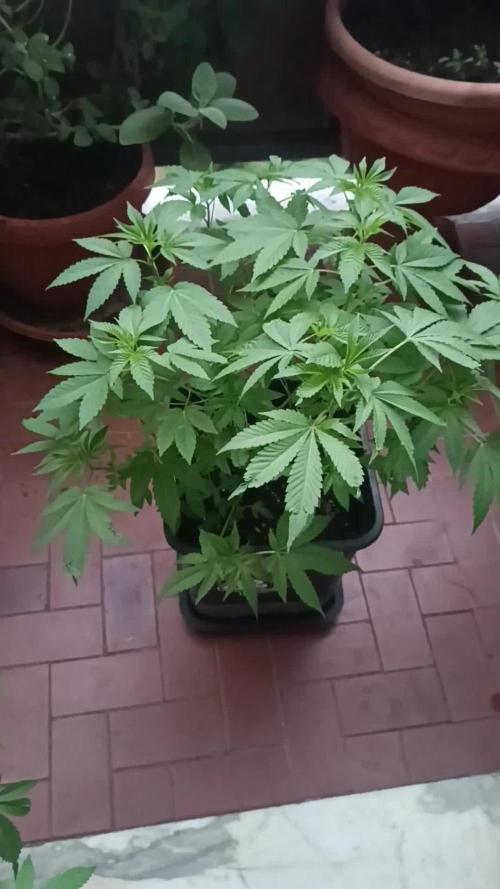
Decima settimana di veg sul balcone..inizia a riprendersi anche le foglie inizia ad uscire bene,(normali)...💪👍