


Likes
Comments
Share


@StickyScissors
Follow
This is my favorite new auto strain now. Enjoyed every part of the grow. She likes the nutrients very light, but was a simple grow with zero problems. Very sticky plant but not too loud. Curing in the Cannatrol as of now and will update in a couple weeks.

Likes
57
Share


@MadeInGermany
Follow
Hey everyone 😊.
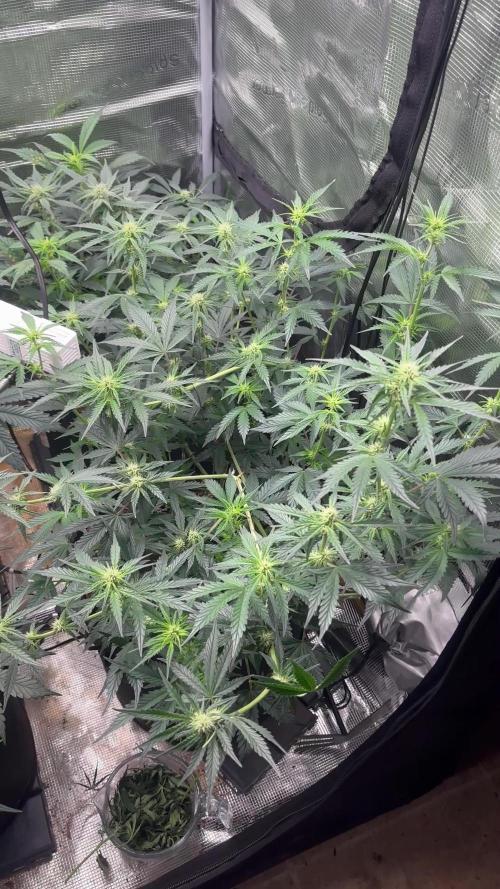
The two women will be in the vegi tent for the last time under 6/6 this week, and will come to the flower tent 🤗 next week.
Otherwise there is nothing to report this week, except that both are developing really well 😀.
Have fun with the update and everything stays healthy 🙏🏻☘️
You can buy this Strain at :
https://sweetseeds.es/de/red-mandarine-f1-fast-version/
Type:
Red Mandarine F1 Fast Version
☝️🏼
Genetics:
Red Poison Auto®️ (SWS39)
X
Tangie (California Orange x Hybrid Skunk)
👍
Vega lamp:
2 x Todogrow Led
Quantum Board 100 W
💡
Bloom Lamp :
2 x Todogrow Led
Cxb 3590 COB 3500 K 205W
💡💡☝️🏼
Soil :
Canna Coco Professional +
☝️🏼
Fertilizer:
Green House Powder Feeding
☝️🏼🌱
Water:
Osmosis water mixed with normal water (24 hours stale that the chlorine evaporates) to 0.2 EC. Add Cal / Mag to 0.4 Ec Ph with Organic Ph - to 5.5 - 5.8 .

Likes
1
Share

@PicoDeGallo
Follow
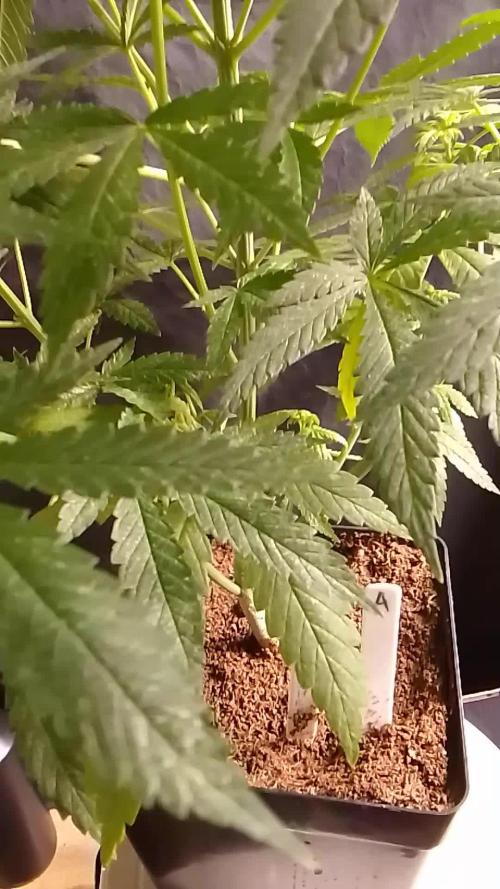
Fast Buds RF3 Auto Mixed pack (4 of 5 seeds)
Everything is coming along fine.
I pinned down most of the branches last week but, the #4 plant is starting to stretch so I added 2 more pins to get the head space more even for the light.
The #1 and #2 plants are starting to get some frost and look like they might be the same variety.



Likes
17
Share


@EXZELENS
Follow
Bud wet weight : 168,1g of trimmed medium to big sized buds
25,4g of tiny tiny buds/larfs = 193.5 grams of trimmed wet buds.
Details on genetics and smoke report above.
This, as my first grow, is way more than I ever expected it to be. I haven´t had that much fun and enthusiasm in a very very long time.
I can´t even explain the feeling it is to harvest your own cannabis, but I know most of you know what I´m talking about haha.
It was really nice to practice LST, even tho it was SO HARD, ´cause I didn´t had barely any space to work since I used a hard pot and did not fill nearly half the size of it and the walls of the pot were really high. It was even difficult to water without dropping water on the lower buds.
I haven´t learnt much about defoliation tho, I feel I need to study a little more about the phases you should or should not do it.
Also, I discovered thrips are a pain in the ass. I had 2 tough weeks dealing with thrips, but in the end it was alright.
I don´t have any humidity control device, which I intend to buy for the next grows.
Growdiaries was really helpful for me, it kept me motivated everyday (not that I wouldn´t have had it anyways), the Grow Questions are REALLY useful and all the community is awesome. Thanks to all people that helped me here on GD during this first grow!
To conclude it: I am really happy and satisfied with how the grow turned out. They look incredible, it almost feels like I can´t believe it still.
Peace.
UPDATES:
07/10 : The buds are now dry and already in curing jars, one of them with a Boveda 58% humidity pack.
The total grams of the dry buds are: 41.4g (medium to big sized buds)
4.1g (tiny buds) = 45.5 grams!
I´m really happy with the results, I thought it would be around 30g so yeah, that´s a really good surprise!
In 2 weeks I´ll be back to update the smoke report.
Thanks so much for reading! Peace.
09/10 : I managed to fit everything in the same container with some space between them, so now every bud is with the Boveda pack.
14/10: It´s been a week and the smell improved, it still smells a little like hay/plant ( even tho it´s not too dry neither too wet ).
21/10: Now it´s been two weeks and even tho the smell isn´t anymore hay, it´s a lot herbal. I really think the aroma can get better, but the taste is already good enough for me. The smoke report has been done and in case I have something to add, I´ll report here.
Thank you so much for reading! Peace.

Likes
4
Share

@420DeepGrow
Follow
📆 Semana 6
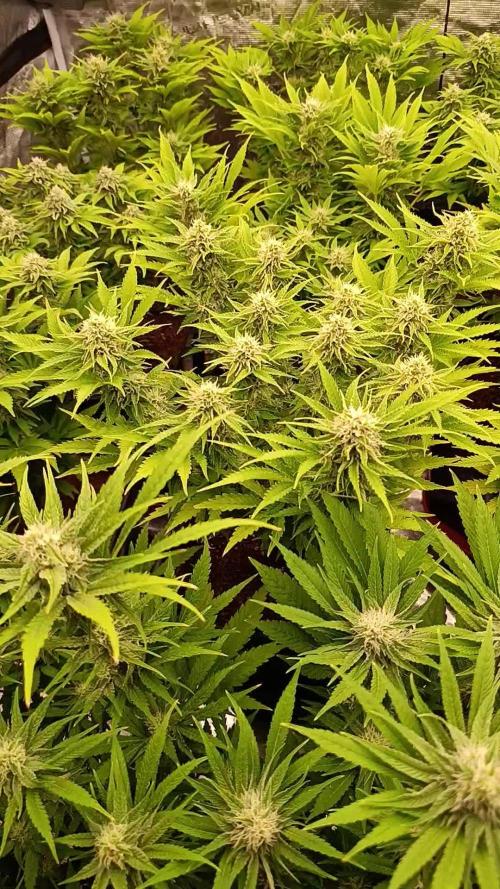
Las plantas entran de lleno en la fase de engorde, con las raíces trabajando a buen ritmo y una absorción eficiente que se refleja en un verde sano en toda la canopia.
El estiramiento ya quedó atrás y los cogollos siguen compactando. Los erizos ganan volumen y la capa de resina empieza a hacerse más evidente, señal de que la planta dirige su energía a densidad y producción de terpenos.
Los aromas se vuelven más presentes y el cultivo muestra una estructura homogénea, con las flores tomando protagonismo día a día.
Seguimos creciendo fuerte 💪!

Likes
9
Share


@Medgrow93
Follow
Had mold at the very end so ended chopping then down early. Delicious smell. Smells like vomit or piss and gets stronger as they continue to cure.

Likes
26
Share


@Bread_n_Buds
Follow
We have reached the second week of flowering for our beautiful photoperiod ladies of Zamnesia. Born 1 September now at day 45 amazing.
---- The general environmental conditions are good, there is always a little too much heat from next week we should have just enough for the resin a sharp drop in temperatures that could also give us beautiful foliage for this period.
--- Our Cosmic Noodles are plants, beautiful, elegant in growth, with low internodes and fast flowering. In fact, as you can see, after only two weeks we have beautiful buds unlike others and not only that... The lateral buds have grown very nice and aligned and the central one slightly exceeds them. Really beautiful to be true, we bet, delicious too.
--- Fertilization program - The fertilizers are always Plagron and I am following the table that I generated on the site depending on the chosen substrate. Create your own card and follow it, never be presumptuous my friend as I have been in the past, follow the card and look at the plants, not all need the same amount of fertilizer. We have reached the moment of giving a good dose of iron in the first weeks of flowering on the advice of Plagron directly foliar and I am at the end of the second week of flowering. It had started a little quietly but now it is proving to be among the best.
---- https://plagron.com/en
- Power Roots - 1 ml/l
- Alga Bloom - 4 ml/l
- Pure Zym - 1 ml/l
- Sugar Royal - 1 ml/l
- Vita Race - 5 ml/l
--- The Plagron 100% Organic pack is available on Zamnesia at: https://www.zamnesia.io/en/11457-pla gron-easy-pack-natural.html
--- The dehumidifier now works between 50% and 55%
// Strain Description //cross of Alien OG and Rollercoaster Haze, Cosmic Noodles offers excellent yields and extraordinary aromas. This variety is very powerful, contains 25% THC and produces intense and long-lasting effects. Stimulating and relaxing at the same time, Cosmic Noodles causes an energizing cerebral effect that fades over time becoming soothing at a physical level.
- Get a seed of this fantastic strain --- https://www.zamnesia.io/it/10777-zamnesia-seeds-cosmic-noodles.html
- Soil and Fertilizers entirely organic --- https://plagron.com/en buy on www.zamnesia.io
- Growbox and air system --- https://www.secretjardin.com/
- Light - P2000 Viparspectra https://www.viparspectra.com/
- Music and sound --- I made my girls listen to 432hz frequencies and music from www.radionula.com
- Z --- You can find these seeds, much more from the world of cannabis, mushrooms and an incredible series of accessories and gadgets on the reference site not only mine but of many growers
—— https://www.zamnesia.io

Likes
18
Share


@JeyGanesha
Follow
Seconda settimana di fioritura si è allungata la mia bella. Iniziano a profumare bene...sto notando che i nutrienti di Advance nutrient dati per via fogliare funzionano davvero bene... complimenti anche ad Advanced nutrient


Likes
16
Share


@osmrducks
Follow
Day 64: Started flushing the girls today. Got All milky and starting to go amber.
Day 65: Still flushing. The girls smell amazing. I have one in the bunch that is SUPER airy and I am just not sure what is going on with her. It's the girl that I accidently broke off the main cola a while back. Not sure if that has anything to do with it or not.
Day 66: No new updates. Cut one of the colas off for a taste test and trial run on drying as this is my first go. Figure if I can dry this super dense beauty with no issue, I will be able to dry the rest. Have it hung up in the spare bathroom. Stays roughly 71° in our house and I'd say roughly 40%ish humidity.
Day 67: Girls are smelling really nice! I keep looking at trich's and looks like no change. They are all cloudy and only a few amber from what I see. Still new to it so no tellin!
Day 68: No updates.
Day 69: Girls still looking good. My bud is still drying and looking super hideous. I feel it is drying slow enough but sure doesn't look or feel dense as it did when cut. Will know in several days to come when fully dry.
Day 70: Girls smell dank and look the same! No new updates at this time.

Likes
6
Share


@eldruida_lamota
Follow
Que pasa familia, vamos con la sexta semana de floración de estas Papaya sherbet feminizadas de fastbuds.
Vamos al lío, de las 3 plantas, me quede con 2 por espacio, siempre pongo alguna semilla de más por si no abriese alguna por no perder ese hueco del indoor.
También se trasplantaron a su maceta definitiva, en este caso de 7 litros, que el mismo trasplante provocó un shock, que también fue solucionado inmediatamente.
El ph se controla en 6.2 , la temperatura la tenemos entre 20/22 grados y la humedad ronda el 50%.
Las flores empezaron a formarse y progresan a buen ritmo.
Hasta aquí todo, Buenos humos 💨💨💨
Likes
14
Share

@birdmountain
Follow
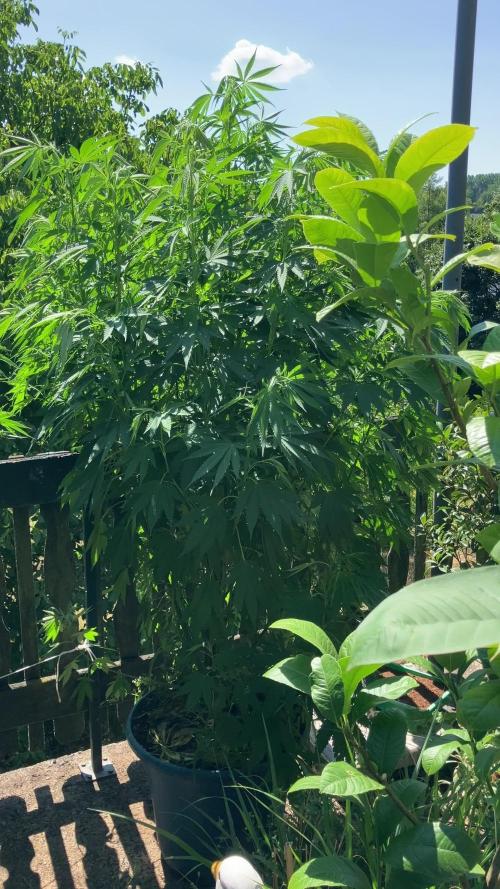
Hey Jimmy, wie läuft es?
Na ja, nachdem du aufgehört hast mir dieses Bittersalz im Überfluss zu geben, ganz gut,
Ich habe es zwar weggesteckt, aber noch mal so ne Menge muss nicht sein.
Ich könnte etwas mehr Licht gebrauchen, ich finde, ich stehe zu früh im Schatten, muss aber deswegen nicht so aussehen wie ein Kaktus, wie Schwester Seven Freeze.
Frage:
Meinst du etwa, du würdest anders aussehen, wenn du hier auf der kleinen Fläche einen anderen Stellplatz hättest?
Jimmy:
Natürlich, meine Internodien wären kürzer, ich hätte mehr Durst und du müsstest mich besser anbinden.
Frage:
Warum blühst do noch nicht und hast keinen Duft?
Jimmy:
Ich würde es ja gerne, aber meine Genetik hat etwas anderes vor. Was den Duft betrifft, stimmt das ncht ganz. Nicht jeder kann wie eine verfaulte Obstschale riechen, ich bevorzuge den leichten hellen Kräuter/Kieferduft der alten Schule.

Likes
17
Share


@Naujas
Follow
great:) everything is going well, much better than the first attempt:) the air extraction at the top has been redone, and a co2 bag has been inserted - the girl likes it:) I will put the scrog on in the coming days :) good luck.


Likes
16
Share


@HowtoBubatz
Follow
The cannabis plant is generally growing well and is progressing as expected during the flowering stage.
Despite the positive overall growth, brown spots have appeared on some of the leaves and I dont really know what it is.
While the appearance of brown spots is concerning, the overall health of the cannabis plant remains good. With careful monitoring and appropriate adjustments, the plant should continue to develop successfully.
It will be exciting to see how the plant progresses as it matures, even if its growth rate is somewhat slower than expected.

Likes
46
Share


@Mr_Motalovah
Follow
Hello growers and tokers! 👋 👩🌾 🧑🌾.🔥💨
It's my first harvest on this community and I'm loving it.
Everyone always ready to help each other and have great feedback.
Tracking my grow on here has made it way easier.
There were times that I misplaced notes or forgot what I did or when with a certain strain and all I had to do was come on here and check it.
Also motivated me take more pictures and do more logs. All out great site. Don't know how I haven't found it earlier.
HIGHLY recommend for all growers.
The grow cycle went pretty smooth.
She's easy to grow and flowers early so you can't do much training. That being said it's great for beginners. 👌
Had no problems with pests on these, while on the other plants (none cannabis) in the balcony I had issues with spider mites.
They grew better than expected given the few hours of direct sunlight they received.
Results were good, I was expecting 10-15 grams per plant and ended up with a tad bit more.
Drying went a bit fast because there were few buds.
I probably could have took it down a few degrees as well.. my fault on that part.
They dried in 4 days, they've been curing for 10 days.
I normally test them after 15 days but they smelled so good I had to try them.
Smell: Lovely earthy, woody, slightly like diesel. Quite pungent for being autos.
Taste: Just as it smells.. leaving a nice after taste of diesel.
Touch: Very sticky, dense buds.
They break down finely in the grinder.
Cleaned the grinder before testing and after 4 joints ( 2 grams or so)
I already have a good amount of kief collected in the bottom. (Check photo)
Might grow this one again just to make some bubble hash.
The high is awesome nice uplifting, long lasting energetic but without a heavy euphoric rush.
Reminds me of a smooth haze high, although if you smoke a lot even being an experienced smoker, she'll get to you.
Only down side is dry mouth, very dry mouth!
Have some water on hand because your mouth will transform into a desert. 😂
Great strain to kick start the day.
Beginner smokers take it easy with this one. She hits hard! 👊

Likes
12
Share

@All_our_small_plants
Follow
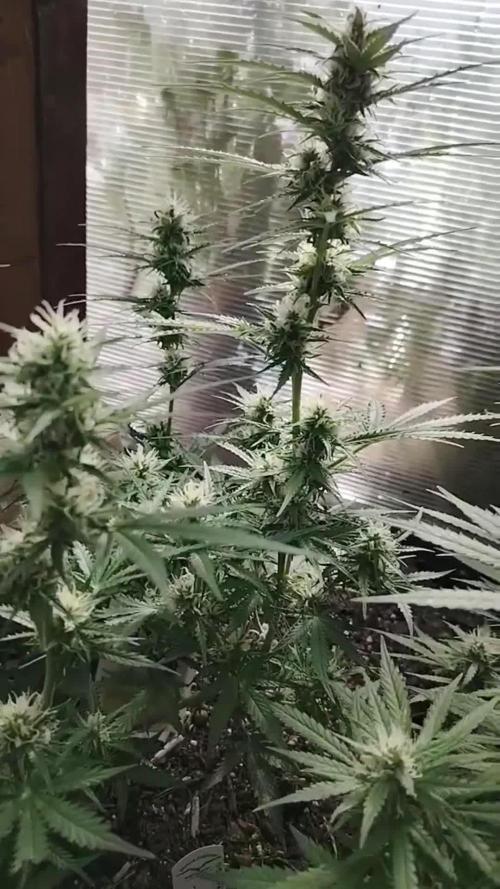
Bewässerung: 5000 ml jeden 3 Tag in der Elften Woche
pH-Wert: 5,8
EC-Wert: 0,4 mS/cm
Temperatur: 20ºC
Luftfeuchtigkeit: 65%
Schädlingsbekämpfung: Diese Woche haben wir ihr Wasser mit Nematoden gegeben da sich doch vermehrt Trauermücken im Bereich aufhalten.
PPFD: Direktes Sonnenlicht
DLI: Direktes Sonnenlicht
-Tag 65 Heute wieder mal gegossen und wir haben den Zaun entfernt und ein Gestell um sie gemacht so können sie sich anlehnen und gleichzeitig auch die Membrana :)
-Tag 66 Die Candy Bubatz XL #3 bildet sehr schöne Blüten und ist im vergleich zu den anderen ein richtiger Hingucker, wenn das Wetter Trocken bleibt wird sie so in 2 bis 3 Wochen fertig sein.
-Tag 69 Heute haben wir die gegossen mir ca. 5l Wasser und 500ml Brenneseljauche

Likes
9
Share


@Kindbot
Follow
Began with equal parts of GH at a very diluted concentration.
This week, I increased the concentration to the manufacturer's recommended dosage for seedlings (1/4 tsp per gallon).

Likes
45
Share


@OGBOBBYBUSH
Follow
First week of flower is in the books. All 3 plants stretched about 6" and grew tons of new branched. Really starting to thicken out. Been battling a more problem with sns217 sprayed at beginning of night cycle. 1 confirmed female while it's still to early for the other 2 although they look female. Only problem now is I'm starting to run out of height so hopefully they don't have too much more stretch in them.
From here on I will be doing individual weekly updates on each plant they will be labeled AH1, AH2, and AH3
AH1 30"
topped once biggest and strongest plant
Female
AH2 26"
Kind of a boring one 1 main stem not much other growth
AH3 22"
The mutant! Probably On of the craziest plants I've grown. Has 3 main colas and a bunch of strange leaves with no training. Bushiest of the group
Had a 4th AH that was only about 18" and struggling confirmed male and chopped 10 days into flower
Likes
6
Share

@DogDoctorOfficial
Follow
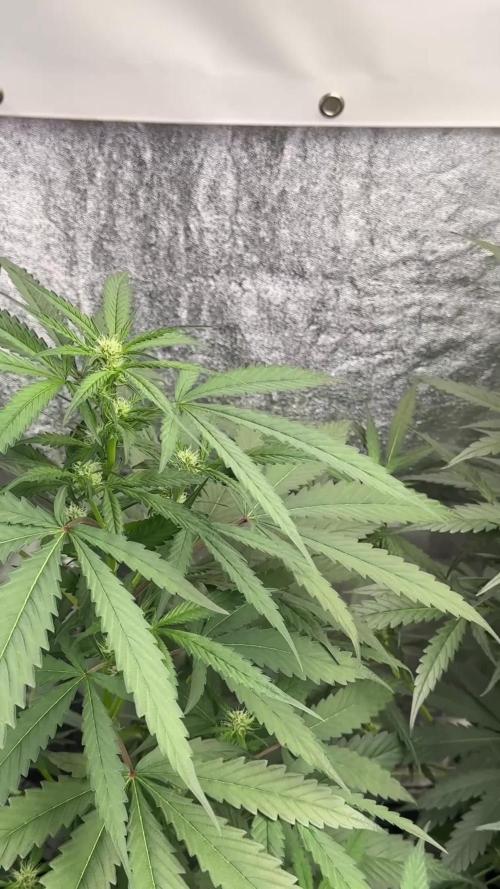
💚 Amnesia Haze Auto by Zamnesia – Pheno B
Week 6 | Quiet Confidence Begins to Bloom
Welcome back to another chapter of the 8×8 Adventure!
Growing multiple phenotypes side by side is one of my favourite parts of this project because every week nature reminds us that there is no such thing as a "correct" way for a plant to grow.
Pheno B has chosen a completely different rhythm from her sister.
While Pheno A stretches toward the ceiling with long internodes and a very expressive narrow-leaf structure, this lady prefers patience. She's shorter, more compact, and slightly behind in her overall flowering development, yet she's thriving under exactly the same conditions.
Same room.
Same lighting.
Same nutrients.
Same watering.
Same training.
The only thing that's different is the genetics expressing themselves in their own unique way.
And that's exactly why phenotype hunting is so fascinating.
🌱 The 12/12 From Seed Journey
For anyone joining this diary for the first time, welcome!
Every plant in this project has been grown under a 12 hours on / 12 hours off light schedule from the day the seeds germinated.
Rather than extending the vegetative stage, this method allows every phenotype to reveal its natural growth habits much earlier, making it easier to compare structure, stretch, flowering speed, and overall efficiency.
Watching sisters grow into completely different plants while sharing the exact same environment is one of the biggest rewards of this experiment.
Pheno B is proving that slower doesn't mean weaker—it simply means different.
🌿 A Compact Personality
Standing at around 69 cm, she's noticeably shorter than her sister, but she's beginning to develop a personality all her own.
Her internodes remain tighter.
Her branching is beautifully balanced.
The canopy is naturally organised, giving every future flower plenty of access to light without requiring much intervention.
The overall impression is of a plant that's taking her time, investing in structure before committing fully to flower production.
The first pistils are now multiplying across every growing tip, and although she's still stretching slightly, it's clear that flowering has become her main priority.
Sometimes genetics prefer to build slowly before rewarding us later.
This may very well be one of those plants.
🌸 Flower Production Is Taking Over
This week marks an important shift.
The explosive vegetative growth is beginning to slow, while clusters of fresh white pistils continue appearing across every branch.
Instead of producing dramatic vertical growth, she's now directing more of her energy toward building the framework that will eventually support her flowers.
Watching this transition happen is always exciting because it's the point where each phenotype begins revealing how it intends to build its harvest.
Every week, her own personality becomes a little clearer.
🍃 Gentle Training, Natural Development
Training continues to be intentionally minimal.
Low Stress Training performed earlier in the grow has already created a balanced structure, so this week only occasional leaf tucking was needed to keep developing flower sites exposed.
Rather than removing healthy leaves, I prefer allowing them to continue acting as efficient solar panels while simply repositioning them whenever necessary.
Healthy leaves mean more energy.
More energy means stronger flowers.
Sometimes the best decision is knowing when to leave the plant alone.
💧 Feeding the Transition Into Bloom
As with the rest of the room, Pheno B is now receiving a flowering-focused feeding program while still supporting the final stages of stretch.
This week's nutrient schedule includes:
• Plagron Terra Bloom
• Plagron Power Buds
• Plagron Sugar Royal
• Plagron Pure Zym
• Plagron Green Sensation
• pH adjustment using pH Plus and Lemon Kick
This week also introduces one of my favourite bloom additives: Green Sensation.
Rather than simply boosting phosphorus and potassium, Green Sensation is designed as a complete flowering enhancer, supporting flower development, nutrient efficiency, resin production, and overall plant vitality during the final weeks of bloom.
I like introducing it gradually as the plants begin committing fully to flowering, allowing them to transition naturally while preparing for the heavier bud-building phase that's still to come.
So far, she's responding beautifully.
🌡️ A Stable Environment
Every phenotype in this room continues sharing the exact same environmental conditions, allowing genetics—not environmental fluctuations—to tell the story.
Current conditions include:
• Day temperature: 29°C
• Night temperature: 25°C
• Relative humidity: 60%
• pH: 6.0
• EC: 1.78 mS/cm
• Root zone temperature: 21°C
• Nutrient solution temperature: 21°C
• CO₂ concentration: 639 ppm
Consistency remains one of the most valuable tools in any grow room.
When the environment stays stable, the plants can dedicate their energy to growing instead of constantly adapting.
📸 This Week's Gallery
This week's photographs perfectly capture the personality that's beginning to emerge.
The full-plant portraits showcase a compact, balanced structure with excellent branch spacing and a strong central leader that's quietly taking command of the canopy.
The close-ups reveal fresh clusters of white pistils forming at nearly every growing tip, signalling that flowering is now well underway.
One detail I particularly enjoy is how organised her architecture feels.
Nothing appears forced.
Every branch has found its place naturally, creating a canopy that's both easy to manage and full of future potential.
She's not trying to compete with her sister.
She's simply becoming herself.
And that's exactly what makes phenotype hunting so rewarding.
🔮 Looking Ahead
Over the coming weeks I expect Pheno B to continue slowing her vertical growth while shifting more and more energy into flower production.
If her current structure is any indication, she could develop into one of those wonderfully manageable plants that quietly surprises everyone at harvest with dense, beautifully stacked colas.
Every week her confidence grows a little more.
Now it's time to watch those flowers do the same.
💚 Thank You
Thank you so much for following another chapter of this 8×8 Adventure.
Watching two sisters grow side by side, sharing the exact same environment while expressing completely different personalities, continues to remind me why growing from seed never stops being exciting.
A huge thank you to:
💚 GrowDiaries for providing an incredible platform where growers from around the world can learn, inspire one another, and document every stage of their journeys.
🌱 Zamnesia for providing the outstanding genetics that make this phenotype hunt possible.
💜 Plagron for supplying the nutrition supporting these ladies from seed to harvest.
💡 Future of Grow LED for delivering the consistent light powering every day of this grow.
🌿 TrolMaster for helping maintain a stable environment where each phenotype can express its full genetic potential.
And finally, growers love to everyone following these diaries, leaving comments, sharing knowledge, and joining me on this adventure.
Every phenotype has its own story.
Pheno B may be telling hers a little more quietly...
...but she's making sure it's worth listening to. Growers Love 💚🌿