


Likes
Comments
Share


@madlangs
Follow
All going extremely well. No problems
22.12.24
Height
Purple lemonade 78cm
Small jelly breath 63
Large one 89
Slurricane 59
Lemon haze 91
Tangie 66
Hubbabubba 56
Cosmic queen 56
Ppfd around 800
22.12.24
Gave all 1L each
10ml/L Pk 5-8
2ml/L bio heaven
2ml/L acti Vera
Recharge quarter tsp/L



Likes
28
Share


@Go4Gav
Follow
Had to trim a little early because of a last minute holiday but got her done .. 16 hours of it 🤦 ..
Some massive long buds on them .. rather easy to trim because effort was put in before hand deleafing an tidying up
Time will tel now 🤗😁
Likes
15
Share


@Jr104th_st
Follow
They been doing good this past week some I cut off some water leafs and they started booming the 3 cuts are good one seems like it rooted roots caught on to the cube already hoping they get better waiting for funds to get the fish shit start using that as soon as possible
Likes
9
Share


@Terp-A-Derp
Follow
Comet candy growing well heat stress and some pest munching on the fan leaves. Nice tricome stacks and bud structure.You can tell a little difference in multiverse and fast buds genetic resistance but, multiverse has great plants and the owner and customer service is great. Also great prices check them out. Thanks for following.

Likes
3
Share


@Olduffybastard88
Follow
Red mandy in around 16 weeks veg while the tropicanna next door is around 6 weeks flowering


Likes
10
Share

@LST420
Follow
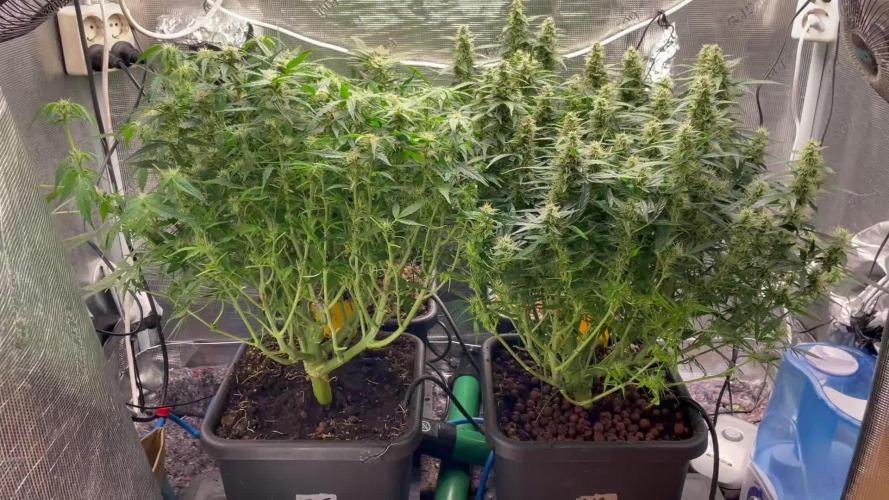
Week 9
I've harvested the Gelato Auto on day 62. I've added another Biotab into the OGK pot a few days ago and it's finally getting greener and healthier looking.


Likes
17
Share


@The_Projexx
Follow
IM BACK !! New grow room and all !!!!! Entering the last weeks of flowering this week will trying to pack as much as I can in the medium and on this coming Sunday I will decide whether or not she gets one more week of nutes or I start flush . So far shes rippening up really nice look like its going to be a decent harvest. Stay tuned !!
A big thank you to everyone who stops in and smashes that like button or simply just checks the diary out !
-Happy Growing!
Day#43F Shes really enjoying her new home ! Trichomes ripening everyday !!
Day#44F Swelling up , and trucking along!
Day#45F Shes ripining up nicely ! Might switch her to flush next week !!!!
Day#46F Noticed abit more swell and more trichome development ! <3 these flowers are hard like rocks !!
Likes
45
Share


@Ultraviolet
Follow
2nd net is up. Early bud formations are promising. holding up to the extremes pretty well, some leaves taking minor damage, but overall, she is holding up, gave her 1 night at 50F see how she would react, stressful. Not advised as it messes with her metabolism, but I want to see if it triggers any anthocyanin response. Love to see her purp up but no signs yet.
My homework.
Rubisco regeneration is intrinsically linked to nitrogen supply because Rubisco is a major sink for nitrogen in plants, typically accounting for 15% to over 25% of total leaf nitrogen. The regeneration phase itself consumes nitrogen through the synthesis of the Rubisco enzyme and associated proteins (like Rubisco activase), and overall nitrogen status heavily influences the efficiency of RuBP regeneration.Structural Component: Nitrogen is an essential building block for all proteins, and the sheer abundance of the Rubisco protein makes it the single largest storage of nitrogen in the leaf.
Synthesis and Activity: Adequate nitrogen supply is crucial for the synthesis and maintenance of sufficient Rubisco enzyme and Rubisco activase (Rca), the regulatory protein responsible for maintaining Rubisco's active state. Nitrogen deficiency leads to a decrease in the content and activity of both Rubisco and Rca, which in turn limits the maximum carboxylation rate, Vmax, and the rate of RuBP regeneration Jmax, thus reducing overall photosynthetic capacity.
Nitrogen Storage and Remobilization: Rubisco can act as a temporary nitrogen storage protein, which is degraded to remobilize nitrogen to other growing parts of the plant, especially under conditions of nitrogen deficiency or senescence.
Nitrogen Use Efficiency (NUE): The allocation of nitrogen to Rubisco is a key determinant of a plant's photosynthetic nitrogen use efficiency (PNUE). In high-nitrogen conditions, plants may accumulate a surplus of Rubisco, which may not be fully activated, leading to a lower PNUE. Optimizing the amount and activity of Rubisco relative to nitrogen availability is a target for improving crop NUE.
Photorespiration and Nitrogen Metabolism: Nitrogen metabolism is also linked to the photorespiration pathway (which competes with carboxylation at the Rubisco active site), particularly in the reassimilation of ammonia released during the process.
To increase RuBisCO regeneration, which refers to the process of forming the CO2 acceptor molecule Ribulose-1,5-bisphosphate (RuBP) during photosynthesis, the primary methods involve optimizing the levels and activity of Rubisco activase (Rca) and enhancing the performance of other Calvin-Benson-Bassham (CBB) cycle enzymes.
Biochemical and Environmental Approaches:
Optimize Rubisco Activase (Rca) activity: Rca is a crucial chaperone protein that removes inhibitory sugar phosphates, such as CA1P (2-carboxy-D-arabinitol 1-phosphate), from the Rubisco active site, thus maintaining its catalytic competence.
•Ensure optimal light conditions: Rca is light-activated via the chloroplast's redox status. Adequate light intensity ensures Rca can effectively maintain Rubisco in its active, carbamylated state.
•Maintain optimal temperature: Rca is highly temperature-sensitive and can become unstable at moderately high temperatures (e.g., above 35°C/95F° in many C3 plants), which decreases its ability to activate Rubisco. Maintaining temperatures within the optimal range for a specific plant species is important.
•Optimize Mg2+ concentration: Mg2+ is a key cofactor for both Rubisco carbamylation and Rca activity. In the light, Mg2+ concentration in the chloroplast stroma increases, promoting activation.
•Manage ATP/ADP ratio: Rca activity depends on ATP hydrolysis and is inhibited by ADP. Conditions that maintain a high ATP/ADP ratio in the chloroplast stroma favor Rca activity.
Enhance Calvin-Benson-Bassham (CBB) cycle enzyme activity: The overall rate of RuBP regeneration can be limited by other enzymes in the cycle.
•Increase SBPase activity: Sedoheptulose-1,7-bisphosphatase (SBPase) is a key regulatory enzyme in the regeneration pathway, and increasing its activity can enhance RuBP regeneration and overall photosynthesis.
•Optimize other enzymes: Overexpression of other CBB cycle enzymes such as fructose-1,6-bisphosphate aldolase (FBA) and triose phosphate isomerase (TPI) can also help to balance the metabolic flux and improve RuBP regeneration capacity.
Magnesium ions, Mg2+, are specifically required for Rubisco activation because the cation plays a critical structural and chemical role in forming the active site: A specific lysine residue in the active site must be carbamylated by a CO2 molecule to activate the enzyme. The resulting negatively charged carbamyl group then facilitates the binding of the positively charged Mg2+ion. While other divalent metal ions like Mn2+ can bind to Rubisco, they alter the enzyme's substrate specificity and lead to dramatically lower activity or a higher rate of the non-productive oxygenation reaction compared to Mg2+, making them biologically unfavorable in the context of efficient carbon fixation. The concentration of Mg2+ in the chloroplast stroma naturally increases in the light due to ion potential balancing during ATP synthesis, providing a physiological mechanism to ensure the enzyme is activated when photosynthesis is possible. At the center of the porphyrin ring, nestled within its nitrogen atoms, is a Magnesium ion (Mg2+). This magnesium ion is crucial for the function of chlorophyll, and without it, the pigment cannot effectively capture and transfer light energy.
Mg acts as a cofactor: Mg2+ binds to Rubisco after an activator CO2 molecule, forming a catalytically competent complex (Enzyme-CO2-Mg2+). High light + CO2) increases demand: Under high light (60 DLI is a very high intensity, potentially saturating) and high CO2, the plant's capacity for photosynthesis is high, and thus the demand for activated Rubisco and the necessary Mg2+ cofactor increases. Mg deficiency becomes limiting: If Mg2+ is deficient under these conditions, the higher levels of Rubisco and Rubisco activase produced cannot be fully activated, leading to lower photosynthetic rates and potential photo-oxidative damage.
Optimal range: Studies show that adequate Mg2+ application can enhance Rubisco activation and stabilize net photosynthetic rates under stress conditions, but the required concentration is specific to the experimental setup.
Monitoring is key: The most effective approach in a controlled environment is to monitor the plant's physiological responses e.g., leaf Mg2+ concentration, photosynthetic rate, Rubisco activation state, and adjust the nutrient solution/fertilizer to maintain adequate levels, rather than supplementing a fixed "extra" amount.
In practice, this means ensuring that Mg2+ is not a limiting factor in the plant's standard nutrient solution when pushing the limits with high light and CO2.
Applying Mg2+ through foliar spray is beneficial to Rubisco regeneration, particularly in alleviating the negative effects of magnesium (Mg) deficiency and high-temperature stress (HTS). While Mg can be leached from soil, within the plant it is considered a mobile nutrient, particularly in the phloem. Foliar-applied Mg is quickly absorbed by the leaves and can be translocate to other plant parts, including new growth and sink organs.
Foliar application of: NATURES VERY OWN MgSO4 @ 15.0g L-1 in a spray bottle.
Foliar sprays are often recommended as a rapid rescue measure for existing deficiencies or as a supplement during critical growth stages, when demand for Mg is high. Application in the early morning or late evening can improve absorption and prevent leaf burn.
The starting point [of creativity] is curiosity: pondering why the default exists in the first place. We’re driven to question defaults when we experience vuja de, the opposite of déjà vu. Déjà vu occurs when we encounter something new, but it feels as if we’ve seen it before. Vuja de is the reverse—we face something familiar, but we see it with a fresh perspective that enables us to gain new insights into old problems. Come walk in the enchanted forest.
Likes
22
Share

@Mrs_Larimar
Follow
2026-06-04
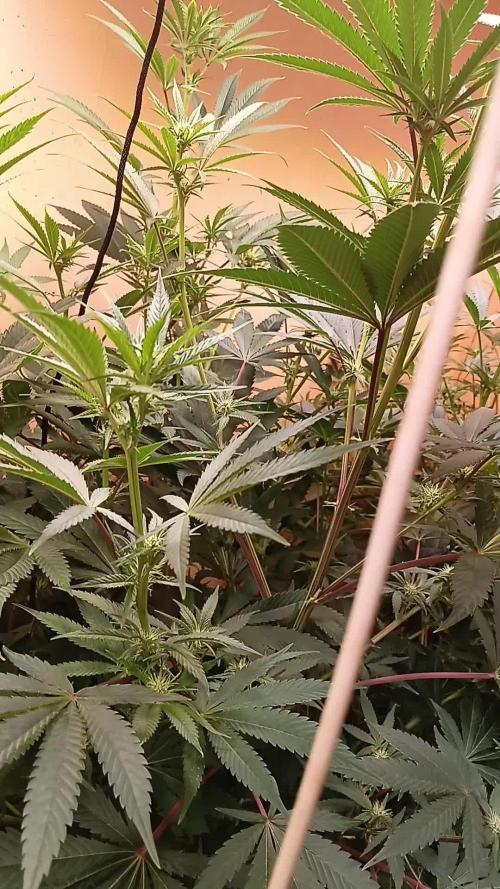
I can barely get into the room, because these ladies are spreading-
so i made a room video
Setup & Method
The plants are growing in an Autopot system using the Biotabs "just add water" strategy.
Setup process:
1. Mix in Startrex
2. Add Silicium Flash
3. Add Biotabs tablets
4. Add Mycotrex
5. Water with Bactrex
This turns any soil into a living, active growing medium. Combined with Autopot, it acts as a cheat code for effortless growth — resulting in large, healthy plants with an excellent and flavorful end product.
Feeding & Maintenance Plan
• Refreshing mycorrhiza and microbes with Mycotrex and Bactrex
• Applying compost tea to all plants
• If any deficiencies appear: top-dress with Silicium Flash
• Continuing the "just add water" strategy otherwise

Likes
40
Share


@Totogrowuk
Follow
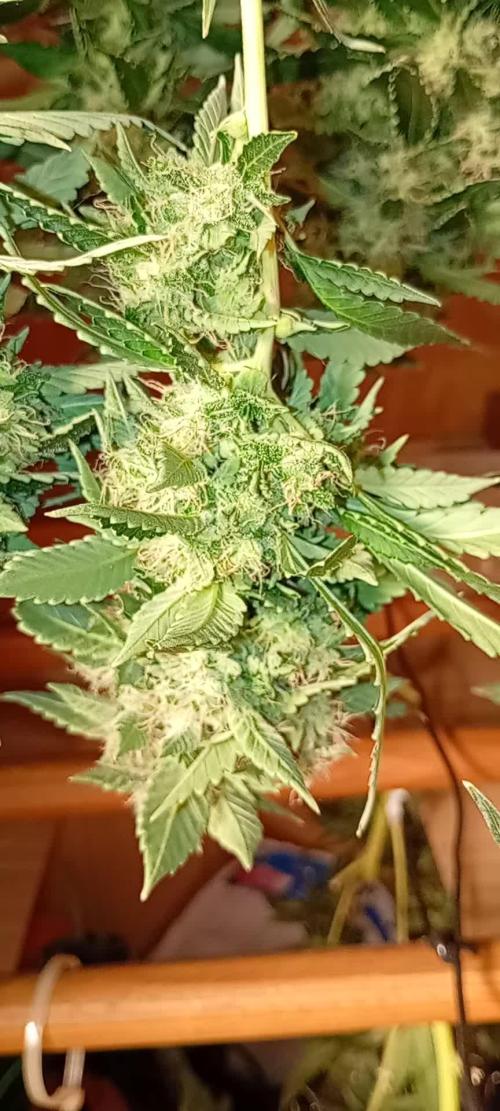
Dry weight of quality buds was 34g. I don’t wet weigh as it’s completely pointless.
Quite a lot of trim for the hash bag.
Tastes great
Likes
2
Share


Likes
3
Share


@andocbd
Follow
Germinacion exitosa, pasarán a maceteros de 3L , los cuales serán las definitivas para este cultivo, pretendo darle 21 días de crecimiento para luego pasar a florar.

Likes
4
Share

@Ninjabuds
Follow
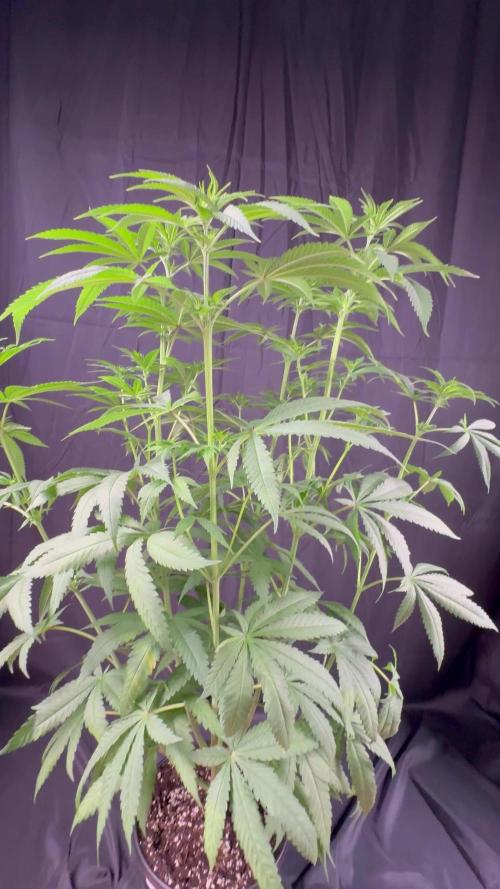
White Runtz has been the biggest plant out of all the SOG plants this run. It has large leaves and a large body to go with
All of the plants have really taken off. Usually I have a couple plants that are much smaller but all of these plants are getting huge. Seeing I got a new eluefah uap1
500 the other day and I have my 2 fastbuds plants under that now I have my spider farmer light free. So I popped up another 2x2 and moved 3 of the 10 plants into the 2x2 and left the 7 other in the 2x4.


Processing
Likes
4
Share


@buildblackson
Follow
The first week of progress. Got a little sprout coming out. The leaves got somewhat messed up from the shell sticking. More to come.


Likes
13
Share


@ffcoppola
Follow
The plant have visible nutritions problem, nitrogen's over and maybe K's deficency, this is my first cycle so I gladly accept suggestions.