


Likes
Comments
Share


@420Germany
Follow
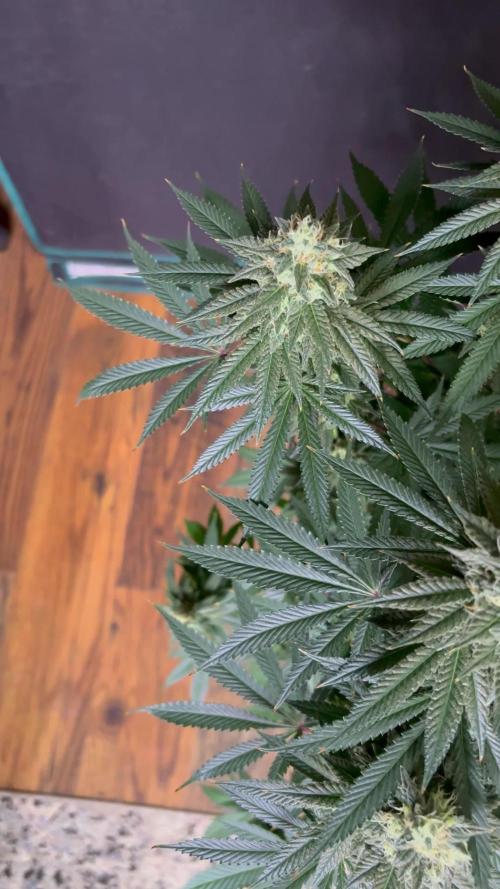
Just before harvest. Pictures in about a week or 2 when product is dry and my eyes are healed (I am going to have Eye Surgery tomorror)

Likes
1
Share


Likes
10
Share


@Kevjunior20
Follow
Beginning of third week, changed up my set up! Ready to see how these girls react to the Nutes also I have two slow growing plants(purple lemonade autoflower) & (seedsman autoflower lemon)


Processing
Likes
7
Share


@Kushizlez
Follow
Day 70-77
(Day 71) Not exactly sure why but node spacing on bbb 6&7 is super tight still. Their stems are also harder and less bendy, almost like they’re root bound.
Bbb #5 in my veg tent is looking bizarre and I’m at a loss for what to do. I’ve been looking up and asking around about the leaf crinkle and no one seems to know what’s wrong. Trashing a pheno of this would hurt. It could be a keeper too as I don’t think the problem is genetic. It’s definitely root bound but that doesn’t cause contorted new growth like that. I’ve concluded that it’s my dense soil coupled with root bound issues, overwatering and high RH.
(Day 72) Later tonight I’m going to give bbb 5 a bath tub flush until it’s reading 200ppms, drain it well and then transplant into a 3g pot with lightly amended soil. I’m also going to give it a light defoliation. I don’t mind stressing the shit out of this plant right now because I won’t be flipping for another week at least. With the small container it will run out of amended nutes mid flower so I will hit it with a few synthetic feedings around then to test out the smokabilty and taste compared to organic nutrients.
I might as well give the rest a good defoliation on the rest of the plants too. I will try to get most of what is under the trellis.
(Day 73) I definitely defoliated #7 waaay too much. Since it’s tucked away in the corner and a really bushy plant I can’t train it as well as the others. I cut most of the sucker branches and the majority of the lower fans. This should prevent the need to defoliate at all until week 3 of flower.
(Day 74) I’ve been reading that higher temperatures with a high RH can affect growth big time. It could be what’s causing all the crinkling and twisting. And now that the plants are in very late veg they could probably benefit from a lower RH. When I was running my temps around 74-78F and 70% RH I was in the perfect range. Now that I’m around 82-86F with the same 70% RH that could be what’s causing it. Hotter air holds more moisture than cooler air and proper vpd at 84F is around 75-80%. I’m going to turn up the speed on my carbon filter and set my controller to 75%. If I don’t see a difference or it gets worse I will drop to 65 and go from there.
(Day 76) I finally got the lights raised up another 4 inches or so. It’s not much but it should help reduce the intensity and stretch the nodes more.
I’m starting to think the super tight node spacing and droopy/contorted growth has more to do with something I’ve been reading about called ‘soil compaction’. Apparently farmers often deal with compacted soil in fields from running tractors over it all day. When I potted the plants I gave them a good little jiggle to compact the soil down further so I could fit a bit more in the container. I think this could be the culprit as they don’t seem to be drying out evenly. Even the plants in my other room are not drying out like they should and it’s probably from compacting too. With the addition of rock dust and dry amendments the soil can become sandy/clay like and retain a lot more moisture. Wish I would have added a few more liters of perlite and packed the soil a bit looser. Either way I need to get this problem sorted ASAP before I get root rot.
Earlier in the season when I overwatered, I stuck a fish tank air pump into the soil and it aerated the soil enough to prevent overwatering. The only reason I discontinued it is because it didn’t have much effect in the 1.7g pots. I just ordered a 36w 6 way fish tank pump that is way more powerful. It was 50 bucks and I’m willing to take a gamble on it. It seems to be my only option at the moment because I can’t just repot. Worst case scenario I can use it for brewing compost teas if it doesn’t work. I’m not sure how well this will work in a giant fabric pot but it’s worth a shot. I’ve heard of people supplementing additional air into raised garden beds with great results.
I’m picking off some of the new auxiliary branches to try and widen the node spacing. Growth is definitely slow and stunted but no signs of deficiencies.
I just thought of another theory on the node spacing... and the more I think about it, the more I think it’s the mystery problem. I’ve been foliar spraying with 1-1-1 VeloKelp at pretty high concentrations 2-3 times per week. I have heard in passing that kelp and seaweed can somehow reduce stretch. A quick google search reveals that Ascophyllum Nodosum Seaweed and other marine algae extracts contain large amounts of hormones and auxins that reduce plant height and stretch. *facepalm*
Guess I’ll stop that for the rest of the cycle. As far as I know there is nothing I can really do but wait for the plant to use up all those excess hormones and nutes. The recent 0-0-15 seaweed extract and 1-0-3 kelp meal I bought is derived from the same kind as the velokelp. I guess I won’t use it again until week 3 or 4 in flower. Tight nodes are very useful in flower but aren’t desirable at all in when trying to scrog in veg. Especially when they’re like a half inch apart. It slows the shit out of a grow. Vietnamese and biker gangs in my area used to grow SOG style and use a synthetic PGR hormone (meant for bonsai trees) called ‘paclobutrazol’ that would make the weed rock hard dense so they wouldn’t have to pay people as much to trim it. I’ve heard that in recent years they have made the switch to using kelp extracts because paclo is getting harder find and is not meant for food crops let alone smokeable crops. I’m ashamed of it but I have smoked pounds of PGR weed long before I knew what a PGR was. 🤷♂️
(Day 77) One more theory. Ever since raising up the plants up onto that shelf the root zone is probably significantly warmer and the bottom of the pot (where most of the roots are) drys out way quicker. It’s possible that the warmer root zone could not be holding dissolved oxygen at the proper rate resulting in that over/underwatered look. Or it could be that I’m not watering enough at once to reach the bottom of the pot where the roots are and it’s indeed under watered. I’m going to water in a gallon when I get my new air pump and see if that makes any positive change. If I see the new air pump making a difference, I will flip on the 21st of April. If I don’t see a difference, I will carefully untangle the plants from the scrog net and remove the shelf. That extra foot should make a massive difference with ppfd and will cool down the roots significantly too. I’m thinking about grabbing a simple soil/compost thermometer to check the temp of the medium. Better safe than sorry.
Rough week. Hopefully everything get smoothed out in the next little while before I flip.


Processing
Likes
4
Share


@Simon_Says_Smoke
Follow
Week 1
17 January 2021
The seed has germinated and the plant has risen.
Week 2
24 January 2021
( 3cm in height )
Looks very healthy with a thin fragile stem.
Only developed the first pair leaves.

Likes
10
Share


@Virga22
Follow
These Ethos Seeds are showing an amazing burst of energy. Really impressed, it's intriguing me.

Likes
12
Share


@Willy_Balls
Follow
First week of flowering.
Girls are super happy. And drink a lot. I very much prefer the lower plant count with 8 plants. And I’m probably not going to go back to more than 9 plants. Perhaps will even try 6 or 7. 12 or 16 was a bit of overkill. Maybe with super short veg it has its place.
26.01 first day of flower.


Likes
9
Share

@Kushizlez
Follow
Harvest:
Everything dried up to 347 grams + 96 grams of super high quality trim. Overall I am not too pleased with the smoke of the product. Although the bud size, bag appeal, smell and taste are pretty much all there, the shitty burn is a deal breaker for me and the majority of this weed is quite frankly useless. Another downside is while smoking I’ve found 4 seeds in an ounce from almost every strain. Light leaks? At least I learned a ton, including how to get super good burn for my next crop. I’m hoping that curing for a month or so will improve the burn but I wouldn’t really count on it. I have seen weed dried for 4 days with no cure and no flush smoke clean and not go out once. I have been told that the key to white ashes/clean burn is proper mineral content in the soil and there is tons of scientific studies on cigar ash going back 100 years. Plants grown in a medium with high levels of decomposing organic matter, phosphorus, magnesium, chlorine and heavy metal ratio tend to produce black/grey ash. Whereas plants grown in a medium with a higher ratio of trace minerals like calcium carbonate and potassium in the form of wood ash, rock dusts, oyster shell flour and lower levels of decomposing organic matter will produce a dense, uniform white ash that rarely goes out. But this is still all theory until I test it to confirm for myself a few times. My last few outdoor harvests did not improve with curing at all so I’m hoping this will be the missing link. Plain peat moss and coco clearly lack essential minerals that help burn. If said theory is correct I should find a synthetic nutrient line with more trace minerals. Makes me wonder if growing if rockwool/basalt rock could improve burn in a hydro setup.
I think I did a fairly decent job for my first grow. I went wrong in a million different places but I still stuck it out and got some decent herb. Things went wrong early when I got black spot mold, nitrogen/magnesium deficiencies and powdery mildew. I corrected most of it but things didn’t get really bad until mid veg when I intentionally skipped a few feedings and defoliated quite heavily stunting the plants. I also didn’t even top or start LST until the 6-9th node which was really stupid and hurt my yield. My temperatures were all over the place from the learning curve. I was severely overwatering without realizing it. 100% peat moss is a shitty medium. I also fed way too late in flower (not what caused shitty burn). I also used synthetic nutrients in soil.
Zkittlez bonsai
Yield: 1.9g
Smell: 7/10 - sweet, candy, berry, gassy, piney hints
Bag appeal: 7/10 - slightly leafy/stemy
Crystal coverage: 7.5/10 - very impressed
Ash: 6/10 - flaky, mostly white/grey
Fire holding: 4/10 - stays lit for 10-30 seconds
Smoke: 6/10 - taste is decent, needs curing
High: 6/10 - indica dom
Comment: looks nice, smells nice, tastes nice, burns like shit.
43.5/70 = 62% 👎🗑️
Black Garlic #1
Yield: 53.6
Smell: 8/10 - gassy, piney, earthy, skunky
Bag appeal: 7/10 - slightly leafy/stemy
Crystal coverage: 7.5/10 - very impressed
Ash: 8/10 - thick, uniform white ash
Fire holding: 7.510 - stays lit for 45+ sec
Smoke: 7.5/10 - taste is good until the end
High: 7/10 - sativa dom
Comment: looks nice, smells nice, tastes nice, burns great but quite leafy.
52.5/70 = 75% 👍🔥
Black Garlic #2
Yield: 42.3
Smell: 7/10 - woody, earthy, tea
Bag appeal: 6.5/10 - slightly leafy/stemy
Crystal coverage: 7/10 - impressed
Ash: 6/10 - flaky, mostly white/grey
Fire holding: 4/10 - stays lit for 10-30 seconds
Smoke: 6/10 - taste is decent, needs curing
High: 8/10 - sativa dom
Comment: looks nice, smells nice, tastes nice, burns like shit.
44.5/70 = 63% 👎🗑️
Zkittlez
Yield: 39.4
Smell: 7/10 - sweet, candy, berry, gassy, piney hints
Bag appeal: 6.5/10 - slightly leafy/stemy
Crystal coverage: 7.5/10 - very impressed
Ash: 8/10 - thick, uniform white ashes
Fire holding: 8/10 - stays lit for seconds
Smoke: 7.5/10 - taste is decent, needs curing
High: 7/10 - indica dom
Comment: looks nice, smells nice, tastes nice, burns great but smalls didn’t fill out.
51.5/70 = 73% 👍🔥
Blackberry Breath #1
Yield: 57.5
Smell: 9/10 - sweet, grape, berry, gassy, earthy, hashy
Bag appeal: 8.5/10 - dense, sparkly buds
Crystal coverage: 9/10 - super impressed
Ash: 5/10 - flaky, mostly grey/blackish
Fire holding: 4/10 - stays lit for 10-30 seconds
Smoke: 5/10 - tastes like chalky shit
High: 6/10 - indica dom
Comment: looks amazing, smells amazing, tastes like shit, burns like shit.
46.5/70 = 66% 👎🗑️
Blackberry Breath #2
Yield: 76.1g
Smell: 6/10 - musky, tea, berry, herbal
Bag appeal: 8/10 - slightly leafy/stemy
Crystal coverage: 7.5/10 - very impressed
Ash: 5/10 - flaky, mostly grey/black
Fire holding: 4/10 - stays lit for 10-30 seconds
Smoke: 5/10 - taste is shit
High: 6/10 - indica dom
Comment: looks nice, smells shitty, tastes shitty, burns like shit.
41.5/70 = 59% 👎🗑️
Slurricane #4
Yield: 34.5g
Smell: 8.5/10 - gassy, deep piney, fuel, earthy,
Bag appeal: 8.510 - slightly leafy/stemy
Crystal coverage: 7.510 - impressed
Ash: 6/10 - flaky, mostly white/grey
Fire holding: 4/10 - stays lit for 10-30 seconds
Smoke: 6/10 - taste is decent
High: 6/10 - indica dom
Comment: looks amazing, smells amazing, tastes nice, burns like shit.
46.5/70 = 66% 👎🗑️
Badazz OG Cheese
Yield: 43.5g
Smell: 6.5/10 - musty, woody, cheesy, piney hints
Bag appeal: 6/10 - slightly leafy/stemy
Crystal coverage: 6/10 - very impressed
Ash: 5/10 - flaky, mostly white/grey
Fire holding: 4/10 - stays lit for 10-30 seconds
Smoke: 6/10 - taste is decent
High: 6/10 - sativa dom
Comment: looks like shit, smells decent, tastes decent, burns like shit.
39.5/70 = 56% 👎🗑️

Likes
2
Share

@LaBurlaVerde
Follow
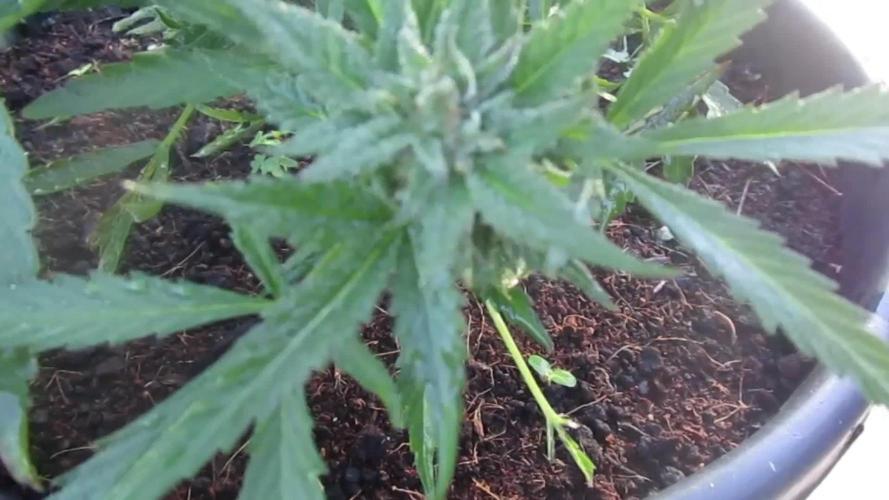
Lo primero perdonad por no actualizar esto mas seguido, el trabajo y las pocas horas de luz solar no ayuda, cuando salgo es de noche y llego a casa de noche y no puedo prestarles mucha atencion a las plantas y hacerles las fotos correspondientes.. Pues asi van las niñas de Divine Seeds, la Auto Moon Rock me esta encantando, que monton de resina saca esta planta.. Ya empiezan a oler muy bien.. Como veis una de las Auto Fractal va a tardar mas en cosecharse que la otra auto fractal y que la auto moon rock. Ahora ya estare con actualizaciones mas seguidas, para el final del cultivo, el concurso no voy ni acercarme a ganarlo, pero da igual asi e podido probar estas geneticas de Divine Seeds.

Likes
13
Share


@XanHalen
Follow
Mar 15:
Looking good, keeping rh down has proven difficult with 3 in a 2x3x4ft box, blasting intake and exhaust with 2 fans inside.
Otherwise good, did a 1/4 feed to use up stores and salts.
Mar 16:
Looking good, dialed back in RH, Temp lowered a couple degrees, no oscillating fan so I adjust the position every day.
Want to start using MonsterBloom for some fat buds but don't wanna start too early.
Also need info if incorporating run-off feeds is necessary if i do occasional 1/4 dose feeds.
Slowly dialing back grow nutrients, and upping bloom.
New light has made 100X difference.
Mar 18th:
Will be increasing of volume per feed over the next week to 1 - 1.2L per plant, or until I get 10% run-off.
keeping concentration of feed around 800ppm,
No signs of deficiencies or toxicities yet, though colour of leaves may be a tad dark, no signs of slowed growth.
Increased PPFD to 750 - 940 at the top of the canopy.
Mar 21:
Going to start counting days not weeks, its been 36 days since they popped, so just over 5 weeks now, I was a bit ahead.
Explosive growth, still playing the "increase volume of feed until I get 10-15% runoff" game, at 1L now, will up to 1.25L for todays feed.
decreasing FloraGro by .5ml/gal every feed till I get to 1 - 1.5mL/gal.
increasing FloraBloom by .5mL/gal every feed till I get to 7 - 7.5mL/gal, or until I see P or K toxicity, whatever comes first.
That being said if I get runoff today and its 300 ppm over input, i will flush with a mild feed until I get proper output/input ppm ratio.
PLEASE, IF YOU ARE READING THIS, IF YOU SEE ME DOING SOMETHING WRONG, OR IF THERE IS A BETTER WAY, COMMENT OR DM ME 😭😂💪


Likes
14
Share


@Weedywade89
Follow
Another hell week temperatures were at 112 degrees in the day and 90 at night so two of my three plants got zoo bad there’s no coming back very sad day hurt all my feelings
Likes
3
Share


@kdifiori_
Follow
The girls are doing great. I decided to eliminate Bloom Part A from their schedule to start reducing N slightly. From now on, I will also give Overdrive to Cheese and Gorilla; Skunk has already been receiving it since last week. I started flushing Pineapple, as it is definitely the closest to harvest.


Likes
34
Share


@Ultraviolet
Follow
Yellow butterfly came to see me the other day; that was nice.
Starting to show signs of stress on the odd leaf, localized isolated blips, blemishes, who said growing up was going to be easy!
Smaller leaves have less surface area for stomata to occupy, so the stomata are packed more densely to maintain adequate gas exchange. Smaller leaves might have higher stomatal density to compensate for their smaller size, potentially maximizing carbon uptake and minimizing water loss. Environmental conditions like light intensity and water availability can influence stomatal density, and these factors can affect leaf size as well. Leaf development involves cell division and expansion, and stomatal differentiation is sensitive to these processes. In essence, the smaller leaf size can lead to a higher stomatal density due to the constraints of available space and the need to optimize gas exchange for photosynthesis and transpiration. In the long term, UV-B radiation can lead to more complex changes in stomatal morphology, including effects on both stomatal density and size, potentially impacting carbon sequestration and water use. In essence, UV-B can be a double-edged sword for stomata: It can induce stomatal closure and potentially reduce stomatal size, but it may also trigger an increase in stomatal density as a compensatory mechanism. It is generally more efficient for gas exchange to have smaller leaves with a higher stomatal density, rather than large leaves with lower stomatal density. This is because smaller stomata can facilitate faster gas exchange due to shorter diffusion pathways, even though they may have the same total pore area as fewer, larger stomata. Leaf size tends to decrease in colder climates to reduce heat loss, while larger leaves are more common in warmer, humid environments. Plants in arid regions often develop smaller leaves with a thicker cuticle and/or hairs to minimize water loss through transpiration. Conversely, plants in wet environments may have larger leaves and drip tips to facilitate water runoff. Leaf size and shape can vary based on light availability. For example, leaves in shaded areas may be larger and thinner to maximize light absorption. Leaf mass per area (LMA) can be higher in stressful environments with limited nutrients, indicating a greater investment in structural components for protection and critical resource conservation. Wind speed, humidity, and soil conditions can also influence leaf morphology, leading to variations in leaf shape, size, and surface characteristics. Small leaves: Reduce water loss in arid or cold climates.
Environmental conditions significantly affect gene expression in plants. Plants are sessile organisms, meaning they cannot move to escape unfavorable conditions, so they rely on gene expression to adapt to their surroundings. Environmental factors like light, temperature, water, and nutrient availability can trigger changes in gene expression, allowing plants to respond to and survive in diverse environments.
Depending on the environment a young seedling encounters, the developmental program following seed germination could be skotomorphogenesis in the dark or photomorphogenesis in the light. Light signals are interpreted by a repertoire of photoreceptors followed by sophisticated gene expression networks, eventually resulting in developmental changes. The expression and functions of photoreceptors and key signaling molecules are highly coordinated and regulated at multiple levels of the central dogma in molecular biology. Light activates gene expression through the actions of positive transcriptional regulators and the relaxation of chromatin by histone acetylation. Small regulatory RNAs help attenuate the expression of light-responsive genes. Alternative splicing, protein phosphorylation/dephosphorylation, the formation of diverse transcriptional complexes, and selective protein degradation all contribute to proteome diversity and change the functions of individual proteins.
Photomorphogenesis, the light-driven developmental changes in plants, significantly impacts gene expression. It involves a cascade of events where light signals, perceived by photoreceptors, trigger changes in gene expression patterns, ultimately leading to the development of a plant in response to its light environment.
Genes are expressed, not dictated! While having the potential to encode proteins, genes are not automatically and constantly active. Instead, their expression (the process of turning them into proteins) is carefully regulated by the cell, responding to internal and external signals. This means that genes can be "turned on" or "turned off," and the level of expression can be adjusted, depending on the cell's needs and the surrounding environment. In plants, genes are not simply "on" or "off" but rather their expression is carefully regulated based on various factors, including the cell type, developmental stage, and environmental conditions. This means that while all cells in a plant contain the same genetic information (the same genes), different cells will express different subsets of those genes at different times. This regulation is crucial for the proper functioning and development of the plant.
When a green plant is exposed to red light, much of the red light is absorbed, but some is also reflected back. The reflected red light, along with any blue light reflected from other parts of the plant, can be perceived by our eyes as purple.
Carotenoids absorb light in blue-green region of the visible spectrum, complementing chlorophyll's absorption in the red region. They safeguard the photosynthetic machinery from excessive light by activating singlet oxygen, an oxidant formed during photosynthesis. Carotenoids also quench triplet chlorophyll, which can negatively affect photosynthesis, and scavenge reactive oxygen species (ROS) that can damage cellular proteins. Additionally, carotenoid derivatives signal plant development and responses to environmental cues. They serve as precursors for the biosynthesis of phytohormones such as abscisic acid () and strigolactones (SLs). These pigments are responsible for the orange, red, and yellow hues of fruits and vegetables, while acting as free scavengers to protect plants during photosynthesis.
Singlet oxygen (¹O₂) is an electronically excited state of molecular oxygen (O₂). Singlet oxygen is produced as a byproduct during photosynthesis, primarily within the photosystem II (PSII) reaction center and light-harvesting antenna complex. This occurs when excess energy from excited chlorophyll molecules is transferred to molecular oxygen. While singlet oxygen can cause oxidative damage, plants have mechanisms to manage its production and mitigate its harmful effects.
Singlet oxygen (¹O₂) is considered a reactive oxygen species (ROS). It's a form of oxygen with higher energy and reactivity compared to the more common triplet oxygen found in its ground state. Singlet oxygen is generated both in biological systems, such as during photosynthesis in plants, and in cellular processes, and through chemical and photochemical reactions. While singlet oxygen is a ROS, it's important to note that it differs from other ROS like superoxide (O₂⁻), hydrogen peroxide (H₂O₂), and hydroxyl radicals (OH) in its formation, reactivity, and specific biological roles. Non-photochemical quenching (NPQ) protects plants from damage caused by reactive oxygen species (ROS) by dissipating excess light energy as heat. This process reduces the overexcitation of photosynthetic pigments, which can lead to the production of ROS, thus mitigating the potential for photodamage. Zeaxanthin, a carotenoid pigment, plays a crucial role in photoprotection in plants by both enhancing non-photochemical quenching (NPQ) and scavenging reactive oxygen species (ROS). In high-light conditions, zeaxanthin is synthesized from violaxanthin through the xanthophyll cycle, and this zeaxanthin then facilitates heat dissipation of excess light energy (NPQ) and quenches harmful ROS.
The Issue of Singlet Oxygen!!
ROS Formation: Blue light, with its higher energy photons, can promote the formation of reactive oxygen species (ROS), including singlet oxygen, within the plant.
Potential Damage: High levels of ROS can damage cellular components, including proteins, lipids, and DNA, potentially impacting plant health and productivity.
Balancing Act: A balanced spectrum of light, including both blue and red light, is crucial for mitigating the harmful effects of excessive blue light and promoting optimal plant growth and stress tolerance.
The Importance of Red Light:
Red light (especially far-red) can help to mitigate the negative effects of excessive blue light by:
Balancing the Photoreceptor Response: Red light can influence the activity of photoreceptors like phytochrome, which are involved in regulating plant responses to different light wavelengths.
Enhancing Antioxidant Production: Red and blue light can stimulate the production of antioxidants, which help to neutralize ROS and protect the plant from oxidative damage.
Optimizing Photosynthesis: Red light is efficiently used in photosynthesis, and its combination with blue light can lead to increased photosynthetic efficiency and biomass production.
In controlled environments like greenhouses and vertical farms, optimizing the ratio of blue and red light is a key strategy for promoting healthy plant growth and yield.
Understanding the interplay between blue light signaling, ROS production, and antioxidant defense mechanisms can inform breeding programs and biotechnological interventions aimed at improving plant stress resistance. In summary, while blue light is essential for plant development and photosynthesis, it's crucial to balance it with other light wavelengths, particularly red light, to prevent excessive ROS formation and promote overall plant health. Oxidative damage in plants occurs when there's an imbalance between the production of reactive oxygen species (ROS) and the plant's ability to neutralize them, leading to cellular damage. This imbalance, known as oxidative stress, can result from various environmental stressors, affecting plant growth, development, and overall productivity.
Causes of Oxidative Damage: Abiotic stresses: These include extreme temperatures (heat and cold), drought, salinity, heavy metal toxicity, and excessive light. Biotic stresses: Pathogen attacks and insect infestations can also trigger oxidative stress. Metabolic processes: Normal cellular activities, particularly in chloroplasts, mitochondria, and peroxisomes, can generate ROS as byproducts. Certain chlorophyll biosynthesis intermediates can produce singlet oxygen (1O2), a potent ROS, leading to oxidative damage. ROS can damage lipids (lipid peroxidation), proteins, carbohydrates, and nucleic acids (DNA). Oxidative stress can compromise the integrity of cell membranes, affecting their function and permeability. Oxidative damage can interfere with essential cellular functions, including photosynthesis, respiration, and signal transduction. In severe cases, oxidative stress can trigger programmed cell death (apoptosis). Oxidative damage can lead to stunted growth, reduced biomass, and lower crop yields.
Plants have evolved intricate antioxidant defense systems to counteract oxidative stress. These include: Enzymes like superoxide dismutase (SOD), catalase (CAT), and various peroxidases scavenge ROS and neutralize their damaging effects. Antioxidant molecules like glutathione, ascorbic acid (vitamin C), C60 fullerene, and carotenoids directly neutralize ROS. Developing plant varieties with gene expression focused on enhanced antioxidant capacity and stress tolerance is crucial. Optimizing irrigation, fertilization, and other management practices can help minimize stress and oxidative damage. Applying antioxidant compounds or elicitors can help plants cope with oxidative stress. Introducing genes for enhanced antioxidant enzymes or stress-related proteins over generations.
Phytohormones, also known as plant hormones, are a group of naturally occurring organic compounds that regulate plant growth, development, and various physiological processes. The five major classes of phytohormones are: auxins, gibberellins, cytokinins, ethylene, and abscisic acid. In addition to these, other phytohormones like brassinosteroids, jasmonates, and salicylates also play significant roles.
Here's a breakdown of the key phytohormones:
Auxins: Primarily involved in cell elongation, root initiation, and apical dominance.
Gibberellins: Promote stem elongation, seed germination, and flowering.
Cytokinins: Stimulate cell division and differentiation, and delay leaf senescence.
Ethylene: Regulates fruit ripening, leaf abscission, and senescence.
Abscisic acid (ABA): Plays a role in seed dormancy, stomatal closure, and stress responses.
Brassinosteroids: Involved in cell elongation, division, and stress responses.
Jasmonates: Regulate plant defense against pathogens and herbivores, as well as other processes.
Salicylic acid: Plays a role in plant defense against pathogens.
1. Red and Far-Red Light (Phytochromes):
Red light:
Primarily activates the phytochrome system, converting it to its active form (Pfr), which promotes processes like stem elongation and flowering.
Far-red light:
Inhibits the phytochrome system by converting the active Pfr form back to the inactive Pr form. This can trigger shade avoidance responses and inhibit germination.
Phytohormones:
Red and far-red light regulate phytohormones like auxin and gibberellins, which are involved in stem elongation and other growth processes.
2. Blue Light (Cryptochromes and Phototropins):
Blue light:
Activates cryptochromes and phototropins, which are involved in various processes like stomatal opening, seedling de-etiolation, and phototropism (growth towards light).
Phytohormones:
Blue light affects auxin levels, influencing stem growth, and also impacts other phytohormones involved in these processes.
Example:
Blue light can promote vegetative growth and can interact with red light to promote flowering.
3. UV-B Light (UV-B Receptors):
UV-B light:
Perceived by UVR8 receptors, it can affect plant growth and development and has roles in stress responses, like UV protection.
Phytohormones:
UV-B light can influence phytohormones involved in stress responses, potentially affecting growth and development.
4. Other Colors:
Green light:
Plants are generally less sensitive to green light, as chlorophyll reflects it.
Other wavelengths:
While less studied, other wavelengths can also influence plant growth and development through interactions with different photoreceptors and phytohormones.
Key Points:
Cross-Signaling:
Plants often experience a mix of light wavelengths, leading to complex interactions between different photoreceptors and phytohormones.
Species Variability:
The precise effects of light color on phytohormones can vary between different plant species.
Hormonal Interactions:
Phytohormones don't act in isolation; their interactions and interplay with other phytohormones and environmental signals are critical for plant responses.
The spectral ratio of light (the composition of different colors of light) significantly influences a plant's hormonal balance. Different wavelengths of light are perceived by specific photoreceptors in plants, which in turn regulate the production and activity of various plant hormones (phytohormones). These hormones then control a wide range of developmental processes.


Likes
111
Share


@DevilsBud
Follow
10/10/21 new week for Hyper glue
Growing almost a month now did some topping last week and today started to LST the main everything going great so far plants loving the new FC-4800 so as i absolutely no extra heat is coming of them 👌🏻
I maybe will top some more but as far it Goes for LST this will be the only thing i will do to the plants let the rest grow freely one hyper glue has to wait for main LST
12/10/21
The other hyper glue got LST clip on the main and think this was one of best ones so far
14/10/21
Growing very nicely giving them the watering and nutrients when they need it . I am trying to understand plants better by looking at feeling soil etc instead of a regiment. And learning we do every day because bin growing in 11L pots but now in 8L pots so that means that there gone be smaller then my first grow . But hey got now 12 plants going on and not 4 so that will help lol
15/10/21
Did some small defoliation and some of them get light penetrating better
visit www.marshydro.eu
for your best gear and use the PROMO CODE: DEVILSBUD
Fully marshydro supported Setup:
Marshydro GT120x120x200
Marshydro FC-4800 LED lamp
Mars Hydro tent handy info
●【Lock All Light Insid】MARS HYDRO Grow Tent Interior is made of diamond mylar. Non-toxic to the environment, no harm to plants. High-quality 1680D canvas being double stitched, (ALL OTHERS BRAND grow tent is 601D canvas) which is tear-proof for perfect light locking, No light leaks or rips at all.
●【Durability Grow Tent】Stable Metal corner adapters and poles are the trustful supporters of the tent. No rusting nor paint-falling. Quick easy tool-free installation. Carries strong heavy-duty SBS zippers, double layer lining to create a light-proof seal.
●【Easy Observation of your Plants】Special peeks window made by double layers of cloths. Observe the growing conditions of your plants without opening the tent and avoid disturbing plants. The peek window also serves to dissipate heat and ventilate air.
●【Removable Tray Keep Clean】The package includes a removable waterproof floor tray to hold soil and fallen leaves. The tray can be taken out easily to wash. Removable and water-proof makes cleaning easy.
●【Good Ventilation&Fast Assembly】 Circular double-sleeved vent holes with adjustable nylon strap for air circulation by exhaust fan, ducting, carbon filter, or reflector. Better allows proper light, heat, and airflow. Quick tool-free installation. Reinforced by a sturdy metal frame to ensure security and stability, supports up to 140lb. Perfectly safeguard your plants to thrive even in winter.
Likes
18
Share


@maneaura
Follow
I came back from vacay. Im harvesting the amensia haze next week!! i’m really excited! i wonder if the painkiller will make it tho. spider mites and thrips somehow got to the plant even though it was inside. and all the pests collectively decided to leave the amnesia alone? Also got new seeds! only paid for 3 lol