


Likes
Comments
Share




Likes
58
Share


@MadeInGermany
Follow
Flowering day 58
since the time was
changed to 12/12 h.
Hey everyone 😁.
We have reached the end of bloom 👍.
The trichomes are now 80% milky and 20% amber ☺️.
I have again today freshly made all the water and added canna flush.
Now the last few stoves in the vicinity will be used for the next few days The day after tomorrow I will turn off the lights so that the plants get 48 hours of darkness before trimming begins 👍.
I turned the watering cycle down so that you only get 2 minutes of water every 5 hours :-).
I'm so happy to be trimming this Pehno again 😍.
He is and remains one of my favorites 👍.
As always, there will be an interim update of the harvest Ernte before the last update.
Until then, I wish you all a lot of fun with this update.
Stay healthy and let it grow.🍀
You can buy this Strain at :
www.Zamnesia.com
☝️🏼☝️🏼☝️🏼☝️🏼☝️🏼☝️🏼
Strain
Gelato clone from mother (Zamnesia )
☝️
Genetics: Wedding Cake x Gelato x Gelato 33
👍
Vega lamp: 2 x Todogrow LED CXB3590 COB 55 W
1 x Sanlight S2W 62 W
💡
Flower lamp : 2 x Todogrow LED CXB3590 COB 55 W
1 x Sanlight S2W 62 W
💡 ☝️
Grow Aero System : Growtool 0.8
☝️
Fertilizer:
Canna Aqua Vega A + B , Canna Aqua Flores A + B , Rizotonic, Cannazym, CANNA Boost, Pk 13/14, Canna Cal / Mag, Canna Ph - Grow, Canna Ph-Bloom
☝️🌱
Water:
Osmosis water mixed with normal water (24 hours stale that the chlorine evaporates) to 0.2 EG. Add Cal / Mag to 0.4 Ec Ph with ph- to 5.2 - 5.8
💦 💧

Likes
3
Share


@FordWenty
Follow
Since this was a first grow, I treated mostly as a learning experience. I had one other plant of the same strain two weeks behind this one. I was happy with the bud structure, nice and dense and they trimmed up nice. I never did get any plant aromas while it was growing. I'm posting this after I've dried and cured both plants. I didn't dry this one properly and the hay smell ended up pretty strong during dry and didn't go away enough during cure. So end result was pretty nugs that smelled a bit of hay and wasn't potent at all. My fault, I don't blame the genetics. I realize now I was underwatering and that better equipment equals better results.

Likes
Comments
Share


@420DeepGrow
Follow
📆 Semana 10
Las dos A5 Chaze siguen avanzando sin rastro de hongos y con la humedad completamente controlada. La planta que perdió su punta principal concentra ahora toda la energía en las secundarias, que se están compactando más, ganando resina y mostrando un brillo más marcado. La otra, que mantiene su punta principal, desarrolla una cola dominante muy firme, densa y con ese aspecto clásico de Haze bien llevada.
En ambas plantas los pistilos se van cerrando y el color se intensifica. Los tricomas muestran mayoría lechosa con los primeros toques cálidos en las zonas más expuestas, señal de maduración activa. El aroma sube otro punto: terroso, madera seca y especia fina, cada vez más profundo.
La ventilación y los riegos están en su punto, aportando estabilidad sin forzar nada en este tramo final.
🌼 Semana de afinado: densidad, resina y aroma consolidándose en cada estructura según su forma.
¡Seguimos creciendo fuerte 💪!
Likes
11
Share



Likes
7
Share


@eldruida_lamota
Follow
Vamos familia actualizamos la cosecha de las gelato Olandese de Dutchfem .
La verdad que el secado muy bien 7 días en Malla y a los botes, 40% humedad y 24 grados es la temperatura ambiental que han tenido en el secado.
Por lo demás de miedo os la recomiendo.
Gracias a DutchFem, Agrobeta y Mars hydro , sin ellos este proyecto no sería igual 🙏.
Agrobeta:
https://www.agrobeta.com/agrobetatiendaonline/36-abonos-canamo
Mars hydro:
Code discount: EL420
https://www.mars-hydro.com/
Buenos humos.


Likes
3
Share


@Grownewgenetics
Follow
another week is all most over (week 3) , and we are having a really beautiful time Looking at these Autos growing, we are getting ready for transplant and also increase the co2 with the co2enhancer bottle from Tnbnaturals thanks a lot for these Guys.

Likes
2
Share


@Keep_it_Cleannabis
Follow
This is my favorite smoke, had this cut for about 2 years. Came from the best bag of runtz I ever bought, got a few ozs and 3 big nugs each had 1 seed. And I got this, im excited to actually document it. Only one of these got trained. I cut the top off for a clone and spread her legs lol. Rest are straight up clones.
Likes
1
Share


@zzzzzzz064
Follow
On week 2 the woolrock got some mohoo, i fixed it by putting water mixed with "safe roots" from Hydrotek directly into the rockwool superfice.
After a couple days that problem was solved and the plant kept growing very well.
And also i started to train the plants (lst)


Likes
2
Share


@koci263
Follow
not so pretty buds, but through their fragrance they are unforgettable flowers for me. It smells beautiful of grapefruit


Likes
5
Share

@Bread_n_Buds
Follow
Good morning, we're finally here.
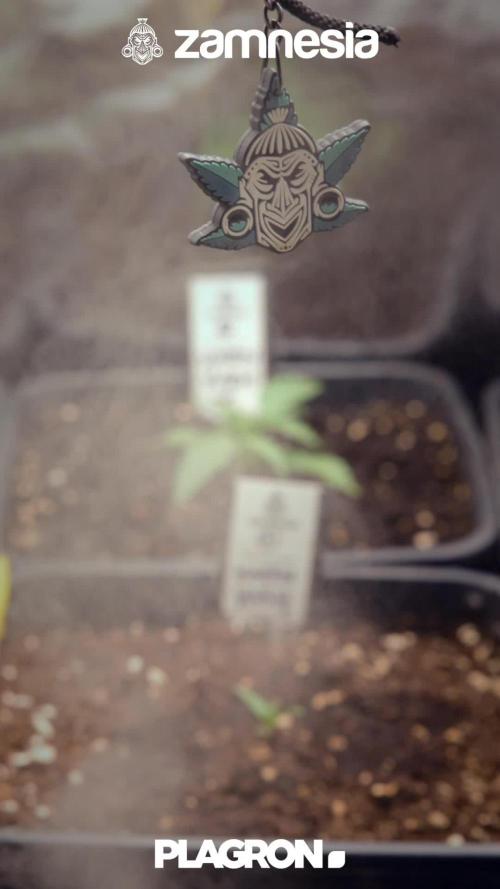
We've changed locations, still in southern Spain, but this time much closer to the sea and with a Mediterranean climate, like my Italian roots. Love it.
We'll start with the autoflowering plants first; this time, they'll all be grown without cutting techniques. We'll always have two plants: one grown with just a little tidying and left to grow straight, and the other using techniques that don't involve cutting, and therefore slowing things down.
I need weed; the grower must also consider this, so the autoflowering plants will finish as quickly as possible.
In most cases, it will be a nice, firm LST, not too delicate, and I'll fim if the plant seems to touch the sky, as has happened recently, probably thanks to the Plagron fertilizers, which will be with us this time too.
The chosen soil is the recently released Plagron Bio LightMix, which will allow us a more regular and reliable start without the sudden changes that liquid fertilizers can cause.
We're 100% organic this time too. For the germination, we also used Seedbooster as soon as it arrived with the last and first 75% water + 25% hydrogen peroxide - *** In my opinion, it's very important to add hydrogen peroxide if you start with the seed in a small glass of water. As soon as it's opened, it would drown too; the oxygen bubbles in the hydrogen peroxide prevent suffocation.
www.plagron.com
Our Karen Kush really started off like a rocket, the fastest of all. We just pretended to smoke the jar of the photoperiod version and we still have the incense flavor in our mouths. Great strain, great flavor and plant.
This seedling started out very well; the other had trouble releasing the seed and placenta, and germination stalled. I'm germinating another one, it's arriving very soon.
https://www.zamnesia.io/en/10783-zamnesia-seeds-karen-kush-auto.html
Zamnesia Description - There's no need to complain about this strain: Karen Kush Auto will satisfy even the most demanding smokers with its dense flowers, fragrant terpenes, and high THC content. Created by crossing Monster Bud Kush, White Widow, and ruderalis, Karen Kush Auto boasts first-class genetics that leave no room for complaint. Inhale its sweet, spicy, and diesel aroma and enjoy the physical buzz that envelops you. After a few minutes, the only thing you'll want is a comfortable place to relax. And best of all, you won't find this strain anywhere else, as it was created by the geneticists at Zamnesia Seeds.
www.zamnesia.com
Likes
11
Share
@chrizzle
Follow
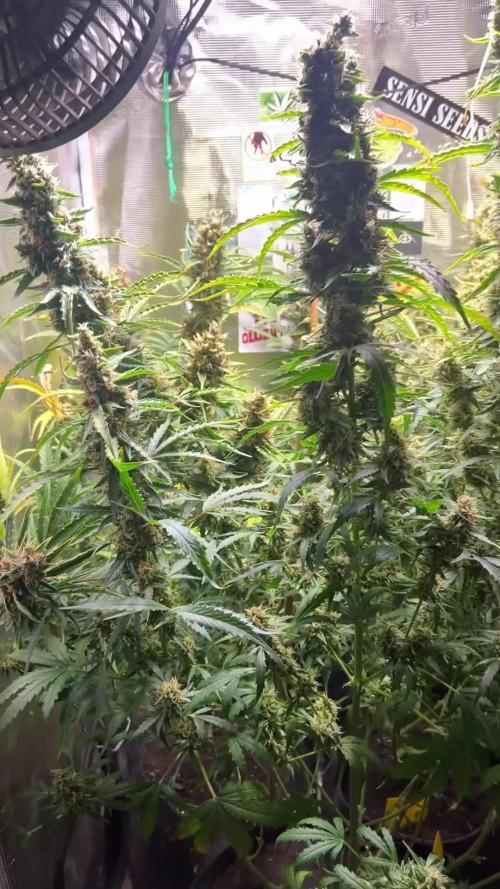
Already went down with the nutrients last watering (day 78) , they‘ll receive plain water for the next week. :)
Likes
46
Share


@The_Bearded_Grower
Follow
welcome to📅 Day 8 6/14/2021. Things are going just as I would expect for this stage and no gnats as of yet thank god for that🙏 If things go as planed top feedings will stop by the end of the week and I will move on to the reservoir on a 2 week cycle.
The Mars Hydro TS 1000 is performing just as I would expect and that's to say flawlessly this little light works its magic best in the veg faze of the grow when growing multiple plants but in flower it will need some help. If I had 2 of them I think I would be fine in my 4x4 tent one for each plant or better yet the TS 2000 for each plant
Until Thursday Happy Growing and as always Keep your stick on the ice 🏒
Update 📅Day 11 6/17/2021 she is well on her way and I am very happy with the progress. My Mars Hydro TS 1000 light is preforming just as I would expect and I have turned is up to 75 %
Likes
22
Share


@Canntemporary
Follow
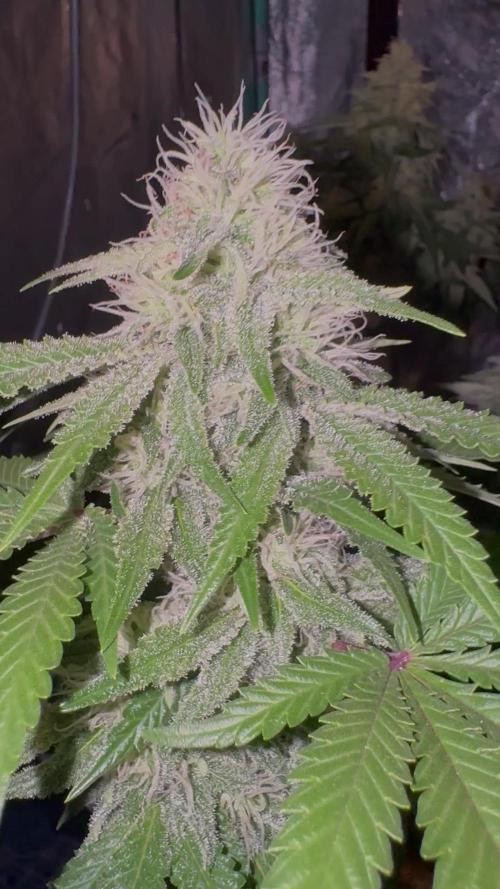
Week 4 of bloom in a diy vertical setup. The space is 10x5 feet and in total 120sqft of canopy space


Likes
126
Share


@WhiteWidow
Follow
Since i applied almost identical training to all of them, i will name them individually once.the flowers start formig and there is an actual difference haha..
Health is perfect, they enjoying food, water, ecosystem, everything seem to be on spot and i am not worried at all, just waiting for flowers :D
I defoliated extremly so all the budsites are exposed to light and there is good airflow, i also lolipoped those branches i am sure wont make it till the end..
Much compliments on remo chemo and spliffs strawberry, i see them as winners here


Likes
54
Share


@MrJones
Follow
MrJones Cream Mandeiran Auto XL - ViparSpectra XS2000 240W Infrared Full Spectrum LED Grow Light
´🍪⊱╮🍪╰⊰🍪 WEEKLY GOALS 🍪╰⊰´🍪⊱╮🍪
🏡Indoor - 3"x4"x8" Custom Built Grow Closet
🌞Environment - 80F and 50%Humidity - using Humidfyer as needed.
🌾LST and Defoliation - this strain likes to stretch!
🗓️Week 2 Seedlings
⚱️5-Gallon 📊6.2 PH
💧 Feeding / Using Dr. Earth Dry Organic Amendments - Home Grown & Bud / Bloom Booster
🌞ViparSpectra XS2000 240W x2 Infrared Full Spectrum LED Grow Light
🕷️ IPM - Will be using Green Cleaner" 1 OZ per Gallon, and CannControl from Mammoth alternating between products each month for Integrated Pest Management.
´🍪⊱╮🍪╰⊰🍪 PLANT UPDATES 🍪╰⊰´🍪⊱╮🍪
📝 Notes - Girls are just blowing up, they have doubled in size and started producing their second and third nodes, the leaves look perfectly healthy! The ViparSpectra XS2000's are just killing it!
╰⊰🍪╰⊰´🍪⊱╮🍪╰⊰🍪╰⊰🍪╰⊰´🍪⊱╮🍪╰⊰🍪╰⊰🍪╰⊰🍪⊱╮
🔶Sunday 06.20.21/ Continuing feeding just H20 PHed to around 6.0/6.5
🔶Monday 06.21.21/ Continuing feeding just H20 PHed to around 6.0/6.5
🔶Tuesday 06.22.21/ Continuing feeding just H20 PHed to around 6.0/6.5
🔶Wednesday 06.23.21/ Continuing feeding just H20 PHed to around 6.0/6.5
🔶Thursday 06.24.21/ Continuing feeding just H20 PHed to around 6.0/6.5
🔶Friday 06.25.21/ Continuing feeding just H20 PHed to around 6.0/6.5
🔶Saturday 06.26.21/ Continuing feeding just H20 PHed to around 6.0/6.5
╰⊰🍪╰⊰´🍪⊱╮🍪╰⊰🍪╰⊰🍪╰⊰´🍪⊱╮🍪╰⊰🍪╰⊰🍪╰⊰🍪⊱╮
Cream Mandarine XL Auto®️ Information
Tall-stemmed auto-flowering strain. This high-yielding 4th generation auto-flowering strain is the resulting hybrid from the cross between selected specimens of our Cream Mandarine Auto®️ (SWS29)) and a Super Tai’98 elite clone.
The genetic coming from the Super Tai’98 elite clone contributes with interesting Sativa characteristics to this hybrid, such as bigger size, but also subtle aromatic and spicy tones with hints of wood and nuts. The so much appreciated Cream Mandarine Auto®️ genetic contributes with traits from the Indica side, such as high flower and resin production, but also sweet and fresh aromas with tones of citric fruits of the mandarin orange type.
DATA SHEET
Variety SWS55
Indica: 35% / Sativa: 63,4% / Ruderalis: 1,6%
THC: 18-23% · CBD: 0,6%
Indoor Yield: 450-650 g/m2
Outdoor Yield: 50-300 g/plant
Indoor/Outdoor Harvest: 9 weeks from germination
Height: 110-150 cm