The Grow Awards 2026 🏆
Likes
Comments
Share
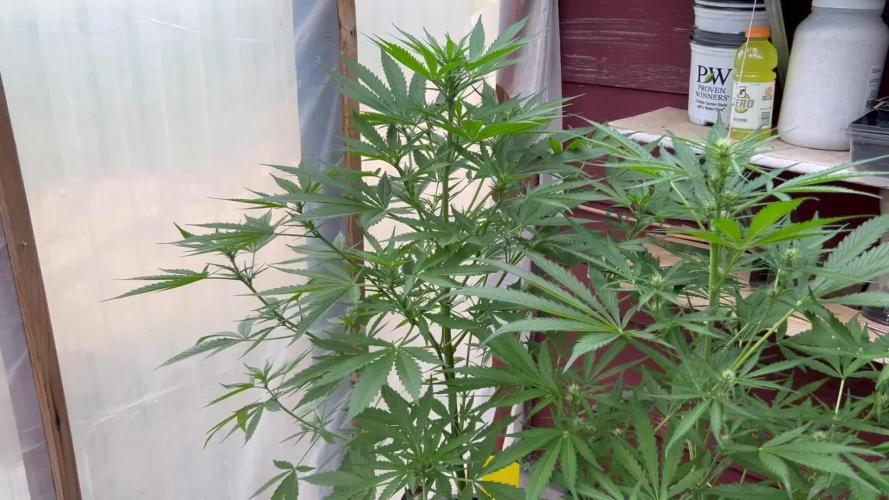
Week 2: The Growth Phase Begins The germination phase is officially behind us, and it’s time to kick off the vegetative growth phase. I’ve uploaded a video that showcases the entire start of this grow diary, from germination to where we are now. 🌱📹 Be sure to check it out for a full recap! This week marks a critical step in the journey: Pheno Selection. I’ll carefully evaluate the three seedlings and choose the one that will move forward in this competition. So far, the plants are neck and neck, but slight differences are starting to emerge. By the end of the week, the strongest contender will take center stage. In addition to the video, I’ll be sharing photos of the seedlings as they settle into their new phase of life. Stay tuned for updates on their progress and my final decision. dein-onlineheadshop.de/ Use my referral code 420Shop at checkout to get a discount on your purchase. By using this code, you also support me, as I receive a small reward for each use. Thank you for your support!
Likes
59
Share
@Coopmc
Follow
Looking good the 3 in front are a week behind the two in back! Buy chance 2 should be typ 1 hight THC plants and 2 should be type 3 plants 50/50 THC/cbd
Likes
12
Share
@m0use
Follow
Plants are chilling, added in some bokashi and dry amendments, not expecting much more from this plant, just needs to finish growing and we can be done.
Likes
5
Share
@Rizza78
Follow
2 weeks to flower in main tent. Red Hot May have had a little nute burn. Lighting is at 628 on Par meter. 78deg avg. Malt was accidentally super cropped. Healing from splitting her branch. Oozecake aka Judy is my prize now. She fought through some mold 1st week. Transplanted her with only 1 node. Then her 2nd transplant to 1 gallon she was stunted for a week.
Likes
7
Share
Temps were rough the last few nights but the girls look great tho, im hopping to achive some purple on them cause of the night temps, but other then that they are hopefully gone be done in the next month Date: 14.09.2024
Likes
55
Share
What's in the soil? What's not in the soil would be an easier question to answer. 16-18 DLI @ the minute. +++ as she grows. Probably not recommended, but to get to where it needs to be, I need to start now. Vegetative @1400ppm 0.8–1.2 kPa 80–86°F (26.7–30°C) 65–75%, LST Day 10, Fim'd Day 11 CEC (Cation Exchange Capacity): This is a measure of a soil's ability to hold and exchange positively charged nutrients, like calcium, magnesium, and potassium. Soils with high CEC (more clay and organic matter) have more negative charges that attract and hold these essential nutrients, preventing them from leaching away. Biochar is highly efficient at increasing cation exchange capacity (CEC) compared to many other amendments. Biochar's high CEC potential stems from its negatively charged functional groups, and studies show it can increase CEC by over 90%. Amendments like compost also increase CEC but are often more prone to rapid biodegradation, which can make biochar's effect more long-lasting. biochar acts as a long-lasting Cation Exchange Capacity (CEC) enhancer because its porous, carbon-rich structure provides sites for nutrients to bind to, effectively improving nutrient retention in soil without relying on the short-term benefits of fresh organic matter like compost or manure. Biochar's stability means these benefits last much longer than those from traditional organic amendments, making it a sustainable way to improve soil fertility, water retention, and structure over time. Needs to be charged first, similar to Coco, or it will immobilize cations, but at a much higher ratio. a high cation exchange capacity (CEC) results in a high buffer protection, meaning the soil can better resist changes in pH and nutrient availability. This is because a high CEC soil has more negatively charged sites to hold onto essential positively charged nutrients, like calcium and magnesium, and to buffer against acid ions, such as hydrogen. EC (Electrical Conductivity): This measures the amount of soluble salts in the soil. High EC levels indicate a high concentration of dissolved salts and can be a sign of potential salinity issues that can harm plants. The stored cations associated with a medium's cation exchange capacity (CEC) do not directly contribute to a real-time electrical conductivity (EC) reading. A real-time EC measurement reflects only the concentration of free, dissolved salt ions in the water solution within the medium. 98% of a plants nutrients comes directly from the water solution. 2% come directly from soil particles. CEC is a mediums storage capacity for cations. These stored cations do not contribute to a mediums EC directly. Electrical Conductivity (EC) does not measure salt ions adsorbed (stored) onto a Cation Exchange Capacity (CEC) site, as EC measures the conductivity of ions in solution within a soil or water sample, not those held on soil particles. A medium releases stored cations to water by ion exchange, where a new, more desirable ion from the water solution temporarily displaces the stored cation from the medium's surface, a process also seen in plants absorbing nutrients via mass flow. For example, in water softeners, sodium ions are released from resin beads to bond with the medium's surface, displacing calcium and magnesium ions which then enter the water. This same principle applies when plants take up nutrients from the soil solution: the cations are released from the soil particles into the water in response to a concentration equilibrium, and then moved to the root surface via mass flow. An example of ion exchange within the context of Cation Exchange Capacity (CEC) is a soil particle with a negative charge attracting and holding positively charged nutrient ions, like potassium (K+) or calcium (Ca2+), and then exchanging them for other positive ions present in the soil solution. For instance, a negatively charged clay particle in soil can hold a K+ ion and later release it to a plant's roots when a different cation, such as calcium (Ca2+), is abundant and replaces the potassium. This process of holding and swapping positively charged ions is fundamental to soil fertility, as it provides plants with essential nutrients. Negative charges on soil particles: Soil particles, particularly clay and organic matter, have negatively charged surfaces due to their chemical structure. Attraction of cations: These negative charges attract and hold positively charged ions, or cations, such as: Potassium (K+) Calcium (Ca2+) Magnesium (Mg2+) Sodium (Na+) Ammonium (NH4+) Plant roots excrete hydrogen ions (H+) through the action of proton pumps embedded in the root cell membranes, which use ATP (energy) to actively transport H+ ions from inside the root cell into the surrounding soil. This process lowers the pH of the soil, which helps to make certain mineral nutrients, such as iron, more available for uptake by the plant. Mechanism of H+ Excretion Proton Pumps: Root cells contain specialized proteins called proton pumps (H+-ATPases) in their cell membranes. Active Transport: These proton pumps use energy from ATP to actively move H+ ions from the cytoplasm of the root cell into the soil, against their concentration gradient. Role in pH Regulation: This active excretion of H+ is a major way plants regulate their internal cytoplasmic pH. Nutrient Availability: The resulting decrease in soil pH makes certain essential mineral nutrients, like iron, more soluble and available for the root cells to absorb. Ion Exchange: The H+ ions also displace positively charged mineral cations from the soil particles, making them available for uptake. Iron Uptake: In response to iron deficiency stress, plants enhance H+ excretion and reductant release to lower the pH and convert Fe3+ to the more available form Fe2+. The altered pH can influence the activity and composition of beneficial microbes in the soil. The H+ gradient created by the proton pumps can also be used for other vital cell functions, such as ATP synthesis and the transport of other solutes. The hydrogen ions (H+) excreted during photosynthesis come from the splitting of water molecules. This splitting, called photolysis, occurs in Photosystem II to replace the electrons used in the light-dependent reactions. The released hydrogen ions are then pumped into the thylakoid lumen, creating a proton gradient that drives ATP synthesis. Plants release hydrogen ions (H+) from their roots into the soil, a process that occurs in conjunction with nutrient uptake and photosynthesis. These H+ ions compete with mineral cations for the negatively charged sites on soil particles, a phenomenon known as cation exchange. By displacing beneficial mineral cations, the excreted H+ ions make these nutrients available for the plant to absorb, which can also lower the soil pH and indirectly affect its Cation Exchange Capacity (CEC) by altering the pool of exchangeable cations in the soil solution. Plants use proton (H+) exudation, driven by the H+-ATPase enzyme, to release H+ ions into the soil, creating a more acidic rhizosphere, which enhances nutrient availability and influences nutrient cycling processes. This acidification mobilizes insoluble nutrients like iron (Fe) by breaking them down, while also facilitating the activity of beneficial microbes involved in the nutrient cycle. Therefore, H+ exudation is a critical plant strategy for nutrient acquisition and management, allowing plants to improve their access to essential elements from the soil. A lack of water splitting during photosynthesis can affect iron uptake because the resulting energy imbalance disrupts the plant's ability to produce ATP and NADPH, which are crucial for overall photosynthetic energy conversion and can trigger a deficiency in iron homeostasis pathways. While photosynthesis uses hydrogen ions produced from water splitting for the Calvin cycle, not to create a hydrogen gas deficiency, the overall process is sensitive to nutrient availability, and iron is essential for chloroplast function. In photosynthesis, water is split to provide electrons to replace those lost in Photosystem II, which is triggered by light absorption. These electrons then travel along a transport chain to generate ATP (energy currency) and NADPH (reducing power). Carbon Fixation: The generated ATP and NADPH are then used to convert carbon dioxide into carbohydrates in the Calvin cycle. Impaired water splitting (via water in or out) breaks the chain reaction of photosynthesis. This leads to an imbalance in ATP and NADPH levels, which disrupts the Calvin cycle and overall energy production in the plant. Plants require a sufficient supply of essential mineral elements like iron for photosynthesis. Iron is vital for chlorophyll formation and plays a crucial role in electron transport within the chloroplasts. The complex relationship between nutrient status and photosynthesis is evident when iron deficiency can be reverted by depleting other micronutrients like manganese. This highlights how nutrient homeostasis influences photosynthetic function. A lack of adequate energy and reducing power from photosynthesis, which is directly linked to water splitting, can trigger complex adaptive responses in the plant's iron uptake and distribution systems. Plants possess receptors called transceptors that can directly detect specific nutrient concentrations in the soil or within the plant's tissues. These receptors trigger signaling pathways, sometimes involving calcium influx or changes in protein complex activity, that then influence nutrient uptake by the roots. Plants use this information to make long-term adjustments, such as Increasing root biomass to explore more soil for nutrients. Modifying metabolic pathways to make better use of available resources. Adjusting the rate of nutrient transport into the roots. That's why I keep a high EC. Abundance resonates Abundance.
Likes
15
Share
The girls started to pre-flower on the 6th of June. They all have a slight smell when you rub the leaves. Kosher cake, Strawberry banana and the Forbidden runtz have a sweet smell to them. The Forbidden runtz reminds me of the smell of skywalker OG which is totally LUSH..!! The blackberry has more of an deep earthy smell with a slight bit of fruitiness. Super excited for the next few weeks with these ladies. Happy toking my peeps 😁
Likes
9
Share
@Car1bGrow
Follow
This week is going really good, started seeing white hairs appear for it’s safe to say that it is beginning to flower, no scent as yet but will update as time goes on. Was eyeballing the height before but now I actually did it and it’s close or even passed 3ft now....this plant is growing amazingly.
Likes
44
Share
For LIQUIDS & NUTES ******GREEN BUZZ NUTRIENTS***** organic. Also i’m using their LIVING SOIL CULTURE in powder form! MARSHYDRO ⛺️ has large openings on the sides which is useful for mid section groom room work. 🤩 ☀️ MARSHYDRO FC 3000 LED 300W 💨MARSHYDRO 6” in-line EXTRACTOR with speed-variation knob, comes complete with ducting and carbon filter.
Likes
3
Share
@123Grow
Follow
Hulk-Berry- starting to really develop b leaves are much larger and fat!! In 2 weeks we are definitely topping her. RuntZ- slow moving for some reason. 4th set of leaves but still stacking small. I am going to do some bacteria LABS and some SST. 10-27 OK, I added some fulvic/humid acid with Corn SST and Photosynthesis plus. Each one of the plants responded positively. The growth has sped up in development. Okay, all cylinders firing now. Hulk Berry is looking like it’s doing it’s Hulk thing, FINALLY. The leaves are getting larger and it’s trying to touch the lights. Runtz- My 3 little Kings 😂😂 2 of the3 have the same growth structure and speed. The 3rd one is kind of lagging behind. I loaded an app on my iPhone that measures the DLI. As I become more familiar with how it works, I think lighting will be on point at all stages. ( Daily Light Integral) DLI measures the amount of light hitting your plants. Keeping them within a certain range helps them grow to their peak when growing indoors. 10-29 Making some Corn, Lentil, Barley SST’s today. I rinse first using distilled water. I let each soak in a separate jar containing distilled water and 2-3 drops of seaweed/kelp to kick up sprouting faster ( works with seeds as well).
Likes
3
Share
Started a liquid supplement because my dry amendments aren’ didn’t activate my last grow. Maybe I didn’t mix them deep enough or keep the top layer wet enough but i know its the end of my first run & my girls have been STARVING . So even though I did top dress a few weeks ago I still started her on liquid amendments like my oldest girls & she’s handled all the feedings brilliantly. She has pre flower pistals showing but only sparsely so we’re still vegging out. She’s a beast & that’s an understatement. Definitely the biggest & most vigorous auto I’ve ever grown. Liquid amendments I’ve been feeding are still indeed organic so no worries.
Likes
14
Share
Day 35. Minor defoliation and supercropped a few branches. Day 37. Starting to flower nicely, some frost Starting to appear on buds. Day 41. Strong smell of strawberry bubblegum when manipulating plant.
Likes
Comments
Share
@420stuffs
Follow
# Cannabinoids In the ever-evolving world of cannabis, enthusiasts are constantly on the lookout for the highest quality products to enhance their experience. Whether you’re a seasoned connoisseur or a curious newcomer, understanding the different types of cannabis products available can elevate your high to new heights. Among the most sought-after options are Grade A+ products, including shatter, hash, and more. Explore these premium offerings with https://t.me/cerianberigam a trusted supplier on Telegram, ensuring you have access to the best cannabis products available. Telegram contact:https://t.me/cerianberigam https://medium.com/@cryptoflash000/cannabinoids-8ed5ba487075 What Makes Grade A+ Cannabis? Grade A+ cannabis is characterized by its superior quality, potency, and purity. These products are meticulously cultivated and processed to ensure they meet the highest standards. Factors that contribute to the Grade A+ classification include: Genetics: The strain’s lineage plays a crucial role in its overall quality. Top-tier genetics often result in more potent and flavorful products. Cultivation Techniques: Expert growers utilize advanced techniques, such as hydroponics and organic farming, to produce cannabis that is rich in cannabinoids and terpenes. Harvesting and Curing: Proper harvesting and curing methods preserve the plant’s integrity, enhancing its aroma, flavor, and effects. Exploring Premium Cannabis Products Shatter Shatter is a type of cannabis concentrate known for its glass-like appearance and high potency https://t.me/cerianberigam. It is created through a process of extracting cannabinoids and terpenes from the cannabis plant using solvents. The result is a product that can contain upwards of 80–90% THC, making it one of the most potent options available. Shatter is perfect for dabbing, providing an intense and flavorful experience that can elevate your high significantly. Hash Hash, or hashish, is one of the oldest forms of cannabis concentrate. It is made by compressing the trichomes (the resinous glands) of the cannabis plant. The result is a potent product that can be smoked, vaporized, or used in edibles. Hash comes in various forms, including traditional pressed hash, bubble hash, and dry sift. Each type offers a unique flavor profile and potency, making it a versatile choice for cannabis enthusiasts. Telegram contact:https://t.me/cerianberigam https://medium.com/@cryptoflash000/cannabinoids-8ed5ba487075 Live Resin Live resin is another popular concentrate that captures the full spectrum of flavors and aromas from the cannabis plant. It is made from fresh, frozen cannabis flowers, preserving the terpenes that are often lost during the drying and curing process. This results in a product that is not only potent but also rich in flavor, making it a favorite among those who appreciate the nuances of different strains. Distillate Cannabis distillate is a highly refined product that contains pure cannabinoids, typically THC or CBD. It is created through a process of distillation, which removes impurities and other compounds, resulting in a clear, viscous oil. Distillate is incredibly versatile and can be used in a variety of ways, including vaping, edibles, and topicals. Its potency and lack of flavor make it an excellent choice for those looking to customize their cannabis experience. Your Trusted Supplier: Cerian Berigam on Telegram Finding high-quality cannabis products can be a challenge, especially with the vast array of options available. That’s where Cerian Berigam comes in. As a trusted supplier on Telegram, Cerian Berigam offers a curated selection of Grade A+ cannabis products, including shatter, hash, and more. With a commitment to quality and customer satisfaction, you can rest assured that you’re getting the best products available. To explore the offerings and elevate your cannabis experience, join Cerian Berigam on Telegram at https://t.me/cerianberigam. Whether you’re looking for potent concentrates or flavorful edibles, Cerian Berigam has you covered. Telegram contact : https://t.me/cerianberigam
Likes
24
Share
@nonick123
Follow
Día 37 (08/07) Ajustes de LST en todas las plantas! 🚀 Día 38 (09/07) Ajustes de LST en todas las plantas. Las ramas inferiores están creciendo como un cohete! 🚀😍 Riego con 250 ml H2O pH 6,5 Día 39 (10/07) Las plantas se muestran sedientas! Creo que el cepellón está lleno de raíces y piden el trasplante! El crecimiento no se ha visto afectado de momento Riego con 500 ml H20 pH 6,5 Día 40 (11/07) Paso a regar con 500 ml / día, ya que hace mucho calor (30 ºC) y efectivamente las plantas ya han copado la maceta de raíces OnionOG y KS1: Las ramas de nodo inferior se han quedado enanas tras el entrenamiento, de modo que las elimino y aplico canela en polvo en los cortes Riego con 500 ml H20 pH 6,5 Día 41 (12/07) Riego con 500 ml H20 pH 6,5 Clones! Mi experimento vuelve a demostrar que NO necesitas complejos productos de clonación ni sistemas para obtener clones! Hace 15 días puse 2 clones con el tallo sumergido en miel durante 5 minutos en una maceta de 400 ml con PRO-MIX HP BACILLUS + MYCORRHIZAE He mantenido la humedad alta con una cúpula de humedad casera hecha con una botella de agua PET de 5 litros cortada por la mitad y pulverizando a diario. Han estado los 15 días en mi terraza con luz indirecta, y temperaturas que rondan los 30 - 32ºC durante las horas centrales del día Hoy los he trasplantado a una maceta de 1 litro porque ya habían formado raíces y empezaban a formar nuevas hojas! 🐥🐥🚀🐥🐥 Día 42 (13/07) Riego con 500 ml H20 pH 6,5 Día 43 (14/07) Trasplante a maceta definitiva de 21 litros de ROOTPLUS Pot de GSKOREA GLOBAL! Estas macetas son una maravilla! Proceso de trasplante: Se prepara con 17,85 Litros (85%) de sustrato PRO-MIX HP BACILLUS+MYCORRHIZAE + 1,05 Litros de Humus de Lombriz (5%) + 2,01 Litros de Insect Frass (10%) + 210 gramos de Earth Vibes Super Soil (10 g/L substrato) Se llena la maceta de sustrato con las manos (limpias) y rompiendo los trozos más gruesos, para que el sustrato esté aireado y esponjoso, sin presionar Se coloca una maceta vacía de 6,5L para que quede la forma perfecta de la maceta donde están actualmente Se espolvorea la parte proporcional de la probeta de microorganismos sobre el agujero de trasplante Se saca la planta de su maceta actual (bonitas raíces 😍) y se coloca en la maceta final Se riega muy lentamente hasta percolación profunda con H2O EC 0,5 pH 6,5 Una vez asentada, complemento con un riego de 500 ml con 25 ml/L de Humus de Lombriz Liquido Se coloca mulch (acolchado) de paja para evitar traspiración excesiva y cuidar a los microorganismos del suelo A ver como reacciona al trasplante! Aplicación foliar Kelp hidrolizado de Lurpe Solutions a 0.25 ml/l Realizo ajustes de LST aprovechando el trasplante a la nueva maceta. De momento tienen una canopia muy bien formada! 💦Nutrients by Lurpe Solutions - www.lurpenaturalsolutions.com 🌱Substrate PRO-MIX HP BACILLUS + MYCORRHIZAE - www.pthorticulture.com/en/products/pro-mix-hp-biostimulant-plus-mycorrhizae
Likes
10
Share
Day 78 from seed This week was a big learning curve as may have dodged a bullet and improved yield . Finally changed res after 3-4 weeks thinking I could get through to harvest I was wrong ppm was spiking to 2200 after multiple water top ups Figured plant wasn’t up taking nutes and had some sort of lockout , ph dropping aswell 5.5 ish Res was salty all over , was way over due , note to self add nutes gradually to reach desired ppm, I gave her what little nutes I had left ( could have more ) Settled around 1000 , seemed to uptake them in two days to settle around 750 , ph at recommended 6.3 , buds changed within a day ! Had to tie her up as she was leaning badly after res change, may invest in a pump to make things easier. Look to be ripening , putting on weight ; pistils browning :)
Likes
371
Share
D60. I'm back again after being out of town for six days. The tent was packed when I opened it! The girls had stretched more, and a couple of leaves were even touching the lights and had gotten burnt. They are now 125 cm tall. That's five times the height they were when I flipped to flower. Five times!!! I have never had a strain stretch this much, and I hope they are done now since there's no more room in the tent. I removed the fan and carbon filer and placed them outside the tent. It looks a bit stupid and is far from stealthy, but what to do? I moved up the lights as far as possible, but I will probably switch the lights with the one I have in my autotent. That light has a much lower profile, so raising it even further is possible. Should that not be enough, I will have to cut off some tops, but I hope it doesn't come to that. The first girl already has dark purple flowers, while the second looks more green with some purple. ------------------------------ D61. I opened the tent today, only to find that the second girl had stretched another 2 cm overnight! This is getting ridiculous, and I hope they stop soon. I super-cropped the tallest top, hoping it would slow down the stretch. A few hours later, she had already recovered. These genetics are nuts! In other news, my girlfriend found spider mites on her papaya plants that are in the same room as my tents. We immediately removed the plants from the room, and I started to scout my plants for an infestation. The good news is that I didn't find any spider mites. However, the bad news is that I found thrips on the lower leaves of the second girl. Ugh! I had thrips last grow season, and I guess some survived. The thrips were only on the lower part of the plant, so I defoliated the girls by removing a bunch of leaves and tiny branches down low and immediately threw them out of the apartment. Thrips don't like it humid, and since the buds are still tiny, I don't need to worry about botrytis yet, so I cranked up the humidity into the high 70s to low 80s. Finally, I ordered a bunch of lacewing larvae that will get here next week. They should eat the thrips and any spider mites that I might not have been able to find. ------------------------------ D63. The girls have slowed their stretch, BUT they are still stretching somewhat. I freaked out when I opened the tent today and saw they were taller, so I attacked them immediately and super-cropped the highest tops. I will switch out the lights next week, gaining me another few centimeters, which I hope will be enough. The VPD in the tent is way off, but I'm more interested in figuring out the light and getting rid of the thrips. Finally, I watered each girl with 2.5 liters of water L pH 6.1, with 10 ml humic acid and 5 ml Fermented Fruit Juice I made a few months ago. ------------------------------
Likes
6
Share
She is doing good, not sure what my plant for her is yet since all my plants need to be in bloom in 9 days....... oh well maybe i'll bring her upstairs with my house plants lol. Enjoying her environment, no longer needs bamboo stalk to hold up, giving light nutes. Happy growing 👽 FEB10/20 update with video, everything looks good n healthy