Likes
Comments
Share
Likes
29
Share
Likes
19
Share
This week went real great, 2 ogreberrys and Bruce banner got trimmed up an jarred ! We chopped the 3 other Ogreberrys on Sunday the 14th , they will hang out to dry for 14 days ! Stay tuned for next update! More trimming an weight an overall photos! Cheers to y’all 😶‍🌫️💨💨💨💨
Likes
34
Share
Yellow butterfly came to see me the other day; that was nice. Starting to show signs of stress on the odd leaf, localized isolated blips, blemishes, who said growing up was going to be easy! Smaller leaves have less surface area for stomata to occupy, so the stomata are packed more densely to maintain adequate gas exchange. Smaller leaves might have higher stomatal density to compensate for their smaller size, potentially maximizing carbon uptake and minimizing water loss. Environmental conditions like light intensity and water availability can influence stomatal density, and these factors can affect leaf size as well. Leaf development involves cell division and expansion, and stomatal differentiation is sensitive to these processes. In essence, the smaller leaf size can lead to a higher stomatal density due to the constraints of available space and the need to optimize gas exchange for photosynthesis and transpiration. In the long term, UV-B radiation can lead to more complex changes in stomatal morphology, including effects on both stomatal density and size, potentially impacting carbon sequestration and water use. In essence, UV-B can be a double-edged sword for stomata: It can induce stomatal closure and potentially reduce stomatal size, but it may also trigger an increase in stomatal density as a compensatory mechanism. It is generally more efficient for gas exchange to have smaller leaves with a higher stomatal density, rather than large leaves with lower stomatal density. This is because smaller stomata can facilitate faster gas exchange due to shorter diffusion pathways, even though they may have the same total pore area as fewer, larger stomata. Leaf size tends to decrease in colder climates to reduce heat loss, while larger leaves are more common in warmer, humid environments. Plants in arid regions often develop smaller leaves with a thicker cuticle and/or hairs to minimize water loss through transpiration. Conversely, plants in wet environments may have larger leaves and drip tips to facilitate water runoff. Leaf size and shape can vary based on light availability. For example, leaves in shaded areas may be larger and thinner to maximize light absorption. Leaf mass per area (LMA) can be higher in stressful environments with limited nutrients, indicating a greater investment in structural components for protection and critical resource conservation. Wind speed, humidity, and soil conditions can also influence leaf morphology, leading to variations in leaf shape, size, and surface characteristics. Small leaves: Reduce water loss in arid or cold climates. Environmental conditions significantly affect gene expression in plants. Plants are sessile organisms, meaning they cannot move to escape unfavorable conditions, so they rely on gene expression to adapt to their surroundings. Environmental factors like light, temperature, water, and nutrient availability can trigger changes in gene expression, allowing plants to respond to and survive in diverse environments. Depending on the environment a young seedling encounters, the developmental program following seed germination could be skotomorphogenesis in the dark or photomorphogenesis in the light. Light signals are interpreted by a repertoire of photoreceptors followed by sophisticated gene expression networks, eventually resulting in developmental changes. The expression and functions of photoreceptors and key signaling molecules are highly coordinated and regulated at multiple levels of the central dogma in molecular biology. Light activates gene expression through the actions of positive transcriptional regulators and the relaxation of chromatin by histone acetylation. Small regulatory RNAs help attenuate the expression of light-responsive genes. Alternative splicing, protein phosphorylation/dephosphorylation, the formation of diverse transcriptional complexes, and selective protein degradation all contribute to proteome diversity and change the functions of individual proteins. Photomorphogenesis, the light-driven developmental changes in plants, significantly impacts gene expression. It involves a cascade of events where light signals, perceived by photoreceptors, trigger changes in gene expression patterns, ultimately leading to the development of a plant in response to its light environment. Genes are expressed, not dictated! While having the potential to encode proteins, genes are not automatically and constantly active. Instead, their expression (the process of turning them into proteins) is carefully regulated by the cell, responding to internal and external signals. This means that genes can be "turned on" or "turned off," and the level of expression can be adjusted, depending on the cell's needs and the surrounding environment. In plants, genes are not simply "on" or "off" but rather their expression is carefully regulated based on various factors, including the cell type, developmental stage, and environmental conditions. This means that while all cells in a plant contain the same genetic information (the same genes), different cells will express different subsets of those genes at different times. This regulation is crucial for the proper functioning and development of the plant. When a green plant is exposed to red light, much of the red light is absorbed, but some is also reflected back. The reflected red light, along with any blue light reflected from other parts of the plant, can be perceived by our eyes as purple. Carotenoids absorb light in blue-green region of the visible spectrum, complementing chlorophyll's absorption in the red region. They safeguard the photosynthetic machinery from excessive light by activating singlet oxygen, an oxidant formed during photosynthesis. Carotenoids also quench triplet chlorophyll, which can negatively affect photosynthesis, and scavenge reactive oxygen species (ROS) that can damage cellular proteins. Additionally, carotenoid derivatives signal plant development and responses to environmental cues. They serve as precursors for the biosynthesis of phytohormones such as abscisic acid () and strigolactones (SLs). These pigments are responsible for the orange, red, and yellow hues of fruits and vegetables, while acting as free scavengers to protect plants during photosynthesis. Singlet oxygen (¹O₂) is an electronically excited state of molecular oxygen (O₂). Singlet oxygen is produced as a byproduct during photosynthesis, primarily within the photosystem II (PSII) reaction center and light-harvesting antenna complex. This occurs when excess energy from excited chlorophyll molecules is transferred to molecular oxygen. While singlet oxygen can cause oxidative damage, plants have mechanisms to manage its production and mitigate its harmful effects. Singlet oxygen (¹O₂) is considered a reactive oxygen species (ROS). It's a form of oxygen with higher energy and reactivity compared to the more common triplet oxygen found in its ground state. Singlet oxygen is generated both in biological systems, such as during photosynthesis in plants, and in cellular processes, and through chemical and photochemical reactions. While singlet oxygen is a ROS, it's important to note that it differs from other ROS like superoxide (O₂⁻), hydrogen peroxide (H₂O₂), and hydroxyl radicals (OH) in its formation, reactivity, and specific biological roles. Non-photochemical quenching (NPQ) protects plants from damage caused by reactive oxygen species (ROS) by dissipating excess light energy as heat. This process reduces the overexcitation of photosynthetic pigments, which can lead to the production of ROS, thus mitigating the potential for photodamage. Zeaxanthin, a carotenoid pigment, plays a crucial role in photoprotection in plants by both enhancing non-photochemical quenching (NPQ) and scavenging reactive oxygen species (ROS). In high-light conditions, zeaxanthin is synthesized from violaxanthin through the xanthophyll cycle, and this zeaxanthin then facilitates heat dissipation of excess light energy (NPQ) and quenches harmful ROS. The Issue of Singlet Oxygen!! ROS Formation: Blue light, with its higher energy photons, can promote the formation of reactive oxygen species (ROS), including singlet oxygen, within the plant. Potential Damage: High levels of ROS can damage cellular components, including proteins, lipids, and DNA, potentially impacting plant health and productivity. Balancing Act: A balanced spectrum of light, including both blue and red light, is crucial for mitigating the harmful effects of excessive blue light and promoting optimal plant growth and stress tolerance. The Importance of Red Light: Red light (especially far-red) can help to mitigate the negative effects of excessive blue light by: Balancing the Photoreceptor Response: Red light can influence the activity of photoreceptors like phytochrome, which are involved in regulating plant responses to different light wavelengths. Enhancing Antioxidant Production: Red and blue light can stimulate the production of antioxidants, which help to neutralize ROS and protect the plant from oxidative damage. Optimizing Photosynthesis: Red light is efficiently used in photosynthesis, and its combination with blue light can lead to increased photosynthetic efficiency and biomass production. In controlled environments like greenhouses and vertical farms, optimizing the ratio of blue and red light is a key strategy for promoting healthy plant growth and yield. Understanding the interplay between blue light signaling, ROS production, and antioxidant defense mechanisms can inform breeding programs and biotechnological interventions aimed at improving plant stress resistance. In summary, while blue light is essential for plant development and photosynthesis, it's crucial to balance it with other light wavelengths, particularly red light, to prevent excessive ROS formation and promote overall plant health. Oxidative damage in plants occurs when there's an imbalance between the production of reactive oxygen species (ROS) and the plant's ability to neutralize them, leading to cellular damage. This imbalance, known as oxidative stress, can result from various environmental stressors, affecting plant growth, development, and overall productivity. Causes of Oxidative Damage: Abiotic stresses: These include extreme temperatures (heat and cold), drought, salinity, heavy metal toxicity, and excessive light. Biotic stresses: Pathogen attacks and insect infestations can also trigger oxidative stress. Metabolic processes: Normal cellular activities, particularly in chloroplasts, mitochondria, and peroxisomes, can generate ROS as byproducts. Certain chlorophyll biosynthesis intermediates can produce singlet oxygen (1O2), a potent ROS, leading to oxidative damage. ROS can damage lipids (lipid peroxidation), proteins, carbohydrates, and nucleic acids (DNA). Oxidative stress can compromise the integrity of cell membranes, affecting their function and permeability. Oxidative damage can interfere with essential cellular functions, including photosynthesis, respiration, and signal transduction. In severe cases, oxidative stress can trigger programmed cell death (apoptosis). Oxidative damage can lead to stunted growth, reduced biomass, and lower crop yields. Plants have evolved intricate antioxidant defense systems to counteract oxidative stress. These include: Enzymes like superoxide dismutase (SOD), catalase (CAT), and various peroxidases scavenge ROS and neutralize their damaging effects. Antioxidant molecules like glutathione, ascorbic acid (vitamin C), C60 fullerene, and carotenoids directly neutralize ROS. Developing plant varieties with gene expression focused on enhanced antioxidant capacity and stress tolerance is crucial. Optimizing irrigation, fertilization, and other management practices can help minimize stress and oxidative damage. Applying antioxidant compounds or elicitors can help plants cope with oxidative stress. Introducing genes for enhanced antioxidant enzymes or stress-related proteins over generations. Phytohormones, also known as plant hormones, are a group of naturally occurring organic compounds that regulate plant growth, development, and various physiological processes. The five major classes of phytohormones are: auxins, gibberellins, cytokinins, ethylene, and abscisic acid. In addition to these, other phytohormones like brassinosteroids, jasmonates, and salicylates also play significant roles. Here's a breakdown of the key phytohormones: Auxins: Primarily involved in cell elongation, root initiation, and apical dominance. Gibberellins: Promote stem elongation, seed germination, and flowering. Cytokinins: Stimulate cell division and differentiation, and delay leaf senescence. Ethylene: Regulates fruit ripening, leaf abscission, and senescence. Abscisic acid (ABA): Plays a role in seed dormancy, stomatal closure, and stress responses. Brassinosteroids: Involved in cell elongation, division, and stress responses. Jasmonates: Regulate plant defense against pathogens and herbivores, as well as other processes. Salicylic acid: Plays a role in plant defense against pathogens. 1. Red and Far-Red Light (Phytochromes): Red light: Primarily activates the phytochrome system, converting it to its active form (Pfr), which promotes processes like stem elongation and flowering. Far-red light: Inhibits the phytochrome system by converting the active Pfr form back to the inactive Pr form. This can trigger shade avoidance responses and inhibit germination. Phytohormones: Red and far-red light regulate phytohormones like auxin and gibberellins, which are involved in stem elongation and other growth processes. 2. Blue Light (Cryptochromes and Phototropins): Blue light: Activates cryptochromes and phototropins, which are involved in various processes like stomatal opening, seedling de-etiolation, and phototropism (growth towards light). Phytohormones: Blue light affects auxin levels, influencing stem growth, and also impacts other phytohormones involved in these processes. Example: Blue light can promote vegetative growth and can interact with red light to promote flowering. 3. UV-B Light (UV-B Receptors): UV-B light: Perceived by UVR8 receptors, it can affect plant growth and development and has roles in stress responses, like UV protection. Phytohormones: UV-B light can influence phytohormones involved in stress responses, potentially affecting growth and development. 4. Other Colors: Green light: Plants are generally less sensitive to green light, as chlorophyll reflects it. Other wavelengths: While less studied, other wavelengths can also influence plant growth and development through interactions with different photoreceptors and phytohormones. Key Points: Cross-Signaling: Plants often experience a mix of light wavelengths, leading to complex interactions between different photoreceptors and phytohormones. Species Variability: The precise effects of light color on phytohormones can vary between different plant species. Hormonal Interactions: Phytohormones don't act in isolation; their interactions and interplay with other phytohormones and environmental signals are critical for plant responses. The spectral ratio of light (the composition of different colors of light) significantly influences a plant's hormonal balance. Different wavelengths of light are perceived by specific photoreceptors in plants, which in turn regulate the production and activity of various plant hormones (phytohormones). These hormones then control a wide range of developmental processes.
Likes
6
Share
@RzDreams
Follow
24/10/2022 Todo va muy bien el crecimiento acelerado me preocupa por el poco espacio, 0.5m2 25/10/2022 Se baja a 15hrs de luz para aclimatar cambio a floración se empieza a descontrolar un poco el tamaño Fl26/10/2022 Día de riego, se nota poca actividad en time lapse, este día comienza ciclo 12/12 se añade un poco de Triple 17 como abono 27/10/2022 Continúan creciendo se notan nuevos brotes en la parte baja y aceleración de crecimiento se adiciona nuevamente tierra diatomea para continuar con el tratamiento. 28/10/2022 Crecimiento acelerado, preparándose para comenzar a florar, se notan brotes nuevos en ramas bajas. Se hace amarre en 02 para que aprovechen más la luz las hojas que le quedan y se acomodan plantas a nivel de plástico reflectante para aprovechar más la luz 30/10/2022 Se hace poda de bajos para fomentar el desarrollo de las ramas superiores, El crecimiento ceso, al parecer comenzara a florecer...
Likes
1
Share
Hello friends, another week behind me. All in all, everything is going great, I have a light output of 300 watts and for that number of watts it already looks magnificent! At the Lemon tree and runtz muffin have formed in the last few days many trichome is also already a strong smell to perceive the thinning with biobizz grow was a unique thing and give the plants a nice boost for 2-3 weeks. Today I noticed something, when I saw to the tent was light on although it was dunekelfasse, somehow I got to the timer:/ it’s about 2 hours before it actually started, I turned it off again to restore the rhythm quickly, I hope I don’t have to expect big problems because so far everything was going great. What I also notice more and more that the buds have the right weight!! I tried at the runtz to take a photo where you see all the buds above, but no chance the leaf roof is too dense but still well lit, it’s just amazing how many flowers are forming there!!!!!!That’s it for this week and I wish you good smoke TM️ Hallo Freunde, wieder 1 Woche mehr hinter mir. Im grossen und ganzem läuft alles Top, ich habe eine Licht leistung von 300 Watt und für diese Wattanzahl sieht es jetzt schon prächtig aus! Bei der Lemon tree und runtz Muffin haben sich in den letzten tagen viele trichome gebildet zudem ist auch schon ein starker Geruch zum wahrnehmen 😁 die dünngung mit biobizz grow war eine einmalige Sache um den Pflanzen für 2-3 Wochen einen schönen Schub zu geben. Heute ist mir was aufgefallen, als ich zum Zelt sah war Licht ein obwohl es dunkelfasse war, irgentwie bin ich an die Zeitschaltuhr gekommen :/ es ist ca 2 Stunden bevor es eigentlich beginnt an gegangen, ich habe es wieder abgeschaltet um den rytmus schnell wieder herzustellen, ich hoffe ich muss jetzt nicht mit grossen Problemen rechnen weil bis jetzt alles top lief. Was ich auch zunehmend bemerke das die Buds richtig an Gewicht haben!! Das war es für diese Woche und ich wünsche guten Rauch.
Likes
9
Share
Day 49 The plants are progressing well into the flowering stage. Bud development is becoming more noticeable, with small clusters starting to form and fill out. The leaves are a healthy green, though some are slightly curling down, possibly due to a bit of overwatering or humidity fluctuations. Overall, the plants look strong and vigorous. Light distance and airflow are being monitored closely to keep conditions stable. Over the next days, the focus will be on maintaining consistent watering, adjusting nutrients for mid-flower needs, and supporting steady bud growth
Likes
Comments
Share
Going into flower as im running oit of space and the last plants ended up outgrowing my tent still got the project in the greenhouse doing well even tho itd now freezing outside
Likes
121
Share
Nutrients remain the same, and will continue so until ripening. Bulking has slowed down over the last week, as expected. I am hoping she will give me one last growth spurt, but maybe I am being wishful! Res was changed on D100, because well, yano, it was its hundredth birthday :) Pistols are slowly starting to curl, but it appears new ones are still coming through. A few days ago I managed to climb to the back, there are some heavy nuggets at the back of the canopy that I can't take a picture of, from the door. I have a feeling I need to buy some more jars 🤞
Processing
Likes
8
Share
After defoliating both Barbarian (=AK-47 x Barbara Bud) plants after week 11 they now develop more and amore flower clusters, since the light can penetrate deeper int the canopy now. The plants are producing trichomes like crazy, even the bigger sugar leaves are covered in them! VERY FROSTY PLANTS! The flower clusters clearly form colas now along all side branches and both plants fill up nicely. The smell is now strong and sweet with a clear peach aroma to it, it makes me smile every time I look into the tent. The plants love the Advanced Nutrients feeding schedule and are getting the recommended dose every watering.
Likes
3
Share
Dear Growers , Over the next weeks, we’re excited to share a very special project with you: Sensi Seeds Supreme Jack F1 Automatic 2025 Release With dedication, knowledge, and hands-on practice, we’ll guide you step by step through the journey—watch with us as growth, development, and small wonders unfold before your eyes. Whether you're a beginner or an expert, you are warmly invited to join, ask questions, and share your own experiences along the way! Project Setup & Conditions: • Brand/Manufacturer: Sensi Seeds • Tent: 120cmx60cmx80cm • Light: 2x 200 Watt Full Spectrum • Humidity: 45% • Soil: Narcos Organix Mix • Nutrients: Narcos Products • pH Value: 5.8 A Special Thanks To Sensi Seeds for the amazing collaboration, trust, and generous support in making this project possible. Your contribution is truly appreciated! Congratulations on Your Own Projects! We celebrate your growth, your creativity, and the passion you bring to the table. It’s truly inspiring to witness at Each visit . Stay curious and keep up Growing —we look forward to welcoming you back for the next chapter soon!
Likes
10
Share
Shes stays nice and short and bushy which i like defo shell we do good with some LST but ive left her on her own to do her things very sticky and smell rather gassy not so much purple thou but maybe in another week or two we mite see some colours 💪🎄🍀🔥💚
Likes
9
Share
@Grileon
Follow
Started giving nutrients, up to 300-350 ppm. Having temperature problems, it's too hot outside 34-36 degrees Celsius. This causes problems inside the box, mostly for water inside hydroponics. Have to use frozen bottles of water two times per day.
Likes
28
Share
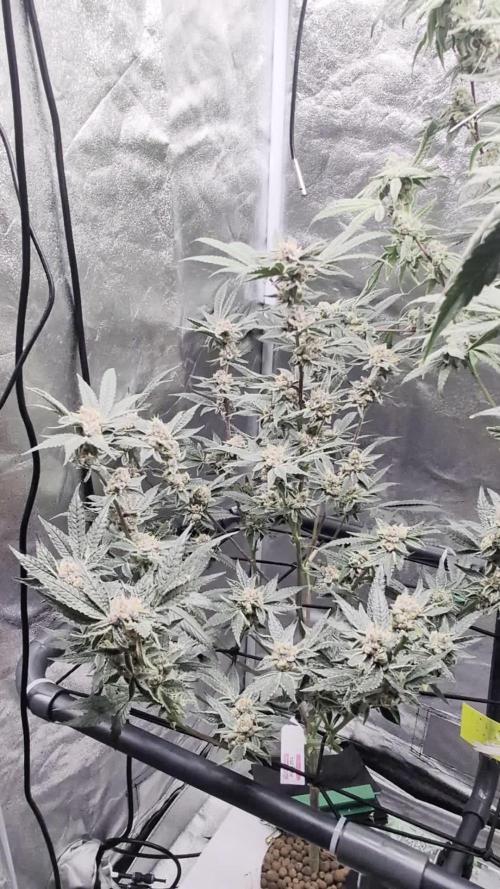
Noticed some yellowing tips. I think I need to dial back the nutrients a bit. I increased them last week to see what they could handle. There is a lot more growth than I expected this time and I've let them veg longer than I usually like to but it was necessary to let them recover from my previous mistakes. Tomorrow will be a good day to defoliate and start the flip into flower. If it isn't nutrient burn, then what is causing the yellowing leaves and tips?
Likes
3
Share
4. Woche Sie befindet sich weiter auf der Streckbank 🤭 Sie wurde jetzt 3x getoppt in den letzten Wochen und das reicht dann auch, bald darf sie wachsen, wie sie will und das Training wird zum LST, aber dazu in den nächsten Wochen mehr 😄
Processing
Likes
1
Share
The Girls are EXPLODING Switch to Bloom nutes has been made, The Stardawgs have absolutely taken off. The runt which was discoloured and small seems to be stacking up nicely behind the rest. The Two which have been mainlined are now showing their potential with the main two colas looking like 2 fat bum cheeks! 1 has been untrained as an experiment for my own conclusion to the old age question.. 'can you train an AUTO?' The GG's are still growing rapidly but seem to be slowing down and bud sites have gone from a few pistils to little crumbs of furry goodness!
Likes
Comments
Share
Likes
1
Share
@Jaschkoo0
Follow
On Dez 25 I flew to Thailand so my father had to gave the planst nutriens and water I Wrote him a what and how much he should give .
Likes
14
Share
Note: At time of writing the Runtz has had 2 weeks cure, will update the review and rate it after 2+ months cure. Hermied a bit, has very few seeds so not too bad. Growth review: - vigorous grower during veg - solid stretch - medium internode distance - small sized buds - lower buds not too airy - very easy/not fussy - medium amount of smell - 80+ days flower (12/12) in hydro DWC under full spectrum led - responded well to various lst techniques Ease of growth rating: 9/10 General note: --> For me personally this strain NEEDS a good cure and is not worth smoking yet... It has a bit of a citrus grassy (not hay) taste, with some 'special' fruity smells to it that remind a bit of grapes/cassis. When grinding/opening the curing pots there is a pretty dank heavy weed smell so I think the quality will come out after a few months of cure... In its current state not worth smoking for the taste or effect after 14 days cure. --> Currently the effect is not very strong, easy to handle and I need a lot to feel a bit. The effect lasts for short compared to the average strains I smoke. Should develop more character with a longer cure. Hash making notes: - water extraction of the trim yielded 16g of hash (45mc-220mc) - rosin has a bit too much of a weird spicy grassy taste which make it a bit unpleasant, waiting till the buds improve with cure to try again - rosin color at 80c is yellow/white/beige creamy waxy, with hard consistency - rosin color at 95c is golden with hard consistency
Likes
91
Share
@Salokin
Follow
Gu Guys, she is continuing to develop as she should, however doesn't seem to be stretching all to much even with lower light intensities. I have therefore decided to push the ppfd to roughly 600 and let her finish her pre flower, no matter if she will fill the entire scrog or not. the roots are bit stained, however, this seems to be nutrient related, no slime or smelly roots thus far and it seems like she is constantly shooting out new ones from the net pot. She is going to be a nice little bonsai bush :)
Likes
55
Share
@BodyByVio
Follow
Just got done with trimming the 4x4 @greenhouseseedco Super Silver Haze / @blimburnseeds Silver Surfer Haze tent. The final yield is exactly 1000g plus some (kind of a lot)that I smoke in the last 2 weeks 😃 Also got 6, gallon size ziploc bags filled with good quality trim for concentrate. To be honest I was expecting a little more but keeping in mind that this grow I did not supplemented with bottled CO2 I think I’m good with the results. Definitely I enjoyed a lot this grow and I’ve learned even more.