The Grow Awards 2026 🏆
Processing
Likes
Comments
Share
@
Follow
Likes
13
Share
Recette du tco pour 20 litres. (Grammes : gr) 50gr biochar 250gr zéolite 3gr granulé Micro-Organisme IT45 10gr pollen d’abeilles 10gr levure de bière 3gr endomychorize 10gr consoude 20gr vers de farine 10gr cendre coque de ricin 12gr ortie microniser 15gr Kelp 10gr spiruline 10gr de cbd living soil 20ml de miel liquide 30ml de mélasse 20ml d’acide humiques et fluvic Mettre tous les ingrédients (sauf la mélasse ,l’acide h/f et le miel) dans un filtre 400micron, le placer dans un seau avec de l’eau (10litres). Rajoutez le miel et 10ml de mélasse Y mettre un micro bulleur alimenter sur une pompe à air et faire oxygéné le mélange pendant 24h. Rajout de 10ml de mélasse après 12h le début de la mise en route de la pompe. A la fin des 24h rajoutez le restant de mélasse et d’acide h/f, mettez y en plus 10litres d’eau au mélange. Reste plus qu’à arroser! j’y ai incorporé 7litre de mélange La veille j’ai préparé le pot à l’arrosage avec 500ml d’eau et 2gr de Bacillus IT35 Amyloliquefaciens X5 Bacillus Amyloliquefaciens : rhyzosphère, probiotiques. Aspersion et arrosage. Utilisable pour toutes cultures. La bactérie Bacillus Amyloliquefaciens se fixe dans la rhizosphère en se nourrissant des exsudats racinaires. En contrepartie, elle stimule la croissance racinaire en sécrétant des métabolites de croissance et solubilise le phosphore en sécrétant des phytases (enzymes). Effet probiotique consistant en l’utilisation de micro-organismes bénéfiques pour la nutrition et la santé des plantes. La spiruline, le plus riche et le plus complet des amendements organiques La Spiruline est une algue aquatique connue comme complément alimentaire, la Spiruline est aussi un amendement organique et écologique très complet. D'une grande qualité nutritive, elle apporte à vos plantes une quantité de nutriments, dont l'azote, phosphore, potassium, minéraux, acides aminés, vitamines, chlorophylle et protéine. Le charbon végétal actif est capable d’absorber jusqu’à cinq fois son poids propre en eau ainsi que les éléments nutritifs qui s’y trouvent. Il joue ainsi le rôle de catalyseur et d'amplificateur pour les fertilisants traditionnels, qu'ils soient d'origine organique ou minérale. Ce pourquoi il est idéal pour activer un sol et pour les thés de compost oxygénés. Le charbon végétal améliore la diffusion et la disponibilité des éléments nutritifs dans le sol et offre des conditions propices au développement des micro-organismes. Le Biochar peut être introduit dans une grande variété de sols. Il est particulièrement efficace dans les sols pauvres, difficiles et acides. Pour faire agir rapidement et efficacement sa capacité d’amendement, le charbon végétal est enrichi et biologiquement activé avec des micro-organismes. Le Biochar se comporte ainsi comme un structurateur et un activateur dans le but de valoriser les sols. Composition : • Charbon végétal actif 31%
• Matière organique 33%
• Matière sèche 75%
• C/N : 17
• PH : 7,2
• Azote (N) : 2,1 % dont 1,2 % azote organique
• Phosphore (P205) : 0,74%
• Potassium (K20) : 1,18%
• Calcium (Ca) : 6,8%
• Magnésium (MgO) : 0,65% Le pollen est l'ingrédient de base de la fabrication du miel par les abeilles. Riche en vitamines et minéraux, il est qualifié « d'aliment parfait », y compris pour les plantes ! Les zéolithes sont des roches cristallines, présentant des capacités d'adsorption particulièrement importantes vis à vis des polluants que l'on rencontre dans l'eau et dans certains liquides, ainsi que dans l'air et les gaz. Elles sont extrêmement poreuses comme les charbons activés et elles peuvent être chargées électriquement pour opérer comme des échangeurs d'ions. La zéolithe est un produit naturel qui respecte notre environnement. Utilisé dans le milieu industriel depuis de longues années déjà, ce minerai aux propriétés filtrantes particulières commence à se vulgariser dans le domaine de la piscine privée, de l'aquariophilie, des bassins d'agrément, de la récupération des eaux de pluie, ou encore de la culture des bonsaïs et autres plantations diverses par exemple... 4 points techniques majeurs : - Grâce à leur propriété hydrophile, les zéolithes peuvent adsorber l'eau jusqu'à 30% de leur poids total et sans aucune variation de volume : pas de gonflement en présence d'eau ni de craquement en cas de déshydratation comme certaines argiles. Les zéolithes sont d'ailleurs de puissants agents anti-mottant (anti-agglomérant). Cette propriété est très appréciée dans le cas des terrains de golf et autres aires de jeux. - Les zéolithes ne captent pas l'eau de façon irréversible, elles se comportent comme une réserve au voisinage des racines. Celles-ci peuvent capter l'eau en fonction de leur besoin. Les zéolithes permettent ainsi de réduire les besoins d'arrosage jusqu'à 35 %. - Une zéolithe se comporte comme une "Zone de Stockage" qui retient l'azote et les éléments minéraux nutritifs au voisinage des racines et les relâche lentement en fonction des besoins de la plante. Cela se traduit par une croissance harmonieuse mais rapide du végétal. - La capacité d'adsorption et l'énorme rapport surface/volume des zéolithes, vont permettre à la fois la rétention de la solution du sol et une bonne oxygénation au voisinage du système racinaire. Les zéolithes favorisent donc l'organisation biologique des sols en contribuant au développement de la micropopulation. L'apport en nutriments (N, P, K) est réduit de 20 à 25 %. Ces derniers, adsorbés par la zéolithe, sont beaucoup moins sensibles au lessivage et à l'évaporation. Composition minéralogique : * Chabasite 70 % * Phillipsite 2 % * Feldspath 5 % * Augite 3 % * Illite - Mica 2% Analyse atomique: * Sio2 52 % * AL2o3 17 % * CaO 5,7 % * K2O 6,1 % * MgO 2 %, * Na2O 0,6 % * Fe2O3 3,6 % Amendement calcaire, dolomie et gypse avec préparation microbienne à base de Bacillus Amyloliquefaciens IT45 et Saccharomyces cerevisiae LYCC6420 Formulation : micro granulés (1 – 1,6 mm) à base de rhizobactéries favorisant la croissance des plantes qui se multiplient et colonisent rapidement la zone des racines, et de levures Saccharomyces cerevisiae souche LYCC ayant un effet probiotique. Les PGPR produisent des enzymes qui solubilisent le phosphore à partir de complexes inorganiques et organiques dans le sol et stimulent la croissance des racines efficaces augmentant ainsi la zone d'interception des éléments nutritifs. Les levures LYCC permettent une occupation de la rhizosphère par une flore bénéfique. Composition :
• Matière sèche : 96,8%
• Matière organique : 91,5%
• N total : 6,6% dont N soluble dans l'eau 0,17%
• P total : 2%
• K total : 1,7% Micro-granulés : 
• Oxyde de calcium (CaO) total : 30%
• Oxyde de magnesium (MgO) total : 7%
• Anhydride sulfurique (SO3) : 13% La levure de bière est une matière vivante qui permet un meilleur fermentation pour les thés de compost oxygénés notamment conseillé pour accompagner les croissances ou apporter un gros coup de pousse pendant la floraisons. La levure stimule la vie des sols également à l'arrosage direct en apportant tout aussi bien que dans le TCO sa population l'espèce micro-bactérienne positive pour votre sols ainsi que des oligo-éléments et diverse vitamines. Composition : • 2,8% (N) total dont 1% (Norg), • 2,3% (P205) • 1,6% (K20) • 35% de MO • C/N : 8. PH : 8,4. Sous forme de poudre mouillable. Il contient des spores du champignon mycorhizien Rhizophagus Irregularis MUCL57891 avec des levures inactivées spécifiques. 2000 spores/gramme d’endomycorhize Rhizophagus Irregularis MUCL57891 et Saccharomyces Cerevisiae LYC6420 inactivée. Se connecte efficacement au système racinaire et forme un vaste réseau souterrain de filaments, qui agissent comme des extensions pour atteindre les nutriments et l’eau au-delà de la rhizosphère Composition : • Poudre contenant 2000 spores/g. d’endomycorhizes Rhizophagus irregularis La Consoude (Symphytum Officinale) est une plante présentant de nombreuses propriétés. Particulièrement riche en Potassium (K) organique, la consoude est une alliée idéale pour les périodes de floraison. La consoude a tout pour plaire : riche en vitamine B12, elle agira également comme stimulateur racinaire, mais aussi comme biostimulant cellulaire, grâce aux alcaloïdes, aux allantoïnes et jusqu'à 30% de protéine ! 100% déjection de vers de ténébrions.
Très riche en microorganismes, le guano de vers de farine est une matière directement composté par les vers. En effet, c'est bien la digestion de matières végétales par des larves, insectes ou autres arthropodes qui valident le processus de compostage, que ce soit en zone de production de cultures d'insectes, pour le compost maison ou la dégradation de litière forestière. Les bactéries et autres champignons obtenus grâce au système digestif de nos vers, permettent la dégradation accélérée des éléments nutritifs dans vos supersoils, et les symbioses permettant l'assimilation des éléments nutritifs. Cette bio-activation intense mettra dans vos sols, à la disposition de vos plantes, un panel tellement varié de nutriments frais qu'il nous est aujourd'hui technologiquement impossible de pouvoir tous les nommer et de les compter. Le guano de vers de farine fournit une grande polyvalence. Très équilibré, il s'utilise en entretien ou en apport ciblé seul ou en complément de d'autres amendements ou fertilisants organiques. Il agit comme un puissant activateur de sol et/ou de substrat. Cendre coque de ricin NPK 0,1-18,6-16,5. 0,1% (N-Azote), 18,6% (P205-Phosphore), 16,5% (K2O-Potasse), 11,7%(Ca0), 9,1 (Mg0) - Origine : Inde ACTION SOL • rend rapidement accessible au sol Phosphore, Potasse, Magnésium et Calcium. ACTION PLANTE • Apport aux stades agronomiques propices. • Produit riche en éléments fertilisants : combinaison NPK 35%. • Régularité de l’apport, milieu et fin de floraison. . Favorise la sénescence. Analyse chimique : • NPK 0,1-18,6-16,5 • N-Azote 0.1% • P205-Phosphore 18,6% • K2O-Potasse 16,5% • CaO-Calcium 11,7% • MgO-Magnésium 9,1% Ortie bio micronisée Stimule la vie du sol et la végétation. Composition : • 2,8% (N) total dont 1% (Norg), • 2,3% (P205) • 1,6% (K20) • 35% de MO • C/N : 8. PH : 8,4 KELP poudre
ascophyllum nodosum
- amendement sol Croissance et floraison - Meilleure germination - Meilleur développement racinaire Meilleure assimilation - Résistance aux stress osmotiques - Augmente la production de chlorophylle = plantes plus vertes = lumière mieux captée - Lutte contre le stress osmotique - Développement des Micro-Organismes dans le sol – Riche en vitamines, fer, iode, oligo-éléments, hormones de croissance auxines et cytokinines - Idéal en épandage et pour les thés de compost oxygénés. Important : notre Kelp est un goémon noir mais il n'est pas le varech bien moins fertile de la même famille qui est l'algue qui pullule et pollue la Bretagne, notre algue pousse uniquement à plus de 50 mètres de fond dans les grands courants froids au large de la Norvège.
Likes
18
Share
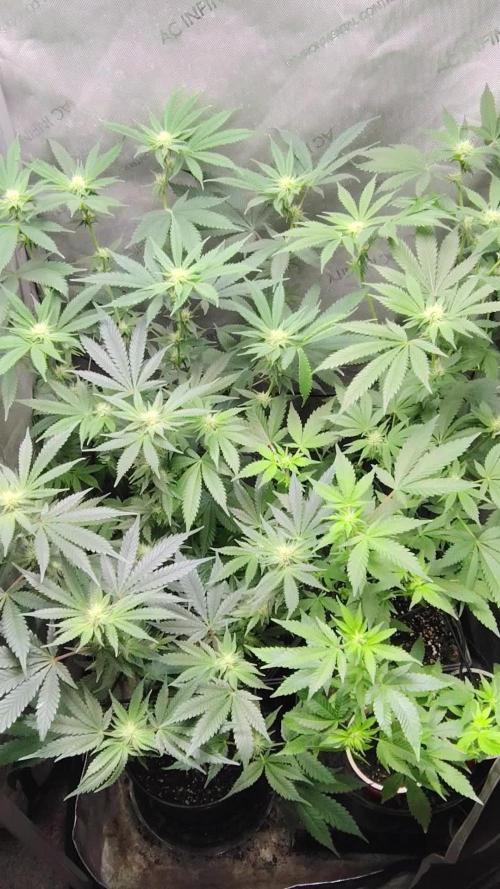
Day22, Tuesday Week 3 Both are growing quick now. Might have to clip some of the big fan leaves blocking light to the lower bud sites. Day27, Sunday, End of the week both getting bigger an bushier and drinking a lot more. Hulkberry started going into flower, so I expect it to stretch during next week.
Likes
1
Share
@Kusemono
Follow
Juju grow 2ml Juju flowa Bloom 3 ml Juju Green Mystic 3 ml 1liter Water Each plant 130 ml
Likes
8
Share
Week#7 Baby Boom/ Kannabia Seeds Week#7 Dec.9th-16th Baby Boom Plant stretched to 25 inches tall. She is starting to fill in her multiple buds sites.
Likes
2
Share
@Semi-Auto
Follow
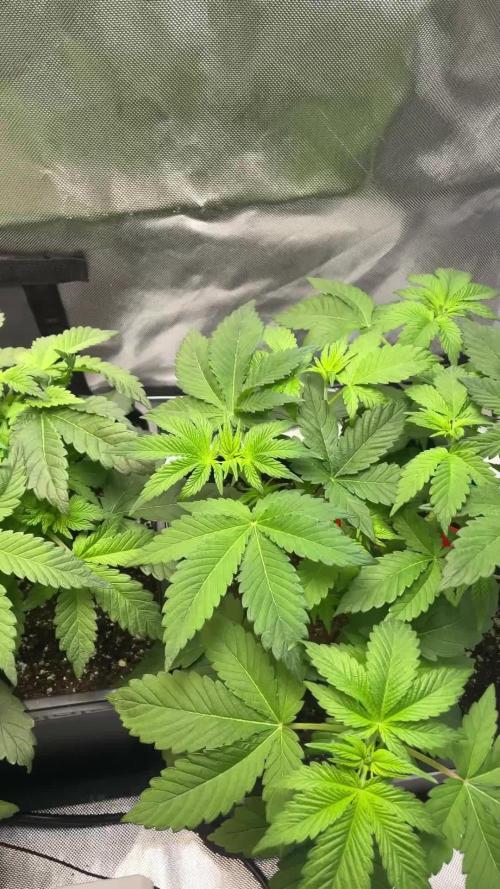
I topped the two healthiest the Bruce banner and the bigger blackberry auto I also tied down two of them I will let the smaller blackberry run naturally I don’t know if I will do lst though I will see with a little more observation I am still trying to get the watering schedule down pat so I will let the soil dry out a little at least to half the weight it is now oh yeah Ac Infinity holla at me let work!!!!!
Likes
60
Share
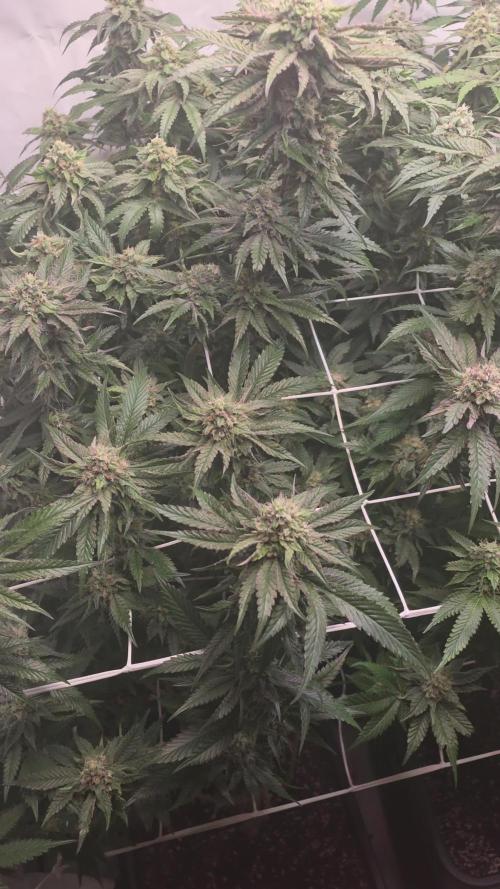
The week was completely normal with no problems, I'm more and more excited about the next few weeks 😁 they already smell very, very tasty 😏😍
Likes
32
Share
March, 14th. The automatic Strain performs well. Its alittle bit tougher to keep them happy, than the Photoperiods, but i get it managed Harvest is coming closer Girls sit in up to 10g of Soil getting daily Bath into the Feedingsolution, and some claypebbles on the surface to keep them happy Stay tuned
Likes
9
Share
Very resilient strain. Hight tolerance to stress .
Likes
52
Share
Week 8 Flower Last full week of flush (plus a couple days). She was taken down on Day 58 Flower after she'd faded enough. Most of her fans had died off and been plucked. I always cut them down approx half hour before the light is due to turn on. This is so the chlorophyll production is at its minimum, giving you the best flavour and smoke. She's a stunning girl with fat juicy fruity cola's! 🍇🍓 Thanks for following and happy growing! 🐺
Likes
12
Share
4/20: I have 3 good clones of the shortie growing, and another FFT6 seedling. 5/1: The seedling is now in a 5 gallon pot outdoors, and 2 of the clones are in my closet getting ready to be transplanted into 5 gallon pots and moved outdoors. One of the FFT6 clones will be grown in my tiny tent. 5/6: I took the last two clones outdoors and fed them really well. I also did some training on the seedling and the clone in my tiny tent. 5/7: I did a foliar application of Axiom Harpin proteins today. 5/9-5/11: Did foliar feeding and lots of training every day. 5/12 - 5/17: Fed the outdoor girls on the 13th, then we had lots of rain all week. The seedling is a beast. Installed a new 200w 3000k waterproof LED over the outdoor plants. The indoor clone looks great. I gave her some water on the 16th. 5/18 - 5/19: The seedling and two clones outdoors are all flowering?!?! I suppose it's because I germ'd and vegged them for a month under 24/0 before taking them outdoors under 14/10 of daylight... I'm really hoping she sees the days getting longer and goes back to vegging. I need time to bush her up really well! I ordered another 200w 3000k waterproof LED to replace the two cool white 60w LED's, so that will be 550w total watts of lighting outdoors in addition to the 5'ish hours of direct sunlight they get at mid-day, and the tree-diffused sunlight they get for the rest of the day. Thinking about trying a product called Bud Bomb...has lots of hormones, cytokinins, and auxins that when applied at the beginning of flowering supposedly causes more lateral branching and less vertical stretch. As it is, I'm spending too much time training her and the other outdoor plants to stay below the eyeline of nosy neighbors, so I'm really considering giving it a shot... 5/20: I went for it and sprayed them with Bud Bomb this morning...hope it works like they claim.. 5/21 - 7/4: The clone i grew in the tiny tent got to move in under the quantum boards for her last 2 weeks and fattened up nicely. I harvested her on 6/28 and washed her buds, then jarred and weighed her on 7/3. She produced 110g of cola and 51g of lower bud...very little of it was larfy.👍 After a few great weeks flowering outdoors, i was invaded by spider mites and grasshoppers. The #6 seed-grown plant didn't make it, but i brought the #6 clone indoors and treated her for spider mites a few times, along with the 2 x #1 clones and the #7 plant. That outdoor clone now in my closet is still flowering as of 7/4, but had her last dose of nutes on 7/3. Flushing in a few days.
Likes
15
Share
@Trinidad
Follow
21.11.2512 days dry. I suffered some bud rot so my final weight of 189 is inaccurate, also there is still trim on weed. But you can clearly see she is a high yeilder. I had to tie the dehumidifier high up in the tent so that the heat coming from it would not dry out the buds like what happened in my 1st grow, Wurlz F1 by Zamnesia. She is very sticky. She smells like when you pull on a THC vape.
Likes
14
Share
@Fre_84
Follow
The three plants are doing well. Fat Banana with topping has recovered strongly and continues to grow. Fat Banana without topping is unstoppable. A little defoliation applied. Northern Light is now a bonsai! :D Northern Light - Bloom status - 24/25 cm 08/17 * 08/21 30 cm * 08/24 36,5 cm * 08/27 40 cm Fat Banana with Topping - Bloom status: 15 cm 08/17 * 08/21 - 22 cm * 08/24 27,5 cm * 08/27 32 cm Fat Banana no topping Bloom status: 20 cm 08/17 * 08/21 - 30 cm * 08/24 - 35,5 cm (small defoliation) * 08/27 40,5 cm
Likes
6
Share
TUESDAY 7/16: I graduated two of my hybrids to 3 gallon pots and moved them outdoors today. Both were Candy Cane x Amnesia Autos that had been in solo cups. They were both extremely well rooted and should do just fine. I watered them in with spring water and a little extra bokashi, dolomite, and azomite and wished them well. I hope to graduate a couple of the Candy Cane x C4's tomorrow or the next day, but it will be another week before the other CC x C4, the Candy Cane x Early Miss, and the Candy Cane (S1) are ready. Neither Candy Cane x White Widow seedling made it...😥 WEDNESDAY: I transplanted another Candy Cane x Amnesia and a Candy Cane x C4(purple pheno) into 3 gallon pots today. I watered them in with Azomite, Dolomite, Biochar, Kelp Me Kelp You and sprayed them with Boom Boom Juice a few times early in the morning. By noon, they were standing at attention and growing a millimeter a minute. They are loving the sunshine.😎 Tomorrow, I'll transplant another Candy Cane x C4 and another Candy Cane x Amnesia. The Candy Cane x Early Miss is a misshapen miniature mongrel, but I'm hoping she snaps out of her funk and gets busy growing soon. The Candy Cane(S1), and the last two Candy Cane x C4's are tiny little runts..I'm hoping the Boom Boom Juice I misted them with all morning will kick them into gear....🙏 I was really hoping to have at least one Candy Cane x White Widow in the grow too, so I went ahead and floated another bean last night..it had sunk by this morning. Fingers crossed... THURSDAY: I transplanted another Candy Cane x C4 and another Candy Cane x Amnesia into 3 gallon pots today. Out of Bio Tabs, so mixed up some of my recharged soil with a little extra coco coir, perlite, bokashi, biochar, and a handful of compost, along with some Osmocote Plus, then watered them in with azomite, dolomite and Kelp Me Kelp You. The day of sunshine did seem to kick the Candy Cane x Early Miss into gear, but I didn't really see much growth on the other CC x C4 or the Candy Cane (S1)..what did grow is really twisted up like the Early Miss hybrid..I'm thinking that I must've used too much Mycotrex and/or Great White on the new seedlings. They have all been rooted like crazy, but several had weird-looking, slow-starting, twisted foliage.😕 So the current line-up of hybrids in this diary consists of: 4 * Candy Cane x Amnesia Auto (planted) 2 * Candy Cane x C4 (planted) 1 * Candy Cane x Early Miss (not yet planted) 1 * Candy Cane x Amnesia Auto (not yet planted) 1 * Candy Cane (S1) (not yet planted) FRIDAY: Inspected for pests and repositioned them a few inches over so that they get another half hour of sunlight per day. I sprayed the area with Ortho again and bought a little air bubbler to aerate water for compost tea. SATURDAY: They've all put on a couple of inches since Thursday. I mixed up a fairly weak batch of Big Bloom and Grow Big plus some Kelp Me Kelp You and douched them with about a half-gallon right as the sun was coming up. I also prepared a foliar feed using Big Bloom and Kelp Me Kelp You and sprayed them well as the sun came up, and again after it was going down. I also started aerating 4 gallons of water today...will add the compost tea tomorrow morning and let it cook for 24 hours. The Candy Cane x Early MIss is a few days away from being planted and moving outdoors, and one of the remaining Candy Cane x C4's is a few days behind her. The other Candy Cane x C4 and the Candy Cane (S1) probably won't make it, but that's fine..I had really only planned to grow 5 hybrids plus a photo and a Zkittlez auto. Also, the Candy Cane x White Widow bean may yet come up. SUNDAY: I foliar fed them and sprinkled a little more Silicium Flash on top of the soil of all my plants and also mixed about 4 grams of Bactrex into a jug with 3/4 gallon of bottled water and douched them with about 2 pints each. That should really get the beneficial bacteria and fungus kicked into overdrive. I started brewing a 4 gallon batch of compost tea today. Since I don't have any Orgatrex, I am using a little Big Bloom, Kelp Me Kelp You, and Grow Big in the tea in addition to the PK Compost Booster tea from Bio Tabs. I'll add Mycotrex to it about 2 hours before it finishes and thoroughly dowse them all tomorrow morning. MONDAY: I fed the outdoor ones each about a liter of compost tea and foliar fed them a couple times as the sun came up, and gave each of the remaining seedlings in the cabinet about 2 shot glasses full each and foliar fed them as well. It looks like I've finally got a Candy Cane x White Widow Auto seed to sprout...fingers crossed that she takes off normally. If she does fully emerge, she's already waaaay behind the rest...🙏 Late last night one of my cats ate half of one of the biggest leaves on my Early Miss hybrid, but she's okay..actually starting to grow. I may actually plant her outdoors tomorrow.👍 It's been a decent week for them...tomorrow begins a new week.
Likes
7
Share
🌿 Week 4 Veg – Beauty, Branching & Bio-Tech Symphony Grower’s Journal – BlueBerry by Zamnesia Seeds | Entry 005 Welcome to Week 4 of Veg, and let’s just say it clearly: These BlueBerry girls are growing like there’s no tomorrow. Branching like crazy, stretching into their potential, and looking like true queens under the lights. ⸻ 📸 Visuals to Match the Growth This week, we pulled them out of the tent for a special photoshoot, just to honor how gorgeous they’ve become. Their structure is perfect, the leaves are flawless, and the pace of development is exactly where we want it. These are the kinds of plants that make growers pause, smile, and say, “Yes, this is working.” ⸻ 🌱 Nutrition – A Balanced, Thoughtful Feed We’re continuing our Aptus nutrient regimen, supporting explosive vegetative growth while maintaining biological harmony in the root zone: Current Feed (per liter): • Regulator – 0.15 ml: Cell wall integrity, anti-stress armor, and enhanced nutrient uptake • CalMag Boost – 0.25 ml: Supporting structural development and leaf strength • All-in-One Liquid – 1 ml: The nutritional foundation, covering macro and micronutrients • 🌿 Start Booster – 0.25 ml: Still supporting root density, node stacking, and early branching 🌿 Why we’re using this: Because we’re in rapid growth mode, and we want to fuel expansion without pushing too hard. This combo delivers strength, balance, and root vitality, exactly what we want before any training or pre-flower stretch. ⸻ 🌞 Lighting – Now a Two-Zone Setup We’ve expanded the operation—stretching across an 8x8 space, creating two active light zones: ⚡️ Zone 1 – Black Series 600 by Future of Grow • Full-spectrum LED designed for early veg and structured growth • Gentle but powerful PPFD—keeps internodes tight and leaf color rich ⚡️ Zone 2 – THINKGROW Model One LEDs • Ultra-efficient LEDs with controllable spectrum • Ideal for pushing vigorous vegetative growth across a larger canopy • Controlled via the TrolMaster system for precise lighting schedules and dimming 💡 Both systems are delivering clean, cool light, helping shape the canopy while managing energy use smartly. ⸻ 🌬️ Airflow & Environmental Control – Total Tech Harmony We’re not just growing plants—we’re growing a controlled microclimate, with every element tuned: Airflow Setup: • Exhaust: Two 6” inline fans • 1x Spider Farmer 6” Exhaust w/ Carbon Filter – Controlled via Spider Farmer GGS Controller • 1x TrolMaster AeroFan 6” Exhaust w/ Carbon Filter – Controlled via TrolMaster Tent-X Controller • Intake: One 6” fresh-air intake pulling air into the tent 🌀 This system keeps: • CO₂ fresh (~632 ppm) • Temperatures steady (~27°C) • Humidity ideal (~57.4%) • And filters in place keep the air pure, clean, and odor-controlled, even at this early stage 🧠 Sensors & Controllers: • TrolMaster Tent-X Ecosystem – the brains of the setup • Managing lights, exhaust, intake, CO₂, temperature, and humidity • Connected to: • CO₂ sensors • Temperature & Humidity probes • PPFD sensor (light intensity measurements for accuracy) Every zone, every variable is dialed in with care. ⸻ 🌿 Why All This Matters – Creating Plant-Centered Intelligence We’re not just creating a grow tent. We’re creating a living, breathing system that adapts, protects, and encourages growth. Each element, from airflow to light to nutrition, is designed to support the natural intelligence of the plant. And the BlueBerries are responding. They’re thriving, stacking, stretching, and showing gratitude through leaf expression, branch angles, and rhythm. ⸻ 🔮 What to Expect Next Week • More branching, tighter nodes • Early signs of pre-flower development • Possibly early LST if needed • Continued sensor data collection as we dial in the automation ⸻ 🙅‍♂️ What Not to Expect • No topping yet—structure is still unfolding • No transplant (they’re in final 11L fabric pots) • No overfeeding—we’re keeping it steady and strategic ⸻ 🎥 Video Update – Inside the Setup A video has been added to this week’s update, just a quiet visual journey through the setup: 💡 No narration, just the gear, structure, and rhythm of a garden built with intention. The systems speak for themselves. ⸻ 💬 Final Thoughts – BlueBerry as a Statement This isn’t just another grow. It’s a special BlueBerry run. A classic cultivar grown with modern methods, storytelling, and reverence. We’re blending nature with tech, instinct with data, and roots with rhythm. Thank you for being here. The best is yet to grow. 🌿 With light and love, Your faithful garden companion 🌱💚 DD💚 As always, this is part of our ongoing Grow Series, an open diary of everything we do and why. Whether you’re a new grower or just here for the vibes, you’re invited to come along. 📲 Don’t forget to Subscribe and follow me on Instagram and YouTube @DogDoctorOfficial for exclusive content, real-time updates, and behind-the-scenes magic. We’ve got so much more coming, including transplanting and all the amazing techniques that go along with it. You won’t want to miss it. • GrowDiaries Journal: https://growdiaries.com/grower/dogdoctorofficial • Instagram: https://www.instagram.com/dogdoctorofficial/ • YouTube: https://www.youtube.com/@dogdoctorofficial ⸻ Explore the Gear that Powers My Grow If you’re curious about the tech I’m using, check out these links: • Genetics, gear, nutrients, and more – Zamnesia: https://www.zamnesia.com/ • Environmental control & automation – TrolMaster: https://www.trolmaster.eu/ • Advanced LED lighting – Future of Grow: https://www.futureofgrow.com/ • Root and growth nutrition – Aptus Holland: https://aptus-holland.com/ • Nutrient systems & boosters – Plagron: https://plagron.com/en/ • Soil & substrate excellence – PRO-MIX BX: https://www.pthorticulture.com/en-us/products/pro-mix-bx-mycorrhizae • Curing and storage – Grove Bags: https://grovebags.com/ ⸻ We’ve got much more coming as we move through the grow cycles. Trust me, you won’t want to miss the next steps, let’s push the boundaries of indoor horticulture together! As always, this is shared for educational purposes, aiming to spread understanding and appreciation for this plant. Let’s celebrate it responsibly and continue to learn and grow together. With true love comes happiness. Always believe in yourself, and always do things expecting nothing and with an open heart. Be a giver, and the universe will give back in ways you could never imagine. 💚 Growers love to all 💚
Likes
13
Share
@Prozak
Follow
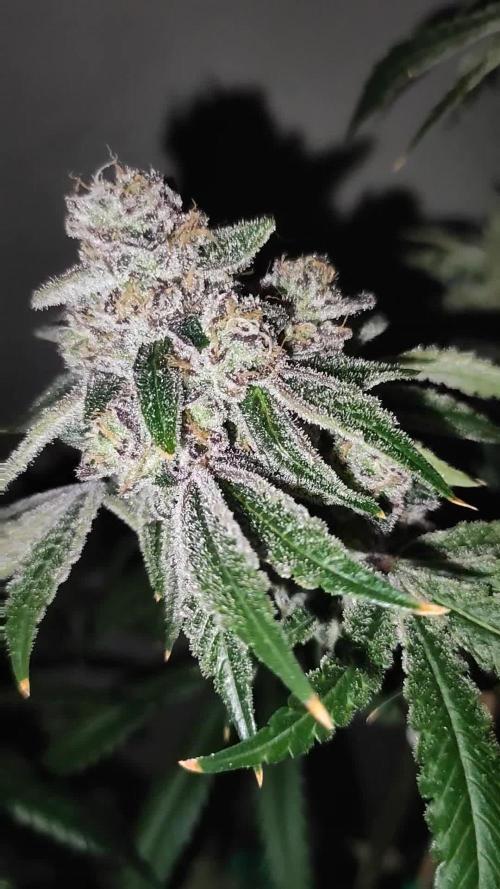
to mutch cold here 2 week with low temps at night cicle betwen 12 &16 graus in europe. maybe this is the reason of that purple orange colors (:
Likes
14
Share
We are very close to the harvest. One more week and it's good to go. Feeding with water only. No more nutrients. Aroma from this plant its incredible, its like a very good man's perfume. Musky with fruit like tangerine and mango. Incredible.